This weekend, I am trying to concentrate on poetry-wrestling, herding poems, culling and grooming and all that. So–less time to reflect on writing my own blog posts.
However! I follow many poets and writers, and one or two philosophy and science blogs, would like to direct my readers to two writers who responded to Mary Oliver’s recent death--both of these poets commented on Oliver’s reputation as a nature writer and a poet of “joy.” Reputation isn’t the same as analysis.
Here is Grant Clauser, wondering whether it will be possible for him to write gladness into his observations (which are quite keen and worth reading).
And here is Catherine Pierce, a poet much younger than I who admits to her own prejudices when deciding which poets to read–which poets are “worth the effort” of reading (ie, which writers teach us most about life and about poetry-writing).
The death of a beloved animal companion some years ago took me to Oliver then. And in the sorrow, I recalled the gladness of having that dog in my life.
“Nature poets” can be fierce, asserting the need for stewardship of our blue planet; poets who write happiness well understand–and convey–that pain and sorrow remain our companions in life. That does not mean a focus-on-the-positive Pollyanna attitude. No–to compose poems that show us we have every reason to love what we encounter takes bravery, because we so often fear what the world offers. To do so takes deep acknowledgment of suffering, not just a glancing nod, but compassion. The poet may not “behave well” in his or her own life but has the practiced gift of observation and enough craft to show the reader difficult perspectives.
Sometimes, gladness and optimism and beauty get obscured by experience and griefs. Next time that happens, maybe turn to poems?
My brother, whose avocation is science historian and whose papers I often proofread, has acquainted me with the 18th-c. comparative anatomist Johann Friedrich Blumenbach. As often occurs when one becomes attuned to new knowledge or focus, I suddenly seem to find Blumenbach’s name or theories “everywhere.” Mostly in books, of course, but also in a natural history museum where I came face to face with a trilobite that bore his name. I have also been reading Andrea Wulf’s book on Alexander Humboldt, The Invention of Nature; Blumenbach was one of Humboldt’s professors and influencers.
calymene blumenbachii
Wulf’s book begins as a biography of Humboldt but closes with several chapters on others who were inspired by his work; she makes the claim that Humboldt’s ideas about the deep connectedness of everything on earth laid groundwork for environmentalists and the discipline of ecology. Indeed, Darwin, Thoreau, Marsh, Muir, and many others found his texts revelatory and transformative. His writing is supposedly poetic and emotional–he did not think the earth and its denizens deserved less than awe and appreciation. Even though his books are packed with measurements, comparisons, careful botanical descriptions, and minute observations of practically everything he encountered, he allows space for admiring the view. Or, so Wulf’s book says. Now, I suppose I shall have to do a bit of reading Humboldt!
~
Along these lines, the lines of the natural world’s connectedness and relationships–ourselves among these, despite our frequent destruction of them–I find myself thinking of the recent death of poet Mary Oliver. I so admire the work and the woman, or what little I knew of her from a few appearances and through friends who studied with her. My social media feed has been alive with tributes, postings of her poems, and some critique about her standing as an American poet, as if that would matter to her (I doubt it would).
I can just make note that her poems have encouraged me to continue to write about nature, even when I’ve been told nature poets are unfashionable, uninteresting, or unnecessary. Her work taught me how to observe closely, like Aristotle at the tidal pools or Haeckel peering at radiolaria. First notice, listen; then describe, then try to obtain more information, and all the while percolate what experience has created within the observer herself. Maybe nothing earth-shattering comes of the process, but sometimes there’s a poem…
Here’s one of Oliver’s early poems (from Twelve Moons, 1979), one readers are less likely to find in all of the tributes to her but which offers a sense of how well-observed–for all their ‘simplicity’–her poems are.
Buck Moon–from the Field Guide to Insects
Eighty-eight thousand six-hundred different species
in North America. In the trees, the grasses
around us. Maybe more, maybe
several million on each acre of earth. This one
as well as any other. Where you are standing
at dusk. Where the moon
appears to be climbing the eastern sky. Where the wind
seems to be traveling through the trees, and the frogs
are content in their black ponds or else
why do they sing? Where you feel
a power that is not yours but flows
into you like a river. Where you lie down and breathe
the sweet honey of the grass and count
the stars; where you fall asleep listening
to the simple chords repeated, repeated.
Where, resting, you feel
the perfection, the rising, the happiness
of their dark wings.
Her poems are not metaphysical by any means, but Oliver is avowedly spiritual, which is not a fashionable thing. I am not spiritual, but I have always respected that in her. May she rest in the perfection and the happiness of those dark wings.
As I have mentioned before in many previous posts, telling stories matters to humans. It’s the best way to get a person’s attention: if a writer wants to bring a fact, claim, event, person, or history to light, the best way to reach a wide audience requires spinning a good story about it. I recently finished reading a book about so-called living fossils, including bacteria and worms (not my favorite subjects), because the author’s enthusiasm for his subject was scaffolded onto a story of world-travel and time-travel. In the process of learning about coelacanths, horseshoe crabs, and echidnas, Richard Fortey also makes an impassioned plea for biodiversity–and storytelling.
“…I am not in sympathy with the idea that what matters about a species is how we humans react to it, which seems allied to a view that nature is only validated by observation from this particular hominid…We don’t reckon the worth of a species by the “damage” its extinction would do to other ecosystems. We cannot rank the products of more than 3 billion years of evolution in utilitarian lists. The richness of the biological world is the most wonderful feature of the biosphere, and every story is worth telling no matter how humble, or indeed insular, is the the organism concerned.” [my italics]
The lyric, the epic, the myth, the story written in the genome or the geology or the great vast cosmos–all of the things we know contain mysteries–intrigue us when we hear a narrative. Who knew that microbes and bacteria and alga have stories? They cannot tell their own unless “the storytelling animal” interprets them, raising their stature and importance in the eyes of “particular hominids.” In 1971, Dr. Seuss invented The Lorax for such a purpose.
It takes all kinds of people to tell good stories. Keep reading!
Poetry and publishing: two topics that seem diametrically opposed, if you look at them under the perspective that’s the norm in the USA—that of business, capitalism, popular culture. Shake off that norm, however, and publishing can be re-imagined as aural/oral, visual, textual, cinematic, digital, interactive…who knows?
When a reader begins to deepen her understanding of creative literature, she will also find it necessary to widen the concept of publishing. Some folks say this is a new world. Or they’ll claim things were better in the old days. Curmudgeons and prejudices abound.
In my lifetime, I have observed and been part of significant and constant changes in what constitutes publishing, from Linotype to Huffpost. Recently, I participated on a panel of poets talking to students who have just begun an MFA program. The panel was a discussion, but it jogged reflections on the process of getting poetry to an audience. So here’s a compressed version of getting poems published, as I experienced it.
~~
I began to submit my work in the very early 1980s to the indie-publishing journals which were extant at the time: photocopied, stapled zines with print runs of 300, or maybe just 150. I was new at writing and aware that my work wasn’t ready for Ploughshares or Poetry and the so-called top-tier journals I purchased and read carefully and tried to learn from.
As a 20-year-old woman, I was not exactly full of self-esteem. Why did I submit at all, when I knew my poems were juvenilia? Well, I know that now…at the time, let’s say I knew they weren’t up to the work of Elizabeth Bishop or Audre Lorde. The reason was mentorship. I had two good friends who encouraged me to send work out but to be realistic. To read the journal first and analyze my work in comparison to what appeared in the magazine. Good advice—and let me tell you how much harder that was in the years before the internet! As I lived in New York and Brooklyn and Philadelphia, however, and it was the 80s, there were good independent bookstores to browse, and good libraries. And there was Dustbooks.
So analysis was crucial, not just for deciding where to submit but to learn how to be a better writer. It was important to compare, to take apart, to hear meter, to recognize rhythm and consonance and the fabulous image and the fresh metaphor, to say how does that writer achieve what she does and can I learn it? Without slavish copying?
Damned difficult. But thanks to publishers, at least the materials were available. If we hadn’t had poetry publishers, it would have been even harder to learn the craft; and I’m not the sort of sui generis writer who just creates out of genius. I had to study, practice, revise, and learn the hard way. Alas.
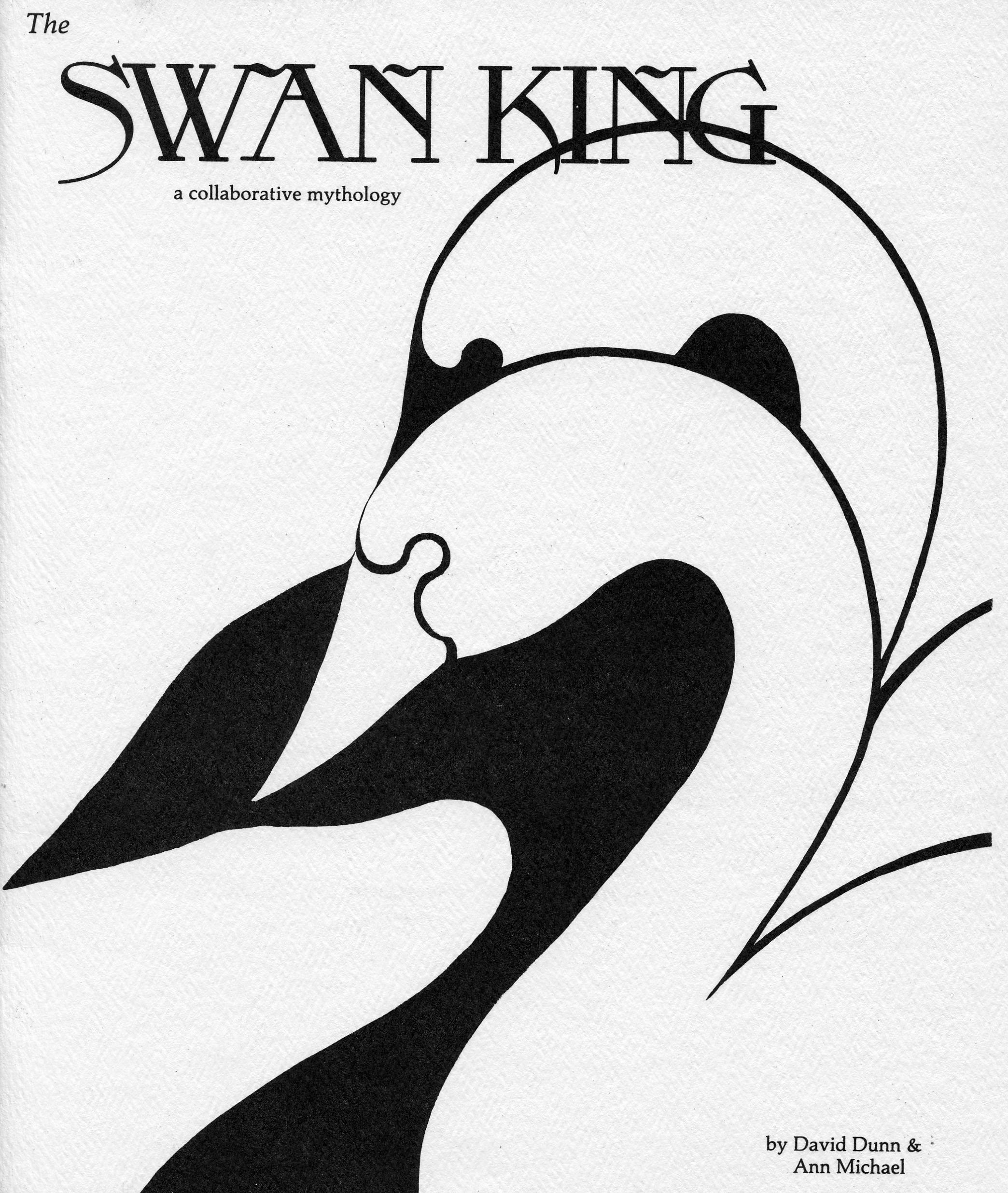
In the later 80s, I started doing some editing and publishing of other people’s work. My dear friend, David Dunn, and I had a small press that put out two broadsides and four chapbooks. Taught me a great deal. I helped to edit a Xerox-zine in Philadelphia in the 80s. Meanwhile, I kept getting work into small press journals nationwide, mostly these photocopied deals with tiny readerships; but the minor successes kept me going. After awhile I had enough hubris to try the better-recognized journals, with some success. This is how it works: persistence, but not bull-headed, blind persistence. One persists through the learning process; revises, practices, finds trustworthy people for feedback.
My sister, my spouse, and I all have worked in the publishing business-as-business, in how-to and B2B magazines; I was a typographer, proofreader, copyeditor, writer, indexer. All of that background was valuable in its way and never kept me from pursuing creative work. So I did eventually go for my MFA, in my 40s, and I got chapbooks and a collection published at long last in spite of—oh, you know—life.
Because I feel that poetry needs audience, I was early to jump on the online publishing wagon, despite colleagues who warned that it wasn’t really as acceptable a venue as academically-affiliated print journals. Nonetheless I’ve found myself enthralled by online journals, by audio-poems, moving-poems (video), podcasts, blogs. I’ve watched well-respected magazines migrate to the internet. And there are problems with online publishing. I know about them, wrestle with them, yeah—keeps life interesting.
My route has not been the academic route, although I work at a college today; I am more of an outlier. Poets and writers can be nurses, doctors, mechanics, or landscapers, grandparents, people with disabilities, insurance industry managers, post office workers, tutors. Each of us discovers her own process for writing and for getting the poems into the world. Mine is pokey and slow and frequently interrupted, and my next long collection won’t appear until 2021, nine years after Water-Rites, my first. But I feel satisfied with my publishing record, such as it is. People do read my work, which is kind of the entire point of writing, no?
When everything is easy and there’s no chance of failure, life is boring. Writing creatively means taking risks, creating tension. Publishing creatively requires the same things. Risks, imagination, persistence, curiosity, analysis and a willingness to be open-minded. Fun pursuits, but not always easy ones.
“Human consciousness has at least as great an impact on the planet as any force of nature, yet its existence is in doubt because science does not know how to describe it.” —Marilynne Robinson
~
One of the things I most enjoy when reading Marilynne Robinson’s essays is her earnest yet delighted devotion to the preciousness of being a human on the Earth. “The sheer plenitude of things a mortal encounters is a marvel in itself,” she writes, and her prose illustrates how all that she encounters deserves attention and compassion. Humanity, in particular, is a marvelous anomaly (“What a piece of work…”) which she lovingly defends while noting our “propensity to error” leads us into great evils but also to the kind of wide-latitude indeterminancy within which “we construct our minds and our civilizations.”
With clear logic and complex ideas and sentences, Robinson dismantles the logic that dehumanizes us. She demonstrates “that much influential thought is fundamentally incoherent” (this thought includes philosophy, psychology, and scientific theory) but nonetheless informs our norms, our behaviors, the tenor of our beliefs and our entire lives. Too often we are reflexive rather than reflective. Too often we dismiss feelings as irrational, when they originate in our bodies and minds and often work to alter what we regard as facts, thus biasing our perspectives. Emotions are part of our beings as humans. So are questions, especially the unanswerable questions.
Robinson says science “exploits accidents and relishes surprise”–something that poetry does, too (my aside, not hers, though I doubt she would disagree). But scientific method does not “provide an all-sufficient test for the reality of everything.” By implication, the biblical texts and so-called creation myths offer people a method of grasping the awesome that science cannot answer for and may never yield to, as each marvel reveals new mysteries and new questions.
We cannot say that the stars were arrayed to instruct us in the glory of God, to dispose our minds to wonder, to make us feel our finitude within an order of Being for which millennia are more transient than breath. This, for all we know, is the accidental consequence of the accidental emergence of the constellations, the fortuitous interaction of our unfathomable brains and senses with dazzling reality…We must step back and acknowledge that any accounts of the initial moments that make the event seem straightforward and comprehensible are deeply wrong. Nothing else could be true, considering what it has yielded.
I have not mentioned the words theology or philosophy in conjunction with Robinson, because so many readers would be less inclined to read her work. She’s not afraid to use those words and to examine, often rigorously, what they have meant to societies. Don’t be put off. In the final chapter of her book What Are We Doing Here?, Robinson writes about slander. It’s a short essay I wish all of us would read and think about, especially relevant to our current moment.
For now, I will be taking a break, putting on the brakes, pausing for a breather. Briefly, though! Blogging has been not just a good discipline for writing practice but also for thinking practice. It has offered me a place to “bookmark” books that matter to me and to reflect on my teaching, my environment, my garden, and on The Big Stuff–consciousness, values, aesthetics, culture.
Urged along by other poetry bloggers (see Poetry Bloggers), I have posted 60 times in 2018. I felt quite disciplined about that feat until I looked at my WordPress statistics and learned that, for example, in 2014, I wrote 74 posts. This year I was no more or less active than usual (say the statistics). My average number of posts per year over the decade is pretty close to 60. Respectable enough–there are other things to do.
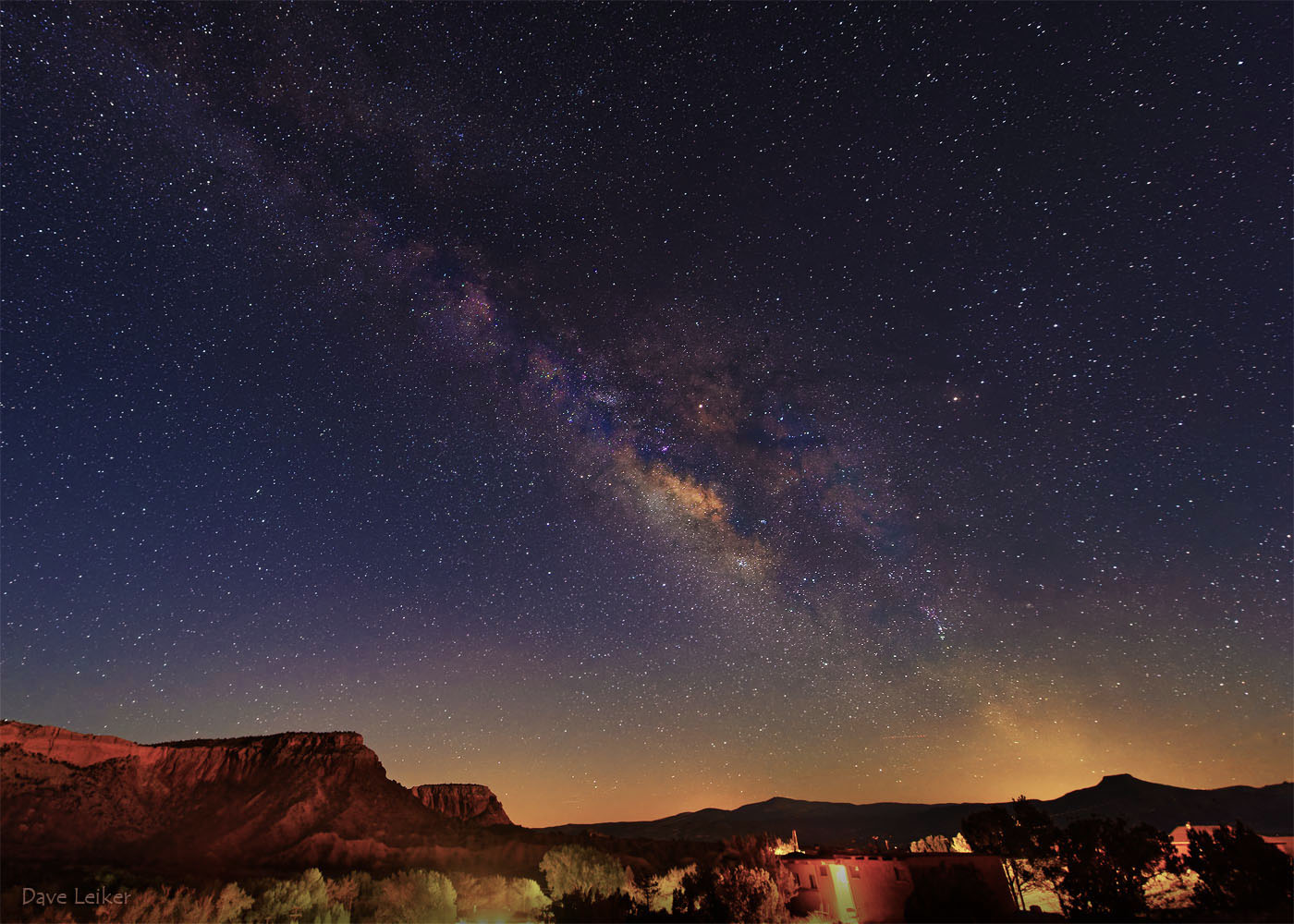
The college semester has closed. We are now “on break.” And I want to take advantage of the gap by making a break with our family tradition, just this once, and to relish the pause my job contains when the students are off campus. I’m especially happy to be breaking bread with Best Beloveds this holiday season. Before the year closes, I plan to enjoy long breaths in high altitudes and to look at the Milky Way.
May your breaks and breaths be of the best and most nourishing kinds.
I have read reams of advice and guidance on how to choose poems for a collection, how to order them, whether to construct an arc in a poetry collection, and so on. I have also had the excellent personal input of good poets and mentors in the process, all of which leaves me deeply grateful and still stumbling when I once again begin the process.
One challenge is excess. I have put off revising for collection for a few too many years, and now I need serious critique and culling; thus, I didn’t know where to begin (as I mentioned in an earlier post). Given a problem, however, creative people tend to develop a method. I chose the simplest one I could come up with: start by pulling all the published work that is not in my previous collections, and see what happens.
What I will discover–in fact, in the early process, already have noticed–is that not all work accepted for publication in a poetry journal reflects my judgment of my strongest poems. Then, too, down the road I will pull some good poems from the evolving manuscript because they do not play well with the others…that is, in terms of tone or subject. As I add things up, I’ll begin to see what might be missing or needed, or I’ll be reminded of an unpublished piece that ought to be included.
This work is exciting. And it takes weeks or months. It will change; my feelings about what I want the collection to say will change.
And then the reading will begin. I will read and re-read the book-as-it-exists and ask generous friends to read and critique the whole.
If I were a more ambitious and organized person, I might approach the manuscript process differently–certainly sooner, and possibly with more of a projected arc in mind from the start. I know that putting together another manuscript will be yet another learning experience, different from chapbook-writing, different from the past books I have composed. The poems differ, too–of course! My perspective, my physiology, my experiences, even my environment, though I have lived in the same house for 20 years.
At this stage, a month or so into the process, a coherence begins to occur. Yes, a book exists in the piles of poems. Probably two books, in fact–but let me begin with abundance (or perhaps, with diminishment) and proceed from there.
During my adolescence, many of my friends came, if not from “broken homes” (the term we used in the 1970s), at least from emotionally-difficult family situations. Why that is, I don’t know–but it seems the town I lived in had quite a few struggling families in it. The era was a difficult one, rife with drug use, protests, political upheaval; and people were wrestling over attitudes concerning sex and feminism and birth control, dealing with a recession, and uncomfortable with the nation’s changing demographics.
I loved my friends, most of whom were female and, in one way or another, outsiders among our peers. I loved the nerdy bookworms who appreciated my goofy, bookish sense of humor. I loved the slightly wild risk-takers who encouraged me to do the kinds of things I might otherwise avoid; I loved that they accepted me even when I decided to decline participation in their antics. I learned my boundaries and learned to be accepted for having boundaries, knowledge that is vital for anyone to discover–especially for a young woman.
My friends liked me because I listened to them. One of them referred to me as her psychologist. Through these young women, I learned about love, lust, yearning, sex, educational aspirations, the behaviors of men, family stresses, jobs, career hopes, personal values, fears, thrills, recreational drugs, alcohol, birth control, popular music, dancing, concert-going, lies, mistakes, and heartbreak. The only thing I can think of that has taught me as much is the reading of books, particularly poems, novels, and memoirs.
1974, New Jersey, USA
Years later, I asked my parents whether they ever felt concerned about my choice of friends. Did they ever worry that these young people were somehow bad influences on me? My dad paused a moment, thoughtful, and answered, “I don’t think we ever worried about your friends being bad influences on you. I kind of thought you were maybe a good influence on them.” I’m not sure that’s accurate; but looking back, perhaps my parents, or my family, presented a positive “model” for my friends who endured much more challenging home lives and had less support for education, career, and independent futures. And most of them have grown up to have successful lives–but that’s not because of me.
Four or five years ago I found myself reminiscing through writing poems; it was quite accidental on my part, and initially just a response to a Bruce Springsteen song. Influences: popular song, teen friends, the suburban environment of my youth. I ended up with at least 40 poems, of which there may be enough good ones to make up a chapbook collection someday. [In 2014, I blogged a bit about the project here.] I call them my Barefoot Girls poems. They provide, I suppose, one aspect to answering the question posed in my last blog. My friends’ experiences, flowing through me.
Someone recently asked me what my poetic influences were. I admitted to some confusion about the meaning of “influences” in this question. “Do you mean which poets wrote work that influenced my writing style, or do you mean what sorts of people or experiences or art had an influence on the things I write about?” I wondered. Or maybe which poets’ lives influenced me somehow? There are so many ways to interpret that question.
I did assume the person meant the noun form of influence:
the power to have an effect on people or things, or someone or something having such power. The kid next door is a bad/good influence on Kevin. She used her influence to get her son a summer job.
The Online Etymology Dictionary says that the word was originally an astrological term (13th-14th c) that described how stellar positioning acted upon human destinies. It designated a “flow” from the stars, but also “a flow of water, a flowing in,” from Latin influere “to flow into, stream in, pour in,” from in- “into, in, on, upon” (from PIE root *en “in”) + fluere “to flow.” What star streamed its power to me or exerted its effect upon my writing?
When I read a wonderful poem, I do feel the piece has exerted its power, that language, words, imagery have the strength to sway my emotional field. After reading an entire collection by a good writer, I sense a resonance–intuitive, unsettling. Sometimes, the work evokes in me a desire to do what that writer has done. That’s one type of influence. The list of such writers would be lengthy indeed.
~~
Other influences, though–amazing works of art, thrilling architecture, deeply moving music or dance–I could not exempt those as streaming into my consciousness, awakening me to something new. Or human beings, especially those I love best.
And places. Environment matters to my poetry. In the city, I wrote city poems. In the country, I write country poems. After I’ve traveled somewhere new to me, I conjure the place in my mind and it exerts its own kind of power on me.
Influences, in my writing life, are generally bound to experiences; I’m not a very imaginative writer. “A change in the weather is sufficient for us to create the world and ourselves anew,” wrote Proust. I am not contradicting myself in this paragraph. But I think I will have more to say on this topic soon, once I mull it over a little longer.
When a friend who grew up in Central America visited the USA for the first time, she arrived in New York City in January. She encountered the airport, security, passport service, crowds, parking lot, the traffic en route to Central Park, shivering a bit as she went in and out of heated places to the cold weather and back. But when she finally found herself walking the city streets with her host, at 3 o’clock in the afternoon amid the many noises of downtown, she stopped and stood still a moment–listening intently.
“But–where are the insects?” she asked.
~ ~
“We notice the losses,” says David Wagner, an entomologist at the University of Connecticut. “It’s the diminishment that we don’t see.”
Because insects are legion, inconspicuous and hard to meaningfully track, the fear that there might be far fewer than before was more felt than documented. People noticed it by canals or in backyards or under streetlights at night — familiar places that had become unfamiliarly empty. The feeling was so common that entomologists developed a shorthand for it, named for the way many people first began to notice that they weren’t seeing as many bugs. They called it the windshield phenomenon.
While I do not expect to hear insects in New York in the dead of winter, the “windshield phenomenon” is something I noticed here in the USA during the 1980s. I recalled long cross-country trips in the car with my parents and the constant need to clean smashed bugs from the window and front bumpers or grilles, back when I was a child. And somehow, once I was driving, that task became less necessary. I decided that pesticides such as DDT were responsible for fewer bug-splats, but I did not consider the long-term ramifications that Jarvis describes:
Insects are the vital pollinators and recyclers of ecosystems and the base of food webs everywhere… In the United States, scientists recently found the population of monarch butterflies fell by 90 percent in the last 20 years, a loss of 900 million individuals; the rusty-patched bumblebee, which once lived in 28 states, dropped by 87 percent over the same period.
~~
Right. And a loss of bees leads to a loss of any plant requiring bees for pollination. A loss of beetles and dragonflies and mayflies and even the much-maligned mosquito leads to birds that starve, not to mention amphibians, reptiles, and some omnivorous or insectivorous mammals–particularly vulnerable bat and marsupial populations. The bottom of the food chain matters more than most human beings ever stop to consider.
One part of this article mentions the important, even crucial, role of people who study nature without having gotten degrees…the so-called amateur botanists, lepidopterists, and hemiptera observers. Another reason I find this article so interesting has to do with how Jarvis employs thoughtful, reflective moments in the piece, while maintaining a journalistic stance:
We’ve begun to talk about living in the Anthropocene, a world shaped by humans. But E.O. Wilson, the naturalist and prophet of environmental degradation, has suggested another name: the Eremocine, the age of loneliness.
Wilson began his career as a taxonomic entomologist, studying ants. Insects — about as far as you can get from charismatic megafauna — are not what we’re usually imagining when we talk about biodiversity. Yet they are, in Wilson’s words, “the little things that run the natural world.” He means it literally. Insects are a case study in the invisible importance of the common.
Maybe it’s my personal inclination towards the natural observation, but I find some resonance here. It’s what I tend to do when I write poems–to celebrate the common, or at any rate to notice it. I notice, too, the diminishment.
Some readers have told me my poems feel sorrowful, and maybe that sense of diminishment hunkers behind even the more celebratory poems I write. That’s an idea worth my consideration as I revise my work. Maybe Diminishment should be the title of my next collection.
Anyway–read Jarvis’ article. You will learn much. Even if you’re one of those folks who “hates bugs.”





 ann e michael