9th as new

Last week, I tutored a student on a music appreciation paper in which she was asked to review a concert-going experience. Her family background is culturally rich–but not rich in terms of the Western cultural canon. She had heard the name Beethoven; but until this class, as a sophomore in college, she had never listened to his music. She attended a concert that featured a Liszt sonata, two brief Schubert pieces (Ständchen and one other), and Beethoven’s Symphony No. 9.

Because I cannot remember not knowing Beethoven’s music, I kind of envy this young woman’s revelations in the concert hall; what must it be like to hear Beethoven’s 9th symphony, for the first time, as a 19-year-old? I may not be familiar with all of the master’s works, but my parents had some of the symphonies on vinyl back in the 1960s. We listened to classical music on the radio and in church; even commercial television featured famous musical phrases. My sister and I liked dancing around the living room every weeknight to The Huntley-Brinkley Report’s closing theme (2nd movement Beethoven’s 9th).

portrait by Joseph Karl Stieler

portrait by Joseph Karl Stieler

~

Initially, she and I went over the structure of a review and how it resembles an analysis paper. She had used musical terminology reasonably well, and we had grammar and mechanics to work on. What she liked best, she said, was the part with the singers. She found the third movement “a bit boring. I kept wondering if this was the end.” But the fourth movement excited her: “It was really like a celebration or something, and you could see the expressions on the faces of the singers and the musicians, that they were so into it. Like, you kind of wanted to stand up for it, you know?”

Yes, I know–that’s how I have felt when I have heard the piece in concert.

~

Our discussion went on after our work on the paper’s mechanics had ended, though, because she asked me why courses like this one are required for college. Her major is early childhood education, and she says her parents asked her how a course on classical music has anything to do with teaching 4-year-olds.

It turns out I had more to say on that than I realized. Bless her heart, this student was eager to listen. [I have to admit that isn’t as common a response as one might wish.] Many of my friends, I said, are teachers or former teachers; they are among the smartest, most open-minded and curious people I know. They pay attention to contemporary culture and they read about history. They get allusions and references and make clever jokes and know all kinds of things and also, they admit what they do not know and are eager to learn about. They’d play Beethoven for kindergarteners and let them dance to the fast movements and ask them how it feels to hear the slower, sadder late quartets. They might have the children finger-paint to Beyoncé or twirl like leaves to Vivaldi’s “Autumn” or use round colored stickers to make their own “Starry Night” pictures or recite a poem that’s fun to say out loud. Culture is education.

And there’s more, I told her, that has to do with you as a person who understands the culture you are part of. You have to know about politics, especially local and state politics, because teachers need to understand how legislation and budgets can affect income and careers. You might feel uncomfortable in your job if you don’t get your colleagues’ allusions or feel you cannot participate equally in their conversations when the subject turns to culture, history, museums, music, art, policies and fiscal issues. It is fine to admit what you do not know or have not yet been exposed to–but it helps to know where you stand and to show you want to learn.

You’ll learn from your students, too. If you really want to be a good teacher, I said, you will never want to stop learning. Maybe you will reach a point where you don’t need to know a whole lot more about Beethoven, but you will want to explore other subjects. So when you take the required fine arts courses, the required literature courses, the courses in philosophy and math and all that other stuff, realize how all of it will get into your brain somehow, maybe touch a nerve here or there, and help you become a terrific teacher.

Besides, isn’t it beautiful? Even the boring parts…have you ever experienced anything like that before?

“No, honestly,” she said. “I wasn’t sure I was up for it, but it was worth it.”
Familiarity & awe

The region I live in is not known for dramatic landscapes–no big sky, no ragged peaks or ocean shoreline, no palms, grand flora, impressive architecture. Nonetheless, there are days such as this one when my familiar commute fairly glows with beauty. In the long slant of mid-autumn morning sun, the half-harvested soybean fields shimmer under frost: beige never looked so glorious. Even the big agricultural gleaner glimmers with ice crystals. The sky’s washed with upswept cirrus clouds, and backlit dogwood leaves cling like maroon pennants to silhouetted branches.

Perhaps my aesthetic appreciation of the view is due to a neural release of dopamine responding to images processed through my eyes’ rods and cones; that understanding, if true, in no way lessens my awe.

As I head toward the campus building, the clamorous urgency of wild geese momentarily catches me by surprise. Welcome.

The knot of contrariety

~
Sometimes, human beings feel contrary: irritable, grumpy, stubborn. It does not matter that we may be well-versed in rational critical thinking, or aware that a Zen approach can offer balance, or that an understanding of the psyche, or studies of consciousness, or even immersion in some sort of spiritual practice might help us to clear whatever baggage happens at this moment to burden us.
We’re just cranky, and for the moment, we feel justified in our contrariety. Here’s Walt Whitman:
I too knitted the old knot of contrariety,
Blabb’d, blush’d, resented, lied, stole, grudg’d,
Had guile, anger, lust, hot wishes I dared not speak,
Was wayward, vain, greedy, shallow, sly, cowardly, malignant;
The wolf, the snake, the hog, not wanting in me,
The cheating look, the frivolous word, the adulterous wish, not wanting,
Refusals, hates, postponements, meanness, laziness, none of these wanting…

~

What appeals to me in the passage above is not so much Whitman’s confession–any of us might admit to others our foibles and our sins–but the extravagant and beautiful mode of his expression: lists, near-synonyms, expansions on meanings, metaphors following the verbs, nouns, and adjectives, “none of these wanting.”

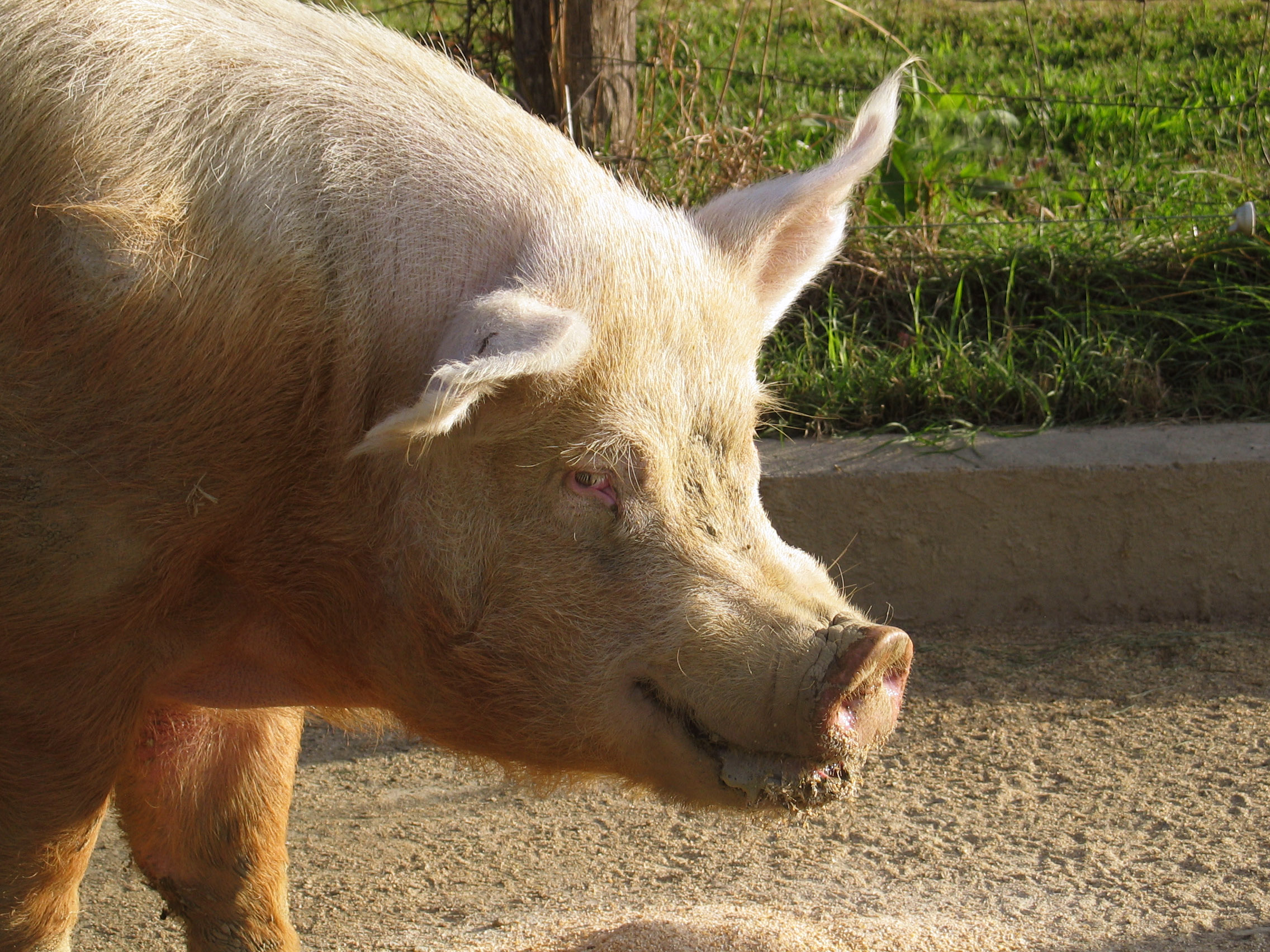
128-2848_IMG

Hog… [His name is not Walt]

What appeals to me, really, is the way these lines make the litany of our petty evils so beautiful to behold. Perhaps that indicates that the aesthetics of a poem move the purpose beyond mere description and into the realm of art. I will be reading more about this in the coming week as I make my way through the book Feeling Beauty: The Neuroscience of Aesthetic Experience by G. Gabrielle Starr.

~

Meanwhile, I am threading my way through the thorny knottiness of everyday life, trying to shed my contrariety as I proceed.

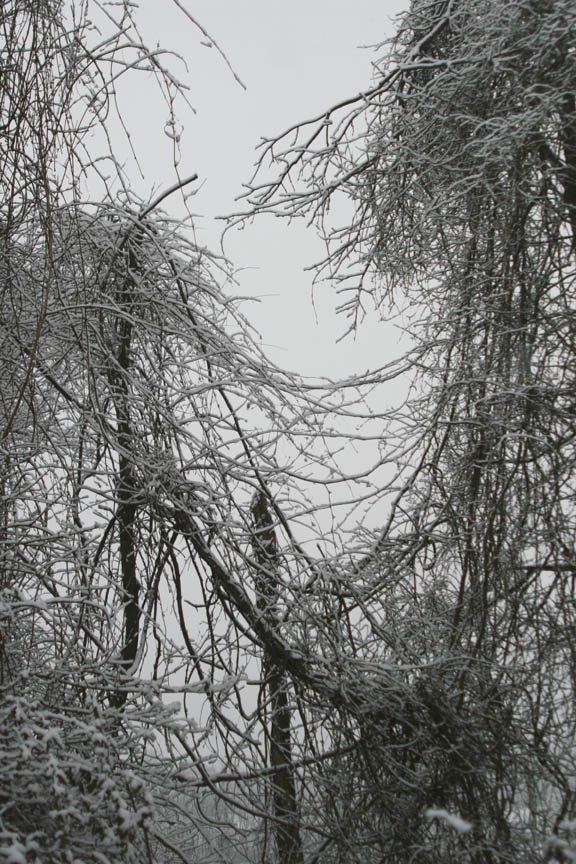
Knotted vines

Knotted vines

Beauty & awe–briefly

I have been reading lately (currently Leonard Shlain’s Art & Physics and Donald Revell’s The Art of Attention: A Poet’s Eye), but not much inspired to write. Instead, I work in the garden or sit on the porch and listen to birdsong.

I muse upon beauty. Partly such musing falls under the pursuit of aesthetics: the world of my garden becomes especially beautiful in spring. The sounds birds make seem beautiful to my ears. Water droplets on emerging leaves appear beautiful in the morning light.

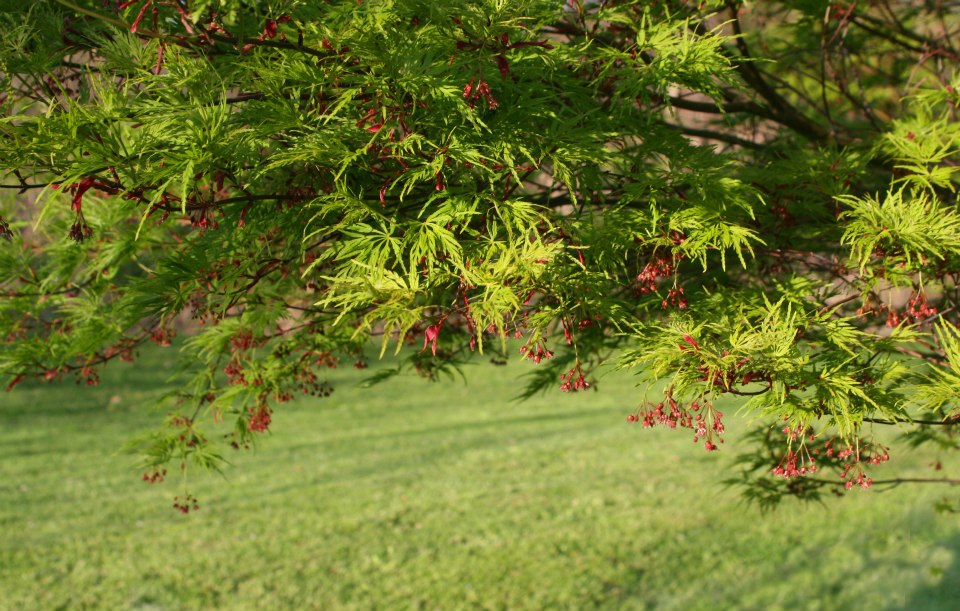
japanese mapleThese are phenomena. The world of things I can take in with my senses, process through my body and brain, and create–out of whatever “mind” may be–a concept of the beautiful. The phenomena are not physically affected by my categorization. It is I who am changed, I suppose, by virtue of my aesthetic appreciation of the beautiful.

I am reminded of Kierkegaard:

“Love does not alter the beloved, it alters itself.”

Aesthetic appreciation does not alter the thing-in-itself, it alters the person who finds beauty in the thing-in-itself. If this is so, I am altered by my love of what I deem beautiful.

~

While I was searching the web to find the quote above–I couldn’t quite recall it exactly–I found the Kierkegaard quote on the blog of pastor Jonathan Martin, whose theology I can’t completely get my mind around but whose words (below) reminded me of the Bhagavad Gita:

The most beautiful thing a person will ever see may well also be the most terrifying.

Is this not the nature of true beauty? To not just be soft and delicate, but to be so powerful, so overwhelming, so altogether other from ourselves as to threaten? Beauty does not intimidate, but it can overpower. Beauty is a coup to our senses. It holds an unruly power over us. Beauty can move us, haunt us, carry us, compel us. To feel ourselves beholden to the raw power of something beautiful is to be upended, not just inspired but assaulted.

On the lines of such thinking, we might find beauty in a tsunami, hurricane, earthquake, meteor strike the same way Arjuna feels paralyzed by the awesome beauty of the revealed godhead Krishna.

Perhaps that is why we often find ourselves fascinated by photos of natural disasters. Having lived for a couple of years along the northern end of Tornado Alley in the USA, I fear tornadoes. But they possess a kind of beauty in their awesomeness, if we can remove ourselves from the anguish we feel for people whose livelihoods, homes, and lives are destroyed by the big winds.

I wonder if human beings can ever bear that kind of awe; Martin says it transfigures us, Kierkegaard implies something similar, the Mahabharata and other sacred literature suggest that our bodies and our minds can withstand such revelation but cannot describe or truly comprehend it. It seems to me a kind of spiritual post-traumatic stress disorder! This is the “fear and trembling” of the psyche, whether the mind decides the experience is physical, mental, spiritual, or religious.

And that manner of beauty is not aesthetic.

Martin later writes, “Objectively speaking, the beauty of God is already present in our beloved, whether we recognize it or not. Rather, when we encounter beauty in another person, we are changed–we are transfigured…[those we love] do not become beautiful because we recognize their beauty; rather their beauty makes us beautiful.”

Is this experience awesome or aesthetic? Does the beauty of the azalea, the lilac, make me beautiful because I recognize it as such? Am I altered, fundamentally, in my admiration for an artist’s work, a poet’s words?

~