Once again, ambition

Dave Bonta, he of the Poetry Blog Digest, Moving Poems, via negativa, Dave Bonta blog, and more, recently posted a thoughtful essay about personal poetic ambitions vs. careers in the poetry field (see https://davebonta.com/2023/10/ambition-without-careerism/). The link’s here because I encourage you to read it! It is a topic many of us poets return to occasionally, especially when we find ourselves wondering things like why bother and who cares whether we write or not or whether we ever get any good at writing poetry…and whether poets should be paid better, or at all…and whether or not poets benefit by being attached to universities.

In fact, when I read Dave’s post I immediately recalled having written similar ideas, though from a different perspective, on this very blog some years back–and probably more than once. The concept of ambition in poetry, and how one defines that word in relation to poetry, is something I first encountered in Donald Hall’s 1988 book Poetry and Ambition–still in print from University of Michigan. I read this book of essays in 1991, in between changing diapers and coordinating naptimes for two children under the age of four. It was difficult to feel ambition about career at that time, and a career in poetry was ever a pipe dream; but the notion that a writer could feel ambitious about the work she might be doing in learning about and endeavoring to craft really good poems, even should she fail most of the time, felt encouraging to me. I recommend this book, as there’s also a good deal one can find to disagree with in it, and debate is useful for thinking.

Fast-forward to today (time does seem to move in fast-forward), and I find myself retired from a career on the fringes of academia, where I taught composition to students less-prepared for college and ran the writing center at a university. But I did not teach poetry or creative writing and was staff, not professorial/tenured; so the need to be career-ambitious through poetry was null. That suited my personality well. Maybe too well. Yet somehow I managed to get a reasonable amount of my work published (see the sidebar of this page) and to get several chapbooks and books into print (see the My Books tab here). I had my own form of ambition.

What now, I wonder? I have so much work to revise! Recently, I submitted an experimental, historically-based chapbook to a publisher, and I’m working on getting a new book of older work, though not as old as The Red Queen Hypothesis‘ poems, into print. Will I spend the next few years just catching up? Possibly. Is that “ambitious”? Nah, just means I wasn’t ambitious enough to get to it earlier!

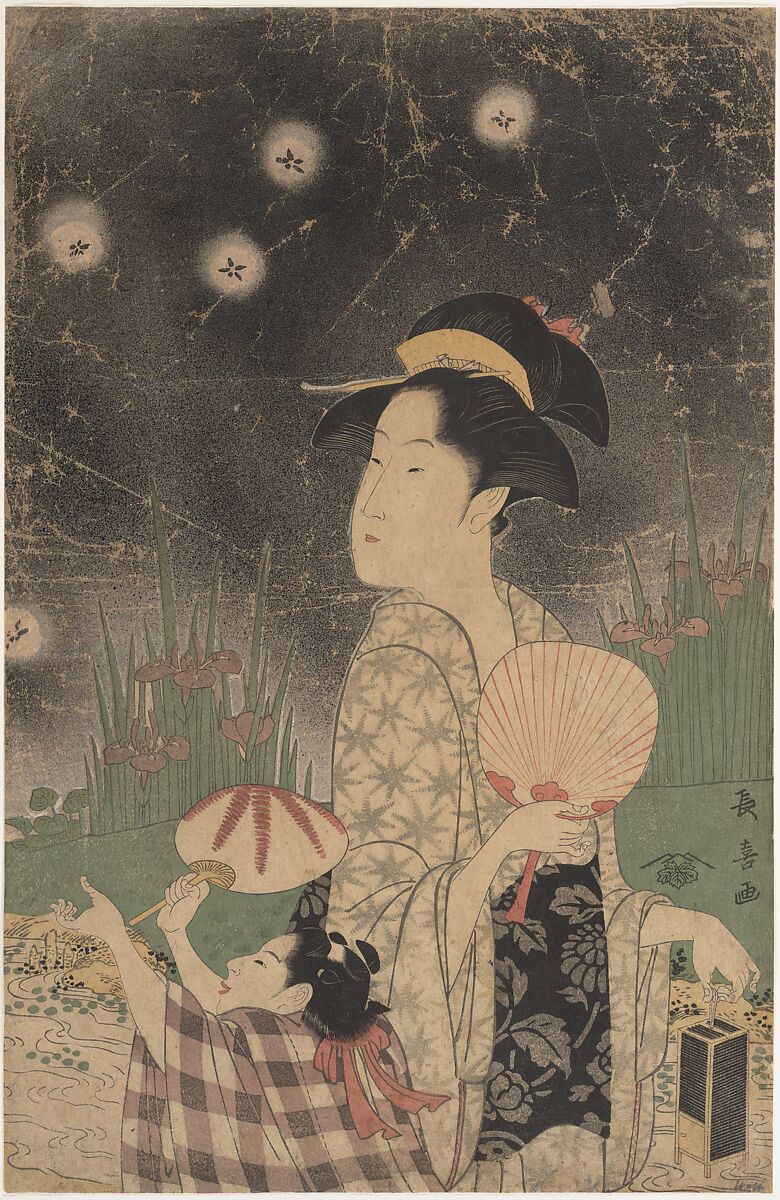
Lightning bugs

We didn’t call them fireflies when I was a child, though now I kind of prefer that name for the flittery flashers that decorate the summer nights. There are fewer this year, probably due to variances seasonally–that drought we’re still not completely recovered from, followed by some rain and hail, and slightly cooler June temperatures than usual thanks to the haze of smoke from wildfires to our north. Peak season for fireflies in my region has typically been right at the solstice. Looking out my window this evening, I remark on a paucity of flashes in the meadow and over the lawn. Fewer Lampyridae this June. Things can change from one year to the next.

Change equals living: no life without alterations of one kind or another. My current situation is one of those so-called Life Events: I have retired from my position at the university where I worked for about 17 years. I suppose it is A Big Deal (see how I’m capitalizing?), but I must admit that so far it doesn’t feel terribly fraught, major, or even bittersweet. It just feels appropriate. Part of the reason for that is that I’m not a person who has defined herself by her career. Thank goodness, since it was a fairly modest career. I enjoyed my work with students; and I was part of a terrific team of earnest, funny, and supportive folks. So yes, that’s something to miss. However, I have many interests beyond work at the college. Time to pursue those, methinks. Time to spend with my mother as she wanes. Time to travel with my husband and on my own and to visit our far-away offspring. Of course, there are all those things that will keep me unexpectedly busy…gardening, house maintenance, trying to get the metaphorical ducks to line up (as if they ever will). And then, poetry; I want to devote some serious brainpower to revising, reorganizing, drafting, reading, learning more about the art I love. Maybe even submitting more work, putting together another manuscript or two. Who knows what changes are ahead?

~

When I note the fewer numbers of fireflies, I do not mean there are none. It’s just that some years, by June 18th, the back of our yard simply dazzles; we don’t need fireworks! Because they pupate in dampness, such as in rotting logs or underground, and because they need moist earth in order to feed (on soft-bodied invertebrates, according to the Xerxes Society’s informative page here), a spring drought can limit their numbers. And I miss them, the way I miss the little brown bats and the green ash trees. Those types of changes may be more or less inevitable, but I can’t help thinking that such transitions feel less timely than my departure from running the university’s writing center. The ash and the bats are still around, but in vastly decreased numbers. I hope the lightning bugs bounce back.

~

Art from the Metropolitan Museum: Eishōsai Chōki ca. 1763

Vocation, avocation

Somewhere recently–was it the Sunday New York Times?–I read an opinion essay about how recent surveys of US citizens indicate that we have fewer hobbies than we have had in years past. The columnist wondered whether that lack is due to a zeal to be the best at whatever we engage in–the best jogger we can be, the most avid cyclist, the best collector, knitter, paper-crafter, woodworker, violinist, what-have-you. She suggested we’ve somehow lost the joys of being hobbyists: amateurs who do or create something because it is fun or relaxing, or because trying to learn a new skill makes us feel good. A true hobby is something we don’t have to be perfect at, because that is not the point.

As my students wrestle with the tasks of college and their concerns about their futures, the concept of vocation arises often. What to do with a life? Earn enough money to live reasonably comfortably, even if the job is not a passion? What if it’s not even satisfying? Should people choose a bearable career and find enjoyment in avocations? Or persist at what they love even if society doesn’t always reward the path they’ve chosen? Or–the options are legion.

~

I believe in vocation as passion, and I also practice hobbies. My career is in higher education, and I enjoy and learn from my job. My vocation is writing, particularly writing poetry; my passion lies in that direction more than any other, but poetry has not been a career path in my case.

~

My hobbies have evolved over the years. For decades, gardening has kept me happily occupied out of doors–but I have no need to become a Master Gardener, and my gardens are often minor failures in one respect or another. The garden, however, soothes me, distracts me from anxieties, helps me to become a better observer, teaches me much. When learning about plants, I got interested in botany and wild flower identification, so I am a more informed hiker and nature-saunterer than I used to be.

IMG_5633

garden photo: pepper, sassafras leaf © 2018 by Ann E. Michael


Photography’s also a hobby I pursue, an interest of mine since my late teen years (back before digital). The view through the frame has always intrigued me, as well as the opportunities that different lens lengths offer the photographer as to framing and focus. I especially enjoy macro lenses. It’s fun to zoom in closely on insects, flowers, and small areas of everyday objects. Photography encourages different types of observation.

The earliest interest I can recall having is art: painting and drawing in particular. From the time I was tiny, even before I entered kindergarten, I loved to draw and paint and to look at art in books and museums. During my teen years, I studied art at Fleisher Art Memorial in Philadelphia and headed to college thinking I would minor in the fine arts. My talent did not match my aspirations, and a thorough self-analysis at around age 20 led me to recognize I could be creative more successfully in other ways…by that time, I was writing more seriously than I was painting.

But now? I have taken up painting in acrylics. Mostly sketches of clouds. There’s no pressure on me to do well; I can paint many mediocre pictures of clouds and feel relaxed in the process, meditative, observant, a casual learner.

cloudsketch

mediocre acrylic sketch of clouds, by Ann E. Michael

~

As I wrap up this post, I realize that my career and my hobbies have encouraged observation from multiple and new perspectives. And my vocation? Poetry practically relies upon the writer’s ability to switch into creative and imagined points of view, as well as to have the opportunity for closely-observed objects and experiences.

Vocation, avocation, passion, career. I count myself lucky.