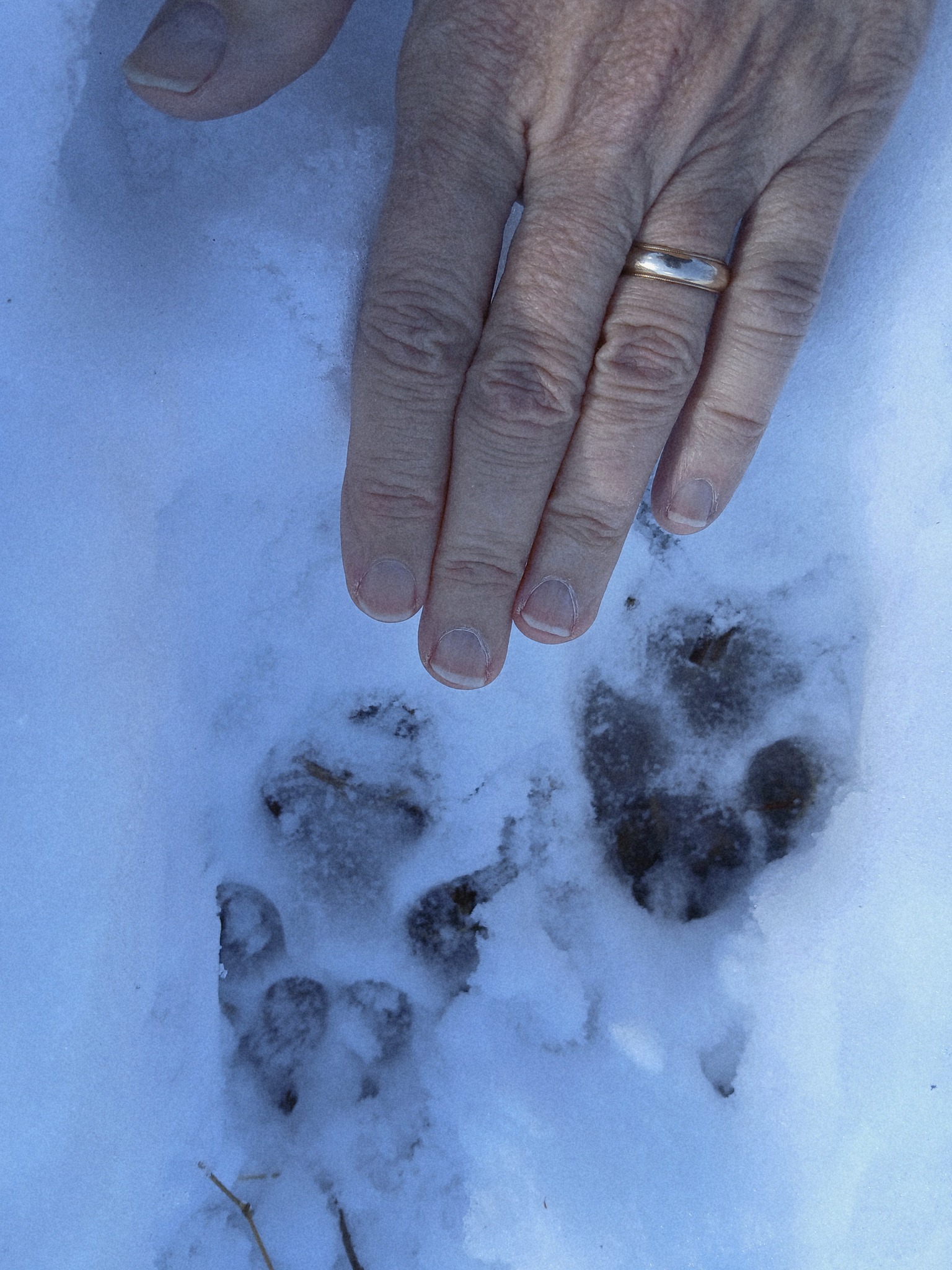
The other day, we noticed a coyote limping down the meadow. We hear them now and then, at night, but we seldom see them; and this one was out at noontime. A bit unusual. I felt concerned about it as it moved off into the undergrowth at the field’s edge.
Out of curiosity, I guess, the next day I traced its tracks from the treeline between our property and the next one, down through our meadow, into the woods beyond our lot. Mind you, I am not an animal tracker. Furthermore, our snow is absolutely criss-crossed by tracks: deer, rabbits, humans, birds, squirrels, cats, and the occasional owl-hit. It took a little looking to determine which tracks had been left by the coyote, but I had seen it taking the deer path through the dead weeds, so I started there. It wasn’t really too difficult to determine, despite paw prints from all those other critters. The prints resemble dogs’ tracks; and there aren’t spots, like those you see with a fox, where the animal suddenly prinks, leaps, or lunges its nose and forepaws into the snow while chasing field voles. Also? The prints were too big to be a red fox.
An aside–I recently read Catherine Raven’s memoir-ish book Fox and I, which I liked very much and from which I learned a more than a few fox-related pieces of information. And some descriptions of winter in Montana, which is too much winter for me, especially after this latest snowfall in Pennsylvania. But anyway—
The average cat weighs 10-12 pounds, the average red fox 30-ish pounds, and eastern coyotes in our region can be 45-55 pounds. This one was, I think, a male because it left quite heavy tracks, though possibly it was putting more weight on three legs because the front right paw was injured badly enough it never set that paw down. I recall once when our family dog got caught in a neighbor’s “soft-paw” fox trap. As soon as I got her loose, she ran for the house, and I noticed her prints in the snow–three heavy prints and a lighter one since she was favoring one foot. This coyote wasn’t using its leg at all. In a few places I could see a swash on the snow surface where the snow was deep enough that the coyote’s foot had skimmed it. The circuit led into the woods and I pressed no further.
That’s about the extent of my animal-tracking knowledge. It was, however, an interesting departure from my usual winter walk, and a nice day for walking. Everyone else in the county was out buying gasoline and groceries because a big storm was in the forecast for the weekend. Which did arrive (the storm, I mean. Well, also the weekend.).
I’ve been working on new poem drafts lately, after weeks of barely any new writing, focusing on revision instead. What do you bet that coyote, or its tracks, or at very least, the snow, will show up in at least one new draft?
~
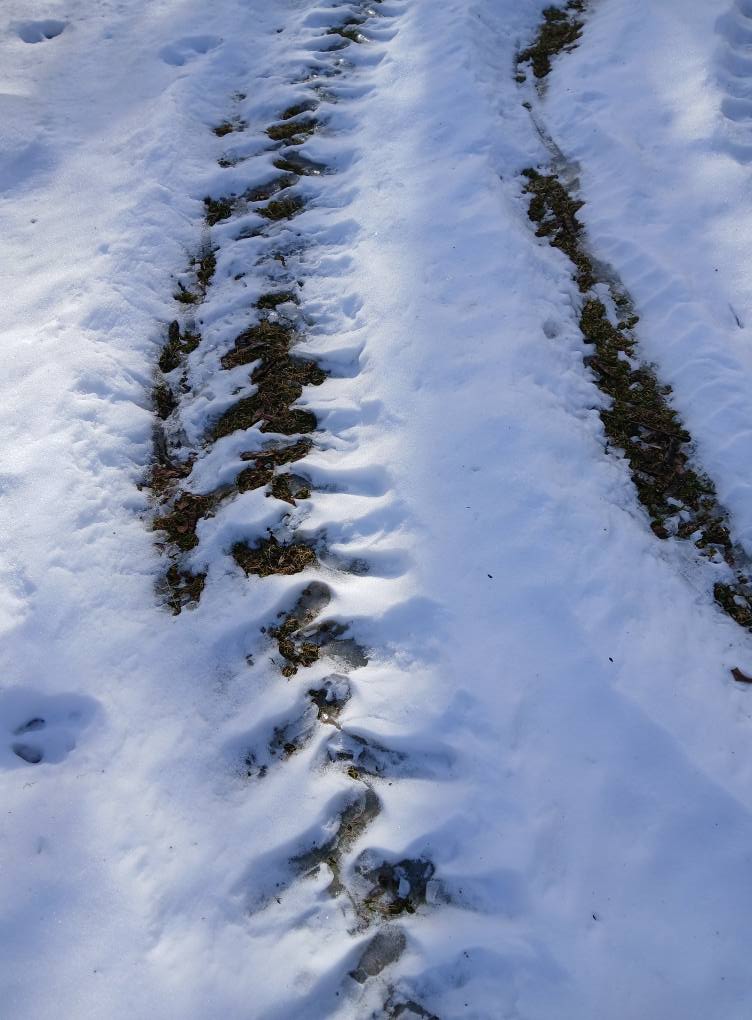
FYI: Here’s another set of tracks commonly seen at my house in winter:

 ann e michael