Something like hope

Wintry weeks grind along like the noisy snowplows tearing through sheets of ice this morning. At least we are having a winter, unlike some years. I may not love winter–especially the short, grey days–yet I live in a region that needs it. Indeed, it is February (alas); but in a few weeks I’m liable to notice snowdrops emerging from the dirt. Anticipation stirs my heart. It feels something like hope, although hope is something I feel less inclined to believe in every year. I guess my problem with hope is that it feels like there is human agency invested in the concept, and as I age I recognize how little effect our wishes, hopes, and prayers have upon anything.

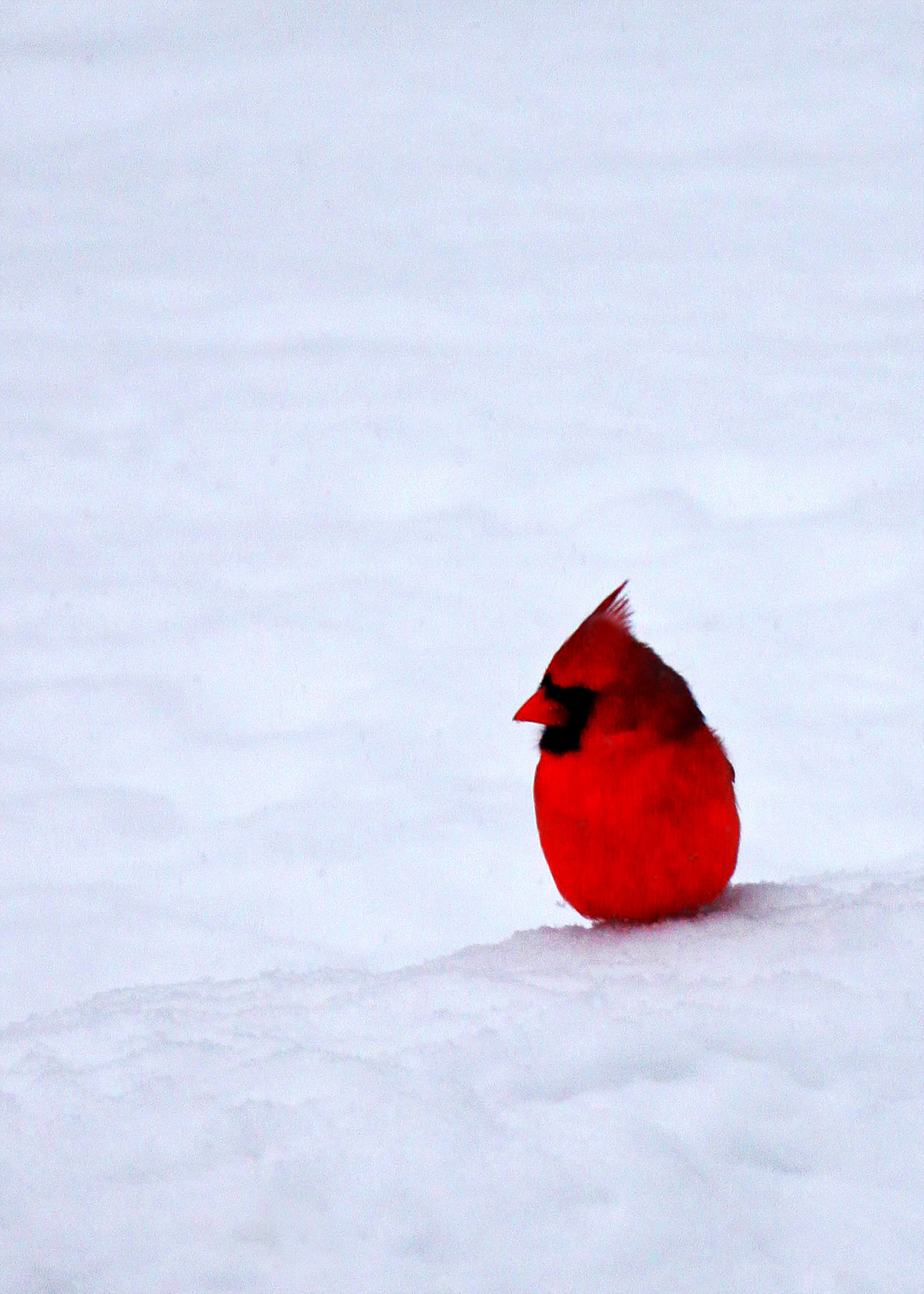
Photo from Feb. 9th of last year; as of now, no blossoms yet!

The snowdrops emerge all the same, until such time as they can no longer withstand changes in their environment. There is some comfort in that, for me.

~

Dave Bonta recently reposted (on his Substack and Bluesky accounts) a post by Guy LeCharles Gonzalez called “Why Keep Blogging in 2025?” It’s a lengthy piece (for a post) but brings up some worthy points. He closes with this paragraph, one that I find I heartily agree with–it is why I do what I do:

“Before they became walled gardens, social networks were great places for discovery, and although posts with links don’t get the visibility they used to on the bigger platforms, you shouldn’t be blogging or socializing for scale anyway. Defy Big Social and share those links to your own posts, and to posts you’ve enjoyed. Blogs only die when they’re abandoned by their owners.”

~

Not all of us need to be blogging for scale. That’s a capitalist, celebrity- and status-focused thing that sucks the love and beauty out of poetry, prose, and the arts. We shouldn’t be creating for Big Bucks or Pulitzers but because writing/art is what we love and what we do.

~

Speaking of art…here are three ekphrastic poems of mine, just published in Unleash Lit, which is an online journal that uses a Substack platform.

https://www.unleashlit.com/p/ekphrastic-poems-by-ann-e-michael

Considering the collection

Recently, reading through Dave Bonta’s Poetry Blog Digest, I noticed a few posts on stalling with a manuscript and subsequently clicked on those links and read what other poets have to say about it. Mmm, yeah. I understand the challenges. I have kind of stalled on my next book, too. Or shall I say, neglected my work on it. In fact, today–when I finally thought I had some time to review the draft ms–I could not find it. I had forgotten where I put the printout.

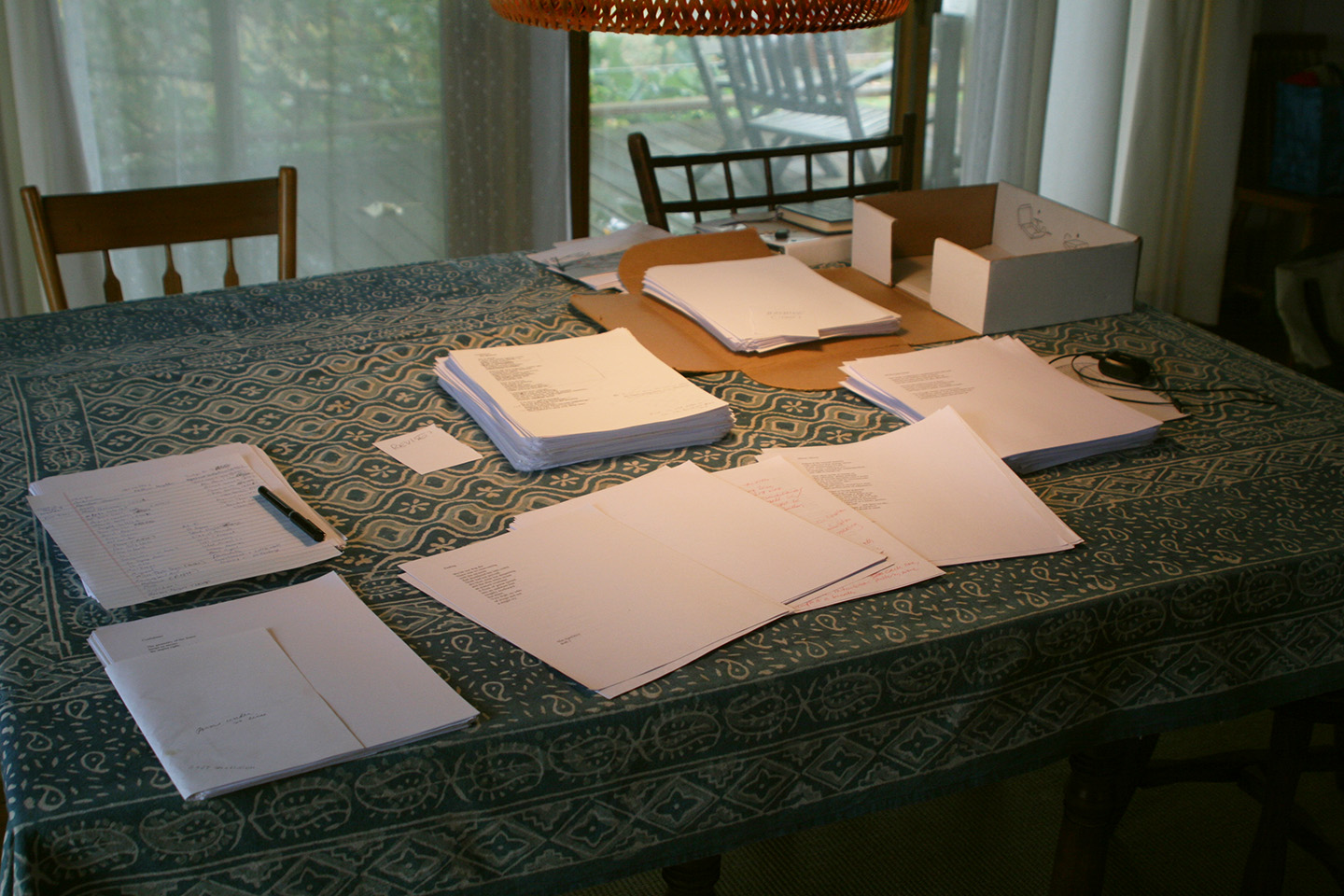
Yes, it resides on my computer. But I prefer to work with hard copy when structuring a collection. And where was the hard copy? I wasted a good half an hour seeking it but finally noticed it peeking from under a pile of other papers. This is not a sign of determined intent.

Why do I allow it to languish? There are so many possible answers to that. The poets who posted (see above) had structural concerns, other things going on in their lives, also a bit of second-guessing and self-doubting. I had eye surgery and covid, but those circumstances did not keep me from drafting new work, only kept me from putting the book together. I recognize now that these tasks involve, for me at least, very different processes, and maybe that is why I’m stalled but not “blocked.” I mean, hooray, I’m writing poems! Which is a process I enjoy, along with revising. But drafting and revising revolve around the process of an interior reflection and creative surge. I wish I could feel that way about putting this collection together, but I don’t. The manuscript-making process is lengthier, broader in scope, requires more critical analysis and a consideration (to a degree) of audience/readership that an individual poem does not. It asks questions of chronology, topic, and forms in aggregate that matter much less when working on one poem at a time.

Perhaps that means I’m not ready to put this collection together yet. Or that I have chosen the wrong theme or mix of poems, and I should reconsider the entire project.

*le sigh*

Maybe I need to take another amble around the garden to clear my head. It’s nice to have that option. It feels more like rejuvenation and less like…procrastination.

~

Throwing mud

This week, I got the potatoes in the ground; last week, it was spinach. In between, a lengthy late-March cold snap and yes, more rain. But also a visit from a Dear One and a trip to parts of Pennsylvania I seldom have had reason to explore. Although I have lived in PA’s Lehigh Valley for nearly 40 years–longer than I have lived anywhere else–I confess a lack of familiarity with many areas of the Keystone State. Philadelphia and its suburbs I know well, and Reading and Lancaster, to a lesser degree; and our family often visits Gettysburg. We travel west and north to go camping now and then. I’ve been to Pittsburgh a few times and seen Falling Water and the Cathedral Trees and both branches of the Susquehanna River. Penn State just twice, once when I was chaperoning high school sophomores to History Day competitions.

Pennsylvania is a big commonwealth: 46,055 sq miles. It’s a good place for poetry, though I leave it to poets such as Harry Humes and Jerry Wemple (among others–looking at you, Dave Bonta) to explore its varied climate, geography, history, and culture. Mostly I stay within the confines of my own back yard, which is large and varied enough to inform me for a lifetime.

But the Dear One had planned to give her dad a pottery workshop with a well-known potter, Simon Leach, as a 70th birthday gift. That birthday fell during covid, however; the long-delayed weekend in Millheim PA thus did not take place until this past week. I have never placed my hands on a potter’s wheel (though I ought to try it sometime) and just went along for family togetherness and to visit the arboretum at Penn State, slightly out of season but still a very pleasant place to walk, by myself, on a cold but sunny Sunday. It rained on Saturday, so I sat by the fireplace at our B&B and read novels. Could anything be more perfect?

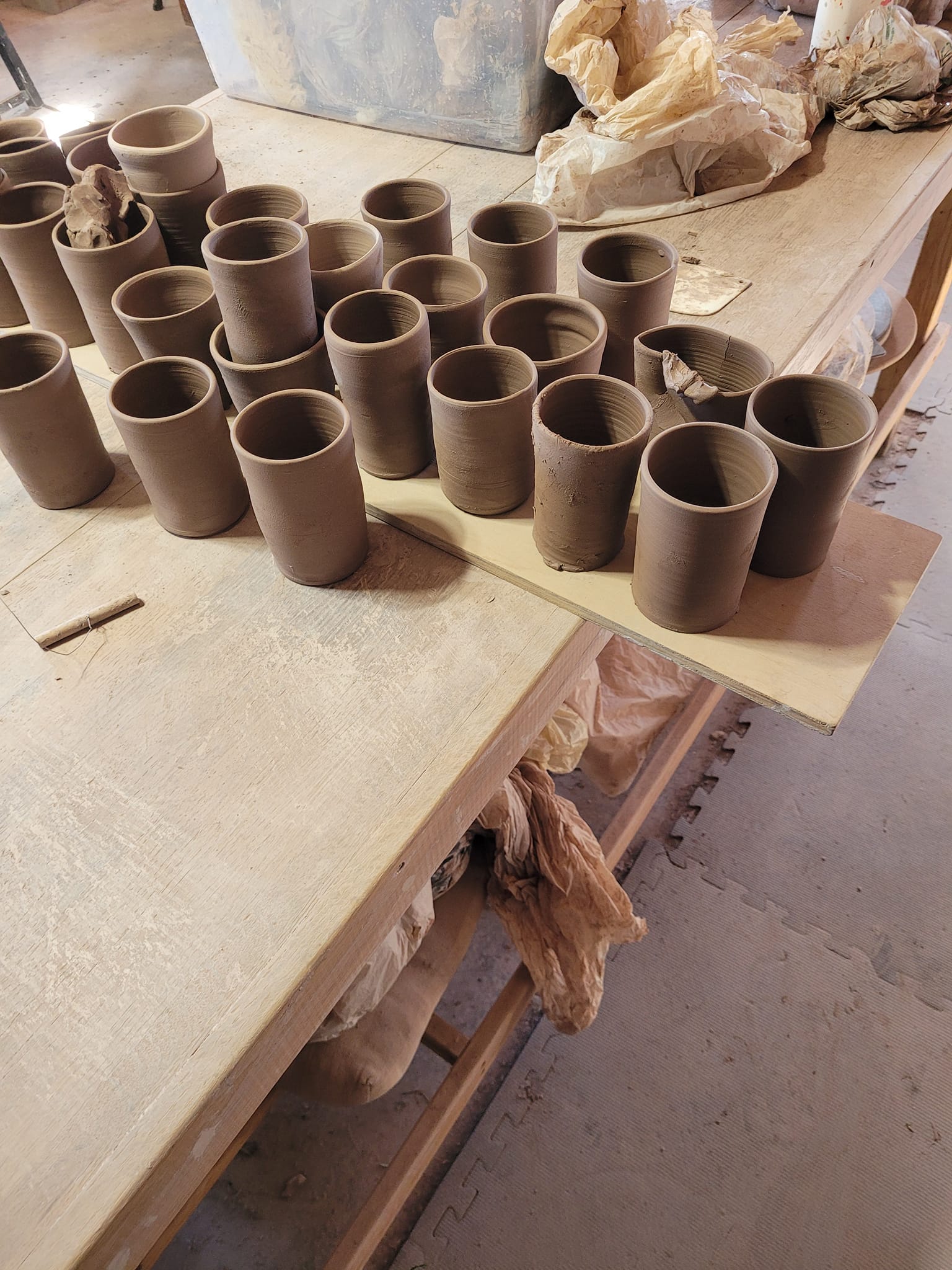
The task of Leach’s workshop was to practice making cylinders. It was a muddy job indeed. Here’s a photo of some of the student results. Dear One is quite adept at cylinders; indeed, she’s a good potter and sells much of her work, a skill she enjoys when she’s not providing emergency medical care to dogs and cats.

Leach uses the slogan “Keep practicing!” Yeah, that’s how you get to Carnegie Hall, right? But it is also how people get better at any skill, even those who are preternaturally talented in music, art, dance, etc. That includes writers. I have to remind myself that it is now time I got back to my routine of writing, revising, and the practice practice practice part of composing poems. The garden, the daughter, the travel, and the novel-reading have been splendid distractions, but as National Poetry Month approaches (April!), I ought to get myself back into routine.

A routine’s generally looked at as mundane–a tedious necessity. It needn’t be that way, I keep reminding myself. It can be as fun and messy and surprising (or frustrating) as throwing mud.

clay cylinder practice in Leach studio

Once again, ambition

Dave Bonta, he of the Poetry Blog Digest, Moving Poems, via negativa, Dave Bonta blog, and more, recently posted a thoughtful essay about personal poetic ambitions vs. careers in the poetry field (see https://davebonta.com/2023/10/ambition-without-careerism/). The link’s here because I encourage you to read it! It is a topic many of us poets return to occasionally, especially when we find ourselves wondering things like why bother and who cares whether we write or not or whether we ever get any good at writing poetry…and whether poets should be paid better, or at all…and whether or not poets benefit by being attached to universities.

In fact, when I read Dave’s post I immediately recalled having written similar ideas, though from a different perspective, on this very blog some years back–and probably more than once. The concept of ambition in poetry, and how one defines that word in relation to poetry, is something I first encountered in Donald Hall’s 1988 book Poetry and Ambition–still in print from University of Michigan. I read this book of essays in 1991, in between changing diapers and coordinating naptimes for two children under the age of four. It was difficult to feel ambition about career at that time, and a career in poetry was ever a pipe dream; but the notion that a writer could feel ambitious about the work she might be doing in learning about and endeavoring to craft really good poems, even should she fail most of the time, felt encouraging to me. I recommend this book, as there’s also a good deal one can find to disagree with in it, and debate is useful for thinking.

Fast-forward to today (time does seem to move in fast-forward), and I find myself retired from a career on the fringes of academia, where I taught composition to students less-prepared for college and ran the writing center at a university. But I did not teach poetry or creative writing and was staff, not professorial/tenured; so the need to be career-ambitious through poetry was null. That suited my personality well. Maybe too well. Yet somehow I managed to get a reasonable amount of my work published (see the sidebar of this page) and to get several chapbooks and books into print (see the My Books tab here). I had my own form of ambition.

What now, I wonder? I have so much work to revise! Recently, I submitted an experimental, historically-based chapbook to a publisher, and I’m working on getting a new book of older work, though not as old as The Red Queen Hypothesis‘ poems, into print. Will I spend the next few years just catching up? Possibly. Is that “ambitious”? Nah, just means I wasn’t ambitious enough to get to it earlier!

Emergent

emergent (adj.) late 14c., “rising from what surrounds it, coming into view,” from Latin emergentem (nominative emergens), present participle of emergere “to rise out or up” (see emerge).

etymologyonline: etymonline.com

~

Spring equinox.

Very soon–perhaps days from now–the vernal ephemerals will appear. The vernal ephemerals are early spring flowers that thrive low to earth before the trees leaf out: spring beauties, dogtooth violet, squirrel corn, bloodroot, hepatica, and others that look delicate but are, in fact, tough little survivors who have found their ecological niche in the cool days and weak sunlight just post-equinox. We could consider their resilience an inspiration.

Vernal ephemerals sounds to me like a term for sprites, will o’ the wisps, or angels, but it’s a scientific term. I learned it from Tom Wessels (here’s one of his videos on coevolution https://www.youtube.com/watch?v=hCAvBmY7ZgA),* but I have been fascinated by these plants for decades. I have always been the sort of person who walked around with my head either facing the clouds or scanning the earth beneath my feet. Hence, a reason so much of my poetry uses images from nature even when I am not writing about the garden, the meadow, the woods, the sea. My clumsiness a byproduct of my peculiar need to observe the natural environment.

Anyway, hepatica is about as close to a sprite as any blossom I know of.

They aren’t common where I now live. Here, the vernal ephemerals I see most often are trout lily, bloodroot, spring beauty, violets, coltsfoot, trillium. Probably a few others that I’m forgetting because the ephemerals haven’t popped up yet. Still far too cold and a bit dry after a month of snow cover. The emergent greens in my gardens consist mainly of winter weeds, and I’m happy even to see those. Because: green.

“Just a little green like the color when the spring is born” says a line in Joni Mitchell’s song. The green things rise up or out of what surrounds them, coming into view.

I have been keeping under the standing snow, leaf litter, and dross for three months, processing (as the jargon terms it) my father’s death and a new manuscript and a backlog of poem drafts and covid-19 with its attendant disruptions, limitations, and opportunities. But the snow has subsided from all but a few gullies on the north sides of hills; iris reticulata and snowdrops are in bloom, along with the winter-blooming witch hazel. There’s work to do in the garden. Poems to revise. National Poetry Month ahead (April!). It’s the 25th year for this literary celebration.

Time for me, like the skunks and the skunk cabbage and the little ephemerals, to rise out of my surroundings. And take up this blog again? It’s a start. A little green shoot emerging in the chilly sunlight. Hello.

* Thanks to Dave Bonta for the video recommendation

Short lines, few words

A friend has been sending me the occasional haiku she’s written; she says that the haiku form has kept her busy and creative during a time when her attention feels divided. I am reminded that, in the past, composing haiku has been a useful practice for me, as well–a method of retaining images and moments that might later prove useful in other types of poems..

My colleagues Dave Bonta, Michael Czarnecki, and Marilyn Hazelton, among others, find in haiku and tanka a wide range of possibilities for expression–and compression. Though I suppose that is true for any poetic form or strategy.

I just want to get writing again.

~

This morning I made some attempts at writing again. Writing poetry, I mean–different from my other acts of writing. Writing against frustration, grief, and absence and pain…obstacles, for me, to composition.

If I were a fiercer poet, a fiercer person, I might manage to write in media res, the midst of the goings-on; I might accomplish poems through my anger or sorrow. Instead, I have to wait it out, mull, observe, speculate. It’s just my natural modus operandi.

Maybe I’m lazy, or afraid.

~

No luck with haiku. I wrote a couple of mediocre tanka that might be salvageable once I work on them a bit.

I wrote this–no form, just words. Putting it out there for now, with an illustration. Not exactly haiga, not nearly luminous or complete.

Hey, Muse. This is all I got.

~

Introvert
 
Long-necked gourd
tangled in
its own vine
twists and curls.
There is something
fantastic in its nature,
imprinted in seed,
patterned and tendriled--
an urge to
turn
and flourish
hidden though it is
beneath broad leaves.


zucchino rampicante


Miscellany

I reside in one of the Pennsylvania counties under “shelter in place” advisory, but I can work from home; also, we live on almost 7 acres, so outdoors activities continue. The buds bloom. The insects waken, goldfinches molt to their bright yellow, the magnolia tree bursts into blossom. The meadow is muddy, and vernal pools appear in the hedgerows.

Today, a miscellany of links and virtual or reading-related forays.

My new chapbook, Barefoot Girls, can be purchased at https://prolificpress.com/bookstore/chapbook-series-c-14/barefoot-girls-by-ann-e-michael-p-317.html

(Here I am as a barefooted teenager)

bfg

1975, New Jersey, USA

Poets House is offering live workshops (video) and has a great archive of past readings. Check them out. https://poetshouse.org/

Dave Bonta continues to compile fascinating writing-related blog posts. From his site, you can link to many other poets and writers who are pondering pandemics and etc: https://www.vianegativa.us/2020/03/poetry-blog-digest-2020-week-12/

~

Meanwhile, I am still making my way through the 910 pages of The William H. Gass Reader, a selection of some of the prolific writer-critic-novelist-philosopher’s essays and excerpts. I love his piece on the book as a container for consciousness, and I suspect I’ll be saying more about that in future.

~

Two friends have come down with the coronavirus; it’s no joke, people, take the slow-down seriously and “level the curve.” Please.

Finally, here is a photo of the wonderful hospice staff at the in-patient unit where I volunteer (though, for now–no volunteers are permitted in the hospital to assist, so these folks are doing it all themselves, bless them!).

thumbnail

❤   ❤   ❤


Normality: it’s not a thing

Yesterday, I was happily puttering in the vegetable garden, prepping soil and setting up raised beds and sowing peas. We had a visitor who is 26 years old and not a gardener, so I teased her by saying, “If the Apocalypse happens, come to us–I’ll have food!”

“This is the Apocalypse,” she responded. Joking, sort of, not really. She’s anxious, and I understand. When I was between 21 and 26 years old (and living on almost no money in New York City), a virus swept through and rapidly killed some of my beautiful, talented, young friends–a virus about which medical science had no firm understanding and few ways to diagnose, screen, or treat. And no vaccine.

It was frightening. There were also the hostage crisis in Iran, gas shortages, and a rise in nationalist and fundamentalist/apocalyptic/anti-feminist rhetoric that led to a polarized presidential election and divisiveness among neighbors (all of which was partly the inspiration for Margaret Atwood‘s The Handmaid’s Tale).

Am I less frightened now? Yes. Does that make me less cautious about “social distancing” and public gatherings? No–although I would say I am perhaps less freaked out than most people I know. We went to the local diner last evening; I met a friend at a coffee shop. My workplace has asked staff to go to our offices, so I’ll be there tomorrow even though the students will not. They are finishing the semester online, as are so many other university students.

Looking back at the past couple of years, it seems we live in a time of plague and fire and politically difficult situations; but that’s the way the world has ever been. Many times have felt like end times to those enduring the uncertainties that come with changed routines and dangerous events, natural and human-created. Here we are, raking the garden, hoping there’ll be harvest.

I think of Samuel Pepys, the diarist, and the London of his life and times. Times of plague and fire. All of which makes Dave Bonta’s Samuel Pepys erasure poems project about as relevant as can be! Also of relevance, Jeannine Hall Gailey on Slate.com about love in a time of coronavirus.

When my young friend asserted that this is the Apocalypse, I wanted to assure her that, at very least, she’ll be eating some of my garden veggies this summer. To let her know that normal’s just a word we made up that, when you think about it, has a very shifty continuum for a definition. Also, I wanted to give her a hug.

But–you know–social distancing.  🙂

IMG_5601

Bounds against chaos

It is easy, even comfortable, to think of the past as a linear narrative; but that is not actually how brains record and archive our experiences.

Marilyn McCabe notes: “So much of the past is only what we think we know based on what we remember, or think we remember. The past is a fun-house maze of stretchy mirrors and blind corners.”

~

The brain and consciousness intertwine through so much complex, possibly fractal, and certainly inter-relational connections that chaos looms as an option all the time; human experience is an edge phenomenon. I have long considered the meadow and forest, the clearing or glade, the hedgerow, the riverbank, ditch, or roadside berm as metaphor for what keeps us curious–interested in life and its inter-relationships, its connectedness and its chaos.

~

By complete coincidence, a biologist/blogger posts a poem by Robert Duncan; an excerpt here:

Often I am permitted to return to a meadow
as if it were a given property of the mind
that certain bounds hold against chaos,
that is a place of first permission,
everlasting omen of what is.
Robert Duncan

~

Yes. Often I am, myself, permitted to return to a meadow. Pretty much daily, when I’m home. And what I learn there! What the edges and the chaos (and the patterns, and the simplicity) reveal to me!

IMG_5123

~

As an aside: Dave Bonta writes poetry blog roundups here: https://www.vianegativa.us/2018/04/poet-bloggers-revival-digest-week-14/ Each of the links he posts is worthy of a read.

Dave has even posted his wedding to Rachel Rawlins–video, context, porcupine, open-sourced wedding vows, poems, & all: https://www.vianegativa.us/2018/04/mountain-wedding/

When it’s done well, lived well, marriage can be one of the bounds that hold against chaos, “a place of first permission”–even for anarchists.

Namaste! And keep reading poetry.

Smalls

This week in the blog tour, both Kelli Russell Agodon and Lesley Wheeler (poets) blogged about smallness, small things, smaller lives.

And a lovely (small) erasure poem by Dave Bonta got me thinking about ‘little things’:

in the night bog
I part with my road
curious about other things

I lack philosophy enough
to understand bread
or the question of touch                                            —Dave Bonta

~~                                             ~~                                                     ~~                                             ~~

iris reticulata

~

Just yesterday, these tiny iris reticulata bloomed along the woodlot’s edge. This evening’s forecast is for a nor’easter and up to 8 inches of snow. So long, for now, little irises. During the brief time I observed you, beauty entered my day.

~

Can we even understand such small and usual things as bread? As touch? As the winter’s blossoms? Could we entertain an aesthetics of small things?

Or do I lack the philosophy for that?