Rest in poetry

National Poetry Month has brought with it a sad bit of poetry news: Harry Humes has died. If you are unfamiliar with his work, you might want to check Penn State’s PA Book site’s biography of him, and then find one of his books:

https://pabook.libraries.psu.edu/literary-cultural-heritage-map-pa/bios/humes__harry

He was an excellent poet, influential for many folks–especially for Pennsylvania writers–and while I never knew him well, our lives intersected in some surprising ways over the years…

~

In 1982 or thereabouts, I resided in Philadelphia and was participating in many poetry readings, mostly open mike events. Carol Ann Robertson, who lived at that time in Philly but who had connections in the Lehigh Valley, told me that Bethlehem’s Godfrey Daniels listening room hosted a monthly poetry reading and invited me to drive up with her to hear someone named Harry Humes read. If I recall aright, three or four Philadelphia poets crammed into her compact car and headed north. We arrived early and were introduced to Harry, who seemed to have quite a case of nerves; that surprised me, since he was my parents’ age and a professor. Apparently this was one of his first, or perhaps his first, public reading–whereas I had been reading at open mikes since I was in my early 20s and was pretty much over my nervousness. (Years later he told me he’d fortified himself with a bit of scotch before the event.)

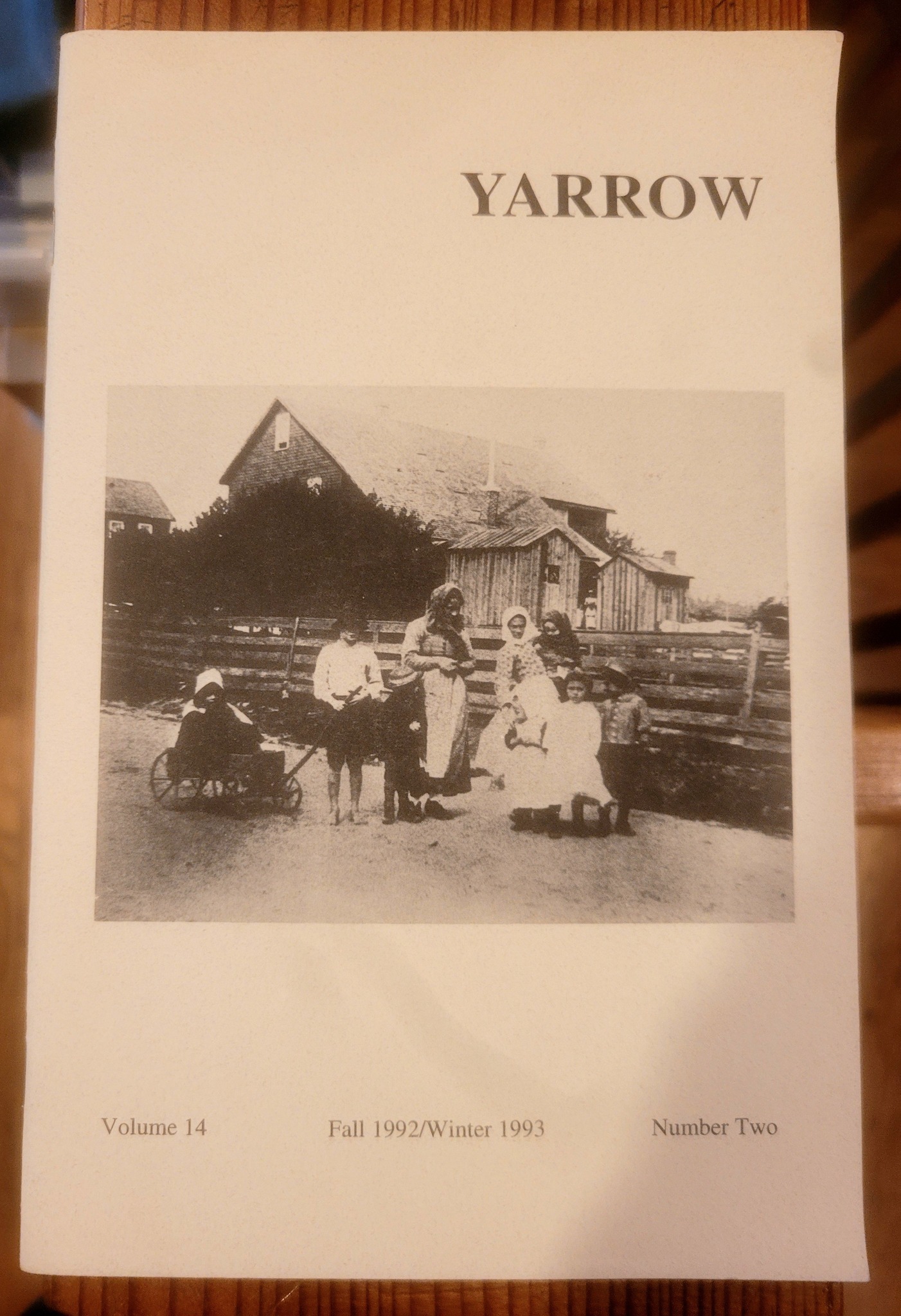
It was a beautiful reading. His work was both accessible and mature, and he clearly knew what he was doing when it came to writing poems. Indeed, his first full-length collection, Winter Weeds, came out shortly afterwards. Anyway, I moved out of Pennsylvania for awhile and, when I returned, it was to the very suburban Lehigh Valley. In 1992, I sent some poems to Yarrow, a lit journal published at Kutztown University–Humes was the faculty advisor and editor then, and he chose to publish my prose poem La Barbe.” For which, Harry, many thanks. I was so busy with toddlers that I was hardly submitting any work anywhere, or finding much time to write. The publication was a boost for me.

Then, in the peculiar way of small-world eventualities, my husband hired Harry’s wife, Nancy, as copyeditor for a Rodale Press magazine. I found that out when, a few weeks after she’d been hired, my beloved asked whether I had ever heard of a poet named Harry Humes! (By that time, Humes’ fourth collection, Bottomland, was in print)…

~

When I was hired at DeSales University around 2005, I learned that DSU held an annual poetry event for high school students. I attended/participated often, and Harry Humes–who was a good friend of the program’s administrator (Steve Myers)–was always involved in the workshops and events. Humes had retired from Kutztown by then, and was writing more poems, fishing, and enjoying family life. He always greeted me with a big smile and asked about my writing. That sums up for me what kind of person he was: generous; possessed of a self-effacing, even self-deprecating humor; kind and encouraging to people just starting out in poetry.

Here’s a poem of his that I like a lot, which I clearly recall him reading that day at Godfrey’s so long ago: https://www.poetryfoundation.org/poetrymagazine/browse?volume=154&issue=3&page=13

And here is one of his best-known poems, the title piece from his 2004 book. Harry, thank you for gracing us with your words. We’ll remember them for a long time.

~

August Evening with Trumpet

Up in the woods a neighbor or stranger
who has had enough of August,
its spider webs and first yellow

near the roots of things,
has out of the blue found his old voice,
wailing away everything

he can remember.
Perhaps he will play
right through fall and winter,

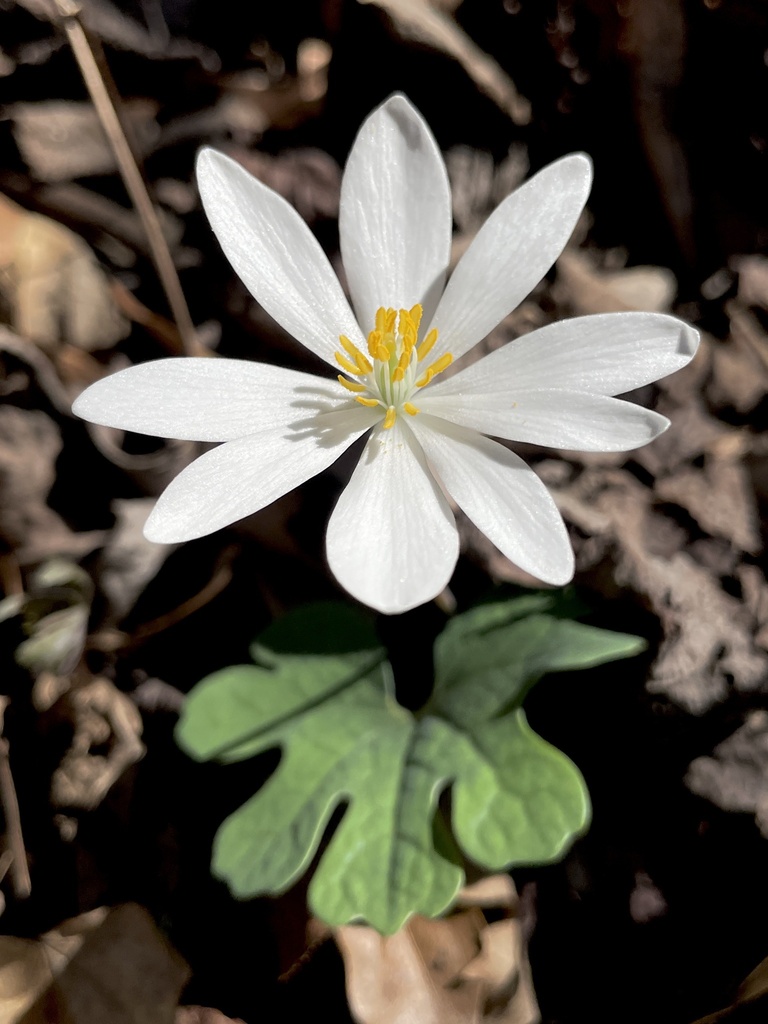
not stopping until bloodroot
and anemone blossom.
But now it is almost dark.

Mist veils the fields,
and last sounds play out
as simply as longing or breath.


Copyright © 2004 Harry Humes All rights reserved
from August Evening with Trumpet
University of Arkansas Press

Favorite poem project

coal

Last night, I had the pleasure of participating in a Favorite Poem Project reading at my university.  I have many favorite poems, but this time I chose to read Audre Lorde’s “Coal”, because of how powerfully it spoke to me when I encountered it as a very young woman in a Contemporary Women’s Literature course in my undergraduate years. Reading it aloud to the audience, I realized the poem speaks to me even now–though in a slightly different way, altered by life experience.


~

My poem for Day 9 seems to evoke Han Dynasty style poetry.

~

Warm Spring Night

I was not drinking wine
alone on the porch
I was accompanied by clouds
two species of frogs
toads whose squeaking chorused
sex and risk–
also the silent predators
awaiting the amphibian
awakening
hungry after winter
among this vast assembly
I had least to gain
and least to lose
I savored the taste
of my situation
under the near-new moon.

~

amphibian animal animal photography blur

Photo by Plus Blanc Studio on Pexels.com

End of semester crunch

The university year here in the USA is almost over; at my college, today is the last day of classes, and next week is final exam week. As a result, I have little space in my mind for speculative musings and little time for reading–other than reading student papers.

This is also the time of year when my colleagues in academia, feeling stressed and slightly burned out, share stories from the trenches and sigh over perceived inadequacies of students in general, higher education in general, academic administrations in general, and life in general. I admit to occasionally joining the chorus, but this year I am making a concerted effort to refrain from generalities in order to cultivate a bit more mindfulness and compassion.

I have been thinking a great deal lately about stereotyping and how the short-cut of pigeonholing people by general traits, which demographics tends to bolster as sociologically “true,” can hinder the ways human beings interact and value one another. Most of us shy from outright stereotyping by race; and many of us are aware that there are ingrained stereotypes concerning sexual preferences, disabilities, and nationalities about which we ought to try to be sensitive. So I would like to remind my colleagues–who do have every reason to be exasperated as the academic year closes–that much as we want to generalize people by their generation or their status as students, each one of them is a human being, individual, unique, with his or her own burdens and inconsistencies, worthy of compassion.

Not necessarily worthy of a higher grade than they’ve earned…that would not be compassion so much as rescuing or caving to some sort of pressure. But when we must place an ‘F’ on the transcript, I hope we remember to do so with compassion rather than irritation, resentment, or triumph.

photo by Patrick Target

The “Black Madonna” –A view from the heights of the DeSales University Campus; photo by Patrick Target


There are other stereotypes we employ regularly, partly because language was invented to get information across to others rapidly, and generalities offer the expediency of compressed information. The culturally and perhaps evolutionarily ingrained “us vs. them” attitude of included, excluded, and outliers of community also lends itself to forgetting the individual. As a person who often takes such language- and thinking-related shortcuts in conversation (and in little angry rants), I am in no position to chide my fellow human beings about their shortcomings. I do, however, want to remind myself that it would be a good idea to recognize, in my heart, that general judgments of others occur all too easily–unconsciously–unmindfully.

Now, back to the pile of student papers. {crunch, crunch, crunch}