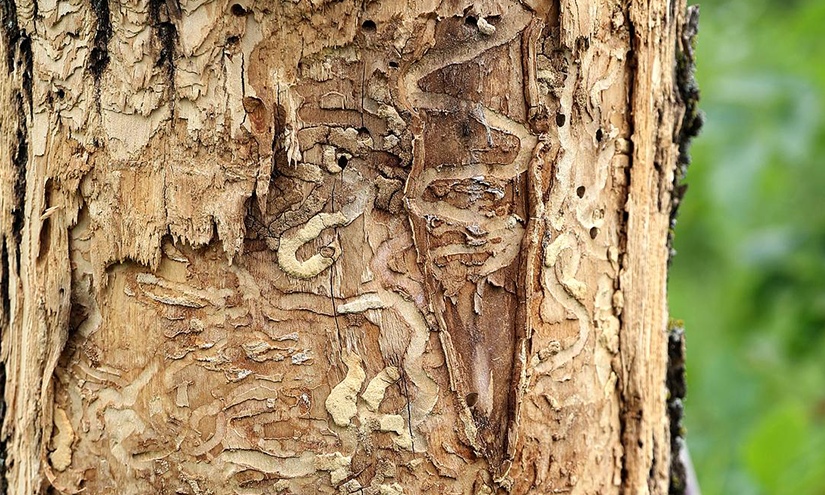
The weather has been glorious lately, which has the downside of getting rather droughty. No rain in the forecast, either, so it is time for supplemental watering if I want to keep harvesting from the vegetable garden. There’s not much left there, though; I may just wait things out and save the water. Meanwhile, some of our days have recently been punctuated by the sound of green ash limbs crashing in the nearby woods. When I investigate the trees, there are the telltale scribbles of ash borer on the trunks. The marks look like script.
I learned, while teaching college freshmen the past few years, that many younger adults do not know how to write or even to read script. Many children never get the lessons in handwriting in the second through fourth grades the way I did. Instead, they learn keyboarding–a skill I got to in my junior year of high school but never really have mastered (yes, even now I use a self-developed version that’s sort of an advanced hunt-and-peck method). It’s hard to believe that reading script is a task that will be relegated to specialists in years to come, but I shouldn’t be surprised if that’s what happens. To many of my college age students, handwritten script in English is almost indistinguishable from the marks of ash borers. They don’t see the need for that particular skill. Handwriting is going the way of letter-writing.
Perhaps we live in a post-script world?
I have been thinking about the handwritten word recently because of a recent incident while visiting my mother. She received a small refund check from an insurer, and though she understood what it was and that she no longer uses her checking account–we siblings take care of that through power of attorney–she was confused about what to do with it. “Sign it, Mom,” I told her, offering her a pen. “We’ll deposit it for you.” I turned the check over and pointed to the line for signature on the back.
She wavered, pen in the air. “I don’t…I don’t,” she said (her aphasia has advanced past the point of expressing full sentences). It took me a moment to realize that she could not recall how to sign her name. I placed my hand around hers and helped her start with the capital B.
I didn’t cry, but the experience hasn’t left me alone. I suppose there may be a poem in this incident, but if so, it’s a sorrowful one.

 ann e michael