Adventuring

The weather here has been hot and somewhat humid, though it continues to be dry–much drier than autumns used to be. Drought extending past August into October is becoming a more usual thing, according to my garden journal. One plant that thrives this time of year is tithonia (Mexican sunflower), and it attracts monarch butterflies like crazy. These are the monarchs that go adventuring: the super-generation of these insects that makes the 3,000-mile trip to Mexico. Here’s a brief blog from the Xerxes Society that has some quick facts. The monarchs I see in my garden may, if they are lucky enough to survive the trip, live up to 9 months, which is well past the life span of spring and early summer generations.

They are not even returning to a place they know or have ever been. Human science has never yet determined how monarch butterflies of the last summer generation find their way to Mexico. They just go adventuring, floating on air currents, supping on flowers as they travel.

I’m about to go adventuring, as well, traveling further east than I’ve ever been, in the company of one of my favorite persons in the world–my daughter. She and I had long talked about taking a mother-daughter trip together once I retired, and sooner is better than later! She found an environmentally-conscious adventure tour business that offers some really intriguing historical/archeological/environmental hike-and-bus options. We’ll find out whether the company is worth recommending & I’ll report back here, meanwhile keeping our destination unrevealed for now. A little mystery is fun.

While I am taking this trip for reasons beyond writing inspiration, I can’t help hoping it will act as a prompt and opportunity for drafting new poems. I’ve been working on new drafts, and revising older ones; but I have to admit that for awhile my creative mojo has been a bit off. Yes, this happens to any so-called “creative” occasionally, but it never feels terrific. One prefers the juicy, challenging urgency of creative flow. Wish me luck (and traveling mercies).
Promptings

I have mixed feelings about poetry prompts. There have been times when using prompts has really got me writing and feeling inventive about poetry. I’ve had instructors (and read books) whose prompts seemed terrific for me; but maybe I felt already ‘primed’ for writing, anyway, and it was not so much the prompt itself but the circumstances that led to fruitful drafts. At other times, prompts appear useless, or even–dare I say–insipid. My current belief is that, for me, circumstances and instructor matter more than the cleverness of the prompt. Any prompt can be delightful if only I find myself situated in the mood or feel an urgency to write.

The virtual workshop I’m taking with Anita Skeen opened with a discussion of poems (by Roethke, initially) and then moved to some list-making and prompts. This is not unusual for workshops, and lists are a fine way to begin thinking about poems. The prompts we were assigned employed both lists and a method for drafting a poem. So far, I’ve drafted four or five poems in a week: therefore, success (!) even though only one of the drafts seems to have legs.

I think what happens is that after many, many years of writing poetry (or making any kind of art) one begins to feel a rhythm that is almost circadian–as analogy–that informs a person about flow. I ask myself, “Am I ready to write today?” The answer may not be yes. But if it is yes, then I can just write. No expectations, and it’s okay to use a prompt, or re-write an older poem, or just free-write about whatever moment I happen to be in. Usually, in this frame of mind, I don’t get concerned about writing well. I just start on in.

If the am-I-ready answer isn’t a definite yes, then I may procrastinate or distract myself by cleaning the house or reading a book. I can overcome the “maybe” by turning to work by a poet whose work I find interesting or by experimenting with a prompt. Sometimes, it helps to give myself a deadline of some kind–this is why workshops are often useful!

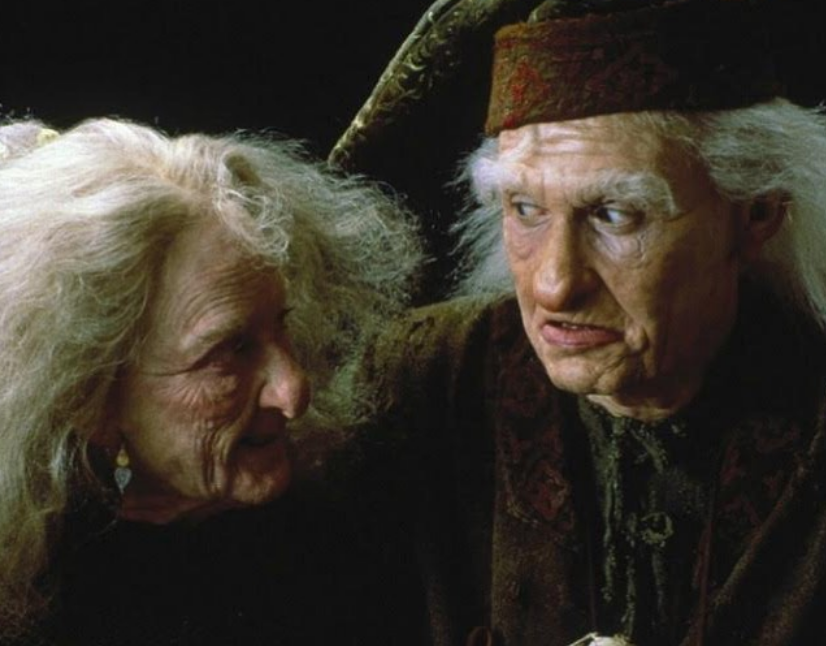
But the answer may simply be, “No, not today.” Sometimes we have those non-creative days. It is alright to have them. Art shouldn’t be about pushing out ideas to get to a “product.” I’m suddenly laughing to myself, thinking of Billy Crystal as Miracle Max in the movie The Princess Bride: “You rush a miracle man, you get rotten miracles.”

At least with writing, one gets a chance to revise.

Carol Kaine & Billy Crystal in The Princess Bride (20th Century Fox, 1987)

If you are a writer, what do you think about the use of prompts?

A good start. Possibly.

My most recent reading material is The Feeling of What Happens: Body and Emotion in the Making of Consciousness, by Antonio Damasio. Damasio is convincingly on the neurological/evolutionary trail to recognizing how consciousness operates and why we have developed it, though he allows for mysteries we do not yet and may never understand.

Damasio is clearly not a dualist who thinks the consciousness can exist separately from the body (one of his previous books is aptly titled Descartes’ Error). He doesn’t address the “soul” in The Feeling of What Happens, but argues that reason requires feeling in order to operate effectively, that feeling is a more “conscious” form of emotion, which is “unknowing” in the sense we call consciousness and is founded upon core consciousness, which is reliant upon the physical organism…a vastly complex array of cells, nerves, you name it, generally self-regulating and not by nature in particular need of a conscious mind.

So next time someone tries to explain why a situation happened and just says, “It’s complicated,” maybe you ought to accept that. Because, apparently, it’s really really really complicated!

http://www.isys.ucl.ac.be/descartes/images/Descartes.gifThat does not keep people like Damasio from trying to track down what goes on in the minds of sentient beings.

Having just read Flow, I immediately thought of what Csikszentmihalyi says about the way true flow experiences depend upon deepening levels of complexity–that’s how we keep from becoming bored by routinization of a task. Dennett suggests that consciousness consists of layers: “multiple drafts,” and Damasio calls the human brain, and the brain-body unit, a series of “systems within systems.” But there is no little self, no metaphorical or actual homunculus, at the very bottom of the system, or at the very top. There are only more and varied connections, he asserts–with profound respect and amazement at what biology has wrought.

I also thought about Csikszentmihalyi’s idea of a life project. Some years ago, I began a journal devoted to exploring my poetic project and learned that I do not really think about my writing as a project per se, at least not in the formal sense of poetics. [Here’s Dorothea Lasky harping on the whole concept of a poetic project, in a bit of refutation aimed at poetry critic David Orr.]

What I think I was doing, in fact, was trying to figure out my life project, in the way Csikszentmihalyi defines that concept. What is my life’s philosophy in terms of guiding tasks, principles, goals, projects, challenges? Is teaching part of the package? Motherhood? Gardening? Writing? Human relationships? Learning? Speaking of human consciousness, do I have a conscious path or goal?

Maybe my goal is to keep on amid the complexity and to relish it as much as possible, since it is unavoidable. And perhaps by accepting the complications, I will find my life becomes simpler. That could be a possible outcome–right?

I think of Reineke writing on Marcel Proust’s narrator and his struggle with status, jealousy, conformity, and desire. I read the Proust novel(s) when I was in my early 20s and found his narrator frustratingly neurotic but also a little too familiar, as my life experiences in many ways mirrored his. Eventually, he learns that the way to cure the pain of desire is to discipline himself to let go of desire itself; (and no, neither Proust nor his narrator were Buddhist).

And what happens when he gains this recognition is that he can write the novel. He develops flow, and a life project.

I am past 50, a good time to establish more consciously what my life project is. I know it involves relentlessly and joyously learning new things. I think it will include poetry in some way. And discipline of some kind, conscious effort. For now, those things constitute a good start.


Flow & dough

I have no doubt that, for some people, making pies is a flow experience. I’m reasonably certain that my grandmothers, and sometimes my mother, felt a sense of flow when pie-making: fully engaged in the process, challenged, immersed, and enjoying the fulfillment of a task as it evolves. Making pies can be intrinsically rewarding, but–alas–for me, it is a bit too much of a challenge and the purpose is generally extrinsic (though a good pie is surely worth the effort).

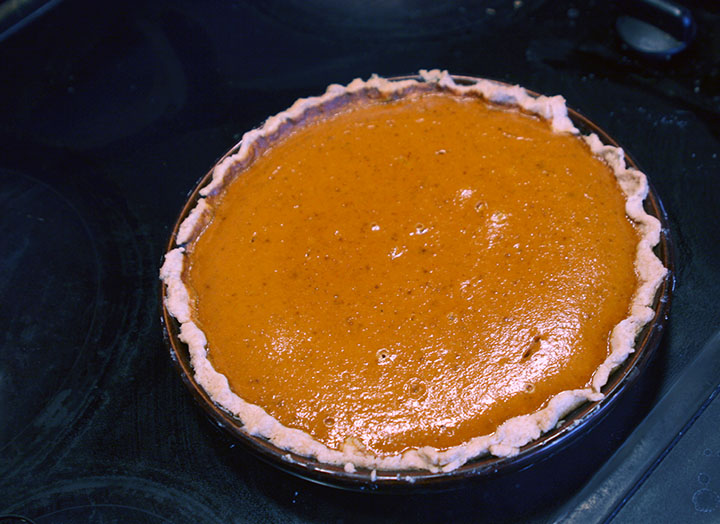
Today I made pie in preparation for the Thanksgiving feast we celebrate here in the USA. But I feel more of a sense of flow when I am cleaning up the mess I made in the kitchen and stopping occasionally to gaze out the window at the falling snow and the sweet little juncos hopping along the porch railing. The actual process of rolling a pie crust involves, in my case, swearing and cussing and patching torn dough. I am positive that my Methodist grandmother never resorted to salty language while pie-making, but I imagine she may have also enjoyed glancing up from her work and appreciating a view, a fellow-creature, something aesthetic or pleasant to behold in the midst of family life.

The activities that keep me actively entranced and purposeful do not include making pies. My re-reading of Mihaly Csikszentmihalyi’s book, however, has reminded me that feeling happy means making meaning in my life and continually seeking out challenges that offer me a sense of building a conscious self and a disciplined, mindful attitude toward life.

Even if I never get really expertly engaged with concocting desserts, I can find some sort of flow throughout my days through reading, art, gardening, writing, tai chi, interactions with friends and family members. And who knows what else? There is so much to learn; that is what I feel most thankful for today.

Not the prettiest pie.

Not the prettiest pie.

Here’s a TED talk by Csikszentmihalyi, if you want to hear more about flow & happiness.