Work

Ending the year reading new-to-me poetry collections was my plan, though of course family life and all that distracted me quite a bit, in a pleasant way. Maybe I will reframe that as starting the new year with poetry collections. Which is to preface the following, an excerpt from “The Work,” a poem that contains a lovely reflection on what it means to leave one’s job and find one’s work–eg, retirement–in David Mason’s latest (2022) collection, Pacific Light:

~

Once, work was the thing one rose to by the clock,
the place one drove to, the faces one met getting coffee.
Now there are stones to be moved, but will they be moved?

...We are doing the work no other demands in the light
we are given, forgetting what day of the week it is,
the work all other work was a way of putting off.

That’s a useful way of thinking about post-job life, the work that everything else was a way to put off. So now we are poets or writers, artists, gardeners, people who spend time fishing, walking in the woods, hanging around in libraries, caring for grandchildren or pets. In his poem “One Day,” Mason writes “I was always too slow/and now my deadline/nobody knows,//not even the moon…” That concept of a deadline, so ubiquitous in all industries (and academia), churns workers into all kinds of stress. Needless to say, the term has a violent origin–“time limit,” 1920, American English newspaper jargon, from dead (adj.) + line (n.). Perhaps influenced by earlier use (1864) to mean the “do-not-cross” line in Civil War prisons.” [Thank you Etymology Online.] I am happy not to have so many deadlines now. Whatever work I do now, moving stones or writing poems, no other person demands it of me or sets the timing. “Not even the moon.”

Or maybe I’m mistaken, just a bit, because: gardening. I do have to follow the environment’s requirements and timing when it comes to that work. Nature can be a demanding “boss,” but the work rewards me. As does the work of reading and writing poetry. Pacific Light, by the way, is one of those rewarding books.

Lightning bugs

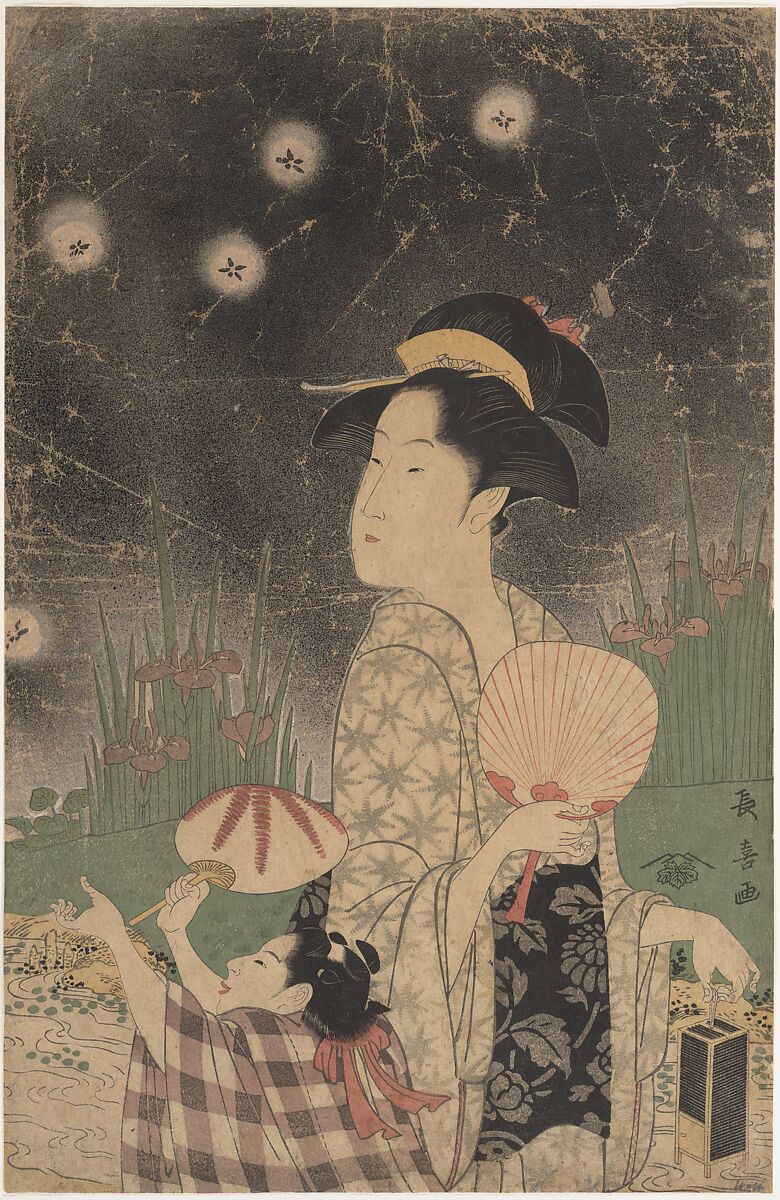
We didn’t call them fireflies when I was a child, though now I kind of prefer that name for the flittery flashers that decorate the summer nights. There are fewer this year, probably due to variances seasonally–that drought we’re still not completely recovered from, followed by some rain and hail, and slightly cooler June temperatures than usual thanks to the haze of smoke from wildfires to our north. Peak season for fireflies in my region has typically been right at the solstice. Looking out my window this evening, I remark on a paucity of flashes in the meadow and over the lawn. Fewer Lampyridae this June. Things can change from one year to the next.

Change equals living: no life without alterations of one kind or another. My current situation is one of those so-called Life Events: I have retired from my position at the university where I worked for about 17 years. I suppose it is A Big Deal (see how I’m capitalizing?), but I must admit that so far it doesn’t feel terribly fraught, major, or even bittersweet. It just feels appropriate. Part of the reason for that is that I’m not a person who has defined herself by her career. Thank goodness, since it was a fairly modest career. I enjoyed my work with students; and I was part of a terrific team of earnest, funny, and supportive folks. So yes, that’s something to miss. However, I have many interests beyond work at the college. Time to pursue those, methinks. Time to spend with my mother as she wanes. Time to travel with my husband and on my own and to visit our far-away offspring. Of course, there are all those things that will keep me unexpectedly busy…gardening, house maintenance, trying to get the metaphorical ducks to line up (as if they ever will). And then, poetry; I want to devote some serious brainpower to revising, reorganizing, drafting, reading, learning more about the art I love. Maybe even submitting more work, putting together another manuscript or two. Who knows what changes are ahead?

~

When I note the fewer numbers of fireflies, I do not mean there are none. It’s just that some years, by June 18th, the back of our yard simply dazzles; we don’t need fireworks! Because they pupate in dampness, such as in rotting logs or underground, and because they need moist earth in order to feed (on soft-bodied invertebrates, according to the Xerxes Society’s informative page here), a spring drought can limit their numbers. And I miss them, the way I miss the little brown bats and the green ash trees. Those types of changes may be more or less inevitable, but I can’t help thinking that such transitions feel less timely than my departure from running the university’s writing center. The ash and the bats are still around, but in vastly decreased numbers. I hope the lightning bugs bounce back.

~

Art from the Metropolitan Museum: Eishōsai Chōki ca. 1763