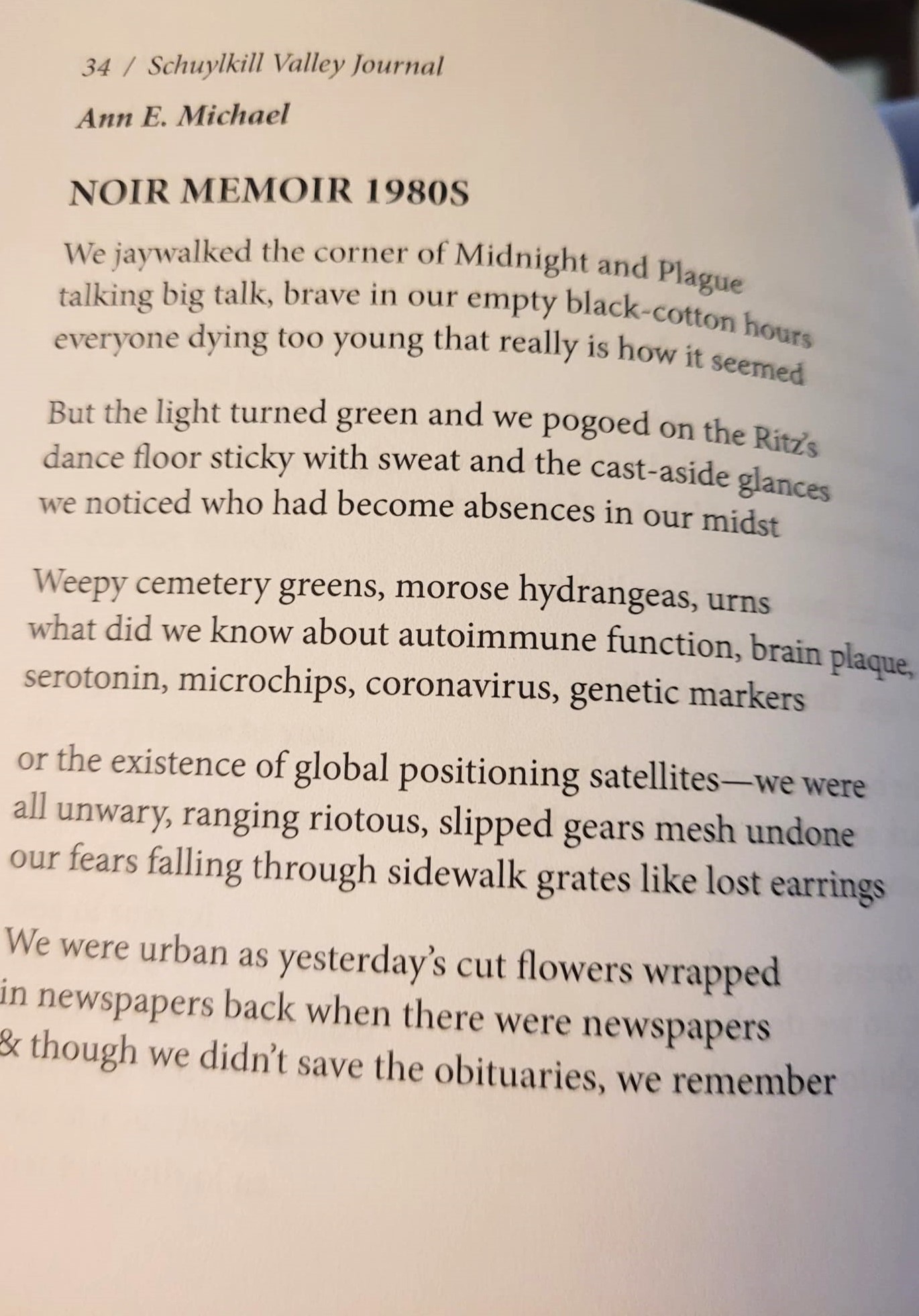
Persistence & belief

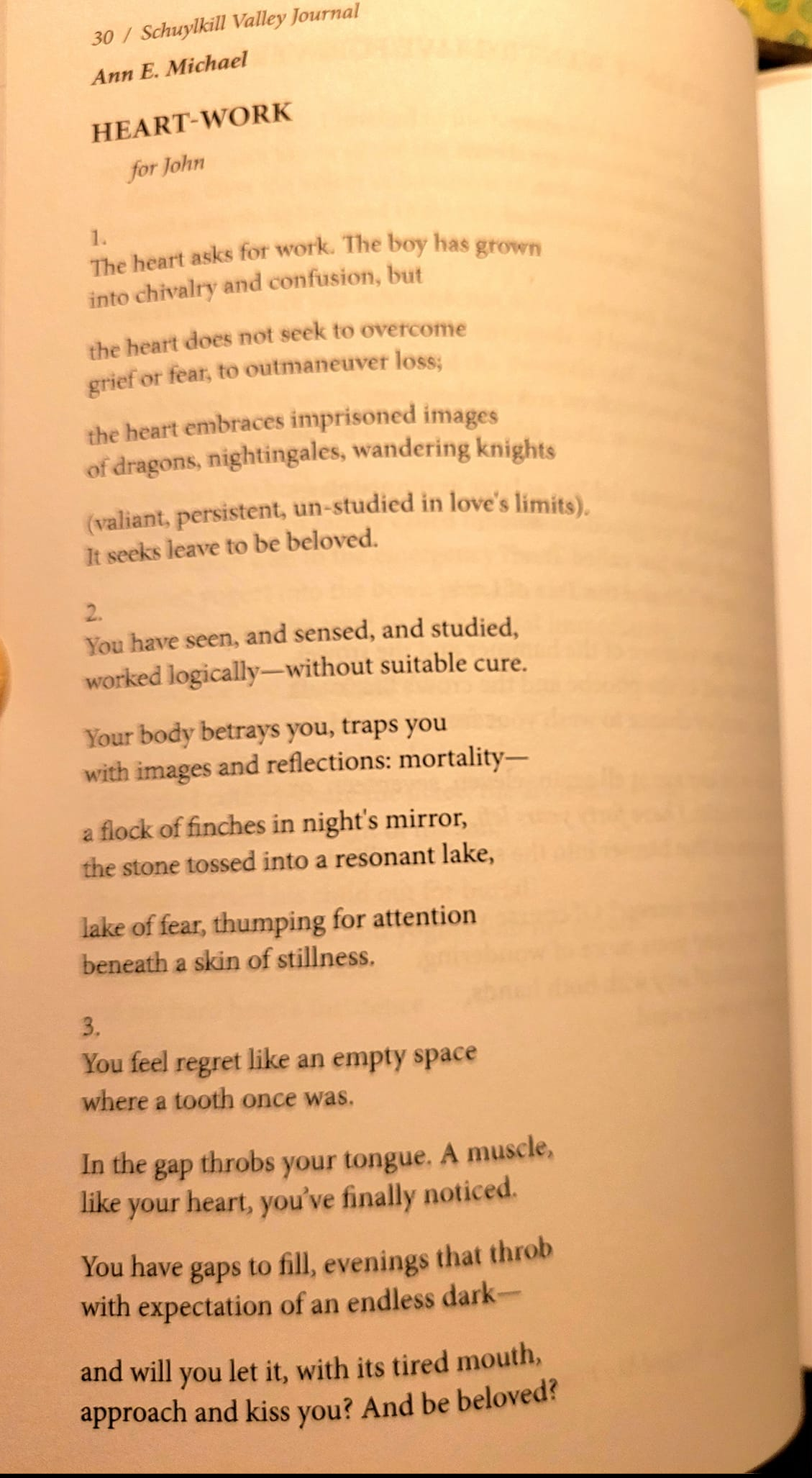
I wrote a poem for my brother 25 years ago or more, when he was in his early 30s and having mysterious and frightening cardiac issues. He was working on geological and wetlands surveys for the county and feeling fairly uncertain about his career, as often occurs when one is in early mid-life. My initial drafts included a quote from a Rilke poem and some geological terminology. That poem draft, as a whole, didn’t quite “work,” however. I gnawed on it for well over a year, tweaking and revising. I showed it to Ariel Dawson, a friend (alas, now gone) whose critique and suggestions I respected. She gave me some ideas for revision and told me she thought this was a poem with real possibility. I just hadn’t quite gotten to the final possibility yet. She told me it was a poem I should believe in, keep working on.

Some years later, after a major reworking, I sent it out. Several times. No one accepted it; a couple of years later, I realized where it was in need of a change. Tried that. It felt better to me. But no one accepted it for publication. Fast-forward about 18 years, and I made yet another change in the poem. I thought maybe it was still worth submitting to journals. Nope. But, last year, reassessing some older work, I came across this poem and thought it was actually a pretty good poem, worth sending out a few more times. One might say I believed in the poem.

This post is to say: Be persistent, writers, and do believe in your work! Because Jane Edna Mohler at Schuylkill Valley Journal chose “Heart-Work” and two of my other poems for the issue that just came out in print (and I do love print journals!). [Purchase the issue by clicking here]

That poem found its way into print 25 years after I first drafted it.
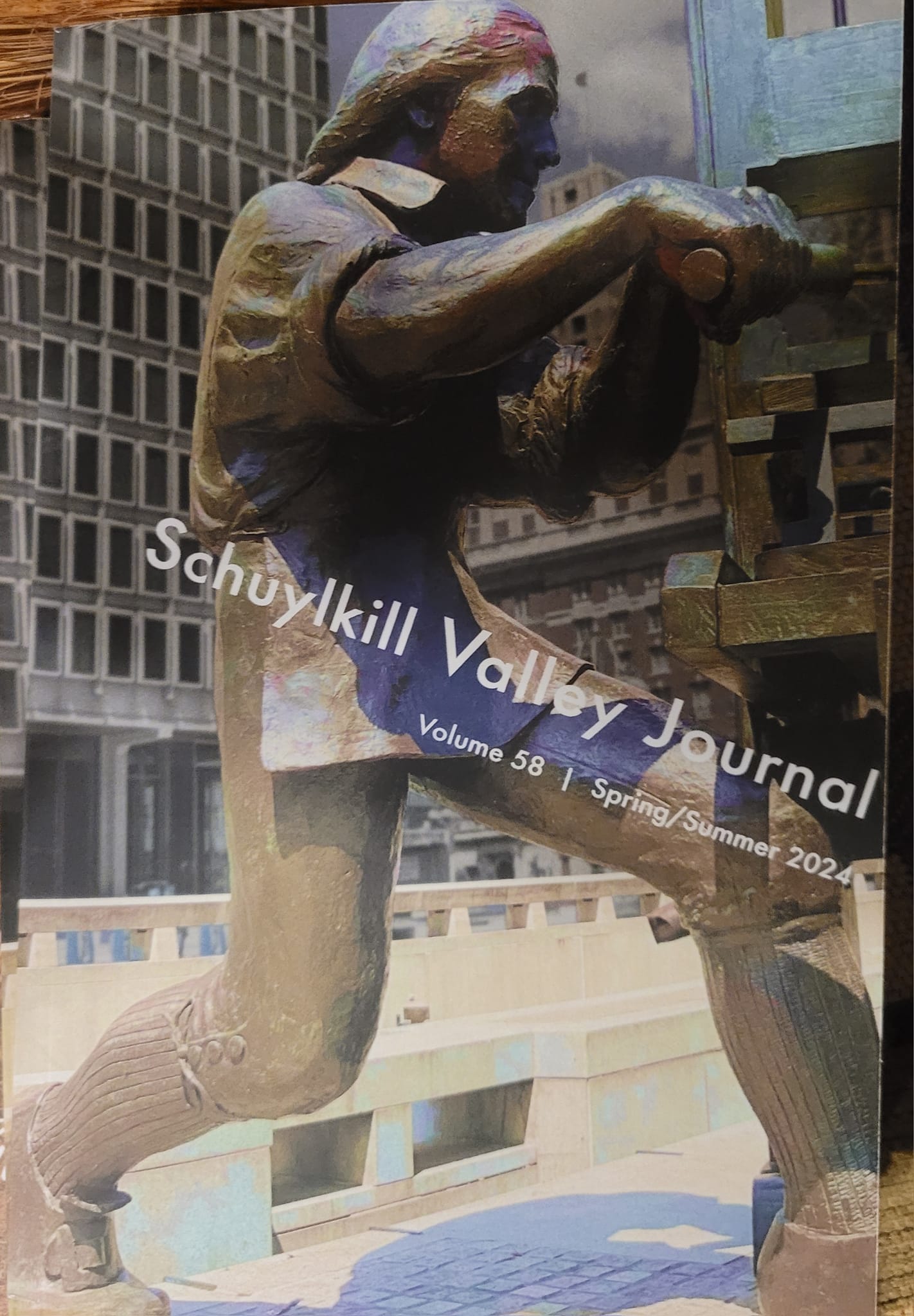
Something equally as nice occurred when I received the print copy in my mailbox. Peter Krok, the long-time editor in chief at SVJ (since 1990) and a long-time colleague-in-poetry, sent along a lovely note in which he praised Jane Edna’s editorial sensibilities and then kindly said he felt that my poem “Heart-Work” was exceptional. How frequently does that happen? Not often, I can promise you–although I suspect such comments are more likely from small independent journal editors and presses. Those lovely people are involved in the arts for the love of poetry and the humanities. When they find time, they can be marvelously encouraging. Let us thank them personally and to the world!

~
Wandering

My mind’s been wandering a great deal lately. This at a time when focus would be quite useful, and yet–I don’t mind a little mental meandering. I think that, akin to daydreaming, a lack of focus can lead to creative thinking. Of course, the downside is that it may also lead to lollygagging and a lack of ambition.

I’ve been thinking about the way contemporary Americans use the word “engagement.” Not as in marriage proposals–that definition hasn’t changed–but in statistics, marketing, self-help, and education. My department at the university has been directed to “foster student engagement.” Our administration wants us to find ways to engage students, but it seems what’s meant by that is simply to attract their attention amid the myriad distractions and attractions of modern life. In my area of the college, where students go to get a little extra assistance in their coursework or their educational plans, we have long been aware that we can’t reach everyone who needs help and that we cannot create enthusiasm or involvement. Apparently, engagement is supposed to lead to motivation. That would be a miracle. Like many young people when I was a young person, today’s young people are often rather undirected. Wandering.

I wonder whether gap years or a required year of community or civil service would benefit people before they march off to college to “become a physical therapist” or whatever it is they think of as a career. Many of them would save on tuition fees, because maybe they are not that keen on academic coursework after all, or because they can go to college with a better idea of what they want to learn (rather than end up attending for 6 years because they changed majors). US society has evolved to push its citizens through large, unwieldy systems that supposedly create clear-thinking individualists who can fit into whatever job market the nation happens to foresee itself needing in future, but there is so much wrong both with that methodology and with that picture in the first place.

I’m with Walt Whitman and the loafing approach to observation and creative thinking, but that probably won’t be sufficient for a nation with a population of 336 million people.

This is not my problem to solve, and I would not be the person elected to solve it. But I ponder this sort of thing.

~

This poem appeared in Schuylkill Valley Journal Online. It’s a persona poem in which I imagine being Walt Whitman as a young child. May we encourage our young people to wonder and wander (and, yes, loaf a little).

Little Walt

When Mother sends me with a bucket to the pump
and it is a rainy day, droplets landing on my face, I open my eyes
trying to see where the rain starts but cannot
because I blink—and why is it that I blink without ever
meaning to?

My Baby Brother wails so loud
I hear him out of doors although the rain is also noisy
splashing the leaves. I can tell the wagons’ wheels are spewing mud
as they clobber past hitched to wet horses who snort at the weather.
The pump handle feels slick and water spurts into my
bucket so that I think of a waterfall in a gully or tumblers
at the sea’s shore where the little fishes get caught in the seining nets.

When the bucket’s full I set it down beside me
and watch water’s surface going plip plip and my own face
under the rain and how it is that I can keep my eyes open looking
into the bucket: behind me in the reflection is the cloud
that is raining all upon the Town.

Mother calls me to the house, You have been loafing.
The bucket, full now and heavy, becomes my chief burden
although a hen scurries beside me, and the ice man hollers
at his little brown donkey and the world around me
is so full of everything!
~
Walt Whitman in mid-life