Au revoir, institution

It was not a huge surprise–the proverbial writing has been on the metaphorical wall for some time–but the college I attended for graduate studies has announced that it is folding.

In January 2001, shortly after I won a grant in poetry from the PA Council on the Arts, I rallied myself and my work, packed a bag, and took the family car by myself to Vermont for two weeks. In a burst of confidence and enthusiasm post-grant, I’d applied to creative writing graduate programs. There were none nearby enough to commute to, and Goddard’s low-residency model seemed my only choice. Well, I could have abandoned my husband and young children and moved to another area, but that seemed untenable and unkind.

But Goddard was perfect. I met new people and made (so far) lifelong friends-in-writing and friends-in-feeling. The work challenged me; the reading was intense! When I look at the bibliography at the back of my thesis, I admit I wonder how I managed. Hard work, intellectually demanding work, constant revision. Well, I needed less sleep in those days. Many times I read and annotated while waiting for my kids while they took piano lessons or riding lessons or whatever they were doing in middle school.

Sometimes my parents or spouse spent a Saturday or Sunday with the children so Mama could study and write. It is kind of a blur, but the community of fellow students seemed so supportive at the time. It’s not that I was without supportive people in my life–but the folks at Goddard, students and faculty, deeply understood my passion for writing. I found I could spend hours talking about things that matter to writers (which is kind of everything, but also, WRITING), which wasn’t easy to do in other areas of my middle-aged, middle-class, mom-life existence.

The iconic Goddard College Clocktower

Goddard often has been termed an “experimental” college. That term covers a whole host of meanings in the world of education. No point in trying to define it, since one thing that experimental institutions tend to do is change and evolve. The program I attended in 2000-2003 differed from the programs of 1985 or 2015. Which is as it should be–education should not be a static set of activities even when some exploration of canonical texts is necessary. One reason I chose to pursue my education at experimental colleges (The New School, Thomas Jefferson College, Goddard) is that I am a slightly odd bird, an autodidact who did well enough in standard subjects but who got the most benefit from deep study of things I felt passionate about–literature, history, botany, poems, dance, philosophy, feminism, visual art. Experimental colleges offered mentors who could guide me in self-directed learning, recommend books and authors, feed my often-changing interests, offer personal, one-to-one advising and critique. I am 100% sure I would not have excelled in universities that followed more standard educational subjects and protocols, and I’m glad I received good guidance (usually) and a well-rounded, if eclectic, education.

Many of the poems in my book Water-Rites are from my time at Goddard, since Water-Rites in an earlier form was part of my graduate thesis. And a fair number of the poems in The Red Queen Hypothesis were first drafted during my years there, when I was experimenting with forms. So, having just learned for certain that Goddard will cease to function as an offbeat, transformative, self-directed institution of higher education–thus joining my undergraduate school, Thomas Jefferson College of Michigan, as defunct institutions–I will post a poem that I know for certain I drafted just before I graduated. It’s a response to the events of 9/11 and was not quite ready, nor suited, for inclusion in my first collection; it appears in The Red Queen Hypothesis and Other Poems.

~

Shreds
for Judith

We ran, leaves before a bitter wind,
& some ran headlong & some in circles,
we did not know what to do with ourselves,

& watched, pressed to our windows & could
do nothing: streets erupted with people
like clustered beetles wakened from dormancy.

We walked, in all directions but mostly north,
& we were silent and our mouths were dry.
Things like shoes and hats made us human.

We wept and it was not sufficient,
& swept, then, for months & recalled
mostly paper, the ways we occupy ourselves,
the mild wind carrying what lingered. Scraps.


(after “Exhibit 13,” Blue Man Group, 2002)


~

In memoriam

Ariel Dawson, 1959-2013

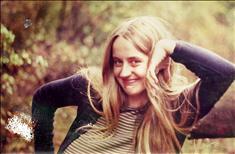
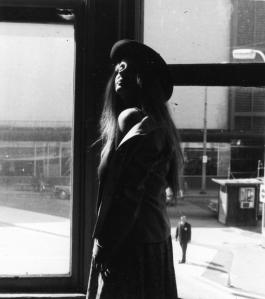
I recently learned that a friend who was hugely significant in my life once, but with whom I had lost touch for 15 years, no longer walks the same earth that I do; in fact, Ariel Dawson died in 2013, unbeknownst to  me.

Ariel Verlaine Dawson

Ariel Verlaine Dawson

It is hard to lose friends, but losing the friends of one’s youth–those intense, passionate friendships that teach human beings how to navigate the world of human relationships–that loss cuts in a different way. For Ariel is perhaps the reason I am a writer. No–I would have become a writer. She is the reason I decided it was possible to be a poet. She amazed me with her vocabulary, her insights, her evaluative reading, her positively voracious and precocious reading, her charm, her gentle goofiness, her forthrightness, her neurosis; she seemed to fear nothing (but that wasn’t true); she had published poetry in real journals before she was 17 years old; she read Rilke and Yeats; had affairs with well-known poets; spent years fathoming Jung. In 1994, she wrote an opinion piece for what is now AWP’s Writer’s Chronicle responding indignantly to Dana Gioia’s article “Can Poetry Matter?”–a piece that started quite a dust-up among defenders of what has been termed “new formalism.”

Ariel had always been the sort of person who chose to disappear and then to reappear, to my joy, months or years later to take up the friendship without pause–and often without explanation for her absence. She had her reasons, and I respected that; but I missed her.

Ariel, 1977 or 78

Ariel, 1977 or 78

~

In the early 1980s, my (also late) friend David Dunn and I were publishing chapbooks under the small-press name LiMbo bar&grill Books. We approached Ariel for our second-ever chapbook: Poems for the Kazan Astrologer. She was, at the time, teaching creative writing at Old Dominion University. We were very happy with the outcome, but we had no good method of distributing the books. I may still have a box of 25 or so of these books somewhere in my attic.

Then Ariel became more intensely interested in Jungian psychology, though it had long been a passion of hers.

In subsequent years, she wrote less and less poetry and stopped submitting her work for publication. The response to her Writer’s Chronicle opinion was, I think, a bit shocking to her, though I know she stood by her opinion. She just decided, perhaps, that she felt more at home in the world of Jung and his followers.

During the past decade I have often tried tracking her down, imagining the internet would find her. My job at the college has made me a rather adept online researcher, but all that ever showed up was a listing for her psychotherapy practice in New York City. The number was incorrect.

Then, my father became very ill and other issues crowded my mind. Searching for a friend who clearly wanted to remain anonymous in an electronic era was not a priority.

Besides, I always assumed that Ariel would suddenly re-emerge, call me–my phone number remains the same as it was last time I saw her–and mention she was going to be in the area, and could she stop by? That’s how it had been before. And I’d be thrilled to see her, and we’d talk about poetry and art, and politics and pets, cheese, philosophy, psychology, parents, wine…

I assumed incorrectly. That’s what happens with assumptions. Just this past week, when I finally found myself with some spare time, I tried an internet search again. And found her “electronic obit” online, and the fact that she’d died in February of 2013.

~

I have no words to express how this information feels to me.

And also–

~

Arthur Cadieux, 1943-2015

Arthur Cadieux in 1978, a photo taken by Jim Terkeurst.

Arthur Cadieux in 1978, a photo taken by Jim Terkeurst.


279519_2290955317647_6522544_o

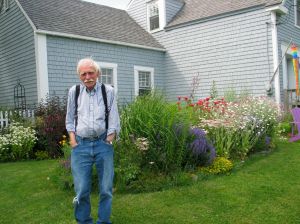
Arthur 2011, Eastport, Main

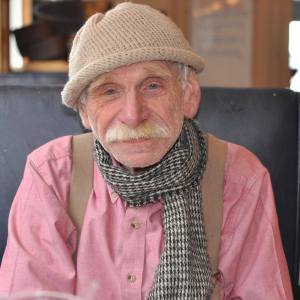
Arthur in 2015. Photo Elizabeth Ostrander.

Arthur in 2015. Photo Elizabeth Ostrander.


~

Arthur Cadieux was my art teacher at Thomas Jefferson College in the late 1970s. He and his wife, Helene, were exceptionally kind to young adults who had an interest in art and in observing the world around them. We had dinner at their house in Michigan and at their loft apartment in New York City. Years later, after Helene’s tragically early death, and after Arthur had moved back to Maine, he let me stay at their cottage on Leighton Point (he lived in a smaller house in town) so that I could have a personal “writing retreat.” He deeply understood the creative person’s need for reflection, evaluation, thought, imagination, boredom, and occasional moments of lively talk.  The universe needs people like Arthur Cadieux, talented and generous, who are constantly pushing their own boundaries. Many of us who benefited from his friendship will miss him. Arthur’s paintings can be found at his website, arthurcadieux.org.

~

May they be free from suffering and causes of suffering.
May they never be separated from the happiness that is free from suffering.