I have mixed feelings about poetry prompts. There have been times when using prompts has really got me writing and feeling inventive about poetry. I’ve had instructors (and read books) whose prompts seemed terrific for me; but maybe I felt already ‘primed’ for writing, anyway, and it was not so much the prompt itself but the circumstances that led to fruitful drafts. At other times, prompts appear useless, or even–dare I say–insipid. My current belief is that, for me, circumstances and instructor matter more than the cleverness of the prompt. Any prompt can be delightful if only I find myself situated in the mood or feel an urgency to write.
The virtual workshop I’m taking with Anita Skeen opened with a discussion of poems (by Roethke, initially) and then moved to some list-making and prompts. This is not unusual for workshops, and lists are a fine way to begin thinking about poems. The prompts we were assigned employed both lists and a method for drafting a poem. So far, I’ve drafted four or five poems in a week: therefore, success (!) even though only one of the drafts seems to have legs.
I think what happens is that after many, many years of writing poetry (or making any kind of art) one begins to feel a rhythm that is almost circadian–as analogy–that informs a person about flow. I ask myself, “Am I ready to write today?” The answer may not be yes. But if it is yes, then I can just write. No expectations, and it’s okay to use a prompt, or re-write an older poem, or just free-write about whatever moment I happen to be in. Usually, in this frame of mind, I don’t get concerned about writing well. I just start on in.
If the am-I-ready answer isn’t a definite yes, then I may procrastinate or distract myself by cleaning the house or reading a book. I can overcome the “maybe” by turning to work by a poet whose work I find interesting or by experimenting with a prompt. Sometimes, it helps to give myself a deadline of some kind–this is why workshops are often useful!
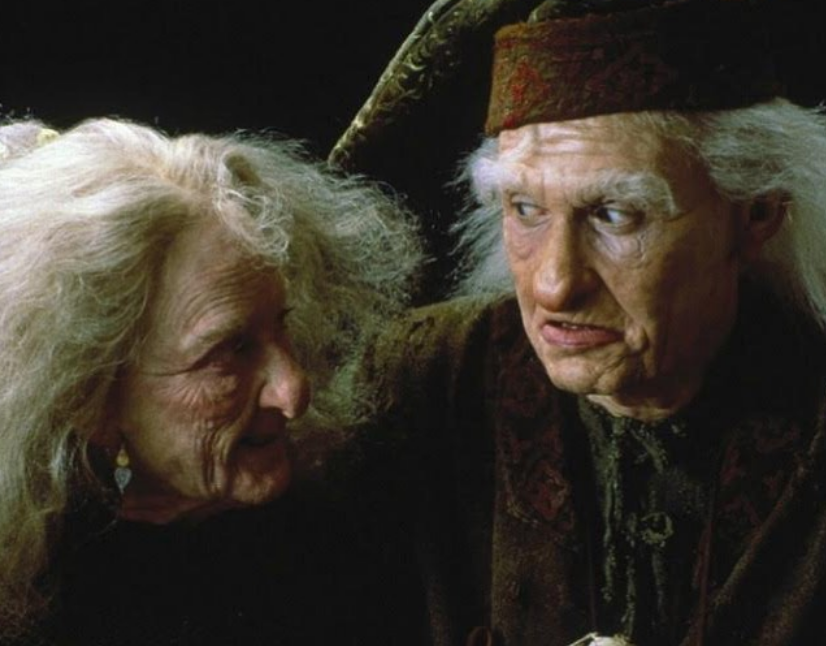
But the answer may simply be, “No, not today.” Sometimes we have those non-creative days. It is alright to have them. Art shouldn’t be about pushing out ideas to get to a “product.” I’m suddenly laughing to myself, thinking of Billy Crystal as Miracle Max in the movie The Princess Bride: “You rush a miracle man, you get rotten miracles.”
At least with writing, one gets a chance to revise.
Carol Kaine & Billy Crystal in The Princess Bride (20th Century Fox, 1987)
If you are a writer, what do you think about the use of prompts?
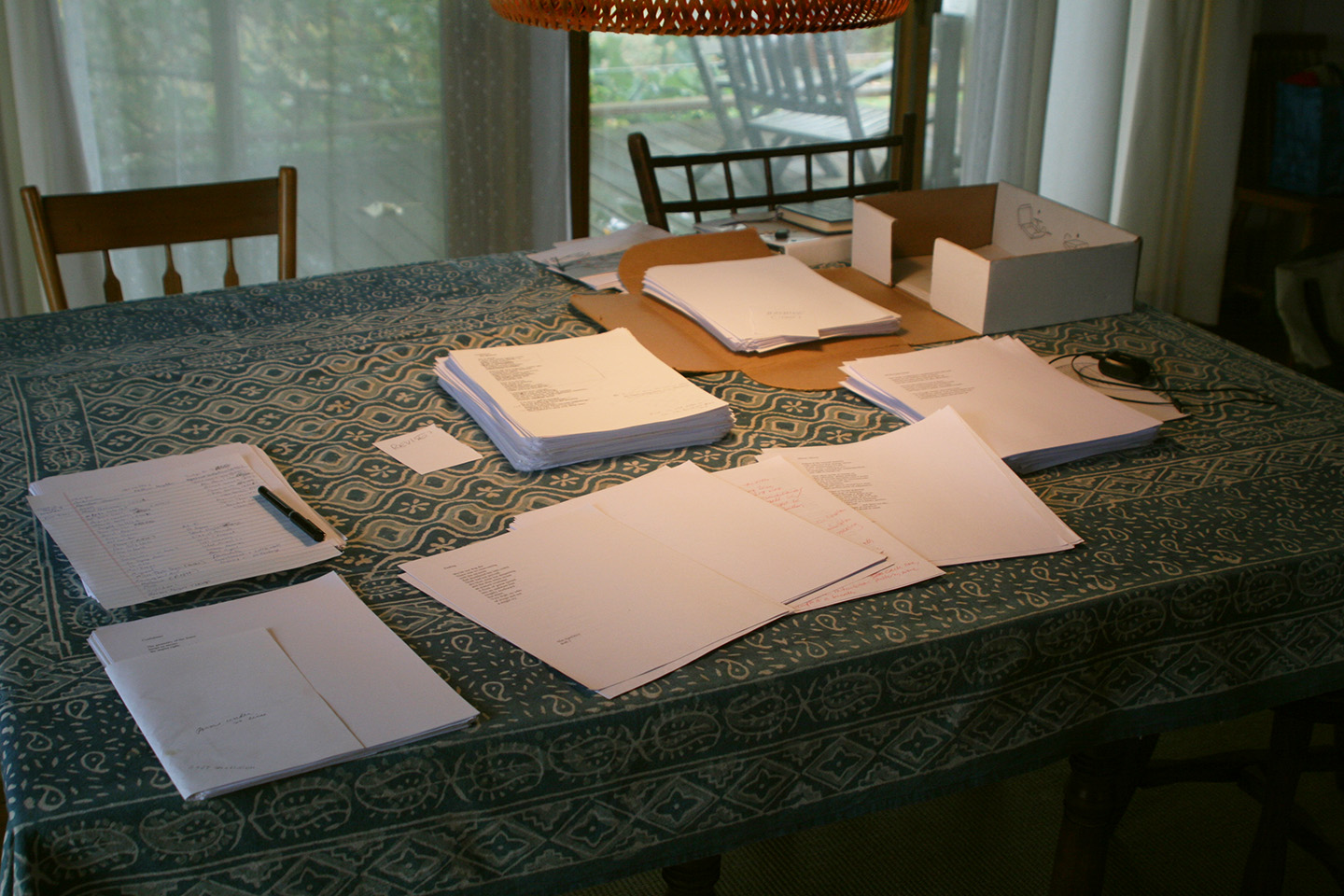
Recently, reading through Dave Bonta’s Poetry Blog Digest, I noticed a few posts on stalling with a manuscript and subsequently clicked on those links and read what other poets have to say about it. Mmm, yeah. I understand the challenges. I have kind of stalled on my next book, too. Or shall I say, neglected my work on it. In fact, today–when I finally thought I had some time to review the draft ms–I could not find it. I had forgotten where I put the printout.
Yes, it resides on my computer. But I prefer to work with hard copy when structuring a collection. And where was the hard copy? I wasted a good half an hour seeking it but finally noticed it peeking from under a pile of other papers. This is not a sign of determined intent.
Why do I allow it to languish? There are so many possible answers to that. The poets who posted (see above) had structural concerns, other things going on in their lives, also a bit of second-guessing and self-doubting. I had eye surgery and covid, but those circumstances did not keep me from drafting new work, only kept me from putting the book together. I recognize now that these tasks involve, for me at least, very different processes, and maybe that is why I’m stalled but not “blocked.” I mean, hooray, I’m writing poems! Which is a process I enjoy, along with revising. But drafting and revising revolve around the process of an interior reflection and creative surge. I wish I could feel that way about putting this collection together, but I don’t. The manuscript-making process is lengthier, broader in scope, requires more critical analysis and a consideration (to a degree) of audience/readership that an individual poem does not. It asks questions of chronology, topic, and forms in aggregate that matter much less when working on one poem at a time.
Perhaps that means I’m not ready to put this collection together yet. Or that I have chosen the wrong theme or mix of poems, and I should reconsider the entire project.
*le sigh*
Maybe I need to take another amble around the garden to clear my head. It’s nice to have that option. It feels more like rejuvenation and less like…procrastination.
Ah, the manuscript process! It interests me even when I’m not in the midst of putting a collection together, because it seems there is no consistently efficient way to go about it–no matter what people claim. It’s fascinating to read, in interviews, articles, and blogs, how poets decide on the poems to gather into a book; I have put together three full-length collections, and yet I can’t say that I have developed a method I can rely on. Each volume seems to have had different inceptions and different means of getting to an end.
My first approach is to choose several dozen poems, about a third of which have been published in literary journals. After that, no system: I ponder possibilities. My last two books had titles early on, which helped a little, and my chapbooks have had themes that guided me about what to include or exclude. Not so this time. The process this time reminds me of how I put together Water-Rites, which evolved from my MFA thesis in 2003. In other words, I don’t really know what I’m doing! Which feels edgy and uncomfortable, and is probably therefore a good thing. I don’t want to get too confident or at ease with writing. Creativity sometimes thrives on obstacles, or on the prompting to do more, to try new things, to solve problems.
Putting Abundance/Diminishment together at the “lighthouse” in 2019
This past weekend, I started curating in earnest, laying out poems and reading them to find out whether there are resonances and “conversations” between them. One method is to try grouping the pieces by theme or style. The overall book may then be divided into sections, which is a not-common approach in contemporary poetry books. But my first attempt arrived at seven sections, which strikes me as maybe two or three too many divisions for a manuscript. Also, the sections were wildly divergent in tone and context. Some divergence keeps a book from being tonally monochrome, but I don’t want my text to throw my readers from port to starboard willy-nilly, either. As a reader, I like poetry collections that have chapters/sections. How necessary are they, though? Maybe I don’t need them.
I was thinking about Louise Glück’s book Wild Iris, which is not divided into sections and which even has many poems with the same title (seven called “Matins,” for example). But the poems appear naturally, with a sense of flow–and there are not a lot of twists from poem to poem, though there are twists within the poems.
Billy Collins’ books are not separated into sections, either. He has said he doesn’t work towards a theme or arc, just chooses poems that he thinks are good enough; and yet his latest collection, Musical Tables, is full of short poems (um, a style or theme? Possibly). I have been doing a bit of research on this through my bookshelves and online, seeking further direction. Clearly, there’s work ahead, and even though I’m in my 60s I’m still a novice when it comes to manuscript-making.
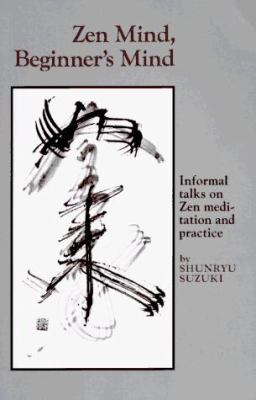
Shosin: 初心 , or “beginner’s mind,” may serve me well here. (See Suzuki’s classic book). Wish me luck? I think I’ll need it. And if you have some advice, let me know.
A few posts back, I mentioned I would weigh in on artificial intelligence prose generators–“bots”–specifically the much-reported-upon ChatGPT. The media coverage has included everything: hand-wringing, speculations on the extinction of critical thought, predictions about the death of the high school essay or the re-institutions of oral and handwritten exams, not to mention worries about spurious content and job loss among educated citizens, as well as wild enthusiasm for automating tedious writing tasks and excitement about where tech is taking us.
It’s not as new as most people think. AI has been providing customer-service responses and generating basic summary content for news-related websites for awhile; but OpenAI’s open-source platform, which is currently free and for use by anyone (not to mention educating itself as each user inputs prompts and questions) has so rapidly gained “tech adopters” that those of us who teach writing cannot ignore it completely. And we shouldn’t ignore it, but neither should we throw our hands up in surrender and predict the end of the art of writing as we know it.
A recent New York Times article reflects the kind of discourse taking place at the institution where I work. It’s fascinating to me to see how quickly the conversations have evolved in the usually slow-moving environment of academia. I find that at my college, my years of laboring with students who lack strong backgrounds in written expression or confidence in their writing have suddenly attracted the attention of full-time faculty members–they want to know how they can tell if students are using AI assistance to write essays (when said profs have no pedagogical experience in writing) and how to change the wording of their assignments to “fool” the programmed generators, among other pressing questions. These inquiries tend to come tinged with a sense of slippery-slope fallacy: does this mean academia will go to hell in a handbasket?
I refuse to send out a firm forecast, though my intuition says no; instead, academia, and society, will change.
And despite the daily-proven, scientifically-accurate, anecdotally-obvious FACT that change is normal and indeed necessary, most people (and their societies and institutions) fear change. Hence, the media and institutional brou-ha-ha.
Let’s face it, writing can be hard. There will always be people who do not want to do the work of writing from the soul, brain, heart, emotion, experience, dread, you-name-it. Painting is hard, too. But people who don’t want to practice and experiment with visual art can use paint by numbers, clip art, or AI. There will always be a few folks who learn to play an instrument for the joy of it and for the challenge of continually learning new approaches to the process of music making; the rest of us can be audiences, if we like. People who write because they can’t not write? They won’t use bots unless they want to experiment with them: make perverse use of the programs, play with them to see what the human’s skills can do in concert with algorithms, bits, bytes, and data. I know artists who are already collaging with AI-generated art to create new, human-mediated visuals.
I recognize the fear factor here, but I don’t buy into it because I am so curious about what will happen next. I’m interested to see how changes will occur, which changes will make a difference and which ones will just vanish, and whether pedagogy will develop toward, away from, or parallel to AI developments in numerous spheres–to name just three of numerous possibilities. Change is exciting, but it’s also hard. I can’t say I am as excited about adapting my fall semester syllabus to reflect whatever the university decides to do in light of ChatGPT, but since I’ll have to adapt to a new “learning management system” anyway, I may as well accept that “a change is gonna come.”
I have been re-reading Allen Lacy’s charming and informative book The Garden in Autumn. I first read it years ago and enjoyed his writing as much as I appreciated his useful ideas about landscaping with autumn in mind. I treasure books that offer more than information–well-written and inspirational texts which in this case includes attractive photographs, as well. I am outside in the clear, cool weekend days and doing some garden cleanup, but I don’t tidy things up as neatly as I used to: many insects and other small animals need some vegetative cover, and incautious hoeing can disturb nesting bees. I was almost 40 years old before I learned that most bees don’t live in hives and that our precious pollinators of many varieties need winter shelter.
Meanwhile, haiku drafts. Meant to kick myself back into creative writing gear. Practice/Zen practice.
~
So hot!
drinking the last of my morning coffee
with ice...


cicadas whirring.
under my bare feet
	dry grass.


Fall semester
remember to practice
resting Buddha face


Jays and chickadees call—
louder but not as constant as
crickets in the dew


four cantaloupes
on the vine
I didn’t plant!

~

In the profusion
of morning glories:
		one gold leaf


good morning, cicadas!
	at least some of us
feel wide awake

~

in the tulip poplar
red squirrel scolds
a Carolina wren


dew
on crabgrass is
still dew


farm stand:
fresh eggs for
a dying friend


late summer
six young sparrows—
empty birdfeeder


Three bats flit
at dusk the doe huffs, sneezes—
bedtime for fawns.
I don’t need the word September I see the spider’s orb
This evening, a steady rain at last, one I hope continues for hours. It is too late to save my vegetable garden but will help trees, shrubs, flowers as they set seeds, birds as they migrate.
Earlier today, I harvested a few remaining veggies. I cut some zinnias for bouquets and watched as a newly-emerged monarch butterfly unfurled its antennae and proboscis and dried its new wings. As often happens in the late-summer weeks, I pondered what to do for the next year’s garden. A surprising thought took shape: letting the garden go fallow for a year. After all, the patch has been working hard for over two decades now–shouldn’t it get a break?
My thought process then admonished me about weeds. The majority of the weeds that would crop up in a fallow patch well-composted over the years will be non-native plants. Those are what mostly come up in our meadow, though we do have many natives as well. But the meadow isn’t rich soil like the garden is. True, I have nurtured some natives even in the vegetable garden. I grow three varieties of milkweed as well as native asters, rudbeckia, and goldenrod (not to mention the native vine poison ivy, despite my best efforts to eradicate it). The milkweed was, this year, much appreciated and eagerly consumed by monarch caterpillars. Still, if I do nothing in spring but let the patch go fallow, I’m likely to find it has been claimed by white clover, dandelion, purslane, Canadian thistle, mugwort, garlic mustard, Japanese knotweed, Amur honeysuckle, and other common weeds that originated in Europe, the Caucasus, or Asia.
Okay, but I’m a champion at weeding in the springtime. I could pull out many of the invaders just as they are getting started. What if, however, I allowed some sprouts to grow? The volunteers, as gardeners call them, that come up on their own after wintering as seeds in the ground or in the compost–I could let them stay wherever they popped up. In this way, the garden would design itself, instead of me being the designer. It would be a year of surprises! I like that idea. I love a good experiment…why not find out what my garden wants to do, after 25 years of me trying to tell it what to do?
Hasn’t yet taken its first flight!
I can make some good guesses as to what I might find: morning glories, zinnias, some variety of squash, tomatoes of mixed parentage, nicotiana, sunflowers. Basil, possibly; chives and cilantro and dill, almost certainly.
Anything else really would be surprising, but this year I had a cantaloupe volunteer, and its fruit was quite tasty. It gets below freezing here for months in winter, and I have never had lettuce volunteer; however, I haven’t let it go to seed, either. It might survive, as the radishes seem to do.
The more I mull it over, the more I like the idea. I like the experimental aspect of it, and the speculation and the surprise. It means that instead of preparing the soil in spring, all I’ll do is spread the compost out as usual–but not dig it in. I’ll water if the spring is dry, but mostly pay attention to the things that sprout and determine as early as possible whether those are edible or ornamental, or just weedy. The downside is that I’ll get all those marvelous seed catalogs and…will I be able to resist? Also, my spouse will complain. He likes a well-laid-out, well-delineated garden so he knows where he can step and where he shouldn’t, what to water, and what to pull out. He may also object initially to the aesthetics of an unplanned truck patch. But around mid-June, I will be admiring my volunteers. It will be beautiful.
~
Always I find metaphors and analogies between the gardening process and the writing process. The way I put my recent chapbook (Strange Ladies) together was similar to the theory of an all-volunteer garden. I drafted those poems at different times over many years and let them sprout even though they did not seem to fit in with my other writing projects or plans. After awhile, I realized they made their own kind of peculiar and surprising design.
I recognize that experimentation is a big part of my writing process. I love just playing around with words and ideas; when I first started writing more purposefully, my poems were often a bit surreal and strange. Over the decades, I’ve experimented with craft, prompts, natural world imagery, poetic form, philosophical and speculative concepts, and memory. It’s hard for me to say where my style or genre of poetry fits. I experiment, but most of my poems are not “experimental.” Much of my work uses observations of the natural world as major image and motivation, but I am not quite a “nature poet.” It doesn’t really matter how or whether my poetry fits an identifiable description. I weed as I go along, and I let anything that looks interesting (or familiar) show me its stuff.
That’s a natural process that reflects the way I think, the way I experience the world, and the various ways I find to express myself to readers. [Crafting and revising–that’s less spontaneous, though it can have outcomes just as surprising.]
In a recent post, I mentioned that one of the challenges of writing a speaker in lyric or lyric narrative poetry is that readers assume the voice, experience, or perspective of the speaker completely aligns with that of the poet. It’s especially confusing if the writer reveals that one poem does arise from or act as memoir/lived experience when other poems by the same author–that seem like memoir–are fictions.
I admit to being among said poets: my collection Barefoot Girls contains poems based on memories of my teen years in the 1970s, yet the stories therein are invented. Sometimes a poem starts as something that “really happened” but does not work well as a poem when I stick to the truth as I recall it. Journalism is not poetry (usually). Thus, in the revision process, the so-called truth gets reimagined…in order to craft lines that are better as poetry. I know that people who don’t write poems find this fact difficult to grasp.
I keep a journal–have done so for decades–and I tend to start poems one of two ways, either from image-based phrases I jot down or from prose entries. The latter approach, from prose, may indeed have a basis in lived experience. Here, I offer a concrete example.
The draft below started as prose but may evolve into a prose poem, may evolve into free verse, or may end up as metrical or formal, blank verse or pantoum. Or it may end up in the “Dead Poems” folder of forgotten drafts. Right now it consists mostly of lived experience, though I’ve already begun to fictionalize a few moments, blur a few lines about the ride in the car (there was another passenger), what he may really have said (heck, my memory’s not that accurate) and where my thought process went. I’ve also played around with line breaks and indents to help me visualize phrasing and rhythm. This is the way I often work.
I believe models and examples of creative working methods help to clarify what artists do. Yet some of it–especially among geniuses–is inspired, mysterious, and cannot be described. I wish I felt that inspiration more often. But I do not mind doing the work of rethinking, reimagining, revising.
~
My Son Drives Me from West LA to Pasadena

…talking the whole way about the job he loves,
new friends, old friends, how he spends
            his leisure time; where we can eat,
what he thinks about social movements and
government policies, whether it’s worth buying
            patio furniture, what we should do
next time I visit

and I’m listening, honest I am, but I’m also observing—
I can’t call it a landscape, really, as the view’s
            a swath of highway many lanes wide and
city blocks for untold acres dotted by walls of vivid
bougainvillea, beige buildings, tall palms under a sky
            perfectly cloudless, flat.

Then, a shift of geographic formation leads into
scrub brush, spotty suburbs, highway narrowing to
            a mere six lanes, and he says I’ll notice
real change once we get into the hills; the weather’s
usually predictable here, it’ll be a fine day. I’m listening,

but I’m also recalling times—many times—I sat
behind the wheel when he was far too young to drive,
            watching the road through the windshield
of the family car and listened to him tell me the thoughts
that flashed through his mind like a summer field of fireflies.
            Those trips I was privy to a newly-forming
perspective on the world, it was as though I listened to his
young mind crackling with ideas,
listened, and listening, with a joy I’ve never abandoned.

~
National Poetry Month comes to a close this week, as does my experiment with revising someone else’s poem. It was a fascinating practice, because it involved a kind of interpretation and re-imagining, taking–in this case–a poem written in Portuguese in 1928, and seeing whether through revising, I might make it mine (if not make it new). In slightly less than a month, I reworked the poem ten times. That’s a pace much quicker than I generally revise my own work. Which also made for an interesting process.
No judgment on the outcome, such as it is. The purpose of the prompt was to keep me writing and to remind me to get revising my poems, and it did have the intended effect. When emotional, physical, job or life obstacles clutter the writer’s terrain, attending to a writing project–however arbitrary–can have a salubrious effect. Or at least grease the wheels a bit.
The initial piece: I randomly chose the following poem by Pessoa in the heteronym of Ricardo Reis, in Honig & Brown’s translation:
"Whatever stops is death, and is our death"

Ricardo Reis (Pessoa)

Whatever stops is death, and is our death
If it stops for us. That very shrub now
    Withering, takes with it
    Part of my present life.
In everything I saw, part of me remained.
With all I saw that that moves I too move.
    Nor does memory distinguish
    What I saw from what I was.
~~
That was my ground zero. Perhaps I chose it because it reminds me a bit of Dickinson’s “Because I could not stop for Death.” I will not reproduce all ten ‘versions’ I drafted, though that might interest someone (who exactly, I don’t know…). Here, however, is the tenth version, which sounds much more like me:
Revision
            after a poem by Ricardo Reis {Fernando Pessoa}
                        “Whatever stops is death…”

Hurrying to wait,
I contemplate
the final cessation
which
like the intersection
of Lanark Road and Rt. 309
lies up ahead:
red light, stop sign.

At a less determinable
distance, death does its duty—
part of me goes dying daily
each fallen leaf
dry stalk and road-killed
grey squirrel
pulls me closer
to my own departure
the way
a mother grasps her
child’s hand while running
to catch a crosstown bus—
hurrying.

I imagine memories
will dissipate, and freeze—
slowness and blur
will burgeon
until I can’t discern
the glistening new cicada
from its static husk
or morning’s gleam from dusk’s
cluttered, cloudy smog
or red lights from yellow

change will be stopped
at that intersection because
I will no longer know who
or what it is I was.
~~
One of the things I take away from this effort is that I do have a recognizable voice in my work. That was something I fretted over for many years, the concept of possessing a poetic voice. I have written in so many styles and taken different approaches to work and, for awhile, topic, that younger me worried that I had not developed a voice. Apparently someone long ago convinced me of the importance of having a recognizable voice; now, I barely recall why lacking it would feel like such a terrible thing. But reading my revision of Pessoa’s original, I sense his idea but hear my voice and my interpretation of his idea.
I’m not sure this is the final draft–whether this poem is finished or not, or whether it ever will be. I thank Pessoa for providing the starting point for the experiment and for making me stop and consider whether memory distinguishes who I am from who I was.
The weather warmed and got windy, and that bodes reasonably well for garden prepping even if the last frost date is still almost a month away. I got digging, sowed more spinach and carrots, cheered on the lettuce sprouts, and–with some help from Best Beloved–pried most of the winter weeds out of the veg patch and set up a raised bed or two.
While I was out there pulling creeping charlie and clover and reviewing my garden plan for this year, it occurred to me that my process in gardening parallels my process in writing. My approach to each has similarities, probably due to my temperament though perhaps due to the way I go about problem solving. The process is part habituation or practice and part experiment, with failure posing challenges I investigate with inquiry, curiosity–rather than ongoing frustration. And sometimes, I just give up and move on without a need to succeed for the sake of winning.
I have no need to develop a new variety of green bean nor to nurture the prize-winning cucumber or dahlia. My yard looks more lived-in than landscaped; on occasion, we’ve managed to really spruce the place up, but it never stays that way for long. I admire gorgeous, showy gardens but am just as happy to have to crawl under a tree to find spring beauties, mayapples, efts, rabbit nests, mushrooms. My perennials and my veg patch grow from years of experimentation: half-price columbines that looked as though they might never recover, clumps of irises from friends’ gardens, heirloom varieties I start from seed. The failures are many, but I learn from them. Mostly I learn what won’t grow here without special tending I haven’t energy to expend, or I learn which things deer, rabbits, groundhogs, and squirrels eat and decide how or whether to balance my yearning for food or flora with the creatures that live here and the weather I can’t control. There are a few things I’ve learned to grow reliably and with confidence–ah, the standbys! But the others are so interesting, I keep trying.
Writing poems? Kind of similar. After so many years of working on free-verse lyrical narrative, I feel confident in my control of those poems and can usually tell when they’re not operating the way I want them to. Then I wait and revise and rethink, but there’s a familiarity to the process. Whereas I am far less confident with sonnets–nonetheless, sometimes a poem really works best in a form like that. So I know I have to expend more energy on it. Other times I find myself needing to experiment. I try mimicking another poem, tearing apart my line breaks, or revising in a form I barely know. I play with puns or alliteration, alter punctuation to stir up the rhythm or surprise the reader (or myself). Breaking my habitual approach to starting or revising a poem leads to curious results, sometimes intriguing ones.
But, like my garden ambitions, my writing ambitions exist more as a means to learn and experiment. I do not set out to produce the decade’s best poem or to develop a unique style or form that academics will admire and study. (I just made myself chuckle.) Heck, most of my work has not yet seen print–and with good reason. Not every rose is an RHS Garden Merit award winner.
For now, here’s a poem I wrote over a decade ago, one that will be appearing in a forthcoming chapbook. More on that when I know more myself.
~
STILL LIFE WITH WOMAN

Loose sleeve envelopes her brown hand
which rests upon an apple or a secret
cupped beneath; only the stem shows,
fruit’s oblate body intimated by
the solidity of her skin against
the table’s plane.
This is a moment undiscovered,
a painting by Vermeer—
blue, white, quince-yellow, poised—
her palpably-dimpled wrist sloping
toward the precise, thumbnail shadows of
her relaxed fingers. We know
blood imperceptibly alters the shape of her veins
every second her heart beats, we know her womb
continues its cyclical pulse, that she inhales
and exhales, a living form, yet—
still: an inclination of the white, loose sleeve,
half an eye open, she covers some promise.
This is only one second before
surprise or boredom, a miniature:
one of those moments we find ourselves
in parity with every other thing,
equal in being to quince, fan, mirror,
that pitcher of water on the sideboard,
that window, full of light.

~
When does bereavement permit the writer to get back to the writing process? I have had quite a few conversations about this topic in the past few decades, and the answer’s pretty obviously “It depends.” I think of Donald Hall writing during Jane Kenyon’s illness and death and afterward–the stunning poems of Without. When my friend David Dunn died, I wrote immediately and often, sorrow emerging through elegies and remembrance. But I was younger then, and less experienced in the arena of bereavement.
During my mother-in-law’s two-year decline toward dying, I found myself writing about the challenges we faced–physical, emotional, communicational (that’s not a word, but I’m leaving it here all the same). Afterward, I could not/did not write. What interferes?
Why my thoughts turn this way: because, lately, my dad keeps turning up in my poem drafts.
I did not write much last year and did not submit any work.* For some reason, though I blogged and wrote long emails to friends and read many inspiring books, I did not feel particularly creative. But I wouldn’t have associated that semi-arid year with my father’s death; I figured my creative void was more about covid and an increase in chronic fatigue symptoms.
To jump start myself this year, I signed up for an online workshop (see this post). It has helped–I’ve drafted more poems in five weeks than I wrote in five months last year. But there’s been a peculiar outcome to these poems: despite widely differing prompts, source poems, and initial processes, my dad or something I connect with him appears in almost a third of the new drafts. I wonder what my subconscious is doing behind my day to day routine. Is this a response to bereavement, or a sign that I’ve accepted his death, or a reminder to self of what a huge loss it has been to me?
Not that I have a definitive answer to any of those questions. I do feel grateful for his appearance, though. He had a good sense of humor and loved to sing–nice things to have in a poem.
~
Thanks, Dad.
~
*Well, almost no work. Thanks to Marilyn Hazelton, editor of red lights tanka journal, I did submit tanka poems in 2021; and she accepted a few for this season’s edition (print only).







 ann e michael