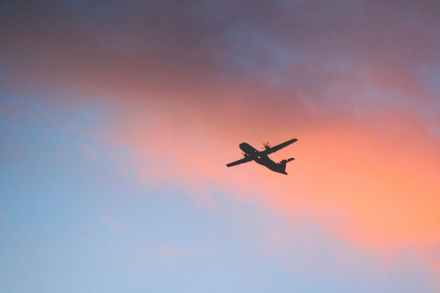
April blossoms

Easter and Passover are late in April this year, which rather complicates the semester breaks of the university; the weather remains unsettled, and at present (6:30 pm, Eastern Time), I look out my north-facing window at bright evening light, lengthening shadows, and the narcissus and shadblow trees in bloom.

I have some visiting to do and may not be posting for a day or so–but will manage to do so if I can; and I will endeavor to at least compose one (I can at best promise one) poem per day even if I don’t get to this blog to post it.

[Note: This is more a reminder to myself than to my readers, who I’m sure have more  significant things to do than to keep track of whether I am holding to my discipline for National Poetry Month.]
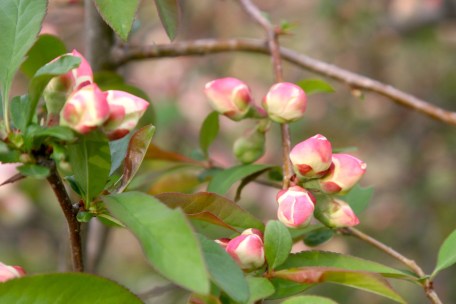
IMG_6022

Aesthetic Potential

In her yard stood a large quince
which was her favorite flower, she said
though she admitted the bushes
ill-shaped and far too thorny,
the blossoms, though early, unscented
and often sparse or inward-facing,
simple in form, not good for cutting.
The fruits sour, useful only in jelly
which she never bothers putting up
anymore, the branches susceptible to rust.
It looks both forlorn and nasty all winter.
I like its tenacity, she told me, but also
its tenderness. For no other shrub
bears buds with such multi-colored
promise, that might open into anything—
sweet, complex, showy. Though it
doesn’t deliver, April’s bees indulge.
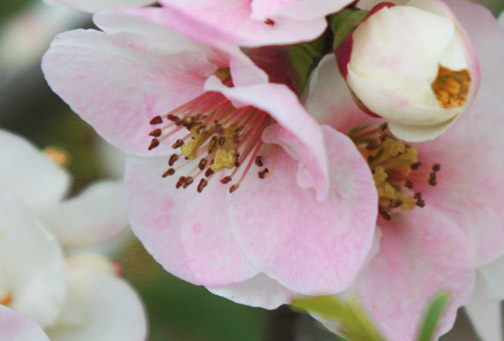
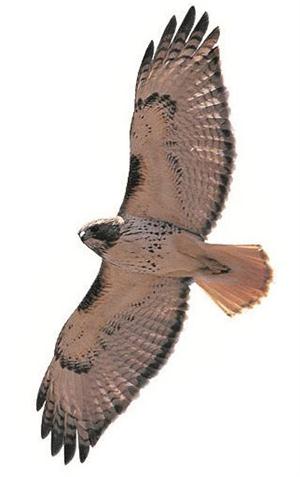
photo by Ann E. Michael

Distractions

I know that many social critics these days, and many educators, complain that there are too many distractions in human lives. Social media, pop-up ads online, brief click-bait “articles” and screamer headlines, visuals that cause decreased attention spans, too much audiovisual stimulus brain noise.

I think I agree with them, but there are days I need distraction. My distraction tends to be of a non-electronically-mediated variety, but it is distraction all the same.

~

Diversion

It’s the hawk crying
or the crows vying
for territory
in the overstory,
maple trees and ash
and pine awash
with pollen and dew.
It’s the long view
the ache that underpins
what some call sins
as though pain’s earned.
Unconcerned
with absolution
the birds have won
my attention–
birds, and one
ray of sun.

redtail


National Poetry Month poem-a-day challenge for day 17.

Burning

letter I t’s fascinating to me how memory and associations work; this weirdly human cognitive process (or set of connective processes) seems to wire us for poetry, for art, for metaphor, analogy, and symbolism–for dreams and the surreal, and for curiosity and wonderment.

I visited the Cathedral of Notre Dame when I was in Paris at age 16, an experience indelible in my mind. And yet, what arrived when I sat down to write my poem for this particular April day is a different, though related, image and experience. One I had not thought about for many years, not since this post, probably.

~

Cathedral, Burning

In a work of fiction, the church aflame would act as symbol; in a sermon,
as analogy, something metaphorical in both church and fire; but listen,
my childhood church, First Presbyterian of Yonkers, burned to the ground–
steeple towers, bricks, stained glass, oak pews–in 1968, faulty electric
wires, not an act of God, nothing symbolic about it, no medieval art, no
gargoyles, no rose window; and I can attest to fire’s brute facts, the physics
of heat, the combustion chemistry my father’s brother studied for years, how
even stone can change in fire, transmute, char, chip, and timbers light up
like a droughty forest, glass fused into new-made forms and smoke erupting
to chorus its own pronouncement louder than prayer; and there is no alleluia
yet there is no satan, only what the earth is made of changing its form
(molecular re-arrangements) but not its substance, which is earth, and ours.
~

Archival photo here.

Half-way through

Night-storm

Then, the flood: flash. Side of road overwashed
as we are washed over. Swept. Wind is the broom
and we the debris. Unnecessary as dust or crumbs.
What name can we give to this occurrence? Call it
natural. Disaster. Or just a Thing That Happens.
Not that the name means much to us once we drown
in it, sucked under and curled into water’s embrace
whether sea or river or the lake become enraged
by thunderous sky or thunderous quaking crusts
the planet [they say] possesses. Loose scutes or
scales. Loose bark, like a tree. Pieces of slate
shorn sideways. Shear. Water. A species of bird,
Calonectris, that touches earth only to breed.
They skim sea. We cannot. We tumble under, breath
withheld until we can no longer wait and inhale
water. Absent our past gills, we inundate our lungs.
The crash of a body blasted from surf to shore.
Gasping. Thus I waken, shaken with sobs, damp to
the core, bruised, stiff, coated in mud and sand.
I wonder. All that inside me. As though I could know.
Sense the absence after the dwindling and oblivion.
Or is it creativity–imagining swell and loss?
Which may be nothing. Nothing like this dream.
~

Today marks the halfway point in my challenge to myself to write a poem a day for National Poetry Month. Is it getting easier yet? (No.)

Tending, clearing

According to the Chinese lunisolar calendar, between now and the late April rains one should tend to the graves of one’s ancestors. This period goes by the name 清明, or qīngmíng, and the weeks are designated “clear and bright.”

In my part of the world, we experience a mix of rainy and clear; but the days are warming and the grass greener. The annual winter weeds pull up easily, and the tough perennial weeds emerge before the grasses. The moist, newly-thawed soil makes levering those weeds less difficult now than later in the year.

I, however, do not live anywhere near my ancestors’ graves.

~

Clearing

Clear the patch that yields
to memory
clutch the hand hoe
and the trowel
disturbing early spring’s
small bees and gnats
beneath the plum’s
blossoming branches

Weeds encroach here
grasses grown too high
a nearby stone
toppled and broken
tells us about
forgetfulness

Insects surround
the quiet morning
active each year as warmth
moves into earth
the newt that curls
under last year’s leaf
finds sustenance

As do we
in our earnest effort
clearing as skies clear
each handful of chickweed
representing thanks
to those whose efforts
and accidents
brought us into
the world

~

getPart-1

photo by David Sloan

Brevity

Haiku are even shorter than tanka, though in some ways they are easier to compose. Herewith, two versions of a haiku moment, both in draft form.

I began a longer piece this morning but could not complete it…maybe tomorrow…or another day.

~

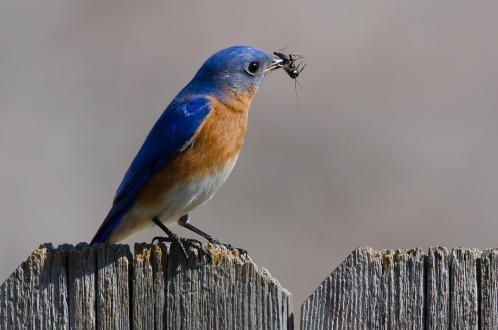
bluebird on fence post
tree frogs calling–
insects have wakened

~~

bright bluebird
under overcast sky
an April day

~


Eastern Bluebird-4299_Laurie Lawler_Texas_2013_GBBC_KK

Eastern bluebird photo thanks to Photo: Laurie Lawler/Great Backyard Bird Count Participant, Audubon Society website.
 

Playing

Sometimes a “skinny” poem’s fun to play with. And breaking up the expected in a rather ornery mood.
~

airplane on sky during golden hour

Aviatrix

I get off on
it, scoff at
ground
walkers
down be
lo & be
hold—
sky waves
a big hello.
Nobody drags
me under
no beast nor
man can
tether me
to lack
luster earth.
Wind, cloud
I am a
light o, how
I hate
going back.

~

Photo by Azim Islam on Pexels.com

Lustratio*

Another day, another draft!

This challenge has not gotten easier yet. Sometimes, disciplined practice leads to a certain ease or confidence–that’s always the hope, anyway, that I might find amid the drafts something wonderful. My model here would be someone like William Stafford, who sat down every morning to draft at least one poem (and sometimes they were wonderful). The Poetry Foundation’s site says:

Stafford reports that he sits alone in the early morning and writes down whatever occurs to him, following his impulses. “It is like fishing,” he says, and he must be receptive and “willing to fail. If I am to keep writing, I cannot bother to insist on high standards…. I am following a process that leads so wildly and originally into new territory that no judgment can at the moment be made about values, significance, and so on…. I am headlong to discover.”

At the end of this National Poetry Month, I will give myself a reckoning as to whether the NaPoWriMo process has been at all helpful to me as a poet. It may be it proves beneficial in some other way…

~

Lustratio

Her friends died young when she herself
was young and unbaptized in the realm of dying

Yet you would think her better prepared–for there were
car crashes, suicides, fires, the blood plague taking
its long and steady toll

There were the risk-takers certain of their immortality
who drowned or fell from cliffs or grace
through the needle or the drug or drink and those
whose hearts took upon themselves
a need to hurry beyond the body’s balance and
whose breastbones could not contain them

You would think her ready for the news that someone
loved or once loved or otherwise connected
(Milgram’s six degrees of separation theory)
had died however people do when they are young–
embolism, cancer, accident, murder

Slow or sudden–it’s not as if the difference
though there is one, matters
because you’d think, by now, when she is no longer young
the facts of gone and after and remembering
the evidence of dying and grief’s enormous cosmos
would have carved for her a familiar space

A kind of purifying trauma–as if the bulla and procession
could protect her or her community from harm
when harm is what the world offers now and then
and we must bid it enter even if we are young

Even when it is unwelcome.

~

NOTE:

* Lustratio was an ancient Greek purification and protection ritual for children or for cities, farms, and other precious items; in the case of a male child, sometimes it was a naming ceremony at which the baby would receive a small, gold bulla (charm in the shape of a bull’s head) as a blessing or for protection. Ancient historians describe it in several ways, but most frequently mention a procession and animal sacrifice.

Rhyme

Rhyme comes easily to some people. For me, rhyme presents no problem as far as lighter verse, parodies, ditties–which have their place in literature and in culture. In more introspective or reflective verse, though, rhyme tends to elude me and often seems not to mesh with the poem’s mood. Revising toward rhyme often succeeds in assisting the metaphors, imagery, or tone, however. Usually assisted by some sort of metrical strategy.

Today my poem-draft-a-day offers evidence of how rhyme can appear spontaneously in a poem’s first version.

If you are interested, here’s an excellent book on rhyme in poetry: Rhyme’s Reason, by John Hollander & Richard Wilbur–welcome authorities on the subject.

Quite long ago now, I dwelt in cities for a few years. The contrast to my current environment startles me now and then, makes me remember those years.

~

Outmoded

His back aches. It hurts to move.
How did he ever get so old?
The work it takes to walk a block
to buy a paper! Then he’s told
the news is found online, where he
can read it on a mobile phone.

He hates the sound of that idea–
the text so small–and, when alone,
he likes the paper’s rustling noise.
It’s domestic. One of life’s joys.
The work and pain are thus worthwhile.
That, and the newsstand vendor’s smile.

~

man sitting reading newspaper

Photo by Daria Obymaha on Pexels.com

Favorite poem project

coal

Last night, I had the pleasure of participating in a Favorite Poem Project reading at my university.  I have many favorite poems, but this time I chose to read Audre Lorde’s “Coal”, because of how powerfully it spoke to me when I encountered it as a very young woman in a Contemporary Women’s Literature course in my undergraduate years. Reading it aloud to the audience, I realized the poem speaks to me even now–though in a slightly different way, altered by life experience.


~

My poem for Day 9 seems to evoke Han Dynasty style poetry.

~

Warm Spring Night

I was not drinking wine
alone on the porch
I was accompanied by clouds
two species of frogs
toads whose squeaking chorused
sex and risk–
also the silent predators
awaiting the amphibian
awakening
hungry after winter
among this vast assembly
I had least to gain
and least to lose
I savored the taste
of my situation
under the near-new moon.

~

amphibian animal animal photography blur

Photo by Plus Blanc Studio on Pexels.com