Lists

There can be beauty in a list: its specificity, also the rhythm and sound–which order does the poet choose for each word? That matters. Chronology perhaps; category, like the scientist; or else sound, such as alliteration; or possibly by the thread of some concatenation that gradually creates associations. The logic of a list poem differs from other forms of lists.

I always think of Whitman as an early and consummate “list poet,” though a great many of his poems do not rely on the strategy. There are list poems that employ anaphora and those that build through phrases. Others rely on modifiers that escalate or change tone to surprise the reader. In my own process it has been useful to begin drafting poems through listing, though often I abandon the list when I revise.

Also, I teach myself about the world and its people, environs, and ideas through lists.

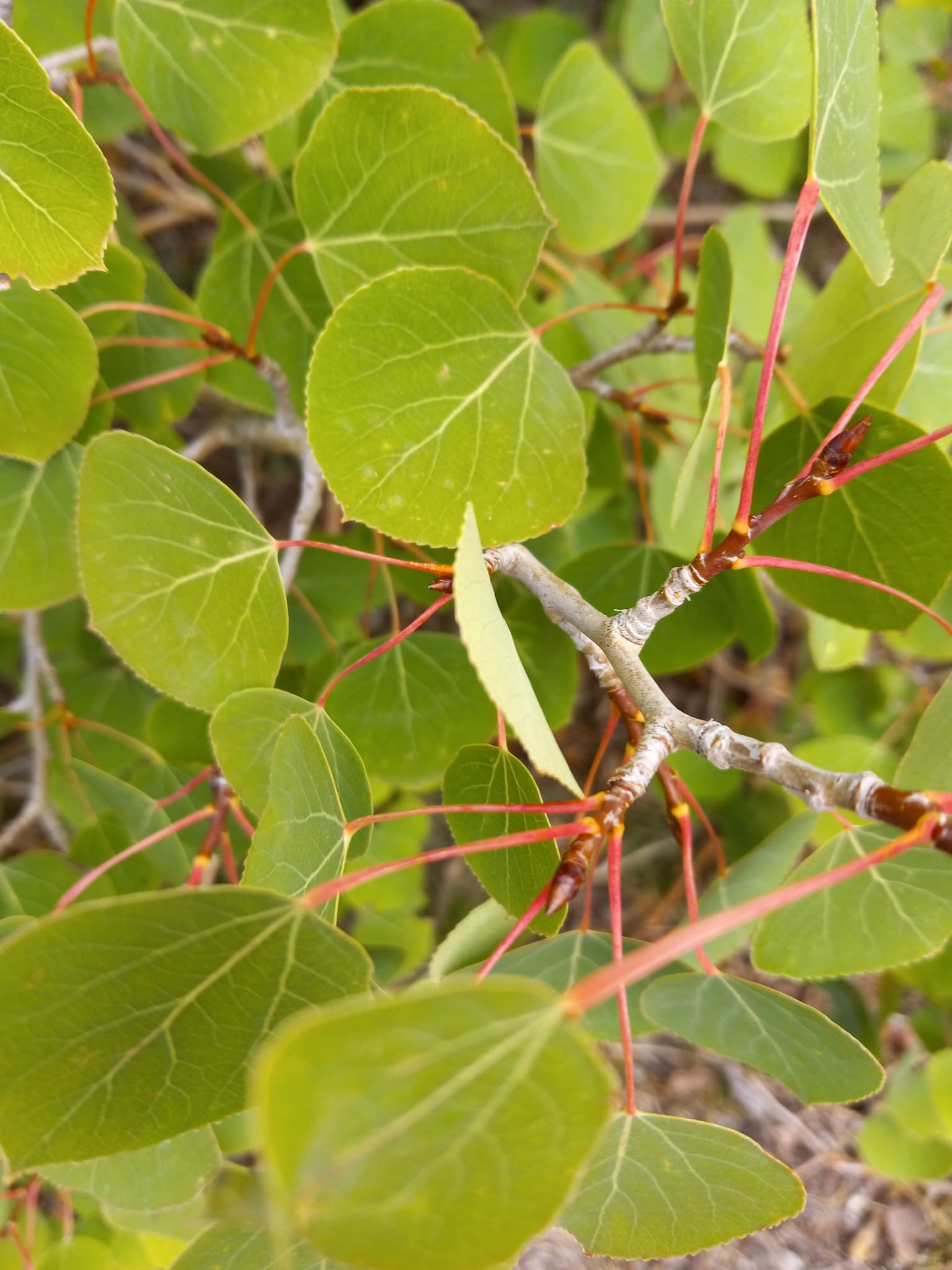
For example, having strayed temporarily from my home region, I’m getting acquainted with a “new” place by making lists of birds, trees, flowers–yeah, the naming-things approach so basic to human beings, like when my children were just learning to talk and conversation with them consisted largely of naming objects or actions.

This is not a poem:

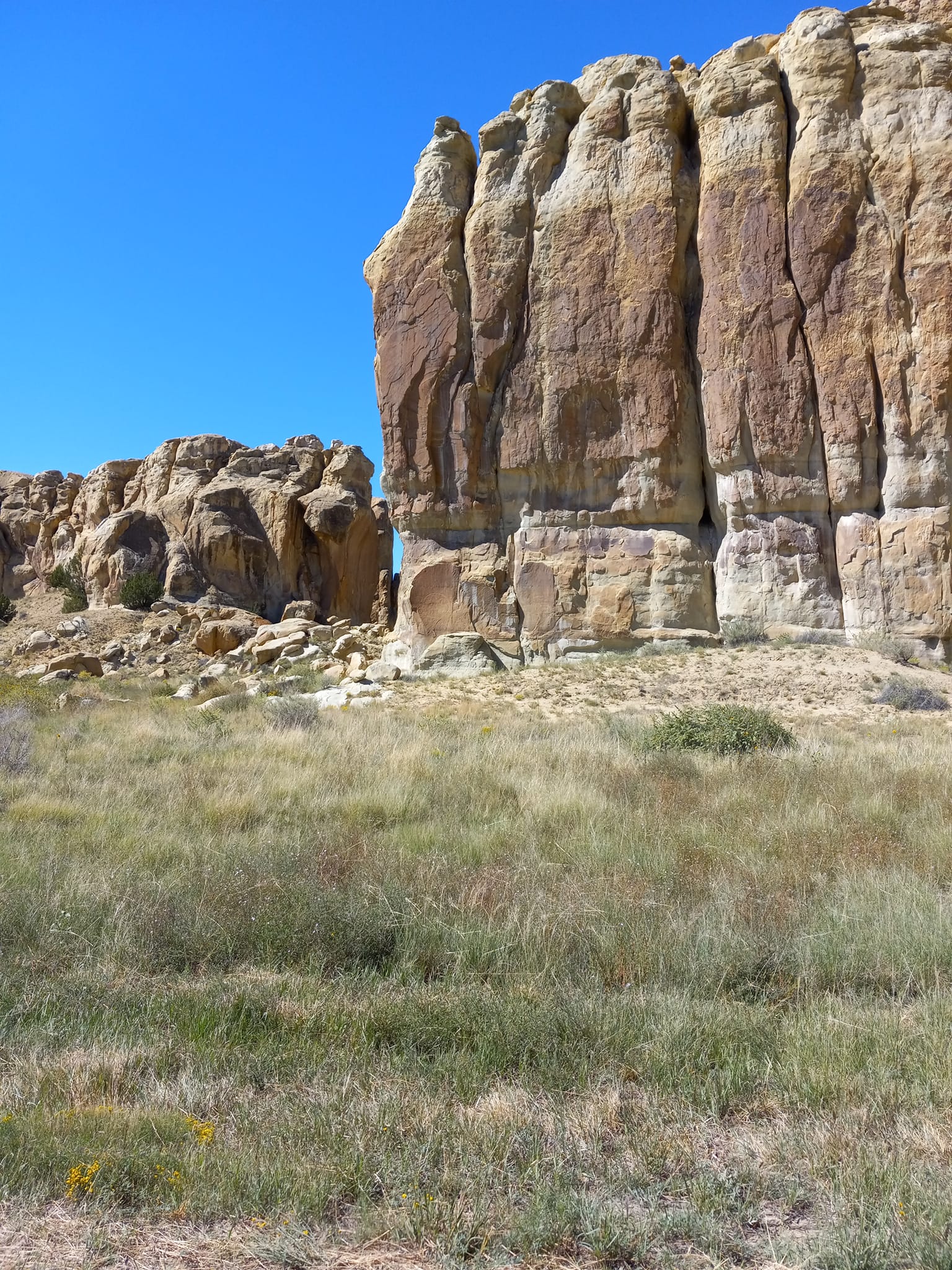
Pygmy nuthatch, juniper titmouse, pinyon jay. Gambel oak, Abert’s squirrel, pinacate stink beetle, skink. Quaking aspen, limber pine. Common raven, Woodhouse’s scrub-jay, fireweed, globemallow, bear corn, oak gall, crow. Pinyon, cholla, Ponderosa pine, alligator juniper, Apache plume, sandwort, groundsel. Gneiss, granite, gray oak, spotted towhee, rabbitbrush, bajada, arroyo, muttongrass, mesa, schist.
~

However, these words now evoke images, sounds, memories, senses that–who knows?–may end up in poems eventually. Because poetry is about and in the world.

Restorative

I often start a post with a mini-weather report; I guess that’s one way I prepare myself to write, centering myself in the environment I inhabit. Our region received much-needed rain this weekend, but I was out of town–and the weather in Chicago was glorious: cloudless, crisp, mild, a light breeze. Odd, though, how weather conditions can evoke strong memories for me. The amazing clarity of the sky and air reminded me vividly of September 11, 2001, and the two days following it when we had a run of glorious weather and a mood of intense disturbance all around us…and no plane traffic at all. It took a few moments for that recall to settle in, and a few minutes more to let the memory go so I could enjoy the present moment.

~

I was in the Chicago area–Highland Park– for the book launch of The Red Queen Hypothesis. Many thanks to my publisher, Julie Dotson, and the welcoming and supportive group of poets and audience; the reading went well, and we sold some books (always a satisfying thing). I met quite a few interesting people and learned a bit about the city of Highland Park, its relatively long history, its parks, architecture, the storied Ravinia Festival, and how the city’s been coping since the July 4 tragedy last year. Travel always offers perspective. In this case, travel offered community as well: a lively community of people who support the literary arts.

~

I even got to be recorded, with Jennifer Dotson as the interviewer–a first for me. Here’s the link:

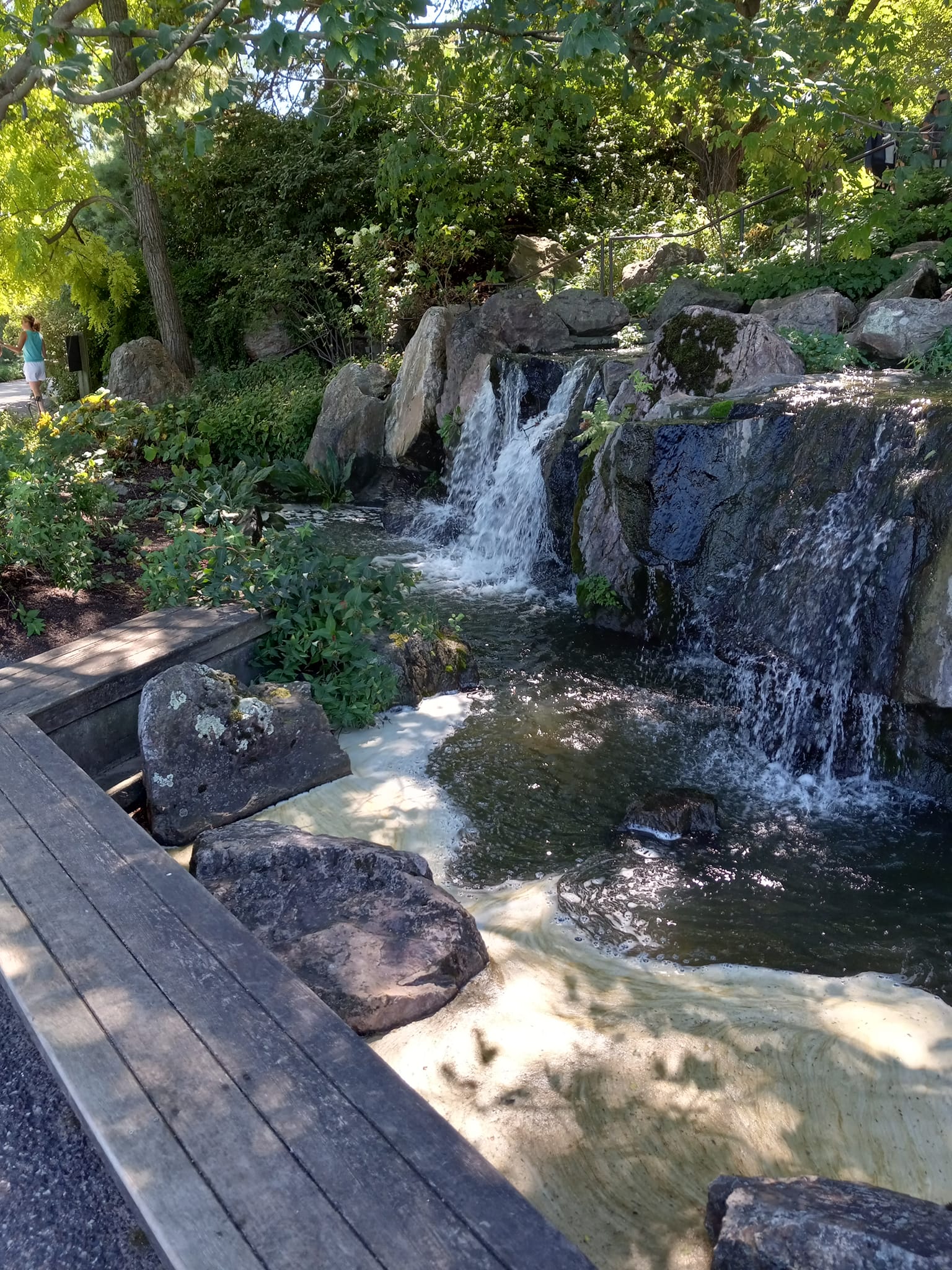
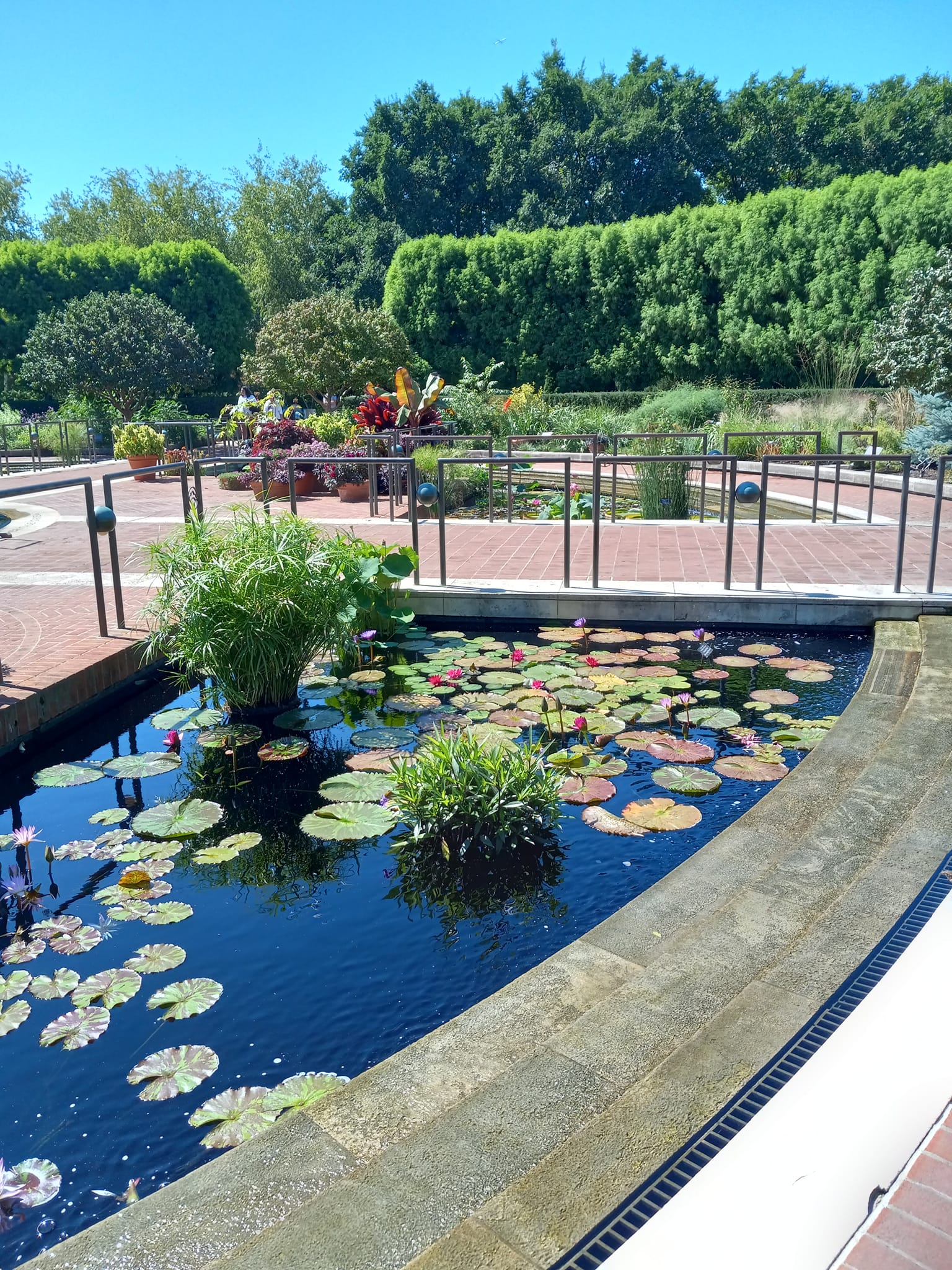
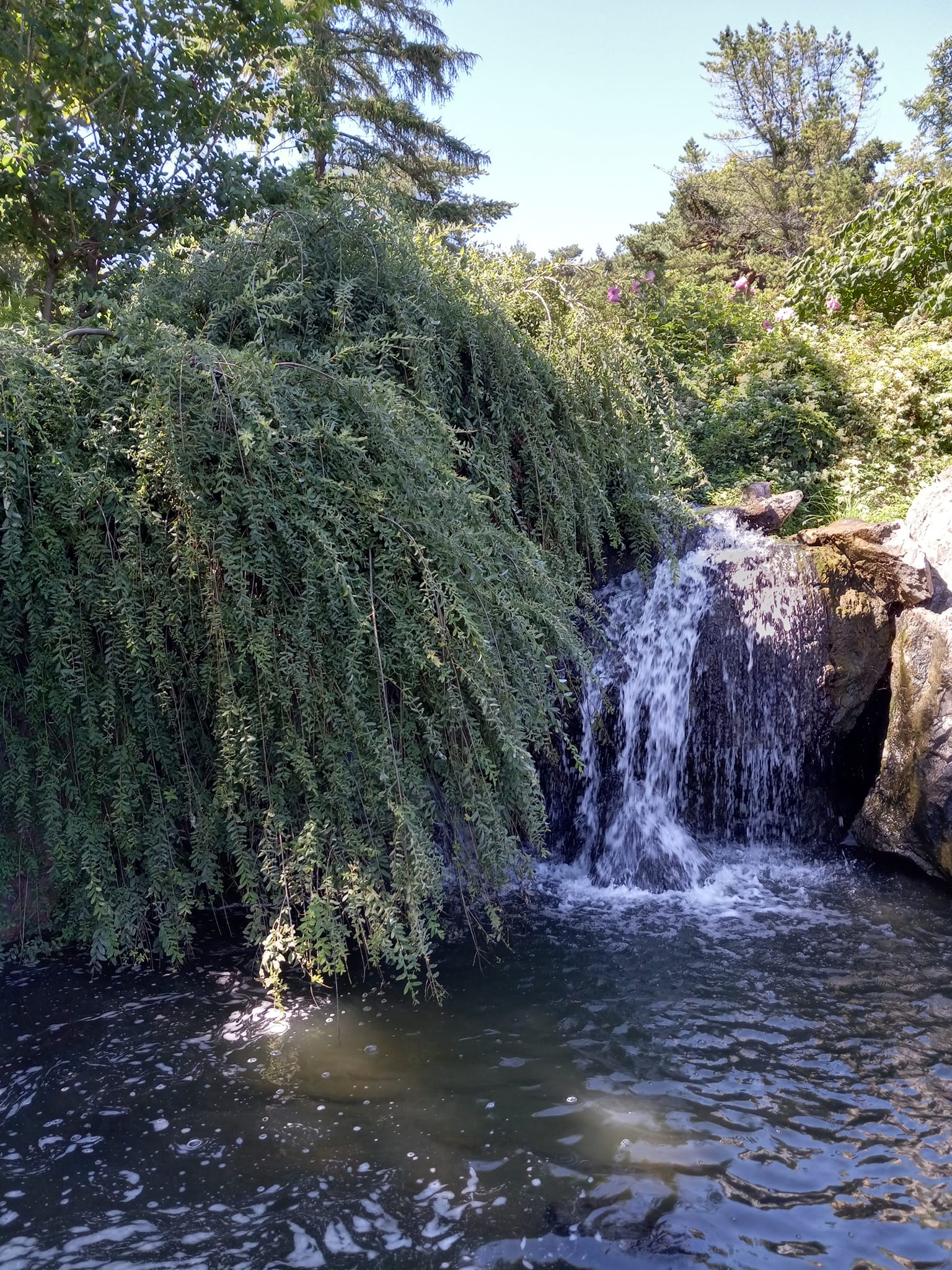
My generous poet-host, Julie Isaacson, knew from my writing and my biography that I would enjoy a walk around the Chicago Botanic Gardens–and she was so right! The gardens offered just the respite I needed after airplane travel. We hadn’t the time to stroll all 280+ acres, but the chance to walk amid trees and beside water in the middle of an urban expanse was genuinely restorative.

Now I am pulling weeds and pruning for the approaching autumn, activities that allow me to settle into myself internally and which sometimes result in poem drafts. Please wish me luck on both endeavors!

Language power

In advance of my reading this weekend, Jennifer Dotson of Highland Park Poetry asked a few questions and created the flyer below. I especially like the last question and have more to say about it below.

~

The graffiti on the NJ and NY Palisades sent a thrill through my childish mind and body. I first recall seeing words spray-painted on the cliffs when I was under age five and barely cognizant of letter forms. The view puzzled and frightened me, partly because of the heights (I was acrophobic from a very early age) and partly because I had no idea what those huge, high-up letters signified. When I got to kindergarten and began deciphering letters, the graffiti confused me because it contained signs that weren’t in the alphabet I was learning at school: Ω, Φ, the scary-looking Ψ; θ, Δ, and Σ, which resembled a capital E but clearly wasn’t. Once I could read and still could not understand them, I asked my father what those letters were and why they were up there on the rocks. They reminded me of the embroidered on some of the altar cloths in church, but I didn’t know what that stood for, either.

Frat boys from the colleges painted their Greek symbols on the rocks long before spray paint was invented, my dad said, possibly as part of hazing rituals. By the time I was a child, the 50s-era “greasers” had begun announcing their love for Nancy or Tina through daring feats of rock and bridge painting; then the graffiti era came into full swing after the mid-sixties, and the process got colorful–the Greek symbols vanished, replaced by “tags.” All of which just reinforces the importance of words in the world.

I will never climb up high to write or declaim my own words, as heights continue to terrify me. But I continue to push ideas, words, arguments, pleas, elegies, and gratitude into the world. Writing is the only way I know how to do that. It’ll have to be enough.

Script, postscript

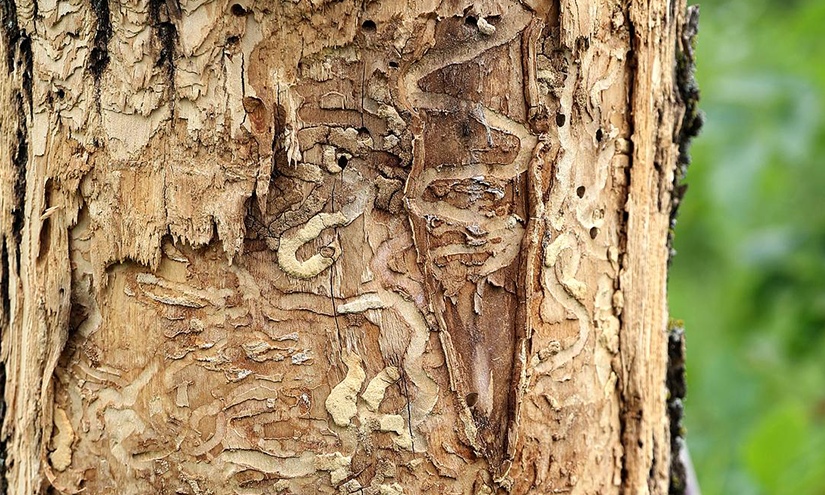
The weather has been glorious lately, which has the downside of getting rather droughty. No rain in the forecast, either, so it is time for supplemental watering if I want to keep harvesting from the vegetable garden. There’s not much left there, though; I may just wait things out and save the water. Meanwhile, some of our days have recently been punctuated by the sound of green ash limbs crashing in the nearby woods. When I investigate the trees, there are the telltale scribbles of ash borer on the trunks. The marks look like script.

I learned, while teaching college freshmen the past few years, that many younger adults do not know how to write or even to read script. Many children never get the lessons in handwriting in the second through fourth grades the way I did. Instead, they learn keyboarding–a skill I got to in my junior year of high school but never really have mastered (yes, even now I use a self-developed version that’s sort of an advanced hunt-and-peck method). It’s hard to believe that reading script is a task that will be relegated to specialists in years to come, but I shouldn’t be surprised if that’s what happens. To many of my college age students, handwritten script in English is almost indistinguishable from the marks of ash borers. They don’t see the need for that particular skill. Handwriting is going the way of letter-writing.

Perhaps we live in a post-script world?

I have been thinking about the handwritten word recently because of a recent incident while visiting my mother. She received a small refund check from an insurer, and though she understood what it was and that she no longer uses her checking account–we siblings take care of that through power of attorney–she was confused about what to do with it. “Sign it, Mom,” I told her, offering her a pen. “We’ll deposit it for you.” I turned the check over and pointed to the line for signature on the back.

She wavered, pen in the air. “I don’t…I don’t,” she said (her aphasia has advanced past the point of expressing full sentences). It took me a moment to realize that she could not recall how to sign her name. I placed my hand around hers and helped her start with the capital B.

I didn’t cry, but the experience hasn’t left me alone. I suppose there may be a poem in this incident, but if so, it’s a sorrowful one.