AWP conference 2013

I am heading up to Boston next week with about nine thousand other writers, writer-educators, writer-publishers, academics, and business people. The annual Associated Writing Programs conference will be in session March 6-10. I posted about the conference briefly last year...and last year’s conference introduced me to Brian Boyd’s work on cognition and storytelling. So I am hopeful that this year’s programs and panels will prove equally enlightening.

The conference offers a chance to meet or at least hear some of my favorite writers and to talk with interesting colleagues. Best of all, there are thousands upon thousands of books and literary magazines to browse. If I feel shy, I can interact with books at the Bookfair and “meet” my fellow writers through their polished texts instead of face-to-face (or body-to-body in the packed bar). The main problem with any event of this kind is the lack of places for introverts to regain equilibrium. At AWP, there are quite a few introverts; and people tend to claim a spot by a window, balcony, or corner somewhere in the conference area and send out “don’t disturb me, I’m recharging” body-language signals. Or they eat alone in the restaurant without looking too uncomfortable about the status of solo diner.

Writers understand.

~

Lori A. May offers her insights on the conference here, with a focus on people who are considering graduate school programs. I will be participating in a panel on that topic: the Low-Residency MFA. My main interests, however, remain bibliophile-oriented: discovering poets whose work I haven’t encountered before, finding new books by favorite poets, learning who is editing which long-running journals, and finding new journals to peruse.

By contrast, here’s a lovely, very funny article by Kay Ryan that appeared in Poetry magazine in 2005. The second paragraph sets the tone:

Once, when I was about twenty-five and not yet entirely aware of the extremity of my unclubbability, I did try to go to a writers conference. Thirty minutes into the keynote address I had a migraine. It turns out I have an aversion to cooperative endeavors of all sorts. I couldn’t imagine making a play or movie, for instance; so many people involved. I don’t like orchestral music. I don’t like team sports. I love the solitary, the hermetic, the cranky self-taught. Make mine the desert saints, the pole-sitters, the endurance cyclists, the artist who paints rocks cast from bronze so that they look exactly like the rocks they were cast from; you can’t tell the difference when they’re side by side. It took her years to do a pocketful. You just know she doesn’t go to art conferences. Certainly not zillion-strong international ones, giant wheeling circuses of panel discussions.

How, then, one wonders, can it be that I have just come back from AWP’s annual conference in Vancouver, treading upon a lifetime of preferring not to?

I fear I am rather in her camp. I do like orchestral music, but I prefer chamber ensembles. I don’t care for team sports. I love the solitaries, the St. Simeon Stylites of the world; there’s a bit of the hermit in me. Crowds–shudder! Yet a conference of writers at least offers the promise that I will be among others who understand how I feel and who feel that way themselves now and then.

St. Simeon Stylites

St. Simeon Stylites

Another advantageous aspect to this event is that I get a chance to talk about poetry and creative writing with people who are as passionate about it as I am. I can discuss the logic and music behind free verse line breaks and learn contemporary writers’ opinions about the sonnet. Is the metaphor dead? Does symbolism have any place in modern writing? Is hypertext the new L=A=N=G=U=A=G=E poetry? Does anyone understand the significance of the tattoo that says “December 10, 1830” on that young woman’s arm? (It’s Emily Dickinson’s birthday). I can talk about my book Water-Rites with people who are working on getting their own poems published and discuss current projects with folks who are sure to have ideas and advice to share.

So the event is worth a bit of discomfort on my part. If I get too overwhelmed, I can go back to my room or walk the chilly Boston streets or have a chat over coffee with just one person at a time.

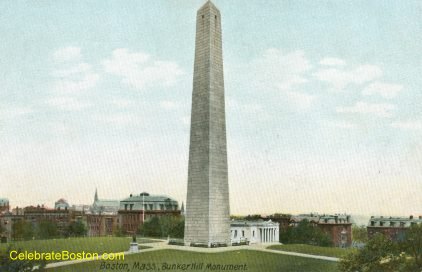
Or maybe find a pillar in a park somewhere. I think I recall one at Bunker Hill….

bunker-hill-monument

Reading in Allentown

Tonight, I will be reading at one of my favorite places: A public library. With one of my favorite fellow-writers, April Lindner.

Information on my Events page. More later…

Another Reading reading

On All Saints’ Day, November 1st, I’ll be reading poetry in Reading Pennsylvania–again! And this time, I’ll be accompanied by my fellow Goddard alumna, the dynamic and talented Barbara DeCesare, author of Jigsaw Eyesore and Silent Type.

Reading, PA is home to GoggleWorks, a former goggle-making factory that now serves as studio, theater, and gallery space for Berks County area artists and craftspeople of all kinds. Small, struggling cities like Reading are turning to the arts as a means to fill abandoned factory space and create an economic and cultural reason to keep downtown areas alive. Sometimes these efforts succeed, sometimes they don’t. GoggleWorks opened in its current incarnation in 2005. So far, that’s a 7-year run, supported through grants and donations and rent. I am optimistic about GoggleWorks and about other such endeavors, including Bethlehem PA’s Banana Factory, which is a little closer to my neighborhood. I strongly believe the arts belong in our neighborhoods, in our school curricula, and in our lives.

I’m thrilled, therefore, to be reading from my book, Water-Rites, at 6 pm November 1st at GoggleWorks’ Cucina Cafe.

And I’m thrilled to be reading with Barbara, whose work is funny, poignant, imaginative, fierce, and charming by turns.

November 1st is the Day of the Dead in Mexico, a good day for elegies and to celebrate the lives of those we’ve loved and lost. I will be thinking of David Dunn, among other dear ones. And in honor of All Saints’ Day, I may also read a poem or two about saints; recently, I’ve composed a few imaginary lives of saints poems.

I have no idea what Barbara DeCesare has up her sleeve for this event, but it is certain to be delightful. If you are in the region, stop by at 6 pm. I believe an open mic follows the reading.

water-rites by Ann E Michael

Arts festival

Early autumn is a lovely time for festivals. The city of Easton, PA–situated on the Delaware River–is hosting its 15 annual Riverside Festival of the Arts. There will be music, art shows, food, etc. on September 22 and 23.


At noon on the 23rd, I will be reading poetry with Diane Lockward at the amphitheater. Next to the river: a perfect site to read from my book Water-Rites.

~

The link is here. Or check the Events tab above.


A moment of self-promotion

It’s a busy week. I am glad to note that my local newspaper (yes, our area still has a local newspaper) published the following article about my new book, Water-Rites. Many thanks to Collin Roche and Jodi Duckett at the Call.

Profile of Ann E. Michael in Allentown Morning Call.

Thanks for reading, and for everyone’s support for poetry.

Memorial

Today is the anniversary of my friend David Dunn’s passing into the beyond, (1999).

And yesterday, I attended the memorial service for theologian, professor, writer, social activist, and family friend, Walter Wink. The memorial was held at the James Chapel of Union Theological Seminary, where Walter attended grad school with my dad and where Wink taught for awhile in the 1970s before moving to Auburn Seminary.

Words that stayed with me hours and hours after the services: iconoclast. creativity. non-violence. scholarship. action. impishness. curiosity. reconciliation.

I’ve read three of Walter’s books and some of his articles. He was a brilliant and unusual man, optimistic, forward-thinking, that rare combination of someone who is both a thinker/writer and a doer/person of action. I include here an excerpt of one of his articles on The Sermon on the Mount, well worth reading in its entirely for the force of his rational as well as spiritual argument, a relevant and timely reasoning for cognitive awareness and non-violent action in the lives of human beings who want to value themselves and others as human beings–not as inferiors, not as “other,” not as enemy–with dignity and compassion.

from–  http://www.cres.org/star/_wink.htm

Excerpt from Wink’s Jesus’ Third Way

“Seize the moral initiative
Find a creative alternative to violence
Assert your own humanity and dignity as a person
Meet force with ridicule or humor
Break the cycle of humiliation
Refuse to submit or to accept the inferior position
Expose the injustice of the system
Take control of the power dynamic
Shame the oppressor into repentance
Stand your ground
Make the Powers make decisions for which they are not   prepared
Recognize your own power
Be willing to suffer rather than retaliate
Force the oppressor to see you in a new light
Deprive the oppressor of a situation where a show of force   is effective
Be willing to undergo the penalty of breaking unjust laws
Die to fear of the old order and its rules
Seek the oppressor’s transformation

….

Gandhi insisted that no one join him who was not willing to take up arms to fight for independence.  They could not freely renounce what they had not entertained.  One cannot pass directly from “Flight” to “Jesus’ Third Way.”  One needs to pass through the “Fight” stage, if only to discover one’s own inner strength and capacity for violence.  We need to learn to love justice and truth enough to die for them, by violence if nothing else.

Jesus, in short, abhors both passivity and violence.  He articulates, out of the history of his own people’s struggles, a way by which evil can be opposed without being mirrored, the oppressor resisted without being emulated, and the enemy neutralized without being destroyed.  Those who have lived by Jesus’ words–Leo Tolstoy, Mohandas K. Gandhi, Martin Luther King, Jr., Dorothy Day, César Chavez, Adolpho Pérez Esquivel–point us to a new way of confronting evil whose potential for personal and social transformation we are only beginning to grasp today. Beyond Just War and Pacifism Just war theory was founded in part on a misinterpretation of “Resist not evil” (Matt. 5:39), which Augustine regarded as an absolute command to non-resistance of evil. No Christian, he argued, can take up arms in self-defense, therefore, but must submit passively even to death.  Nor can Christians defend themselves against injustice, but must willingly collaborate in their own ruin.  But what, asked Augustine, if my neighbors are being thus treated?  Then the love commandment requires me to take up arms if necessary to defend them.

But Jesus did not teach non-resistance.  Rather, he disavowed violent resistance in favor of nonviolent resistance.  Of course Christians must resist evil!  No decent human being could conceivably stand by and watch innocents suffer without trying to do, or at least wishing to do, something to save them.  The question is simply one of means.  Likewise Christians are not forbidden by Jesus to engage in self-defense.  But they are to do so nonviolently.  Jesus did not teach supine passivity in the face of evil.  That was precisely what he was attempting to overcome!

Pacifism, in its Christian forms, was often based on the same misinterpretation of Jesus’ teaching in Matt. 5:38-42.  It too understood Jesus to be commanding non-resistance.  Consequently, some pacifists refuse to engage in nonviolent direct action or civil disobedience, on the ground that such actions are coercive.  Non-resistance, they believe, only licenses passive resistance.  Hence the confusion between “pacifism” and “passivism” has not been completely unfounded.

Jesus’ third way is coercive, insofar as it forces oppressors to make choices they would rather not make.  But it is non-lethal, the great advantage of which is that, if we have chosen a mistaken course, our opponents are still alive to benefit from our apologies.  The same exegesis that undermines the Scriptural ground from traditional just war theory also erodes the foundation of non-resistant pacifism.  Jesus’ teaching carries us beyond just war and pacifism, to a militant nonviolence that actualizes already in the present the ethos of God’s domination-free future.

Out of the heart of the prophetic tradition, Jesus engaged the Domination System in both its outer and spiritual manifestations.  His teaching on nonviolence forms the charter for a way of being in the world that breaks the spiral of violence.  Jesus here reveals a way to fight evil with all our power without being transformed into the very evil we fight.  It is a way–the only way possible–of not becoming what we hate. “Do not counter evil in kind”–this insight is the distilled essence, stated with sublime simplicity, of the meaning of the cross.  It is time the church stops limping between just war theory and nonresistant pacifism and follows Jesus on his nonviolent way.”

–Walter Wink

Interview

“Who has not sat, afraid, before his heart’s
curtain?  It rose:           the scenery of farewell.
Easy to recognize. The well-known garden…”
–Rainer Maria Rilke
~

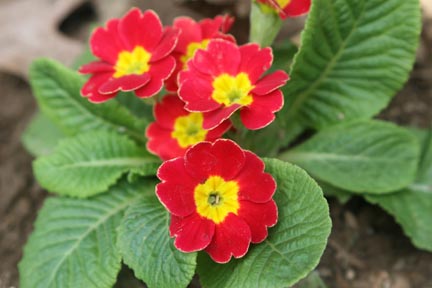
primrose by Ann E. Michael

Herewith, a recap of my side (much edited) of the ArtsAlive! conversation this past Sunday at Soft Machine Gallery. SØrina Higgins was also reading and being interviewed by Lehigh Valley Arts Council director Randall Forte, but I can’t adequately summarize her insightful comments. You can find her book here, however.

~

RF: What is your favorite poem in the collection Water-Rites?

AM: I hate to try to pin down a favorite poem, by my favorite writers or by myself. I once heard Billy Collins reply to that question by saying his favorite poem is always the one he is currently in the process of writing. That’s kind of cleverly evasive, but it’s also a little true. Though sometimes I hate the poem I’m currently working on…

I like the title poem, but I get a kick out of “Doxology” because it is so odd; and perhaps my favorite poem is “Tailfeathers” or “The Big Umbrella” or, for purely sentimental reasons—not because it is my best poem—“At Bull’s Head Pond.”

~
RF: What was the most difficult poem to write?

AM: The most difficult poem to complete was probably the long poem in the center of the collection, “The Valley, the Whitetail: A History.” That was difficult in terms of managing the length and the purpose of the poem; also, it required some research. Yes, occasionally poems take quite a bit of research—I have no desire to be inaccurate when I am writing about history or geology or botany (though I often am, inadvertently, despite my best efforts). Not all poetry is solely a work of the imagination.

There are other ways to be “difficult” however. A poem that was hard to complete was the elegy “I Shall Never Be Nearer,” which came quickly initially but took a long, long time to revise and to come to terms with. Not all of these poems—or any of the poems I write—are “about” me or my experiences, I mean, not as biographical as they may seem. But this poem does deal very specifically with the death of my close friend. It was the day after I learned of his passing, and, completely numbed and sleepless, I went with my family for a canoe trip on the lake. I titled this poem “Single Lines” for several years while I was revising it, because the images came to me in – well – single lines. Single images. I must have revised little tiny things in it oh, about 14 times. So I guess that means it was “hard to write.”

~

RF: So, the opposite question. Which poem was easiest to write?

AM: Some poems do come quickly and relatively easily. Not often, and sometimes those that come rapidly end up being sort of crappy poems. But “Lot’s Wife” only underwent about 2-3 drafts and mainly arrived, haiku-like, as a visual image that carried with it some cultural freight.

Another poem that arrived rather miraculously is “River by River.” That was the result of a car trip to Indiana with my kids and is kind of a list poem. It spooled out as a result of a kind of inadvertent prompt. Will Greenway and Elton Glaser were looking for poems about Ohio for an anthology. I read the call for work, went back to my notebook about the car trip, and recalled an incident with my son and a roadmap. The editors chose it as the opening poem in the main text of the book—immediately following the preface poem by James Wright. I felt completely graced and humbled.

~

RF: How did you choose the title of the collection?

AM: Early on, while I was working on my graduate thesis project, I chose the title for the book. I’d written the title poem but hadn’t really thought of it as the title poem until I recognized how many of the poems dealt with drought or with bodies of water or rain or artworks that portrayed water. And spelling the second word as “rites” as in ritual, rather than as an other interesting aspect of water—the “rights” to water that have caused so much conflict over the centuries—seemed fitting given that there are also rites associated with death. Funerary rites, religious rites. And rites in the form of chants and dances people have done to invoke rain during times of drought. So there’s a pun there, rights and rites, and I love literary puns.

I wanted to use Steve Tobin’s sculpture as the cover art, and Steve granted the rights for that photo (more rights, legal rights) and Keith at Brick Road approved of the image for the book cover. So I am gratified by all of that. The sculpture is an early work of Tobin’s, when he was making art using surgical glass piping. It’s environmental, site-specific art that really looks like a splashing creek. But it isn’t—it is glass.

~

RF: Tell us about your publishing history and about how and if poetry publishing has changed over the years.

AM: I had my first poem published in a tiny literary journal back in the days of Xerox-ed micro-magazines, 1981 or 82. I’ve been publishing pretty regularly since then, regularly but not ambitiously. Lots of individual poems and essays in individual journals. I had no academic reason to get a book out, and I had no real direction either. It didn’t seem to be on my to-do list when I was in my twenties. Then, at 30, I had my children. Most of my creativity went in the parenting direction, though I continued to write. I didn’t really work toward book publication until about 1999. Then I began to think about it—after David Dunn had died. In fact, I got a chapbook and a full-length collection of his work out after his death. This is hard to do—to convince a publisher to put out a book posthumously. After all, the poet cannot promote his work. That’s hard on small publishers. But I succeeded. So I thought, I guess I can get my own books published. Maybe. And my first collection was a chapbook Spire press published right after I graduated from Goddard, 22 poems about building a house, sort of ecologically-invested nature-type poems.

Things have changed in the world of poetry publishing, but it is still hard to get your work into actual print—ebooks and POD self- or partially-self-published options, as well as the web and blogs, have changed the spirit of the poetry world only marginally, though I do think these options have made it possible for more people to read and encounter poetry. The absence of critical, discerning, well-read editors & proofreaders is a loss, in my opinion; but poetry is finding other ways to deal with that. And those editors are still out there. Underpaid and overworked and cranky, but out there nonetheless. MFA programs, perhaps. Critique groups have maybe replaced salons and absinthe cafes. I don’t know.

~

RF: Any advice for aspiring poets who want to get published?

AM: I’d advise aspiring poets to be ambitious. But there are many ways to be ambitious. I’m a bit of a plodder, but I hang in there. I’m not great at networking or schmoozing or even being sort of normally assertive—I’m quite shy with strangers and hate to ask even small favors…like asking an editor to consider publishing my work. Or asking people to host readings. I mean, that goes with the job, but it’s taken me a long time to get good at doing that. I hate that stuff lots more than I hate being rejected. I don’t take the rejections hard at all. My weaknesses lie in other areas. So I can say, if you want to get published, you might not want to do what I did…anyway, if you are eager to see print soon, you might want to be more assertive and organized. On the other hand, I have been self-promoting rather badly for thirty years; and I’m okay with that because the poems are better after thirty years even if my publicity skills are not.

I’m kind of outside the box as far as the “po-biz” goes. I do my job at the college, which is only marginally poetry-related, and then only when I am teaching a section of intro-to-poetry. (Mostly I teach remedial comp and tutor students in English; I like to remind myself that Kay Ryan has the same kind of job!). I attend conferences when I can get away and when I can afford them; I have taken seminars and workshops over the years, but not religiously or frequently. The “big thing” I did for my so-called career was to get an MFA from Goddard College in 2003. This was after I had won a PA Council on the Arts Fellowship—back when the council was giving those out. Please lobby your congress people for an increase in federal and state arts funding. That was so crucial for me, earning that grant. A great confidence-builder.

Since then, I’ve earned my MFA and have four chapbooks and this full-length collection coming out and a job in academia that I probably wouldn’t have if it hadn’t been for my graduate studies and a certain amount of dogged persistence of a sort of quiet variety that I seem to possess in abundance. I still send out individual poems for publication in print and online, though not as often as I should if I were really eager to stay on the po-biz radar. I keep up a blog and a Facebook page for “promotional purposes” but don’t expect to see me on your Twitterfeed anytime soon. Technology takes me away from my reverie zone and is, generally, bad for my poetry. What’s good for my poetry are long walks, gardening, and genial loafing, visits to museums, viewing architecture and geological formations, long face-to-face chats with friends, and reading reading reading.

The quote that opens my book, the Rilke quote, kind of sums that up for me. It’s really the well-known garden that makes me recognize where the poems are coming from. The scenery of farewell, in this case, opened up the place this collection began, in loss and later in fullness.

Reading & discussion

Sunday, April 29th, at 2 p.m., I will be reading at Soft Machine Gallery in Allentown PA, at a special program hosted by the Lehigh Valley Arts Council. The event is described below:

Poetry: Getting the Word Out!

Location: Soft Machine Gallery, 15th & Green Sts., Allentown, PA

Arts Alive series event. Local poets will read selections from their new books and unravel the mystery of getting published. Hosted by LVAC director Randall Forte.

~
Ann E. Michael, author of the upcoming (June 1, 2012 release date) poetry collection Water-Rites and
Sørina Higgins, whose poetry collection Caduceus was released late last year.
Books available for sale. Refreshments provided. Sun 2 pm. Admission $10.

Haiku impressions

The reading Friday at Blind Willow Bookshop, a lovely used bookstore specializing in literature and unusual or rare books, combined the voices and perspectives of three poets who are exploring Japanese poetic forms.

Here’s a summation of my own remarks, though Marilyn Hazelton and Ann Burke had much to share. I’m not including the poems we read, either–Ann Burke’s haiga-like tanka poems coupled with art work or photos were lovely, though, and I wish I had files to post. Marilyn included work from the tanka journal she edits, red lights.

~

I learned about the haiku form long ago, but I can’t remember exactly when. I think it may have been during my junior high school years, though I certainly didn’t learn it in school—there was no poetry taught at my schools. I was exposed to poetry through other means: church, nursery rhymes, my own reading, relatives, song lyrics.

Initially I learned the syllabic approach, 5-7-5 syllables in English. That is the way the form was taught in the USA the 1970s. And it was clear to me early on that haiku is visual or physically-based; the imagery is sensual and real—in other words, what is in the world is in haiku, and vice versa. So it is not imaginative in the sense of fiction or dream. It engages the imagination in other ways, which means the poet has to corral quite a bit of compressed and specific imagination into a few words. The intense compression of these brief forms requires the poet to work hard at expression through the tightest possible means in language without employing what we in the Western traditions term symbolism. Classic Chinese poems often used symbolism, but Japanese poems relied more on allusions of several types (historical, poetic, seasonal). We tend to term these “symbols” (ie, cherry blossom equals spring romance) but that is not actually an accurate way to define the way concrete imagery is used in Japanese poems.

Later, after more study, I learned some details and contexts for the seasonal allusion, the references to previous poets or poems, the cutting word, the reasons haiku in English may need to be briefer than 17 syllables for maximum effect; and I found out about related forms of Japanese poetry such as haibun, renga, tanka. I met Marilyn Hazelton and learned through her, as she studied and taught the forms, in English, to other aspiring writers. Japanese poetry forms may seem to follow arbitrary rules, but that is no more true than asserting that western sonnet forms follow arbitrary rules.

My study of this poetry brought me a better understanding of the Imagist poets of the early 20th century in the sense of how they were influenced by, and how they misinterpreted, the haiku poem, crafting in the process some critically important poems for western readers. Poetry is a marvelously flexible art, elastic and willing to morph as its authors are willing to experiment. I think of much of my work as based in a ‘haiku moment’ for inspiration or image.

I will be the first to assert that haiku is not my métier, nor is tanka form. My poetry—and I’ve written a great deal of it—is generally more Western in style and tone, no surprise given my cultural and educational background. Yet haiku appealed to me immediately because, I think, of my interest in visual art and in the natural world.

~

My attraction to haiku is therefore image-based. My interest in Japanese poetry also increased after I studied Zen. The two are inter-related, also no surprise. In my notebooks, and on random pieces of paper I use to jot down ideas for poems, nine times out of ten the phrases I want to capture are physical images. Later, I may try to craft these jottings into a haiku. More often, they get employed as lines in other types of poems.

Sometimes, a poem I attempt to write as haiku becomes a tanka…or a longer poem in some other form (free verse, blank verse, etc.); in any case, the sensual first impression is usually what I first observe and note. My own interest in nature and my physical environment make haiku-type poetry sort of an inclination. So the inspirations and influences for me include Zen, visual art, physical or concrete imagery, nature and season, brief observation, compressed or concise language use, and a quality of universality in the poem.

~

For writers who have done Westerners the service of exploring, interpreting, and explicating haiku and the Zen practice that leads to the haiku moment, I suggest Jane Hirshfield, Robert Aitken, William Higginson, Penny Harter, Hasegawa Kai, Earl Miner, Richard Wright, Gary Snyder.

Exploded clay art

Steve Tobin’s exploded clay works showing at Moravian College’s Payne Gallery. Opens this week.