October blizzard—
along the fence, red rose
in snow.
—I didn’t have my camera with me at the time, so I took the image away by haiku.
—I didn’t have my camera with me at the time, so I took the image away by haiku.
The recent freak snowstorm brought silence to my house in the form of power losses: no refrigerator humming, no dishwasher or washing machine, no furnace fan, no well-pump running, no electronic sounds. After working outside to clear fallen boughs and cut back broken shrubs, I felt physically tired each evening.
I find that physical exhaustion often inspires me to write because I am mentally alert but able to find physical stillness. I can pick up a notebook and a pen and stay in a cozy chair–or under a pile of warm blankets–and jot down poems and ideas. I don’t get as “antsy” as I do when I have not exerted myself so much.
Today, the power came on again after almost three days. I had cut back the broken buddleia stems and cleaned the house. I had a few quiet hours for reading and concentration.
I was interrupted by picoides pubescens, the downy woodpecker. A pretty bird that hammers at our wood-sided house, especially when the weather’s been nasty. I find it difficult to get my thoughts onto paper when a one-ounce feathered creature is pounding away at the cornerboards, drilling 2-inch holes into the cedar and distracting the writer at her work.
Blame the bird for my lack of productiveness today? Well, maybe I needed to mull over my ideas a bit longer.
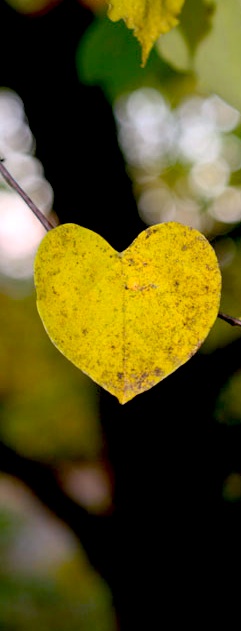
Redbud leaf in fall
“[T]o be worldly… is to be outside the gift of poetry, to be, in some measure, too human for comfort.” Peter de Bolla
A teacher of mine once defined a nature poet as a writer whose subjects and metaphor are nature-based. The majority of my work does fall under that definition, though not all of it. At a recent meeting of my writing group, one member who considers herself a beginning poet asked me, “What do you do if an idea for a poem comes to you while you are gardening?”
As in my work, her poetry often centers on images and inspirations that visit while walking, weeding, sowing, and so forth. So it was a simple and sensible question. Generally, I keep a small journal and a pen nearby when I work. There’s a porch swing near my garden gate, and often I keep my writing tools as well as my gardening tools on the swing.
But today I forgot. I was drawn to the vegetable garden by a break in the soggy weather, a glorious day before first frost, zinnias and marigolds still in bloom and all the weeds going riotously to seed. I pulled up undesirable annual grasses, polygonum, crabgrass and queen-anne’s-lace, wild asters, elderberry stalks, and vines along the edge of the fence. I’m fond of goldenrod and chicory in the meadow, but they make poor companions for asparagus; out they went. A northern mockingbird heading south stopped to perch among the walnuts trees and trilled as cheerily as it would have done in spring.
And I had ideas. And I forgot to write them down.
I cannot recreate that pleasant hour now, but the time spent among the weeds and the late bees and the big spiders catching their last prey and hanging their egg sacs in possibly-safe places while the hawks cry high overhead is comforting and inexpressibly valuable to me. But being in the world—what we tend to call “the natural world”—keeps me from becoming too worldly. Keeps me attuned to the gift of poetry, and keeps me from becoming too human (too rational) for comfort.
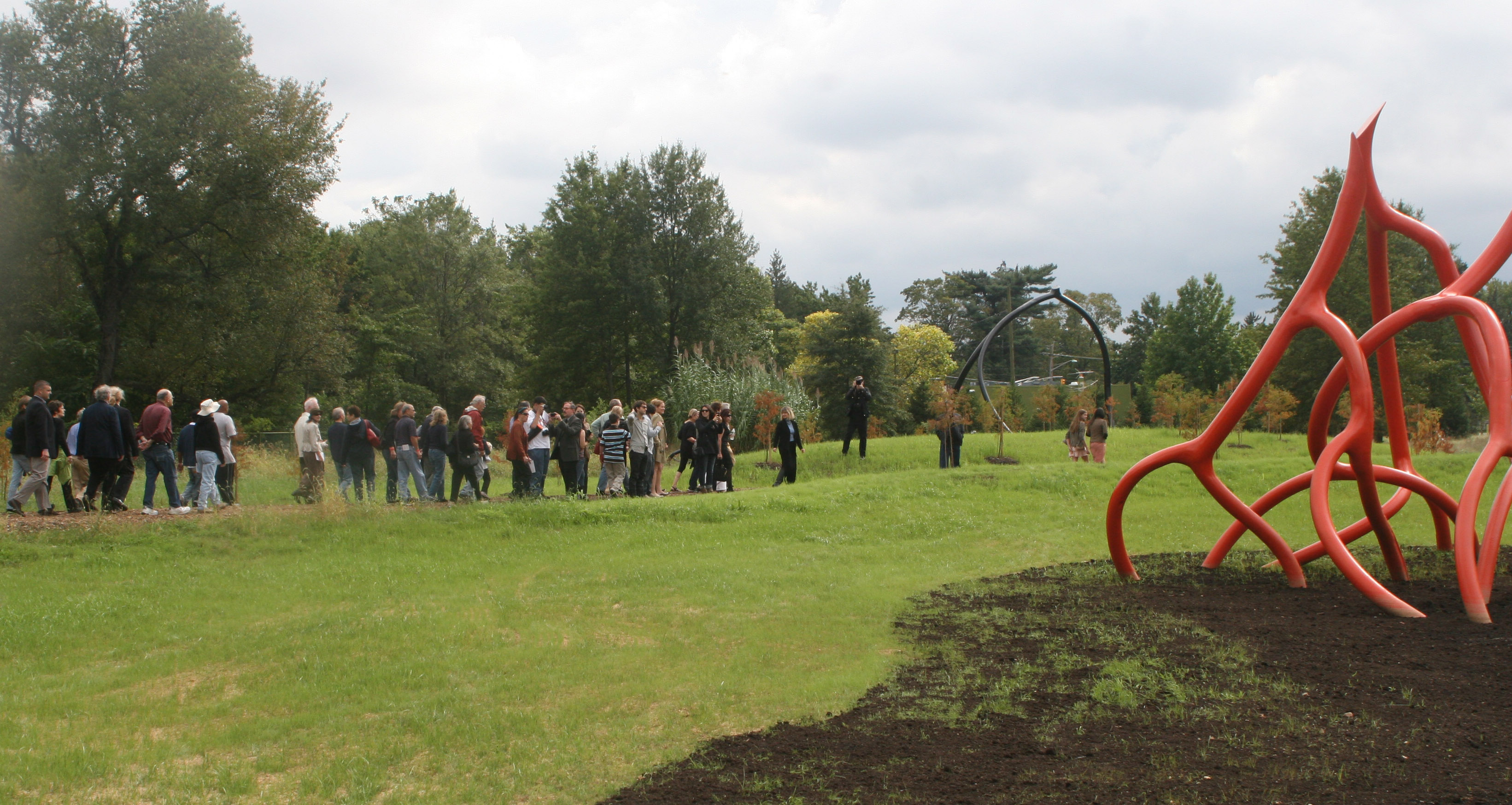
The Wildflower Meadow @ Grounds for Sculpture w/Tobin’s Aerial Roots
Visitors descend upon the newly-opened meadow. Aerial Roots will be in residence for about a year. By spring of 2012, the wildflower meadow should be well-established; the plan was to provide a native ecology setting (for central NJ near the Delaware River) in which sculptural works could be displayed. As the smaller trees mature, they will screen some of the sculptures, lending the possibility of surprise as the visitor walks the paths. Right now, the meadow is more of a flat setting for the steel roots–we can see everything from the rise as we enter the park. In time, revelations may be part of the experience. Visit the mature areas of GfS to get some idea of how the meadow may evolve naturally around the artwork.
Surprise is, for me, one of the hallmarks of wonder, awe, and art. I like to be surprised when I view or read or listen to works of art. Surprise leads, when the work is good, to revelation and reflection. It is not the sum of the aesthetic experience, but it seems to me a necessary component.
 ann e michael