Complexity of perspective

A brief aside in which a contemporary philosopher admits of complexity among humans as social animals and implies (later on, more specifically illustrates) the challenges that individual consciousnesses create in resolving conflicts, or even in making individual decisions as to what is “right.” But what a thrilling capacity, if frustrating to theorists, our multiplicity is:

Human beings are subject to moral and other motivational claims of very different kinds. This is because they are complex creatures who can view the world from many different perspectives–individual, relational, impersonal, idea, etc.–and each perspective presents a different set of claims…The capacity to view the world simultaneously from the point of view of one’s relations to others, from the point of view of one’s life extended through time, from the point of view of everyone at once, and finally from the detached viewpoint often describes as sub specie aeternis is one of the marks of humanity. This complex capacity is an obstacle to simplification.

–Thos. Nagel, “The Fragmentation of Value”

Yes, an obstacle to simplification–but juicy and interesting, which clearly Nagel rather relishes. Viva complexity!

~

For a philosophical discussion particularly pertinent to the US presidential campaign this year, see his “Ruthlessness in Public Life.” Both essays are chapters in Mortal Questions (1979).


Nagel, on stepping back

From Thomas Nagel’s 1979 Mortal Questions, and still relevant today (as philosophy tends to be), on doubts, questions, and the value of being reflective and skeptical. My italics to emphasize the sentence in paragraph 3:

“Leading a human life is a full-time occupation, to which everyone devotes decades of intense concern.

This fact is so obvious that it is hard to find it extraordinary and important…Yet humans have the special capacity to step back and survey themselves, and the lives to which they are committed, with that detached amazement which comes from watching an ant struggle up a heap of sand…they can view it sub specie aeternitatis–and the view is at once sobering and comical.

…this is precisely what provides universal doubt with its object. We step back to find that the whole system of justification and criticism, which controls our choices and supports our claims to rationality, rests on responses and habits that we never question, that we should not know how to defend without circularity, and to which we shall continue to adhere even when they are called into question.

17435196-Sand-anthill-of-excavation-black-ants-Lazius-Stock-Photo.jpg

source: Instagram stock photo from sochicat

The things we do or want without reasons, and without requiring reasons–the things that define what is a reason for us and what is not–are the starting points of our skepticism.”

We judge and choose based solely upon our own perceptions and experiences–it seems unnatural to do otherwise; yet stepping back makes it somewhat possible, through listening and observation, to make connections and find relationships with what is Other than ourselves. First, we must agree to feel skeptical about our own view of the world and to pose inquiries and then to shut up and pay attention to someone else’s experience of the human occupation. (See my post here.)

I do, however, admit–as Nagel does–to the limits of philosophy as relates to public policy. Whether reflection can change the methods of oligarchy, capitalism, dictatorships, the Leviathan, revolution, social attitudes, the masses, democracy, or the Republic has already been answered:

“Moral judgment and moral theory certainly apply to public questions, but they are notably ineffective. When powerful interests are involved it is very difficult to change anything by arguments, however cogent, which appeal to decency, humanity, compassion, or fairness. These considerations also have to compete with the more primitive moral sentiments of honor and retribution and respect for strength. The importance of these in our time makes it unwise  in a political argument to condemn aggression and urge altruism…the preservation of honor usually demands a capacity for aggression and resistance to humanity.”

We continue to adhere to unfounded but deeply ingrained notions we cannot rationally justify, and that remains a truly interesting aspect of human life. It is a set of notions I do not criticize nor defend, but which I do think we should question.

Even as we vote–if we bother to vote–with our guts and our resistance to what is Other, even as we defend those powerful interests from which many of us benefit, we should keep up our inquiry and work on becoming more aware of other human beings’ situations and sufferings, joys and social experiences. One thing about the human being and the whole human endeavor: as long as we possess our consciousness, we also retain the startling and magnificent ability to learn new things.

Here’s to life on the anthill.

termite-hills-Steve-Tobin-5

Steve Tobin, “Termite Hill,” 1999–stevetobin.com


As to what matters

What matters, at this moment, are compassion and communication–and recalling that communication requires listening, especially when we assume we know what the Other will say. [The Other may be black, or white, or a parent, or a politician, or of a different culture, etc.]

http://blacklivesmatter.com/

To people of color in the United States of America, in particular to African-Americans: Ask your questions. Speak up. I understand that some of you are prepared for argument and rhetoric, others for fear, anger, and defensiveness. You are tired, perhaps, of speaking up. Tired of the resulting outcry and pushback and character assassination and judgment and stereotyping. Tired of the pain. I get what you are feeling, even though it isn’t my personal experience, even though my social experience differs from your social experience.

Speak up nonetheless. Many of us finally recognize the need to listen. It matters because once someone signals readiness, true perspective begins. Because connections must occur before listening can occur. Where do we begin?

“Why don’t you listen?” is a good question, though it tends to put the Other on the defensive. If, however, people can hear genuine curiosity behind the interlocutor, there may be a moment of pausing to reflect: “I thought I was listening. Why do you think I am not?” Both parties need to ease the borders a bit (not a popular thing to do, I know).

So often, perspectives vary so widely that each of us carries into the discussion a host of unspoken assumptions based upon the only experience each of us has–our own. No one can ask the child-like, curious questions without being accused of hidden or not-so-hidden agendas.

I am reminded of an old saw one of my high school teachers wrote on the chalkboard:

Screen shot 2016-07-12 at 12.18.21 PM

Learning to listen and to accept and to formulate questions reminds me of the process of raising children. Really. My perspective as an adult in the world–my assumptions–so often trumped what my children were experiencing as small people with totally unexpected and intriguing perspectives on life. I had to learn to listen to their points of view at least some of the time, and I was always rewarded with insights I would not have discovered on my own. (I referred often to the Faber & Mazlish book How to Talk So Kids Will Listen and Listen So Kids Will Talk when my children were at home.) We have to make ourselves more aware, and much much much more patient than usually comes naturally, as parents and as members of a wider community than human societies have ever encountered before.

Yes, we yearn for answers. We do. That yearning may be part of the human genome. But just like our brains, and our conscious sense of self or selves, it’s complicated.

It would be helpful for all of us to recognize that listening to questions, and forming more inquiries–rather than answers or arguments–supplies the basics of Socratic inquiry. For the methods application in contemporary society, check out books by Christopher Phillips. Despite my occasional ramblings and speculations on rational thought (see many of my previous posts on argument, pedagogy, philosophy), argument may not be our best human tool at all times. The best human tool is compassion.

What matters is that human beings, whatever our color or culture, enter into relationships with one another and with our environments. That we admit to complexities and to questions; that we remain curious, which opens us to connections and enables us to see how vital all kinds of relationships are. Do people need to be reminded that #BlackLivesMatter? Yes, alas, people do. While a few of the social majority of human beings in the USA are more cognizant than usual, grab the moment. And people? Listen.

Because there actually is but one species of human being. Let us be homo sapiens–wise, judicious, sensible.


On absence

I have experienced a felt absence lately, a sense of missing.

Maybe the world is too much with me. I have responses to the Stanford rape case, responses to the Syrian refugee crisis, to the US presidential campaign, to the mass murder at a gay nightclub in Orlando; responses to some personal challenges, as well–health: my own and loved ones’, among other concerns.

Responding represents the equal and opposite reaction to any action, in a Newtonian metaphor. And what my body and my mind these days are saying to me is “step back, reflect.”

Humans love immediacy–the rapid Twitter argument, the comments on opinion posts, the punch in the gut. Animals need rapid responses in order to negotiate a world of predator and prey; humans, however, (and, more than most of us realize, many other animals) also possess the ability to reflect on what the feelings are. What they may mean. How that meaning may alter our responding mechanisms. We can–if we pause to do so–put ourselves in the place of the Other, imagine different perspectives that may color our responses.

Sometimes, we may need to absent ourselves awhile. To put some distance between our feelings and the conflicts we engage in. We need feelings and we need thoughts, we need responses and we need observation from other viewpoints.

~

It occurs to me that poetry is the conversation between the rational, languaged mind and the mind of feeling and imagery. This effort involves the same mind at work on two or more fronts, the human brain constructed as it is to handle multiple levels of feedback, feedforward, and association.

Poetry isn’t “about emotions.” It’s an art that employs language to represent the tension between the rational and the feeling, the mind’s mighty efforts to engage with the difficult and the heart-stirring.

This is how reading about neuroscience enhances my interpretation and understanding of what poets do. I read difficult books and eschew spending time on the internet. I sit on my back porch and ponder. A buzzard swings to and fro above, gliding on the updrafts. I try to heal myself. I cannot heal the world.


IMG_2288


At sundown

The disintegrating physical and mental situation of an elderly best-beloved recently has led me back (after a brief pause) to readings in neurology and consciousness. It has also led me to reflect on the tasks memory accomplishes for us and how the need to tell a story seems to reside deep in whatever “makes us human.” Many poems, perhaps most of them, are “inspired” by memories and a need to tell. So I will indulge myself by giving a narration here, and perhaps poems will follow later.

paintdaub copy

The best-beloved has been in and out of hospitals, rehabilitation centers, and so-called independent living placement and appears to have developed a very common but not-commonly-talked-about cognitive disarray, or hospital-induced delirium, that medical personnel call “sundowning” when it occurs in Alzheimer’s patients. But my patient does not have Alzheimer’s disease. Her meshing of realities must have been triggered by something else, but the possible factors are many. We may never figure out what it was that pitched her into delusion and lack of compassion, turning her into a person we barely know.

She took good care of her body. At 90, her physical self is in better shape than many people 20 years her junior. Her brain–and hence, her mind–has not stayed as healthy as the rest of her. Several small strokes deep in her brain began to alter not just her gait but her personal focus. Long years of hearing loss no doubt altered how her brain processes input. The reading I have been doing (most recently Carr’s The Shallows, Sacks’ On the Move, and Damasio’s Looking for Spinoza) indicates that the human brain is “plastic” but not necessarily “elastic.” It can modify in response to damage or training, but that does not mean it will spring back to the way it was before. In extreme old age, the process of adaptation slows. The brain becomes less resilient. For reasons no one really understands–a host of possible culprits includes hormones, glutamates, serotonin production, medicines, genetic predispositions, and environmental factors among others (a perfect storm…)–persons who have been sharp and cogent may suddenly experience delusions, often leading to paranoia, confusion, loss of affect, lack of social filters, violent and contrary behavior.

And we ask, “What happened to the soul I love?”

alice-heart1 copy

If we believe in souls, we have faith that somewhere under the changeling is the best-beloved. In flashes, she may return to us. If we believe that the brain is the person, the transition from best-beloved to aggressive complainer is harder to accept. Damasio seems to believe the brain is the person. I find it hard to agree with him fully, though I have been learning a lot about neurology in the process.

Metaphors or analogies for the situation seldom seem, to me, quite to capture the wrenching feeling I have when encountering sundowning. The idea of disintegration seems inappropriate in this case, because she recalls who we are and her mind is not collapsing so much as morphing in unaccountable ways. Threads unraveling? No, not really; the metaphor of a quilt coming undone, maybe, or an intricately-woven tapestry shredded apart–but that’s far too simplistic.

Think of the mind: it encompasses the brain with its regions for motor, somatosensory, auditory, and visual processing; the body, which takes in those physically-produced inputs; memories; thoughts; feelings, which are thoughts spurred by emotions; and a host of complex inter-relationships we cannot even begin to map. Somewhere in all of this is the person, the “self.” At least, as far as we have so far been able to speculate (though not everyone agrees; see my post on Hofstadter & Parfit. Parfit suggests personal identity is an invalid construct).

Perhaps an environmental analogy would suffice, being complex enough for comparison. She is the planet Earth, aging and adaptable, but not endlessly adaptable; her healthy balance has been thrown off by things she may not have had any control over. In whole regions, she becomes inhospitable. Poisoned. Dry. Hot. Overrun with invasives. She seems not to like us anymore, but that is not what’s going on at all. In fact, she’s dying.

Maybe that’s taking the metaphor too far. But in difficult times, one reaches far. There is hope she may recover at least some of her Self, and in the meantime, we have stories in which she plays a role. Mnemosyne–awaken in the consciousness of those who know her. Telling the stories is a step toward letting go.


Doubt

The prompt of questioning, and recent reading on ethics, have led me to pose for myself a framework for poems that walk between the abstract (ideas, values, philosophies) and the more concrete, pragmatic phenomena in my life (ethics, gardens, weeds, human beings). I find myself thinking again about edges, about fringes, hedgerows, the between-spaces.

That happens to be where doubt arises, too–when we feel in-between, on the edge, and in all likelihood, uncertain.

Fanny Howe, excerpt from “Doubt”

While a whole change in discourse is a sign of conversion, the alteration of a single word only signals a kind of doubt about the value of the surrounding words.

Poets tend to hover over words in this troubled state of mind. What holds them poised in this position is the occasional eruption of happiness.

While we would all like to know if the individual person is a phenomenon either culturally or spiritually conceived and why everyone doesn’t kill everyone else, including themselves, since they can— poets act out the problem with their words.*

Acting out problems and doubts in words. Yes, that directive works for poetry as I understand it. Theater, a related art, allows an acting out of conflicts employing a method that keeps us from killing ourselves and each other. The same may be said for any art; perhaps even our development of a philosophy of aesthetics offers the possibility of acting out.

And there is always room for doubt, as doubt has a way of making room in us and among us. The alteration of a single word–from you to them, from proper to prosper, from hie to high: in student writing, these are generally spelling errors; in the work of a thoughtful poet, they may signal a change in viewpoint, a pun that twists the initial intention, a turn in the poem’s story or rhetoric, a region of ambiguity. Howe wrestles with doubt and celebrates it:

“Doubt is what allows a single gesture to have a heart.”
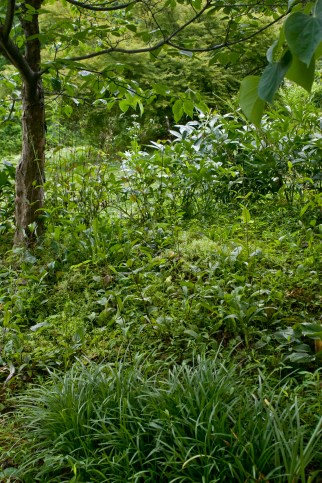
overgrown

Edges. The meadow’s just beyond.

Any single gesture. The prayer hands, the bow, the outstretched arm, the Mona Lisa’s smile, the inked line, the poem.

The trapeze artist who walks along a genuine edge, balanced.

Doubt may live deep in the center of everything, but it is hidden there. Along the fringe of things, where the meadow and the forest meet, doubts are much more visible and less harmful.

What we learn along the edge we can take with us into the deeps: our doubts and ambiguities go with us, a kind of enrichment we might learn to accept instead of resent, if we are poets. The troubled state of mind persists, but “the occasional eruption of happiness” keeps the balanced hovering possible.

That eruption of happiness? I am familiar with it. Sometimes, when I’m working on a poem, I feel like a kite in an inconstant wind.

~


*Howe, Fanny.  Gone : Poems. Berkeley: University of California Press, 2003. 

The ethicist & the healer

The “Morbid Book Group” recently read John Lantos’ book on ethical issues in Neonatal Intensive Care Units (NICUs), The Lazarus Case. As one of our members is a pediatric physician, one is a NICU nurse, another a hospital social worker, and another a former obstetrics nurse–we had quite a bit at stake when discussing this book, and quite a few different perspectives. Add to the mix my armchair-philosopher and educator point of view and all the questions a non-medical person has to ask to clarify the issues, and we spent the evening in lively and often challenging discussion.

Lantos tells his readers that medical ethics questions are not really answerable. They depend too much on cases, contexts, and–whether we like it or not–economic situations. An example: Until third-party payer systems are dismantled or significantly changed, confirms the doctor in our book group, NICUs will continue to be profit centers in addition to places where terrifyingly premature babies are saved, or not saved, not so much by technology as by individual circumstance over which doctors and nurses have less control than the parents of these neonatal patients may think.

The NICU nurse told us that Lantos’ book made her question her vocation. One of his observations is that NICUs have become the profit-hub of many hospitals in the USA; then, he asks tough ethical questions about “viability” and “pain and suffering.” The nurse says she sees these babies suffering and feels that too often, the suffering is prolonged when the baby is clearly unlikely to survive–prolonged because the parents cannot let go and the technology promises miracles that only occasionally occur. The doctor in our group gave us her point of view, which many of us found a bit too “scientific”–but that’s how doctors are trained, as she reminded us, while acknowledging heartily that doctors need more real-life experience in compassion, listening, and psychology than they receive in med school or as interns.

tulip

These are the sorts of circumstances that lead us to philosophy. Lantos writes: “Moral reflection begins with a particular type of suffering,” when we are faced not with abstract ethical dilemmas but genuine, frightening, life-altering situations. Lantos argues that doctors must not be “passive vessels” dispensing adrenaline, oxygen, delivering technology to a human being whose individuality the physician may not even notice in those crucial moments. He does not deny that there is value in the dissociated emergency response protocol, when the doctor’s training takes over and pulls the person acting away from emotion.

There is a “but,” however. Lantos says there are times when the healer is the medicine, when trust in the doctor, and the doctor’s willingness to take time to listen to the  patient, can “create a moral framework for dealing with the limitations of being human, of getting sick, suffering, weakening, dying,” when it is understood that the patient might die while under the healer’s compassionate care, and there need be no blame.

How do we get our society there?

“We make changes in medicine the way we make changes anywhere,” says our book-group doctor. “All of you are asking me very hard questions. I don’t have answers to all of them, and you may not agree with my answers or my rationale. And that’s great! Medicine needs to be challenged. There is no way for the medical industry–and it is an industry–to grow in a more positive way if patients and their families, ethicists, and even the damned lawyers remind us that behind the technology is always, always, a singular human being…it ain’t just a science. It’s an art.”

Doctors do need to be educated in the humanities, we agreed, and to spend more time learning about culture and psychology through experiences that develop compassion. Patients need to learn to ask more specifically for that kind of response, and to let hospital administrators understand how often it is lacking. Most of all, we need not to shy from asking the Hard Questions, those life-and-death ethics questions. Not for the sake of answers, but for the sake of discourse and understanding.

If you want a breezy article about how to go about the process of talking about what we fear and wonder at, here’s an article from HuffPost. A reply to Lantos’ critique of NICUs from Jonathan Muraskas and Kayhan Parsi is here.


Valuable to know

One of the philosophy faculty members at my college perennially assigns an end-of-term paper in which the freshman student must defend whether (or not) a philosophical principle, view, or argument “is valuable to know.” He has a list of possibilities, such as “Is Descartes’ concept of the body-mind problem valuable to know?” and “Is Aquinas’ proof of God’s existence valuable to know?”

The students wrestle mightily with these essays, although the professor’s question does not in itself constitute a major philosophical argument; even when we disagree with something, we may still feel it is valuable to know. The students do not always recognize that they have to make and defend only the view that knowledge is valuable. They tend, instead, to re-argue the philosopher’s claims…which confuses them, but also works to help them learn what those claims are and how they operate as arguments.

This bust resides in the Louvre, and was found here: http://www.humanjourney.us/greece3.html

Socrates. This bust resides in the Louvre, and was found here.

Philosophy, the art of thinking about thinking, by its very nature creates confusion on the path toward greater understanding. Or anyway, that should be the intention. What I like about this assignment (which I often see when I am tutoring) is the way young people come to terms with the material while they are in the process of composing the paper.

Here is how the tutoring sessions tend to go: I look at the first paragraph for context and clarity. Then I look at the claim and help the student clear up any grammar or mechanical errors. Then the student writes about what, for example, Aristotle’s claims about moral and intellectual virtue are. Usually this section comprises two rather vaguely-worded general paragraphs presenting claims by the philosopher, paraphrased in freshman-student sentences, and two short paragraphs presenting opposing views come next.

Here is where grammar and rhetoric are friends. I read each sentence, and I tell the student what he or she is saying in the sentence–based on how well the student can write or proofread, what the sentence says and what the student meant to say may be rather distant partners. So we work on that. As we plow through the paragraphs, the student gets a chance to re-think his or her arguments about and understanding of the philosophical questions at stake in the essay. Sometimes, I can almost see the lightbulb of comprehension beginning to glow in the student’s mind.

It really demonstrates what I tell my students all the time: Writing helps thinking! And so does discussion. In my office, for half an hour, the student gets a sounding board for his or her own ideas and then writes them down. Not all of my students get terrific grades, but it fascinates me to watch them in the process of coming to understand that pretty much anything can be valuable to know.


Poetry Month & Simic’s prose

I have read and enjoyed a great deal of Charles Simic‘s poetry over the years. How did I miss his prose?

I just picked up The Life of Images (2015) and find myself delighted indeed. This book makes a wonderful read for National Poetry Month, despite its subtitle “Selected Prose,” because so many of the pieces in this collection are about poetry or act as prose poems–a form Simic is well-known for.

Every other paragraph or so I find myself wanting to write down a glorious sentence, or a quote I should share with my poetry students, or a concise description that fits perfectly, such as Simic’s observation about Buster Keaton‘s persona in his silent movies: “Bedeviled by endless obstacles, Buster is your average slow-thinking fellow, seeking a hidden logic in an illogical world.”

9780062364715.jpg

Being of a philosophical bent myself, I was thrilled to read and then re-read “Notes on Poetry and Philosophy,” with its foundation of Heidegger and Simic’s sly and humorous references to Hegel, Schroedinger, Shakespeare, Dickinson, Whitman and others. That essay is really a series of prose poems that resemble philosophical puzzles and paradoxes.

His essays here often focus on visual art, as well. Movies, paintings, photographs. The image as metaphor.

“The poet is at the mercy of his metaphors. Everything is at the mercy of the poet’s metaphors, even Language, who is their Lord and master.” Ah, yes. One of many paradoxes surrounding the practice and theory of poetry:

“Everything would be simple if we could will our metaphors. We cannot…It took me years to admit that the poem is smarter than I am. Now I go where it wants me to go.”

“Metaphor is a part of the not-knowing aspect of art, and yet I’m firmly convinced that it is the supreme way of searching for truth.”

~

The usual progression of spring unfurls and blossoms around me, a bounty of images, thank goodness, and Simic has me mulling over my metaphors again.


Complications

National Poetry Month has rolled around again, and sophomores enrolled in the Poetry classes are trying to interpret poems. Somewhere along the line, people in the USA acquired the notion that teachers ought to make things simple to understand so that students can learn the material. What about diving into the material in order to learn about it? Asking it questions? Having a heart-to-heart conversation with it? Those are alternate approaches to reaching an understanding.

Truly, one aspect of teaching that frustrates me is that the majority of human beings want everything to be simple. “Simple” has become a click-bait word, an advertising slogan. Even the American embrace of mindfulness largely bases its premise on the idea that mindfulness is simplicity itself, when anyone who has seriously attempted meditation and mindful living can attest that the theory sounds simple enough but the practice is more complex than it seems.

Now, I have nothing against simplicity–I yearn for simpler ways of living in the world, myself. Nevertheless, a person does not reach her fifties without a clear recognition of how complicated life is; and no one can deny complexity has considerable value. We would not be human beings, capable of speech and abstract thought and deep love and senses of humor, if it were not for the incredibly intricate operations of neurons and synapses, nerves and hormones, rods and cones, DNA and all the rest that somehow connects us inside our physical corpus.

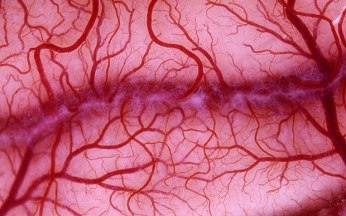
blood_vessels_1.jpg

blood vessels=fractals=complicated

All of these contribute to our conflicting emotional states, to our individual and, because we are group-dwelling creatures, our communal (cultural) psychologies, morphing into social structures of vast networks and multiple influences. Nothing about any of this is simple.

In an effort to assure my students that they can, indeed, become better writers, I endeavor to simplify the writing process as to structure and foundational principles as much as I can. I refuse, however, to suggest that written expression can be simple–because human expression is not simple. We desire and feel and experience in ways that are complicated, layered, multifaceted–hence not easy to put into spoken words, let alone written ones. Writing is work that requires complicated approaches to thinking and reflecting. That doesn’t necessarily make writing hard, but it does not make it simple.

Writing requires inquisitiveness, which seems to come easily to little children but which doesn’t mean inquiry is simple. One of the things my students struggle with most is asking questions. When I say, “Ask some questions about this text,” they look at me as though I have three heads. Students assigned philosophy papers feel gobsmacked by Socrates–he seems so surface-value simple, but he never answers any questions! And now their professor requires them to ask further questions, rather than asking them for the right answer to a simple question.

Oh, my darlings, if there were truly simple answers we would not have developed art or dance or music or poetry.

natural_fractals_tibet.jpg

cloud formations (Von Karman vortices) seen from space*

In other words, if everything were simple, we could say what we need to say and all other people would understand everything they needed to know about us without nuance or subtext or background or socio-cultural context, or whether we are secretly embarrassed by our slight lisp, or grouchy because we had a spat with our spouse the previous night. That sounds pleasant and easy, but that’s not how things evolved among human beings.

I would tell my students I’m sorry about all this, but I’m not. Complexity: I revel in it.


*from http://www.jessicacrabtree.com/journal1/wp-content/uploads/2010/09/natural_fractals_tibet.jpg