Generosity

It is a well-documented fact that writers can be dismissive, hypercritical, and downright insulting when it comes to the work of their peers and predecessors. Juvenal, Samuel Johnson, Oscar Wilde, Dorothy Sayers and her nemesis Edmund Wilson, Dorothy Parker, John Logan…the list is long and spans centuries. Some of the critiques are valid, in their way; many are wickedly funny, which doesn’t remedy the unkindness of the barbs. Most writers who have been writing and presenting or publishing their work for awhile will have encountered some less-than-generous “feedback” from other writers. Given human nature, such responses are probably inevitable.

In the mediated circle of the voluntary critique group such as may be found among MFA programs or community writers’ groups, the group or mentor often establishes protocols for sharing work–methods of responding to creative efforts that avoid too-harsh criticism, ad hominem attacks, or dismissive/discouraging comments. Once your writing is out in the world in whatever public form (print, slam performance, live reading, video, online, etc), however, the best advice is sometimes “don’t read the comments.”

Many agendas may drive the urge to bash particular writers or their works, among these envy, attention, pride, status, self-preservation, righteous indignation, or a sense that one needs to scramble to make space for oneself in an already small environment (“the literary world”). Even, dare I say, ignorance. I could speculate on reasons for unkindness until the proverbial cows come dawdling home, but I suppose it can be attributed to a kind of social Darwinism. People can be mean-spirited when threatened. Though exactly how the writing of poetry poses a threat to other poets remains a mystery to me.

Maybe I am a Pollyanna (entirely possible), but although I can recall some incidents and critiques that have stung me, there have been far more instances of generosity from fellow writers. While contemplating writing this post I sat back and decided to count how many fellow writers have extended courtesy, respect, useful advice, helpful criticism, networking and publication leads, encouragement, and the sense that I’ve “been seen”–acknowledgment as a writer–and I found the list was long. I considered listing names, but there are so many…and I was afraid I’d inadvertently overlook someone. I consider this an excellent “problem” to have.

Granted, some stings have been…memorable. However, I’ve been writing and publishing poetry and related prose since the early 1980s, so there have been many years during which I’ve had the joy of connecting with other writers in generous ways. Writing is both a large community and a small one, depending upon where I am in my own life: local at times, semi-isolated other times, and then–thanks to social media platforms, with which I have love/hate relationships–national and international!

As I get ready to pull back a bit from my work in the realm of higher education, I hope that the lessons I have learned about being generous to my students, gently encouraging while pointing out areas to keep working on, will stay with me. My feeling about poetry is that there’s certainly room for more of it in a world which can be harsh, and that acknowledging other humans’ urge to express their awe, fear, grief, passion, love, anger, and perspective won’t actually harm many of us.

Thus, to all of the fellow writers and artists living and dead who have been generous to me: Bounteous gratitude. I’ll keep trying to pay it forward.
Astronomy

As a freshman in college, seeking to expand my limited science knowledge, I enrolled in a Physical Astronomy course, an introductory seminar class that taught students how physicists study the cosmos. At any rate, it introduced us to how that was done in the early 1970s. Thanks to computer tech and so many rapid changes in the field (we were using slide rules!!), the discipline has changed in some respects. I was terrible at the math, never having gotten beyond Algebra II in high school, but I had a terrific professor and loved the material. As may be obvious to readers of this blog, the cosmos and all that is in it provides me with endless opportunities for learning, speculation, and reflection.

Rebecca Elson, whose book A Responsibility to Awe I just finished reading, keenly reminds me of how fascinating the study of the universe can be and how little we know of it. Each decade the science and the theories take immense leaps in measurement and exploration, and each leap reveals how many more questions we have yet to ask, let alone answer. Not just inquiries into the galaxies, but also biological and ecological worlds to explore: salmon, eels, oceans, mountains, our own histories and our own mortality. Elson’s area of study centered on galaxy formation–the chemical evolution of stars, and globular clusters. But she started out collecting rocks with her geologist father who was doing fieldwork in Canada, then studied biology. It wasn’t easy to be a young woman studying the sciences in the 1970s, and she felt she was drifting a bit; writing, however, she felt more sure of. In the essay that ends this collection, she states that the atmosphere at Princeton during her post-doctoral study was “a stronghold not just of men, but of theoreticians” who looked down on work which involved “mere” observation, which is what she had painstakingly been doing in her research in Australia and Cambridge. At Princeton, though, she met a group of poets who encouraged her work and who made her stay at the university more comfortable. Good observation skills make a terrific foundation for poets.

~

If the ocean is like the universe
Then waves are stars.

If space is like the ocean
Then matter is the waves
Dictating the rise and fall
of floating things...
  --from "Some Thoughts about the Ocean and the Universe"

She was diagnosed with non-Hodgkins lymphoma when she was 29, died ten years later, and this book is the only example I’ve been able to find of her poetry. But it is revelatory what Elson does with simple language and deep, theoretical concepts as metaphor, topic, or theme. Some of the poems are so brief, yet I find myself thinking about them again and again. Like good haiku, they are not aphoristic–but they linger. Her sense of awe is palpable in these poems; I think that’s what I like most about her poetry.

Evolution

We are survivors of immeasurable events,
Flung upon some reach of land,
Small, wet miracles without instructions,
Only the imperative of change.

~
Salmon Running

Who isn't driven
Up the estuaries
Of another's flesh,
Up rivers of blood,
To spawn close to the heart?

~

A poem titled “OncoMouse, Kitchen Mouse” thanks the laboratory mice whose lives led to the cancer treatments that, for a time, prolonged her life; “Antidotes to Fear of Death” finds her eating the stars, or stirring herself into a young universe. While one late poem is bleak (“There is no poetry to cancer/To the body betraying itself”), another–the last entry in her notebook–observes the flourishing of spring. Much to learn here. Enough admiration that I wish, selfishly, she’d had more time on earth so I could enjoy more of her poems.

~

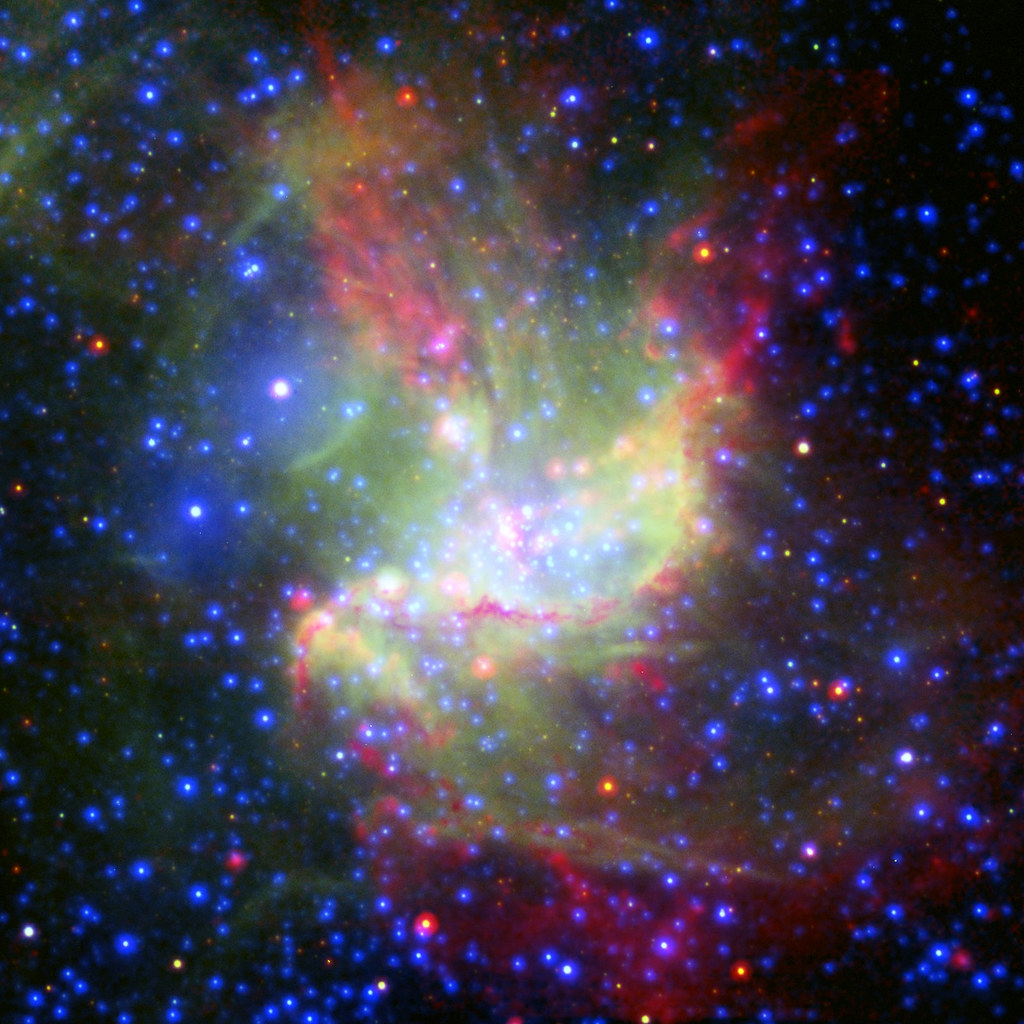
Fledgling Stars in Stellar Nursery by NASA Goddard Photo and Video is licensed under CC-BY 2.0

Wandering

My mind’s been wandering a great deal lately. This at a time when focus would be quite useful, and yet–I don’t mind a little mental meandering. I think that, akin to daydreaming, a lack of focus can lead to creative thinking. Of course, the downside is that it may also lead to lollygagging and a lack of ambition.

I’ve been thinking about the way contemporary Americans use the word “engagement.” Not as in marriage proposals–that definition hasn’t changed–but in statistics, marketing, self-help, and education. My department at the university has been directed to “foster student engagement.” Our administration wants us to find ways to engage students, but it seems what’s meant by that is simply to attract their attention amid the myriad distractions and attractions of modern life. In my area of the college, where students go to get a little extra assistance in their coursework or their educational plans, we have long been aware that we can’t reach everyone who needs help and that we cannot create enthusiasm or involvement. Apparently, engagement is supposed to lead to motivation. That would be a miracle. Like many young people when I was a young person, today’s young people are often rather undirected. Wandering.

I wonder whether gap years or a required year of community or civil service would benefit people before they march off to college to “become a physical therapist” or whatever it is they think of as a career. Many of them would save on tuition fees, because maybe they are not that keen on academic coursework after all, or because they can go to college with a better idea of what they want to learn (rather than end up attending for 6 years because they changed majors). US society has evolved to push its citizens through large, unwieldy systems that supposedly create clear-thinking individualists who can fit into whatever job market the nation happens to foresee itself needing in future, but there is so much wrong both with that methodology and with that picture in the first place.

I’m with Walt Whitman and the loafing approach to observation and creative thinking, but that probably won’t be sufficient for a nation with a population of 336 million people.

This is not my problem to solve, and I would not be the person elected to solve it. But I ponder this sort of thing.

~

This poem appeared in Schuylkill Valley Journal Online. It’s a persona poem in which I imagine being Walt Whitman as a young child. May we encourage our young people to wonder and wander (and, yes, loaf a little).

Little Walt

When Mother sends me with a bucket to the pump
and it is a rainy day, droplets landing on my face, I open my eyes
trying to see where the rain starts but cannot
because I blink—and why is it that I blink without ever
meaning to?

My Baby Brother wails so loud
I hear him out of doors although the rain is also noisy
splashing the leaves. I can tell the wagons’ wheels are spewing mud
as they clobber past hitched to wet horses who snort at the weather.
The pump handle feels slick and water spurts into my
bucket so that I think of a waterfall in a gully or tumblers
at the sea’s shore where the little fishes get caught in the seining nets.

When the bucket’s full I set it down beside me
and watch water’s surface going plip plip and my own face
under the rain and how it is that I can keep my eyes open looking
into the bucket: behind me in the reflection is the cloud
that is raining all upon the Town.

Mother calls me to the house, You have been loafing.
The bucket, full now and heavy, becomes my chief burden
although a hen scurries beside me, and the ice man hollers
at his little brown donkey and the world around me
is so full of everything!
~
Walt Whitman in mid-life

Automatic writing*

A few posts back, I mentioned I would weigh in on artificial intelligence prose generators–“bots”–specifically the much-reported-upon ChatGPT. The media coverage has included everything: hand-wringing, speculations on the extinction of critical thought, predictions about the death of the high school essay or the re-institutions of oral and handwritten exams, not to mention worries about spurious content and job loss among educated citizens, as well as wild enthusiasm for automating tedious writing tasks and excitement about where tech is taking us.

It’s not as new as most people think. AI has been providing customer-service responses and generating basic summary content for news-related websites for awhile; but OpenAI’s open-source platform, which is currently free and for use by anyone (not to mention educating itself as each user inputs prompts and questions) has so rapidly gained “tech adopters” that those of us who teach writing cannot ignore it completely. And we shouldn’t ignore it, but neither should we throw our hands up in surrender and predict the end of the art of writing as we know it.

A recent New York Times article reflects the kind of discourse taking place at the institution where I work. It’s fascinating to me to see how quickly the conversations have evolved in the usually slow-moving environment of academia. I find that at my college, my years of laboring with students who lack strong backgrounds in written expression or confidence in their writing have suddenly attracted the attention of full-time faculty members–they want to know how they can tell if students are using AI assistance to write essays (when said profs have no pedagogical experience in writing) and how to change the wording of their assignments to “fool” the programmed generators, among other pressing questions. These inquiries tend to come tinged with a sense of slippery-slope fallacy: does this mean academia will go to hell in a handbasket?

I refuse to send out a firm forecast, though my intuition says no; instead, academia, and society, will change.

And despite the daily-proven, scientifically-accurate, anecdotally-obvious FACT that change is normal and indeed necessary, most people (and their societies and institutions) fear change. Hence, the media and institutional brou-ha-ha.

Let’s face it, writing can be hard. There will always be people who do not want to do the work of writing from the soul, brain, heart, emotion, experience, dread, you-name-it. Painting is hard, too. But people who don’t want to practice and experiment with visual art can use paint by numbers, clip art, or AI. There will always be a few folks who learn to play an instrument for the joy of it and for the challenge of continually learning new approaches to the process of music making; the rest of us can be audiences, if we like. People who write because they can’t not write? They won’t use bots unless they want to experiment with them: make perverse use of the programs, play with them to see what the human’s skills can do in concert with algorithms, bits, bytes, and data. I know artists who are already collaging with AI-generated art to create new, human-mediated visuals.

I recognize the fear factor here, but I don’t buy into it because I am so curious about what will happen next. I’m interested to see how changes will occur, which changes will make a difference and which ones will just vanish, and whether pedagogy will develop toward, away from, or parallel to AI developments in numerous spheres–to name just three of numerous possibilities. Change is exciting, but it’s also hard. I can’t say I am as excited about adapting my fall semester syllabus to reflect whatever the university decides to do in light of ChatGPT, but since I’ll have to adapt to a new “learning management system” anyway, I may as well accept that “a change is gonna come.”

~

*For the definition of automatic writing, Wikipedia has a fairly complete page.

Photo by Startup Stock Photos on Pexels.com

Poetry mentor: Chris Peditto

I moved to Philadelphia’s suburbs in 1982 because I needed a place to live, and my folks had a spare room. I was job-hunting and did not know anyone locally, so I sought out poetry events in the city–and there were more than I expected to find. Chris Peditto was one of the first people I met, and he was unfailingly generous about introducing me to reading venues and even driving me around sometimes when, as often happened in Philadelphia, public transportation did not exist between where I was and where things were happening.

Chris was natured like that, helpful in a mentoring way. He’d open up a few doors, drop the name of a literary journal I might want to look into or a poet I might want to read, and then leave the rest up to me. Sometimes, I needed a little more motivation–especially in those days, when I was pretty dragged down by depression. Chris nudged me into involvement with the Open Mouth Poetry Series of readings, which had aspects of critique, editorial decisions, publicity (for poetry events) and which eventually branched out to a xerox-zine and a paperback anthology. He liked my work and was happy to get me to rub elbows with the artistic, musical, literary folks in Center City and beyond. His encouragement meant more than I think I realized at the time.

It was Chris who introduced me to Rosemary Cappello and to too many poets, artists, and musicians to name in a blog post. Suffice it to say I remain grateful. He may not have thought of himself as a poetry mentor; but much of the confidence I now have in my ability to analyze my own work and the work of others, and much of my confidence in public performance, stems from those days in my early 20s–and he played a significant role.

But then, Chris understood poetry mentorship. He actively looked for it! I enjoyed his tales about leaving South Jersey for New York City as often as possible, even when he was only 16 or 17, and hanging about the haunts of Beat Poets until he finally managed to meet the last of the stragglers who hadn’t died or moved to California and beyond. He had some great Gregory Corso stories, Etheridge Knight stories, among others–and some rather alarming ones as well; I just loved that as a boy he had so much persistence. He emulated the Beat genre in poetry even when he didn’t completely embrace the Beat lifestyle (there may have been a bit of emulation there, as well…but Chris didn’t end up on Skid Row). I know he omitted a few incidents to keep conversations more tightly focused on writing and less on the lives of writers. To him, it is the writing that matters.

Though his prose ultimately received more notice and publication–reviews, literary analysis, short fiction, academic work on Italian-American authors, even a piece or two on pedagogy–Chris wrote poems and, more than that, loved to read poetry of practically all kinds. He was also an excellent educator and earned achievements for his work once he moved to North LA in the early 1990s. I am certain he became a mentor to many other people–not just writers. I was honored to be his friend and snail-mail correspondent for many years and felt the loss of his kind and encouraging presence keenly when he died in 2013.

~

Three mentors–none of them “famous,” all of them crucial to my development as a poet: they took my work, and my person, seriously. They listened critically and spoke to me encouragingly and listened. I think that’s what makes a person mentor material.

In later years, there have certainly been others who have been guides, coaches, teachers, mentors, friends-in-poetry…some of them better-known than Ariel, David, or Chris. But these three, all of whom are no longer walking about on the earthly plane, gave me so much more than I ever thanked them for. Which is why I’m doing so now.

Poetry mentors

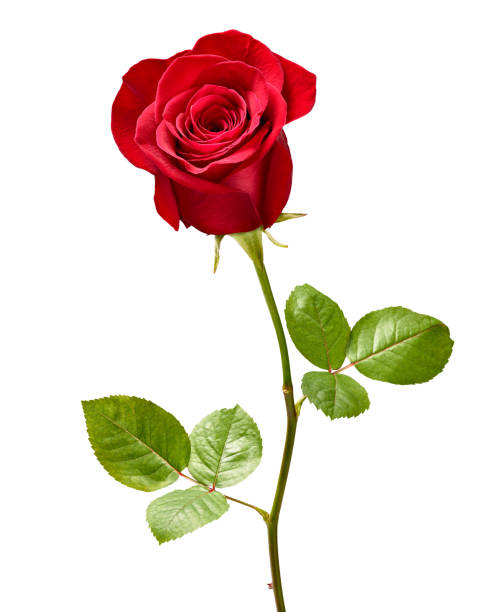
Rosemary loved red roses

I learned, this week, that Rosemary Cappello has died. She was among the first people to encourage my writing and was an advocate for poetry and the arts in Philadelphia, where she lived for most of her life. I would not call her a mentor of mine; but she has been mentor to many other people as well as instrumental in setting up poetry reading series, poetry events, and other gatherings. All while also editing and publishing Philadelphia Poets Journal, a literary magazine that started as an 8-page photocopied zine and became a 100+ page annual journal…what energy, what devotion! And such kindness–when I first met her in the early 1980s, we saw each other often at poetry readings and open mikes. Then I moved away, first to Connecticut and then to the Lehigh Valley. Yet whenever I returned to Philadelphia for a poetry event, it seemed Rosemary was there. She always remembered me, too! In recent years, I’ve encountered her on Zoom readings and events. And I knew she had health struggles and trouble with mobility, but she never flagged in her enthusiasm for the arts.

~

If Rosemary, bless her heart, was not one of my poetry mentors, helpful and kind as she was, who were my mentors–and what exactly is a mentor? A teacher, a guide, a supportive expert in one’s field? Someone who advises, offers a network, feeds the soul, provides a model? Yes–but more than that, perhaps.

At my university, there are several programs or projects that purport to offer mentorship, but I get different answers when I ask people who qualifies as a mentor. It has made me think about my own mentors, most of whom have been in the creative writing field. I mean, I could count my dad or mother, but parents generally aren’t considered mentors—they’re doing another job, that of parenting.

This concept came up recently not only from my workplace, where we are launching programs to have our students be mentors to incoming freshmen, but also from a recent interview with Ocean Vuong that has been making the writing-related social media rounds. [link is here]

This video kind of floored me. I am aware that Vuong is young—but 33? He’s my son’s age! Much as I love my intelligent and funny son, he doesn’t possess the insightful earnestness that comes through in Vuong’s presentations, interviews, and writing. Not to mention his teaching! I am not so sure, at twice Vuong’s age, that I possess those qualities, either; yet I know I have been a mentor to some friends and students, mostly by accident. What defines mentorship?

I have not formulated a definition for poetry mentor or life mentor yet, but considering the possibilities may help me recognize what mentorship is and what it means. Therefore, I think I will devote the next few blog posts to beloved and talented friends and colleagues whom I consider to be my mentors. Alas, some of them have departed this earth, but that doesn’t mean their influence has vanished. I hope that writing and posting about them will keep the memory of them alive in that way that human beings have of recalling and integrating the compassionate and useful persons we’ve known and loved into the present moment.

Next time I post, I’ll have things to say about Ariel Dawson, to whose memory my most recent chapbook collection is dedicated.

Words fail, & yet–

On December 24, 2012, I posted about a school shooting. So little has changed.

Words fail. And I work in a classroom setting, as do many of my friends and colleagues, and my children’s friends and colleagues (now in their 30s and willing to be teachers–bless them!). These events are not things we can ignore by staying in our own little bubbles of “it can’t happen here.”

~

Words have failed so profoundly that I’m out in the garden instead, or indoors cleaning my bathrooms or reading books. Books–always my solace when my own words fail.

My latest good read is David Crystal‘s 2004 The Stories of English, already out of date in its last chapter–a fact I’m sure he gleefully acknowledges. I adore his love of how language evolves and find his non-prescriptivist approach refreshing and necessary if we are to keep literacy and communication alive. This book gave me so much information, enriched the knowledge I already have about our language, and made me laugh, too. Granted, it is word-geek humor…but that’s how I roll.

And I needed a few laughs this past week or so. My heart aches; I am sore afflicted for more reasons than I care to explain at present, though the headline news certainly has much to do with my mood. Crystal’s book got me thinking about the course I teach (come fall) and how I’ve already toned down the prescriptiveness in order to convince my students they can write and can be successful with written communication; that they are not “wrong,” just that their audience for written work differs, in college, from high school and from text messaging and other forms of writing. Crystal says we who teach English need to get over the concern about split infinitives and pronoun antecedent agreement and focus on clarity and genuine expression. I have no argument with him there–but many people I know would quibble and complain. And the English lexicon offers us so many options for how to say we disagree!

~

A book about words–but no, a book about human communication through the mediation of words, spoken and written, and how we got to the forms (plural!) of English we now use to express ourselves. There’s a kind of splendid optimism in Crystal’s thinking about language that somehow made me feel a little less low in spirit. Ah, yes. The solace of books.

Shy

When I was in elementary school, my teachers described me as “shy.” A few of them commented that I was “creative” and “smart.” It’s strange how these adjectives for character traits came to shape how I perceived and pegged myself, and I suppose I’m not alone in this. I considered creativity to be something positive and smartness a little daunting, but I felt ambivalence around the term shy. In the 1960s, shyness could be an admired trait among girls because it meant we were not disruptive. But I didn’t think that was all so wonderful, when the children I admired were often loud and funny. While teachers might have appreciated shyness in a pupil, children tended to think me nerdy or, worse, standoffish and snobby. Shy was not much of a compliment.

shy (adj.) late Old English sceoh “timid, easily startled, shrinking from contact with others,” from Proto-Germanic *skeukh(w)az “afraid” (source also of Middle Low German schüwe, Dutch schuw, German scheu “shy;” Old High German sciuhen, German scheuchen “to scare away”).

Online Etymology Dictionary

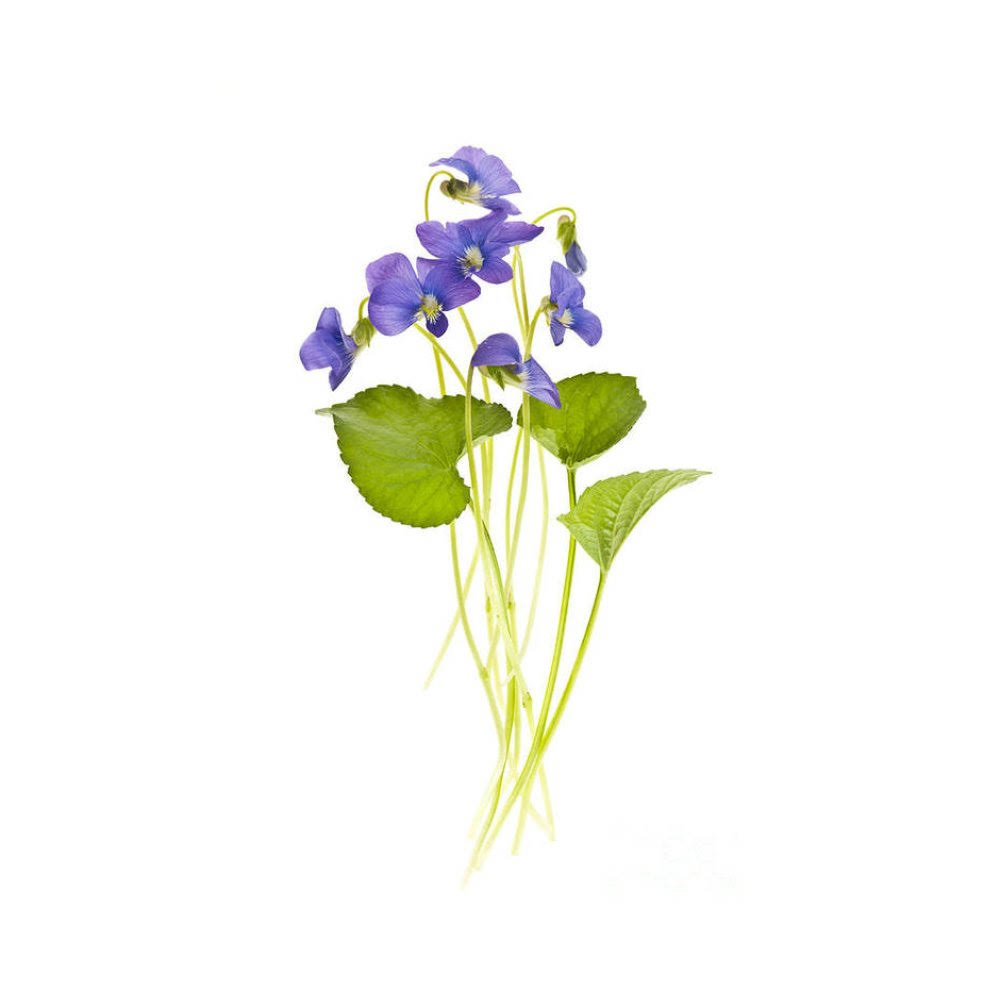
Hence the metaphor of the shrinking violet, the wallflower. I was fond of plants, but I did not necessarily want to be one. The introverted, reflective young person is seldom socially popular in the USA, and my budding self-confidence took a hit in the public school environment. Was I really timid and easily frightened–or was I just dreamy, bookish, unconventionally funny, skinny, tall, bespectacled, and not particularly socially adept?

Elena Elisseeva, Spring Violets @ fineartamerica.com

One trait I developed as a shy child was a capacity to listen to others. I wanted to hear their stories, their points of view, their silly songs, their big ideas. What I regret is that later on, when I gained some self-confidence and began telling my own tales or dispersing acquired knowledge and advice, I lost some of my listening ability. It took hard work and practice on my part to feel secure when speaking to groups, and I started with the hardest practice: reading my own poetry aloud to other people. Eventually the shyness wore off, for the most part.

Then I had to get the listening back. Raising children was a tough balance between saying and listening. I fault myself for not listening quite enough. As an instructor, I found it difficult to listen to a group of students: too much cacophony, too many distractions, hard to gauge where the conversation was headed. I’ve always felt more comfortable with one-to-one tutoring, which makes listening so much easier. As this semester has wrapped, I find I am already dwelling on the fall. What did covid-protocol instruction teach me? Mostly that the listening is even more important than I thought. The students still feel freaked out; overwhelmed by, more than excited about, their futures. I can’t blame them and want to make room for their stories…not to shy away from them, especially if any of them are feeling “timid, easily startled, shrinking from contact with others.”

Prompted

I have been composing new poems, a welcome development spurred in part by my participation in a poetry workshop (see my last post here). Meanwhile, the college semester has resumed, and my colleagues who teach poetry have been discussing and sharing writing prompts.

For those readers who are not poets: A writing prompt is a sort of assignment in associative thinking or use of a craft strategy that the instructor offers as a form of inspiration or motivation to get creative writing started. There are entire books on this topic. Most writers go through dry spells or low motivation, and teachers need new ideas to keep their students doing the actual practice of writing even when bolts from the blue do not arrive to shake the creative spirit into gear.

I will admit to mixed feelings about prompts. Prompts can act as shortcuts to the process of composing, but I am the kind of writer who prefers the long haul; for some reason, the struggle of finding something to say, and an interesting way to say it, assists me in writing poems. I’m not in a hurry. I revise frequently. If it takes a long time to get to the finished poem, so be it. Sometimes I’ve followed a prompt and produced quite a nice poem, but maybe the voice or style or approach does not feel like my own. That’s a potential downside to prompt use. I have read poems by other writers that sound like prompt-produced poems. Some of them are fine work and yet…

This isn’t to suggest prompts lead to inauthentic or cookie-cutter poems (though that can happen, especially with inexperienced poets new to the task). I think it depends on how the prompt is presented or written and, in addition, the environment surrounding the process of thinking about writing. What works best for me is a prompt that makes suggestions I have to complete or devise for myself. Ambiguity with specifics, if that makes any sense–or specifics with ambiguity.

The environment in which I’m currently working includes a group of seven people, with whom I had not previously been acquainted, meeting online, and a moderator/leader who makes observations non-judgmentally and asks questions concerning where this poem draft could go next. And yes, there are also prompts. What I like about Elena Georgiou’s prompts is their open-endedness. Because none of us are beginning writers, we feel free to disregard any part of the prompt that doesn’t appeal to us–or to follow it closely to force us out of well-worn poetry habits–depending on our internal environment on the day we happen to be tuning in or trying the prompts. We are a group of independent people who are collectively thinking about writing. That’s something of value.

Winterwords

It wasn’t exactly a New Year’s resolution–I do not bother with those–but I have promised myself to spend more time on poetry again following a fairly long interval, not exactly a hiatus, but…

Serendipity, then, to learn of Two Trees Writing Collaborative‘s poetry workshop that is taking place online in the early months of the year when motivation’s most welcome. As well as a chance to meet other writers where they are as the pandemic limps along. This online workshop is facilitated by Elena Georgiou, who was one of my advisor/mentors when I was in graduate school at Goddard. Feels like old times (not. because modality-virtuality-experience much altered). I have drafted four new poems, and the process is fun though the output has been mediocre so far; well, one must sometimes prime the engine.

I’m also reading Anthony BurgessNothing Like the Sun, wildly Shakespearean rollicking-with-language, a novel that reads like iambic pentameter. I’m thinking of poetic cadence, which is a craft aspect of poetry that has not been much on my mind until renewed by this novel. Not that rhythm is unimportant to my work, but thinking about it hasn’t been foremost. I have been thinking more about lyricism lately, it seems my default mode.

And I’m thinking about winter, and snow.

A photo taken by Claire McCrea, in Colorado, earlier this month. Something about this image says “Winter” to me and conjures Japanese woodblock prints that act as visual haiku.

What I would really like to do: make more time to revise the huge stack of old poems languishing in various boxes. And perhaps submit work to journals again, and send out the most recent manuscript. Patience with self is what I need right now, but also a kick in the derriere.