Behind the arts

The regional drought has officially ended, and the rain continues. Ironic, then, that the online site Feed the Holy just posted a poem I wrote near the close of a droughty August: “Zen Gold.” Fireflies and bats, while not abundant, manage to enjoy the recent dampness. The monarch butterflies have returned to our meadow, though I don’t catch sight of them on rainy days. But the moist conditions didn’t dampen the turnout or enthusiasm of local citizens who came out in droves for peaceful “No Kings” protests here…in a decidedly “purple-red” area of Pennsylvania.

Speaking of regional, this weekend I also attended the debut showing of a documentary film about the performing arts community in Bethlehem, PA, formerly famous for Bethlehem Steel Corporation. The film is titled “Rooted,” and it follows that “roots” idea with the planting of trees at arts sites, the metaphor of the mycorrhizal network (see my references to Lesley Wheeler’s latest book–so much overlap!) and the concept of community development. Especially through works of imagination. In the 1970s, when the steelworks was beginning to slow production and lose employees to retirement and business to competitors, small groups of young, talented artists in theater, dance, music, and puppetry started performing in parks, churches, etc…and gradually found inexpensive space in the city to establish themselves and pursue their dreams. Some of those little startups, such as Touchstone Theatre, have been operating, teaching groups of children, entertaining the community, and advocating for the arts for over 50 years.
Godfrey Daniels coffeehouse/listening room and The Ice House (home of Mock Turtle Productions) have been sites for poetry as well as for music and theater-craft. I have participated in and attended poetry and one-act play readings at both of those venues. I don’t live in Bethlehem, but it isn’t too far away from me–still in the Lehigh Valley region. And I deeply appreciate the work that pioneering arts-folks have done, and that arts advocates and teaching artists continue to do, for our area. The people behind the arts deserve recognition.

I’m not the sort of person who networks well; event-planning exhausts me, and preparing for committee meetings and writing grants are not my forte–though I gladly proofread grants and PR materials for local non-profits. Thus I admire the types of people who not only create in the arts but also find creative ways to keep the arts alive through outreach and planning, often in the face of very steep odds (yes, I’m talking funding here, and board membership, and organizing the necessary minutia, and the grind of public relations). God bless them for making space for actors, musicians, dancers, visual artists, sculptors, installation artists, poets, and visionaries of numerous kinds. It’s because of folks like these that I don’t have to travel all the way to New York or Philadelphia to experience lively contemporary arts of many kinds.

You can think of local arts organizations as the independent booksellers of the performance world. You go there to discover stuff that you won’t find on best-sellers lists, for work that’s by new artists, or work that’s been rediscovered, or cool perspectives on the familiar canon of major works by the famous. That has value. That offers inspiration. That gives you the courage to keep on doing whatever kind of art it is you do. Which in my case is poetry, not generally thought of as as performance art–though it once was, and slam poetry events prove it can still be. Maybe I’m a little more of a hermit-in-the-woods writer, but that doesn’t mean I never want to venture out into the wider arts community. And when I do? I’m grateful for the people who have established the beautiful network under my feet.
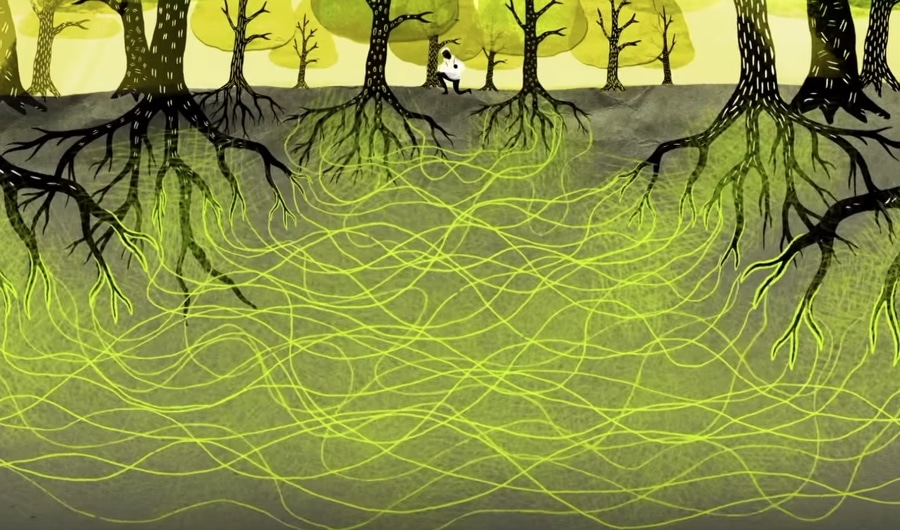
image: https://truetimber.net/TrueTimber arborists

House concert

I can only recall ever attending one house concert. It was during my college days–1977 or ’78–and took place at a large Victorian house in Ann Arbor, MI. We sat about on chairs, sofas, stairs, and the floor to listen to blues/folk singer and guitarist extraordinaire, David Bromberg. It was a pleasant environment in which to hear the musician–an intimate and attentive audience, a sense of camaraderie and shared appreciation, and quite comfortable. But I never managed to attend another house concert…usually, such events are fairly private and by invitation (as I think that one was), so you don’t hear about them until after they’re over.

I was therefore delighted when friends suggested that they hold a “house concert” or, in this case, a house reading, so that they could share my poems with some acquaintances. A new audience! A comfortable, non-intimidating space, terrific food, and the kindness of people willing to listen to a bit of poetry…what’s not to like about that? There were over a dozen folks in our friends’ pleasant home, and at the close of an evening of wine and food and conversation, I was asked to read and talk about my poems. And promote my new book (which is now available to order on Amazon).

My gratitude overflows, Don and Jeannie. You’re the best!

An unexpected aspect of the house concert event was that it was delightful to meet the “audience” first, before the reading–a reversal of the usual order, and very helpful in getting me to feel more comfortable not just in presenting my work but in deciding which poems to read. In addition, the cozy atmosphere meant listeners felt free to ask questions and continue the conversation to include thoughts on song lyrics, “private” poetry (that people write for themselves alone), favorite poets, and the context of the work of poetry in the world.

That was such a marvelous evening. And up ahead, somewhat similar in nature: on March 27, at 7 pm, I will be joining poets Marilyn Hazelton and Susan Weaver–two members of the writing group that I’ve been part of for decades–and folk singer, radio host, teaching artist, and community arts leader Dave Fry for one of Dave’s monthly “Dave’s Night Out” events at Godfrey Daniels, a listening room in Bethlehem PA. Dave has been generous enough to have hosted me with other poets on stage at the coffeehouse before, and the experience was terrific. His guitar accompaniment enhances the sonic delights of poetry. I’m looking forward to this one. Tickets are $15, I think, and they keep Godfrey’s running as a non-profit arts venue in our region.

I’m happy to see this book in the world. Copies can also be ordered from Kelsay Books.

~

Wasp redux & reading

Last year, I had my first encounter with a grass-carrying wasp.

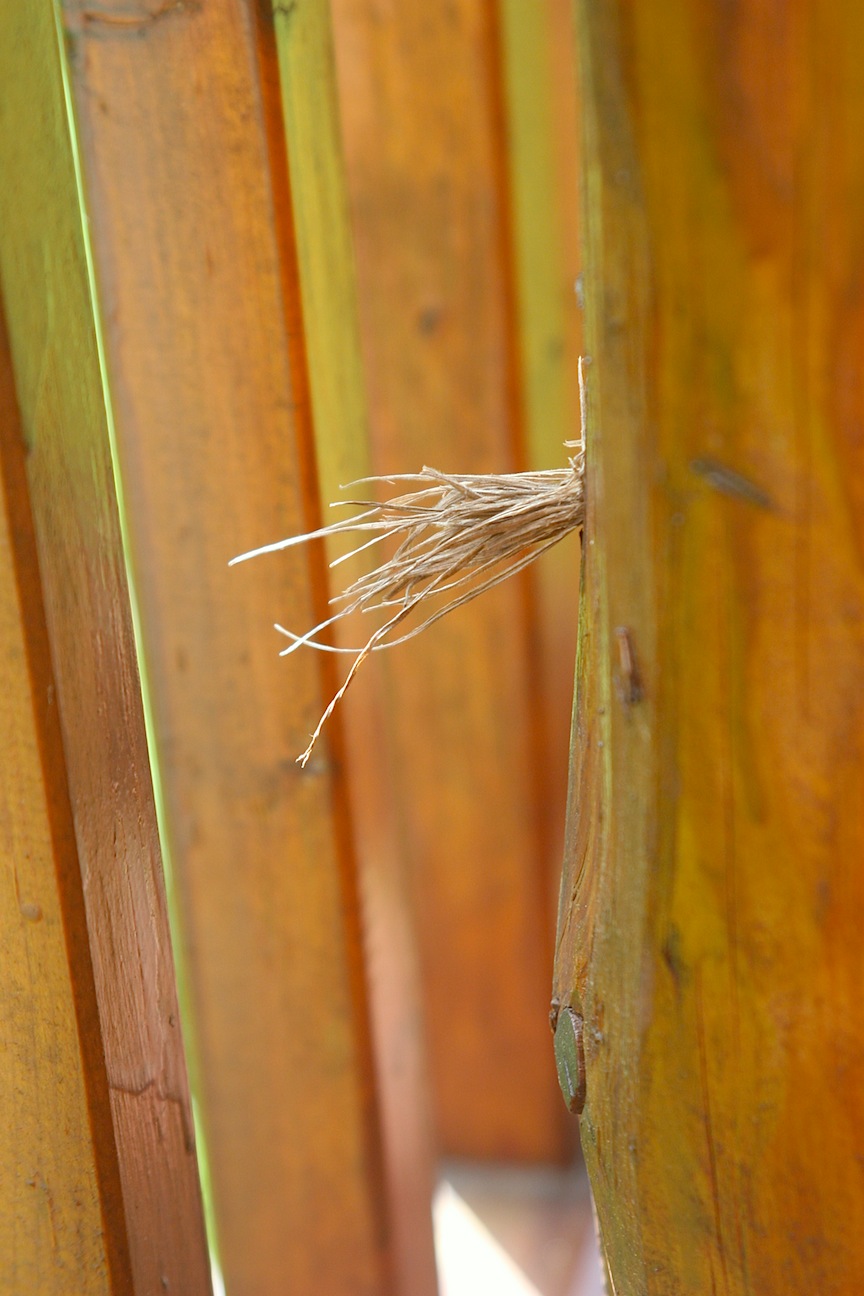
Today, I noticed some waxy, crumbly, yellowish bits around the post in which last year’s wasp had built its nest. Then I saw an adult grass-carrying wasp hovering to and fro with a stem of grass grasped in its legs, which led me to this year’s nest–in a different hole in our post-and-beam porch. Who knew the wood had so many little holes in it? The wasps sure found them! Today’s wasp has built in a much harder place to photograph, a vertical spot, behind a post. So last year’s photo will have to suffice.

nest of the wasp

Isodontia: nest construction in progress

~

I am not quick at writing poems in response to events, personal or public; generally I need time to consider deeply, to process. I am glad to participate in an upcoming event, however, taking place in Bethlehem PA as a public response to the Orlando Pulse shooting. LGBT citizens of the region, and families, friends and supporters of compassion and awareness, are gathering for a memorial and celebration of support for everyday Americans, which includes–we must recognize, and it would be wise and sane to accept–people who are LGBT/gender fluid & who are just human beings notwithstanding, as are we all.

For those in the Lehigh Valley area of Pennsylvania, the poetry reading is at Sun Inn’s courtyard on Friday July 1. I may not have a poem of my own to read, but I have been reading through my library and have already located several poems by other writers that will serve well as responses to tragedy, personal or national, or which speak to the human-ness of all of us.

~

I am doing a little nesting of my own this week, retreating into a metaphorical burrow for a couple of days, I hope. And with any luck, I will emerge with some new drafts of poems.


Seeking

The semester has begun. I’ve been immersed in reading Marilynne Robinson (Absence of Mind) and Daniel Ariely (Predictably Irrational) while procrastinating on uploading materials to the software platform for my class and making tomato sauce at home.

Robinson detects, amid all of our human endeavors, a search for answers. That we have questions at all seems proof of sentience, if there can be such a thing as proof. Certainly the process, myth, and language of seeking surrounds most human developments: religion, art, philosophy, science, and others. It’s the classic quest narrative that runs through anthropologically vast distances, from Gilgamesh’s efforts to find eternal life to the Ramayana (with Sita as the prize, in Ravana’s clutches) to Rowling’s Harry Potter, who snags the role of “Seeker” in a game–a metaphor that continues through the series.

But are there answers to our questions? And a corollary: are we asking the “right” questions?

256px-Chaos_Monster_and_Sun_God~

Ariely, like Dan Kahneman, reminds us that we do not always–in fact, hardly ever–choose the most rational actions or answers to dilemmas. We fail to ask ourselves the better questions. We fail to act upon the better actions or decisions.

But we keep seeking. I find that intriguing.

~

Event Ahead:

On September 16, I’ll be taking part in an art-&-poetry event at a gallery in the “Christmas City” (Bethlehem, PA). Info on my Events page, here.


Second brood

This morning, I noticed catbirds engaged in nest building activities. Then I saw mourning doves mating near the garden–must be time for the second brood.

I do not know a great deal about bird behavior; but many of the smaller birds in my region raise two broods, one in spring and one in early summer. My not-very-scientific observation tells me that the second brood is often less successful–that fewer eggs are laid (or hatch). I could be wrong about that generality, but it seems to have held true in my yard for the past ten or 12 years. A little research would inform me, I suppose. For now, though, I am happy to rely on observation.

Sometimes I am eager to track down information (such as facts on songbird reproduction cycles). This week, though, I prefer to spend my time on looking about and writing. I’m working on a kind of “second brood” of new poems, and that is exciting.

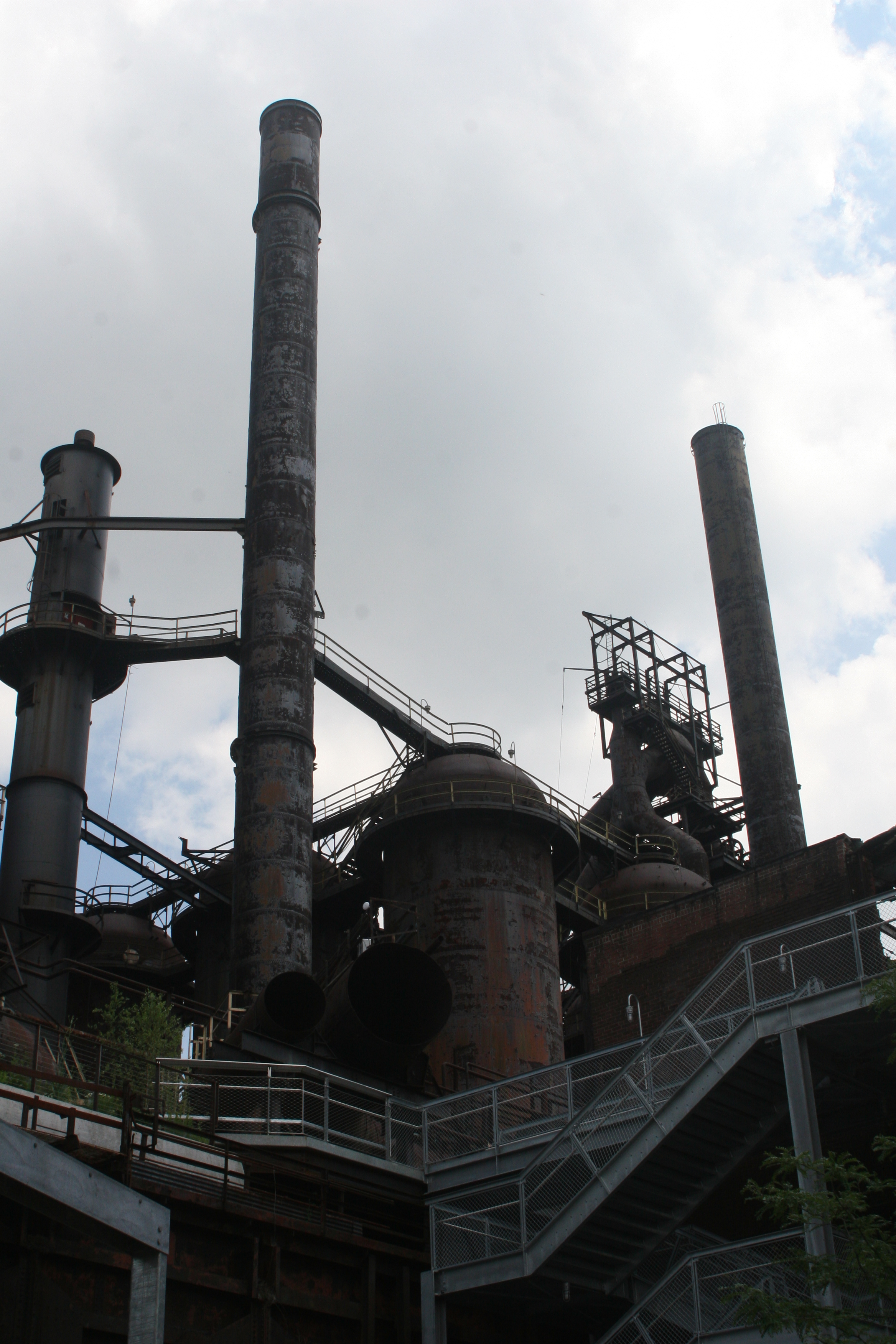
I have also taken walks on two urban above-street-level parks, one in New York City (the Highline) and one in Bethlehem, Pennsylvania, the Hoover-Mason Trestle Park at Steel Stacks. The former park is pretty well-known; the latter just opened to the public and ought to be better known than it is.

Here’s some information on the site itself from the Landezine website that highlights the work of SWA group on the Sands Casino/Bethlehem City project and some of the challenges:

One of the most prominent examples of redirecting the environmental legacy of a post-industrial landscape can be traced to the south banks of the Lehigh Canal, in the city of Bethlehem, Pennsylvania. Comprising 1,800 acres (20 of which belong to this project) and 20 percent of Bethlehem’s total land mass is the former headquarters of Bethlehem Steel Corporation (BSC). Founded in 1904, the company continued to operate until 1998, when US manufacturing divestment, foreign competition, and short-term profit goals finally led to its demise. After almost a century of operation, the effects of Bethlehem Steel’s [1995] closure on the city were heartbreaking, as thousands of jobs disappeared instantly, along with 20 percent of the city’s total tax base. All that remained was an impending bankruptcy claim and the largest brownfield site in the country.

You read that correctly–the largest brownfield site in the USA. The EPA defines a brownfield as “real property, the expansion, redevelopment, or reuse of which may be complicated by the presence or potential presence of a hazardous substance, pollutant, or contaminant.” Acres and acres of said brownfield were left by Bethlehem Steel, and about 20 acres are being redeveloped at present. The park around the steel mill, which follows the elevated trestle around the enormous works, offers a fascinating view at what remains of the United States’ industrial heyday and highlights how significant these mills were. Nice bit of history, nice walk.

I’m not sure these urban parks really move us toward sustainability, but they are at least creative “repurposing” that may help make people more aware of the things that have brought us to where we are today (for good or ill). Perhaps another form of second brood?

IMG_1514

IMG_1485

IMG_1515