At sundown

The disintegrating physical and mental situation of an elderly best-beloved recently has led me back (after a brief pause) to readings in neurology and consciousness. It has also led me to reflect on the tasks memory accomplishes for us and how the need to tell a story seems to reside deep in whatever “makes us human.” Many poems, perhaps most of them, are “inspired” by memories and a need to tell. So I will indulge myself by giving a narration here, and perhaps poems will follow later.

paintdaub copy

The best-beloved has been in and out of hospitals, rehabilitation centers, and so-called independent living placement and appears to have developed a very common but not-commonly-talked-about cognitive disarray, or hospital-induced delirium, that medical personnel call “sundowning” when it occurs in Alzheimer’s patients. But my patient does not have Alzheimer’s disease. Her meshing of realities must have been triggered by something else, but the possible factors are many. We may never figure out what it was that pitched her into delusion and lack of compassion, turning her into a person we barely know.

She took good care of her body. At 90, her physical self is in better shape than many people 20 years her junior. Her brain–and hence, her mind–has not stayed as healthy as the rest of her. Several small strokes deep in her brain began to alter not just her gait but her personal focus. Long years of hearing loss no doubt altered how her brain processes input. The reading I have been doing (most recently Carr’s The Shallows, Sacks’ On the Move, and Damasio’s Looking for Spinoza) indicates that the human brain is “plastic” but not necessarily “elastic.” It can modify in response to damage or training, but that does not mean it will spring back to the way it was before. In extreme old age, the process of adaptation slows. The brain becomes less resilient. For reasons no one really understands–a host of possible culprits includes hormones, glutamates, serotonin production, medicines, genetic predispositions, and environmental factors among others (a perfect storm…)–persons who have been sharp and cogent may suddenly experience delusions, often leading to paranoia, confusion, loss of affect, lack of social filters, violent and contrary behavior.

And we ask, “What happened to the soul I love?”

alice-heart1 copy

If we believe in souls, we have faith that somewhere under the changeling is the best-beloved. In flashes, she may return to us. If we believe that the brain is the person, the transition from best-beloved to aggressive complainer is harder to accept. Damasio seems to believe the brain is the person. I find it hard to agree with him fully, though I have been learning a lot about neurology in the process.

Metaphors or analogies for the situation seldom seem, to me, quite to capture the wrenching feeling I have when encountering sundowning. The idea of disintegration seems inappropriate in this case, because she recalls who we are and her mind is not collapsing so much as morphing in unaccountable ways. Threads unraveling? No, not really; the metaphor of a quilt coming undone, maybe, or an intricately-woven tapestry shredded apart–but that’s far too simplistic.

Think of the mind: it encompasses the brain with its regions for motor, somatosensory, auditory, and visual processing; the body, which takes in those physically-produced inputs; memories; thoughts; feelings, which are thoughts spurred by emotions; and a host of complex inter-relationships we cannot even begin to map. Somewhere in all of this is the person, the “self.” At least, as far as we have so far been able to speculate (though not everyone agrees; see my post on Hofstadter & Parfit. Parfit suggests personal identity is an invalid construct).

Perhaps an environmental analogy would suffice, being complex enough for comparison. She is the planet Earth, aging and adaptable, but not endlessly adaptable; her healthy balance has been thrown off by things she may not have had any control over. In whole regions, she becomes inhospitable. Poisoned. Dry. Hot. Overrun with invasives. She seems not to like us anymore, but that is not what’s going on at all. In fact, she’s dying.

Maybe that’s taking the metaphor too far. But in difficult times, one reaches far. There is hope she may recover at least some of her Self, and in the meantime, we have stories in which she plays a role. Mnemosyne–awaken in the consciousness of those who know her. Telling the stories is a step toward letting go.

 

Change the mind

“The only job of the poet is to destabilize and expand language. This is how poetry changes the world—not by grand ambition or the lauding of critics. It takes the plodding, unending effort of many to alter line by line, phrase by phrase, word by word the way we describe ourselves and everything around us. This is how we change perception. This is how we change the mind.”  —Jaswinder Bolina (in Poetry Foundation: “The Writing Class”  )

Words to mull over. How do we change perception? Is the change of mind correlated with a change in mind–potential alterations of the brain’s structure or synaptic system? If we destabilize language, do we necessarily alter perception?

Although the book is not an easy read, Starr’s Feeling Beauty: The Neuroscience of Aesthetic Experience offers interdisciplinary research into how the brain may be altered by powerful aesthetic experience, or at any rate, how the brain responds to these experiences in ways that lead some researchers to believe the brain can be changed by art. Not just by those who create art, but by those who encounter it.

I encountered Bolina’s essay (see link above) a week or so after I completed reading Starr’s book, and the consilience–to borrow a scientific term–seemed powerful. The ideas have not yet cohered in my own mind, but perhaps in time I will have more to say on this topic.

Meanwhile, I revel in the juicy possibilities of changing mind through art.


More on poetry & the brain

I remain pretty busy with the October poetry workshop and mid-term evaluations, so I’m going to cheat a bit by adding a link to Poet’s Quarterly, which is featuring in this issue one of my brief essays.

Click on this sentence to take you there. (Probably there is a way to embed the post, but I have not quite figured that out and lack the time today to look into it.)

Consciousness as multiple drafts

Daniel C. Dennett’s 1991 book, Consciousness Explained, has kept me entertained and interested for a couple of days now. How could I refuse a book with that title? And Dennett–whose conversational writing style appears to toss off one idea after another in quick succession–actually stays mostly true to classic philosophical reasoning in his arguments as he endeavors to make claims for what consciousness is. He begins with phenomenology as one way to initiate the concatenation of empirical science (physics, biology, neurological research) with logic. He dispenses with Husserl and the early Phenomenologists but invents his own form–hyperphenomenology–breaking phenomena into three divisions and exploring each until he arrives at a way to destroy the long-held concept of the mind, hence consciousness, as “Cartesian Theatre,” and replace that model with a construction more biologically sound.

The book is far too complex to summarize, but the concept he develops that most appeals to me is what he calls the multiple drafts theory of consciousness. Dennett draws upon neurological and psychological research as well as past and current philosophical thinking to propose that what we term consciousness may consist of multiple narratives created through physical input, memory processing, and other processes that result in fraction-of-a-second “revisions” in thinking. Narratives! Revisions! As a writer, I can certainly relate to this idea. The theory of multiple drafts consciousness would explain many phenomena, such as the unreliability of eyewitnesses, the repression and re-constructing of traumatic experiences, the embellishment of stories (as Dennett puts it, “What I should have said at the party becomes what I said at the party”)…and it has examples in the way we “tell” fiction, movies, and family stories.

Currently, I am engaged in the work of revising dozens and dozens of poems. Many drafts. Many narratives, many layers. Subtle shifts in perspective or story or language or style–which version is the real me? All of them, across a continuum.

Derek Parfit’s Reasons & Persons suggests some of the same conclusions through a more traditional philosophical approach (harder to read than Dennett’s often-humorous prose which is geared more toward the non-philosopher and which employs considerable neurological and psychological research as part of its rational evidence).

Although these texts intrigue, and are convincing, they remain speculative. For me, the science aspects of the inquiry remove none of the mystery or delight I experience in terms of my own consciousness. Nor do they negate my sense of myself as individual, unique as to perspective, or whole in myself and in the cosmos. I know that many people resist the idea that consciousness is not soul, who feel that scientific research somehow diminishes human beings into–what? Fancy hardware for intelligent software? Automatons with the illusion of free will? Purposeless life forms? Robotic zombies with no moral bearings?

continuum

A continuum version of tao

Apparently, we desire awe; but knowledge doesn’t have to kill awe.

I find myself fascinated with the ideas posed by Douglas Hofstadter wherein he theorizes consciousness-as-continuum (see this post). People love to default to a black & white way of analysis, thinking, and judging, but everything in nature contradicts that concept. No doubt our brains, wired to make quick decisions using the simplest shortcuts, sieve out a great deal of content and then justify later (Daniel Kahneman’s book Thinking Fast and Slow covers this process in fascinating depth). It’s simply easier to think of balance as tao, perfectly harmonious black and white, or to sort people or objects or ideas into yes-or-no categories. But the distinctions are seldom so clear–there’s a continuum that stretches from the black to the white, as in the spectrum, as in the fringes of a forest or a meadow, as in the so-called races of human beings, as in places where societies and cultures meet and often intermingle, as in the coastline of the sea or a riparian environment. And all of those things are awesome, even miraculous.

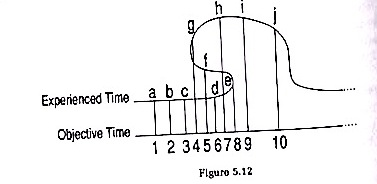
In Dennett’s Chapter Five, “Multiple Drafts vs. the Cartesian Theater,” he offers this diagram:

~

dennett003It’s a proposed version of what happens when we think.

You will have to read the book to decipher this illustration; but I recognize in it the way I tell a story, think about a story, remember an event, record an experience, and the narrative method of the many kinds of stories (many genres, many media) that I love.

One thing it is not is straightforward. We have all those revisions to make, to layer our experiences with, to explore along the fringes of, and to find deeply miraculously awesome. Wading among my drafts now, I feel revitalized. These reflections and revisions are part of my Self as a conscious being in a physical and wonderful world.


Consciousness reconsidered

A few months back, I was reading about consciousness (see here and here). This article on “brain tubules” caught my attention, although I admit to considerable skepticism as to how applicable, or even correct, this research will turn out to be. The material seems exciting–quantum vibrations in the brain!–because of the possibilities inherent in a synthesis of chemistry, biology, and physics and how such synthesis could lead to a theory of human consciousness.

The earliest article I could find on this theory dates to 1998 (an abstract is here). I suppose I should now break down and tackle Werner Loewenstein’s Physics in Mind: A Quantum View of the Brain. But I have a huge to-read list at present and no time or concentration to get to those books. Besides, at the moment I find myself more concerned with the less empirical side of consciousness theory. I mean: belief, attitude, faith. Those non-provable abstracts that nevertheless seem so much a part of most human beings’ operating systems…the things that psychology and neurology do not seem able to answer and that keep philosophers continually at work (the only true knowledge being the knowledge that one knows nothing).

~

And maybe, as Daniel Dennett suggests, the very idea of consciousness is an illusion–the brain evolving to fool us through perception.

~

This bust resides in the Louvre, and was found here: http://www.humanjourney.us/greece3.html

This bust resides in the Louvre,
and was found here:
http://www.humanjourney.us
/greece3.html

Do our brains fool us through our perceptions of emotion, too?

~

And how does this affect how we understand, say, literature, or art? Poetry, for example: Is it possible to deconstruct the pleasure I take from a poem into quantum vibrations in connective synapses as a result of the evolutionary process and, if so, where does the knowledge get me?

Would I still love the poem? (I think I would.) Would I consciously love the poem, consciously find pleasure and surprise in it, once I understand fully the process and development of consciousness? (Why not?) Would such knowledge flatten my emotional or aesthetic attraction to the poem? (I doubt it.)

If loving my perception of art, my relationship with it or attachment to it, is “merely” an evolutionary development, that does not cheapen or devalue the way I feel.

~

What brain studies and consciousness studies have to say about faith may perhaps set up more antagonism between science and consciousness-as-non-biological/i.e. religion, spirituality, etc. By faith I mean not necessarily religious faith but any non-provable conjecture, some of which are imaginative and potentially marvelous, not to mention potentially true. Some statements can be disproven but not proven…and there is the apagogical argument…and then there is the definition of faith (or belief) as Wikipedia defines it: “Faith is subjective confidence or trust in a person, thing, deity, or in the doctrines or teachings of a religion, or view (e.g. having strong political faith) without empirical evidence, or as confidence based upon a degree of evidential warrant (as in a Biblical sense).”

That empirical evidence thing is the perpetual stumbling-block, yet–paradoxically–it’s also what makes faith so appealingly…human. Yes, maybe we are fooling ourselves. And maybe that’s what is so marvelously cognitively neurologically fruitful and imaginative about the whole human endeavor.

Ignore more?

One of my brothers-in-law has been visiting from Berlin during the holidays. His young adult children all live in the U.K., and it is enjoyable to hear what they are doing and how they navigate the world as they grow–having children of their own, pursuing academic degrees or careers in the arts–and finding parallels between their lives and their American cousins’ lives. My brother-in-law (Lee, a jazz musician, listen here on YouTube) told me he recently asked his older son what the most valuable skill for the next couple of decades was likely to be. The answer surprised him:

“The skill of learning what to ignore,” his son said.

When Lee pressed a bit further for clarification, his son explained that “information overload” and real-time social and other media, along with television and Google Glass and smart phones and whatever next gets developed, overwhelm the human brain to such an extent that people tend to lose the ability to sort or to prioritize. When we get distracted, we become less efficient; several recent studies suggest that there are costs to trying to do everything at once.

So, according to my nephew (who is studying neurology at Oxford), those of us who learn to shut out unnecessary information are likely to be more successful in a highly-communicative, highly-technological social landscape. The difficulty is knowing what kind of information is unimportant. Another difficulty is that our brains are wired to sense everything. In fact, our brains are already highly developed to screen out “useless” information. Managing an even more intentional focus will not necessarily be as automatic. It may be something we have to learn: i.e., a skill.

I think I need to re-develop my ability to ignore things. It seems likely that a lack of intentional focus and time away from technology would get me working on my poetry more than I have been. One way to regain this skill might be to recharge my mindfulness/meditation practice. The intentionality of the practice, and its conscious use of both awareness and screening or letting go, seems valuable enough over all that it would be well worth the time away from multitasking.

One possible “New Year’s Resolution,” then?

Ignore more.

QAL

Brains on literature

Here’s a brief article that references a small study of how the human brain responds to reading poetry:

http://www.exeter.ac.uk/news/featurednews/title_324631_en.html

“Some people say it is impossible to reconcile science and art, but new brain imaging technology means we are now seeing a growing body of evidence about how the brain responds to the experience of art. This was a preliminary study, but it is all part of work that is helping us to make psychological, biological, anatomical sense of art.”

Here’s another short write-up from The New York Times on a somewhat similar topic, research into how reading literary work (specifically fiction, in this experiment) improves social skills–empathy and the ability to interpret other people’s feelings in particular.

http://well.blogs.nytimes.com/2013/10/03/i-know-how-youre-feeling-i-read-chekhov/?_r=2&

The article says that “after reading literary fiction, as opposed to popular fiction or serious nonfiction, people performed better on tests measuring empathy, social perception and emotional intelligence.” The psychologist researchers are from my alma mater, The New School for Social Research, and their work connects intriguingly with theory of mind studies.

What makes literary fiction challenging to read is the same thing that makes it so richly rewarding to the human brain: critical thinking is required, inference, active engagement with the text, the need to recognize and validate other points of view than one’s own and, often, to speculate on motives and meanings:

In literary fiction, like Dostoyevsky, “there is no single, overarching authorial voice,” [David Comer Kidd] said. “Each character presents a different version of reality, and they aren’t necessarily reliable. You have to participate as a reader in this dialectic, which is really something you have to do in real life.”

Interdisciplinary understanding of the importance of the arts to human consciousness, learning, and compassion: Am I surprised?

Consciousness & cosmology

"Syntax" by Steve Tobin. Copper, bronze.

“Syntax” by Steve Tobin. Copper, bronze. What can be said about all the things we think make up an “I”?

~

I’ve completed I Am a Strange Loop and Why Does the World Exist? and found, not entirely to my surprise (but to my delight–braiding and synthesis!), that the existential, metaphysical, and cosmological aspects of both authors connect intriguingly. Thomas Nagel, an important “philosopher of mind,” appears as an influence in both of these writers’ books, and Einstein and Plato and Heidegger. Both authors end up citing Derek Parfit’s work, and Holt even interviews him! It turns out that trying to determine the “reason” the world exists at all is not that different from trying to understand what consciousness is made of and where it resides.

After taking up mathematical proofs and several philosophical arguments, as well as neurological science as a basis for the evolution of “mind,” Hofstadter’s book gradually takes apart the mind-body problem that Descartes made so iconic for Western civilization’s thinkers. He keeps returning–and that’s an appropriate word–to the metaphor of looping. He looks at the strange loops of Escher’s drawings and of string theorists’ rolled-up dimensions and alerts us to how crucial the concept of self-reference is to the theory of consciousness.

The need for self-referentiality in a fully “human” consciousness gets him to the idea of “small-souledness” (among, say, such beings as mosquitoes). What portion of our selves makes us able to think about thinking, for example? Is that identity, or consciousness? What’s the difference? Here is where Parfit comes in. Hofstadter writes that Parfit “staunchly resists the idea that the concept of ‘personal identity’ makes sense. To be sure, it makes sense in the everyday world we inhabit…we all more or less take for granted this notion of ‘Cartesian Ego’ in our daily lives; it is built into our common sense, into our languages, and into our cultural backgrounds.”

~

If we care at all about what there may be beyond our everyday lives–and certainly people like Hofstadter, Holt, Bachelard, and me, among others, do care–we need to get “meta” in our meditations, which invariably leads to paradoxes and thorny tangles. Hofstadter’s book also engages with his ‘personal life’ (if, indeed, a personal identity or personal life exists). When his wife died, he found himself engaged in the seemingly unanswerable question of “Where did Carol go?” Did “Doug-and-Carol,” the shared dreams and lives and understandings of two people who knew one another intimately, simply vanish when Carol’s body died? Hofstadter cannot fathom that this shared identity “goes poof” when the body stops. He, after all, still feels connected to the Doug-and-Carol shared consciousness.

It feels real to him. So–what is consciousness? From whence does it emanate, or originate? Is it real, or is it an illusion–is there no such thing as the personal identity we hold so dear that we cannot even imagine ourselves any other way than as an “I”? (Are feelings real?)

~

Jim Holt’s book likewise gets more personal as the chapters progress and as he wrestles with his existential inquiry through texts and interviews. That seems quite appropriate: how can we use language to untangle what language itself makes vague and confusing? (See Tobin’s sculpture “Syntax,” above, for a physical view of loopy entanglement and potential words). Holt’s inquiry initially seems based on the abstract, mathematical, physics of why/how the universe got here; but he ends on the metaphysical and philosophical…whereas Hofstadter entertains the metaphysical from the get-go but employs mathematics, psychology, and brain physiology as well as philosophy. And they encounter similar quandaries, paradoxes, and uncertainties. Both authors essentially come to a similar conclusion about the mystery of existence, though they accept or compromise with their conclusions in slightly different ways. Then again, they are different people who have lived different experiences. Reading both books has been, for me, a valuable experience and one that’s made me examine my own thinking about being.

~

Apropos of these musings, and thanks again to Popova of Brainpickings, here’s a few more words on some contemporary thinkers who have theorized as Holt has (in particular, Lawrence Kraus) in the debate on Something vs. Nothing: “What is Nothing”

~

…And, apropos of nothing in this post, but to lighten the mood, here’s an amusing little blog from The New Yorker about pilcrows & pound signs & ampersands.

Ontologies and inquiries

{ ? }


This week, amidst the whirl of returning students, I have accidentally paired my reading of Douglas Hofstadter’s book I Am a Strange Loop with Jim Holt’s Why Does the World Exist?

How did all of this get started? In the most concrete and specific scenario, I had been slowly savoring Hofstadter–and, let’s face it, trying to “get” the math he occasionally employs–and happened across a copy of Holt’s book, which is a faster read, when I didn’t have Strange Loop to hand. Next thing I know, I’m deep into both texts which, naturally, overlap in several ways. Now, I find myself pondering the beginnings of abstract things like consciousness, which may not be abstract if you think along the lines of E. O. Wilson but which Hofstadter suggests exists as both a top-level abstract “thing” that pushes around its foundational, physical “things” such as synapses, neurons, molecules. And I think about Descartes and the mind-body problem and, oh, while I’m at it, the Big Bang theory and the “what was there before the big bang?” question.

Holt’s book turns to the metaphysical inquiry, “Why is there something instead of nothing?” It’s a question I asked myself when I was about 6 years old. Hofstadter deals mostly with the (perhaps metaphysical) concern: “What is consciousness?” That’s a question I asked a bit later in life, though certainly I asked it before I was in my twenties.

Both authors employ philosophy and math in the service of trying to make sense of these inquiries; and while Holt’s investigation is a bit more physical-cosmological in nature, it may not be necessarily so–lots of the theories floating around out there sound pretty metaphysical to me! Hofstadter employs many analogies, as is his wont (see, in particular, his 1979 book Gödel, Escher, Bach). Hofstadter also gets a bit more into neurology, of course–we are talking about consciousness, after all, and it may reside in our brains–and slightly into the arena of psychology. Holt takes a more journalistic approach, using interviews and readings to cite past and current thinking on the topic of existence. The subtitle of his book is “An Existential Detective Story.”

So far, I enjoy both books, though they differ in significant respects.

Meanwhile, at work I am mainly dealing with adjusting-to-updated-software issues and helping-students-with-advising questions and explaining drop-add and pass-fail and comp-rhet and the difference between Elementary Spanish I and II. Keeps my brain flexible and gets those neurons firing. {Right??}

I haven’t finished reading either book yet. I may have more to say about the synthesis of these two books after I’ve let my brain settle down.