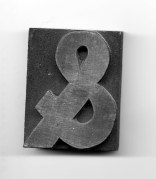
Synthesis & coincidence

&&001“and per se and”

Ah, synthesis! The conjoining and combining of objects, ideas, theories, values and systems, arts, media, experiments, research, disciplines, metaphors, symbols, rhythms, patterns, DNA, et (“&”) cetera.

Synthesis can be planned, hypothesized, purposeful–and it can be spontaneous, unexpected, coincidental. There are times when I feel as though the overlapping and intertwining of experiences seems to have been somehow “planned by the cosmos” (or some higher power); but coincidences occur more often than we think, especially when our consciousness is primed to make connections.

I have primed my own brain, recently, to synthesize thinking about aesthetics, neuroscience, the arts, philosophy and consciousness. So it should not surprise me–though it does!–that the books I have recently been reading connect many threads of my thought, including other recent readings. For example, Martha Reineke’s Intimate Domain: Desire, Trauma, and Mimetic Theory is an exploration of family “romance” in psychoanalytic theory that draws on Freud and Girard; but because Reineke uses Girard’s early writings as her basis, she cites Merleau-Ponty and phenomenology quite often. Furthermore, mirror neurons and the place and operations of consciousness appear in her claims and explorations in this (difficult) text. Mirrors and mimesis, minds and spirits…Gabrielle Starr’s Feeling Beauty, which I’ve mentioned in recent posts, examines the art-body-mind connections in neurological domains and mentions, more than in passing, the phenomenological aspects of the experience we term “art.” Arthur Danto’s The Transfiguration of the Commonplace: A Philosophy of Art (1983, though I read it last month) also wove itself into my thinking as I read Starr’s more current book. In addition (oh, there’s always an “in addition” with synthesis), I am re-reading Csikszentmihalyi’s classic, Flow: The Psychology of Optimal Experience. The states humans experience when we work hard at challenges we enjoy, such as art-making, are deeply connected to our brains and also rooted in our bodies.

So there is a coming-together, a process not unlike chemical bonding, that all of these texts and ideas produce in my mind. This post is one outcome, I suppose. But there will be others.

~

From Carl Sandburg’s “Tentative (First Model) Definitions of Poetry” (1928): “Poetry is the achievement of the synthesis of hyacinths and biscuits.”

387236_10201085579685937_1062169370_n


More on poetry & the brain

I remain pretty busy with the October poetry workshop and mid-term evaluations, so I’m going to cheat a bit by adding a link to Poet’s Quarterly, which is featuring in this issue one of my brief essays.

Click on this sentence to take you there. (Probably there is a way to embed the post, but I have not quite figured that out and lack the time today to look into it.)

Youthful narcissism

“It’s not all about you.”

zits004(Many thanks to those geniuses of the adolescent mind, Jerry Scott and Jim Borgman, creators of Zits.)

~

…Or is it? Psychologists, neurologists, and even philosophers seem to agree that human beings need to develop through the stage of self-centeredness in order to attain a mature sense of self-in-the-world. We do not recognize the world at large without finding a way to validate or maintain the self or consciousness that we are given.

One method of defining who that self is, what selfhood entails, is through dissent. The two-year-old who shouts “No!” establishes the foundation for the later process of expressing selfhood through making oneself distinct from others–sometimes through disagreement. As I guide my latest freshman class through the understanding of argument as reasoned discourse in an academic environment, one of my purposes is to encourage them to feel free to disagree as long as they can support their reasons for doing so. To accomplish that task, sometimes they have to learn how to “step back” from themselves a bit (see my last post).

~

Yeats: “We make of the quarrel with others, rhetoric, but of the quarrel with ourselves, poetry.”

~

I am aware that most of my students’ dissenting opinions will occur outside of the academic environment, i.e., in “real life.” Real life could benefit from a little more reasoned discussion and fewer overheated, intuition-based gut reactions and ad hoc attacks. Often what people (and students) need is what we desperately try to avoid: difficulties, complexities, challenges. Okay, I’m whistling into the wind…still, I’ve written about the topic briefly here.

~

…and maybe the narcissistic 18-year-olds who come to college subconsciously thinking “it’s all about me” are actually reasonable human beings whose developing conscious awareness of self is ready, (almost), to feel the push-back of the world against the whining ego and recognize that respect and understanding require wide perspectives and differing methods of operating in the world. Maybe they are ready to move beyond mere opinion and into the realm of thinking about thinking, analysis, generosity, compassion…and facts, if we can discern what’s factual.

Maybe they are ready to begin the quarrel with themselves.

~


Circle Game

Mandala: मण्डल

ann e michael

Sanskrit for circle. Symbolic of completeness, unifying principles. The container that holds the center. The cosmic center and the spiritual center, including the void (being able to recognize that the “self” is also a void, a construct).

This deep practice–the emptying of self and the entering into completeness and unity with everything (becoming One)–intrigues me but seems very far beyond my grasp. If consciousness can be envisioned as a set of experiential layerings that the mind braids into a narrating self, illusory but convincing, I can imagine feeling One with them. But that’s theory, not genuine practice.

“You and I are all as much continuous with the physical universe as a wave is continuous with the ocean.” ~Alan Watts

I am a physical being in the universe; this, too, I understand. Somehow, that doesn’t make meditation easier for me–even though I have always been a highly reflective person.

Trying too hard to empty the mind defeats the purpose, of course. The practice of compassion as meditation (see Thich Nhat Hanh and Pema Chödrön)  seems a more effective way for me to enter into a sense of oneness and completeness. I am definitely experiencing beginner’s mind, perhaps complicated by my interests in philosophy, psychology, neurology, and art.

So I turn, constantly, to nature for an immersion in something other than the human self: completion of the cycle evident in every plant and creature. See the mandala of the sunflower above. Contemplate the circle–what it contains, in this case, pollen, seeds, a tiny bee; what encircles the circle: the petals that fade so rapidly, the sun, the air.

And then I turn to my reading again. Hungry mind (appetite). But I found this wonderful column by Kate Murphy in the recent New York Times:No Time to Think.” Quite fitting, given these recent ruminations!

~

And thank you, Joni Mitchell, for the title and this song:

Mixed/media

~

From J. M. Barrie’s Peter Pan: “Fairies have to be one thing or the other, because being so small they unfortunately have room for one feeling only at a time.”

~

From W. H. Auden: “…poetry might be defined as the clear expression of mixed feelings.” For Auden, this communication of mixed feelings didn’t mean ambiguity; it referred to double focus–seeing or feeling or otherwise knowing two conflicting feelings simultaneously. Something that, according to Barrie, fairies could not do.

~

The mixed-ness of life presents many of its irritants, but also many of its joys. Think about the amazing complexity of a human being, a consciousness, a sentience: the mish-mash of experiences filtered through a mish-mash of other experiences and through unique neurological channels. I relish the fringes and edges of things such as meadows, rivers, horizons, roads, neighborhoods, and cultures. Combinations are more interesting than homogeneity. Paradoxes are more exciting than indelible rules.

I appreciate the design of formal gardens, or swaths of tulips; but a cottage garden interests me for longer, as do bogs and wetlands and the borders of woodlands. Most of the poems I love best, those that resonate the deepest and longest, express multiple and mixed possibilities. I enjoy poetry that can be interpreted several ways, or that twists back on itself and points out a paradox or a different focus, poetry that opens up perspectives and challenges expectations and perceptions. Mixed media, mixed expression, mixed feelings, mixed perennial borders, mixed forests, mixed neighborhoods…these juicy collages of experience keep the brain lively and interested.

They also pose good challenges for meditation. One can concentrate or focus on the unity of the disparities, for example. Lose yourself in a meadow.


Mere philosophical speculation

I have been reading more of Daniel Dennett. One of his earlier books, Brainstorms, consists of essays and talks and thus, being available to read in short bursts, has served as my intellectual entertainment in between the busy social events of this particular June.

I liked three of his essays better than the others. The first one in the book describes, explains, and argues for “intentional systems;” the author also does a fairly good job of asserting that philosophers and psychologists ought to study computer models of intelligence as a means of leaning more about human intelligence. He does not make lots of mechanistic claims, however–he does not suggest human beings are mere soft machines, and he gives a good argument in Chapter 11 as to why we cannot make a computer that feels pain. But he does separate, by degrees, the differences between basic consciousness states and consciousness that exhibits intentionality, and he separates basic consciousness from simple instinct–something that confuses many people when they are posed difficult questions about non-human animal “minds”.

His essay “How to Change Your Mind” offers terrific, logical insights about human “feelings,” “intuitions,” and opinions. Dennett shifts the perspective on the psychological question of why it is so difficult for human beings to “change their minds” and to give genuinely rational (or mechanistic) reasons for doing so.

The book’s final chapter, “Where Am I?” is available as a PDF at this link, and here Dennett offers a much more entertaining and readable philosophical thought experiment on personhood (and consciousness/mind) than Derek Parfit posits in his book Reasons and Persons. Those readers who are interested in how a thought experiment can argue for the existence of a person-as-consciousness-state without embodiment-in-carbon-based-materiality, without the usually-required religious or spiritual crutch, but also without the dense counterarguments of Parfit’s approach, may wish to check out this chapter.

Granted, I understand that many people feel thought experiments are a monumental waste of time, tantamount to navel-gazing; others feel sure that teleportation out of fleshly bodies is the stuff of science fiction (emphasis on the fiction). But as our inventions permit us to test out theories that once were “mere philosophical speculation,” all kinds of surprises may await us. Quantum physics was an imagined idea, for example, that scientists have been able to revise and explore in a more machine-based way…Thomas Kuhn’s The Structure of Scientific Revolutions does, often, operate historically as he envisioned the process. The recent excitement over teleportation of coded data provides an example of mechanical testing of theories (here is a good basic article on the experiment for the layperson, with graphics and a Star Trek image, and here is the scientist-written article).

All of which is fascinating, yet none of which decreases my enjoyment of a run of perfect June summer days. Incarnate, I attempt meditation. There is honeysuckle on the breeze. Insects whir and buzz around me; sun warms my left shoulder. Time for consciousness. Time to be here, among the things of this world.


IMG_0787

Consciousness as multiple drafts

Daniel C. Dennett’s 1991 book, Consciousness Explained, has kept me entertained and interested for a couple of days now. How could I refuse a book with that title? And Dennett–whose conversational writing style appears to toss off one idea after another in quick succession–actually stays mostly true to classic philosophical reasoning in his arguments as he endeavors to make claims for what consciousness is. He begins with phenomenology as one way to initiate the concatenation of empirical science (physics, biology, neurological research) with logic. He dispenses with Husserl and the early Phenomenologists but invents his own form–hyperphenomenology–breaking phenomena into three divisions and exploring each until he arrives at a way to destroy the long-held concept of the mind, hence consciousness, as “Cartesian Theatre,” and replace that model with a construction more biologically sound.

The book is far too complex to summarize, but the concept he develops that most appeals to me is what he calls the multiple drafts theory of consciousness. Dennett draws upon neurological and psychological research as well as past and current philosophical thinking to propose that what we term consciousness may consist of multiple narratives created through physical input, memory processing, and other processes that result in fraction-of-a-second “revisions” in thinking. Narratives! Revisions! As a writer, I can certainly relate to this idea. The theory of multiple drafts consciousness would explain many phenomena, such as the unreliability of eyewitnesses, the repression and re-constructing of traumatic experiences, the embellishment of stories (as Dennett puts it, “What I should have said at the party becomes what I said at the party”)…and it has examples in the way we “tell” fiction, movies, and family stories.

Currently, I am engaged in the work of revising dozens and dozens of poems. Many drafts. Many narratives, many layers. Subtle shifts in perspective or story or language or style–which version is the real me? All of them, across a continuum.

Derek Parfit’s Reasons & Persons suggests some of the same conclusions through a more traditional philosophical approach (harder to read than Dennett’s often-humorous prose which is geared more toward the non-philosopher and which employs considerable neurological and psychological research as part of its rational evidence).

Although these texts intrigue, and are convincing, they remain speculative. For me, the science aspects of the inquiry remove none of the mystery or delight I experience in terms of my own consciousness. Nor do they negate my sense of myself as individual, unique as to perspective, or whole in myself and in the cosmos. I know that many people resist the idea that consciousness is not soul, who feel that scientific research somehow diminishes human beings into–what? Fancy hardware for intelligent software? Automatons with the illusion of free will? Purposeless life forms? Robotic zombies with no moral bearings?

continuum

A continuum version of tao

Apparently, we desire awe; but knowledge doesn’t have to kill awe.

I find myself fascinated with the ideas posed by Douglas Hofstadter wherein he theorizes consciousness-as-continuum (see this post). People love to default to a black & white way of analysis, thinking, and judging, but everything in nature contradicts that concept. No doubt our brains, wired to make quick decisions using the simplest shortcuts, sieve out a great deal of content and then justify later (Daniel Kahneman’s book Thinking Fast and Slow covers this process in fascinating depth). It’s simply easier to think of balance as tao, perfectly harmonious black and white, or to sort people or objects or ideas into yes-or-no categories. But the distinctions are seldom so clear–there’s a continuum that stretches from the black to the white, as in the spectrum, as in the fringes of a forest or a meadow, as in the so-called races of human beings, as in places where societies and cultures meet and often intermingle, as in the coastline of the sea or a riparian environment. And all of those things are awesome, even miraculous.

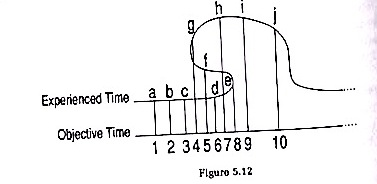
In Dennett’s Chapter Five, “Multiple Drafts vs. the Cartesian Theater,” he offers this diagram:

~
dennett003It’s a proposed version of what happens when we think.

You will have to read the book to decipher this illustration; but I recognize in it the way I tell a story, think about a story, remember an event, record an experience, and the narrative method of the many kinds of stories (many genres, many media) that I love.

One thing it is not is straightforward. We have all those revisions to make, to layer our experiences with, to explore along the fringes of, and to find deeply miraculously awesome. Wading among my drafts now, I feel revitalized. These reflections and revisions are part of my Self as a conscious being in a physical and wonderful world.


Consciousness reconsidered

A few months back, I was reading about consciousness (see here and here). This article on “brain tubules” caught my attention, although I admit to considerable skepticism as to how applicable, or even correct, this research will turn out to be. The material seems exciting–quantum vibrations in the brain!–because of the possibilities inherent in a synthesis of chemistry, biology, and physics and how such synthesis could lead to a theory of human consciousness.

The earliest article I could find on this theory dates to 1998 (an abstract is here). I suppose I should now break down and tackle Werner Loewenstein’s Physics in Mind: A Quantum View of the Brain. But I have a huge to-read list at present and no time or concentration to get to those books. Besides, at the moment I find myself more concerned with the less empirical side of consciousness theory. I mean: belief, attitude, faith. Those non-provable abstracts that nevertheless seem so much a part of most human beings’ operating systems…the things that psychology and neurology do not seem able to answer and that keep philosophers continually at work (the only true knowledge being the knowledge that one knows nothing).

~

And maybe, as Daniel Dennett suggests, the very idea of consciousness is an illusion–the brain evolving to fool us through perception.

~

This bust resides in the Louvre, and was found here: http://www.humanjourney.us/greece3.html

This bust resides in the Louvre,
and was found here:
http://www.humanjourney.us
/greece3.html

Do our brains fool us through our perceptions of emotion, too?

~

And how does this affect how we understand, say, literature, or art? Poetry, for example: Is it possible to deconstruct the pleasure I take from a poem into quantum vibrations in connective synapses as a result of the evolutionary process and, if so, where does the knowledge get me?

Would I still love the poem? (I think I would.) Would I consciously love the poem, consciously find pleasure and surprise in it, once I understand fully the process and development of consciousness? (Why not?) Would such knowledge flatten my emotional or aesthetic attraction to the poem? (I doubt it.)

If loving my perception of art, my relationship with it or attachment to it, is “merely” an evolutionary development, that does not cheapen or devalue the way I feel.

~

What brain studies and consciousness studies have to say about faith may perhaps set up more antagonism between science and consciousness-as-non-biological/i.e. religion, spirituality, etc. By faith I mean not necessarily religious faith but any non-provable conjecture, some of which are imaginative and potentially marvelous, not to mention potentially true. Some statements can be disproven but not proven…and there is the apagogical argument…and then there is the definition of faith (or belief) as Wikipedia defines it: “Faith is subjective confidence or trust in a person, thing, deity, or in the doctrines or teachings of a religion, or view (e.g. having strong political faith) without empirical evidence, or as confidence based upon a degree of evidential warrant (as in a Biblical sense).”

That empirical evidence thing is the perpetual stumbling-block, yet–paradoxically–it’s also what makes faith so appealingly…human. Yes, maybe we are fooling ourselves. And maybe that’s what is so marvelously cognitively neurologically fruitful and imaginative about the whole human endeavor.

Gratitude & Qigong

My mother is still living. I am grateful for that.

My mother and I get along well. In that, we are fortunate.

Furthermore, although she is an octogenarian, my mother is in reasonably good health. Another reason for gratitude.

Her interests are varied, and she’s willing to try new things. My mother has always been quietly innovative about life. She has pursued alternative therapies for health and emotional well-being, read difficult texts, studied disciplines and subjects that challenged her, traveled the world, lived in foreign lands.

Mostly, she has been a care-giver of one kind or another. This past weekend, I took my mother with me to a Qigong and Mindfulness retreat, thinking she could use a couple of days of restorative practices and a little time off from care-giving for others in order to care for herself. In addition to several hours of “medical qigong” (Yi gong), we learned some practices for spiritual qigong (Tao gong), got information about implementing a plant-based diet, observed a tea ceremony, tried our hands at Chinese bamboo brush painting, and followed a labyrinth path in a walking meditation. It was quite a significant conclusion (of sorts) to my recent weeks of thinking about consciousness as presented by various “Western” thinkers on the subject.

Yin-Yang

Kirkridge Retreat Center hosted the weekend. Kirkridge’s organization is dedicated to peace, compassion, and community–to the concerns of social justice and to individual healing. It is a peaceful place, located on a steep, wooded hill. The setting alone fosters a sense of restorative energy. Our teachers were excellent, informative, and full of grace. The meals were terrific. The crickets sang sweetly and the moon shone amidst the clouds. My mother and I felt grateful for the event, the weather, the place, the people, for the breaths animating our bodies and for one another.

Consciousness & cosmology

"Syntax" by Steve Tobin. Copper, bronze.

“Syntax” by Steve Tobin. Copper, bronze. What can be said about all the things we think make up an “I”?

~

I’ve completed I Am a Strange Loop and Why Does the World Exist? and found, not entirely to my surprise (but to my delight–braiding and synthesis!), that the existential, metaphysical, and cosmological aspects of both authors connect intriguingly. Thomas Nagel, an important “philosopher of mind,” appears as an influence in both of these writers’ books, and Einstein and Plato and Heidegger. Both authors end up citing Derek Parfit’s work, and Holt even interviews him! It turns out that trying to determine the “reason” the world exists at all is not that different from trying to understand what consciousness is made of and where it resides.

After taking up mathematical proofs and several philosophical arguments, as well as neurological science as a basis for the evolution of “mind,” Hofstadter’s book gradually takes apart the mind-body problem that Descartes made so iconic for Western civilization’s thinkers. He keeps returning–and that’s an appropriate word–to the metaphor of looping. He looks at the strange loops of Escher’s drawings and of string theorists’ rolled-up dimensions and alerts us to how crucial the concept of self-reference is to the theory of consciousness.

The need for self-referentiality in a fully “human” consciousness gets him to the idea of “small-souledness” (among, say, such beings as mosquitoes). What portion of our selves makes us able to think about thinking, for example? Is that identity, or consciousness? What’s the difference? Here is where Parfit comes in. Hofstadter writes that Parfit “staunchly resists the idea that the concept of ‘personal identity’ makes sense. To be sure, it makes sense in the everyday world we inhabit…we all more or less take for granted this notion of ‘Cartesian Ego’ in our daily lives; it is built into our common sense, into our languages, and into our cultural backgrounds.”

~

If we care at all about what there may be beyond our everyday lives–and certainly people like Hofstadter, Holt, Bachelard, and me, among others, do care–we need to get “meta” in our meditations, which invariably leads to paradoxes and thorny tangles. Hofstadter’s book also engages with his ‘personal life’ (if, indeed, a personal identity or personal life exists). When his wife died, he found himself engaged in the seemingly unanswerable question of “Where did Carol go?” Did “Doug-and-Carol,” the shared dreams and lives and understandings of two people who knew one another intimately, simply vanish when Carol’s body died? Hofstadter cannot fathom that this shared identity “goes poof” when the body stops. He, after all, still feels connected to the Doug-and-Carol shared consciousness.

It feels real to him. So–what is consciousness? From whence does it emanate, or originate? Is it real, or is it an illusion–is there no such thing as the personal identity we hold so dear that we cannot even imagine ourselves any other way than as an “I”? (Are feelings real?)

~

Jim Holt’s book likewise gets more personal as the chapters progress and as he wrestles with his existential inquiry through texts and interviews. That seems quite appropriate: how can we use language to untangle what language itself makes vague and confusing? (See Tobin’s sculpture “Syntax,” above, for a physical view of loopy entanglement and potential words). Holt’s inquiry initially seems based on the abstract, mathematical, physics of why/how the universe got here; but he ends on the metaphysical and philosophical…whereas Hofstadter entertains the metaphysical from the get-go but employs mathematics, psychology, and brain physiology as well as philosophy. And they encounter similar quandaries, paradoxes, and uncertainties. Both authors essentially come to a similar conclusion about the mystery of existence, though they accept or compromise with their conclusions in slightly different ways. Then again, they are different people who have lived different experiences. Reading both books has been, for me, a valuable experience and one that’s made me examine my own thinking about being.

~

Apropos of these musings, and thanks again to Popova of Brainpickings, here’s a few more words on some contemporary thinkers who have theorized as Holt has (in particular, Lawrence Kraus) in the debate on Something vs. Nothing: “What is Nothing”

~

…And, apropos of nothing in this post, but to lighten the mood, here’s an amusing little blog from The New Yorker about pilcrows & pound signs & ampersands.