Unsettling

We got some rain on Saturday, which we’ve needed, and dismal cold rainy January days are perfect for settling down with a book. I’m reading The Unsettling of America, Culture & Agriculture (1977) by poet, writer, farmer, educator, activist Wendell Berry, still working at 91–his book Sabbath Poems was published in 2024. I’m much more familiar with Berry’s poetry than his prose, though he’s written at least half a dozen novels and many books of nonfiction. This text, I’ve since learned, is one of his more famous–it’s been revised and re-issued six times. The copy I got from the library is the original version and features cover blurbs by Gary Snyder, Wallace Stegner, Edward Abbey, and Stewart Brand, among others; Publishers Weekly summed up the book as “a cool, reasoned, lucid and at times poetic explanation of what agribusiness and the mechanization of farming are doing to the American fabric.”

Which is a fairly good one-sentence précis, though Berry’s wording often strikes me as more passionate than “cool,” and agribusiness is only one aspect of his critique. I was in high school in the 1970s, and at the time it seemed average Americans were beginning to recognize that pollution and overpopulation could be problematic, that maybe we needed to eat more natural and wholesome foods, and that establishing an Earth Day might help people turn focus toward the planet. Simultaneously, we had Earl Butz as Agriculture Secretary, a man who ended many New Deal programs to help “small” farmers and who encouraged large (eventually, corporate) farms. Butz appears several times in this book, and no wonder; he and Berry debated the topic in public and in print, and their thinking was almost diametrically opposed concerning the philosophy behind agriculture. Berry’s book is a social and philosophical argument that is only somewhat dated and really quite prescient, though he might come off as mildly curmudgeonly to today’s readers. Or maybe not so prescient. He was simply paying attention.

The sections of the book that most resonate with me are those in which he writes of nurturing and relationships, and points out that good relationships involve responsible actions and collaborative, mutual care whether they are marital, family, or social relationships or relationships with the soil, the flora and fauna, the whole planet. He predicts a future in which people live in their houses and not with the land, or even within their communities, and where wilderness is “conserved” so that it can be exploited for entertainment and scenic views. People in the US, he says, don’t feel responsible for the land on which they live; they don’t understand its cycles, its weather patterns, its waterways; their property is merely property–a commodity for convenience and investment. I’d say that future is already upon us.
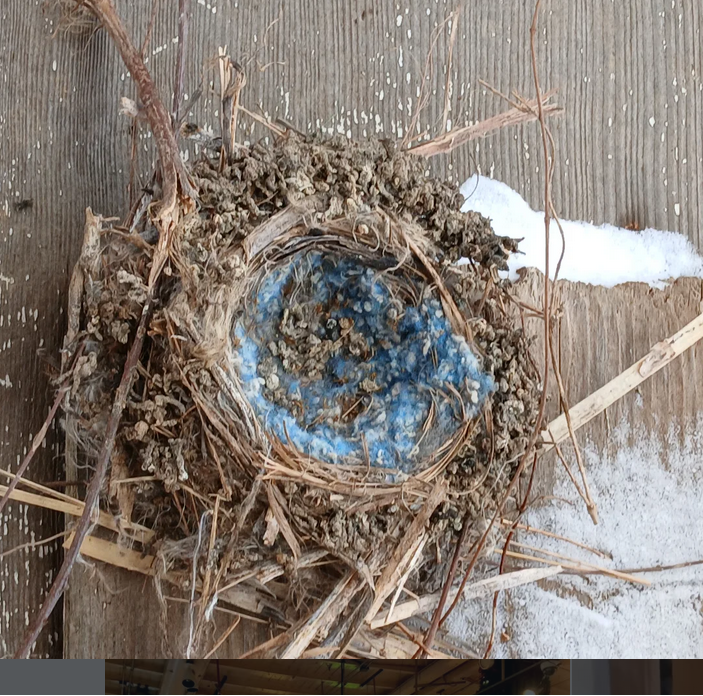
Thus, Berry has made me think more deeply about my relationship with “my” property. If you’ve read this blog for awhile, you may notice how often I consider weather, dirt, local animals, insects (especially invasive or non-native ones), plants, tree diseases, water–I’m no farmer, but I am a gardener and do feed myself at least partly from my own backyard. I take almost daily walks around the perimeter of our 6+ acres, poking around in the hedgerows, scanning the sky, looking down at walnuts and animal scat, watching for new buds or coloring leaves or bird nests or wildflowers. I worry over droughts and hailstorms and flooding. Climate change concerns me in very local and specific ways, not just in general.

One could say I’m at least trying to nurture the earth. I’ve made many mistakes along the way and done some damage that I’m learning how to rectify; I have also realized that I have to accept some changes, such as incursions by invasive species, because they are beyond my control. Through the almost 30 years we’ve lived on this land, I’ve tried to understand it better. After all, we built a house on it. The soil was hard-packed, acidic, overused from previous decades of corn-growing, full of stones, sumac, and asiatic rose bushes, a fallow field that hadn’t been planted or farmed in decades but didn’t necessarily need me to tend it. It wasn’t my family’s land, and I didn’t intend to end my days here; however, I figured if I was going to live on this spot, I had better do whatever tending and nurturing it might require.

Which is about the best I can do as far as a relationship with the land in which I dwell, and about the best any of us can do in any long-term relationship: try to understand it, get acquainted, do some research, make plenty of observations (maybe take notes), and nurture what seems to need special attention and care. The land has given me much more than I’ve ever given it. It’s offered shelter, beauty, an education, food, the companionship of animal life, cricket sounds, tree frog songs, firefly lights on long summer nights, open spaces for my children to play in, owl calls and fox kenning, the grace of leaping whitetails, dead-fall wood we can burn in winter, forest-bathing, hammock-swaying, inspiration for writing. The wonderful porch here, where I often sit to write in my journal, opens a view to the meadow out back. So many poems started on that porch, with that view…

That’s how the earth nurtures me. May I be somehow worthy of it.

photo by David Sloan 2020

Biodiversity, biodestruction

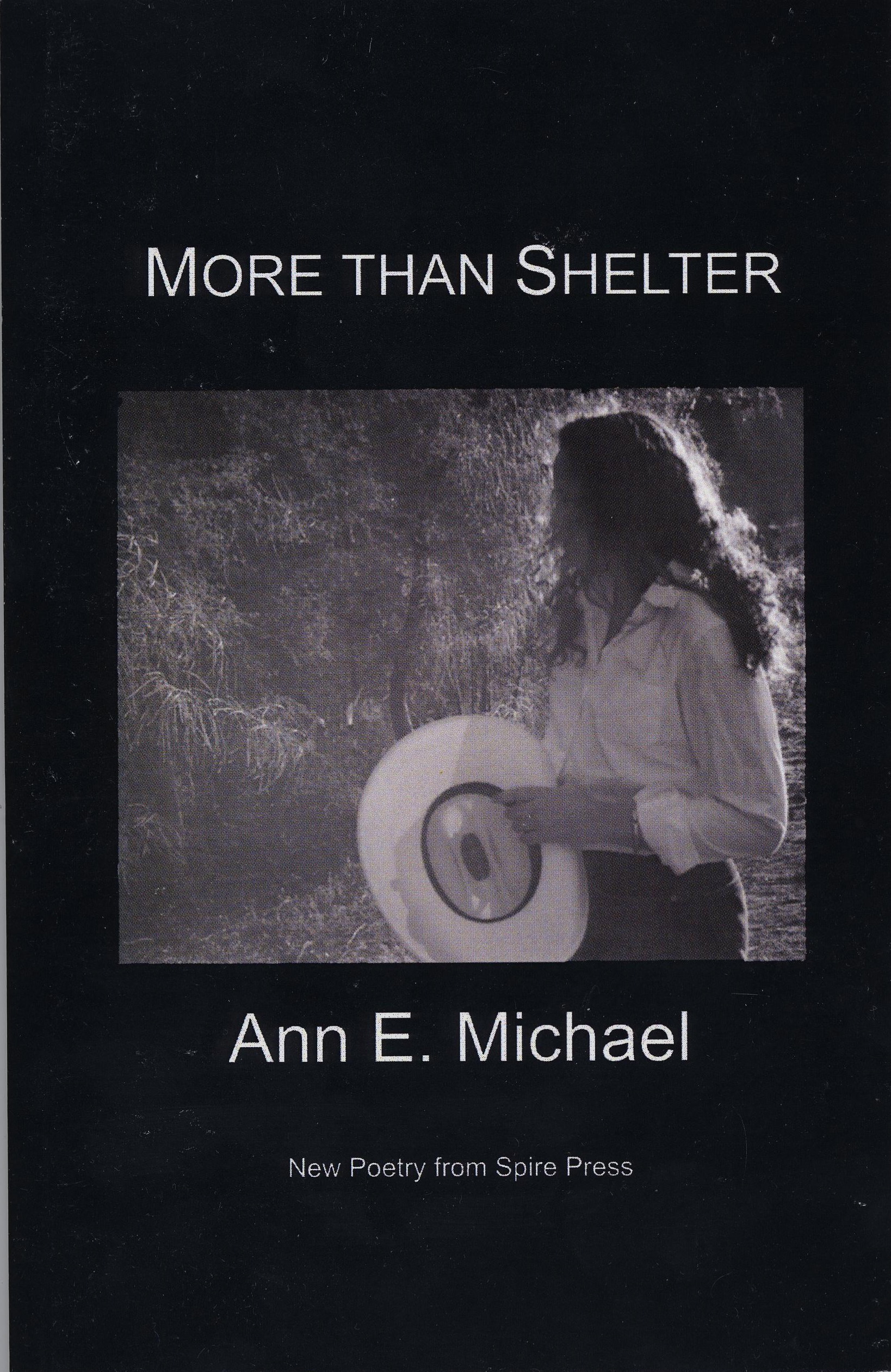
As the poems in my first collection, More Than Shelter, convey, I experienced mixed emotions about building a house and residing as human animals on a field that was in the process of reverting to wildness. It is a terrific privilege to “own” several acres of property and to dwell and raise food and children here. We have, after nearly 20 years, settled many of our challenges with the environment and its flora and fauna; and often, our lesson has been to let the environment be itself.MTS002

That means our “lawn” has largely reverted to clover and to grasses that can compete with weed seeds. That means we have meadows fore and aft and shrubby, scrubby hedgerows of mixed brush along a thin row of trees and rocks. It means we cannot entirely rid the area of invasive, non-native plants or the insects that come with them. And if a season passes without regular, careful maintenance–the environment will creep in on our living spaces very quickly.

On the other hand, a commitment to use no chemicals–or as few as possible (some exterior house maintenance requires paints and finishes that just are not environmentally-neutral) has meant that the property has good biodiversity for its size. So many kinds of avian life: scrub-loving little brown jobs, woods-dwelling owls and thrushes, turkeys, four varieties of woodpeckers, brightly-plumaged orioles, cardinals, jays, bluebirds, tree swallows, and goldfinches. Also the transient hawks, buzzards, and herons, and the grass-dwellers such as killdeer–to name a few. We are host to winterberry, serviceberry, dogwood, elderberry, nannyberry, mulberry, cherry, and wild grapes, so the wild fruit-eaters adore the place. Foxes, deer, groundhogs, raccoons, squirrels, chipmunks, skunks, opossums, even coyotes and possibly a black bear graze here.

They do not always stick to the margins and the flora. Sometimes they get into the trash cans or the compost heap (I once disturbed a deliriously happy raccoon sucking on a mango pit). Owls and foxes feasted on the guinea hens that refused to go back into the chicken run at night.

This description has not even gotten as far as the insect life, which is lively indeed–nor to the little bats, nor the oak trees’ flying squirrels.

~

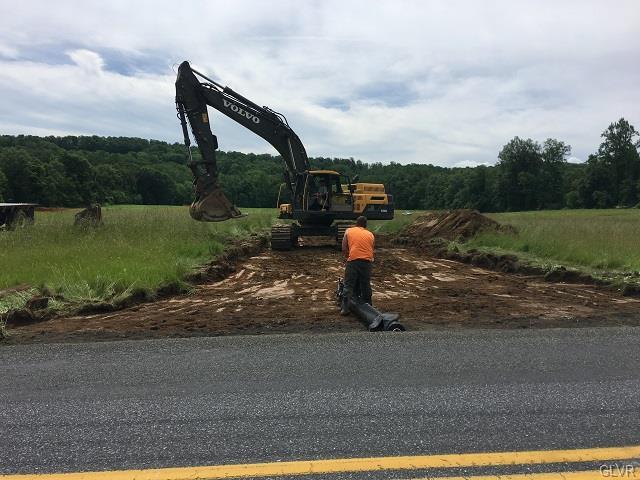
For the last decade, we have been among several neighbors who worked to slow the development of about 60 acres that lies immediately east of us and extends up the last low rise of the Appalachian foothills (Blue Mountain/Great Valley section). We have had some success in limiting the development: there are now 40 acres of preserved land on the north side of the slope, and the “estates” will consist of 13 township-approved house lots instead of the initially-proposed 52.brunner

But the site preparation process has begun in earnest this summer, and each morning–an hour or so after the birds start their chorus–the bulldozers and front-end loaders rev up and begin the crash-&-bang, the delivery of large culverts made of concrete, the dump trucks with their loads of gravel, the engineered changing of swale and drainage.

We were guilty of such disruption ourselves 20 years ago, when we installed the house we love on the land we think of as our own. I try not to mourn the loss of the field next door; it was never ours to begin with, and in so many ways, neither is the property on which our house sits.

The land belongs to no one. It is earth’s. If it belongs to anything it is to the generations of dragonflies, lightning bugs, red-tail hawks, barred owls, and rotund skunks, all of which preceded our appearance here by centuries.


Quiet earthiness

The beloved life partner of a long-time friend was interred in a green burial today, a glorious May morning full of flowers (she loved gardening…); and I find myself with little to say.

It’s been that way for the past two weeks. Not exactly writer’s block, as I have in fact drafted several poems, but an extreme sense of turning-inward. My nature is reflective–I’ve always fallen into the introvert category (INFP for those who are familiar with the Myers-Briggs assessment)–but my job requires pretty constant interaction with other people, students and colleagues for the most part, and quite a bit of listening and talking. I enjoy my job and find it rewarding; but the stressful weeks just before exams, when term papers are due, can be challenging for a person whose inclination is to read books and putter in the dirt.

I planted seeds in the earth, and picked flowers. And then placed flowers on a coffin woven of reeds which was lowered into the earth.

Returning home the quiet overcame me. I’ve been reading poetry today instead of the Sunday New York Times.

Also, I’ve been reading books on “good death” and “mindful dying,” and the guidance of some sensitive and experienced authors seems appropriate and grounded.

But grief is hard. It’s probably one reason we invented philosophy, religion, and poetry.

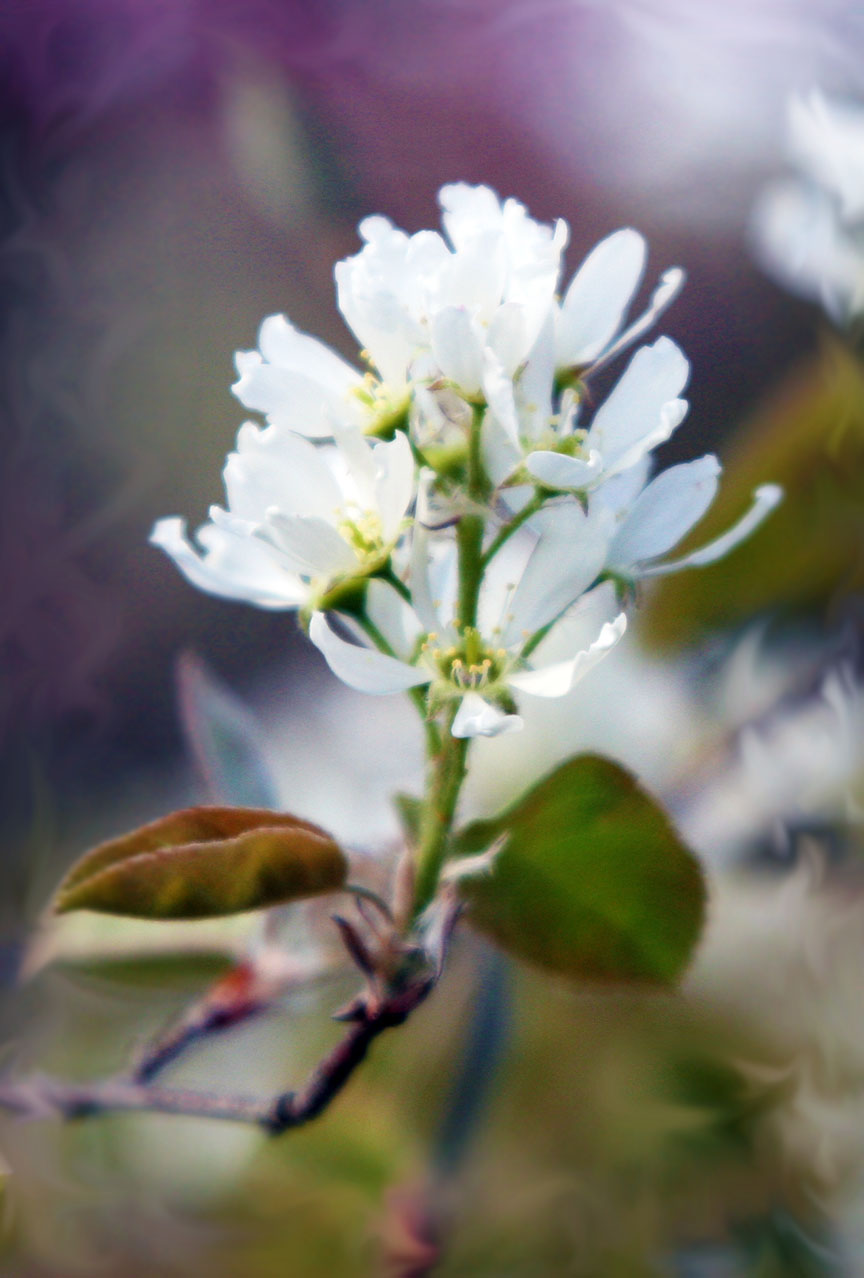
Shadblow, also known as serviceberry.

Shadblow, also known as serviceberry.

One of my go-to anthologies for sorrow is Pinsky’s The Handbook of Heartbreak, which I’ve mentioned in a previous post. In addition, I opened Christian Wiman’s book Every Riven Thing at random and came upon his poem “From a Window“–

Incurable and unbelieving
in any truth but the truth of grieving…


The poem comforted me (and I read other poems today, by other poets, that also comforted me). This one ends with the following stanzas:


Of course that old tree stood
exactly as it had and would


(but why should it seem fuller now?)
and though a man’s mind might endow


even a tree with some excess
of life to which a man seems witness,


that life is not the life of men.
And that is where the joy came in.


~
The joy comes in, somehow, through the quiet and the dirt and the trees.

Endemophilia, toponesia, psychoterric states

Thanks to poet Annie Finch, I came across a thoughtful essay in Aeon magazine–an exercise in synthesis and interdisciplinary thinking that connects with Naess and his notion of ecosophy; and with Bachelard and others whose work I have lately been reading and thinking about. Liam Heneghan combines ecology, botany and topography with Winnie-the-Pooh and explores transience and trans-placement from several viewpoints. He looks at how so many of us are transplants, foreign “invaders,” culturally and biologically, and asks us to think about how we feel about place–home-place, in particular.

Not all of us connect with the concept of a home-dwelling anymore; but if we do so, that place is generally closely associated with childhood, observes Heneghan. He cites environmental philosopher Glenn Albrecht and says:

…we do not yet have an adequate vocabulary to address our ‘psychoterric’ states — or how the state of the Earth relates to our states of mind. To balance the negative psychological state of ‘nostalgia’, a couple of years ago Albrecht proposed ‘endemophilia’ (the sense of being truly at home within one’s place and culture — or ‘homewellness’). To balance the term ‘topophilia’, a love of place, Albrecht opposes ‘solastalgia’ — the desolate feeling associated with the chronic decline of a homescape. Solastalgia names the emotions we have at the loss of species and habitats through climate change and other environmental changes. We should all expect a lot more of it.

I do know those feelings, and I feel happy to have terms for them! Yet I argue that we do have an adequate vocabulary for how the state of the Earth relates to our states of mind, and that vocabulary is artistic. I believe the finest expression of these kinds of emotional-memory sensations can be found mainly through art. My task for myself in the coming weeks is to gather a few examples of endemophilia, solastalgia, and other “psychoterric states” in poetry. I’ve already got a few in mind.

Please read Heneghan’s essay if ecopoetics or the notion of homescape appeals to you.

Place

A family member has recently complained that she wants to move from her apartment because her feelings for the place have changed. It’s been on her mind so much that she seems obsessive about this urge to find a more suitable home, somewhere she feels she can “fit in.” My response, initially, was compassion; then, I began to feel irritated (other people’s obsessions often seem irritating). I’ve been reading essays by the Norwegian philosopher Arne Naess for the past few days, however, and his work has tempered my irritable response. Place matters.

Naess was an originator of the “deep ecology” movement, a follower of Gandhi’s non-violence philosophy, a mountaineer; his influences include Taoism and Spinoza. Deep ecology, as a movement, is fairly controversial and has been subject to some pointed criticism–but as a philosophical practice, its inquiry and premises have been valuable to subsequent thinking and critical problem solving as applied to the earth and its environmental limitations.

What appeals to me about Naess, though, is the personal aspect of his “ecosophy,” a term he coined to refer to earth-wisdom, to place-wisdom. He called his own place-wisdom Ecosophy T: the “T” stands for Tvergastein, a mountain he loved and sometimes chose to live on. Living above the timberline for weeks at a time, Naess observed tiny flowers, diverse lichen forms, changeable and severe weather systems, mice, foxes, herds of reindeer bedding down in front of his hut. He contemplated life’s interconnectedness, the concept of peace in all aspects of earth-dwelling, compassion for all sentient beings, respect for earth-forms from rock to plant to insect…


(saxifrage photo–http://torirotsstitches.blogspot.com)

As Buddhist studies say: “When one has great loving-kindness towards all sentient beings, there are limitless beneficial effects.” Naess seems to have believed this whole-heartedly. He loved the mountain, he loved the miniature saxifrages, he loved the view of the valleys and the lake. These things enlightened him about the inherent earth-wisdom of the place itself. All of his thinking seems to spring from the mountain’s earthy source, its seasons. A mountain seems unchanging to most of us, but Naess appreciated its transformations. Such acceptance can lead to an abiding sense of peace and peacefulness, and certainly to a comfortable feeling of belonging to place.

I understand that urge to belong to place. It’s one reason I have stayed in one region for so long: I do not live in an area of breathtaking natural beauty or harsh extremes, as Naess chose to do, but I respond to my surroundings deeply here in the valley. The temperate climate with its four distinct seasons, the plants I recognize, the familiar birds and mammals, insects and toads, salamanders, the gravel and the different soils, the creeks and meadows, the agricultural fields and–yes–the suburban sprawl and nearby highways all make up the place where I exist. It’s comfortable, and it is comforting, and it is always surprising in small ways as I push my observations and attempt to deepen my understanding of and connection with the place I call home.

There have been times I’ve had to leave places that felt like home, and there’ve been times I’ve felt uncomfortable in the place I dwelt. And I needed to move on when that discomfort became too nagging, to irritable to ignore.

So I’m back to my place of compassion again.

Here’s “Urge for Going.”

http://www.youtube.com/watch?v=Z3EofN3Flag