Two falls

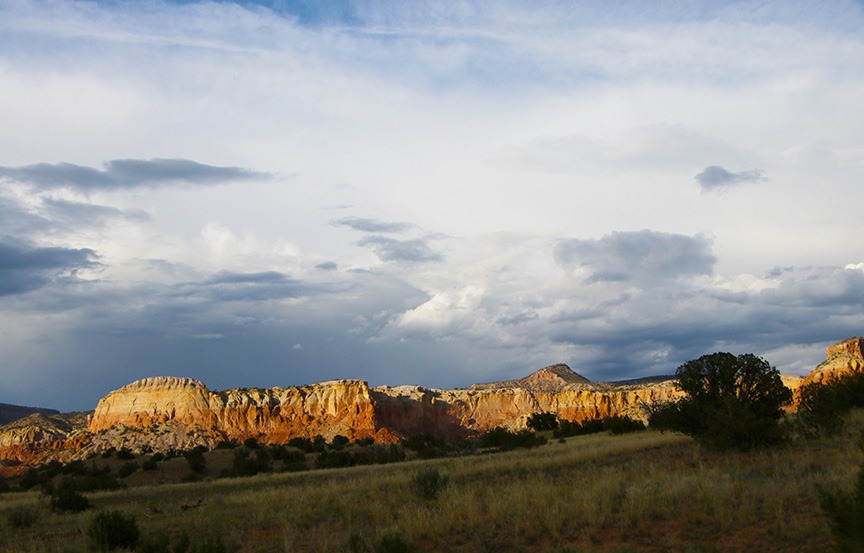
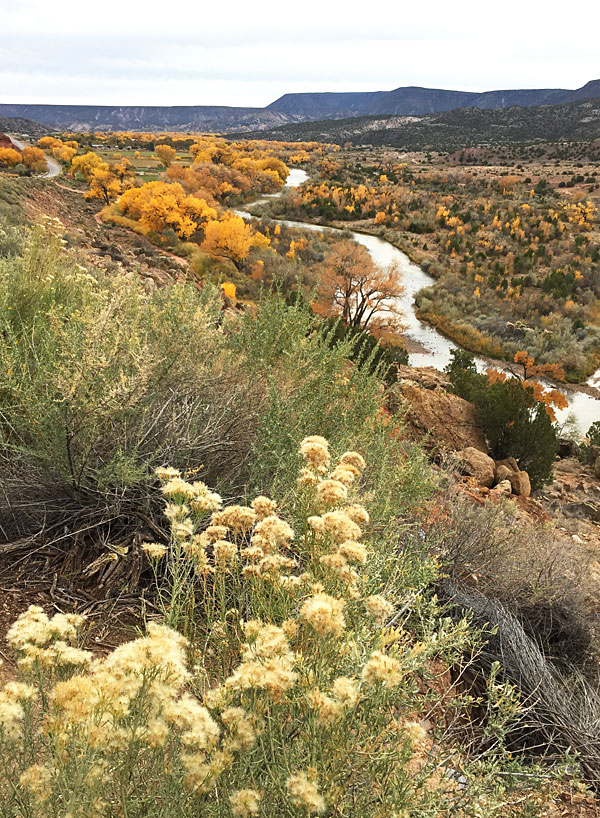
I have experienced two autumns this October: one in New Mexico, one in Pennsylvania. In the American Southwest, high up in the world, the cottonwood trees that hug every available water source were going a brilliant gold while I was there. Any view above a creek or river revealed a winding path of yellow–along the Chama, along the Rio Grande. The tiny-leaved oaks were turning brown-leaved and dropping scads of acorns along the paths. The oranges and reds are mostly there year-round, on the mesas and in the canyons.
It was wonderful to experience a poetry workshop with Anita Skeen and Cindy Hunter Morgan and to learn how books are made by hand, wonderful to draft some poems using color imagery and ekphrasis, wonderful to meet some fascinating people with whom I enjoyed pushing past my/our comfort zones and into art forms we may have been a bit less comfortable with. These are reasons to attend an instructor-led workshop, seminar, or residency. I spent part of last September in New Mexico, but it wasn’t the most spectacular time for autumn coloration–whereas October certainly gleams in northern NM!

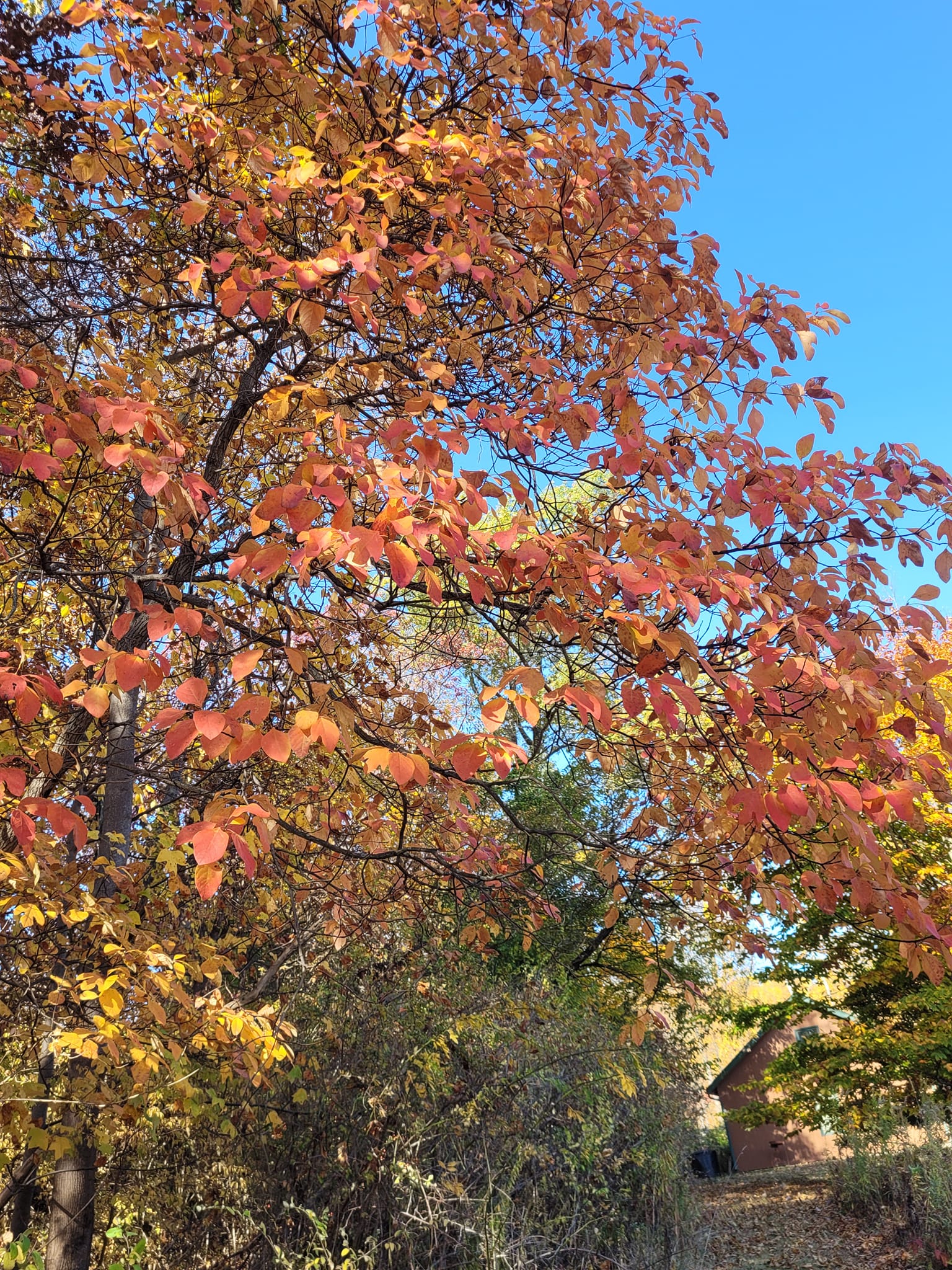
When I returned home, I had missed “peak season” for color in Pennsylvania; my husband said that came a bit early this year because of drought. But it’s still very bright here. The maple leaves haven’t all fallen, most of the tulip trees are still yellow, the hickories haven’t reached peak gold yet, and many of the sassafras are that warm coral color I love so well. The burning bushes? Ours hasn’t dropped its bright fuchsia-maroon leaves. It’s a vivid presence at the corner of the house.
~

Therefore, I have two autumns this year, one sea-level Mid-Altlantic East, and one high-altitude Southwest.

Which strikes me as an abundance of beauty and color. So I am continuing the theme of last week’s workshop. Here’s a new draft of a new poem just for the joy of it. [This fall, those of us in the USA could use a bit of joy.]


I don’t have a title for it yet. Maybe you can help me think of one.

~


The difference between orange leaf color
and orange rock color.
Between the greens of grass and juniper,
the pale dun of meadow’s die-back
and beige sand stretching westward
to the mountains.
Even the clear sky’s blueness
on fair, mild mornings
differs by an almost measurable degree.
Something to do with altitude
and aridity, the science of which
I don’t really understand.
Life’s variations and hues—
striated like cliffs, buttes, mesas,
like hills of maple and hickory in fall—
beautiful and strange.
Even when I close my eyes, color-
memories, all those shades
I can’t define, sift through my skin.
Into blood. Into bone.

With color

I’m taking a break from the garden and from the news cycle and indulging in a different form of work: “Making Poems, Making Books,” a 4-day workshop with poets Anita Skeen and Cindy Hunter Morgan at Ghost Ranch in Abiquiu, NM. Yes, I’ll be making my own book–a small accordion book. There are about a dozen of us in the workshop, which is centered around the idea of color. Autumn in northern New Mexico offers a range of hues somewhat different from the post-equinox colors of eastern Pennsylvania. Perhaps that will inspire me. The last time I took a workshop here was in 1993, and I learned how to draw/paint in chalk pastels. A long time ago–and yet, walking around the dusty alfalfa field in the center of the Ranch’s office and dorm buildings, I felt completely at home. As if I’d been here just last year.

This week differs from the artist residency I attended at Joya-AiR in May because I’m part of a class getting instruction in how to make a hand-made book and also participating in feedback on our writing. Nonetheless, every afternoon there’s a nice stretch of time to work on solo projects, hike, drive to some nearby sites of interest, or nap. I will admit I have been doing more napping than I had hoped. The high altitude, dry air, walking more than usual (on rocky trails) and the emotional energy it takes to learn a new skill and meet new people have conspired to creep up on me some afternoons.

That’s fine with me, though, because I’m banking many images, quotes, anecdotes, ideas, prompts–all the things memory can do.

And I am drafting some new work, so there’s that as well.

~

Enjoying the session and the people, third best thing about this trip. Being back at Ghost Ranch, second best thing, though it is perfectly wonderful. Best thing? Getting some time in the Albuquerque area to visit with my daughter and her partner. And their dog. And their cat, guinea pigs, and beehives. According to her, bees kept in hives (apiculture) are considered considered agricultural animals.

Who knew?

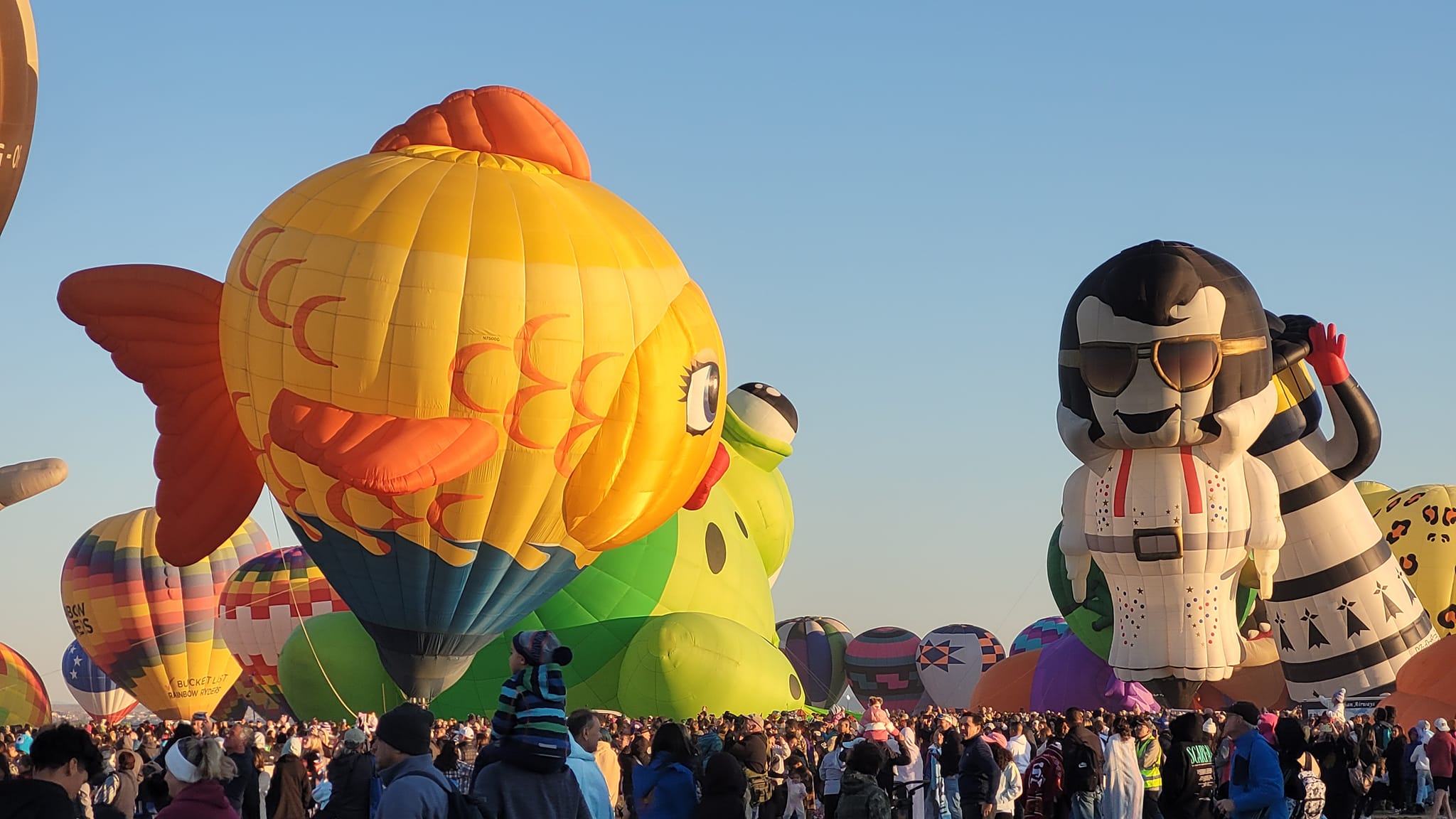
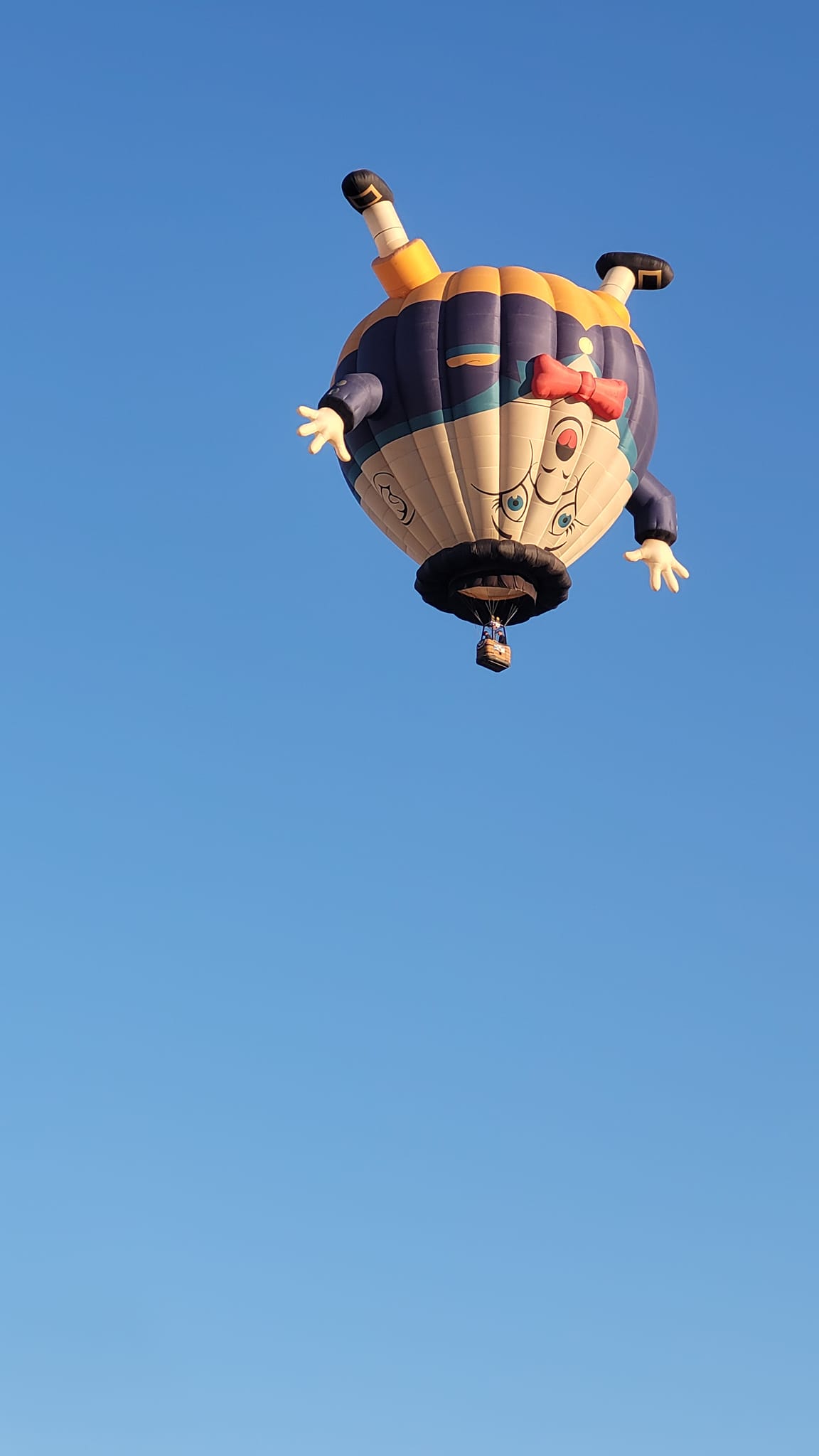
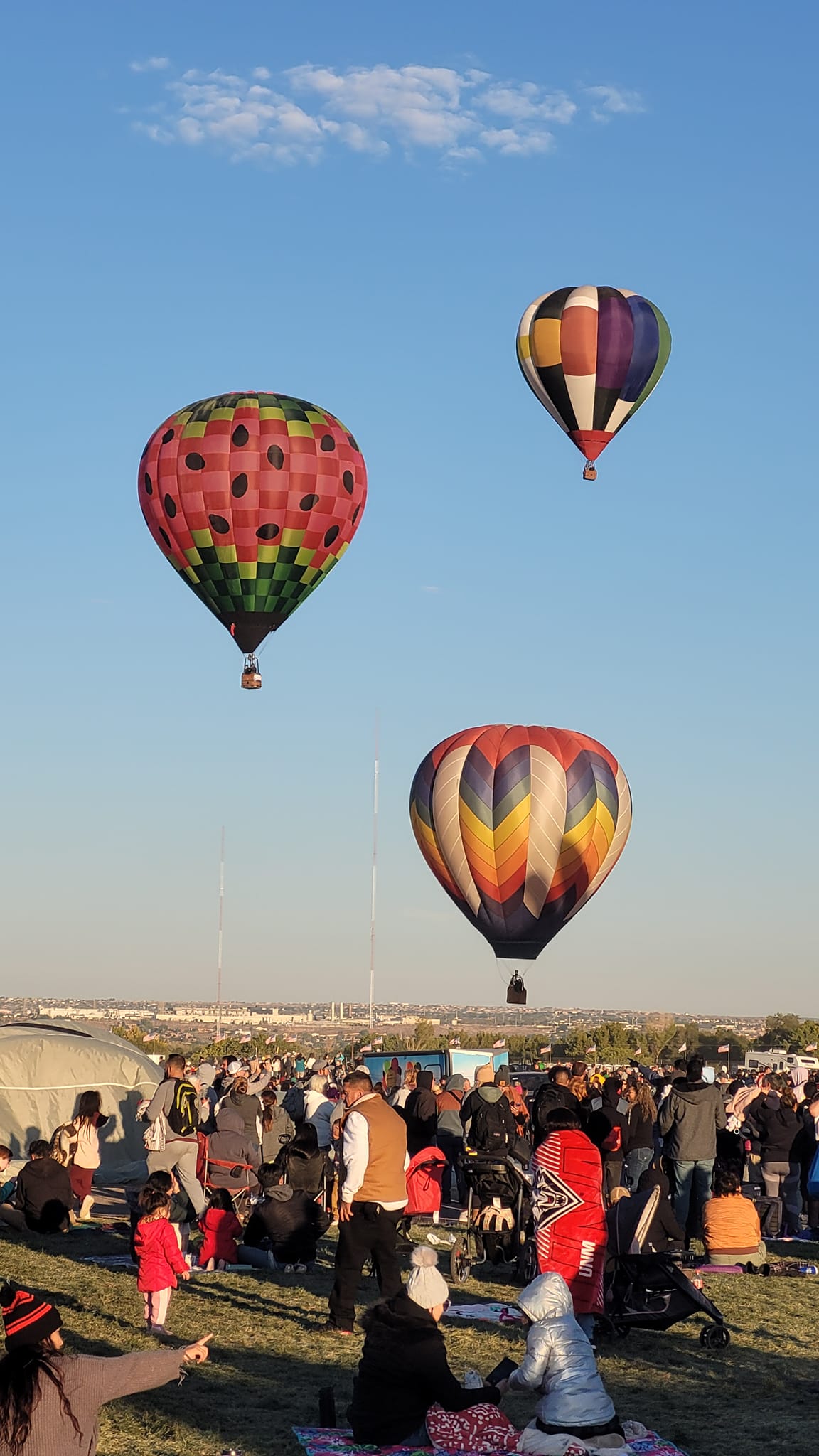
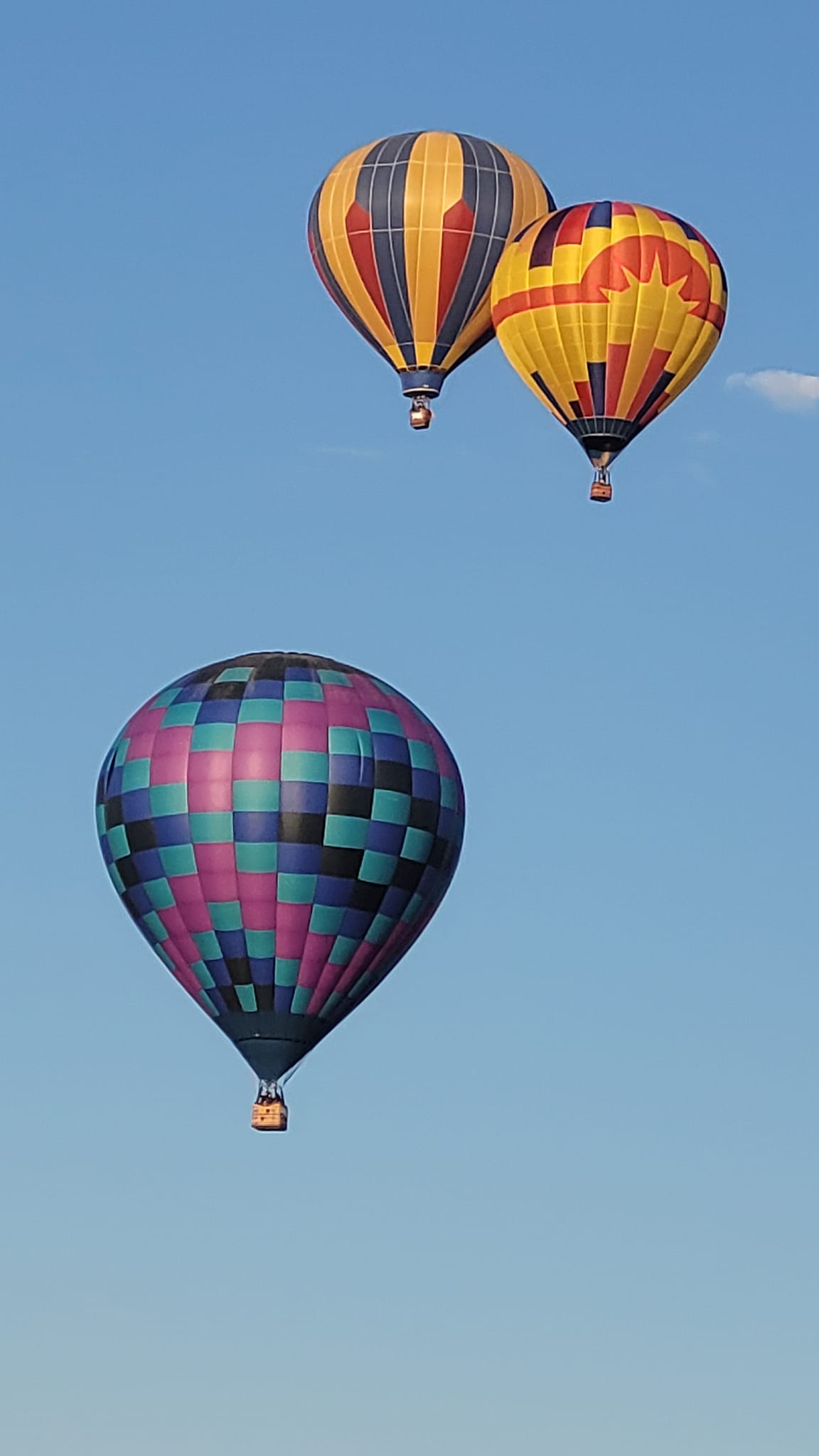
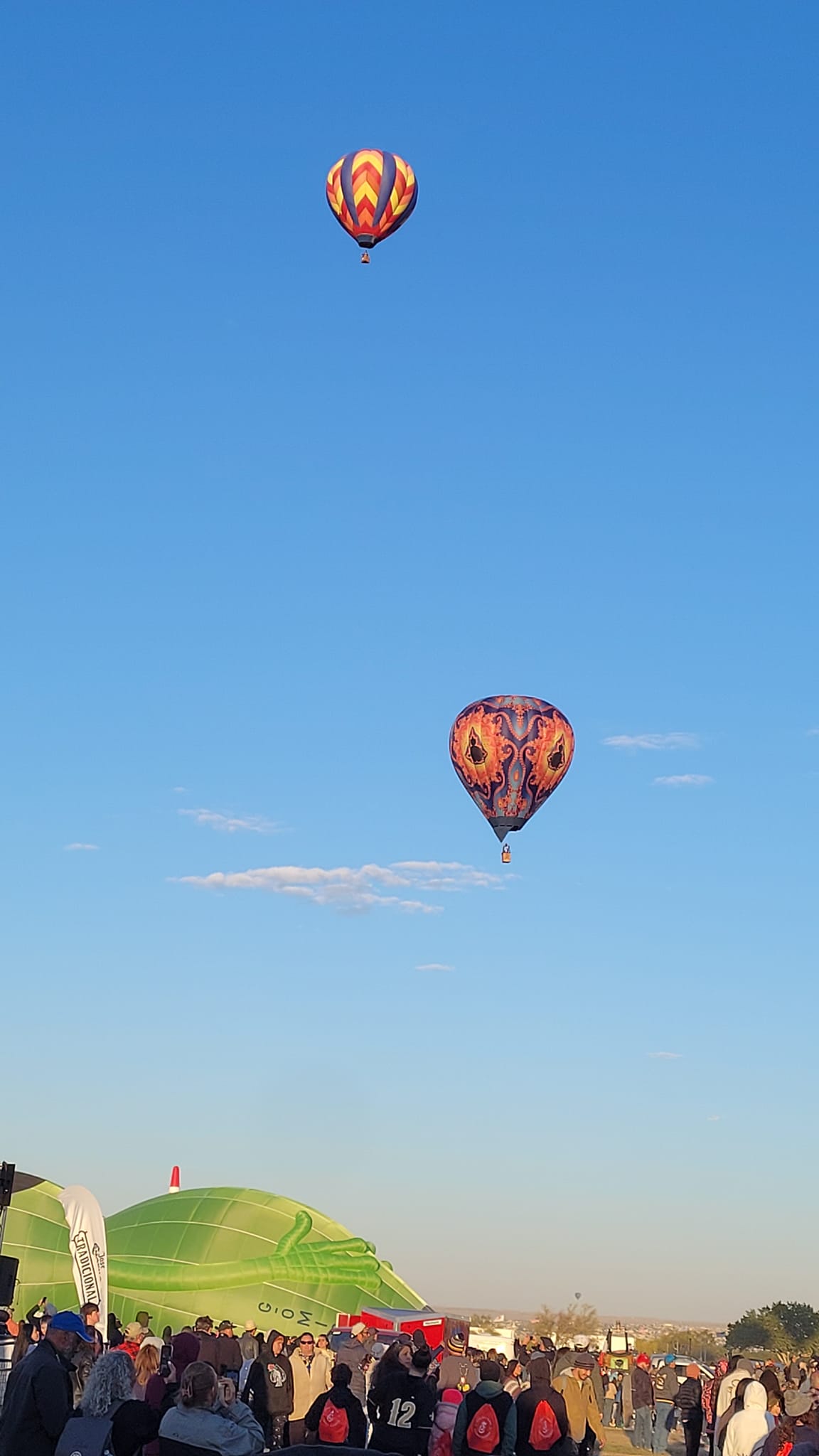
It’s time for my nap, I think. But I have wanted to post about this workshop/retreat before I get home again, just to remind myself of how grateful I am to be here, to be writing, to be seeing my child, to be–yes–escaping from the media frenzy as the presidential election looms. If that seems like something you need, as well, all I can do is send a few cheerful photos I took at the Albuquerque Balloon Fiesta.

~

Topophilia

In a past post, from 2013, I mentioned some neologisms describing feelings about place.

dusk GR

Toponesia suggests nostalgia but adds to it a sense of loss for what has been erased, eroded, or developed to the point it is no longer familiar. When you return to your old neighborhood, for example, and discover that your house no longer exists and there’s a mall there instead, or discover that your old school has become a condominium. Many of us know this feeling: memory conflicting with current reality.

A sweeter emotion–if you can call these emotions (they may indicate self-reflection and consciousness as much as emotion)–is that of topophilia. An article by Hakon Heimer in Environmental Health Perspectives says

The term topophilia was coined by the geographer Yi-Fu Tuan of the University of Wisconsin and is defined as the affective bond with one’s environment—a person’s mental, emotional, and cognitive ties to a place.

This feeling arose in me recently on a trip to New Mexico. The place in mind and heart is Ghost Ranch, which most people associate with the artist Georgia O’Keeffe–her house and studio are there (and are now a museum). But my association began before I knew of O’Keeffe; I was eleven years old, and the ranch was journey’s end of a long family road trip west.

GR19

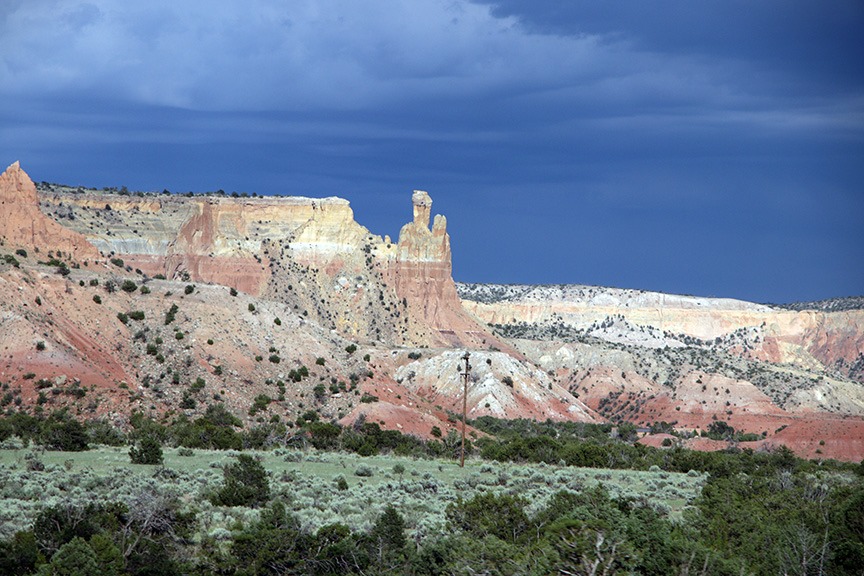
Chimney Rock, Ghost Ranch, Abiquiu, MN


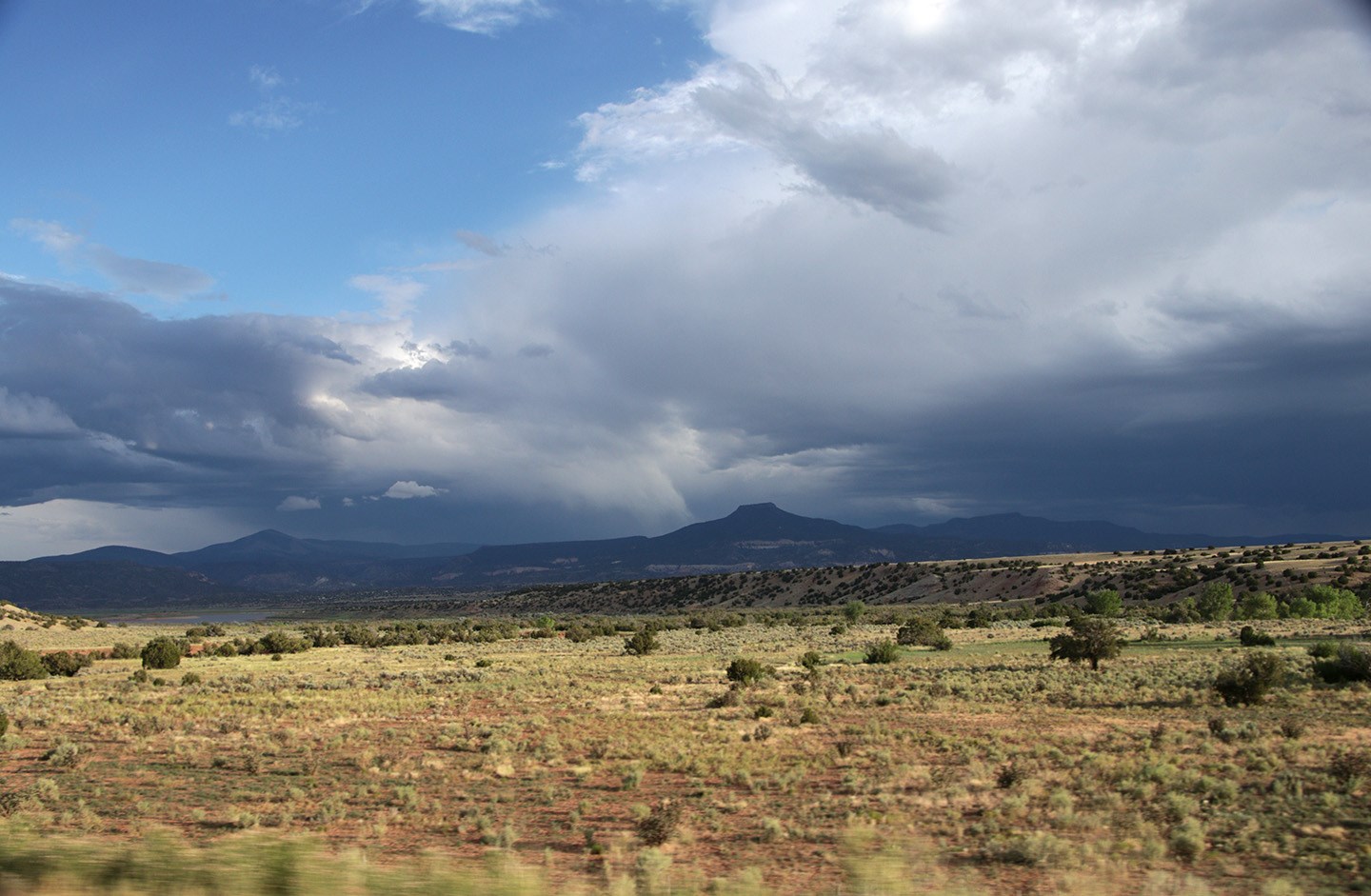
The summer days I spent there somehow lodged inside me with a sense of place–and space–that felt secure and comforting, despite the strangeness of the high desert environment to a child whose summers generally featured fireflies, long grass, cornfields, and leafy suburban streets. Ghost Ranch embraced me with its mesas curving around the flat, open scrubby meadow where the corral block houses sat. Chimney Rock watched over me. Pedernal loomed mysteriously in the deep, blue-purple distance. I still cannot explain why the place felt, and still feels, like a second home to me. If I believed in the existence of past lives, I would say I had lived there before. Topophilia.

pedernal storm