Another day. One that the calendar claims occurs in 2026, although at times I disregard the calendar–another human-made thing, and I find so many human-made things destructive and frustrating. It’s not as though a “new” year puts away what has happened the previous 365 days the way I can put away the holiday decor. Which I haven’t actually done as yet. Anyway, we’re still in the first week of January, and Twelfth Night has barely arrived, so if I do want to acknowledge the calendar I can excuse my lack of clearing-away. But I can’t clear away the losses of the past year, and I don’t want to. I want to remember my friends for as long as I can.
It’s true that wintry walks offer quiet splendor (sometimes) and a chance to reflect, but mostly winter affords the chance to stay inside, curled up with a book or browsing through garden catalogs. Theoretically, it’s a good time to revise and submit my work; often, however, I don’t get to that process because winter is also a low-energy time for me. I powered through a fibromyalgia flare two days after New Year’s Eve because loved ones were visiting, but there’s a bit of fallout as a result–worth it, though; and I’m chuffed about taking poetry workshops later in the month. Meanwhile, reading books! I got a Samuel Hazo collection from my local library, I’m reading Wendell Berry and Richard McCann, and Ada Limón’s You Are Here is on my to-read pile. I’ve also felt inspired by the start-of-a-new-year blog posts Dave Bonta has curated on his Poetry Blog Digest. Many writers and books there I want to check out, and many writers and poets feeling some of the same things I’ve been feeling about the past year and what to make of the years ahead.
So to recharge, as it were, I’ll do small, refreshing things this January: take photos, doodle with watercolors, read books, tromp about in boots, meet pals for morning coffee, draft poems, play with images, as per Johan Huizinga–“To call poetry, as Paul Valery has done, a playing with words and language is no metaphor: it is the precise and literal truth…What poetic language does with images is to play with them.”
End of another year. This one included some truly joyful times that will stay with me for quite awhile. But in that almost-inevitable reflection that arrives with the winter solstice, I find myself recalling dear ones whose lives closed in the past 12 months. I used to have physical reminders of friends and family, the last card or letter they wrote, something to put into a file or drawer or keepsake box and take out from time to time; a photograph or two, or maybe a recording of their voice on tape. Now that human communication has mostly migrated to the digital, to the “cloud,” those tangibles are much less common. But the messages persist.
A few weeks back, I migrated to a newer cellphone and, in the process, moved a year’s worth of text conversations to the new device (I’m not sure how I did that). All the old messages popped up, including three from dear people who are now deceased. Quite a different form of “ghosting.” I’ve kept in an online folder many email messages from my most frequent correspondent and long-time friend, who died February 1st, but I can’t quite bring myself to look at them yet. And it isn’t quite the same experience as opening and unfolding old letters.
I can’t bring myself to delete the messages from my phone, however. I suppose at some point that will occur, perhaps in another upgrade. Letters are ephemeral, too; all it takes is flood or fire. We have to rely on our minds, our memories, when it comes to recalling loved ones. Maybe that is what elegy is for, I don’t know.
~
As for the present–the Spirit of Christmas Present* ?–some of my Best Beloveds will be gathering here and there with me soon. Once the holiday hubbub dies down and the lonelier, cold January days arrive, I have poetry workshops to look forward to. They’ll be online, which suits my schedule in winter. Last year, I enrolled in two such workshops and found they spurred me to get a good deal of writing done, so I figured I might try repeating the process. Anita Skeen is doing another series for The Friends of Roethke Foundation with readings, prompts, and discussion on “writing toward wisdom.” In Dickens’ era, I’d be considered old enough to be wise (though most of us, Dickens certainly included, know better about age inevitably bringing wisdom). But the operating word for Skeen in this case is “toward.” It will be interesting to see where she takes her workshop participants in the new year.
When my children were learning to talk, I remember finding the process of language acquisition so amazing that I briefly considered going back to college to study it. I have two children about 18 months apart in age; many of my friends had babies the same time I did, so I had a range of small children to listen to and be amazed by. Each child seemed to develop their own method of learning to talk, beyond the general similarities among human beings that many scientists and linguists have studied. I wondered what made those small differences–the way parents spoke to the child or to one another? The temperaments of the children? Exposure to music or grandparents, older siblings, the radio??
I can admit that I was an exhausted young(-ish) mother, but also so intrigued. I wanted to learn as my children were learning. There was such excitement and joy–it seemed as though every new day brought further leaps in communication as my kids discovered pronunciation, verbs, adjectives, vocal stresses, and body language to convey what they were noticing, experiencing, needing, complaining about. As a lifelong learner, autodidact, and amateur researcher, I found myself reading up on language and its acquisition and history.
A few moments stay vividly in my memory. One summer day when we had a sun shower, my barely two-year-old son pointed up to the sky and announced, “Sun out. Rain coming down.”
I think of that with joy every time we get a sun shower. Over 30 years later.
~
Now, I’m trying to find the same fascination, the same learning-endeavor, with my mother’s loss of speech. I want there to be some joy or benefit in this reversal of language, something I can take away from it other than a deep sense of losing the person she was. This has meant reading books about dementia, aphasia, aging, and all the rest. It’s meant trying ways to get her attention and jog her memories when visiting her; talking with her caregivers; and reminiscing with my siblings, as well as conferring with them about her current situation as it evolves.
It’s meant finding some humor in the inevitable mix-ups that happen when communication gets woefully impaired. It has also meant finding peace, or comfort, in just sitting beside my mother in silence, holding her hand in her quiet room. She was always a fairly reflective person–capable of hilarity and chattiness, but more often keeping things to herself. Maybe revealing her thoughts some time later. Now? Who can tell. I find that I return from my visits with her feeling increasingly reflective myself, wondering where she “goes” when her attention seems to wander, wondering what she would say, if she could. I find myself wanting to research, even more than I have, information on neurology and cognition and what happens when the neural synapses that lead us to language begin to get trimmed away.
Not everyone who gets past 90 experiences such neural shut-downs in the language-generating parts of the brain; I know several folks who were, and are, quite fine with speech and thinking into their late 90s! Alas that my mom isn’t one of them. My task is to find joy in whatever her moments of being are at present while she is still physically among us. Not always an easy task, it sometimes saddens me. But joy tempers sorrow, just as sorrow so often tempers joy.
Momma. If you could only read this, or understand me when I say it: I love you.
I’ve read many memoirs and non-fiction books about cognitive decline and living with a beloved person who has a neurodegenerative condition; from Oliver Sacks to the recent biography of Terry Pratchett and many of the books we’ve read in my “morbid book group,” information in these texts connects with the personal emotions involved in deeply complicated human ways. There are also quite a few poetry collections themed around this type of loss, and I ought to compile a list one of these days, because poetry has been helpful to me as my family and I contend with elders dealing with forms of dementia (and there are many forms). That fact has led me to wonder whether readers even need another poetry collection centered around cognitive loss. Since so many of my poems during the past four or five years intersect with or explore that topic, I have considered making a manuscript of them. I hesitate. Too much sadness?
Yet while the circumstances that evoke such poems are usually sad, the disease progression differs, as do the personalities of the persons with cognition loss and the personalities of their loved ones. Perspectives on the persons and the diseases also vary a great deal. Similarities exist–enough to make a reader feel recognized–but situations and value systems mean there are as many ways to write about dementia as there are to write about anything else. My mother-in-law and my mother both were diagnosed with the same thing, vascular dementia, but their living situations, support, and the ways they responded to the aphasia and the cognitive effects create two different stories about the disease.
These days, my mother sometimes seems unmoored from the present moment, but not absorbed in memory either–just kind of lost in the ozone. Self, language, memory…sometimes they slip away from her physical body. In this process, though, she has things to teach me. Just as my hospice patients do, and as their families do, by helping me to widen my understanding of human beings and how we get by in the world. Or how we flounder differently from one another. Or how we rescue one another.
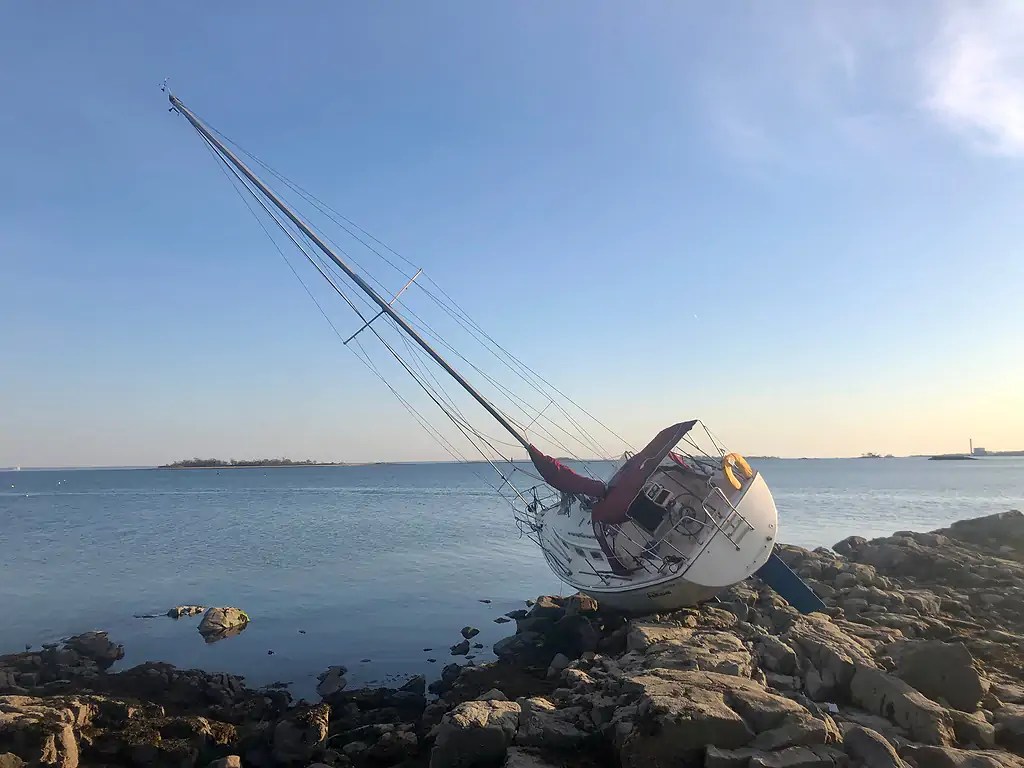
Adiamo unmoored photo: Thane Grauel, 2023
I take this gradual loss into myself–that’s what most of us do–and it’s hard, it’s painful to keep myself open to learning and love when what I first notice is untethering and loss. But yesterday when visiting my mother I noticed she has a cobbled-together notebook in which she sometimes writes (in tiny, indecipherable script). Some pages she had divided into three columns, some have scraps of letters or newspaper clippings stapled to them. Are her pages a record, or a practice? She cannot tell me. Yet it was kind of amazing to realize she does this with apparent intent. She has her reasons, if not her reason in the classic sense.
For all that visiting with her generally means a slow amble down the hall or sitting beside her while she sighs, eyes closed, drifting–despite the emptying hours–she is a Self, and she interests me. So I grieve the loss of who-she-has-been and anticipate the sorrow I’ll feel when she dies, but not everything either of us experiences is sadness. Of the poems I have read about losing a beloved person to neurodegenerative conditions, the range in scope covers a vast continuum of human existence, from misery and resentment and sorrow to revelation and even joy. Why would I avoid the full experience life offers?
My mother has vascular dementia, which renders her more and more aphasic, though in her case–so far–her “emotional tone” (as philosopher Arne Naess calls it) has remained intact. I visited my mother on a recent occasion when I wasn’t feeling my best and had had a week of less-than-good health. It was not a matter of duty. The time I spend with my mother is beautiful. But it had been a tough week. Let’s leave it at that.
We sat in her apartment in the assisted-living wing and arranged the flowers I’d brought. Then we spent 20 minutes in a kind of conversation, to which I’ve become accustomed, during which she tries to convey information about something she needs to have done. In this case, after much of the usual (really, rather humorous at times) confusion, I deciphered that she wanted some sweaters taken to the dry cleaner.
Such minutia. And yet, so difficult to get across, across that divide of language and cognition. The incredible concentration and effort it takes her just to dial a phone number to call her ailing sister. To tell the nurse aide that she needs more yogurt. Anything.
Then she surprised me. She pointed to my forehead and then to her own. “This,” she said. “Is wrong. For you. What?”
Was she reading a crease in my brow? I told her I had not been feeling great. She wanted to know, so I told her details, the way one tells one’s mother. Even though I am never sure quite how much gets through.
“Lie down. Take off the peaks.” By which she meant shoes. Why not comply? We both took off our shoes and spent the visit relaxing. We even indulged in a glass of wine because she loves to offer wine to her guests. Never mind it was 11 am. My mother has lost that rigid cognitive sense of time that the rest of us spend our lives obsessing over. There’s something valuable in that loss, though it is a loss.
She’s still teaching me things. Other ways to live with loss (my dad, her “normal” brain, mobility, words…).
~~
The next evening, she called me. She wanted to know how I was feeling. I’m 63 years old and my mother is 88, and she’s still worried about me.
It’s true that I appreciate a somewhat calmer political/media cycle, in part because I sense slightly lower levels of anxiety from my friends. I love my friends and feel sad when they express fear and exhaustion. The social and environmental messes we humans have made continue, however, as the pandemic stretches on (my region is still in “extremely high risk” covid territory, though most of the people I know personally have been vaccinated). Many of us continue to endure losses of all sorts. Even if the losses are small ones, cumulatively they aggregate, intensified by the spectre of climate change and virus spread and whatever local bogeymen trawl through people’s lives.
In response to the current difficulties, we keep hearing calls for “unity.” One way politicians and community advocates of all stripes and ideologies endeavor to “make nice” is through the concept of unifying people. It sounds like a good thing, to invoke our similarities and our common human bond in order to achieve…[insert goal here].
I’m wary of calls for unity. It’s not that I’m cynical (maybe a little), and I’ve certainly been idealistic in my time; but long experience and lots of stories and histories and my father’s background in how people behave in groups have led to feeling circumspect about unity. It works with people, yes, but it also leads to the worst aspects of tribalism. To the fostering of rigid ideologies. To acts against outliers, to the construct of evil Others. I’ve recently re-read Reinhold Niebuhr’s prescient and insightful Moral Man and Immoral Society, and his analysis of how humans behave individually versus in groups strikes me as relevant today as it was in 1932. My dad studied with Niebuhr during the latter’s last years at Union Theological Seminary and, reading this book, I find I’m reflecting on the ways this philosopher/theologian influenced my then-young father’s views on humanity.
My dad was an optimist, a Pollyanna, a great believer that God loved each human equally and that there exists in each person the promise of Good (because his God is Good). As my dad matured and experienced more of life and a lot of death, injury, backbiting, illness, pain, misery, in-fighting, and scapegoating–even in the Church–he examined more closely the dynamics of people in groups. Here’s where Niebuhr gets it right, as far as I can tell: people in groups suck.
No, he never says that, and perhaps I overstate. People in groups tend toward tribalism, shunning those who differ in opinion, perspective, or other ways. People in groups lean inexorably toward immoral behavior, even when the group is made up of individually moral people. Again and again, under differing social perspectives, Niebuhr demonstrates that unity thwarts diversity even when group intentions are moral. And, all too often, with immoral results.
My dad never really gave up on the idea that people could successfully deal with different perspectives and goals even in the same group, that there were approaches to group dynamics that would produce win-win outcomes or compromises without sore feelings. In this respect, he was an Enlightenment thinker like Locke. Optimistic, as I’ve said, though I suppose there were times he despaired; indeed, I know there were. Perhaps he recited the Serenity Prayer* to himself when he felt powerless to make a difference. Perhaps the way people in groups behave is one of those things we cannot change and must somehow accept.
For myself, I choose diversity. The earth manages its diversity wonderfully, even when human beings thwart it. Milkweed seeds and thistle find their ways into monoculture cornfields. Plants and insects gradually populate the rubble we make.
When circumstances keep me in a tribe-like bubble, I read books and poems that show me other perspectives, other climes, other social cultures, cities, classes, geographies–other histories than my own. I find ways to explore, in person or virtually, artwork and film work, drama, music, and dances from places I may never visit but without which I would be less attuned to the World. To its wonders, which are many. Insert here, instead of a unified goal all people “should” achieve, Whitman’s “Kosmos” or Hopkins’ “Pied Beauty” with its line “All things counter, original, spare, strange;” or, more contemporary, Vievee Francis’ glorious “Another Antipastoral” that states:
Don’t you see? I am shedding my skins. I am a paper hive, a wolf spider, the creeping ivy, the ache of a birch, a heifer, a doc.
~
The World, that great unity. That global balancing act. That paradox: Outliers and Others being necessary, and Beloved.
Happy Earth Day, a day late.
~~~
* You may be familiar with the Serenity Prayer, which Niebuhr composed.
Longfellow wrote that “Into each life some rain must fall” (“The Rainy Day“). The poem is an extended metaphor; here in my valley, the rain has been actual, physical, moist, sopping, wringing, drizzly, humid, soaking, and all the rest.
The metaphorical hasn’t been absent, either.
So this week, my post consists of other writers’ posts. Explore, please. All of these links offer much to enlighten the reader.







 ann e michael