Changes & alterations

We built our house here about three decades ago. At the time, I was young and excited about landscaping the place; although I had been growing our own vegetables for years by then, I was fairly new to ornamental gardening. I made mistakes; I underestimated the speed at which shrubs and trees grow; I thought I could keep a handle on invasive species; the world of various bark beetles and aggressive vines was new to me; and I had no idea how hard it would be to manage almost seven acres without, say, a team of landscapers.

Or how rapidly an environment alters when the climate changes, and when cornfields and early-growth wooded areas become housing developments, parking lots, and streets. I have learned a great deal and much looks different now than thirty years ago, but the swallows still return to my garden between April 26 and May 6. My land contains fewer efts in May than it used to, but the gray frogs, spring peepers, wood frogs, and toads make their usual frenzied chorus at mating time each spring.

~

Recent changes have come from the emerald ash borer, which has decimated, or worse, the green ash native to this valley. The huge trees have come crashing down during the past 10 years, making hard work for us even if it does provide a bit of firewood. Cutting, splitting, stacking hardwood isn’t a task I’m much good at anymore. Thirty years ago, maybe…and there does not seem to be any good that comes of this tree loss, which I’ve been mourning each year as we have less and less of a woodlot treeline above the hedgerow and see more and more of the neighboring subdivision.

But on my damp, early-morning walk today, I perceived some changes that I should have expected and that offer a glimmer of hope for native trees and shrubs–despite the proliferation of Russian olive, multiflora rose, Amur honeysuckle, mugwort, wintercreeper, Asiatic bittersweet, mile-a-minute weed, and more colonizing invaders than I can tick off in one blog post. There, beside the tractor path, along the edges of the hedgerow (for edges are where things happen most quickly), I observed more tree saplings than in past years. With the vase-shaped, leafy arcs of green ash absent, sun reaches further through the thickets. And there I spot horse chestnuts starting to push up, tiny walnut trees, oak trees of differing species, “baby” hickories and maple varieties, along with understory’s smaller shrubs and trees like amelanchier, ironwood, redbud, buckeyes.

Granted, most of them won’t survive to maturity, but some of them will–gradually re-making the woodlot unless other disturbances undo the renewal.

I won’t be here in another 30 years to find out, but I find hope in these saplings. I’m also happy to see that the little woodland and field wildflowers such as false Solomon’s seal, jack-in-the-pulpit, wild violets, and mayapples remain. And though I find myself swearing inwardly at the way the Russian olives grow massive along the property line and the invasive bittersweet sends thick tendrils coiling up into the trees, it’s not the fault of the plants that they got here. Humans brought them to North America, and the plants–like European colonists–became a bit too successful in their new homes, pushing out what was here before their arrival. Am I any different, really, than the dandelion or the honeybee? My ancestors came to these shores not so long after those species were imported with earlier “settlers.”

~

The rain we’ve been getting means I haven’t been out weeding in the vegetable garden. After I take my walks, I come inside to dry off and do household chores, or make soup, or work a little on my poetry. I feel excited by a little writing project I have recently given myself, and I’ve also been playing around with drafting prose poems. Next week, I head to the high desert again for further inspiration and a chance to travel with a good friend, visit museums, and spend some time with my daughter. When I return in mid-May, the gardens, the meadow, and the woods will already be much changed.
Wild places

I’ve been reading Robert Macfarlane’s book The Wild Places slowly, chapter by chapter and pausing between, enjoying his sentences immensely and feeling quite the milquetoast in comparison with an author who climbs snowy peaks by moonlight and sleeps outdoors, like John Muir, in scooped-gravel beds in seaside cliffs. I do not require luxury, but I get chilly easily and my hips and back are seldom forgiving when I sleep on the ground.

Still–I might put up with a considerable amount of misery to see the stars or the northern lights above Stornoway on a clear night (admittedly, a clear night is rare up there). And not by cruise ship. Given current circumstances, however, I am not going anywhere, which gets a bit tedious. Macfarlane’s last few chapters begin to focus on specific ways to view and consider wildness–finding wildness closer to home, in the flora and fauna and earth, rocks, topography even of regions that are tamed, farmed, suburban. One’s backyard walk might reveal wildness, though in miniature.

98106636_10223440949236204_1636631536210018304_o

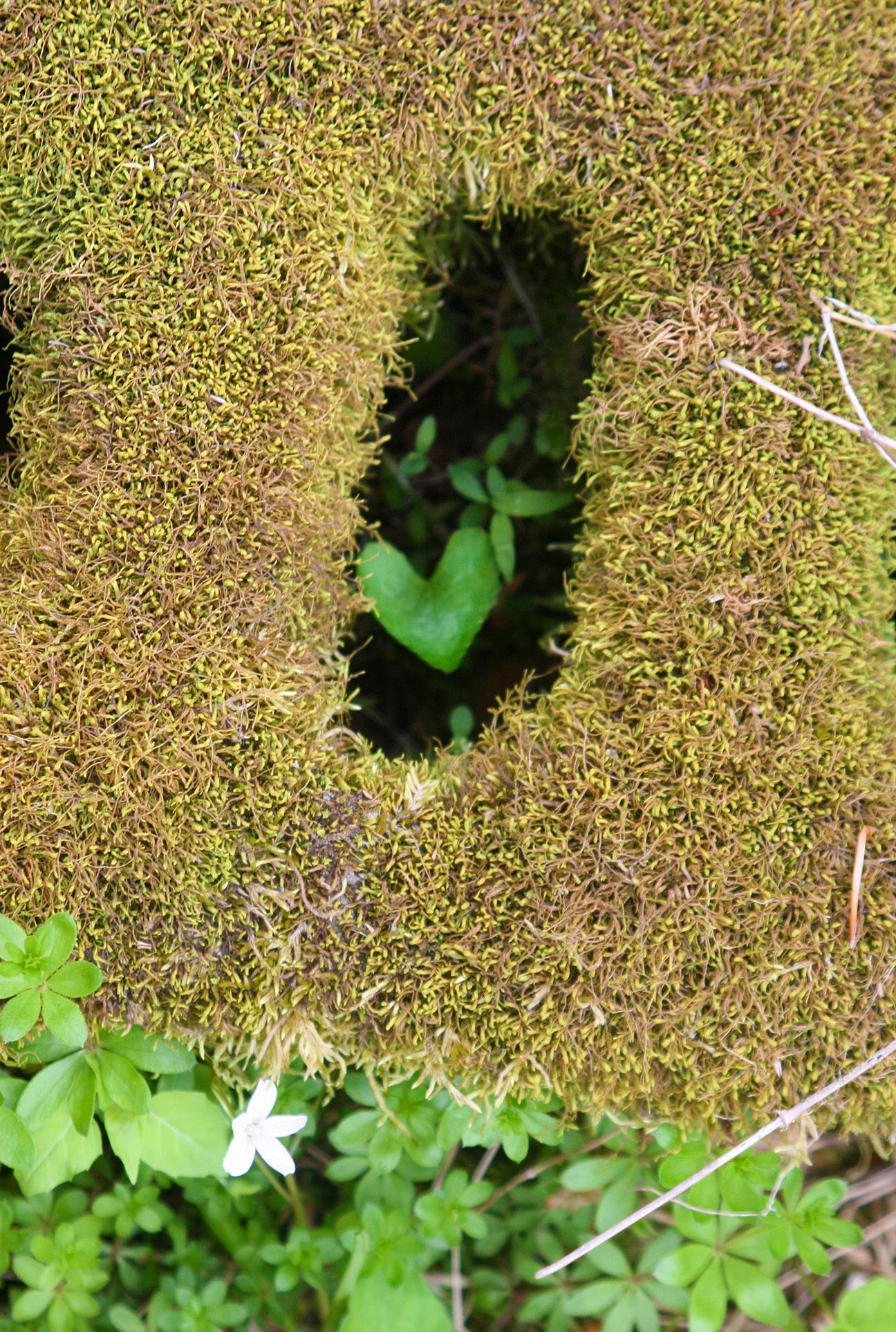
terrarium-sized wildness cultivating human-made cinderblock

There lies inspiration; I can do that–walk in my yard. Look for wildness. Indeed, I have often proceeded that way, slowly and quietly looking about, creeping low to see the small things, overturning old logs, crouching beside vernal pools and driveway puddles, listening for rustlings in the hedge, noting hawk- or vulture-shaped shadows on the path and raising my eyes to find the birds in flight. What are these things but wild? Just because I am familiar with them, I tend to forget their inherent wildness.

~

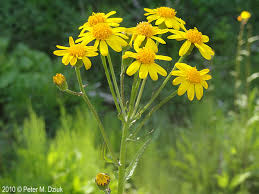
I took a walk in and through the meadow, which has  not yet grown tall with grasses and milkweed and solidago. I took notice of the perennials starting to emerge. Also of the quantity and variety of nutsedge-like plants.  I had not realized there are so many kinds. Amid the low-lying, pale purple violets, the milkweed and eupatorium shoots are emerging. And I found golden ragwort in the field–never had seen it before.

packera aurea

packera aurea, golden ragwort

This time of year, the does give birth; I have found fawns lying still among the grasses before and ambled the field perimeter slowly in hopes of such an encounter again. So far, not yet. But yesterday morning, a doe grazed along the edge of the tractor path, her spindly, spotted newborn scampering around her legs. So I know the wild ones are present and going on about their usual spring business.

Of course, the avian realm of wildness gets active in April and May. We found an eastern kingbird nest perched on the flat of a canoe paddle that rests on rafters in winter, under our outbuilding. Discovering the nest meant we had to put off our intended initial canoe float in May.

Recently I learned about bumblebee nests, too, and found an abandoned one under an oak tree in the hedgerow while I was looking at jack-in-the-pulpit, mayapples, fungi, and solomon’s seal. Thrashers, ovenbirds, numerous sparrows, and a noisily-protesting red squirrel raked about under wild black raspberry canes.

ann e michael

waiting for mama

There with the native plants, and aggressively overtaking the undergrowth, are amer honeysucke, asiatic rose, barberries, wintercreeper, japanese knotweed, mugwort, ragweed, burdock, thistle, garlic mustard, and whole hosts of plantains and creeper vines. One part of me abhors them. But I admire their tenacity and their ability to adapt to new circumstances. They’ll probably be thriving long after humankind has departed the planet.

As, perhaps, will the whitetail deer–a century ago, become scarce in the wilderness, considered almost “hunted out”–they managed to recover their numbers through adaptation to suburbia, where they are now “pests.” They graze on front lawns, nibble at ornamentals, gobble the leaves and bark of decorative trees, and gather at street-side puddles to drink, leaving heart-shaped prints in the mud and grass. But on my walk yesterday, I observed a doe lying amid the brambles; and she observed me. With the eyes of the wild, darkly liquid, meeting my gaze with her own. I did not move. Nor did she. I made no sound. We watched one another until, with a fluid motion and almost soundlessly, she leapt to her feet, twisted in the air, and fled in an instant. A brief rustle of trampled branches in her wake.