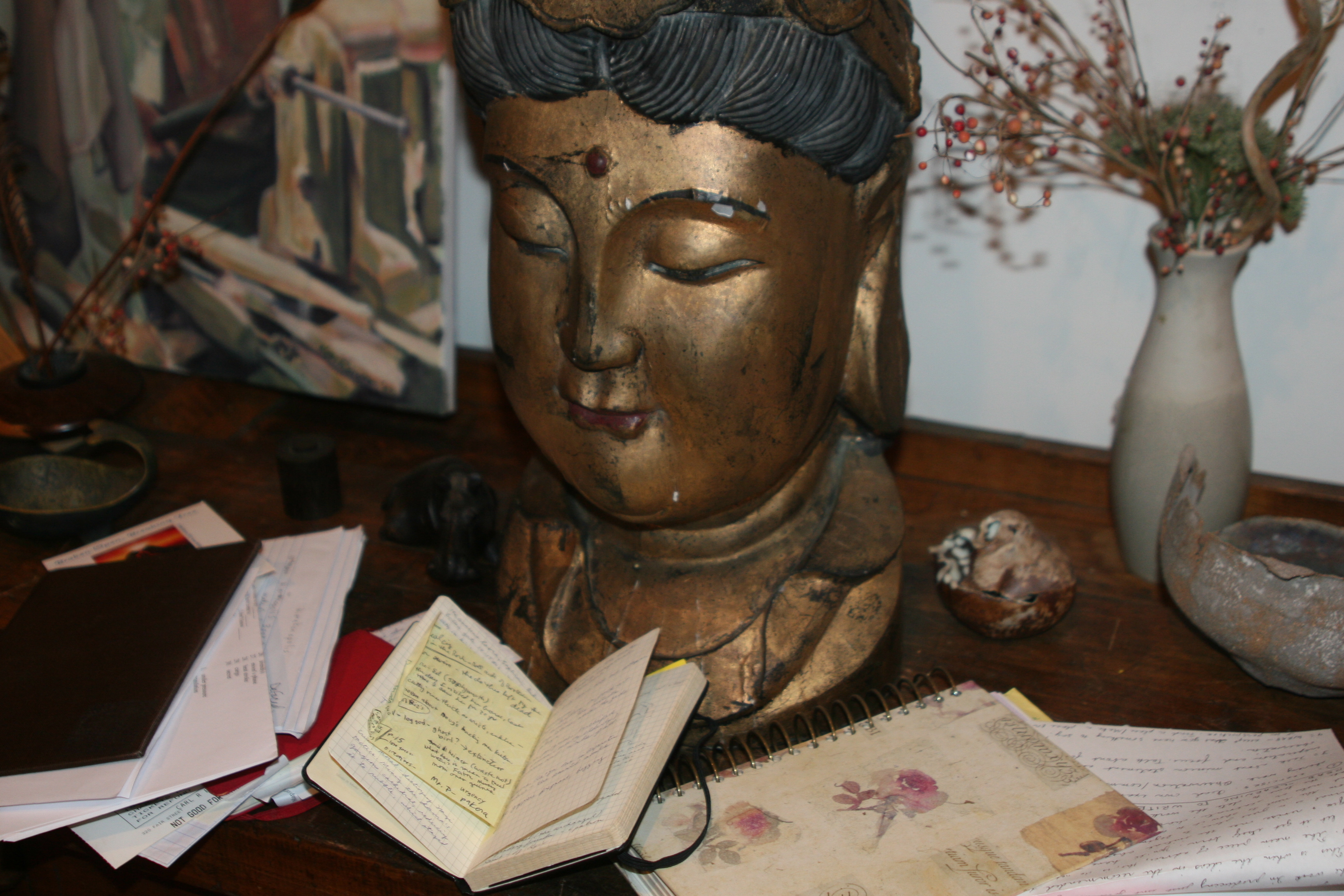
The ethicist & the healer

The “Morbid Book Group” recently read John Lantos’ book on ethical issues in Neonatal Intensive Care Units (NICUs), The Lazarus Case. As one of our members is a pediatric physician, one is a NICU nurse, another a hospital social worker, and another a former obstetrics nurse–we had quite a bit at stake when discussing this book, and quite a few different perspectives. Add to the mix my armchair-philosopher and educator point of view and all the questions a non-medical person has to ask to clarify the issues, and we spent the evening in lively and often challenging discussion.

Lantos tells his readers that medical ethics questions are not really answerable. They depend too much on cases, contexts, and–whether we like it or not–economic situations. An example: Until third-party payer systems are dismantled or significantly changed, confirms the doctor in our book group, NICUs will continue to be profit centers in addition to places where terrifyingly premature babies are saved, or not saved, not so much by technology as by individual circumstance over which doctors and nurses have less control than the parents of these neonatal patients may think.

The NICU nurse told us that Lantos’ book made her question her vocation. One of his observations is that NICUs have become the profit-hub of many hospitals in the USA; then, he asks tough ethical questions about “viability” and “pain and suffering.” The nurse says she sees these babies suffering and feels that too often, the suffering is prolonged when the baby is clearly unlikely to survive–prolonged because the parents cannot let go and the technology promises miracles that only occasionally occur. The doctor in our group gave us her point of view, which many of us found a bit too “scientific”–but that’s how doctors are trained, as she reminded us, while acknowledging heartily that doctors need more real-life experience in compassion, listening, and psychology than they receive in med school or as interns.
tulip

These are the sorts of circumstances that lead us to philosophy. Lantos writes: “Moral reflection begins with a particular type of suffering,” when we are faced not with abstract ethical dilemmas but genuine, frightening, life-altering situations. Lantos argues that doctors must not be “passive vessels” dispensing adrenaline, oxygen, delivering technology to a human being whose individuality the physician may not even notice in those crucial moments. He does not deny that there is value in the dissociated emergency response protocol, when the doctor’s training takes over and pulls the person acting away from emotion.

There is a “but,” however. Lantos says there are times when the healer is the medicine, when trust in the doctor, and the doctor’s willingness to take time to listen to the  patient, can “create a moral framework for dealing with the limitations of being human, of getting sick, suffering, weakening, dying,” when it is understood that the patient might die while under the healer’s compassionate care, and there need be no blame.

How do we get our society there?

“We make changes in medicine the way we make changes anywhere,” says our book-group doctor. “All of you are asking me very hard questions. I don’t have answers to all of them, and you may not agree with my answers or my rationale. And that’s great! Medicine needs to be challenged. There is no way for the medical industry–and it is an industry–to grow in a more positive way if patients and their families, ethicists, and even the damned lawyers remind us that behind the technology is always, always, a singular human being…it ain’t just a science. It’s an art.”

Doctors do need to be educated in the humanities, we agreed, and to spend more time learning about culture and psychology through experiences that develop compassion. Patients need to learn to ask more specifically for that kind of response, and to let hospital administrators understand how often it is lacking. Most of all, we need not to shy from asking the Hard Questions, those life-and-death ethics questions. Not for the sake of answers, but for the sake of discourse and understanding.

If you want a breezy article about how to go about the process of talking about what we fear and wonder at, here’s an article from HuffPost. A reply to Lantos’ critique of NICUs from Jonathan Muraskas and Kayhan Parsi is here.


Valuable to know

One of the philosophy faculty members at my college perennially assigns an end-of-term paper in which the freshman student must defend whether (or not) a philosophical principle, view, or argument “is valuable to know.” He has a list of possibilities, such as “Is Descartes’ concept of the body-mind problem valuable to know?” and “Is Aquinas’ proof of God’s existence valuable to know?”

The students wrestle mightily with these essays, although the professor’s question does not in itself constitute a major philosophical argument; even when we disagree with something, we may still feel it is valuable to know. The students do not always recognize that they have to make and defend only the view that knowledge is valuable. They tend, instead, to re-argue the philosopher’s claims…which confuses them, but also works to help them learn what those claims are and how they operate as arguments.

This bust resides in the Louvre, and was found here: http://www.humanjourney.us/greece3.html

Socrates. This bust resides in the Louvre, and was found here.

Philosophy, the art of thinking about thinking, by its very nature creates confusion on the path toward greater understanding. Or anyway, that should be the intention. What I like about this assignment (which I often see when I am tutoring) is the way young people come to terms with the material while they are in the process of composing the paper.

Here is how the tutoring sessions tend to go: I look at the first paragraph for context and clarity. Then I look at the claim and help the student clear up any grammar or mechanical errors. Then the student writes about what, for example, Aristotle’s claims about moral and intellectual virtue are. Usually this section comprises two rather vaguely-worded general paragraphs presenting claims by the philosopher, paraphrased in freshman-student sentences, and two short paragraphs presenting opposing views come next.

Here is where grammar and rhetoric are friends. I read each sentence, and I tell the student what he or she is saying in the sentence–based on how well the student can write or proofread, what the sentence says and what the student meant to say may be rather distant partners. So we work on that. As we plow through the paragraphs, the student gets a chance to re-think his or her arguments about and understanding of the philosophical questions at stake in the essay. Sometimes, I can almost see the lightbulb of comprehension beginning to glow in the student’s mind.

It really demonstrates what I tell my students all the time: Writing helps thinking! And so does discussion. In my office, for half an hour, the student gets a sounding board for his or her own ideas and then writes them down. Not all of my students get terrific grades, but it fascinates me to watch them in the process of coming to understand that pretty much anything can be valuable to know.


Poetry Month & Simic’s prose

I have read and enjoyed a great deal of Charles Simic‘s poetry over the years. How did I miss his prose?

I just picked up The Life of Images (2015) and find myself delighted indeed. This book makes a wonderful read for National Poetry Month, despite its subtitle “Selected Prose,” because so many of the pieces in this collection are about poetry or act as prose poems–a form Simic is well-known for.

Every other paragraph or so I find myself wanting to write down a glorious sentence, or a quote I should share with my poetry students, or a concise description that fits perfectly, such as Simic’s observation about Buster Keaton‘s persona in his silent movies: “Bedeviled by endless obstacles, Buster is your average slow-thinking fellow, seeking a hidden logic in an illogical world.”

9780062364715.jpg

Being of a philosophical bent myself, I was thrilled to read and then re-read “Notes on Poetry and Philosophy,” with its foundation of Heidegger and Simic’s sly and humorous references to Hegel, Schroedinger, Shakespeare, Dickinson, Whitman and others. That essay is really a series of prose poems that resemble philosophical puzzles and paradoxes.

His essays here often focus on visual art, as well. Movies, paintings, photographs. The image as metaphor.

“The poet is at the mercy of his metaphors. Everything is at the mercy of the poet’s metaphors, even Language, who is their Lord and master.” Ah, yes. One of many paradoxes surrounding the practice and theory of poetry:

“Everything would be simple if we could will our metaphors. We cannot…It took me years to admit that the poem is smarter than I am. Now I go where it wants me to go.”

“Metaphor is a part of the not-knowing aspect of art, and yet I’m firmly convinced that it is the supreme way of searching for truth.”

~

The usual progression of spring unfurls and blossoms around me, a bounty of images, thank goodness, and Simic has me mulling over my metaphors again.


Slightly less difficult books

photo ann e. michaelI recently read Paul Bloom’s book Descartes’ Baby while simultaneously reading Daniel Dennett’s Content & Consciousness. Of these two, the latter falls a bit under the “difficult books” category, but it is not too hard to follow as philosophy goes. Dennett’s book is his first–the ideas that evolved as his PhD thesis–and in these arguments it is easy to see his trademark humor and his deep interest in the ways neurology and psychology have aspects useful to philosophy. Bloom’s book, a somewhat easier read, suggests that the mind-body problem evolved naturally from human development: young children are “essentialists” for whom dualism is innate; Descartes simply managed to write particularly well about the evolutionary project (with which, I should note, Bloom disagrees; as a cognitive psychologist, he maintains a more materialist stance).

It turns out that because I have read widely if shallowly in the areas of philosophy, cognitive psychology, evolution, art, aesthetics, and story-making, I find myself able to recognize the sources and allusions in texts such as these. Quine, Popper, Darwin, Pinker, and Wittgenstein; Schubert, Kant, Keats, Dostoevsky, Rilke…years of learning what to read next based on what I am currently reading have prepared me for potentially difficult books. [Next up, Gilbert Ryle and possibly Berkeley.] I don’t know why I feel so surprised and happy about this. It’s as though I finally realized I am a grownup!

And I am glad to discover I am not yet too old to learn new things, young enough to remember things I know, and intellectually flexible enough to apply the information to other topic areas. Synthesis! Building upon previously-laid foundations! Maslow’s theory of humanistic education! Bloom’s taxonomy! The autodidact at work in her solitary effort at a personal pedagogy.

If I ever really discover what consciousness is, I’ll let you know.


Rest & reading

It’s been a busy week, and I am exhausted mentally and physically; I am taking the three-day weekend as relaxation time–which means: reading, mostly. Currently, my “difficult books” concentration is Maimonides’ Guide for the Perplexed, though I am not finding it as challenging as I expected, because Maimonides is a good teacher! I am not among his target audience, however, as I am a woman. He was quite forward-thinking for a 12th century Talmudic scholar with an Aristotelian bent, but women were not considered qualified to study the deep mysteries of metaphysics. [Alas, I read without repentance for my heresy.]

My reading also means catching up with blogs I follow. Here’s the link to Theodora Goss’s latest musings on aesthetics and beauty–a lovely blog-essay. I hope you will read it.

ann e michael


Desire

In a comment on my last post, M. mentioned the sensuality of gardening. Truly, there is little that can offer more joys to the senses or more opportunity for sensual encounters of various kinds than a garden. Bees, wasps, butterflies, moths, all those pollinators going about helping the flowers have sex; the pistils and stamens, the ovaries fruiting, the scents and colors and attractions doing the work of creating what is juicy, spicy, tasty, fortifying, fragrant, or gloriously beautiful. While picking beans in the heat of late July or weeding in the dog days of August, however, the gardener may be forgiven for occasionally overlooking these aspects.

ann e michaelBut the garden can be considered sensual–the garden is all about desire. My desire to feed my family with fresh foods, or to decorate my view with blooms. My desire to share the garden bounty with friends, or to try new varieties of vegetables, or to see what happens if I let that volunteer melon grow.

And if plants can be said to possess any so-called human quality, I can easily anthropomorphize them as desirous. The desire to live, and to live in order to reproduce: these are the most basic purposes of our DNA, and of the plant’s. As a gardener, I manipulate the plant’s desire. I pick the beans before the seeds have ripened in the pods, and the bean plant in its urge to produce seed sends out more flowers, more young and tender green beans. It will continue in its desperate output until the roots are exhausted. Quite the pathetic metaphor, I guess.

The plants evolve each to its own specialty. Those that “choose” dispersal of seed via bird digestive tracts grow vivid against foliage, easy to see. Those that rely on maturing into pulpy rot, to ensure their seeds get nurtured in the soil beneath the parent plant, hide under large leaves close to the earth. The hard pit, the soft seed pouch that requires fermentation to germinate, the barbed husk that gets carried off in the fur on a mammal’s leg–gardeners often foil some of these strategies, but only temporarily. We turn them to our own uses because we desire the sweet kernels, the juicy flesh, the ripe scents.

Meanwhile the plants continue making more of themselves. The wind blows, and delicious summer fragrances enhance it as it floats the pollen toward awaiting receptors; the bees collect pollen on their legs while climbing into and out of flowers (how sexy), the female flowers of the squash stems swell…

What makes our purpose any different from the plants’? Maybe we experience desire not because we are human, but because we exist, as plants do, to leave something of ourselves behind. That something will not always be our DNA, however. It may be a system, a process, a work of art, a story. Something, perhaps, that we desire.


IMG_1547


Buddhism, philosophy, consciousness (poetry)

IMG_1440~

Sometimes, a startling morning.

A few minutes that feel time-free, when the phrase “Be here now” inheres in the body, the air, the mind, the moment.

Free to recognize consciousness as a grounding, not as an end-in-itself. Part of the world, part of the cosmos.

~

Reflecting, I realize another thing: poetry does that for me, hands me a moment. When I listen to or read a poem, it moves me into a moment suspended in “now-ness.” I am with Seamus Heaney’s father, digging; I watch the horses in Maxine Kumin’s field. The poems that move me do so by allowing me, the reader, to enter that moment or that consciousness, that perspective, which I may or may not relate to, and may or may not layer through perspectives of my own. Yet there I am, in a real way.

~excerpt from “Digging” (see this link for the whole poem, and audio)~

Under my window, a clean rasping sound
When the spade sinks into gravelly ground:
My father, digging. I look down


Till his straining rump among the flowerbeds
Bends low, comes up twenty years away
Stooping in rhythm through potato drills
Where he was digging.


The coarse boot nestled on the lug, the shaft
Against the inside knee was levered firmly.
He rooted out tall tops, buried the bright edge deep
To scatter new potatoes that we picked,
Loving their cool hardness in our hands.


By God, the old man could handle a spade.
Just like his old man.

objects, stories

contemplation

~

Sometimes the momentary sense of time-free, liberated unity occurs on its own, smacks me by surprise. Or it may arise from mediation, contemplation, or during “mindless” work–such as digging.

Philosophy and criticism tend not to evoke that sort of free consciousness. They require the brain to operate in a different way, a distancing from one-ness; but I like that sort of brain-work because the intelligent and inquisitive people who write, or write about, philosophy, neurology, psychology, and criticism of all kinds offer insights I would not likely find on my own. They ask the interesting questions (it doesn’t matter to me if they do not have the answers).

~

So there’s a balance, right?

~

Poets also ask the interesting questions. Through reading a good poem, I am there in the poet’s moment, curious and uncertain. It is a kind of contemplative practice to read, with an open mind and an open heart, poetry.

(The criticism and the analysis come later. Let them wait!)


A good start. Possibly.

My most recent reading material is The Feeling of What Happens: Body and Emotion in the Making of Consciousness, by Antonio Damasio. Damasio is convincingly on the neurological/evolutionary trail to recognizing how consciousness operates and why we have developed it, though he allows for mysteries we do not yet and may never understand.

Damasio is clearly not a dualist who thinks the consciousness can exist separately from the body (one of his previous books is aptly titled Descartes’ Error). He doesn’t address the “soul” in The Feeling of What Happens, but argues that reason requires feeling in order to operate effectively, that feeling is a more “conscious” form of emotion, which is “unknowing” in the sense we call consciousness and is founded upon core consciousness, which is reliant upon the physical organism…a vastly complex array of cells, nerves, you name it, generally self-regulating and not by nature in particular need of a conscious mind.

So next time someone tries to explain why a situation happened and just says, “It’s complicated,” maybe you ought to accept that. Because, apparently, it’s really really really complicated!

http://www.isys.ucl.ac.be/descartes/images/Descartes.gifThat does not keep people like Damasio from trying to track down what goes on in the minds of sentient beings.

Having just read Flow, I immediately thought of what Csikszentmihalyi says about the way true flow experiences depend upon deepening levels of complexity–that’s how we keep from becoming bored by routinization of a task. Dennett suggests that consciousness consists of layers: “multiple drafts,” and Damasio calls the human brain, and the brain-body unit, a series of “systems within systems.” But there is no little self, no metaphorical or actual homunculus, at the very bottom of the system, or at the very top. There are only more and varied connections, he asserts–with profound respect and amazement at what biology has wrought.

I also thought about Csikszentmihalyi’s idea of a life project. Some years ago, I began a journal devoted to exploring my poetic project and learned that I do not really think about my writing as a project per se, at least not in the formal sense of poetics. [Here’s Dorothea Lasky harping on the whole concept of a poetic project, in a bit of refutation aimed at poetry critic David Orr.]

What I think I was doing, in fact, was trying to figure out my life project, in the way Csikszentmihalyi defines that concept. What is my life’s philosophy in terms of guiding tasks, principles, goals, projects, challenges? Is teaching part of the package? Motherhood? Gardening? Writing? Human relationships? Learning? Speaking of human consciousness, do I have a conscious path or goal?

Maybe my goal is to keep on amid the complexity and to relish it as much as possible, since it is unavoidable. And perhaps by accepting the complications, I will find my life becomes simpler. That could be a possible outcome–right?

I think of Reineke writing on Marcel Proust’s narrator and his struggle with status, jealousy, conformity, and desire. I read the Proust novel(s) when I was in my early 20s and found his narrator frustratingly neurotic but also a little too familiar, as my life experiences in many ways mirrored his. Eventually, he learns that the way to cure the pain of desire is to discipline himself to let go of desire itself; (and no, neither Proust nor his narrator were Buddhist).

And what happens when he gains this recognition is that he can write the novel. He develops flow, and a life project.

I am past 50, a good time to establish more consciously what my life project is. I know it involves relentlessly and joyously learning new things. I think it will include poetry in some way. And discipline of some kind, conscious effort. For now, those things constitute a good start.


Dewey & education

I have taken it upon myself to read Dewey after many years’ hiatus from his remarkably clear prose and his fervent support of free, equal, and accessible education for all. The essays in his Philosophy of Education (Problems of Men) were written between 1935 and 1945 and yet in many ways are relevant to 2014: In his era, technology has led to enormous social changes, as have global conflicts; school districts are under pressure to conform to top-down management and are feeling the pinch as politicians cry for school-tax cuts; more young people than ever graduate from high school and college, only to find that jobs are not available for them; an economically-advantaged elite dis-empowers the middle- and working-classes by using class, money, and networking to subvert or gut the democratic system. What is the philosophical, patriotic pragmatist of 1940 to do? Urge people to exert themselves into action, of course.

Dewey’s passion for education and his pragmatism appeal to me even when I do not wholeheartedly agree with his premises, proposals, or–alas–his optimism. Right from the introduction of this series of essays, he sets out such sensible observations about culture, society, and government that it is hard to disagree with him; his works always begin with a straightforward clarity that is refreshing among philosophers. One of the most trenchant observations he makes, over and again, is that the education of the citizenry must change as social developments occur; education must not remain in stasis and, he insists, democracy must also be flexible and living, always moving with the current times:

“I find myself resentful and really feeling sad when, in relation to present social, economic and political problems, people point simply backward as if somewhere in the past there were a model for what we should do today…We have a great and precious heritage from the past, but to be realized, to be translated from an idea and an emotion, this tradition has to be embodied by active effort into social relations…It is because conditions of life change that the problem of maintaining a democracy becomes new, and the burden that is put upon the school, upon the educational system is not that of merely stating the ideas of the men who made this country…but of teaching what a democratic society means under existing conditions.”

My italics in the passage above are there to indicate what I feel is Dewey’s most enduringly important recognition–that social conditions change, and, to stay vital, the foundations of a society need to be resilient enough to be adapted to existing conditions. Tradition has considerable value, but a too-conservative approach to law or education or any other abstract, social construct will fail in time, Dewey says. There is “an inherent, vital and organic relation” between democracy and education that reflects democracy’s recognition of “dignity and the worth of the individual.” As a person who engages in the task of educating others, and who finds she frequently has to change the curriculum to keep up with the technology and the changing mood and environment surrounding her students, I’m glad to be reminded of that organic relationship. It’s important to me that each individual I instruct, advise, and (in turn) learn from feels that he or she embodies dignity and worthiness.

Much as I enjoy reading and thinking about philosophy, it seldom gives me a “warm feeling” the way Dewey’s well-considered, thoughtful words do. He saw the need for balance and for growth–human growth, interpersonal and social growth–which he posited could be achieved through the conscious, considered, informed actions of well-meaning people in community. Educators are, by such lights, among the foremost in the endeavor. Certainly Dewey thought they were.

larch cones by Ann E. Michael


Books, burning

“Every burned book or house enlightens the world; every suppressed or expunged word reverberates through the earth from side to side.” ~Ralph Waldo Emerson, “Compensation”

I have taken this quote out of context–Emerson wrote this sentence as part of his reflection on compensation: he was questioning the received doctrine of his era that evil-doers flourish on earth and the just do not, therefore Heaven is God’s compensation for the trials of being a Good human being. Emerson did not accept this doctrine out of hand and theorized that, through just laws, people could make compensatory actions operable on the earth. He recognized, too, that sometimes evil people fail to thrive and compassionate, just people manage quite well. The received wisdom was merely received, not wise. Nonetheless, I find “Compensation” essentially dualist. And it is, truly, a sermon.

In the paragraph that contains the above words, Emerson suggests that there is always compensation of some kind for any act, for good or ill, that suppression cannot be maintained–the volcano will surge eventually–that the martyr never dies in vain because from his or her action will arise, in time and through the flaws and the perfections of Nature, some form of (often surprising) compensation. Hmm. Sounds a bit similar to Karma.

~

And I am thinking, again, of books and what they offer. My students tend to consider books as information solely (I do not generally teach the kind of young person who reads novels or philosophy). This is, we have been reminded continually, the Information Age–so that approach to books seems well-founded. Then there are our other means of information-gathering, largely through technological devices. These phones and various screens are mighty distracting and designed to be so. Yes, Fahrenheit 451 was prescient. Does the book-burning in that novel begin a revolution? Not in the predicted ways.

~

More prescient writing (found, by the way, in books): Neil Postman, back in 1985, commenting on the prescience of Orwell’s 1984 and Huxley’s Brave New World in Postman’s must-read cultural criticism, Amusing Ourselves to Death. In his foreword, Postman writes

What Orwell feared were those who would ban books. What Huxley feared was that there would be no reason to ban a book, for there would be no one who wanted to read one. Orwell feared those who would deprive us of information. Huxley feared those who would give us so much that we would be reduced to passivity and egoism. Orwell feared that the truth would be concealed from us. Huxley feared the truth would be drowned in a sea of irrelevance. Orwell feared we would become a captive culture. Huxley feared we would become a trivial culture, preoccupied with some equivalent of the feelies, the orgy porgy, and the centrifugal bumblepuppy. As Huxley remarked in Brave New World Revisited, the civil libertarians and rationalists who are ever on the alert to oppose tyranny “failed to take into account man’s almost infinite appetite for distractions”. In 1984, Huxley added, people are controlled by inflicting pain. In Brave New World, they are controlled by inflicting pleasure. In short, Orwell feared that what we hate will ruin us. Huxley feared that what we love will ruin us.

~

Is there compensation for being drowned in a sea of irrelevance? What might that look like?

~

Perhaps these are a few of the reasons I often need to turn from information to poetry.burning