Equinox: autumnal

ann e. michael poet

I do like early autumn. The bright flowers of late summer possess almost tropical coloration: tithonia, goldenrod, zinnias, dahlias, canna lilies, cosmos, salvia, marigolds…meanwhile, the leaves begin to turn. Where I live, the euonymus alatus (spindle-tree/burning bush), sassafras, and sumac are the first leaves to redden, along with the five-leaved Virginia creeper vines.

My reading in Bloomsburg was a great experience. There was a full house, the sound and lighting systems worked, and the Moose Exchange is a delightful building, similar in purpose to many arts-venue collectives in other small US cities as they attempt to revitalize their downtown regions. The building was once the home of the Moose Lodge, one of many community associations that once worked to keep small cities and neighborhoods vibrant in the days before flight to the suburbs. My reading, part of the Big Dog reading series, took place in the third-floor ballroom! Afterwards, we had dinner in a terrific little Italian restaurant just off Main Street. Portobello mushroom ravioli in sage-butter, delicious.

The drive home was quiet–mostly highway, late crickets still making noise along the road, full moon in a perfectly cloudless sky.

I recognized that I can work on my writing practice more diligently and less anxiously than I have been. There are ways to make space in my life for creativity again. My recent readings on consciousness and the nature of being lead back to the poetics of space somehow.

first day of Autumn
my heart is pounding wild
Ah! The full moon

     ~Basho

Poetry reading in Bloomsburg

This is just to say

(a little William Carlos Williams title phrase to acknowledge the natal day of a truly “American” 20th-century poet)

…that tomorrow, September 18th, I will be reading from Water-Rites, and presenting a few newer poems, at Bloomsburg Pennsylvania’s Moose Exchange. The venue is a non-profit cultural arts center in the college town of Bloomsburg PA. More on the event here.

Wednesday evening, there’ll be a full moon over the Susquehanna River, which flooded two years ago this month and stranded many college students (though they were without electricity and water, they were on the hill). The floodwaters inundated the lower part of town, including the main streets and many businesses; the damage to town and the homes of many citizens was devastating. Bloomsburg creative writing professor Jerry Wemple had invited me to read at a poetry festival that very week. The festival was, of course, canceled. Jerry was kind enough to invite me to give a CVPA reading at Moose Exchange this year. Fortunately, the weather for this week is forecast to be quite sunny.

For another WCWilliams moment, click here.

https://i0.wp.com/www.keylimepietree.com/Red_Plums_on_tree.jpg

plums (“so sweet”)

Favorite poems

In my last post, when writing about reading poems of grief, I mentioned Robert Pinsky–former US Poet Laureate. When Pinsky was Laureate, he promoted the program now called “The Favorite Poem Project.” The concept was to demonstrate that poetry appeals to a diverse audience; there are so many styles and types of poetry, on so many topics, that anyone can find a poem that appeals. Teachers, plumbers, teenagers, soldiers, business executives, mail carriers, truckers, grandparents, schoolchildren–anyone who had a poem that had special meaning was invited to say a bit about why or how that poem meant so much and then to read the poem aloud to an audience. Pinsky’s project included favorite poem reading events, and videorecordings of such events, now archived at the site…and a book.

This year–this past Tuesday, to be quite exact–I took part in a favorite poem reading at the college where I work. I find these readings rejuvenating. Sometimes the stories that surround the poem choice are heartwarming, sad, or funny. Some readers tell an anecdote about a favorite teacher, relative, friend, or book; it’s wonderful how those stories “work” with the chosen poem. The director of information technology related the story of how, when her mother was in labor with her, her mother was taken to the hospital by hearse because taxis in the south did not serve her “black neighborhood.” A dance professor offered the romantic story of his long-distance courtship with his (now) wife via letters and poems…and Neruda. An instructor spoke of his fascination with attics and his father’s estrangement from the family and then read Stanley Kunitz‘s amazing poem “The Portrait.”

The poem I read was also a Kunitz poem, “The Snakes of September,” one of his later works. I am not sure this is my favorite poem–indeed, I would be hard pressed to come up with one only, and I might choose Ben Johnson’s “On My First Son” or Mary Oliver’s “Wild Geese” or Li-Young Lee’s “The Gift” or…well, there are dozens. I just chose one I thought would suit the evening, a poem with a garden in it, and an allusion to Eden, and the lovely phrase “the wild/braid of creation/trembles.” It speaks to me.

Look for poems that speak to  you. Keep them near  you, on the fridge or by your desk, in a notebook by your bed, or in your heart. Share them if you feel the urge; you will be doing good.

Blessings for National Poetry Month and always.

Reading in Allentown

Tonight, I will be reading at one of my favorite places: A public library. With one of my favorite fellow-writers, April Lindner.

Information on my Events page. More later…

Another Reading reading

On All Saints’ Day, November 1st, I’ll be reading poetry in Reading Pennsylvania–again! And this time, I’ll be accompanied by my fellow Goddard alumna, the dynamic and talented Barbara DeCesare, author of Jigsaw Eyesore and Silent Type.

Reading, PA is home to GoggleWorks, a former goggle-making factory that now serves as studio, theater, and gallery space for Berks County area artists and craftspeople of all kinds. Small, struggling cities like Reading are turning to the arts as a means to fill abandoned factory space and create an economic and cultural reason to keep downtown areas alive. Sometimes these efforts succeed, sometimes they don’t. GoggleWorks opened in its current incarnation in 2005. So far, that’s a 7-year run, supported through grants and donations and rent. I am optimistic about GoggleWorks and about other such endeavors, including Bethlehem PA’s Banana Factory, which is a little closer to my neighborhood. I strongly believe the arts belong in our neighborhoods, in our school curricula, and in our lives.

I’m thrilled, therefore, to be reading from my book, Water-Rites, at 6 pm November 1st at GoggleWorks’ Cucina Cafe.

And I’m thrilled to be reading with Barbara, whose work is funny, poignant, imaginative, fierce, and charming by turns.

November 1st is the Day of the Dead in Mexico, a good day for elegies and to celebrate the lives of those we’ve loved and lost. I will be thinking of David Dunn, among other dear ones. And in honor of All Saints’ Day, I may also read a poem or two about saints; recently, I’ve composed a few imaginary lives of saints poems.

I have no idea what Barbara DeCesare has up her sleeve for this event, but it is certain to be delightful. If you are in the region, stop by at 6 pm. I believe an open mic follows the reading.

water-rites by Ann E Michael

Arts festival

Early autumn is a lovely time for festivals. The city of Easton, PA–situated on the Delaware River–is hosting its 15 annual Riverside Festival of the Arts. There will be music, art shows, food, etc. on September 22 and 23.


At noon on the 23rd, I will be reading poetry with Diane Lockward at the amphitheater. Next to the river: a perfect site to read from my book Water-Rites.

~

The link is here. Or check the Events tab above.


A moment of self-promotion

It’s a busy week. I am glad to note that my local newspaper (yes, our area still has a local newspaper) published the following article about my new book, Water-Rites. Many thanks to Collin Roche and Jodi Duckett at the Call.

Profile of Ann E. Michael in Allentown Morning Call.

Thanks for reading, and for everyone’s support for poetry.

Interview

“Who has not sat, afraid, before his heart’s
curtain?  It rose:           the scenery of farewell.
Easy to recognize. The well-known garden…”
–Rainer Maria Rilke
~

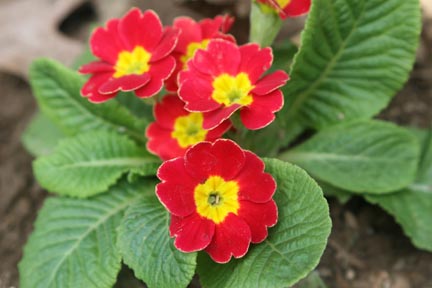
primrose by Ann E. Michael

Herewith, a recap of my side (much edited) of the ArtsAlive! conversation this past Sunday at Soft Machine Gallery. SØrina Higgins was also reading and being interviewed by Lehigh Valley Arts Council director Randall Forte, but I can’t adequately summarize her insightful comments. You can find her book here, however.

~

RF: What is your favorite poem in the collection Water-Rites?

AM: I hate to try to pin down a favorite poem, by my favorite writers or by myself. I once heard Billy Collins reply to that question by saying his favorite poem is always the one he is currently in the process of writing. That’s kind of cleverly evasive, but it’s also a little true. Though sometimes I hate the poem I’m currently working on…

I like the title poem, but I get a kick out of “Doxology” because it is so odd; and perhaps my favorite poem is “Tailfeathers” or “The Big Umbrella” or, for purely sentimental reasons—not because it is my best poem—“At Bull’s Head Pond.”

~
RF: What was the most difficult poem to write?

AM: The most difficult poem to complete was probably the long poem in the center of the collection, “The Valley, the Whitetail: A History.” That was difficult in terms of managing the length and the purpose of the poem; also, it required some research. Yes, occasionally poems take quite a bit of research—I have no desire to be inaccurate when I am writing about history or geology or botany (though I often am, inadvertently, despite my best efforts). Not all poetry is solely a work of the imagination.

There are other ways to be “difficult” however. A poem that was hard to complete was the elegy “I Shall Never Be Nearer,” which came quickly initially but took a long, long time to revise and to come to terms with. Not all of these poems—or any of the poems I write—are “about” me or my experiences, I mean, not as biographical as they may seem. But this poem does deal very specifically with the death of my close friend. It was the day after I learned of his passing, and, completely numbed and sleepless, I went with my family for a canoe trip on the lake. I titled this poem “Single Lines” for several years while I was revising it, because the images came to me in – well – single lines. Single images. I must have revised little tiny things in it oh, about 14 times. So I guess that means it was “hard to write.”

~

RF: So, the opposite question. Which poem was easiest to write?

AM: Some poems do come quickly and relatively easily. Not often, and sometimes those that come rapidly end up being sort of crappy poems. But “Lot’s Wife” only underwent about 2-3 drafts and mainly arrived, haiku-like, as a visual image that carried with it some cultural freight.

Another poem that arrived rather miraculously is “River by River.” That was the result of a car trip to Indiana with my kids and is kind of a list poem. It spooled out as a result of a kind of inadvertent prompt. Will Greenway and Elton Glaser were looking for poems about Ohio for an anthology. I read the call for work, went back to my notebook about the car trip, and recalled an incident with my son and a roadmap. The editors chose it as the opening poem in the main text of the book—immediately following the preface poem by James Wright. I felt completely graced and humbled.

~

RF: How did you choose the title of the collection?

AM: Early on, while I was working on my graduate thesis project, I chose the title for the book. I’d written the title poem but hadn’t really thought of it as the title poem until I recognized how many of the poems dealt with drought or with bodies of water or rain or artworks that portrayed water. And spelling the second word as “rites” as in ritual, rather than as an other interesting aspect of water—the “rights” to water that have caused so much conflict over the centuries—seemed fitting given that there are also rites associated with death. Funerary rites, religious rites. And rites in the form of chants and dances people have done to invoke rain during times of drought. So there’s a pun there, rights and rites, and I love literary puns.

I wanted to use Steve Tobin’s sculpture as the cover art, and Steve granted the rights for that photo (more rights, legal rights) and Keith at Brick Road approved of the image for the book cover. So I am gratified by all of that. The sculpture is an early work of Tobin’s, when he was making art using surgical glass piping. It’s environmental, site-specific art that really looks like a splashing creek. But it isn’t—it is glass.

~

RF: Tell us about your publishing history and about how and if poetry publishing has changed over the years.

AM: I had my first poem published in a tiny literary journal back in the days of Xerox-ed micro-magazines, 1981 or 82. I’ve been publishing pretty regularly since then, regularly but not ambitiously. Lots of individual poems and essays in individual journals. I had no academic reason to get a book out, and I had no real direction either. It didn’t seem to be on my to-do list when I was in my twenties. Then, at 30, I had my children. Most of my creativity went in the parenting direction, though I continued to write. I didn’t really work toward book publication until about 1999. Then I began to think about it—after David Dunn had died. In fact, I got a chapbook and a full-length collection of his work out after his death. This is hard to do—to convince a publisher to put out a book posthumously. After all, the poet cannot promote his work. That’s hard on small publishers. But I succeeded. So I thought, I guess I can get my own books published. Maybe. And my first collection was a chapbook Spire press published right after I graduated from Goddard, 22 poems about building a house, sort of ecologically-invested nature-type poems.

Things have changed in the world of poetry publishing, but it is still hard to get your work into actual print—ebooks and POD self- or partially-self-published options, as well as the web and blogs, have changed the spirit of the poetry world only marginally, though I do think these options have made it possible for more people to read and encounter poetry. The absence of critical, discerning, well-read editors & proofreaders is a loss, in my opinion; but poetry is finding other ways to deal with that. And those editors are still out there. Underpaid and overworked and cranky, but out there nonetheless. MFA programs, perhaps. Critique groups have maybe replaced salons and absinthe cafes. I don’t know.

~

RF: Any advice for aspiring poets who want to get published?

AM: I’d advise aspiring poets to be ambitious. But there are many ways to be ambitious. I’m a bit of a plodder, but I hang in there. I’m not great at networking or schmoozing or even being sort of normally assertive—I’m quite shy with strangers and hate to ask even small favors…like asking an editor to consider publishing my work. Or asking people to host readings. I mean, that goes with the job, but it’s taken me a long time to get good at doing that. I hate that stuff lots more than I hate being rejected. I don’t take the rejections hard at all. My weaknesses lie in other areas. So I can say, if you want to get published, you might not want to do what I did…anyway, if you are eager to see print soon, you might want to be more assertive and organized. On the other hand, I have been self-promoting rather badly for thirty years; and I’m okay with that because the poems are better after thirty years even if my publicity skills are not.

I’m kind of outside the box as far as the “po-biz” goes. I do my job at the college, which is only marginally poetry-related, and then only when I am teaching a section of intro-to-poetry. (Mostly I teach remedial comp and tutor students in English; I like to remind myself that Kay Ryan has the same kind of job!). I attend conferences when I can get away and when I can afford them; I have taken seminars and workshops over the years, but not religiously or frequently. The “big thing” I did for my so-called career was to get an MFA from Goddard College in 2003. This was after I had won a PA Council on the Arts Fellowship—back when the council was giving those out. Please lobby your congress people for an increase in federal and state arts funding. That was so crucial for me, earning that grant. A great confidence-builder.

Since then, I’ve earned my MFA and have four chapbooks and this full-length collection coming out and a job in academia that I probably wouldn’t have if it hadn’t been for my graduate studies and a certain amount of dogged persistence of a sort of quiet variety that I seem to possess in abundance. I still send out individual poems for publication in print and online, though not as often as I should if I were really eager to stay on the po-biz radar. I keep up a blog and a Facebook page for “promotional purposes” but don’t expect to see me on your Twitterfeed anytime soon. Technology takes me away from my reverie zone and is, generally, bad for my poetry. What’s good for my poetry are long walks, gardening, and genial loafing, visits to museums, viewing architecture and geological formations, long face-to-face chats with friends, and reading reading reading.

The quote that opens my book, the Rilke quote, kind of sums that up for me. It’s really the well-known garden that makes me recognize where the poems are coming from. The scenery of farewell, in this case, opened up the place this collection began, in loss and later in fullness.

Reading & discussion

Sunday, April 29th, at 2 p.m., I will be reading at Soft Machine Gallery in Allentown PA, at a special program hosted by the Lehigh Valley Arts Council. The event is described below:

Poetry: Getting the Word Out!

Location: Soft Machine Gallery, 15th & Green Sts., Allentown, PA

Arts Alive series event. Local poets will read selections from their new books and unravel the mystery of getting published. Hosted by LVAC director Randall Forte.

~
Ann E. Michael, author of the upcoming (June 1, 2012 release date) poetry collection Water-Rites and
Sørina Higgins, whose poetry collection Caduceus was released late last year.
Books available for sale. Refreshments provided. Sun 2 pm. Admission $10.

Haiku impressions

The reading Friday at Blind Willow Bookshop, a lovely used bookstore specializing in literature and unusual or rare books, combined the voices and perspectives of three poets who are exploring Japanese poetic forms.

Here’s a summation of my own remarks, though Marilyn Hazelton and Ann Burke had much to share. I’m not including the poems we read, either–Ann Burke’s haiga-like tanka poems coupled with art work or photos were lovely, though, and I wish I had files to post. Marilyn included work from the tanka journal she edits, red lights.

~

I learned about the haiku form long ago, but I can’t remember exactly when. I think it may have been during my junior high school years, though I certainly didn’t learn it in school—there was no poetry taught at my schools. I was exposed to poetry through other means: church, nursery rhymes, my own reading, relatives, song lyrics.

Initially I learned the syllabic approach, 5-7-5 syllables in English. That is the way the form was taught in the USA the 1970s. And it was clear to me early on that haiku is visual or physically-based; the imagery is sensual and real—in other words, what is in the world is in haiku, and vice versa. So it is not imaginative in the sense of fiction or dream. It engages the imagination in other ways, which means the poet has to corral quite a bit of compressed and specific imagination into a few words. The intense compression of these brief forms requires the poet to work hard at expression through the tightest possible means in language without employing what we in the Western traditions term symbolism. Classic Chinese poems often used symbolism, but Japanese poems relied more on allusions of several types (historical, poetic, seasonal). We tend to term these “symbols” (ie, cherry blossom equals spring romance) but that is not actually an accurate way to define the way concrete imagery is used in Japanese poems.

Later, after more study, I learned some details and contexts for the seasonal allusion, the references to previous poets or poems, the cutting word, the reasons haiku in English may need to be briefer than 17 syllables for maximum effect; and I found out about related forms of Japanese poetry such as haibun, renga, tanka. I met Marilyn Hazelton and learned through her, as she studied and taught the forms, in English, to other aspiring writers. Japanese poetry forms may seem to follow arbitrary rules, but that is no more true than asserting that western sonnet forms follow arbitrary rules.

My study of this poetry brought me a better understanding of the Imagist poets of the early 20th century in the sense of how they were influenced by, and how they misinterpreted, the haiku poem, crafting in the process some critically important poems for western readers. Poetry is a marvelously flexible art, elastic and willing to morph as its authors are willing to experiment. I think of much of my work as based in a ‘haiku moment’ for inspiration or image.

I will be the first to assert that haiku is not my métier, nor is tanka form. My poetry—and I’ve written a great deal of it—is generally more Western in style and tone, no surprise given my cultural and educational background. Yet haiku appealed to me immediately because, I think, of my interest in visual art and in the natural world.

~

My attraction to haiku is therefore image-based. My interest in Japanese poetry also increased after I studied Zen. The two are inter-related, also no surprise. In my notebooks, and on random pieces of paper I use to jot down ideas for poems, nine times out of ten the phrases I want to capture are physical images. Later, I may try to craft these jottings into a haiku. More often, they get employed as lines in other types of poems.

Sometimes, a poem I attempt to write as haiku becomes a tanka…or a longer poem in some other form (free verse, blank verse, etc.); in any case, the sensual first impression is usually what I first observe and note. My own interest in nature and my physical environment make haiku-type poetry sort of an inclination. So the inspirations and influences for me include Zen, visual art, physical or concrete imagery, nature and season, brief observation, compressed or concise language use, and a quality of universality in the poem.

~

For writers who have done Westerners the service of exploring, interpreting, and explicating haiku and the Zen practice that leads to the haiku moment, I suggest Jane Hirshfield, Robert Aitken, William Higginson, Penny Harter, Hasegawa Kai, Earl Miner, Richard Wright, Gary Snyder.