Reading in shade

It’s the time of year when, according to the lunisolar calendar, we move from 小暑 xiǎoshǔ–when the heat begins to get unbearable–to 大暑 dàshǔ, the hottest time of the year. It may also be the greenest time: my garden suddenly plumps out huge squash leaves, giant sunflowers, masses of beans, zinnias, basil. The tomatoes are finally burgeoning after a late start. It’s too hot to spend much time weeding and pruning: I harvest what I can and retreat to the shade as soon as possible, where I can read.

A friend recently lent me a book of short stories, Human Sacrifices, by María Fernando Ampuero, an Ecuadoran writer. It’s been ably translated by Frances Riddle, and the stories are startling and harrowing. Not something to check out for a light summer read on the beach, but memorable and thought-provoking. One critic says Ampuero’s work is South American gothic. I don’t agree–and I think it’s kind of a cheesy shortcut in a review–but perhaps that phrase does convey the flavor of some of her stories. Anyway, it’s always a treat to find a writer whose work I’m unfamiliar with and whose work is admirable.

I’ve been taking a break from reading poetry, though that wasn’t planned on my part. July brought a wedding, a death, and some travel; and now, in the intense summer doldrums, I prefer to read for entertainment or information, or just to pass the time. Poetry takes more brain and heart space for me, more “intentionality” or concentration, than most non-fiction books or novels do. This is not to say any other genre is less demanding in and of itself. It’s a personal quirk: I am more attentive when reading poetry than I am when I read other forms of literature, probably because I’m unconsciously (or consciously) endeavoring to learn something of the craft and style and context of poems by other poets. It’s a method of processing how to write poems. But as I have no plans to write fiction or non-fiction, I read such genres for entirely different reasons.

Usually I try to read outside on the porch, in the hammock, on the garden swing. Some days it is just too damned hot and humid, though, and I resort to the air-conditioning indoors. The indoor climate has no flies or gnats but also no bird songs, cicada hums, cricket calls, breezes, scents of summer. Indoors is less than ideal (except in the teeth of winter!).

Recently I’ve added a shade garden where the chicken run was in decades past, under the umbrella of our largest white oak. I haven’t yet added a bench, but a lawn chair suffices for now. Alas, it is a bit buggy, but so is the hammock. The pleasure of summer reading in shade outweighs the inconvenience of the minor fauna…most of the time.

Alone not lonely

Recent read: Party of One: A Loner’s Manifesto by Anneli Rufus, a book that I would have found enlightening if it had only been around when I was 18 years old. But many things were as yet unwritten 45 years ago, and even if this book had been–I might not have discovered it. Rufus celebrates social loners, decrying the myth that people who prefer time by themselves to socializing are by nature dangerous and threatening. That knowledge would have been a great relief to me when I was young; but I eventually learned on my own that the “loner myth” is, indeed, a mistaken idea perpetrated by too many so-called experts in our society. Through my lifelong bookworm habit, I learned a great deal about people who chose to be alone, chose small circles of friends, or chose to keep friendships going by letter rather than through visits.

All of which options seemed perfectly reasonable to me. I like people and deeply need my friends and family, but I’ve always found a different form of comfort in–and need for–being by myself. I joined Girl Scouts mostly because my two best friends were Scouts, but I was the kid who dawdled on hikes, slowing down to look at the plants and mosses, and I pretended to be asleep when camping so that others would stop chatting to me. When I found my old Girl Scout sash some years back, it was festooned with badges earned for loner-type skills: literature, sewing, whittling, embroidery, and other crafts or pursuits I could accomplish on my own. Selling cookies? Nah. I managed to be the worst cookie salesperson in the troop for several years running.

In high school, I joined the marching band. It was required duty for every student in the concert band, where I played flute. My sister protested against that requirement and succeeded in getting out of marching band, but the self-advocacy did not seem worth it to me-at-15. Besides, band provided me with a few close friends and some sense of high-school camaraderie which, as a sensitive nerd who was never much for teams or competition, gave me a veneer of normalcy in a very team-oriented time and place. I was not a rebellious loner but a stealth loner.

Despite often feeling a bit like an outlier among my peers, I had no burning need to belong or be accepted, and that need (and lack of acceptance) in a person is what leads to “pseudo-loners” (Rufus’ term). Those are the people most likely to get angry, resentful, hostile, or suicidal, she claims: the ones who want to fit in but are ostracized or blocked. The rest of us just want to be left alone when it suits us. It’s not the same thing.

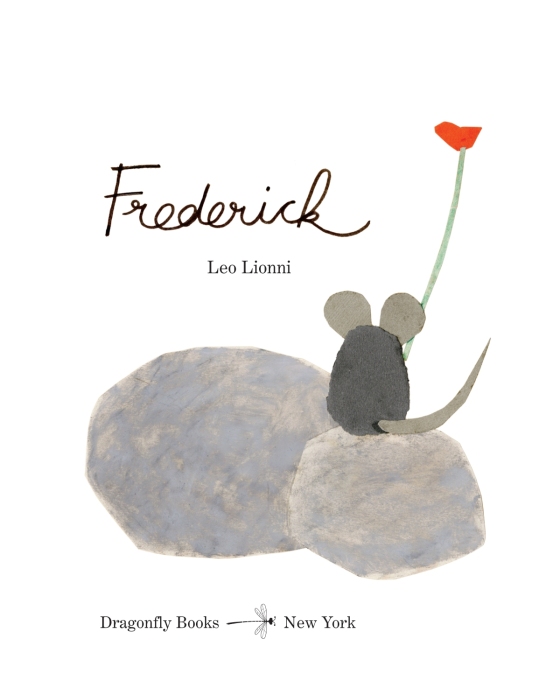
Loner, introvert, eccentric, moody, artistic, creative, sensitive, weird–at my age, I don’t need a manifesto. Experience demonstrates a person can be friendly and funny and easily-tired and sometimes withdrawn and able to speak in public and irritated by too much noise or novelty and can dance at parties and laugh too loudly and a thousand other things that are contradictory and not simple to pin down. (And capable of polysyndeton!) But if you know a child who is content being by themselves and who may feel pressured by well-intentioned adults, I recommend Leo Lionni‘s Caldecott-winning book Frederick. It is a story I loved as a child, and now I realize why. The quiet mouse who is off on his own while his busy community harvests food for winter proves valuable to his mouse-society by offering them poems and stories that ease their discomfort when they are cold and hungry.

In some ways, that has been my lifelong dream.

In print

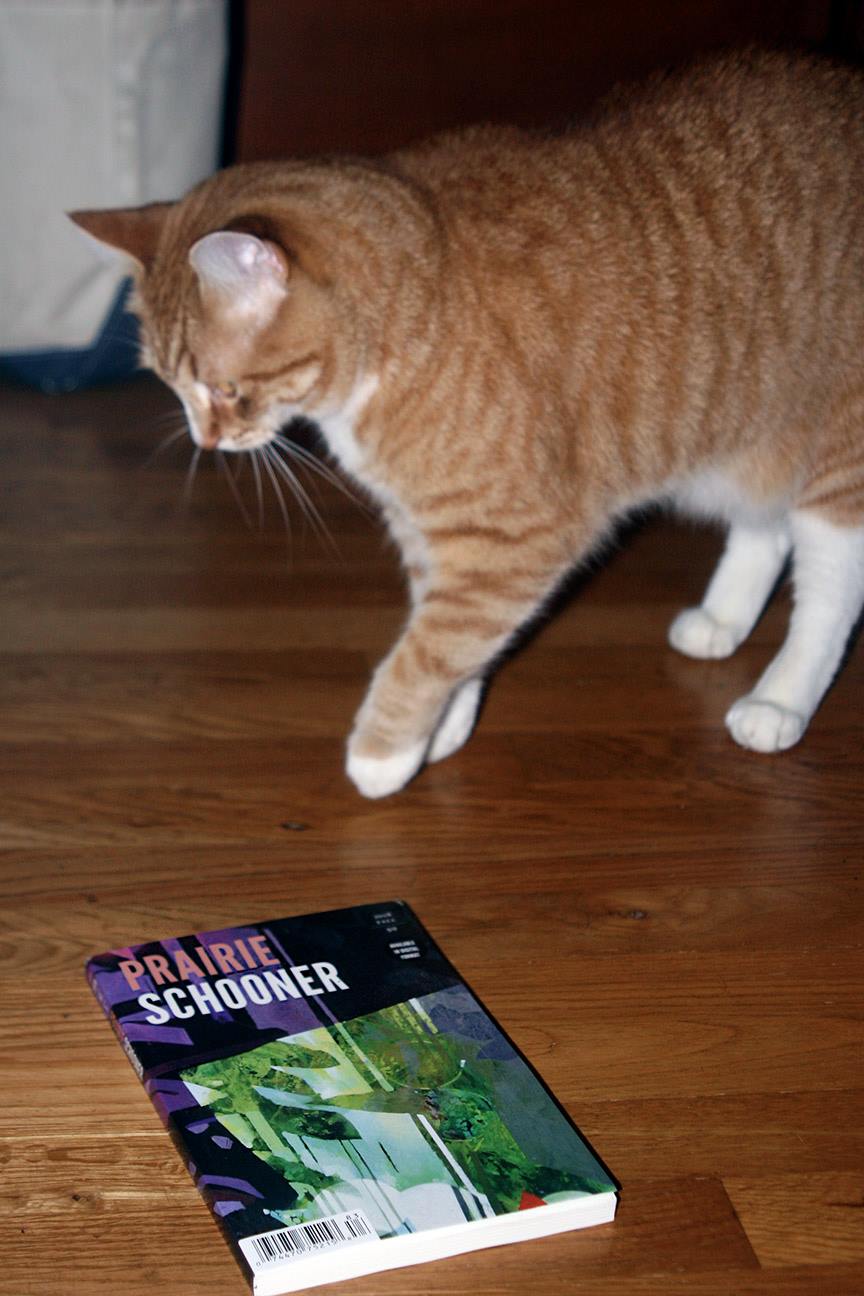
I have been lucky in print this year. Two literary journals that I’ve long admired, Bellevue Literary Review and Prairie Schooner, published my poems, and so did the newer journal Naugatuck River Review. This is “a big deal” to me, because it is always exciting to be admitted into the pages of a magazine I like and because, despite the advantages of online/cloud-based literary journals, I love print!

There’s something inexpressibly marvelous about holding a book in my hands, turning the pages, and having a physical object–paper, binding, print–to carry with me.

Online magazines, theoretically at least, have a longer reach and can capture more readers (“hits”) than print. Literature requires audience, and the interwebs offer potentially millions of visitors to the poem online; but the operating word here is potential. What’s possible isn’t what generally happens. The readers of online literature, those people who stay on the poem long enough to read it–and then read the next poem, and the next, on-site–are not as legion as we poets might wish.

Through moderate use of social media, I do publicize my own work when it appears online (see links to the right on this page!). I welcomed the appearance of literature on the internet because one of my purposes for writing is to communicate with people. Readers matter to me. Getting my words into the public domain is the only way to begin that process of communication, and though online journals seem like the most ephemeral form of ephemera, they do make it easier for me to “share” (thanks to Facebook, I am beginning to despise that word) the poems or essays I’ve crafted.

schooner&scooter

Print journals, like books, lack the immediacy of the online publication. They are not interactive in the way some online journals can be (see my recent audiofile and poem in The Maynard as an example), although some print journals are pretty experimental and interactive in quite innovative ways, such as Ninth Letter.

I encourage anyone who reads my blog to check out other bloggers on literature and poetry, and a good place to start is with Dave Bonta’s Poet Bloggers Digest. Searching the internet will open up a world of excellent poetry in carefully edited and curated literary journals.

The internet platform permits poets to read their own work, in podcasts and on YouTube, and to launch videopoems into the world. It has been a boon for poets to find audiences of all kinds, not just people who read poetry journals.

However, my cat will never circle and then settle on an online literary journal. So there’s that…

~

[I tried to snap his photo when he sat on Prairie Schooner, but he jumped up and moved on.]