Shirt knowledge

I have been missing my dad, so today I put on his old cotton knit sweater, the one that’s developing holes in the weave, the one I kept because his scent lingered in its fibers. It’s been over five years since his death and, alas, that familiar scent has finally vanished from the sweater. Though I like to think that it has been absorbed into the other items in my closet, maybe the hoodie my daughter knitted, maybe the flannel pjs, maybe the four old pairs of jeans I wear continually or the one full-length gown I’ve seldom donned but have kept for reasons not entirely rational. I’m hoping my dad has somehow permeated my closet, the things I wear next to my skin, my life.

And I came across this poem recently in Gary Whited’s Having Listened. Indeed, it resonates in the way a poem can, a sort of slanted parallel of feeling, affinity, relationship. I love the idea of “shirt knowledge,” the thought that inanimate objects might “know” in ways humans cannot perceive. Those last lines: “how to be private and patient,/how to be unbuttoned,/how to carry the scent of what has worn me,/and to know myself by the wrinkles” seem accurate to my current state. Comfortable, comforting.

Like an old shirt. Like a good poem. Like a memory of my dad.

~

My Blue Shirt

hangs in the closet
of this small room, collar open,
sleeves empty, tail wrinkled.
Nothing fills the shirt but air
and my faint scent. It waits,
all seven buttons undone,
button holes slack,
the soft fabric with its square white pattern,
all of it waiting for a body.
It would take any body, though it knows,
in its shirt way of knowing, only mine
has my shape in its wrinkles,
my bend in the elbows.
Outside this room birds hunt for food,
young leaves drink in morning sunlight,
people pass on their way to breakfast.
Yet here, in this closet,
the blue shirt needs nothing,
expects nothing, knows only its shirt knowledge,
that I am now learning—how to be private and patient,
how to be unbuttoned,
how to carry the scent of what has worn me,
and to know myself by the wrinkles.

by Gary Whited
https://www.poetryfoundation.org/poems/91973/my-blue-shirt

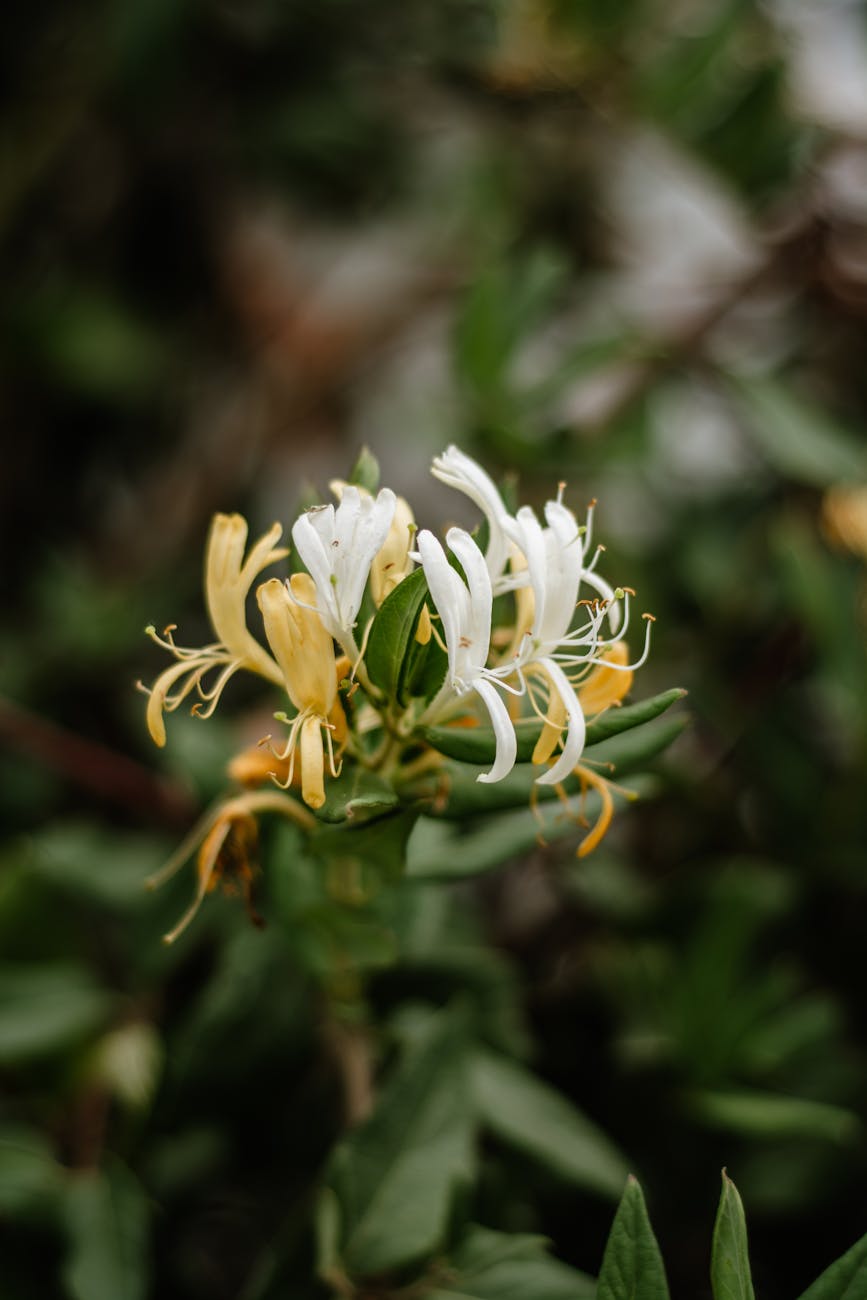
Photo by Polina Tankilevitch on Pexels.com

Perfumes and tunes

This time of year, certain blooms and fragrances evoke my childhood memories. I spent most of my childhood and all of my adolescence in southern New Jersey, along the Delaware Bay; the swampy coastal plains have now largely burgeoned into suburban housing developments, but in the late 1960s there were actual townships with old-fashioned suburbs–the kind with sidewalks–and many a privet hedge that bloomed in early June with small, white spires that gave off a faint scent. In overgrown areas of meadow and scrub, the sweet smell of Japanese honeysuckle perfumed muggy evenings. And while I don’t recall much scent from the mimosa trees in bloom on Harvey Avenue, once those fallen pink blossoms began to rot on the sidewalk, they added a distinct punk that meant summertime. The honeysuckle is blooming here now, making me wonder about the neuroscience behind the sense of smell. Gotta check out these books, perhaps: Kiser reviews four recent books on olfaction.

On a side note, none of these evocative plants are native to the Americas: Ligustrum vulgare, Lonicera japonica, Albizia julibrissin–and yet I associate them with South Jersey. It is almost like a refrain in my memory-mind.

To speak of associations reminds me of Alexis de Tocqueville. I’ll post a quote of his below, one that makes me think of language and poetry and science. But back to refrains:

Musical refrains also run through my brain, evoking memories and nostalgia, or just being irritating “earworms.” At any given time such tunes may include Tchaikovsky’s Serenade for Strings, strains from a late Haydn quartet, one of many Springsteen songs, Marvin Gaye’s version of “I Heard It Through the Grapevine,” or–most confounding of all–the Chock-full-o’Nuts jingle from the 1960s or some similar commercial sloganeering. Why such things wear a familiar groove in the gray matter I don’t know, though Oliver Sacks’ book on music (Musicophilia) and Daniel Levitin’s This Is Your Brain on Music offer some insights, and I’m thinking of reading this one by Samuel Markind when it comes out later this year.

Alas, I’m not gardening because once again the garden is awash in mud, so I entertain myself with endeavoring to discover how/why my brain works (and yours, and anyone else’s), since that’s one of my favorite lines of inquiry when I can’t work outside. I will take a sodden walk later and dwell on possibilities while enjoying the scent of the invasives; I’ll work on some poetry revisions; maybe I’ll listen to music…and freely associate with any and all possibilities. Here, as promised, Alexis de Tocqueville:

“When citizens can associate only in certain cases, they regard association as a rare and singular process, and they hardly think of it.

When you allow them to associate freely in everything, they end up seeing in association the universal and, so to speak, unique means that men can use to attain the various ends that they propose. Each new need immediately awakens the idea of association. The art of association then becomes, as I said above, the mother science; everyone studies it and applies it.”

Honeysuckle photo by Nadiye dabau015fu0131 on Pexels.com