Invention

I’ve been thinking about creativity in the sense of inventiveness, spurred by two recent visits to two very different places. The first place is the Hagley Museum, an industrial museum, site of the original DuPont de Nemours gunpowder works in Delaware, along the quiet Brandywine. The area was not so placid from 1803 to 1920 when the factories were active and a town’s-worth of people lived and labored here doing a dangerous job. The historic non-profit has created a “museum of invention” at the works, in what was once a textile mill, and it features a large number of mostly 19th-century patent models. Also some of the mechanical drawings that accompanied them. Inventors from all walks of life are represented, and I was impressed by the usually-anonymous craftspeople who made the 3-D models for the Patent Office. So cool!
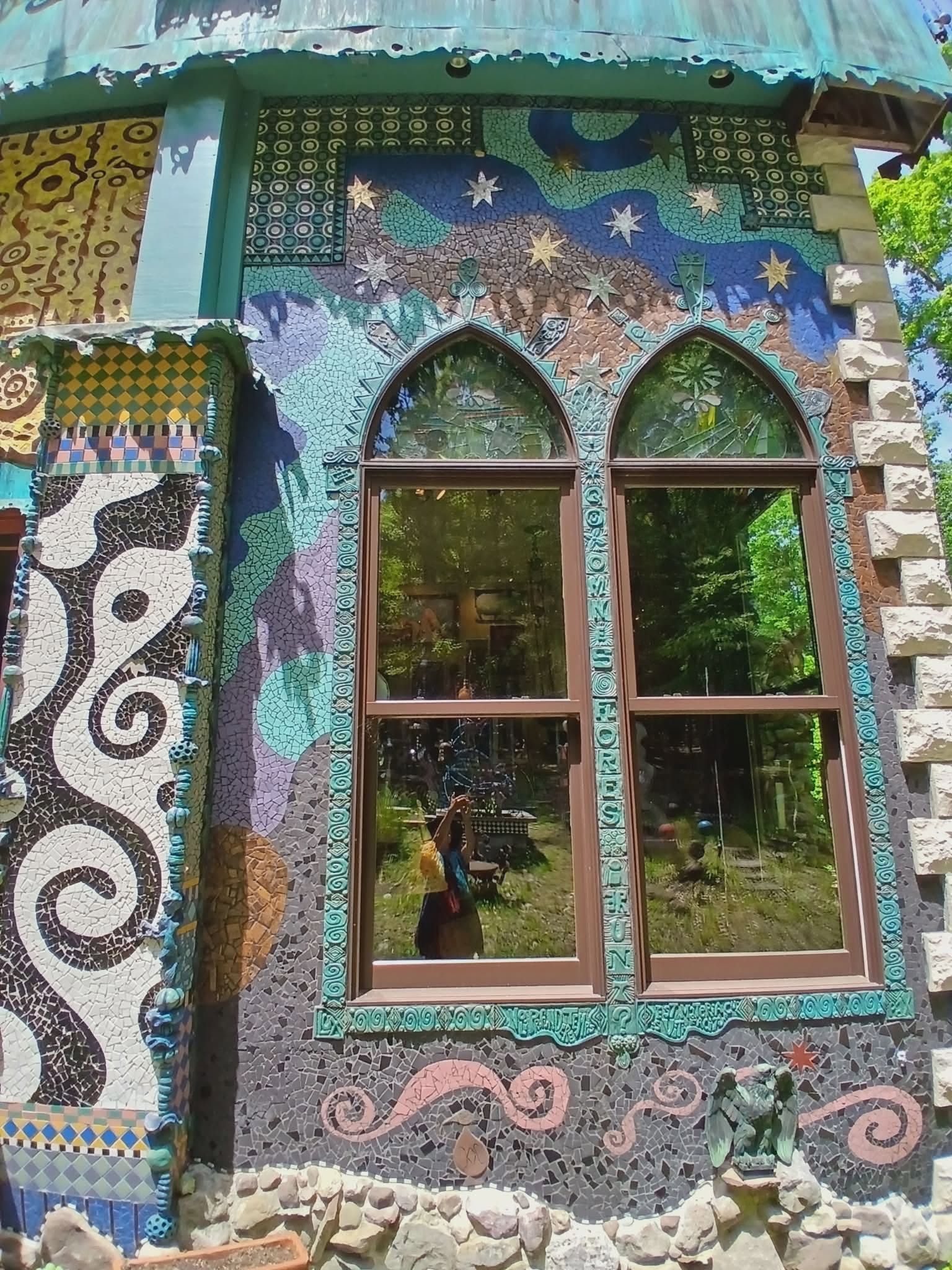
I think this is the west side of the house…

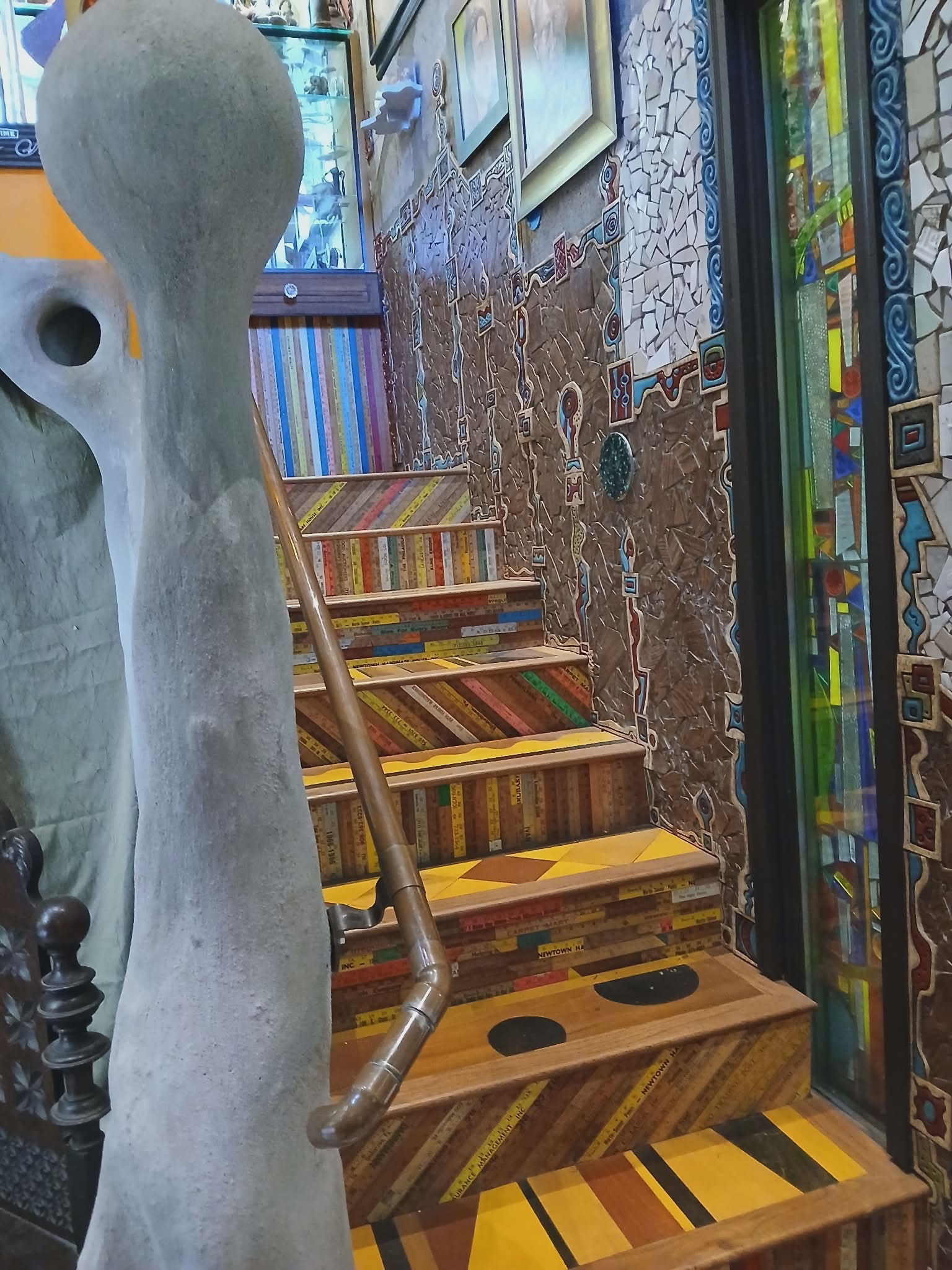
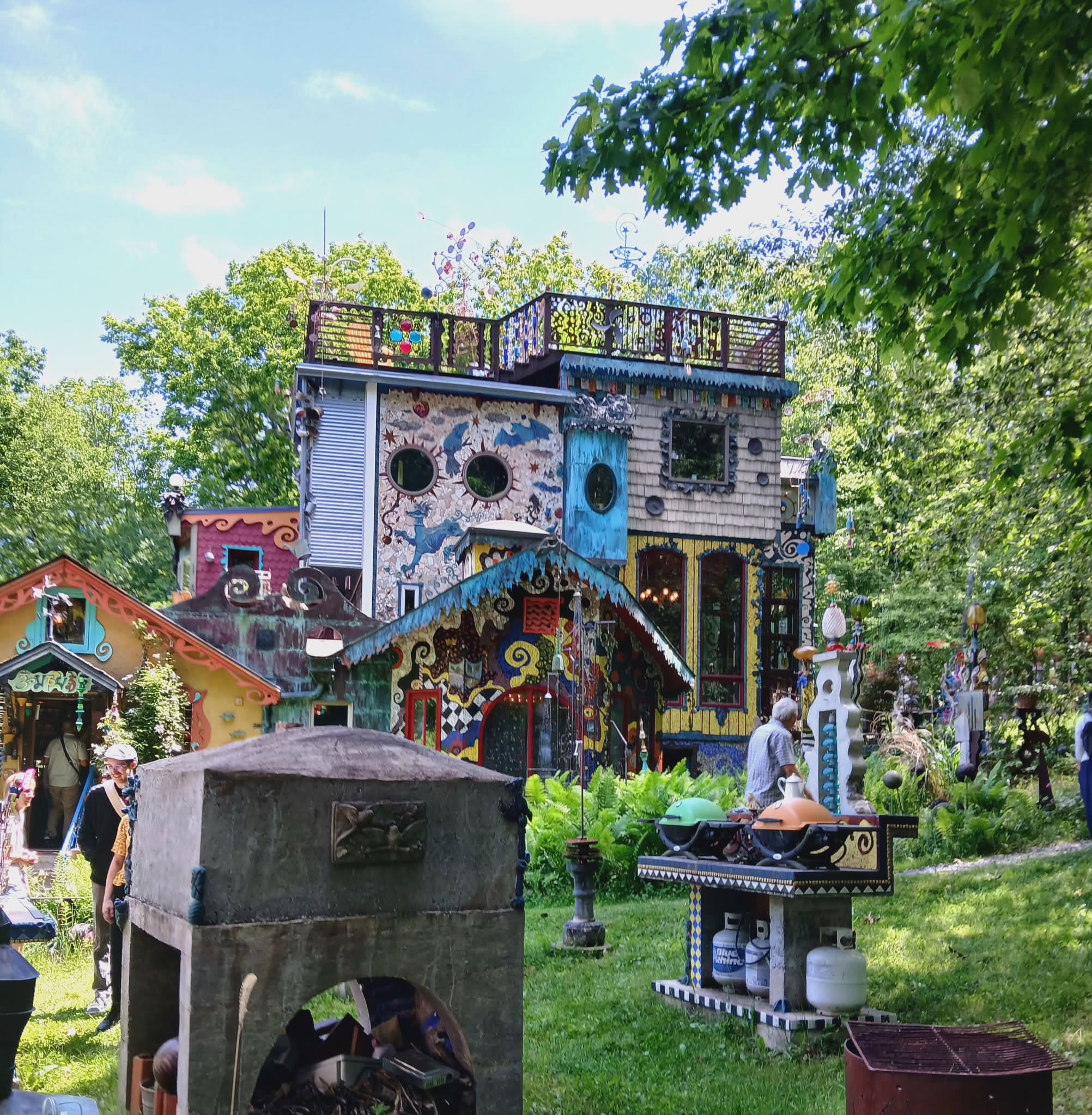
Then, a couple of days ago, we visited Luna Parc, which is quite an experience. It is a handmade house, sculpture garden, and studio that Ricky Boscarino has been working on for decades. A Rhode Island School of Design student fascinated by silver-smithing, Boscarino decided early on that he wanted to make a living doing art. He began by making unusual (and sometimes slightly alarming*) jewelry and creating art from found objects. He’s also a painter, ceramicist, welder, woodworker…and trying to make his housing needs, studio, and life as sustainable as possible in the wooded region near Stokes State Park in New Jersey. Now, the place is a non-profit that trains students, sponsors art interns, and continues to grow and morph into, well, who knows? He’s devoted his life to art-making. And the place is really fun to explore.

Talk about inventive!

It’s something people need to do, have an urge to do–invent stuff for some purpose, to solve a problem, for enjoyment, or out of a need to play around; we are, as Huizinga says, Homo Ludens (see this post!). Play leads to all kinds of things, piqued by curiosity and that urge to fiddle with things. The patent models at Hagley were behind glass, but I was itching to play with them, like a five-year-old.

That is what I like about writing poetry, too, the play and invention of it–using words, images, sounds, patterns. Earlier today I was messing around with quatrains that used rhyme/slant rhyme line endings, switching off between ABBA and ABAB by stanza. The poem’s content isn’t cheerful, yet puttering with possible patterns was fun and kept me thinking about the topic. Then I went inside and put Bach’s Inventions & Sinfonias on the stereo.

~
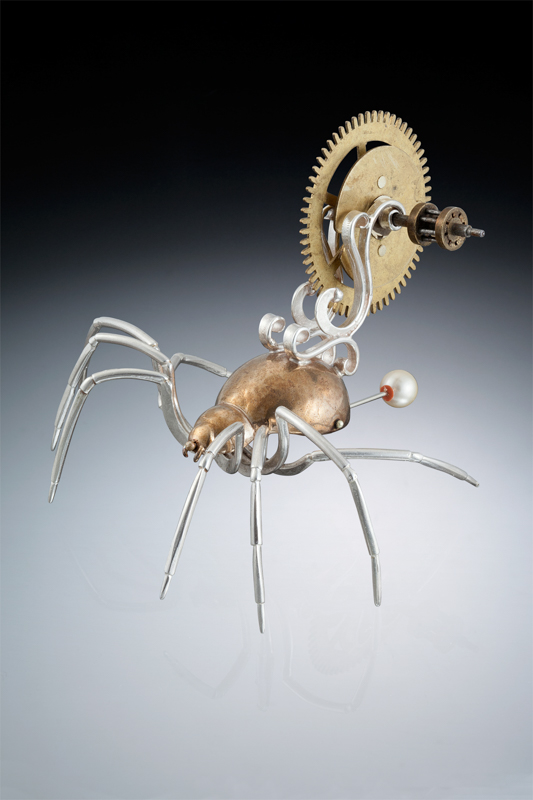
All of the above by Ricky Boscarino. Purchase his work or book a tour here.
Perfumes and tunes

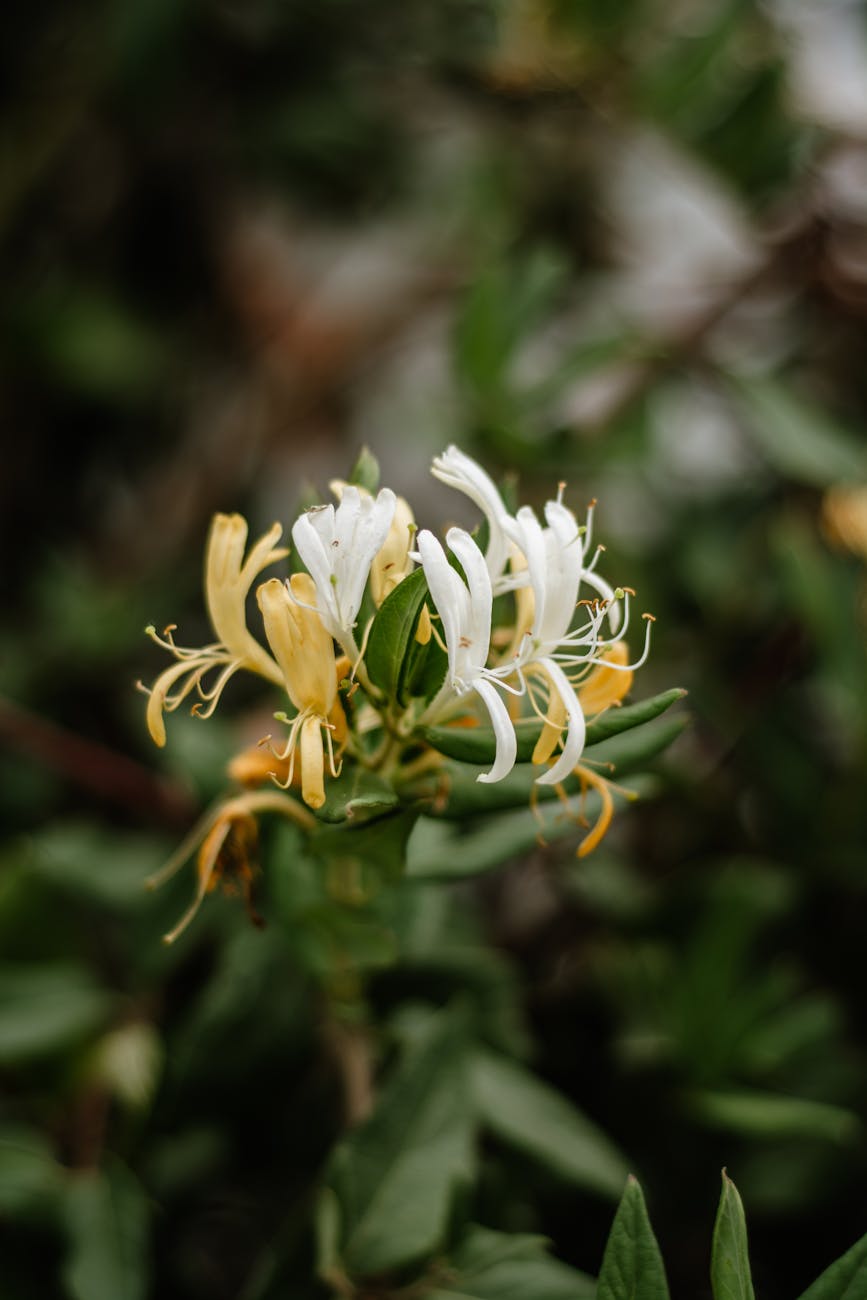
This time of year, certain blooms and fragrances evoke my childhood memories. I spent most of my childhood and all of my adolescence in southern New Jersey, along the Delaware Bay; the swampy coastal plains have now largely burgeoned into suburban housing developments, but in the late 1960s there were actual townships with old-fashioned suburbs–the kind with sidewalks–and many a privet hedge that bloomed in early June with small, white spires that gave off a faint scent. In overgrown areas of meadow and scrub, the sweet smell of Japanese honeysuckle perfumed muggy evenings. And while I don’t recall much scent from the mimosa trees in bloom on Harvey Avenue, once those fallen pink blossoms began to rot on the sidewalk, they added a distinct punk that meant summertime. The honeysuckle is blooming here now, making me wonder about the neuroscience behind the sense of smell. Gotta check out these books, perhaps: Kiser reviews four recent books on olfaction.

On a side note, none of these evocative plants are native to the Americas: Ligustrum vulgare, Lonicera japonica, Albizia julibrissin–and yet I associate them with South Jersey. It is almost like a refrain in my memory-mind.

To speak of associations reminds me of Alexis de Tocqueville. I’ll post a quote of his below, one that makes me think of language and poetry and science. But back to refrains:

Musical refrains also run through my brain, evoking memories and nostalgia, or just being irritating “earworms.” At any given time such tunes may include Tchaikovsky’s Serenade for Strings, strains from a late Haydn quartet, one of many Springsteen songs, Marvin Gaye’s version of “I Heard It Through the Grapevine,” or–most confounding of all–the Chock-full-o’Nuts jingle from the 1960s or some similar commercial sloganeering. Why such things wear a familiar groove in the gray matter I don’t know, though Oliver Sacks’ book on music (Musicophilia) and Daniel Levitin’s This Is Your Brain on Music offer some insights, and I’m thinking of reading this one by Samuel Markind when it comes out later this year.

Alas, I’m not gardening because once again the garden is awash in mud, so I entertain myself with endeavoring to discover how/why my brain works (and yours, and anyone else’s), since that’s one of my favorite lines of inquiry when I can’t work outside. I will take a sodden walk later and dwell on possibilities while enjoying the scent of the invasives; I’ll work on some poetry revisions; maybe I’ll listen to music…and freely associate with any and all possibilities. Here, as promised, Alexis de Tocqueville:

“When citizens can associate only in certain cases, they regard association as a rare and singular process, and they hardly think of it.

When you allow them to associate freely in everything, they end up seeing in association the universal and, so to speak, unique means that men can use to attain the various ends that they propose. Each new need immediately awakens the idea of association. The art of association then becomes, as I said above, the mother science; everyone studies it and applies it.”

Honeysuckle photo by Nadiye dabau015fu0131 on Pexels.com

Hawks & fragments

When I take the commuter bus into New York City and back, I prefer daytime trips because I can count hawks.

I’m not a birdwatcher; but I have noticed, over many years of traveling the route (Interstate 78 Pennsylvania through New Jersey), that the highway offers good predatory-bird landscapes. The bus has large windows and elevates the passengers above the usual traffic lanes, so even though I’m traveling 70 miles an hour, I have a panoramic view through eastern Pennsylvania and north-central New Jersey, where there are scrims of woodlots behind the noise barriers, scrubby undergrowth on medians and embankments, a few cornfields, many high-density housing communities, railroads, creeks, and small county park lands.

I seldom get a close enough look to identify a bird positively; yet from my motor-vehicle perch I can tell a buteo from a harrier or an accipter. The fairly small kestrel is difficult to note, being about pigeon-sized (and pigeons are legion in NJ &NY) but I’ve identified them by their flight pattern. The buteos are most common around here, and from a bus I can’t usually discern a broad-wing from a redtail. But I see them roosting at dusk, or perched, or soaring over the fields and the strip mall parking lots. Twice, I have even spotted a great horned owl in trees along the route.

There are important raptor flyways along this path and into the region just west of where I live: Hawk Mountain is a big birding attraction along the Appalachian Trail. I have counted as many as 18 raptors along an 80-mile stretch of road. The commute takes just under two hours; I am probably the only person on the bus who spends most of her time looking out the windows at what is, admittedly, a rather uninspiring and predictable landscape.

redtail

See below for a link to raptor id at Hawk Mountain

~

51YVrgMy9sL._.jpg

Hawks have been very much on my mind because I recently read Helen Macdonald’s quite wonderful memoir, H Is for Hawk, which I highly recommend.

~

Here are a few fragments of notes I wrote in my journal while I traveled home last Sunday.

what could be a hawk. but isn’t–

paper wasp nests     squirrel dreys (nests of food for hawks!)     leaf clumps      plastic bags[tangled in boughs]

big crows. until they fly.          traffic cameras. the particular angle of them, perched (as it were) above streetlamps.

without binoculars, and in motion. not birdwatching. I scan for raptors.

frozen swamp–The Meadowlands–

snow. out of which phragmite grasses emerge, brown, russet brown. color of redtail feathers.

cranes/high tension wires. canadian geese–also in snow, feeder creeks & streams frozen, Hudson frozen, Delaware frozen.

raptor count NJ 10, PA 4. Four in 16 miles, Pennsylvania.

And yes, I composed a couple of poems during the trip.

But only one of the poems featured hawks.

~ Link to a great page for Eastern US raptor identification