Science is poetic? A debate

Here’s a video I found entertaining and thought provoking–a scientist, a poet, and a philosopher discuss the intersection (or if there is an intersection) between poetics and science.

This debate hinges on a Richard Dawkins statement: “Science is poetic, ought to be poetic and has much to learn from poets.”

The home site is the Institute of Art and Ideas, which is also worth exploring a bit.

Poetic Theories: Can scientists learn from poets?

Ken Binmore, Mary Midgley, Ruth Padel.

What is your take-away from the discussion? I’m curious about which stance seems most convincing, though I suspect one’s fundamental opinion on such topics isn’t easy to change.

Enabling & stewardship

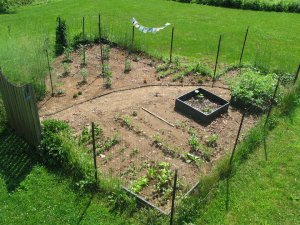
The season of seed catalogs is upon us, and I begin to fantasize about all of the vegetables and flowers I want to grow and how I will arrange my small garden area to accommodate them. I imagine having time to keep the rows cultivated and the foliage free of insect pests. Yes, I need to do some work on the fencing. And yes, some terracing might help where the garden’s taking a decidedly southeasterly dip. The asparagus patch finally played itself out, so it will need some restructuring and weeding; I’ll have an opportunity to use that area in a new way.

There’s snow on the garden now. All of this planning is purely speculative on my part. Yet–how clearly I can envision it, in my mind. One of my concerns is whether I’ll feel hale and hearty and energetic enough to get all of this work accomplished!

Ah, my garden-consciousness brings me to the mind-body problem, though perhaps in a more physical way than philosophers encounter it. My conscious mind imagines the garden that does not yet exist. Is that garden real or an illusion? What makes it possible for me to conjure it so vividly? Is it merely memory of past experience? If so, why does my imagination invent a slightly different garden–this year’s ideal? My animal self takes action, physical action (phenomenological action) in order to bring about fruition to feed the physical body that loves the taste of vine-ripe tomatoes and fresh beans and tender lettuces. Do my actions cause the plants to grow? No. I’m more of a steward or a guide. I help them get a better-than-average start.

This sort of thinking brings me around to a (2011?) post by biologist Stuart Kauffman, on the NPR philosophy blog.

Kauffman says:

We think we live in a web of cause and effect. We do. We also live in a web of enabling opportunities that may or may not be seized, and the living world, biosphere up, unfolds in a different way, creating ever new possibilities of becoming.

But these possibilities often can’t be stated ahead of time. No one foresaw Facebook when Alan Turing did his work in the first half of the 20th century. Nor can we foresee all the possibilities of the evolution of life.

Life is not a well-formulated, complex optimization problem to be solved. We do not know all the variables that may become relevant.

Science is my life, and it is wonderful. But science will not ultimately know everything.

In the world of modernity, our values have become badly deformed. Gordon Gekko’s “greed is good” has replaced “integrity, generosity, and courage” as our First World cultural ideal. Modernity does not serve our humanity well, although it does offer enhanced standards of living. We are reduced — to price tags, cogs in an economic system making often useless products in the name of forever GDP growth on a finite planet. The bankers corrupt themselves and our government. Our government does not yet realize that its better job is to enable, not command, to “garden,” to coach, to enable the creativity of its peoples, here and around the globe.

Yes, that’s it. I engage with my environment partly by enabling things to grow or flourish. The term enabling has garnered some negative connotation in recent years due to its use in psychology: we are warned not to enable alcoholics, manipulative people, or those who need to learn some grit and self-motivation. The idea of enabling is, however, essentially positive: to help, to nurture. In fact, I think I prefer to think of myself as one who enables the earth rather than as a steward–though both concepts suggest that we human beings must engage willfully with the world.

We have work to do here on earth. And I am well aware that I do not know, with my garden, “all the variables that may become relevant.” (Past complex variables have included drought, hail, flooding, and beetles.) My small part this year includes serving the land I temporarily inhabit as well as serving myself and my family our favorite foods.
31281_1488041725309_1074892_n

My favorite sources for seed include: Seeds of Change, Territorial Seed Co., Peaceful Valley Farm Supply, and–while less on the organic spectrum, the British firm of Thompson & Morgan for its amazing variety of herbs, vegetables, fruits, ornamentals and grasses from heirloom to the latest hybrids. For American gardeners interested in some truly historical strains, Thomas Jefferson’s Monticello offers quite a selection.

(Photo: a previous year’s garden in May)

Cognition and storytelling

Apparently, there has been considerable excitement in the humanities and literature worlds concerning new discoveries in neurology and cognition. And while I have been thinking and reading along these lines for years in my own auto-didactic way, I’ve only recently stumbled upon the texts that specifically explore this cross-fertilization of the arts and sciences.

AWP featured a standing-room-only panel on the topic of Cognitive Science and Stories that alerted me to the work of Brian Boyd (more books for the to-read pile), for example; and just this past week, Annie Murphy Paul contributed an opinion essay titled “Your Brain on Fiction” to the New York Times Sunday Review. Oliver Sacks has, of course, worked along this territory for many years, mostly from the neurological viewpoint with research that suggests we consider the relationship of brain science to art. Leonard Shlain has written intriguing books on the subject as well; though he focuses on gender and visual/textual creativity in his earlier work (see The Alphabet vs. the Goddess), his more recent Art & Physics: Parallel Visions in Space, Time, and Light takes on the “rational” brain (physics) and the world and work of art.

The science, which encompasses both ‘hard science’ such as neurology and social science such as psychology, uses fMRI brain imaging and other forms of feedback measurement to record the brain’s responses to imagery, metaphor, descriptive writing, emotionally-evocative literary passages, and other stimuli to gauge how the human brain takes in such stimuli and which regions of the brain ‘fire’ when encountering the materials.

Associations rule. Reading is associative.  The word “coffee,” as it turns out, engages the olfactory regions; so does the word “cinnamon.” Tactile word cues (velvet, sandy, rough) arouse sensory regions, notes Paul. We associate meaning with senses. Or perhaps senses evoke, in the human mind, associated meanings. This is one reason poetry engages its readers; poetry works via a series of different types of arousals by association–allusions to previously-known information, metaphorical associations by means of sensory-related responses, stimulation of brain regions by word-association, and also cultural or social association (contextual cues, which may also be physical). All of this means that the act of reading is an embodied behavior–we are actively encoding physical settings and sensations while we read!

Human brains fill in the gaps in memory and in event-series that may or may not be related. Some of these neurological studies suggest human brains seek patterns…and construct narratives. Hence, story-making may be something that evolved along with the human cortex while we learned that a growl in the bushes is likely to equal a hidden predator and that if we convey this information by narrative (or metaphor) it will be recalled more quickly by our listener. If the listener is offspring, and the lesson is remembered and used appropriately, the genes survive another generation. That scenario sounds pretty scientific/Darwinian; but to a writer or artist, the scenario is lush with the possibility of story-myth-legend-fiction-poem-art.

Storytelling facilitates sociality, claims Tim Horvath, who explained to the attendees at the AWP conference that sociality is the biologist’s “reciprocal altruism.” Because fiction meta-represents life, it simulates possible life scenarios that can help to foster understanding and offers a way to test out possible social reactions to behavior in a way that is low-risk for the reader. The reader can imagine, or play along, with the rebellious heroine and through this adaptive play (reading can be a form of play) learn how others around her might react if she were to try a similar form of rebellion. Indeed, Marilynne Robinson agrees that “The great virtue of the best fiction is to teach compassion.”

I look forward to learning more about the cognitive side of human narrative. I love it when science and the humanities discourse with one another.

More difficult books

photo by Ann E. Michael

Some weeks back, I posted about reading “difficult books.” It occurs to me that there are different kinds of difficult books, and perhaps different kinds of motivation for reading them.

In my previous post, I addressed why I read philosophy. I also read books on subjects like string theory, fractals, physics, economics, psychology, and other topics that might be considered difficult, especially for a person who is not a scholar in any of those areas. One example is the book I’m reading now, Daniel Kahneman’s best-seller Thinking, Fast and Slow. Kahneman is a psychologist who won a Nobel Prize in Economics, and this book explores how human beings make decisions, are rational or irrational depending on circumstances and how information is presented, make judgments, develop intuition and biases, and learn or fail to learn from mistakes. He’s a fairly good writer for the layperson, staying away from jargon and taking pains to explain his work clearly for the non-psychologist, non-economist, and non-mathematician. Nonetheless, this book–while wonderful!–is not easy material to read. One reason is that the text is about thinking, so (like philosophy) the endeavor is entirely metacognitive. Also, Kahneman’s findings directly challenge many of the things we think we know about ourselves. That sort of book is inherently difficult.

Another book written in lively anecdotes avoiding too much technical language but that I found difficult all the same is Stuart Kauffman’s At Home in the Universe. Kauffman explains Boolean logic in a way that helped me to understand not just the basic premise but how Boolean operates in terms of randomness and the development of algorithms. His book, however, takes for its subject complexity theory. You can tell by the name of the theory that this material’s a little challenging. Furthermore, he begins by writing about chemistry, a science in which I have almost no foundational understanding. I learned much from his work about self-organization of things like molecules and stellar systems, and this book enabled me to read his more theoretical text on “reinventing the sacred” with deeper understanding (and even a bit of skepticism). But easy to understand? No.

Joao Magueijo introduced me to the research and theories of young cosmological physicists through his book Faster than the Speed of Light, a book that is laugh-out-loud funny in places and written with the casual tone of having a conversation with an enthusiastic and possibly jerky scientist while at a university-neighborhood pub (there were more than a few asides in his narrative, most of which dealt with university or science politics). I know more physics than chemistry, but I can’t do the math. I had to re-read some of the pages in Magueijo’s book to figure out where he was going with his potential discoveries. I read the book years ago, yet it stuck with me; recent news about possible faster-than-light particle movement reminded me instantly of the work this team was doing in the late 90s.

Science and philosophy are difficult; and while books that involve the relationship between the disciplines (such as Hofstadter’s now-classic Gödel, Escher, Bach and Kauffman’s Reinventing the Sacred, to name only two) are not necessarily twice as difficult, they cannot be categorized as easy-to-read, even when the author is a marvelous writer. True “System 2 thinking” (see Kahneman) means constant engagement with the text, and our brains simply get tired. But they also get exercise and plasticity from the enjoyable work of reading what is hard, a workout I find exhilarating.