Changes & alterations

We built our house here about three decades ago. At the time, I was young and excited about landscaping the place; although I had been growing our own vegetables for years by then, I was fairly new to ornamental gardening. I made mistakes; I underestimated the speed at which shrubs and trees grow; I thought I could keep a handle on invasive species; the world of various bark beetles and aggressive vines was new to me; and I had no idea how hard it would be to manage almost seven acres without, say, a team of landscapers.

Or how rapidly an environment alters when the climate changes, and when cornfields and early-growth wooded areas become housing developments, parking lots, and streets. I have learned a great deal and much looks different now than thirty years ago, but the swallows still return to my garden between April 26 and May 6. My land contains fewer efts in May than it used to, but the gray frogs, spring peepers, wood frogs, and toads make their usual frenzied chorus at mating time each spring.

~

Recent changes have come from the emerald ash borer, which has decimated, or worse, the green ash native to this valley. The huge trees have come crashing down during the past 10 years, making hard work for us even if it does provide a bit of firewood. Cutting, splitting, stacking hardwood isn’t a task I’m much good at anymore. Thirty years ago, maybe…and there does not seem to be any good that comes of this tree loss, which I’ve been mourning each year as we have less and less of a woodlot treeline above the hedgerow and see more and more of the neighboring subdivision.

But on my damp, early-morning walk today, I perceived some changes that I should have expected and that offer a glimmer of hope for native trees and shrubs–despite the proliferation of Russian olive, multiflora rose, Amur honeysuckle, mugwort, wintercreeper, Asiatic bittersweet, mile-a-minute weed, and more colonizing invaders than I can tick off in one blog post. There, beside the tractor path, along the edges of the hedgerow (for edges are where things happen most quickly), I observed more tree saplings than in past years. With the vase-shaped, leafy arcs of green ash absent, sun reaches further through the thickets. And there I spot horse chestnuts starting to push up, tiny walnut trees, oak trees of differing species, “baby” hickories and maple varieties, along with understory’s smaller shrubs and trees like amelanchier, ironwood, redbud, buckeyes.

Granted, most of them won’t survive to maturity, but some of them will–gradually re-making the woodlot unless other disturbances undo the renewal.

I won’t be here in another 30 years to find out, but I find hope in these saplings. I’m also happy to see that the little woodland and field wildflowers such as false Solomon’s seal, jack-in-the-pulpit, wild violets, and mayapples remain. And though I find myself swearing inwardly at the way the Russian olives grow massive along the property line and the invasive bittersweet sends thick tendrils coiling up into the trees, it’s not the fault of the plants that they got here. Humans brought them to North America, and the plants–like European colonists–became a bit too successful in their new homes, pushing out what was here before their arrival. Am I any different, really, than the dandelion or the honeybee? My ancestors came to these shores not so long after those species were imported with earlier “settlers.”

~

The rain we’ve been getting means I haven’t been out weeding in the vegetable garden. After I take my walks, I come inside to dry off and do household chores, or make soup, or work a little on my poetry. I feel excited by a little writing project I have recently given myself, and I’ve also been playing around with drafting prose poems. Next week, I head to the high desert again for further inspiration and a chance to travel with a good friend, visit museums, and spend some time with my daughter. When I return in mid-May, the gardens, the meadow, and the woods will already be much changed.

Mid-March

Tulip poplars begin to plump out their winter bud scales, where they will leaf out later in spring.

A marsh hawk zips overhead, winging above the treeline and vanishing over the northern hill.

Early ornamentals bloom: crocus, snowdrop, aconite, i. reticulata.

Red-winged blackbirds make the mornings noisy–they have so many different songs and calls that three or four of them sound like multitudes, almost drowning out our year-round singers, the song sparrows. Early migrant passerines have returned, but it’s still winter here. Some bugs have gotten active and are emerging from hibernation or incubation. No bees as yet. When I turn over rotting logs, I find amphibians’ eggs and lots of different varieties of soil centipedes.

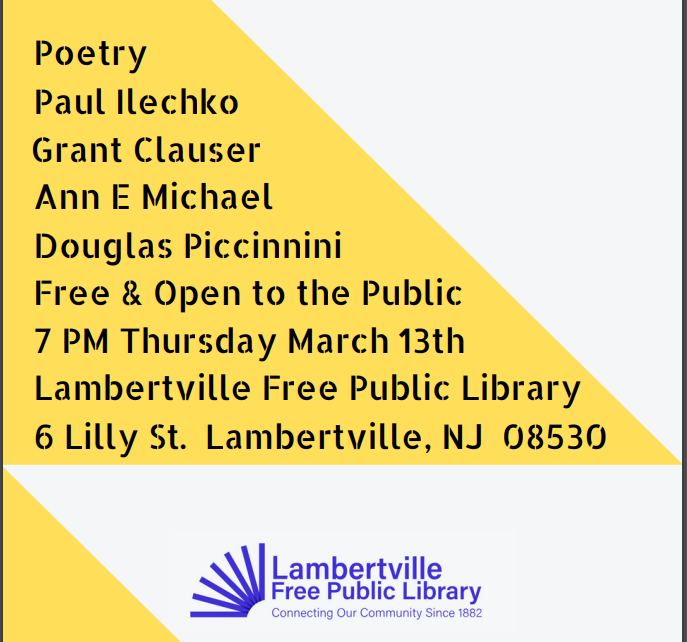
And, of course, worms. March’s moon is sometimes called the Worm Moon, and tonight there’s a total lunar eclipse around midnight here in PA. Is that auspicious? It’s also when I will be reading at the Lambertville Free Public Library in Lambertville, NJ. I’m excited to participate in an on-site, in-person reading again…I’ve been hibernating a bit from poetry events, but it is time to get stirring.

At the end of the month, I’m packing up for a brief trip to Los Angeles, where I will be attending one day only of the annual AWP Conference (Saturday’s Book Fair!) and spending the rest of the visit with my son. The conference always offers a terrific infusion of writerly companionship, community, and inspiration. Whereas time with my son offers love, cool places to see and eat and hike, a host of things I didn’t know I wanted to learn, and many moments of hilarity and conversation. It’s hard that he’s so far away–hard for me; I don’t think he minds, he is busy and having fun, which is as it should be.

Also, yes, the whole situation here in the USA is something I never could have imagined as a younger person, when I somehow had an unquestioning faith the US Constitution could actually be workable as an enduring rule of law. That careless people who value money over community could indeed disrupt that 1787 document was always a possibility (the moneyed property owners and slaveholders had their way with the original, after all), but most of us didn’t see this coming–naive, I suppose. Busy with our own concerns. I get it, and maybe we deserve what’s coming, but [ugh]. A concerned European friend recently asked me how I was faring under the stress of these first three months, and I told him that since making art (poetry) has generally been an unconventional act/behavior/response even under the patronage system, my response is to keep making art. Granted, it isn’t much, nothing earth-shattering, not gonna change society that way; but it keeps us observant little non-conformers on our toes, creative, and flourishing in the face of weirdness and oppression.

Which is something we can do. Like early bloomers in the cold days of late winter.

winter witch hazel blooming in snow

Equinoctal

Torrents. We had rain in torrents, and it went on for days from February into March and then on…and on. Constant alerts on the cell phones: “Flash flooding.” Doldrums set in. In an effort to accomplish anything at all, I even started to sort through and organize my attic.

Talk about desperation!

The attic project isn’t finished–the weather turned mild and clear two days ago, so I ran to the garden to get to work out there–but it turned out to be a more rewarding task than I expected. I started by tackling the Christmas stuff, then the books (SO many books), children’s toys (the kids are in their 30s and there are no grandchildren), and moved on to paper correspondence. Letters! Postal mail. Epistles. Why I have saved so much of my correspondence from 1975 to the present, I cannot explain. Maybe that’s a thing that people who love words just naturally do, the same reason I have kept so many books. I certainly don’t need all of it; but that was part of the task, sorting what I want to keep and agreeing to recycle the rest. I also found odd ephemera, such as photocopied posters for long-ago poetry readings, broadsides of poems, xerox-zines from the early 1980s, and ancient mixtapes on cassette.

~

There’s some sorrow with this project. So many of my former correspondents have died. I find my grandmother’s looping script, my dad’s distinctive handwriting, my dear friend David Dunn’s nearly-illegible scrawl. Reminders of times past. Maybe that is why we keep ephemera: to remember what we thought, at the time, was important.

Maybe it is, maybe it isn’t, by the time we reach our later decades–if we’re fortunate enough to reach them.

I keep gardens for different reasons. Not to remember the past but to see what the present can bring.

~speaking of the present~

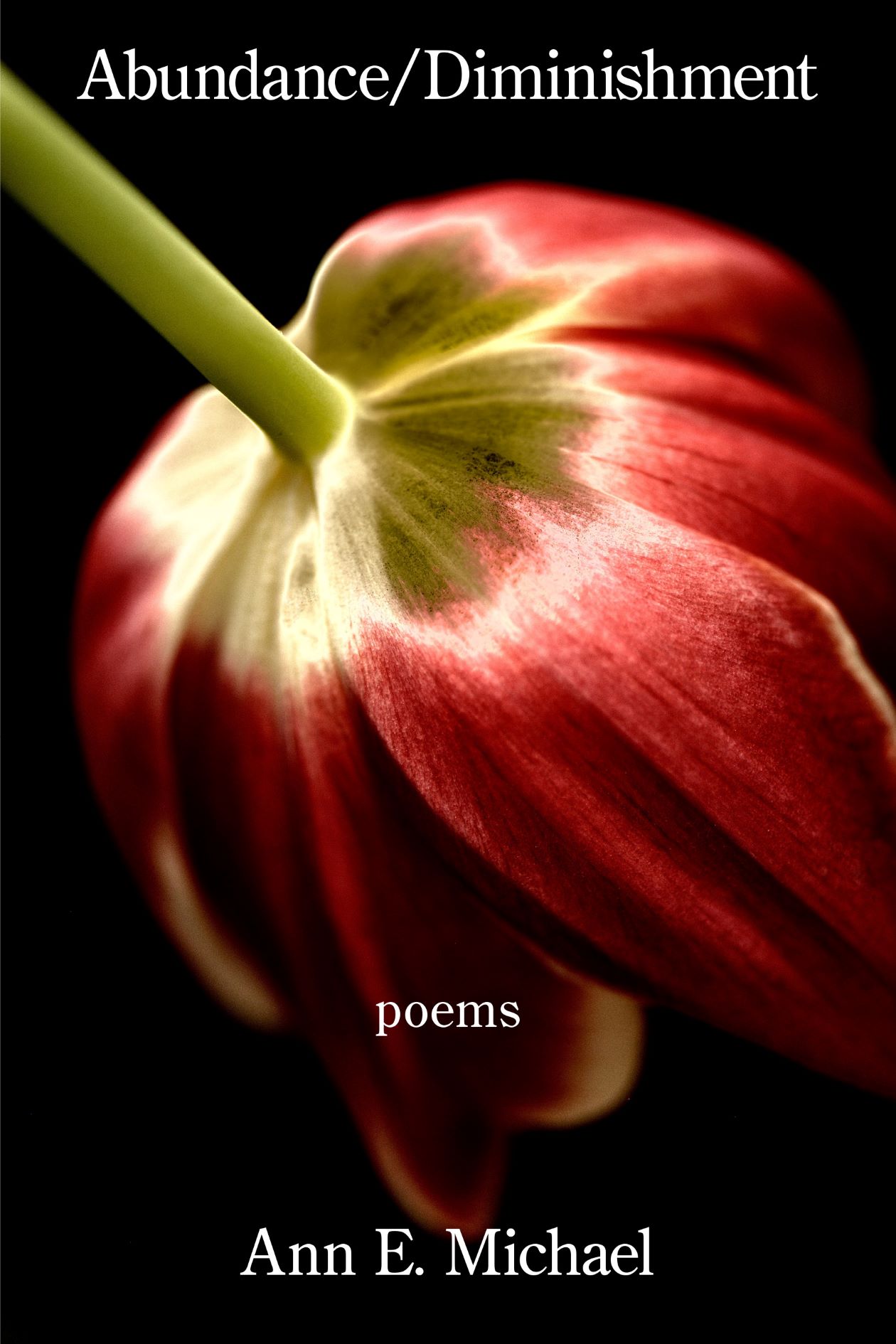
My new book can now be ordered from the publisher, if you find Amazon problematic (and there are good reasons for that). The link is here.