Back in time

At Şanlıurfa in the Urfa region, a Kurdish area in eastern Turkey, we stayed two nights after our visit to two amazing, ancient monuments that are really out in the middle of nowhere: Mt Nemrut Dağ (the tomb of Antiochus I) and Göbekli Tepe, a Neolithic site of the Stone Mound Culture, both Unesco World Heritage sites. I remember reading about the discovery of Göbekli Tepe in the early 1990s, when German archaeologist Klaus Schmidt began excavations there; the “buzz” at the time was that these megaliths mark the earliest temple or place of community worship ever recorded [ca. 9000 BC]. Since then, new discoveries unearthed at Göbekli Tepe, as well as discoveries of similar sites (such as Karahan Tepe, which we later visited) in the region, have somewhat altered Schmidt’s original speculations.

It appears now that people lived here at least part of the time, though until these discoveries, historians assumed humans in the pre-pottery Neolithic Era were hunter-gatherer nomads who did not build permanent structures. Our guide told us the current thinking is that the buildings here played some sort of role in preparing young men for adulthood–almost all of the reliefs and statuary portray male figures and male animals. But it is early yet to guess, and besides, we can never know for certain.

But there are cisterns, a system that distributed water through tunnels, containers that have traces of grains and, yes, beer. Back to the argument of which came first to humans: Bread or beer. My money is on beer. *

But to back up a few hours–first, we rose at 5 am so that we could take the circuitous drive up the mountainside to Nemrut Dağ, a relatively youthful site built around 60 BC, presumably by Antiochus I, who was connecting a slew of peoples and cultures together in a kind of Iranian-Hellenic-Armenian-etc. aggregation in a move toward empire at a time of Roman ascendancy. Commagene is the Romanized name used for this ancient region, which was a merger of Persian and Hellenic areas once Alexander the Great’s empire had disintegrated. Antiochus married a Cappadocian princess and had big plans, but his empire did not last long after his death; by 29 BC, his sons had died or been executed.

The path we walked up to get to the tumulus, 6:45am; my photo

And then over time, this huge tomb monument was forgotten until its rediscovery in the 1880s. The region feels deserted and surreal, and the climb up to the tumulus–though there is now a partially paved path–is long, the wind swirling around, full of dust. My sunhat blew off my head even though I had a neck strap. I guess that was my offering to the ancient king.

What an astonishing place it is, especially at dawn, and despite a fair but not overwhelming number of tourists.

~

Monuments are a step toward writing: they tell stories, written in stone with picture images, because the stories we tell or sing with our human voices don’t leave much of a record for cultures other than our own. I found myself wondering what the poets of these ancient places said or sang, and how their language sounded, and whether I would feel exhilarated or moved by those lays had I been there.

And at Göbekli Tepe, when I learned about the cisterns that contained beer, I thought of a poem I’d written some years ago after visiting a Mesopotamian exhibit at the Penn Museum in Philadelphia. So with a bit of awe and a bit of tongue in cheek, I’ll post it here. [It initially appeared in Mezzo Cammin.]

~

*Porter, Stout, & Mesopotamian Deity

Sisters, let us raise a glass
to agriculture, to dark brew
made possible by wooden hoes,
by seed-gatherers: me and you,
our aunts, foremothers, those
who stayed, patient, and grew
grains, diverted rain, winnowed,
boiled, fermented mash, who
certainly invented ale. For we
descend from goddess Ninkasi
who nourished babies through
breast milk fortified by beer
and whose forgotten virtue
we revive, consuming her.

~~

Thanks to copyright-free photos from Pexels since my own photos are snapshots taken with an out of date cell phone.

Life story

My current slow-read is K. Setiya’s book Life Is Hard: How Philosophy Can Help Us Find Our Way. While there are many aspects of this philosophical book that interest me and pertain to current or recent experiences in my life, something that gained my attention regarding writing is the author’s suggestion that the concept of failure as a loss is bound up with cultural narratives. If we imagine our lives as arcs with the aim of goals, journeys’ ends, attainment of heart’s desires, finding true love, and the like, Setiya argues, it is too easy to feel that we are failures, and to despair or grieve. Maybe we should not be so caught up in narratives, he suggests.

Hmm. As a poet who writes a good deal of what may be termed “lyrical narrative” work and as a human who loves a good story, I’m more drawn to theories of story-as-essential-to-humans; I’m thinking here of Daniel Dennett and Brian Boyd, about whom I’ve blogged in the past (I will place those links at the end of this post). Nonetheless, poetry is often writing about what is NOT a story; some of my favorite poems have no story per se to tell, yet they move me to reflection and/or to emotional resonance. Hence they feel deeply significant.

Photo by Elliot Ogbeiwi on Pexels.com [Despair]

And if you have happened to click on the links to the right of this page that lead to my poetry online, or purchased and read my books (thank you, dear readers!), you are sure to find several pieces that are not even remotely narrative. As someone who has struggled with self esteem and ambition, and often felt myself a failure, Setiya’s philosophical undoing of the concept that a well-lived or meaningful life entails having “successes” comes as a relief. Whether one decides to accept his idea–I guess that’s up to you. It’s a book worth reading given how anxious contemporary American citizens seem to be and how powerless and despairing we often feel.

Colleagues have often asked why I don’t write fiction, and I respond that much as I love stories, I am no good with plots. It occurs to me that I cannot imagine writing a memoir, either. First, my life doesn’t strike me as being all that interesting, and second–I don’t think of my life in plot lines. It has been, instead, a series of experiences that mainly connect because my body and my ego-self are being carried more or less randomly through life on earth while I observe the world and participate in whatever moment I happen to find myself inhabiting. So it seems I need to locate a book Setiya mentions, Jane Alison’s Meander, Spiral, Explode. Whenever I get around to reading and reflecting on it, I’ll post here.

~

Here are links to posts about art, storytelling, narrative urges, etc.

~

Altered perspectives

One of the arguments Arthur W. Frank makes in his book The Wounded Storyteller–and in his subsequent books about “illness narrative”–is that there’s a compelling ethics for medical diagnosticians and caregivers involved in just listening to the other person’s story. The difficulty emerges when the storyteller cannot put his or her story into words or lacks enough objective distance from the illness to narrate the kind of story that others are expecting.

When people’s circumstances push into the chaos realm, they’re in the midst, overwhelmed; few of them can construct a cogent and concise narrative. In their pain, in their grief, everything seems equal–no beginning, no end, all middle.

The listener expects: a beginning. a middle. an end.

The listener expects: chronology. a goal. a desired outcome.

If the listener’s job means determining a course of healing, the listener requires history, onset, comparisons. Truly good diagnosticians therefore need more than sleuthing skills, experience, and education. They need to listen well in the midst of the storyteller’s chaos; Frank calls this listening with.

That often means taking a deep breath and endeavoring to change perspective.

~

[Which, by the way, is excellent practice for poets.]

Tibet-Mountains-Everest-Kailas-Tibet-tours-Tibet-travel-Tibet-trekking-Tibet-hiking-3-of-8-1024x676

Himalayas: view from a high lake plateau (Snow Lion tours)

natural_fractals_tibet

Himalayas from satellite: a fractal view

~
We cannot climb into an airplane and get an overview of a human being’s situation. Nor can we get into another person’s thought processes to determine what’s going on. Listening without rushing the person, without offering advice, without finishing the sentences with what we expect to hear–that’s a hard task.

In a previous post, I tried to replicate what it was I could hear when someone I cared for experienced cognitive damage.

It was very, very difficult to listen. For me, heart-breaking because of my previous understanding of who the person was. It was only in her final days that I started to realize I’d needed to change in my relationship with her in order to get some idea of what she wanted to say. And it was too late, really.

~

As another Best Beloved is now experiencing significant cognitive changes, I want to do better. I need to acknowledge the chaos narrative, the interruptions, the lacunae in the person’s story. It’s important that I develop a new perspective on what a conversation entails, too; my expectations surrounding a conversation no longer hold, and both of us will get frustrated if we stick to former habits.

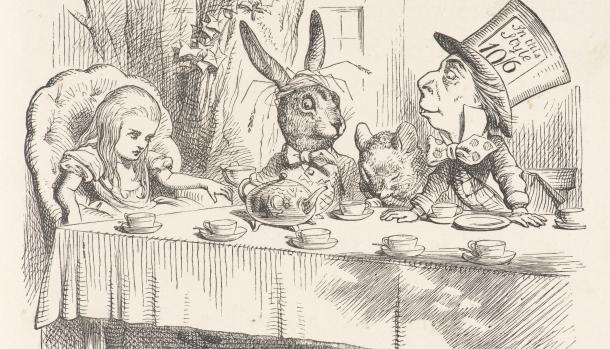
If sometimes a visit feels a bit like the Mad Hatter’s tea party, so be it. There’s a story in that, after all, thanks to Charles Lutwidge Dodgson.

mad hatter tea party tenniel

Tenniel’s sketch for Alice’s Adventures in Wonderland

And, just as an aerial view of the Himalayas alters the perspective of what the mountains are and how they appear, an altered perspective of a loved one keeps the person, as a human being still in the world (no matter how changed), in view. True, perhaps with changed patterns and unexpected gaps that we who love them may grieve the loss of. The conversations may be interrupted and chaotic, or full of long pauses and grasping for words and concepts. It is just a different kind of human communication.

Not what I expect, but what I am given. I’m trying to listen with, before it is too late.

Listen better

Arthur W. Frank’s The Wounded Storyteller, which I’m currently reading, deals with medical ethics, personal narrative, illness, and the community (all of us, really) who may need care, give care, and/or who realize there is a socio-emotional impact when friends, coworkers, and family members become ill and thus require care. A sociologist by training, Frank examines illness stories as testimonies that point to a social ethic and asks all of us both to tell more when we experience pain and to listen better when others are telling us about their experiences of illness.

“Tell me about your despair, yours, and I will tell you mine.”

Mary Oliver, from “Wild Geese

At first this idea sounds unpleasant–one thinks of the stereotype of tedious conversations among the elderly about various surgeries and too-intimate revelations about prostates, livers, stomachs, and bowels (my dad calls these monologues “organ recitals”). That response–evasion, withdrawal, revulsion–is exactly what Frank seeks to change.

But then I consider the way I have heard stories of illness experience from hospice patients. How varied they can be. Some fragmented, some specific, some pious, some stoic, some anxious. And some that are beautiful. These stories aren’t just for (about) the person who has undergone the suffering. They are also for me, the listener. “When any person recovers his voice,” says Frank, “many people begin to speak through that story.”

He later writes:

One of our most difficult duties as human beings is to listen to the voices of those who suffer. The voices of the ill are easy to ignore, because these voices are often faltering in tone and mixed in message, particularly in their spoken form before some editor has rendered them fit for reading by the healthy. These voices bespeak conditions of embodiment that most of us would rather forget our own vulnerability to. Listening is hard, but it is a fundamental moral act…in listening for the other, we listen for ourselves. The moment of witness in the story crystallizes a mutuality of need, when each is for the other.

He would like to see an ethics among medical people and caregivers that dictates not just a compassion for the lot of the ill person but a perspective that the person, as a person, is not diminished by the fact of illness–not made into data, case study, or even into patient or client, any of which reduces the person to a body containing disease or disability. He argues for a full embodiment of pain in narrative as well as in physiology, for only with and through storytelling can we begin to experience the perspective of the other.

I am not very far into the book yet, but I’m finding the concepts relevant to my current life circumstances. I know how deeply I treasure a good listener. So working on listening better, myself, offers more people the chance to recover their voices, to speak through story.

Cartography

Reading Mark Monmonier’s 1995 book Drawing the Lines: Tales of Maps and Cartocontroversy got me thinking about names and boundaries.

Human beings name things so we can communicate with one another, and then we tell stories to remember the names, encoding them in the language of later generations. New occupants–and colonizers or conquerors–claim and rename to communicate to their followers.

This mountain is Mount McKinley (or is it Denali?), this one is Sagarmatha (or is it Everest?). Keep it in view to your left side and you will be progressing northward.

Big objects accrue many names. When you come to the river called Misi-Ziibi (or Yununu’a, or Báhat Sássin, or…), you must ferry across at the place just south of X. Furthermore, the big river moves, as Mark Twain* knew (see Life on the Mississippi); and as it moves it affects human-made boundary lines that we use to determine tax-base and property ownership and state borders.

Not to mention nationhood.

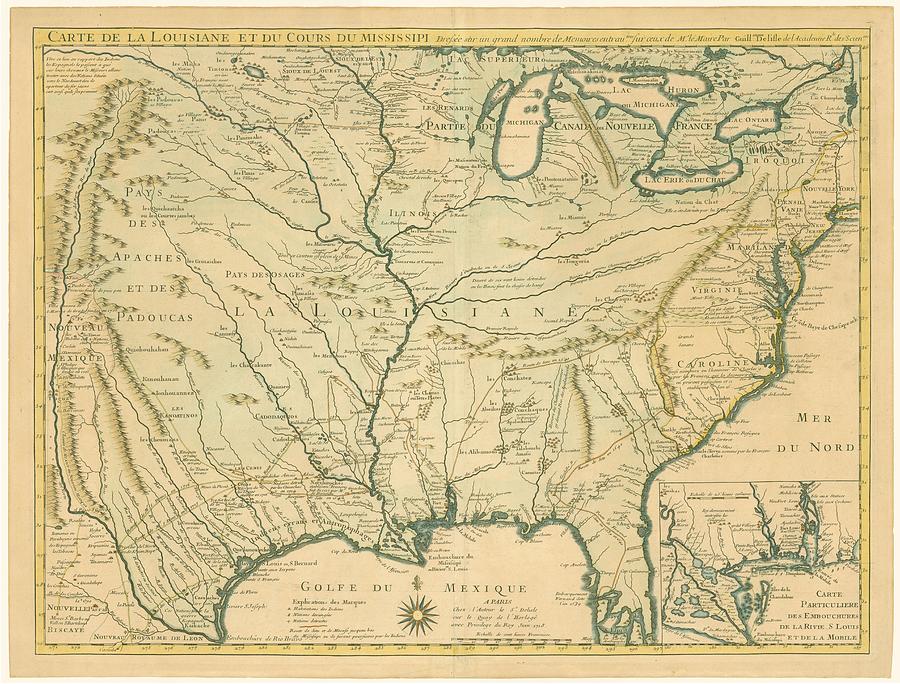
Monmonier rightly observes that most people assume that maps are factual representations of the physical and legal/abstract/imagined aspects of the “real” –and that assumption is incorrect. Maps can be manipulated. They can be propaganda. They can be drawn to reflect anything the people hiring the cartographer want to emphasize, or erase.

My husband has a German map from 1941. There is no Poland on it, no Austria, no Lithuania, no Ukraine…

~

When we built our house, I wanted to come up with a good name for it. Then I realized that the housing developments in our region all seemed to be named after things that weren’t there any more: Field Crest, Orchard Acres, Stony Meadows, Fox Stream…and the urge to name my house began to quiet down. Besides, all along I have recognized that the area around boundaries is more interesting to me than what is in the middle. Edges–the fringes, the spaces along and between–

And yet I’m trying to create boundaries around my garden to keep out the field voles, stands of cleome to discourage the deer, as another rainy spring keeps my shoes and gloves muddy and the weeds vigorous and tall. Paradoxes.

Reminds me that my favorite Whitman** quote when I was a teenager was: “Do I contradict myself? / Very well then I contradict myself.” At 16, however, I never thought to include his marvelous parenthetical line “(I am large, I contain multitudes.)”

(I am large, I am boundaryless).

~~


*Another example of name-changing that humans are so fond of.

** The 31st of this month is his bicentennial! I’m participating in a reading–see my Readings & Events page.

Lyric, narrative

I love hearing stories. Telling stories. Inventing stories. Often I choose to create a story using the first person perspective, whether the story is my own, someone else’s, or totally invented. In poetry this gets called the lyrical narrative.

~

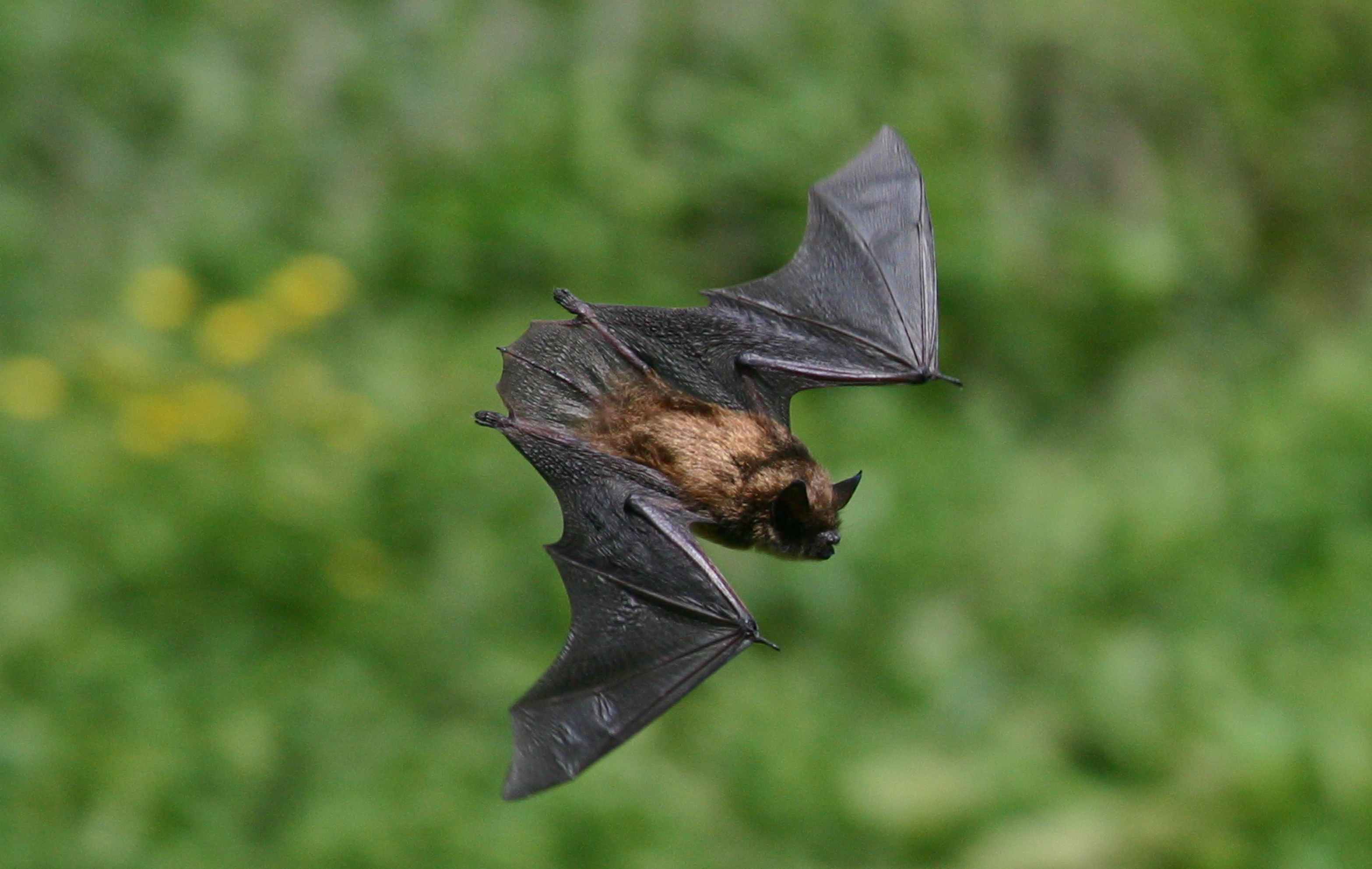
A Toast to the Brown Bat

We are on the porch, drinking wine
late in the long summer day, dusk hovering
the way small storms of insects do
the day after a hard rain, and we’re talking
about something not especially dear to us,
no deep discourse, past that, watching
candles glow and the first wink of fireflies
when a brown bat flutters over like
an autumn leaf and my friend asks, “what
is it like to be a bat?” And as I’m somewhat
versed in philosophy I mention Thomas
Nagel, whose essay with that title is
justly famous but who does not really answer
the question; and she responds, “it must be
alternately stifling and soaring.” I think she
means that every flight’s like Christmas—
freedom and feasting—and every day an
imprisonment in the tightly-packed dark.
“But what if colony life is cozy?” I ask, imagining
small bodies light as sparrows breathing
together softly, fur-lined and snuggled,
fingers folded over the bellies, a generous
communion of sleep. “I can’t quite get over,
though,” she says, “that they sleep upside-
down.” “It might cure your migraines,” I say,
and we devote our next toast to the bat.

~

Biodiversity & storytelling

As I have mentioned before in many previous posts, telling stories matters to humans. It’s the best way to get a person’s attention: if a writer wants to bring a fact, claim, event, person, or history to light, the best way to reach a wide audience requires spinning a good story about it. I recently finished reading a book about so-called living fossils, including bacteria and worms (not my favorite subjects), because the author’s enthusiasm for his subject was scaffolded onto a story of world-travel and time-travel. In the process of learning about coelacanths, horseshoe crabs, and echidnas, Richard Fortey also makes an impassioned plea for biodiversity–and storytelling.

“…I am not in sympathy with the idea that what matters about a species is how we humans react to it, which seems allied to a view that nature is only validated by observation from this particular hominid…We don’t reckon the worth of a species by the “damage” its extinction would do to other ecosystems. We cannot rank the products of more than 3 billion years of evolution in utilitarian lists. The richness of the biological world is the most wonderful feature of the biosphere, and every story is worth telling no matter how humble, or indeed insular, is the the organism concerned.” [my italics]

–Richard Fortey, paleontologist and expert on trilobites, in his book Horseshoe Crabs and Velvet Worms: The Story of the Animals and Plants that Time Has Left Behind. https://www.penguinrandomhouse.com/books/54786/horseshoe-crabs-and-velvet-worms-by-richard-fortey/9780307275530/

The lyric, the epic, the myth, the story written in the genome or the geology or the great vast cosmos–all of the things we know contain mysteries–intrigue us when we hear a narrative. Who knew that microbes and bacteria and alga have stories? They cannot tell their own unless “the storytelling animal” interprets them, raising their stature and importance in the eyes of “particular hominids.” In 1971, Dr. Seuss invented The Lorax for such a purpose.

It takes all kinds of people to tell good stories. Keep reading!

Feeder streams

A friend and I had a conversation about storytelling and human connectedness, relatives and family myths. We recognize that with age and relationships come references and allusions–some that operate only within the family system, others that interconnect with the wider social world. The televised funerals of some celebrated US citizens (Aretha Franklin, John McCain) offer excellent examples of how various eulogists–family, colleagues, close friends–endeavor to extend their feelings about the person to others. The best eulogies tell stories. It’s how human beings learn about one another, how we connect, bond, and cohere. The process reminds me of feeder streams that follow gravity and the earth’s geological patterns to wend their ways to join a river.

A river enlivened my childhood. Several rivers, in fact–the Hudson, the Delaware–but the one that comes to me at this moment is the Eel River in Indiana, pictured in my recent post here. By coincidence, just this week Streetlight, an online literary review, published my poem “Eel River Meditation.” In less cheerful news, someone whose presence I associate with South Whitley, IN has entered hospice care. These associations summon memories that carry me into that realm of family tales, rituals, jokes, sorrows, generational mythology.

My grandmother lived beside the Eel. A self-taught artist, she painted the bridge over the river many times, in all seasons. It must have steadied her sense of being in the world, of being in place; certainly, her paintings evoke that place, a small Indiana town, in those of us who knew and loved her.

And what could be more metaphorical than a bridge? Than a river? Than the changing seasons?

Locally, this rainy summer in my valley region, the feeder streams are full to overflowing and rushing to the Lehigh River, flooding the low-lying marshy areas, stranding the occasional cow or motorist. The fall semester has begun, and the garden’s mostly abandoned to the aforementioned weeds. My mind and heart are full, too. Maybe there will be poetry.

Eel River Bridge Edna Michael

South Whitley’s Eel River bridge, early summer. Edna Michael


Begun in reverie


wooden fishing boats

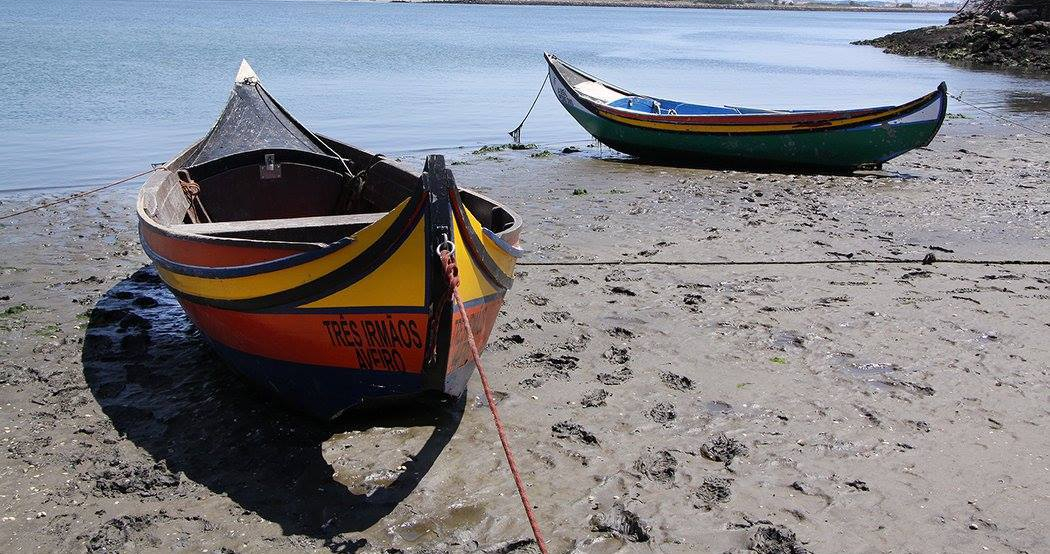
Near Aviero, Portugal; photo: David Sloan

Today, I was thinking of Portugal. Nice memories. I went through my digital photographs, found this one, and fell into reverie. It is amazing how images enhance memory or enable us to embellish it. Sometimes, that is where a poem begins.

When my physical body walked upon this sand, beside this bay, the encounter was a mix of new–a place I’d never been before–and familiar or expected: smell of brine and fish, the feel of breezes in my hair and on my skin, of damp sand underfoot. I recall my delight at seeing the vividly-painted wooden boats, though I had certainly seen paintings and photographs of similar fishing crafts, so their appearance was not surprising. That’s because I have a friend who is an expert in wooden boat-making, Simon Watts; he has been around the world examining wooden boats and had told us to watch for these along the coast of Portugal. Simon is a teller of stories, as is his sister Marjorie Watts. So many hours Simon has regaled us with tales of the writing life, the sailing life, the traveling life, the woodworking life, his forays in Portugal…

Back to Portugal. I think of a most pleasant week there, not so long ago. Mind hums with possibilities. With images. With words.

~

This post is an effort to illustrate how image, memory, sensory experience, stories, human connections, and activities bounce around the neurological synapses while a person experiences reverie.

It isn’t reverie, of course, because I am writing; true reverie seldom includes much activity. Let me suggest the paragraphs and picture are somehow analogous to the reverie process, which often leads to imagination.

~

Next stop: Imagination! train 1And perhaps even a draft for a poem.


First person, continued…

When a poem employs first or, in some cases, second person, readers generally assume the stance is the writer’s. (For more on this, see previous post.) I won’t deny that that is sometimes the case, a situation which has led to the contemporary idea that a poem is always a form of self expression–yet another assumption that is only true in part.

My Best Beloveds have been known to accuse me of writing a lyrical narrative incorrectly. “That isn’t how it happened,” they say–and they are right. But poets are not journalists, nor even memoirists. A poet chooses the event, image, or story that will make the poem do its best work which, dear readers, is not necessarily factual.

Even relationships may be imagined, or imagined from a different-than-expected point of view. The poem may have emerged from a prompt having nothing to do at all with the poet’s own relationships or experiences, and yet seem true.

Here is an example of how the first person (lyrical narrative) point of view may or may not reflect the writer’s actual experience. In the example below, revision, change of stance, and allusion make this “father poem” not about my father, exactly. (For a poem that is about my father, as I imagined his experience, see this post.)

I began this poem when I came across the Chuang Tzu quote. Call that my “writing prompt.” As my father had been dangerously ill at the time, the aphorism resonated. Yet the poem did not seem to head where I thought I wanted it to go…to be specifically “about” my own father. The allusion to the Chinese sage does not feel much like my own family–the image did not jive with my parents’ backgrounds. I tried the poem without the aphorism, and it became totally boring. I returned the quote as an epigraph and tried couplet stanzas then, developing the image of old slide projector screenings (pardon the pun), something I recall vividly from my childhood.

Then, my dad’s condition improved. He recovered. I put the poem away for awhile, and when I went back to consider it, I realized the poem did not need to be about him. Or about me, for that matter. It’s still a poem in progress but works better now.

Who is the “I” in this poem? Shall I let the reader decide?

~~

莊子

Familiarity

The sage Chuang Tzu says, when you step
on your parent’s foot you know
you are already forgiven.

My father’s no sage,
just an old man beginning to die.
Unable to smile at his pain

he smiles at us
at my mother holding his hand
at my sister holding her anxious thoughts;

he smiles at her fears and they seem
translucent, like slides projected
on the wall, pictures of our childhoods

hovering near, colorful but not crisp—
and instead of our rounder faces
and smaller forms fading

he is fading, sallow among the sheets, white screen,
blank wall, and he’s forgiven me in advance
for all the injuries I may do

treating me with gentleness
though I’ve trod upon his foot
again, and again, and again.


~

continuum