Walking

Numerous so-called health and fitness articles continually pop up on my screen, and many of them not only tout the benefits of walking but claim to know how many minutes or miles of walking (or rate of speed and such) are necessary to ward off dementia, keep your heart healthy, your bones in shape, your muscles well-conditioned, your circulatory system moving, your lungs going, or to extend your life. Oh, and relieve stress. And while you are at it you can get a device for your wrist or an app on your cellphone to monitor your pace, steps, heartbeat, etc.

But not everyone can walk. Too many of us forget that, take it for granted–especially “content” developers online angling for clicks. And, while I do like walking, I don’t particularly relish being told how I should go about it. I agree that it would probably be good for me to walk at a brisk pace for an hour every day, and some days I am inclined to do just that. There are other days I want to hike up a hill, or take a pokey amble around my meadow, or wander through a nearby park, or climb Nemrut Dağ just as dawn breaks. Or curl up on the sofa and read a book. I appreciate routine, but not invariable routine.

Autumn happens to be a time of year I like a slow stroll or hike; save the brisk walks for cooler, lousier weather. Now that most of the leaves have fallen, I can spy bird nests and paper-wasp nests (there’s one of those in our tamarack tree; last year, there was one in the Japanese maple). Milkweed puffs are swirling in somewhat chilly air, red berries decorate shrubs and trees. Red-tailed hawks and black buzzards wheel overhead. No reason to churn through the scenery at a rapid pace.

A. R. Ammons wrote an essay titled “A Poem Is a Walk,” in which he describes the physical act of taking a stroll “with” a poem, rhythm, breathing, the stride; he says both a walk and a poem are useless–though you might want to read the essay before agreeing or disagreeing on the uselessness, since his essay is almost a phenomenological argument (and we have to decide what is meant by “useless”). [Note: The essay is paywalled behind University of Arizona’s site, and–oddly–the one legible free version I found is here, from the Università degli Studi di Milano! Well worth reading, though, and in English.]

I think better when I walk slowly and steadily, with pauses to look around. That’s when images come to mind, metaphors, descriptions, sensations, ideas. Sometimes, it is a kind of haiku-walking, generally undirected. I don’t plan to reflect on anything or come up with prompts for poems. And I don’t do it to improve my life expectancy.

I just like to walk. And maybe, a walk is a poem.

Not a brisk pace

Recently, a physician I see (for fibromyalgia and related conditions) suggested that I need to walk more often because “walking is the best exercise for you and will give you more energy in the long run.” The advice surprised me a little; I love to walk and, except when the weather is very cold or super wet, I walk most days. It turns out that what she meant is that I should be walking for 40 minutes or so “at a brisk pace.” When I asked her to define what she considered a brisk pace, she said two or three miles an hour.

This poses a slight problem for me because while I am happy to walk around my yard, woods, and neighborhood for 30-40 minutes almost daily, I can’t say I do it at a brisk pace. I get distracted and stop to look at things. Bugs. Worms. Toads. Birds. Flowers. New leaves. Nests. Spiderwebs…I loaf along, as Whitman claimed to do. Some days I start out with good intentions to keep up a lively pace, maybe even to the point where I can feel my heart rate going up. And then–was that a redtail hawk overhead? Did I hear an ovenbird? Oooh, the Solomon’s-seal is in bloom!

Today–the walk was very wet, as we’ve just had about 3″ of rain–musing on my not-exactly-exercise ambulations, I thought of this Mary Oliver poem.

Walking to Oak-Head Pond and Thinking of the Ponds I Will Visit in the Next Days and Weeks

by Mary Oliver

What is so utterly invisible
as tomorrow?
Not love,
not the wind,
not the inside of a stone.
Not anything.
And yet, how often I’m fooled–
I’m wading along
in the sunlight–
and I’m sure I can see the fields and the ponds shining
days ahead–
I can see the light spilling
like a shower of meteors
into next week’s trees,
and I plan to be there soon–
and, so far, I am
just that lucky,
my legs splashing
over the edge of darkness,
my heart on fire.
I don’t know where
such certainty comes from–
the brave flesh
or the theater of the mind–
but if I had to guess
I would say that only
what the soul is supposed to be
could send us forth
with such cheer
as even the leaf must wear
as it unfurls
its fragrant body, and shines
against the hard possibility of stoppage–
which, day after day,
before such brisk, corpuscular belief,
shudders, and gives way.

~

At my place, it’s feeder creeks I hear and think I may visit, not ponds, but I identify with the mood of this poem. Walks offer me that joy, that unfurling of leaves, ferns, everything…time to reflect and feel gratitude. If I don’t do quite as well by my heart and muscles as I ought to, maybe my psyche or soul will compensate. If I loaf, it’s a purposeful, sweet loafing, the kind of activity that poets tend to do; it gives me energy of a non-physical sort. (And I think Mr. Whitman would concur.)

Walt Whitman in mid-life, probably a bit younger than I am now.

Morning birds

Every year, late March, starting at dawn, the cardinal thumps against our basement window, reminding me of a bored bear I saw long ago in a too-small cage–that repetitious sway and stomp–poor thing. But the bird’s unfettered and the window’s behind a large bush, a spindle tree we planted too close to the house–what’s driving that bird? Territoriality? We think perhaps it sees its reflection, so we’ve tried bird scare tape, opening the window, curtaining. Some years there are nests in that bush, but it’s never been cardinals nesting there. Thunk! Thunk!

My son used to stay up playing League of Legends until 3 am in that room, only to be awakened at 5:45 with irritating regularity by “Morning Bird.” He has left the nest, but the bird or its genetically programmed-to-thunk offspring returns annually. So it must be Spring.

Finally we got some good rain, about 3″, but the feeder stream behind our property lies pretty low and swampy after a mostly snowless winter and a dry autumn. Times have been when that stream flowed four feet deeper, rushing to meet Saucon Creek and head to the Lehigh River basin. I walked there this morning looking for frog eggs and salamanders, found two of the latter in a vernal pool where the skunk cabbage drills up from the swamp. Skunk cabbage doesn’t have much of a reputation for beauty but looks lovely with the sun behind its unfurling leaves.

I’m not a birder and can only identify about 25 birds by sight, fewer by sound. I noted mourning doves, mockingbirds and turkey buzzards, robins and redwings as I headed toward the creek. I have loaded Cornell’s “Merlin” bird app on my phone, though, and spent some quiet time sitting back on my heels in the sunshine while recording birdsong. The field sparrows weren’t in the field as yet, but other sparrows were calling: white-throated, song, and house sparrows (the house sparrows love to hide in the thick English ivy bush near the back of our house). Cardinals, of course, house finches, American crow, bluejay, red-bellied woodpecker, hairy woodpecker, tufted titmouse. Deeper in the woods, the white-breasted nuthatch got noisy, and an Eastern phoebe scolded me quite insistently from a beech tree. I was scouting around the largest beeches to see if I could find any dry beechdrop stems, but likely these trees aren’t quite old enough for beechdrops. I was happy to find some partridge-berry leaves, though; ten days ago, when my husband mowed the meadow, he saw a bobwhite–and left some cover standing for it.

I heard the Carolina wren as “Merlin” identified it, and was interested to note the bird app also recorded the presence of black-capped chickadee, bluebird, and Eastern towhee. It’s a bit early for towhees, but I’ve seen them here in past years, usually in April. And just before this recent rainstorm, I spied a killdeer in the meadow. I feel like an amateur naturalist! Anyway, forsythia are blooming. Even if we get more cold spells, I call Spring as having sprung.

~

By 10 am I was assessing the vegetable patch, where I moved a couple of perennial herbs and tore out as much shotweed as I could find. Some winter weeds can stay in the soil for later season removal, but shotweed flowers early, bolts fast, and sends out thousands of seeds so effectively that winter weeding is essential. I can’t keep it out of my lawn, but I can keep it under control in the garden. Redwings, robins, and woodpeckers kept up their calling while I worked. Good to get sun on my hair and dirt under my nails–feels like the first real spring day.

Wild places

I’ve been reading Robert Macfarlane’s book The Wild Places slowly, chapter by chapter and pausing between, enjoying his sentences immensely and feeling quite the milquetoast in comparison with an author who climbs snowy peaks by moonlight and sleeps outdoors, like John Muir, in scooped-gravel beds in seaside cliffs. I do not require luxury, but I get chilly easily and my hips and back are seldom forgiving when I sleep on the ground.

Still–I might put up with a considerable amount of misery to see the stars or the northern lights above Stornoway on a clear night (admittedly, a clear night is rare up there). And not by cruise ship. Given current circumstances, however, I am not going anywhere, which gets a bit tedious. Macfarlane’s last few chapters begin to focus on specific ways to view and consider wildness–finding wildness closer to home, in the flora and fauna and earth, rocks, topography even of regions that are tamed, farmed, suburban. One’s backyard walk might reveal wildness, though in miniature.

98106636_10223440949236204_1636631536210018304_o

terrarium-sized wildness cultivating human-made cinderblock

There lies inspiration; I can do that–walk in my yard. Look for wildness. Indeed, I have often proceeded that way, slowly and quietly looking about, creeping low to see the small things, overturning old logs, crouching beside vernal pools and driveway puddles, listening for rustlings in the hedge, noting hawk- or vulture-shaped shadows on the path and raising my eyes to find the birds in flight. What are these things but wild? Just because I am familiar with them, I tend to forget their inherent wildness.

~

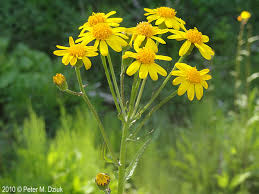
I took a walk in and through the meadow, which has  not yet grown tall with grasses and milkweed and solidago. I took notice of the perennials starting to emerge. Also of the quantity and variety of nutsedge-like plants.  I had not realized there are so many kinds. Amid the low-lying, pale purple violets, the milkweed and eupatorium shoots are emerging. And I found golden ragwort in the field–never had seen it before.

packera aurea

packera aurea, golden ragwort

This time of year, the does give birth; I have found fawns lying still among the grasses before and ambled the field perimeter slowly in hopes of such an encounter again. So far, not yet. But yesterday morning, a doe grazed along the edge of the tractor path, her spindly, spotted newborn scampering around her legs. So I know the wild ones are present and going on about their usual spring business.

Of course, the avian realm of wildness gets active in April and May. We found an eastern kingbird nest perched on the flat of a canoe paddle that rests on rafters in winter, under our outbuilding. Discovering the nest meant we had to put off our intended initial canoe float in May.

Recently I learned about bumblebee nests, too, and found an abandoned one under an oak tree in the hedgerow while I was looking at jack-in-the-pulpit, mayapples, fungi, and solomon’s seal. Thrashers, ovenbirds, numerous sparrows, and a noisily-protesting red squirrel raked about under wild black raspberry canes.

ann e michael

waiting for mama

There with the native plants, and aggressively overtaking the undergrowth, are amer honeysucke, asiatic rose, barberries, wintercreeper, japanese knotweed, mugwort, ragweed, burdock, thistle, garlic mustard, and whole hosts of plantains and creeper vines. One part of me abhors them. But I admire their tenacity and their ability to adapt to new circumstances. They’ll probably be thriving long after humankind has departed the planet.

As, perhaps, will the whitetail deer–a century ago, become scarce in the wilderness, considered almost “hunted out”–they managed to recover their numbers through adaptation to suburbia, where they are now “pests.” They graze on front lawns, nibble at ornamentals, gobble the leaves and bark of decorative trees, and gather at street-side puddles to drink, leaving heart-shaped prints in the mud and grass. But on my walk yesterday, I observed a doe lying amid the brambles; and she observed me. With the eyes of the wild, darkly liquid, meeting my gaze with her own. I did not move. Nor did she. I made no sound. We watched one another until, with a fluid motion and almost soundlessly, she leapt to her feet, twisted in the air, and fled in an instant. A brief rustle of trampled branches in her wake.


Aesthetic “therapy”

I have been musing on Rebecca Solnit’s text in which she writes about the Romantics’ “new” appreciation of Nature. I was particularly struck by her research about how in Europe, and among the Eurocentric American colonizers, pre-Romantic era society considered mountains not only dangerous but also “ugly” (in Wanderlust: A History of Walking). Aesthetics began to change in the late 18th and the 19th centuries. Walking the natural world for something other than pure transportation from place to place altered our social ideas about what’s “beautiful.”

~

“The first question I ask myself when something doesn’t seem to be beautiful is why do I think it’s not beautiful. And very shortly you discover that there is no reason.”  —John Cage


~

This train of thought reminded me of Jack Fisher’s water tower. Jack was a friend and extended-family member who who lived in Bucks County, Pennsylvania from the 1940s until his death in 1999. He was an architect, engineer, teacher, builder of many things, and an artist.

Often when we were visiting, Jack would show us a painting he was working on. On this occasion, he told us how annoyed he had felt at a new condo development; the big, aqua-colored water tower rising from the housing campus especially irked him. “It’s so ugly!” he said. “So ugly, and I was feeling so mad, I decided to do a landscape painting of the damned thing. And here’s what’s funny–I kind of like the composition here, and the colors. What do you think?” He was right. It may have been an ugly water tower, but it was a lovely painting.

Unfortunately, I do not have an image of that painting except in my memory; here, however, is a painting of Jack’s that depicts the fields in Bucks County, PA, which he considered beautiful.

jackpainting004

Suber’s Field with Clouds, Jack Fisher, oil, 1998

Imagine a water tower here, and a sea of peak-roofed condominiums. And a balanced composition, and a deft use of colors.

~

Looking closely enough at something to find that you no longer see it as ugly requires an almost meditative change in perspective. It’s been an approach useful to me as a poetry prompt and as a means of more closely appreciating the world and everything in it. I don’t mean that I identify with the 19th-c Romantics, though I eagerly trod where Wordsworth trod when I visited the Lakes District a few years back; I don’t. My view of nature is really with a small ‘n’ and is pragmatic and scientific, among other things.

But: John Cage’s question to himself is a reminder to be compassionate, to observe with openness, information, education, perspective, and loving-kindness…while walking through the world.