Judging poems

During National Poetry Month, a local newspaper (Lehigh Valley Press) sponsors, with a local public radio station (WDIY), a poetry contest for children ages 6-17. This year I was one of seven people, most of us educators, on the judging panel.

Judging poetry is always a rather fraught endeavor, and when one is reading the work of novices–particularly very young ones–setting standards can be challenging. What were we looking for, exactly? How could we decide whether the writing of one 14-year-old was “better” than the work of another? How to assess the poetry of 8-year-olds?

Our coordinator and organizer began with such questions and by asking us to describe what each of us seeks in any poem–not poems by children, but any good poem. Would children’s work feature any of these attributes? Successful attempts at poetic strategies or craft, for example–we may be able to determine that a 10-year-old’s work shows signs of poetic craft. Imagery that moves beyond the expected or clichéd? Young people often prove quite capable of that part of writing.

We are experienced in the classroom, too, and can usually tell when a child’s work shows signs of being ‘overly-coached’ by a well-meaning adult. Alas, all too often an adult’s interference deadens the imaginative if occasionally grammatically-incorrect approach children take. We can also tell which poems come of a classroom assignment when we get submissions of numerous 7-line poems on “snow.” This is not to suggest that none of the poems are worthy of note: an imaginative writer of any age can probably create a lovely piece conforming to the assigned framework. But, as teachers, we found ourselves responding to the assignments themselves (“That’s clever and would work well with third-graders, too;” “They must be studying the Black Plague;” “Looks as though they made a word bank for this one;” and so on). We had to remind ourselves to look at the work itself for the earmarks of imaginative ideas and use of language.

Interestingly, first-place poems seemed obvious and agreement was usually unanimous. This was true for elementary school, middle school, and high school writers: the best work does stand out.

Choosing the second and third place poems was more difficult and resulted in lively conversation about what makes a good poem, what matters more: authenticity of experience? discernible voice? vivid imagery? clear use of craft? emotional expression? imagination? Each of the judges had useful insights that reminded me of the value of thoughtful criticism and the value of poetry-as-art.

It was also heartening to read the work of so many young people who showed a willingness to play with words, to think about aesthetics and feelings and language, and to show their work to others. I’m grateful to the teachers who took the time to introduce their students to poetry and to encourage their pupils to write.

AWP follow-up

photo Ann E. Michael

winterhazel

Snow fell on Boston. Not a big snow, however, and rather typical for a late-winter storm: damp, swirling but not biting, swift-melting once the sun appeared two days later. Early Friday morning, I trudged with a friend over the as-yet unshoveled sidewalks to breakfast on Newbury Street at Steve’s. We met with conference buddies who are all members of the WOM-PO [women’s poetry] listserv. It is lovely to meet face-to-face people who have been virtual colleagues and splendid to discuss poetry over a good breakfast.

~

It is also a relief to realize that I have finally learned how to manage conference-going. It is all a matter of pacing and, I suppose, of taking poet William Stafford’s advice and lowering one’s expectations. The hardest challenge is making the choice between blowing the budget on terrific food (in a big city, wonderful restaurants abound) or on books, because the bookfair at the Associated Writing Programs’ annual conference is enough to inspire swooning among literary bibliophiles.

In three huge exhibit rooms, small presses and literary and university presses displayed chapbooks, literary journals, and books that range from minuscule to tabloid-sized, books that are handmade, letter-pressed, offset, print-on-demand, stapled, ribbon-sewn, die-cut, fancy-boxed, reprinted, spare, florid, illustrated, edgy, deckle-edged, marbled, second-hand, one-of-a-kind, limited-edition, mass produced, commercial, educational…in all genres including mixed-genre, collaborative, collage, anthology, with an emphasis more on the literary than the commercial text. These books can be devilishly hard to locate, even with the existence of Amazon and online sellers; and holding them in your hands is a far more convincing sell than seeing a picture file on your computer screen.

Heaven for poetry-readers, there are also wonderful creative non-fiction books, collections of short stories, novels, books on prosody and poetics, the craft of writing, on creativity and inspiration and toil and revision and on the complex and controversial topic of teaching writing. Oh, and there are people, too. Most of the attendees are writers of one stripe or another who are congenial and curious or else walking about with the glazed expression of the overwhelmed.

Or some combination of the two.

~

I exercised considerable restraint and managed not to load my bedside table with two months or more of reading material (see a related post here). And I got some terrific ideas for teaching writing to college students and found some wonderful poets whose work I want to study. The last night of the conference, I listened to the mesmerizing Anne Carson read an indescribable take-down of the fifth book of Proust’s À la recherche du temps perdu, the section titled The Captive (Albertine). It’s been years since I read Proust, which I did almost out of stubbornness in my junior year of college, but the book came back vividly enhanced by Carson’s peculiar approach to pacing, language, scholarship, whimsy and satire. I like what the Poetry Foundation’s biography says about her after the release of her text The Autobiography of Red:

According to John D’Agata in the Boston Review, the book “first stunned the classics community as a work of Greek scholarship; then it stunned the nonfiction community as an inspired return to the lyrically based essays once produced by Seneca, Montaigne, and Emerson; and then, and only then, deep into the 1990s, reissued as “literature”and redesigned for an entirely new audience, it finally stunned the poets.” D’Agata sees Carson’s earlier work as an essayist everywhere in her poetry, along with her deep absorption in Classical languages. Carson’s work, D’Agata alleges, asks one to consider “how prosaic, rhetorical, or argumentative can a poem be before it becomes something else altogether, before it reverts to prose, to essay?”

~

Altogether, Boston provided nourishment of many kinds: gustatory, intellectual, emotional, poetical…food for thought.

AWP conference 2013

I am heading up to Boston next week with about nine thousand other writers, writer-educators, writer-publishers, academics, and business people. The annual Associated Writing Programs conference will be in session March 6-10. I posted about the conference briefly last year...and last year’s conference introduced me to Brian Boyd’s work on cognition and storytelling. So I am hopeful that this year’s programs and panels will prove equally enlightening.

The conference offers a chance to meet or at least hear some of my favorite writers and to talk with interesting colleagues. Best of all, there are thousands upon thousands of books and literary magazines to browse. If I feel shy, I can interact with books at the Bookfair and “meet” my fellow writers through their polished texts instead of face-to-face (or body-to-body in the packed bar). The main problem with any event of this kind is the lack of places for introverts to regain equilibrium. At AWP, there are quite a few introverts; and people tend to claim a spot by a window, balcony, or corner somewhere in the conference area and send out “don’t disturb me, I’m recharging” body-language signals. Or they eat alone in the restaurant without looking too uncomfortable about the status of solo diner.

Writers understand.

~

Lori A. May offers her insights on the conference here, with a focus on people who are considering graduate school programs. I will be participating in a panel on that topic: the Low-Residency MFA. My main interests, however, remain bibliophile-oriented: discovering poets whose work I haven’t encountered before, finding new books by favorite poets, learning who is editing which long-running journals, and finding new journals to peruse.

By contrast, here’s a lovely, very funny article by Kay Ryan that appeared in Poetry magazine in 2005. The second paragraph sets the tone:

Once, when I was about twenty-five and not yet entirely aware of the extremity of my unclubbability, I did try to go to a writers conference. Thirty minutes into the keynote address I had a migraine. It turns out I have an aversion to cooperative endeavors of all sorts. I couldn’t imagine making a play or movie, for instance; so many people involved. I don’t like orchestral music. I don’t like team sports. I love the solitary, the hermetic, the cranky self-taught. Make mine the desert saints, the pole-sitters, the endurance cyclists, the artist who paints rocks cast from bronze so that they look exactly like the rocks they were cast from; you can’t tell the difference when they’re side by side. It took her years to do a pocketful. You just know she doesn’t go to art conferences. Certainly not zillion-strong international ones, giant wheeling circuses of panel discussions.

How, then, one wonders, can it be that I have just come back from AWP’s annual conference in Vancouver, treading upon a lifetime of preferring not to?

I fear I am rather in her camp. I do like orchestral music, but I prefer chamber ensembles. I don’t care for team sports. I love the solitaries, the St. Simeon Stylites of the world; there’s a bit of the hermit in me. Crowds–shudder! Yet a conference of writers at least offers the promise that I will be among others who understand how I feel and who feel that way themselves now and then.

St. Simeon Stylites

St. Simeon Stylites

Another advantageous aspect to this event is that I get a chance to talk about poetry and creative writing with people who are as passionate about it as I am. I can discuss the logic and music behind free verse line breaks and learn contemporary writers’ opinions about the sonnet. Is the metaphor dead? Does symbolism have any place in modern writing? Is hypertext the new L=A=N=G=U=A=G=E poetry? Does anyone understand the significance of the tattoo that says “December 10, 1830” on that young woman’s arm? (It’s Emily Dickinson’s birthday). I can talk about my book Water-Rites with people who are working on getting their own poems published and discuss current projects with folks who are sure to have ideas and advice to share.

So the event is worth a bit of discomfort on my part. If I get too overwhelmed, I can go back to my room or walk the chilly Boston streets or have a chat over coffee with just one person at a time.

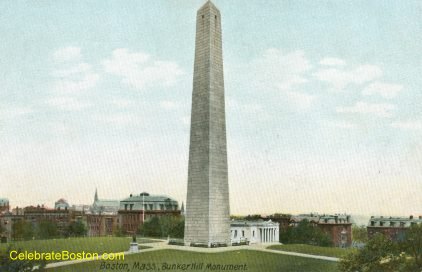
Or maybe find a pillar in a park somewhere. I think I recall one at Bunker Hill….

bunker-hill-monument

Memoir & the lyrical narrative

I have decided to devote two class periods to exploring the lyrical narrative with my students. The reason evolved from, not exactly a revelation, but a dawning awareness that this particular mode of poetry connects more easily with students than other modes.

Popular music, of course, sets the contextual stage here. American country music fills the nation’s highways and airwaves with lyrical narratives and modern-day ballads. The story-song appears in a wide range of musical genres from rock to rap, born from simple blues narratives and Appalachian ballads and from John Henry and Casey Jones to glam-rock “epic rock ballads,” new wave, Motown, British invasion (think “A Day in the Life”) and quirky indie lyrics–not to mention huge hits like “Lying Eyes” and “The Devil Went Down to Georgia” or oft-played 70s narrative songs like “Cat’s in the Cradle” or Bruce Springsteen’s “Thunder Road.” These tunes are all before my students’ time, but they have their own lyrical narrative popular songs; they “get it.”

Bruce Springsteen: lyricsThunder Road

Bruce Springsteen: lyrics
Thunder Road

Narrative lyrical poems hook readers who might not otherwise spend much time closely reading a poem because of those critically important pronouns “I” and “you” and because there’s a human impulse to stick with a story. We want to know how it ends; and we want to figure it out in our own subjective ways, to put the speaker/writer’s experience into our own (or vice versa) and interpret the narrative on our own terms. We also like to be a little surprised.

Why?

I’ve touched on the topic of the cognitive need for narrative in a previous post, and on Boyd’s story-telling impulse research (here), and now–in light of reading the lyrical narrative poem–I want to offer an excerpt from Oliver Sacks. In an excerpt from Speak, Memory, Sacks writes:

“There is no way by which the events of the world can be directly transmitted or recorded in our brains; they are experienced and constructed in a highly subjective way, which is different in every individual to begin with, and differently reinterpreted or reexperienced whenever they are recollected…Frequently, our only truth is narrative truth, the stories we tell each other, and ourselves… Such subjectivity is built into the very nature of memory, and follows from its basis and mechanisms in the human brain. The wonder is that aberrations of a gross sort are relatively rare, and that, for the most part, our memories are relatively solid and reliable. We, as human beings, are landed with memory systems that have fallibilities, frailties, and imperfections—but also great flexibility and creativity.”

How can we honestly interpret a poem without acknowledging immediately that our brains are highly subjective processing organs that inherently interpret and experience input differently? Our personal narratives, our memories and recollections, limit, expand upon, and influence our interpretations. That is why I insist that my students accept all “expert interpretations” of famous works with a grain of salt. Every human brain re-creates based upon subjective, unique processing; the fact need not keep us from admitting of rational thinking, but it must affect human interpretations of phenomena. Especially subjective phenomena such as art.

This is also the reason I warn my students not to assume that the speaker of the poem is the poet himself or herself. Poets invent, and they can invent personas. Furthermore, in their efforts to write truths–emotional truths, lasting truths–they may alter physical, actual, memory-based “truth.” In other words, maybe the story happened just that way. Or didn’t. Though “for the most part our memories are relatively stable and solid,” the paradox of art is that altering the facts can lead to deeper truths. Sometimes the facts seem altered from one perspective but not from another. Other times…well, I confess, I myself have changed some facts in poems in order to make the poem better. In such cases, craft supersedes the need for stony factuality. I guarantee I am not the only writer who employs this strategy.

Whose life is it anyway? And whose art? Sacks reminds us of the loosey-goosey aspects of recollection: “The neuroscientist Gerald M. Edelman often speaks of perceiving as ‘creating,’ and remembering as ‘recreating’ or ‘recategorizing.’” Thus, the lyrical narrative is a form of memoir, created through individual perception and recreated through the process of memory itself. Which, all of us being human and therefore fallible or otherwise liable to err, and subconsciously quite able to lie to ourselves, means that the lyrical narrative could end up as mythical as the stories of Mount Olympus.

And just as compelling to generations of human listeners or readers.

A voyeur’s fascination that the reader may be witness to the human-talking-to-human in the framework of a storyline is a significant part of what engages audiences. This poem might be memoir! It may be true. It may be genuine experience, something to which I can relate. There’s emotional frisson, or thrilling curiosity, or the dread of knowing it will all end badly. But I must know; and I want to believe it might be true. Tell me sweet lies, oh troubadour!

~

*Note: the image above is not Bruce Springsteen’s handwriting. He prints. An example of his actual lyric drafts is here.

Associating with allusions

Human beings use the power of association to create art; indeed, without association, it would be difficult to create or even to learn anything at all. Paolo Friere observed that all true learning is based on previous experiences and associations; Pavlov, in a different field, established the same thing while experimenting with instinctual responses. In literature, in the poem especially, the art of the work depends upon associations. The writer makes cultural, historical, linguistic and personal references and allusions, establishing imagery based upon place, time, art, experience, event. How would metaphor, or simile, operate without prior knowledge and associative power? Allusion’s a crucial tool for poets.

In his textbook/anthology To Read a Poem, Donald Hall notes that allusions can, however, be problematic in poems and may “act as a barrier to understanding.” Indeed, a common criticism in poetry workshops is that an image, word, or allusion is obscure. Such critiques often center around an indirect reference that readers “don’t get.” A poem no one can understand or appreciate is certainly a failed poem, but what if the failure is the fault of the reader’s lack of experience or education? Is the poet to blame for being elitist, or is the reader to blame for his or her innocence? What if the allusion is based on something integral to the author’s perception of life and is meant to further the understanding of the piece, not to build barriers? How is a writer to judge whether or not an allusion is working in the poem?

Let’s back up a bit and start with a definition: an allusion is simply an indirect, but meaningful, reference. It is not the same as writing a poem based on a quote or news article; not the same as direct referencing in a line, stanza or epigraph. It is not a symbol—it does not stand in for anything, merely points indirectly at an experience. Because of its indirectness, allusion operates on a more complex level than does other imagery; and because of that complexity, allusions deepen meaning. A good allusion works on several levels, dependently and independently.

But an allusion is also meant to be understood. Robert K. Miller, in his textbook The Informed Argument, defines allusion as “an unexplained reference that members of an audience are expected to understand because of their education or the culture in which they live.” That expectation—and the assumptions that go with it regarding culture and education—has the potential to make an allusion into a sandpit of obscurity. Yet great poems avoid getting mired. Great poems work even when history has intervened and allusions have been lost: one can read The Inferno with notes and explanations about politics in the city-states of medieval Italy and Biblical references; or one can read it naively uninitiated and still find it to be a fabulous, weird narrative, a guided anti-quest. The uninformed reader has lost some aspects of the poem (perhaps its irony, its parodies of important men, etc.). The uninformed reader has not lost everything in the text, however. He or she does not return impoverished from a reading of Dante by any means. The art is still in the poem, the narrative, the craft, the intention. In a good poem, the poet’s point of view and range of experience can transform the reader’s experience.

il_fullxfull.369385736_ddho

What if the contemporary writer’s experience includes a love of Ovid, a familiarity with Hindu cosmology, or twenty years as a coroner? Educated readers of a century ago would have caught allusions to Greek and Roman classics, but that’s less true today (a fact that has not stopped Billy Collins or Anthony Hecht from employing classical allusions or references, however). I’ve recently had students who were not able to recognize allusions that referenced Shakespeare, Wordsworth or the Bible. While this is dismaying to me as a teacher, it has not interfered with these students’ ability to enjoy—and understand—poems by such writers as Collins, Glück, Pastan and others: poems containing allusions to literature, history, art, and experiences beyond these readers’ ken. A good poem alluding to a coroner’s working knowledge of the body and its various means of demise (without directly referencing or explaining this knowledge) would certainly pique my curiosity, and that of my students. Maybe it is difficult to get the news from poems, but through poetry we can expand in other ways.

Besides, people read to learn, and each unfamiliar reference or allusion offers the chance to further that learning. Why bother to tell people what they already know? In my own experience, poems have led to the dictionary, the encyclopedia, to libraries, art museums, philosophers, scientific theories, and to other poems. Granted, I am the sort of reader willing to do that extra work; and this points out that deciding whether or not to use an allusion entails a couple of decisions. Who makes up the audience for a poet or poem? That’s the issue Miller addresses in his definition of allusion—who’s reading, and what experiences and education these people have access to. The recent interpretations of Wordsworth’s language of the “common man” have on the one hand encouraged accessibility in contemporary poetry but have also led to some ridiculous directives in poetry seminars. (Example: A student of mine was told by a conference instructor never to use the word “vermillion” in a poem because “people won’t know what it means.” While there are poems in which “red” is a better choice than “vermillion,” there are certain styles and subjects in poetry that benefit by the use of the “more obscure” word). The second question a writer must ask is: does the poem work even if the reader misses the allusion?

The first question is intellectual and is less important than the second one—but it can help the writer decide whether to keep the allusive image/phrase or to direct-reference, clarify, footnote, or delete it. In a culture as overwhelmed with media as our own, even contemporary allusions can be missed (what if your readers don’t watch commercial television? or keep up with CNN? or know what blogging is?), let alone well-considered indirect references to, say, American life in the 1950s, composers other than Beethoven and Mozart, or most writers once considered essential to the “classic canon.” So it does help to know who your audience is. This is as true for allusion as it is for vocabulary choice in the poem.

The second question is absolutely necessary for the poet to ask, for allusion often arises spontaneously if it is deeply grounded in a writer’s experience. Because the poet’s experience drives the poem, a writer who is dissuaded from, or afraid to harness and use her experience, risks losing her investment in the work. While obscurity is also a risk, too much concern over being democratically accessible may result in what one of my students called “the dumbing-down of the poem” (a phrase which is itself a contemporary, political allusion). The condensed complexity of poetry is possible thanks in large part to the associative powers of allusion. Strange and surprising associations and metaphors and multiple, list-built associations evoke fresh responses from the reader through transformative acts within the poem. If no one “gets” the allusion, but readers still “get” the poem—if they do not stumble over the language or the images, do not lose the narrative or miss the overall meaning of the piece—the poem has surely succeeded: some kind of transforming language, some synthesized meaning that leaps out of and past the accepted denotations of words, has occurred.

If a reader comes along who does catch the allusion, that reader will have an enriched perception of the poem, a deeper insight into the writer’s inspiration and purpose. That’s how a reader can tell the chosen allusion works. And that’s how the poet can tell, too.


What do poems do?

This semester, I’m teaching an introduction to poetry survey course. This course helps me more than my students, probably, because while drafting the curriculum and teaching the classes, I find myself forced (in a good way) to confront my own aims and purposes regarding the art. In addition, I discuss poetry more frequently with colleagues and friends when I’m teaching a class like this one.

A question I’ve been asking is: what can a poem do for a person? In particular, what do great poems do for people? The phrase “transform us” has been suggested, but I think that word in itself is too unspecific. Transform us in what ways? How?

Here are some of the answers I’ve received, and I think they are all worth considering. I’m always looking for more feedback on this question, so feel free to add comments…

• Poems help us to imagine or understand perspectives we do not ordinarily assume: “I never thought about it that way before.”

• Poems help us to feel understood and less isolated: “I thought I was the only one who felt like that!”

• Poems help us define our experiences: “I would never have described it that way, but it seems exactly right!”

• Poems help us to see what we take for granted: “I never realized how valuable that was before.”

• Poems help us to feel compassion: “I feel as though I went through this experience because I read this poem.”

• Poems help us to reflect and to think about what is beautiful and terrible; they offer solace and extend our grasp of the human situation.

These things–and others–may, in fact, transform our lives. Not every transformation is a bolt from the blue; most transformations occur gradually, through a series of small movements and almost imperceptible changes the way a zygote grows into an adult being.

What else do poems do for people?

Still more on ambition

My experience with college students and their wildly varying achievements, coupled with my long-time interests in temperament and neurology, led me to rejoice in the extensive sources listed in Paul Tough’s book How Children Succeed. Angela Lee Duckworth’s studies on grit, persistence, interest, diligence, and ambition are particularly relevant to my job–she’s at University of Pennsylvania, and the site for her research is here.

Ambition implies a goal; as used in the studies Tough cites, that goal is the desire or drive to be the best. Persistence is what gets us to the goal–sometimes–or at least keeps us plodding in the general direction. Diligence is what we feel we owe to the work or to whomever assigned the work; i.e., careful attention to the job and the completion of each task. Interest means we can focus without becoming distracted by other ideas, novelties, events, or tasks. And grit is composed of all of these traits but includes a crucial element: the ability to carry on after failure or loss–the determination to surmount obstacles, evade them, or compromise; or even to fail to do so, then dust off and carry on anyway.

I administered the long version of Duckworth’s questionnaire to myself and the sense I get is that the results seem fairly accurate. I’ve asked family members and colleagues to take the survey; the results jive with our intuitive “measures” of these traits among ourselves. It came as no surprise to me that I scored below the median in ambition; but when I mentioned that outcome to a colleague, she expressed surprise. She said I am “ambitious” about my poetry, noting the time I devote to reflection, revision, trying to get the poem “right.” But is that ambition or something else?

So the spectre of ambition in poetry appears again (see my previous posts here & here). Having just breezed through David Orr’s delightful if somewhat flawed book Beautiful and Pointless–a Guide to Modern Poetry, ambition in relation to poetry screams out “Do not ignore!” And the coincidence of having the “grit” research to mull over and connect with the idea of ambition and the arts. Language being flexible within context as it is, I will stay with the Duckworth definition of ambition (and my low-ish score) and state I am not an ambitious person. Nor am I an ambitious poet, but I am ambitious about my poems. I want the poems I write to be as beautifully stated as they can be; I want them to communicate as well as possible on as many levels as I can achieve; and I want them to be relevant or revelatory to as many potential readers as possible. I want the poems to exert upon their readers the desire, even the need, to pause and reflect upon necessary things. Those are ambitious aims, and I cannot claim I ever achieve them in my work. But I try.

The poets whose work is great do achieve these things–and more–in their ambitious poems.

An ambitious poet is something else again. Walt Whitman claimed himself a “loafer,” and he may not have been ambitious as a person–but he was certainly an ambitious poet. Orr positions Robert Lowell among the ambitious poets; I’d say Edna St. Vincent Millay qualifies. These writers, who composed ambitious poems, were also ambitious poets. My personality does not support this from of ambition; hence my lower score on the ambition scale reflects my personal trait, not my attitude toward my work. Duckworth’s scale isn’t meant to measure the latter.

It’s been an intriguing exercise to explore interpretations and to revisit poetry and ambition. Now,  I wonder where Emily Dickinson, or Federico Lorca or Muriel Rukeyser would score in terms of ambition. Meanwhile, I am ready to go back to my own work. Plodding away. (Yes, I score above the median in persistence…)

Walt Whitman in mid-life

Walt Whitman in mid-life

Freedom above utility

S. Polgar is mentioned in Tough's book. Her website is here: http://susanpolgar.blogspot.com/

Susan Polgar is mentioned in Tough’s book. Her website is here: http://susanpolgar.blogspot.com/

One of the gifts I received this year is the book How Children Succeed, by Paul Tough. It’s a quick read that dovetails many of my interests: education, psychology, character, motivation, philosophy, & childraising, among others. There are several aspects of the book I could write about here; but today my frame of mind has wrapped around one particular passage having to do–well, in the book, with chess–but metaphorically and personally, with why I bother to write poetry.

In the chapter titled “How to Think,” Tough offers the stories of several chess-for-children programs and connects these endeavors with education, as well as with traits of persistence, grit, and critical thinking skills. He cites examples of chess masters the world over, of child prodigies, and of chess teaching methods; then, he connects these strands with the notion of learning “character.” That’s one of the book’s arguments: that character is learned, made up of other habitual traits, that it is not the same as temperament. One skill that good chess players learn is how to fail, how to overcome confirmation bias in decision-making, and how to immerse themselves through the habit of study (persistence). This does not mean that chess players naturally extend these abilities to other areas of their lives, but they could do so since they do possess these abilities. Tough finds it fascinating that many chess players still manage to screw up other areas of their lives…they do not choose to extend, or apply, their chess traits to things like academics, career, or personal relationships.

So choice (“volition” as he terms it, though he defines volition as closer to willpower) interferes with our application of learned ‘good’ habits. Ah, the old ‘free will’ trap…

~

But I digress.

The part of this chapter that grabbed me is a quote from chess master Jonathan Rowson. He says: “the question of chess being an essentially futile activity has a nagging persistence for me…I occasionally think that the thousands of hours I’ve spent on chess, however much they have developed me personally, could have been better spent…[yet] chess is a creative and beautiful pursuit, which allows us to experience a wide range of uniquely human characteristics.”

Sounds familiar to me. People say the same sort of thing about writing poetry. Then Rowson says chess is “a celebration of existential freedom, in the sense that we are blessed with the opportunity to create ourselves through our actions. In choosing to play chess, we are celebrating freedom above utility.”

Oh, that says it so well. Freedom above utility–choosing to create myself through my actions, which allows me, as poet and as sentient being, to experience all of those messy and sorrowful and complex and delightful human characteristics.

~

I have spent my 10,000 hours writing and am “expert” at it, yet it has brought me not money nor favor nor fame. So why pursue the path? Because it is beautiful and freeing. Because it is my form of gift–I have a small talent that I have labored at, but I am not “gifted” as a writer…yet I can see my way to thinking of my poetry as part of the gift economy Lewis Hyde elaborates upon in his book The Gift (which I’ve mentioned in a previous post). Ambition is not the same as willpower, and I do not have single-minded willpower in the task of promoting my work or my persona as a poet–no “poetry diva” am I. But I do have persistence in this one area: the writing practice and all it entails; and I do have experience with it, and I possess deep and abiding curiosity about poetry and gratitude that it exists and that I can continue to try my hand at it.

Even if it seems futile or pointless or non-productive to some people.

~

As an aside, I note that David Orr’s recent book Beautiful & Pointless: A Guide to Modern Poetry has been both enthusiastically and scathingly reviewed, so I must get to it soon. Perhaps Orr’s work will clarify my thinking on the non-remunerative, generally unacknowledged occupation that chose me long ago.

Or perhaps it does not need clarifying. Perhaps celebration is enough.

Learning the literary analysis

It’s end-of-semester time when I meet with students to coach them through revisions of their final papers. A fair number of those assignments are literary analysis papers, and the students I tutor tend to view these essays with dread stemming from confusion. I have learned a few methods of deconstructing and demystifying the literary analysis, but I understand these students’ frustrations. I felt them myself many years ago, as I learned literary analysis the hard way, under the tutelage of a formidable and exacting professor.

Actually, I had not thought much about learning literary analysis until a few days ago, when I had the chance to read some of my own early essays. In the bag of ephemera that contained my father’s essay on Martin Luther (see this post), there are also a few of my letters and college papers that my mother saved for some reason. How revealing it was to read my early forays into fiction analysis–and to see the comments my professor made on my work. Very astute, critical comments that confronted me, a naive 17-year-old who was accustomed to getting high grades on English papers, with all that I was assuming, leaving out, or asserting with faulty logic or lack of evidence.

It’s interesting that I rose to the challenge. I was shy and easily intimidated, and very young. The reason I did not feel utterly crushed by the professor’s comments is that this was a seminar class, discussion-based, with a great deal of face-to-face conversation among teacher and students. My professor was the most assertive, self-confident, and supremely logical woman I had ever encountered; I was intrigued by her. How on earth had she gotten that way? Was she born into it? Had her family encouraged her to be so direct, forthright, critically observant? Her vocabulary was precise. Her expectations were high; yet she insisted we teenagers had ideas that we were capable of expressing verbally and on paper.

Many students disliked her intensely, considered her too blunt, wounding, hypercritical. I respected her acuity and her breadth of knowledge. I didn’t want to emulate her, but I wanted to read what she had read and understand it as intently as she did.

I don’t think she would mind my revealing her identity, as she’s well-known for her passionate learnedness and her controversial ideas about education. You can find her on a TEDtalk on YouTube: Liz Coleman, long-time president of Bennington College. When I was a freshman at the experimental Freshman Year Program at The New School for Social Research, she was the program dean and my Art of Fiction teacher.

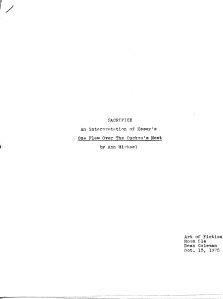
The title page of a much-lacking freshman attempt.

The title page of a much-lacking freshman attempt.

She did not coach us on thesis statements or methods of breaking the analysis into chunks of ideas supported by evidence from the text. Instead, she quarreled with our assertions, asked probing questions of our thin but possibly promising claims, and confronted us with the obvious. I was astounded by this approach to education, 180 degrees different from what I had encountered in high school. After Liz made her comments on my One Flew over the Cuckoo’s Nest essay, I picked up the book and immediately read it again–something I had never done before.

I had drawn parallels to the Christ narrative, a rather obvious way for a beginner to explore Kesey’s novel, but had completely failed to recognize that if you’re going to draw such parallels there comes a point where you need to recognize what the novelist does with the idea of “sacrifice”–what is gained (if anything) by it, and what purposeful and ironic twists the writer does to that narrative, and to what end(s). I was onto something when I wrote about the ‘earthly’ aspects of the characters but lost that thread in my allegorical pursuit.

My professor pointed out that I had “seriously limited the impact” of my paper’s argument–at that time, I had no idea that a literary analysis actually a form of argument–by transforming the novel into something it wasn’t, ie, a retelling of the Christ narrative. I love what she next wrote:

“That’s just not adequate to one’s experience of a novel in which earthly pleasures (the more earthly the better, it seems) are so unequivocally celebrated…[Kesey’s] vision of triumph has very much to do with being alive–his communion is with the juices of life.”

The communion with the juices of life! She wrote that to a 17-year-old. I’m not sure I got the full impact then, but I sure learned a great deal from her feedback both on the page and in class. And I did begin to write better, more argumentative, more logical papers. It wasn’t the simplest way to learn how to do a close read; but then, a close read of classic literature should reveal complex insights. I had to fight my way through my own assumptions and bad logic. I had to learn to read again, and at first I felt that analysis would destroy the joy I took in reading; but that’s only true if you are unlucky enough to have a professor who insists that the students’ interpretations align with the teacher’s opinions.paper002

Dr. Coleman has strong opinions about literature–and education, and political engagement, and many many other subjects. Yet I never felt she was pushing her interpretations onto us students; it seemed to me she was pushing me to do better work, to think more clearly, to read with more enthusiasm, with an alert mind. My engagement with literature, art, and much more owes a lot to her…I had always loved to read but had been in many ways a lazy reader.

I’m pretty much cured of that now!

Rights & responsibilities

I recently assigned a short reflection essay to my freshman college students. The topic was the rights and responsibilities of voting; I asked which mattered more to the student: the right to vote, or the responsibility to vote (or if they were equal in importance). I then requested that they explain their reasoning.

Let’s just say that I didn’t get too many deeply-considered responses, and I could mention that more than one student wrote about ballets instead of ballots.

But before I sigh too deeply or launch into a rant about the lack of interest young people show about governing the country, I must stop myself. After all, these students are 17 and 18 years old. They have not felt engaged in the process of self-governance of any kind–with a few exceptions–including the responsibilities of adulthood in most of its forms. They are still being financially supported by their families. They have meal plans, so they seldom have to go food shopping, budget their dollars and their nutritional needs, or worry about going hungry. They are emerging from the narcissistic and peer-driven teen years and haven’t had much reason to examine public policy or how it affects them. They haven’t learned yet about fallacies, straw men, slippery slope reasoning, ad hominem attacks, circular arguments, and the ways certain uses of rhetoric can persuade us from rational paths.

They do not usually even understand rationality. They are all emotion and denial, but there is an underlying current of curiosity beginning to stir in their souls. Usually.

At least a few of my students, all of whom are “beginning” writers who lack confidence in written expression, produced brief reflections on what rights are and how they differ from personal, cultural, community, or social responsibilities. Even the least reflective students recognized that the Constitutional right to vote is crucial to a democracy; the more adventurous students argued with themselves about how important it is to “vote well” (ie, to be an informed citizen when one casts a vote). A few decided that if a person votes based on looks or culture or without an understanding of the issues or of how our government operates, that citizen is irresponsible, and it would be better if such citizens refrained from voting.

Then, most of these students added that they would not be voting this November, because they are uninformed.

If my classroom is representative, the US presidential candidates have not been effective among the youth vote. There were a number of students, however, who felt that the privilege of voting is so significant that they fully intend to vote in this election (their first ever); and they say they intend to inform themselves of the issues that matter both to themselves individually and to the nation as a whole.

One-fifth of my class plans to vote. Voting turnout usually runs from 36% to 55% nationally–I have looked at several sites and gotten conflicting numbers–so my students indicate a lower-than-average turnout rate. I hope that after they’ve spent four years in college and taken philosophy and marketing and communication and history and criminal justice courses, they will be more likely to participate in the “responsible” part of being a citizen who has the right to vote.

Here’s an amusing interactive site where anyone can learn a thumbnail definition of logical fallacies: http://yourlogicalfallacyis.com/