Enter the philosophy paper…

My “day job” at a small university is part administrative, part teaching, part assessment, and largely tutoring in writing. The last of these requires a peculiar balancing act, because my directive says I must not tutor discipline content; I have to tutor students toward “clear expression” while staying within the areas of grammar, spelling, vocabulary use, assignment interpretation, thesis writing, paper structure, and documentation. As a job description, that all sounds quite clearly delineated and objective enough, but writing well cannot happen when the writer fails to understand content material. Enter the Philosophy paper.

In any discipline, it’s difficult to separate tutoring “clear expression” in terms of grammar and vocabulary without also tutoring content. With philosophy that process is especially challenging, because to a large extent, philosophical understanding (content) relies on grammar (rhetoric). A student can contradict himself simply by neglecting to type the word “not” in a sentence, rendering his attempt at argument void. Or a student may announce she will use one approach to prove her claim and then prove the claim, quite adequately, with a different (and opposite!) approach.

This bust resides in the Louvre, and was found here: http://www.humanjourney.us/greece3.html

This bust resides in the Louvre, and was found here: http://www.humanjourney.us/greece3.html

Cases like these cause me to ponder. How can I coach the writer without offering a content-based answer? Philosophy itself supplies the method: inquiry.

“So, you say here that because Locke believed in Natural Law, he would not apply Natural Law in the case of the social contract. Can you explain that statement? Because it seems as though you are contradicting yourself, unless you accidentally added the word ‘not’ or unless you have more to say after this sentence…maybe, why he would not do so?”

“Here, you do a pretty good job explaining why beauty is in the eye of the beholder, although you need to pay more attention to your use of the comma. But back at your claim in paragraph one, you say you will prove beauty is transcendent–and your definition of transcendent doesn’t work with your argument in paragraph three…do you mean beauty is not transcendent? Did you forget a word, or are you missing a paragraph of explanation?”

When the science students or economics students bring papers to me, it is, I admit, much easier for me to stick to grammar and mechanics. The same sorts of logical structure or argument issues crop up, however. Sometimes, I feel as though I am right on the borderline, and sometimes I think I’ve teetered a bit too far into content tutorial–especially when the students are writing about history, philosophy, literature, or philosophy. Yet would any philosopher disagree that you cannot completely disentangle grammar logic from any other kind of logic? They stem from the same root.
Humanities high horse

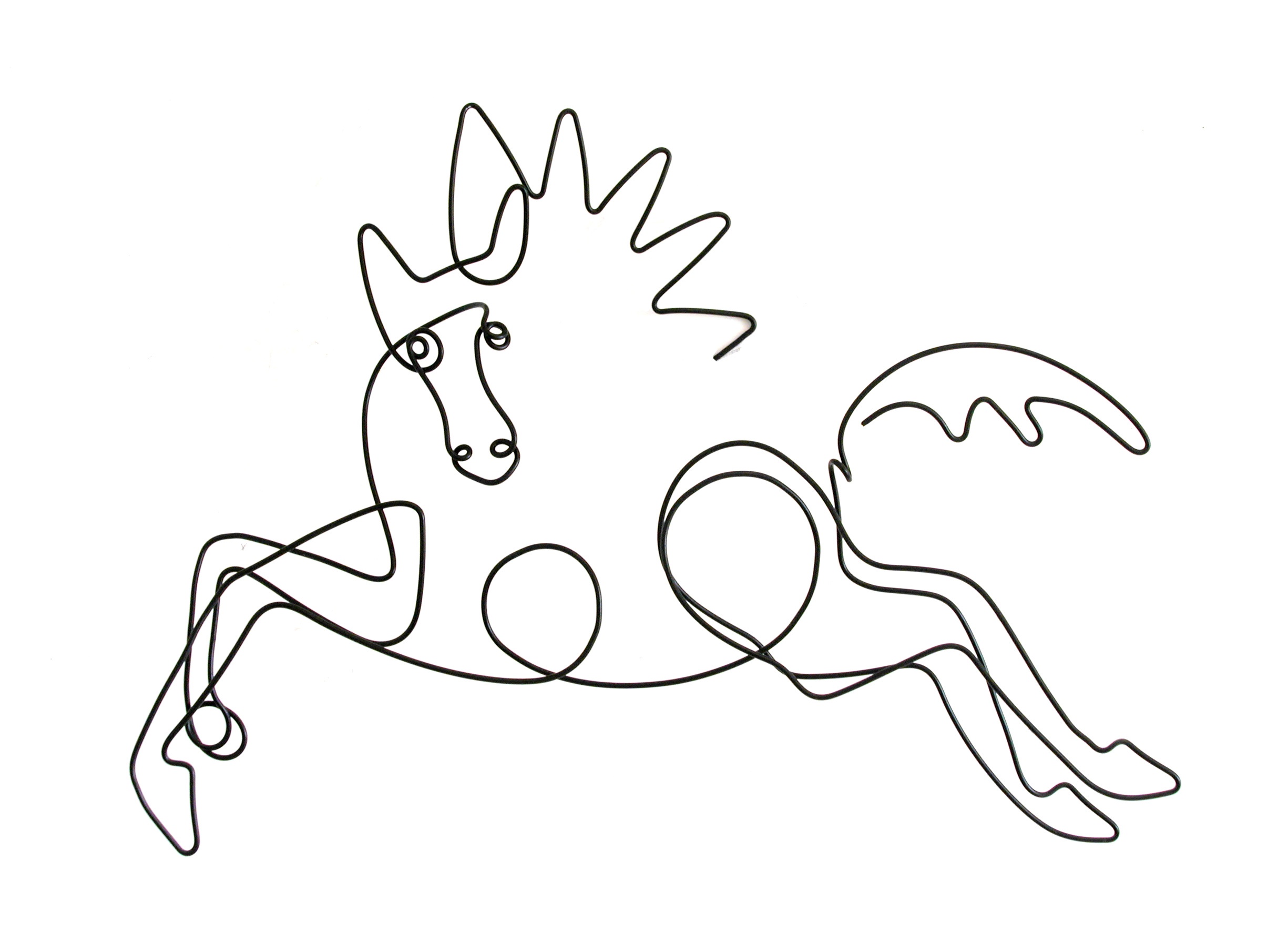
runninghorse2It is the Year of the Horse, and I’m on my high horse again about the value of the humanities and the liberal arts education.

A recent article in the Chronicle of Higher Education reports on studies concerning what preparation a liberal arts degree offers to students once they enter the workforce and suggests that the long-term outcomes (in terms of career and steady employment) bode very well. As I embark on another semester of trying to persuade sophomores that the study of poetry can offer some value to their lives, it helps me to know there is at least some evidence that I’m not just making this up!

~

Artwork source: Steve Lohman of LineArt Gallery; lineartgallery@gmail.com

Entitlement, humility, & self-esteem

Among my academic colleagues in the USA, I hear a refrain of grousing about so-called millennial students who, it is averred, perceive themselves as entitled to good grades, exceptions to rules such as number of absences, timeliness, and response to communication, and other “special treatment.” The general criticism goes along the lines of Kenrick Thompson’s letter to the editors of the Chronicle of Higher Education:

… I grew increasingly weary of all the whining, crying, excuse-making, and general lack of attention to responsibility that appear to characterize most of today’s college and university students. I began to sense a growing atmosphere of entitlement among a majority of my students, who apparently believe that society owes them an education. I even endured several instances of students’ insisting they should pass my course simply because they had paid their fees and purchased the required textual materials.

Thompson lays some of the blame for such behavior at the door of college administrators who care more about admission and retention numbers than about the whole package of education, which includes less-measurable outcomes such as personal responsibility and mature problem-solving. The Chronicle has published other essays on related topics, among them these by Elayne Clift and Frank Donohue.

Other critics have blamed Baby Boomer parents for overdoing positive reinforcement so that their offspring do not have to suffer from low self-esteem. These critics suggest the everybody-gets-a-prize approach has watered down the go-get-’em competitiveness formerly considered a hallmark of the individualist American.

The word “entitlement” pops up in a blog post by Toby Woodlief back in 2007, and certainly appeared in conversations I had with colleagues long before that; but there has been much general buzzing that this sense of entitlement is “a Millennial thing.”

What does entitlement really mean? Webster’s has three main entries, the third of which is: “belief that one is deserving of … certain privileges.”

I can therefore say that I believe I am entitled to something, and I can accuse others of feeling that way; but because the word is based upon the subjective sense (“feeling or believing” that one is “deserving of”), can I say for certain that other persons “believe that society owes them an education”? [Note, Thompson does qualify with “apparently”.] No one can independently ascertain what another person believes or feels. My students do not tell me they feel entitled to things.

Could this be just a problem of perception or point of view, as so much inter-generational sniping is? Certainly my generation received criticism for its youthful irresponsibility, though it was of a slightly different kind (drop out of the rat race, turn on, be free). Did we feel entitled to ignore the paths our parents took?

I wonder if the real reason older people feel so annoyed with Millenials is the perception that there’s so little humility among the young. Many people my age were raised with the Protestant ethic formula that one should be humble, and humility has long been valued by the Catholic church, as well. Humility is closely allied with shame, however–and even guilt, to some degree (original sin and all that)–giving us neuroses along with our humility. It depends, once again, on your sociological and personal outlook; I am not suggesting that humility is bad or good, nor that entitlement is bad or good. These are just extensions of feelings people have, of personal and subjective perceptions.

Blaming the young people, or blaming their parents, or blaming the culture, for that matter…none of it helps us to understand or to respect one another. And as fellow travelers on the planet, are we not entitled to at least an initial moment of respect?

A balance might be nice.

~

I work with 18-year-olds every day, and I enjoy them. This is not to say that I don’t occasionally wish to wring their necks or boot them out of their warm beds in the morning or remind them that I am not here to make them feel good about themselves for no reason other than their uniqueness. It does not dissuade me from doling out Fs when Fs are deserved (or, shall we say, earned) or reminding them, now and again, that most of their annoyances qualify as first-world inconveniences undeserving of hysterical rants.

I try to keep in mind that they are still learning about the world of other human beings.

In time, if they are mindful and observant and lucky, they should discover that the participation trophy for life is life itself–

IMHO   ;)

~

The poet & the Good

I have recently finished reading Robert Archambeau‘s collection of essays The Poet Resigns and am mulling over the idea of resigning with him.

It’s not that I necessarily want to give up writing poetry but that, in my reflections about where I can do the most good among the community of sentient beings, my work as tutor and teacher almost certainly has an effect both deeper and broader than my work as poet. This “good” hearkens to the ancient Good of Socrates, Plato, and their ilk but also to the sense of mindful “middle way” of the Tao: a practical path between two values that may be incompatible in many ways.

~

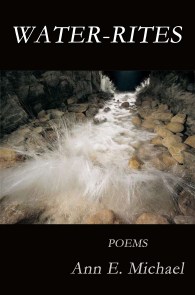
water-rites_coverThe readership for contemporary poetry is small, and my readers number only in the hundreds; among those readers, resonance of any kind–aesthetic, emotional, lyrical–is likely to be limited to a small number of poems. A poem of mine that effects some measure of The Good upon readers represents a minuscule good moving into the world. The net effect, I imagine, hardly registers…not that net effect matters so much. I suppose if a poem of mine moves just one person enough to evince even a small transformation, something has been achieved beyond my individual abilities in the composition of that particular piece.

As a teacher and tutor for the past ten years, my role expands not merely to number of people encountered (few of whom will remember me as an individual) but to the concepts I present to them, most of which will be significant in their lives one way or another–although not immediately, and probably unconsciously. Lately I have been devoting more of my limited energies to this aspect of my life work. Such focus does impede my ability to do creative work of other sorts.

~

This bust resides in the Louvre, and was found here: http://www.humanjourney.us/greece3.html

This bust resides in the Louvre, and was found here: http://www.humanjourney.us/greece3.html

Example: I am reading a little book on philosophy for beginners by Thomas Nagel. The Nagel book is on my table because I have been trying to find simpler ways to talk with students about their philosophy essays. While my main enterprise as writing tutor is to help students to clarify and correct their mechanical weaknesses (sentence and paper structures), it is not always possible to ignore content weaknesses; a student can write correctly about nothing of value–and receive a D or, in the case of Philosophy classes especially, an F.

But understanding philosophy is important.

Now, it is often extremely difficult for beginning writers to express their understanding of philosophical concepts in writing. They are just learning rhetoric and fall into fallacy errors through grammar as often as through thinking. Since I am not supposed to be a content tutor, I have to find ways to tease out what the student understands (or does not understand) and make that idea come through clearly on the page.

Kind of like mind-reading.

[Aside: I have to admit this can take a lot out of me by the end of the day.]

The Nagel book is one of several philosophy primers I have been reviewing to try to find a text to which I can refer my more confused students, the ones who cannot infer the basics from their professors’ lectures or assigned readings. There are academics who might suggest such students do not belong in college in the first place; but I believe in the ideal of an educated populace, and whether or not these students stay in the university through graduation, they can benefit from the discipline of thinking about thinking.

It feels rewarding when, after half an hour of discussion and writing coaching, a young person leaves my office slightly more enlightened. So they tell me, anyway. I know from experience that writing about something helps a person to understand not only the subject but, more importantly, what the writer thinks about the subject.

~

So perhaps my creative energy is better served in the direction of others through tutoring than through poetry; perhaps the former leans more toward the Good. Perhaps I am a better tutor than poet; this is indeed likely, although I have been poet-ing longer than I have been teaching. Then again, not to knock the art of teaching, but writing poetry is much more difficult than the teaching I do. And I get paid to enlighten people through my tutoring.

Not so through poetry. Indeed, Mr. Archambeau–you have gotten me seriously to think about tendering my resignation as a poet, though not without considerably more reflection on the possibility. Writing about the idea has helped me to understand where the Good fits into all of this, and what the middle way might be.

Now, I suppose I could write a poem about the subject…

~

Autodidact as adult student: Goddard & me

In a previous post, I mentioned my peculiar undergraduate experiences at alternative institutes of higher education (The New School) and how being a book-loving autodidact influenced, perhaps even configured, my approach to education. My favored learning strategies led me to a non-traditional graduate school program, as well. Reflecting upon my higher education, I realize that every institution I attended chose alternatives to standard pedagogy–and I am grateful that such colleges exist. The world needs outliers.

A kind of heaven.

The New School’s pedagogy for the “Freshman Year Program” was seminar-based. That worked very well for me. Classes were small, discussion-centered, predicated on the reading of significant original texts–no textbooks. The professor was not a lecturer but a participant-coach and mentor.

The program was only a year long, however, so I had to transfer. There were a number of experimental college programs in the 1960s and 1970s; without the miracle of internet searching, however, they were not easy to locate. I did not find out about St. John’s College, Reed, or Evergreen, for example. I stumbled instead upon Thomas Jefferson College (now defunct) in Michigan.

I completed my undergraduate studies without ever seeing a syllabus. Yet I read more books than the majority of my standard-pedagogy-educated peers and discussed classic and contemporary texts, science and history and literature, in depth with my peers and with scholars. I wrote a lot and did hands-on projects, independent studies, experiments and interviews. TJC drew criticism for its ‘flakiness’ and ‘lack of oversight,’ (some of which, I can attest, was deserved); however, the former college president “described TJC as perhaps too far from the mainstream, but attracting excellent students, noting that ‘Thomas Jefferson College…was sending a larger percentage to graduate school than the College of Arts and Sciences.'” Yes, but in my case it took awhile to get there.

Much water under the proverbial bridge: suffice it to say that in 2000, I returned to college to pursue a masters degree…and I wanted to learn in the kind of environment that suited my style. There were other factors then, as well: two children, for example, and responsibilities I had not encountered as an undergrad. On the other hand, by 2000 I was an adult and more motivated and disciplined than I could ever have been at age 19.

I chose Goddard College for a number of reasons, foremost its small seminar-style instruction, its mix of workshops and instruction, its focus on readings, annotations, mentoring, and community-building among students and faculty–reaching outward into the world at large. The low-residency format only works if the student is independent and self-directed, which–as a returning, “adult” student–I certainly was. I appreciated the school’s more interdisciplinary approach to the creative writing program. We didn’t have to face off, pegging ourselves as poets or fiction writers. And creative non-fiction was taken seriously as a genre to develop voice, style, and depth…it could be studied and parsed. That endeavor of interdisciplinary arts education is true of a few institutions now but was rather new among MFA programs in the late 1990s.

Another college without core requirements, without syllabi, without standard formats. But, like New School and TJC, Goddard offers excellent professors dedicated to students’ intellectual enrichment and personal transformation, small-group discussions, and narrative evaluations. I knew how to balance life’s responsibilities when I enrolled, and I knew what kind of teaching I’d respond best to. How did I learn that? See above. Suits my philosophical, bookwormish, autodidactic approach to–well, practically everything!

Irritation, explanation, interpretation

I had another testy conversation about poetry analysis recently. Hence, this brief explanation, rationale, and license to interpret.

Feeling a mild irritation...

Feeling a mild irritation…

I truly sympathize with people who prefer to avoid any sort of literary analysis; so many times, it is such a badly-taught subject. Nevertheless, it is never a good idea to refuse to learn about something thanks to one or two negative experiences. If that were the case, no one would ever learn to walk (we fell down, we cried, we refused ever to rise up and take another step).

First, let go of the idea that the purpose of literary analysis is to understand exactly what the writer meant. Second, let go of the idea that poetry contains a symbolic hidden meaning.

Instead, recognize the following fairly obvious observations:

1] the poet wrote what he or she meant; the reader can interpret on the reader’s terms.

2] the meaning is in the poem itself.

Poetry is a form of communication, and it is not a detective story. The poet said what he or she said because the poet determined that was the best way to communicate the experience.

Problem: You, the reader, fail to understand the poem. All that means is that you and the poet may be speaking in different terms and that, to you, the poet’s determination of the best way to say what he or she meant does not convey much. Welcome to the world of human interactions.

The reader has choices: turn the page, for example, and ignore the poem. Or read the poem and find its sound or rhythm entertaining. Or read the poem for its summary–the top-line story, if there is one. Or relish the poem’s mood or use of language. Or its images.

Or throw the poem across the room in frustration or anger. Poetry is powerful enough to evoke such responses.

You could also try to examine the poem, look at how the poet uses rhythm or sound or language or image or metaphor or rhyme…you might learn something about how a writer puts a poem together; and even if you do not manage to shoo the “real meaning” out from under a chair, you may be able to come to terms with the poem in your own way.

You are permitted to interpret what the poem means for you.*

~

*CAVEAT: This approach may not get you an A on your analysis paper (though it might), but it will serve to enhance your lifelong appreciation of the poetic art.

Gratitude & Qigong

My mother is still living. I am grateful for that.

My mother and I get along well. In that, we are fortunate.

Furthermore, although she is an octogenarian, my mother is in reasonably good health. Another reason for gratitude.

Her interests are varied, and she’s willing to try new things. My mother has always been quietly innovative about life. She has pursued alternative therapies for health and emotional well-being, read difficult texts, studied disciplines and subjects that challenged her, traveled the world, lived in foreign lands.

Mostly, she has been a care-giver of one kind or another. This past weekend, I took my mother with me to a Qigong and Mindfulness retreat, thinking she could use a couple of days of restorative practices and a little time off from care-giving for others in order to care for herself. In addition to several hours of “medical qigong” (Yi gong), we learned some practices for spiritual qigong (Tao gong), got information about implementing a plant-based diet, observed a tea ceremony, tried our hands at Chinese bamboo brush painting, and followed a labyrinth path in a walking meditation. It was quite a significant conclusion (of sorts) to my recent weeks of thinking about consciousness as presented by various “Western” thinkers on the subject.

Yin-Yang

Kirkridge Retreat Center hosted the weekend. Kirkridge’s organization is dedicated to peace, compassion, and community–to the concerns of social justice and to individual healing. It is a peaceful place, located on a steep, wooded hill. The setting alone fosters a sense of restorative energy. Our teachers were excellent, informative, and full of grace. The meals were terrific. The crickets sang sweetly and the moon shone amidst the clouds. My mother and I felt grateful for the event, the weather, the place, the people, for the breaths animating our bodies and for one another.

Gopnik enters the English major fray

The New Yorker‘s columnist Adam Gopnik contributes his views about why the English major does or doesn’t matter in the blog accompanying a recent issue. He says, in response to apologists (like me) who contend that English, literature, and the humanities generally contribute to a person’s life experience in subtle, long-term ways:

Well, a humanities major may make an obvious contribution to everyone’s welfare. But the truth is that for every broadly humane, technological-minded guy who contributed one new gadget to our prosperity there are six narrow, on-the-spectrum techno-obsessives who contributed twenty.

Then he points out:

Nor do humanities specialists, let alone English majors, seem to be particularly humane or thoughtful or open-minded people, as the alternative better-people defense insists. No one was better read than the English upper classes who, a hundred years ago, blundered into the catastrophe of the Great War. (They wrote good poetry about it, the ones who survived anyway.) Victorian factory owners read Dickens, but it didn’t make Victorian factories nicer. (What made them nicer was people who read Dickens and Mill and then petitioned Parliament.)

Okay, he’s a bit broad and snarky there–but that’s his style. And nonetheless, Gopnik argues for space in society–if not necessarily in the academy–for the study and discussion and obsession with books and literature. He claims that “the best answer I have ever heard from a literature professor for studying literature came from a wise post-structuralist critic” who said the reason he was a literature professor was because he had “an obsessive relationship with texts.”

I would agree with that reasoning, though I am not a post-structuralist, so far as I know.

I believe that education ought to allow us to follow our passions to whatever logical or surprising ends appear. In light of the huge expense of a university education in the USA, however, perhaps the best question to ask is how to motivate citizens to pursue education individually (see my post on autodidacts). Gopnik calls the estimable Dr. Johnson “the greatest English professor who ever lived,” though he never taught in a university and though his title of “doctor” was honorary, and reminds us that other antecedent writers-on-literature, such as Hazlitt and Sydney Smith, “had to make their living doing something else narrowly related.” Colleges at least offer some employment and a modicum of respect to the humanist interpreters and researchers among us, but we need not be employed by the academy to exercise our obsession with books. That can be done on our own.

Dr. Johnson

Gopnik adds this lovely, wise sentence near the close of his column, and I wish I could convey the value of his idea to every college student I advise: “You choose a major, or a life, not because you see its purpose, which tends to shimmer out of sight like an oasis, but because you like its objects.”

Poems, stories, paintings, sculpture, dance, philosophy, books, books, books…I don’t know my life’s purpose, but I know the “objects” that entrance me.

English major argument redux

Yet more weighing-in on why one might wish to choose to major in English as an undergrad, this time from Mark Edmundson:

http://chronicle.com/article/The-Ideal-English-Major/140553/?cid=cr&utm_source=cr&utm_medium=en

Edmundson writes:

Real reading is reincarnation. There is no other way to put it. It is being born again into a higher form of consciousness than we ourselves possess. When we walk the streets of Manhattan with Walt Whitman or contemplate our hopes for eternity with Emily Dickinson, we are reborn into more ample and generous minds.

(He even quotes Heidegger!)

This does not mean all English/literature/humanities folks think alike. In fact, the beauty of it is, we all think differently.

More on the English major

The New York Times commentator Verlyn Klinkenborg recently wrote about the “decline of the English major” in an opinion piece titled “Why the Humanities Still Matter.” I am offering a link to the letters to the editor concerning that essay [which includes a link to the opinion piece as well]:

http://www.nytimes.com/2013/06/28/opinion/why-the-humanities-still-matter.html?emc=eta1&_r=0

Another article, this time in the Chronicle of Higher Education, makes the point that employers often want qualities in their employees that the English major supplies…but that employers may not realize that! (One commenter suggests students major in business or biology or whatever and minor in English).

Those of you new to my blog may wish to look at the archives here on this topic, which include:

“Reasonable, Calming” http://wp.me/p1RDyQ-go

“Just-so” http://wp.me/p1RDyQ-cI

“Defending the Poetry major” http://wp.me/p1RDyQ-6z

“Learning the literary analysis” http://wp.me/p1RDyQ-je

“Philosophy & English are friends” http://wp.me/p1RDyQ-hk

I’m a philosophy and literature major who is also a poet; and I’m not starving to death, and I like my job. Can the cynics please stand down? Learning matters. True education makes us into better thinkers. Society benefits.

End of story. Now, go read a book!