Poetry online

Suddenly the humidity rolls away and the temperatures drop and, with shorter days, the tomatoes stop ripening. Some of them start to rot on the vine; it’s time to start pulling up vines and cutting down sunflower and corn stalks. The meadow continues being gold with solidago, but robins start flocking in the lawn and there are no more fireflies, cicadas, or catbirds. Karina Borowicz’s poem “September Tomatoes” captures the feeling perfectly: “The whiskey stink of rot has settled/in the garden, and a burst of fruit flies rises/when I touch the dying tomato plants.”

I’m happy to note that three (yes! Three!) of my poems, all of them fairly new, appear in Issue #74 of Canary A Literary Journal of the Environmental Crisis. While it’s unsettling that we’ve come to a time when poems about how we’re finding ourselves in environment crisis seem necessary, I’m grateful to Gail Entrekin for editing Canary for many years. And glad to have my poems in its virtual pages. Poet/writer Lynn Levin, whose work I’ve long admired, told me about Canary; I enjoy reading each issue, and the back issues as well. It’s nice that Entrekin keeps the archives of previous issues accessible to readers.

Header image for Canary Literary Journal

Which brings me to what I’ve been reading lately, because I continue to re-read from my poetry library. This week, it’s Adam Zagajewski. But I should mention that I read poetry online pretty much every day, usually on my laptop because the cell phone is just too small and often screws up line breaks. (We poets spend enough time considering line breaks that tech formatting should never decide lineation for us!) Reading online poetry journals lets me keep up with contemporary poetry and learn about poets I might have otherwise missed–such as Borowicz. I found “September Tomatoes” online when looking up something else.

While I hope there are legions of people who read poems online, I suppose readership of literary journals tends to be niche. I hereby encourage you to Google “online poetry journals” and browse a bit. Look at their archives. Google a new poet whose work you admired. Keep reading!

I love books, but certain aspects of the world wide web enable us to find art, music, writing, dance, and so forth that we might overlook otherwise. I’m reminded of how I used to (still do, actually) enjoy dictionaries and encyclopedias when those were the simplest, most accessible forms of compiled and aggregated information for the layperson. I’d open the tome to look something up, and then find something intriguing or distracting, and read about that, which would get me interested in finding out more about something else…or, I’d look for one bit of information and discover a background far more fascinating or that I was unaware of; yes, the old down-the-rabbit-hole effect has been around since long before we had Wikipedia and its ilk.

And that network of educating ourselves, of defining our terms, trying to satisfy our curiosity, questioning our assumptions–that goes far back into human history. The technology behind the technology is cerebral.


Re-reading, re-learning

Circumstances being what they are, too numerous to mention here, I continue amid distraction and creative malaise. To counter the mood, and to educate myself, I turn to poetry. Often I buy or borrow books that are new to me for excitement or inspiration; this month, I’ve decided to do some re-reading. Since I’m not writing much myself these days, and not too thrilled with what little I have been drafting, it seems time to re-examine poetry that I really admire. Maybe I can learn a few things.

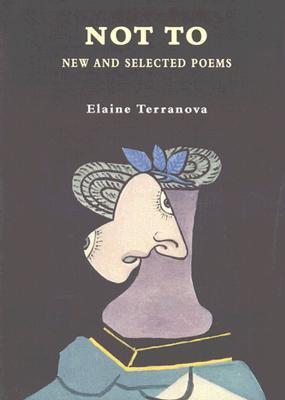
I’ve long been a fan of Elaine Terranova, whom I met many years ago in Philadelphia. I have all of her books but the latest (and will get to that one soon), but the one I’m re-reading is Not To, New and Selected Poems, which came out in 2006 and which contains selections from The Dog’s Heart, Damages, The Cult of the Right Hand, and from her early chapbook called Toward Morning/Swimmers –as well as about 80 pages of what were then new poems.

I don’t want to do a book review here, nor am I interested in poetry analysis right now. The reason I’m re-reading these poems with care and interest is to endeavor to understand why I appreciate her work so deeply. For one thing, Terranova consistently surprises me, but with quiet surprises. The turns in her poems are seldom the powerful, swift changes of mood, direction, or language that I like in many writers’ work…but they are there, and their subtleties and reflective twists engage me in ways perhaps more lasting. Because I have to think about where the poem chose to go, and how it got there. It’s not merely ambiguity, though sometimes the closure’s ambiguous, it’s because the last lines of Terranova’s poems feel so right to me. They don’t always circle back to an image or idea in the opening–sometimes, they travel quite a distance away. And I love her observations and the occasional aside that seems to break the fourth wall:

...Once a squirrel
dropped through the chimney into the whole
ruined civilization of the basement. Here,
I'm taking the squirrel's viewpoint.

That’s from “Small Hours.” How terrific is that–the ruined civilization of basements? And the little comment that suggests indeed, the squirrel has a viewpoint. This poem ends 8 or 9 lines later with the sense of “being swept up/and contained in my bed” but the image she chooses is that of a child on a bicycle, which (to this reader) evokes memory and those hours we find ourselves in the somewhere-else of sleep and remembrance. No statement. No whole-poem metaphor. How did she come to those closing lines? Why do they work so well?

I want to learn that.

~

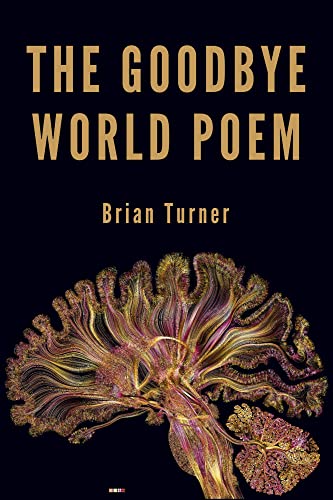
Brian Turner’s book The Goodbye World Poem is another re-read and feels utterly appropriate for a time of personal losses and deep reflection. And thankfully, it’s also a reminder of joy. These poems were written after the deaths of Turner’s wife (poet Ilyse Kusnetz), his father, and his best friend–truly, how does one find the means to say anything at such times? Yet somehow, Turner produced a trilogy of poetry books: The Wild Delight of Wild Things, The Goodbye World Poem, and The Dead Peasant’s Handbook, all published in one year (2023). Exploring what grief feels like has a long history among poets, and Turner’s work reminds me, in topic, of such collections as Donald Hall’s books Without and The Painted Bed, among others; Turner’s poetry is quite different from Hall’s, but the pain of loss and the gratitude for memories of the loved one are similar. And his work differs a lot from Terranova’s.

What do I want to learn from Turner’s poems, what is it he can do in these works that I would like to learn how to do? I love that I learn things in his work, information about whales, jellyfish, swamps, science. His work is usually narrative, doesn’t pretend to be anything but personal and memoir-based. Use of the first-person in poems doesn’t necessarily mean the poem is the writer’s experience or even her own memory/story, but it’s difficult to imagine Turner’s poems as being a stand-in persona. The imagery may offer metaphor but sure feels like “I saw this, I observed that.” Real stuff. Real life. That can get old in poems–but Turner keeps these observations new. Again, there’s reflection in the work that takes us past the surface words, tries to get the reader to find a way in to this grief, this loss, this mix of human feelings.

I think what I like in this work is how Turner acknowledges and presents the mix of human emotions and the movement toward compassion for the sufferer, whether the person suffering is a dying loved one or one’s own distraught and agonized self, whether the sufferer is an animal or a place (environment, region, biosphere). His poem “Fallen Giants” just gets to me each time I read it. It can be read almost as non-fiction prose, though it is lineated–long lines–and uses rhythm and repetition carefully. But, in fact, the poet is describing what whale fall might be like as the huge carcass descends through the silent ocean. And knows that whales are intelligent and can grieve:

...They fall into a hunger they cannot imagine,
with the sound of loved ones in their ears, calling to them, sonorous
and mournful, the pathos undeniable, and mournful because called out
for love's sake, the fluid world a conduit for the voices of these giants,
who sound themselves across the globe, across generations, speaking
to their loved ones...

This poem closes with the image of whales’ huge lungs, how they hold their breaths until they ascend “to the surface/ with a terrific blast of exhalation, a kind of announcement to the universe/that they were here, on planet Earth, a presence in this world, alive.” Compassion for whales that feels like compassion for human beings, for the earth, for the universe. I want my poems to acknowledge and evoke compassion in readers, remind them that the world is complex, beautiful, though often sad. And that it is good to be alive in the world, if only for awhile.

~

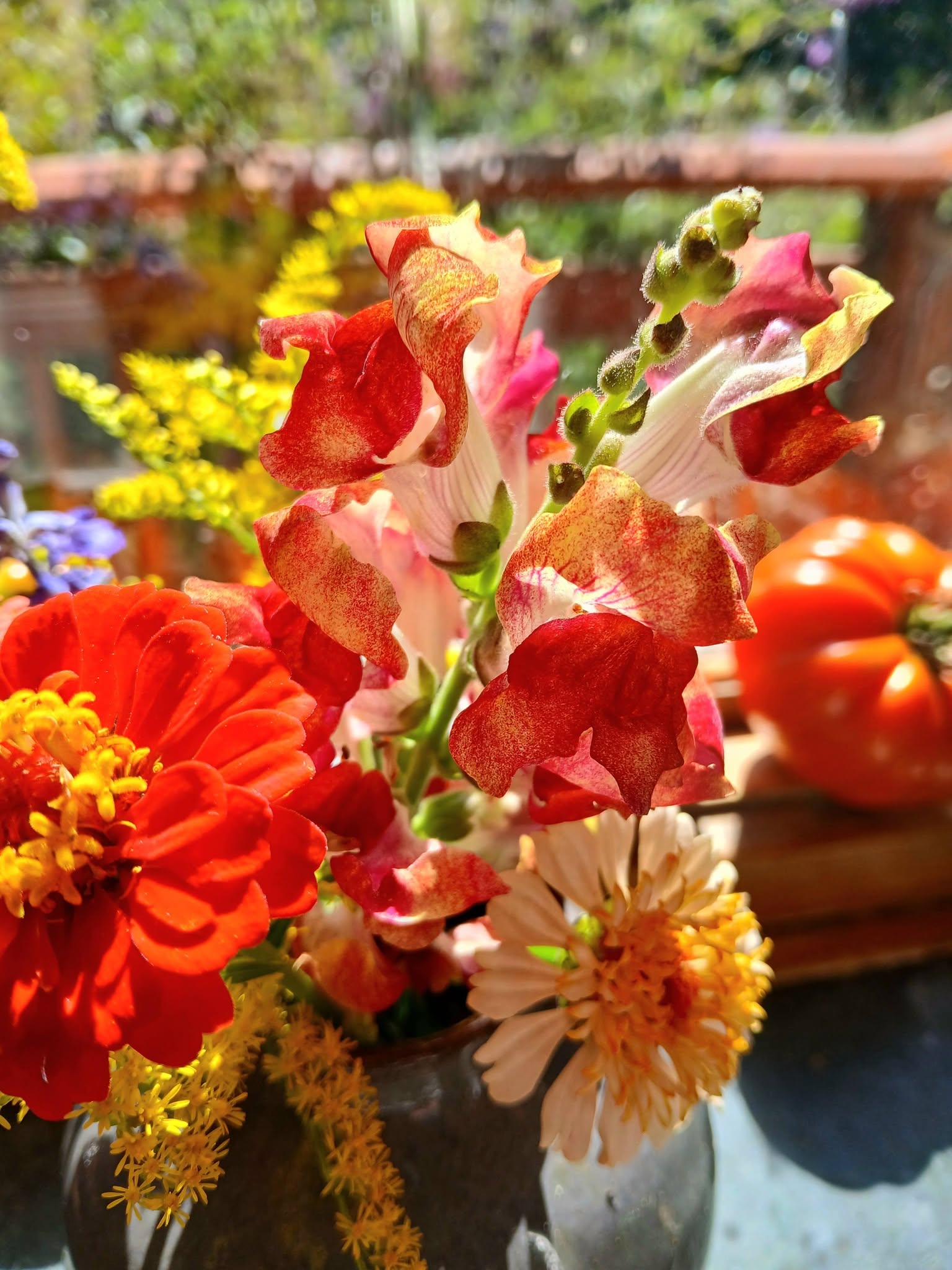
From the late summer/early autumn garden, several beautiful reminders of what life on Earth can offer. I recognize very clearly that not everyone has the good fortune to have a life that gives them bright flowers and ripe tomatoes. So I will be grateful today.

Radio Nowhere

Some days, this, from Bruce Springsteen…

I was tryin' to find my way home
But all I heard was a drone
Bouncing off a satellite
Crushin' the last lone American night
This is radio nowhere, is there anybody alive out there?

~

You get older, you recognize that technology is changing, you grew up with the radio and now there are podcasts and streaming platforms and what-all, which are sometimes a pleasure but also not what you were used to; there are so many ways to reach out to somebody, and smaller and smaller chances that anyone is picking up on your wavelength (https://www.youtube.com/watch?v=uSChVd3yQ_A). You’re not lying on the beach with your friends listening to your transistor radio or boombox or mixtapes or iPod. Maybe you need a little more silence and a little less popular culture in your life, maybe you need a coffee meet-up now and then with your besties, maybe you need a long walk in a quiet woods and no headphones or earbuds. Maybe no one is listening.

Maybe you’re feeling like Radio Nowhere.

If you happen to be a writer, do you find there are times you doubt your audience? Are there readers (of your work)? Do they bother to pay attention, maybe for longer than 20 seconds? Can you name some people who support what you do as a word-artist? –I hope the answer to this is yes, but sometimes that dead-air drone of a satellite picking up no signals can feel discouraging. Literary journals that don’t get back to you for many a month; independent presses that offer no feedback for why they kept your manuscript for a year and then rejected it; I could go on, but you get the picture.

And maybe the problem, if there is one, is that you’re not keeping up. No dedicated website, not enough social media presence, no X thread, no podcast, no Tik-Tok book launch, no visual excitement. I mean, I get it. One reason I left academia when I did was that the university was making a change in its education LMS platform. I would have had to re-do all my tests, assignments, syllabi, etc. to mesh with the new platform, which would have required hours of Zoom and in-person training for which I would not be remunerated. Oh, that and the spectre of ChatGPT/Claude. And fibromyalgia symptoms taking over my days.

Nope.

I’m just going to sit with this knowledge for awhile, see whether I can balance 1) my desire to reach people through poetry in books and journals and online with 2) my desire to opt out a bit further from the popular culture that I and most US citizens grew up with. Poetry and popular culture overlap occasionally but not often [Rupi Kaur & such like], except in the poems themselves, since poets can hardly help but live within their cultures/societies. In contemporary poetry, I’ve seen references to cell phones, credit cards, artificial intelligence, smart cars, social media, celebrities. Heck, I have used those things in my poems. I love the metaphorical possibilities of the GPS, for example.

For thousands of years, poems contained images of goats, sheep, horses, chariots, shrines, birds, hearths, wells, orchards, and other things observed in the world of those writers’ contemporaries. Surely poetry can include a far wider range of images, metaphors, content, commentary! So poetry evolves within culture; I cannot ignore the things of this world. I continue working on achieving some kind of acceptable balancing act.

Even if I can’t quite keep up.