Hornworms

Late summer, and this year the tomato hornworms are out in force. I have mixed feelings about these creatures, because once they hatch into hawk or sphinx moths, they are wonderful pollinators for many plants, fascinating to observe as they hover like hummingbirds over the buddleia. But as caterpillars, do they have to be so damned voracious? Most years I can remove them to places far from the vegetables or snip them in half, but sometimes–like this year–I resort to spraying tomatoes with Bt.

We are having a wet August, however, which is a problem for Bt application: I have to keep applying it after every rain. Not to complain of rain in August–so much more welcome than drought. I always look for hornworms to remove them by hand, but they are so good at camouflage that I’ve only found three so far, and two of those were carrying parasitic wasp cocoons so were not going to live to do much more damage (I removed them anyway). Yet each morning I find further “pruning” of my plants. Sigh.

It’s not a big problem, really. My tomatoes have been going wild this year, with plants 7 feet tall, 8 feet in circumference, all of them loaded with fruit. I should not mind sharing with a few very hungry caterpillars when, after all, I’m loading my friends with tomatoes and making more sauce than Best Beloved and I can possibly consume in a year. And yet, it is rather annoying. So I was scouting the internet when I found this blog from Brie Arthur re hornworms. It’s a nice overview and shows “both sides” of hornworm invaders (though as she is in North Carolina, she has tobacco hornworms on her tomatoes).

Hornworms bring to my mind two very astonishing Stanley Kunitz poems written from the worm’s viewpoint. A tricky task, taking the persona of a non-human and still avoiding the more common issues of anthropomorphism. Kunitz, a master, pulls it off. Here is an excerpt from “Hornworm: Autumn Lamentation.”

~

All day, all night, I carry on my back
embedded in my flesh, two rows
of little white cocoons,
so neatly stacked
they look like eggs in a crate.
And I am eaten half away.

If I can gather strength enough
I'll try to burrow under a stone
and spin myself a purse
in which to sleep away the cold;
though when the sun kisses the earth
again, I know I won't be there.
Instead, out of my chrysalis
will break, like robbers from a tomb,
a swarm of parasitic flies,
leaving my wasted husk behind.

~

I encourage you to read the entire short poem. So layered. And it gave me new respect for the animals that eat the same things we want to eat, who can blame them?

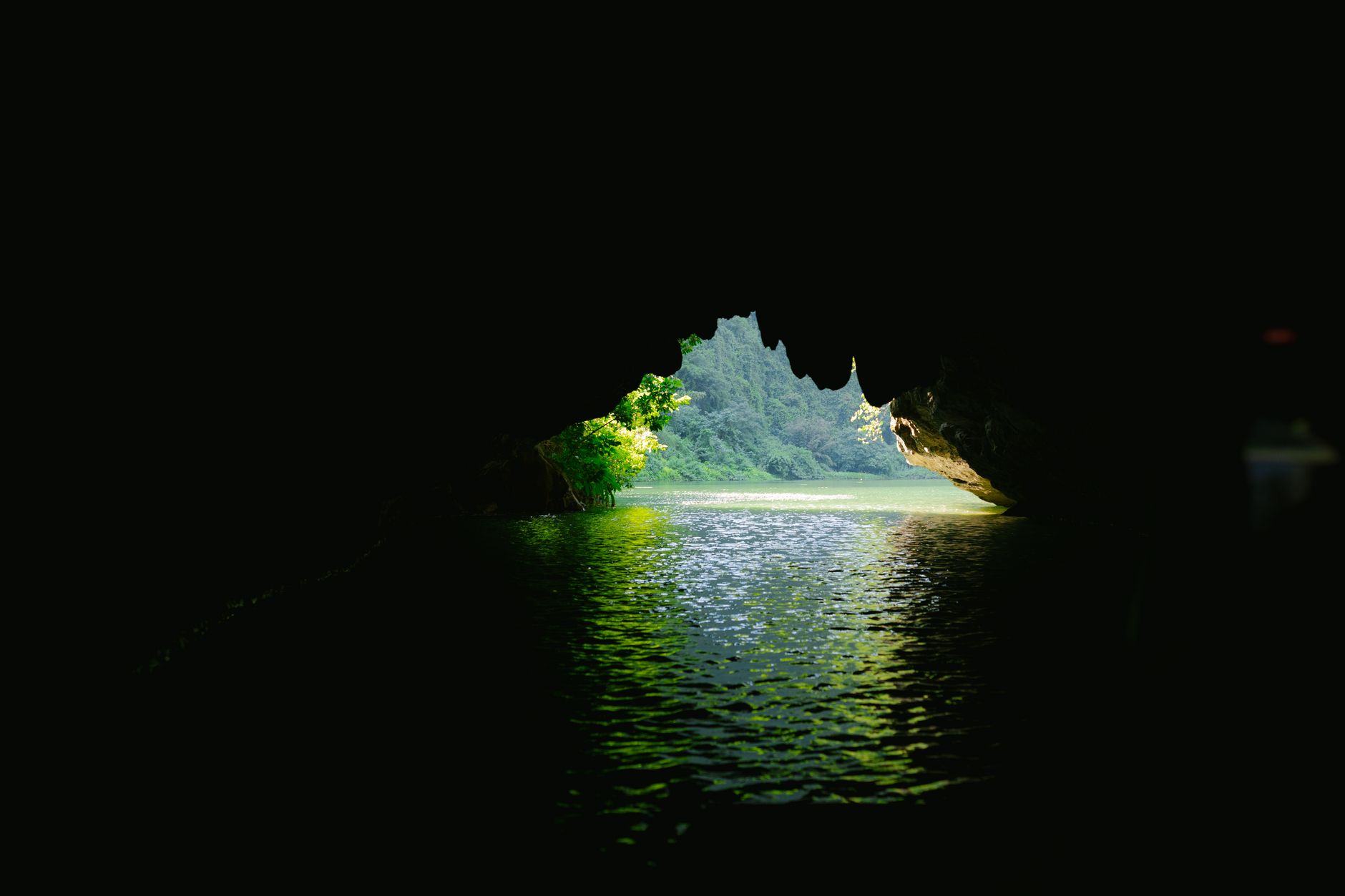
Photo by Chris F on Pexels.com

Comfort in words

July was a tough month and August is busy, so I won’t be reading 31 poetry books for the Sealey Challenge this year. I have managed to read two lovely collections from Jacar Press, however, that will stay with me for awhile. And Kudos to Richard Krawiec for establishing Jacar and its fine catalogue of books.

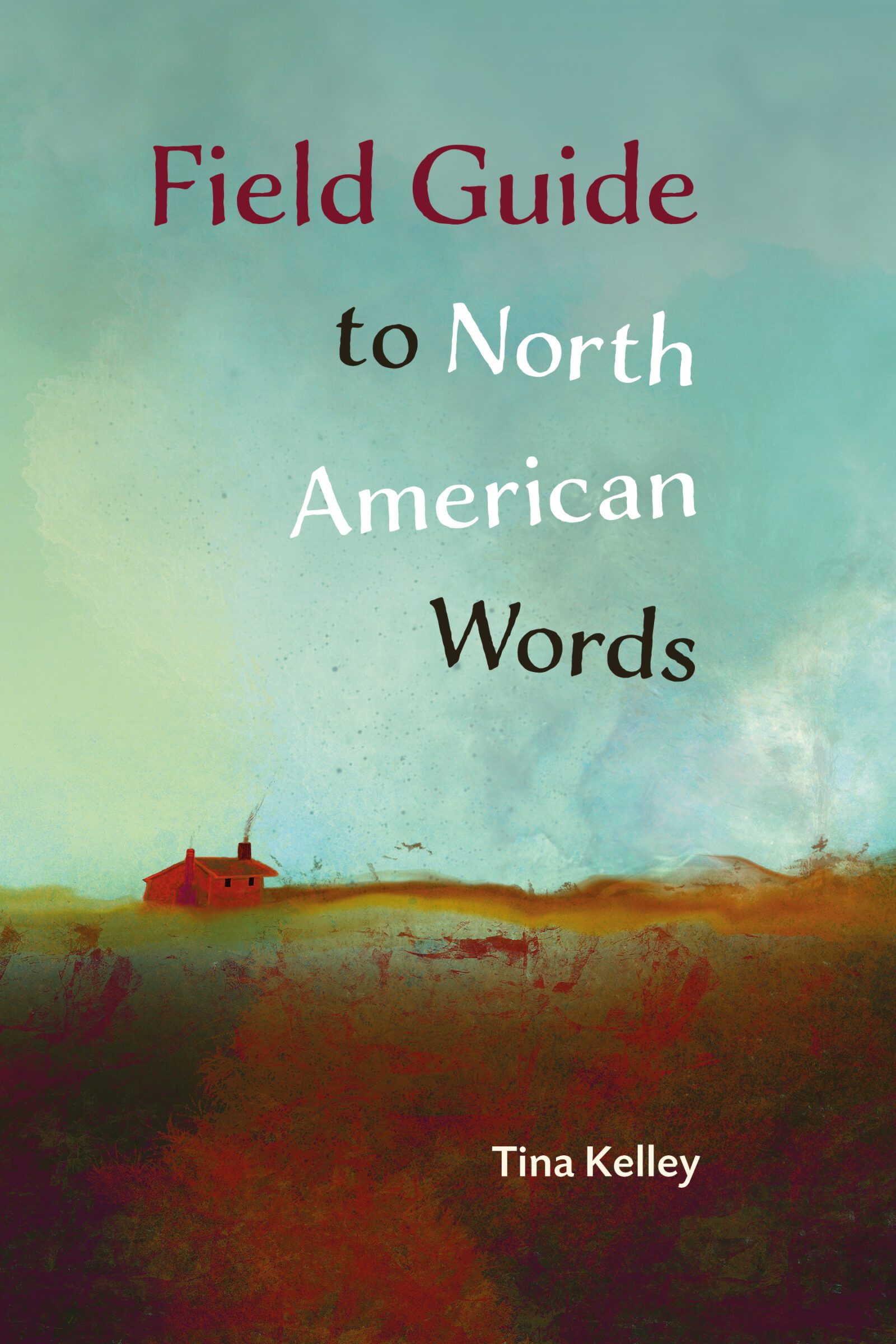
When my Best Beloved saw the title of Tina Kelley‘s latest collection, he thought it was a sort of dictionary-field guide and was slightly disappointed that it is poetry. There’s nothing to disappoint in this collection, though, and it really is something of a field guide–it’s full of interesting words that describe what we didn’t know there were words for, and full of speculations about meaning and inquiries into etymology, and a few puns and other sorts of wordplay. Kelley has written more prose and journalism than poetry, but her poetry never overplays the cleverness of her thinking; the balance of thought-provoking and incisively intelligent observations in her work impressed me. It’s the kind of collection that makes you want to review some of the poems again after you’ve finished the book, to go back and see what you might have missed on the first read.

Kathryn Kirkpatrick‘s book Creature feels entirely different but also masterfully achieved. I enjoyed reading each poem twice, which slowed me down a bit but helped me to savor the subtle way she employs rhyme and alliteration, or verse forms, and varieties of said, into her work. What stands out most, however, is an abiding sense of compassion for the world and its beings. I felt very…embraced by these poems. True, too, that the middle of the collection contains beautiful pieces about her mother’s death, which right now hits close to home for me. In “The Bath,” Kirkpatrick writes:

I fall asleep, then startle in
the warm water, or groggy, lift

awake, away from full immersion
as when at night, the memories
come on, and I'm awash again

in grief, not your absence so much
as your going, the last laps of
it, you making a clean start each

living day, up for it, the past
washed clear away...

...
Now that I never hear it, I
want to bathe in your voice.

~

I have found real comfort in the words of these poets and am grateful I happened to read them just now, when I’m not writing much and just kind of getting through each day with the garden and yoga and housekeeping and reading, though I will be going back to my hospice volunteering this week (I took a month off when my mother was dying). It is important to stay connected to the world and the creatures in it. Even those who are in the process of leaving it, like the patients in hospice, and the lightning bugs that are near the ends of their summer lives.

Imaginary travels

We recently entered a lovely, small, independent bookshop with our youngest niece (13) and nephew (10), both of whom enjoy reading books. The bookseller had taken wise advantage of the release of Christopher Nolan’s movie “The Odyssey” and, in the poetry section, featured a whole shelf of versions of the Illiad and the Odyssey: different formats, translators, paperback, hardback, illustrated, limited-edition–quite a range! Our nephew’s at the age where paintball and nerf-gun battles, fantasy graphic novels, swords, guns, and fireworks interest him. He’s heard about The Odyssey and was curious about it. “Is that the one where all the gods get together and make more gods?” he asked. *

“No, it’s the one about the man who leaves on a ship at the end of a long war and can’t get home because the gods keep intervening and sometimes he makes questionable decisions,” I said. “It’s the one with the Cyclops.” He knew a little about the Cyclops. He wondered if it was too advanced reading for him. But he has been reading the Harry Potter books on his own, so he is used to unusual names and words for things and persistent enough to keep on with a long book. I said he could probably get through it, though he might need a dictionary sometimes. We chatted a bit there in the store, with me telling him about how old the poem is (and it is a poem, I said, though some translations are written in prose) and how it was told out loud for many years but written down into books (and you know, of course, what books were like back then? “On, like, scrolls, right?”). Twenty-four books!

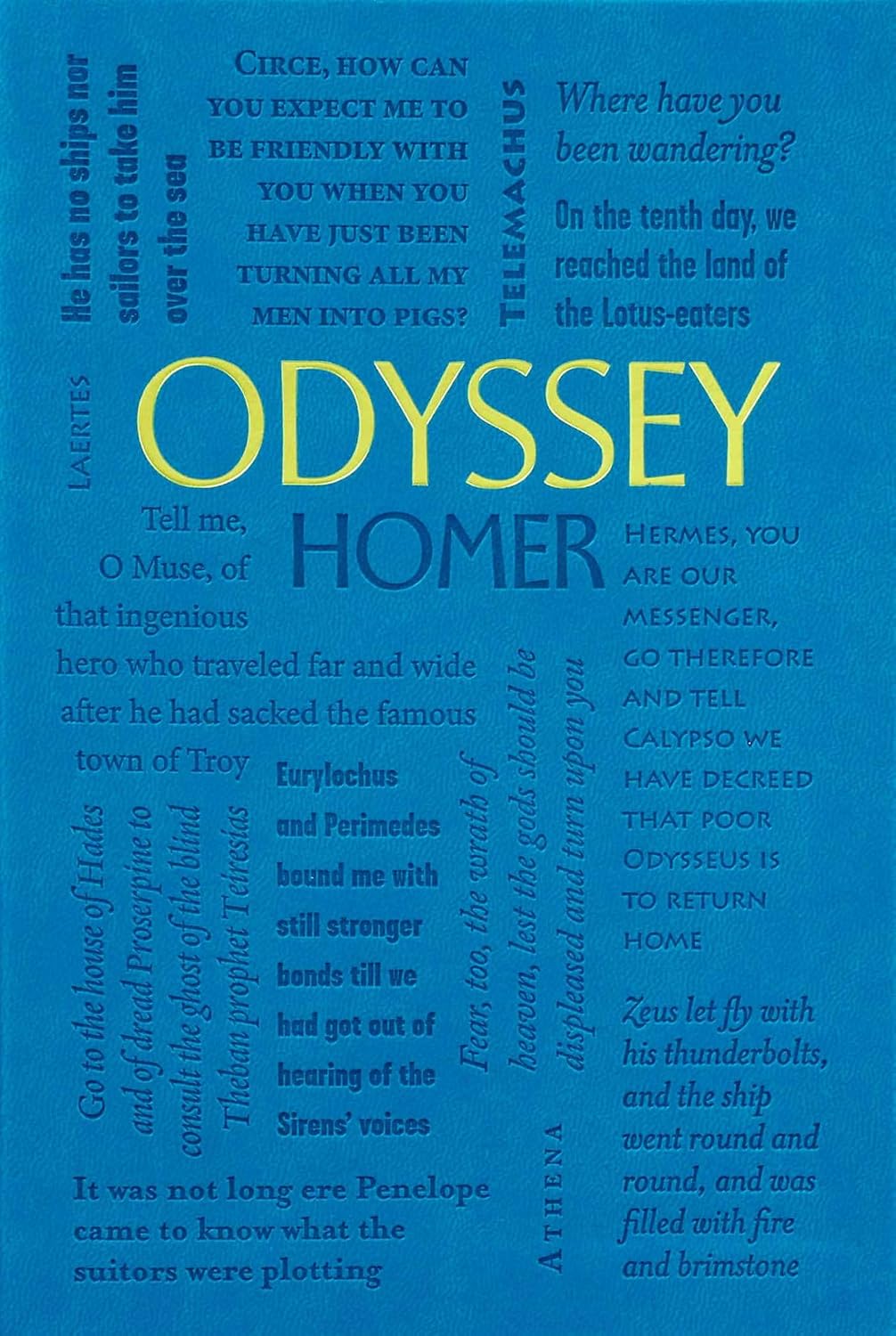
We looked at the various books…some in prose, some in poetry, some in prose but broken up into lines like poetry for academic reasons, some with footnotes. The proprietor was eavesdropping, amused, I think; he leaned over to show us a copy that had Greek on one page with the English verso, so that my nephew could see what the Greek looked like. He thought it was pretty cool. He chose a modestly-priced copy in flex-cover (see above left) because he liked reading the excerpts on the cover and because this one–the Butler translation from 1900–was written in prose. He thought he would find that more familiar, like reading a novel or a history. I said it might seem a little old-fashioned in style, but he’d probably be fine with it. “Old-fashioned like Shakespeare, or old-fashioned like ‘The Turn of the Screw’?” he asked. Precocious little fellow, no? More like Henry James than Shakespeare, I assured him. So he went home with a new book thousands of years old.

* If you happen to know which book is about the gods getting together to make more gods, let me know! 😄

~

The journeying trope is so ancient and always seems relevant. It must be we are nomads right through our genetic inheritance to the earliest human days. That reminds me of this poem, which is imagined but foretells a trip my siblings and I have a duty to make, probably in the coming spring. Now that both of our parents have died, we’ve promised to make this final journey with them.

~~~
Driving to Northeastern Indiana with Our Parents’ Ashes

I’m lazy, worn flat by August’s heat haze
with a feeling of impending grief, unable to sleep,
and I find myself imagining a last road trip
with my sister and brother, carrying our parents’ ashes
to a Midwestern graveyard.
My sister will compulsively update
our calculated arrival time and our brother,
who appreciates geography, will remind us
how many rivers we’re crossing, how many wetlands lost.
There will be a few remaining barns painted
with Mail Pouch Tobacco logos, but will we pass
Sinclair stations, cows pastured beside the highway?
More likely the rabble of off-ramps with their
abundant franchises, gasoline $3.29 a gallon.
It’s easy to imagine us driving I76 west,
Sheetz, Stuckey’s, McDonald’s, as we pass Akron,
Lima, Van Wert, our parents nestled together
in boxes beside the luggage.
I think of them shifting quietly there.
They’ve only briefly been apart, and it is time now
to intermingle them again, at their request,
which is why the three of us, in my imagination,
traverse the backroads of our shared childhood,
cross the new bridge and pass our grandmother’s
old house on the riverbank.
We’ll head for the municipal cemetery,
singing “She’ll Be Comin’ Round the Mountain”
at the tops of our lungs, as the five of us
used to do, laughing until we cry.


~

photo by Joshua Buckmaster