We recently entered a lovely, small, independent bookshop with our youngest niece (13) and nephew (10), both of whom enjoy reading books. The bookseller had taken wise advantage of the release of Christopher Nolan’s movie “The Odyssey” and, in the poetry section, featured a whole shelf of versions of the Illiad and the Odyssey: different formats, translators, paperback, hardback, illustrated, limited-edition–quite a range! Our nephew’s at the age where paintball and nerf-gun battles, fantasy graphic novels, swords, guns, and fireworks interest him. He’s heard about The Odyssey and was curious about it. “Is that the one where all the gods get together and make more gods?” he asked. *
“No, it’s the one about the man who leaves on a ship at the end of a long war and can’t get home because the gods keep intervening and sometimes he makes questionable decisions,” I said. “It’s the one with the Cyclops.” He knew a little about the Cyclops. He wondered if it was too advanced reading for him. But he has been reading the Harry Potter books on his own, so he is used to unusual names and words for things and persistent enough to keep on with a long book. I said he could probably get through it, though he might need a dictionary sometimes. We chatted a bit there in the store, with me telling him about how old the poem is (and it is a poem, I said, though some translations are written in prose) and how it was told out loud for many years but written down into books (and you know, of course, what books were like back then? “On, like, scrolls, right?”). Twenty-four books!
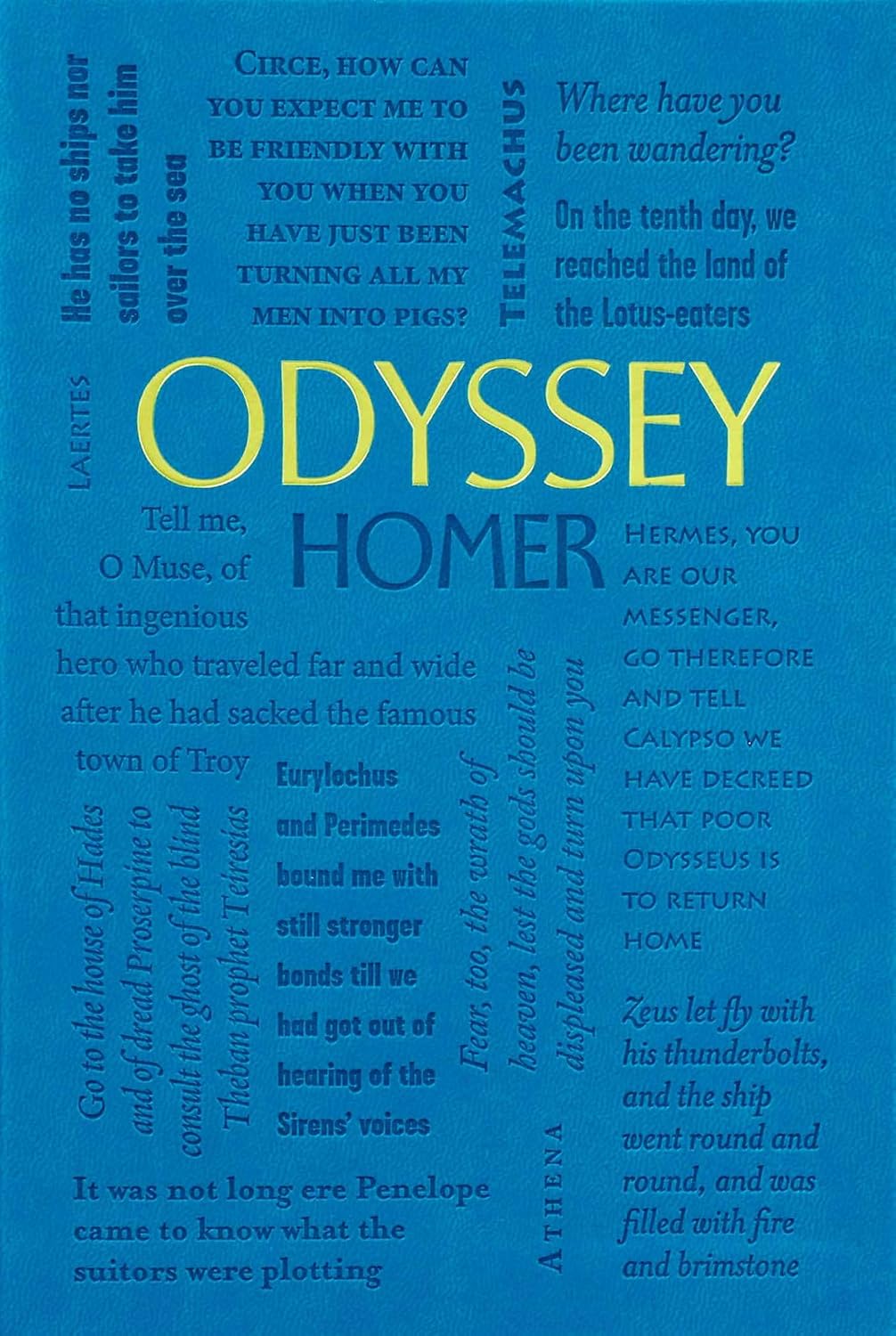
We looked at the various books…some in prose, some in poetry, some in prose but broken up into lines like poetry for academic reasons, some with footnotes. The proprietor was eavesdropping, amused, I think; he leaned over to show us a copy that had Greek on one page with the English verso, so that my nephew could see what the Greek looked like. He thought it was pretty cool. He chose a modestly-priced copy in flex-cover (see above left) because he liked reading the excerpts on the cover and because this one–the Butler translation from 1900–was written in prose. He thought he would find that more familiar, like reading a novel or a history. I said it might seem a little old-fashioned in style, but he’d probably be fine with it. “Old-fashioned like Shakespeare, or old-fashioned like ‘The Turn of the Screw’?” he asked. Precocious little fellow, no? More like Henry James than Shakespeare, I assured him. So he went home with a new book thousands of years old.
* If you happen to know which book is about the gods getting together to make more gods, let me know! 😄
~
The journeying trope is so ancient and always seems relevant. It must be we are nomads right through our genetic inheritance to the earliest human days. That reminds me of this poem, which is imagined but foretells a trip my siblings and I have a duty to make, probably in the coming spring. Now that both of our parents have died, we’ve promised to make this final journey with them.
~~~
Driving to Northeastern Indiana with Our Parents’ Ashes

I’m lazy, worn flat by August’s heat haze
with a feeling of impending grief, unable to sleep,
and I find myself imagining a last road trip
with my sister and brother, carrying our parents’ ashes
to a Midwestern graveyard.
My sister will compulsively update
our calculated arrival time and our brother,
who appreciates geography, will remind us
how many rivers we’re crossing, how many wetlands lost.
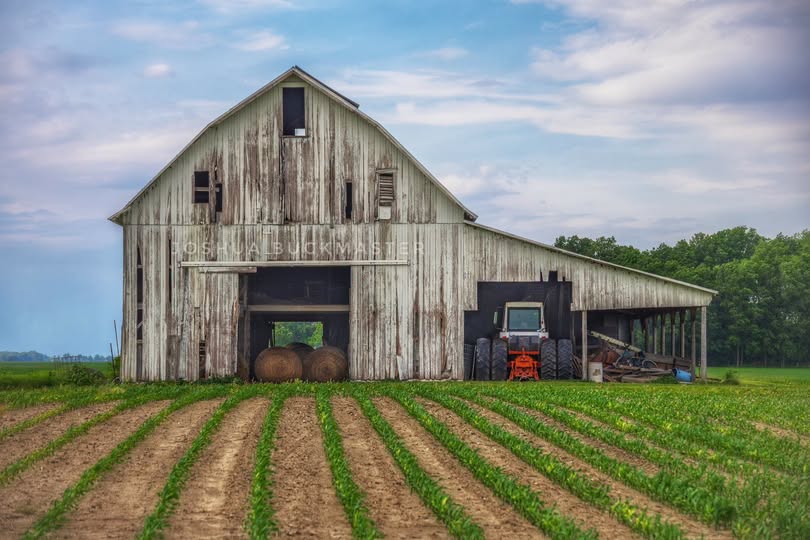
There will be a few remaining barns painted
with Mail Pouch Tobacco logos, but will we pass
Sinclair stations, cows pastured beside the highway?
More likely the rabble of off-ramps with their
abundant franchises, gasoline $3.29 a gallon.
It’s easy to imagine us driving I76 west,
Sheetz, Stuckey’s, McDonald’s, as we pass Akron,
Lima, Van Wert, our parents nestled together
in boxes beside the luggage.
I think of them shifting quietly there.
They’ve only briefly been apart, and it is time now
to intermingle them again, at their request,
which is why the three of us, in my imagination,
traverse the backroads of our shared childhood,
cross the new bridge and pass our grandmother’s
old house on the riverbank.
We’ll head for the municipal cemetery,
singing “She’ll Be Comin’ Round the Mountain”
at the tops of our lungs, as the five of us
used to do, laughing until we cry.


~