Perspective(s)

Usually when I spy the red-bellied woodpecker, what I notice is the large red stripe on its…head. Today, the bird was facing me through a nearly-empty birdfeeder, and I perceived the ragged oval of blush-colored down on its underside. I felt a keen admiration for ornithologists who notice such small details. How many times have I seen the red-bellied woodpecker and noticed only its zebra-like striations and its vivid crown? Even those of us who consider ourselves practiced observers of ____ (name your favored area of observation) find we’re not as careful as we imagine we are.

I do not own a powerful telephoto lens for my old digital camera, so I rarely take successful pictures of birds. My noticing tends toward the small and not-fast-moving: flowers, mosses, flora, lichen, fungi, landscapes. I have learned to look mostly at my feet, and occasionally at the clouds. It seems that the limits of my camera and of my vision (terribly, terribly nearsighted) have led to a particular perspective that affects my photos, my botanical interests, and my poetry.

Which is, sometimes, all to the good–but not uniformly. Perspective should be varied; we humans need to imagine that other humans (and non-humans) may witness life from other points of view. This concept is fundamental to psychological understanding and to the much-vaunted and controversial “theory of mind.” It also gives us the pathetic fallacy and anthropomorphism, which expand human ideas about consciousness and offer plangent and resonant metaphors that writers can employ.

All of this came to top of mind today when a student brought in a Philosophy paper concerning Nietzsche’s perspectivism.

Nietzsche opposes philosophers who ignore the fact that individuals have limitations on their theorizing. What makes his idea so thorny is that at the same time he suggests–goes so far as to claim–that perspective (even limited, ideological perspective) is imaginative, is one of our human freedoms. Stanford Encyclopedia of Philosophy says:

“Particularly as knowers, let us not be ungrateful toward such resolute reversals of the familiar perspectives and valuations with which the spirit has raged against itself all too long… : to see differently in this way for once, to want to see differently, is no small discipline and preparation of the intellect for its future “objectivity”—the latter understood not as “disinterested contemplation” (which is a non-concept and absurdity), but rather as the capacity to have one’s Pro and Contra in one’s power, and to shift them in and out, so that one knows how to make precisely the difference in perspectives and affective interpretations useful for knowledge.” (GM III, 12)

This famous passage bluntly rejects the idea, dominant in philosophy at least since Plato, that knowledge essentially involves a form of objectivity that penetrates behind all subjective appearances to reveal the way things really are, independently of any point of view whatsoever.

Hence, we do not know and cannot know the kind of “original” knowledge that reveals how things “really are,” since each of us is possessed of a unique perspective essentially unshareable by others. And hence a conundrum for philosophers (and freshman students of Philosophy).

Wait. How did I travel from woodpeckers to perspectivism, by way of poetry? Note: Poetry has a way of doing that kind of traveling.

A quote from Joy Harjo: “It was the spirit of poetry who reached out and found me as I stood there at the doorway between panic and love.” We often stand at that door–and there are other doors–and, as we stand there, the perspective(s) we choose create decision, and purpose, and are colored by an almost journalistic observation or by an almost spiritual calling. It can be either. Both.

The woodpecker--
head and neck bright as berries--
protects its abdomen
 pink ovaries,
 soft underbelly.

Imagined discourse, new skills

Despite pandemic restrictions, or perhaps because of them, I have been blessed with poetry the past few weeks. I have attended workshops and readings remotely/virtually, and I’ve participated in a few of those as well as giving one in-real-life poetry reading. I signed up to get the Dodge Poetry Festival’s poetry packet & prompts, and those appear daily in my email. Best of all, poems have been showing up in my mind–I started quite a few drafts in April.

Up to my ears in potential manuscripts (I have at least two books I am trying to organize), I’m also waiting rather anxiously to see whether my collection The Red Queen Hypothesis will indeed be published this year as planned. The virus and resulting lockdowns have interfered with so much. The publication of another of my books matters to me, but it remains a small thing in a global perspective, so I try to be patient.

Meanwhile, I thank poet Carol Dorf of Berkeley CA, who has been kind enough to read through one of my manuscripts and offer suggestions. It’s such a necessary step, getting a reader. I recently enjoyed this essay by Alan Shapiro in TriQuarterly, in which the author reflects on his many years of poetry-exchanges (he calls it dialogues) with C.K. Williams. His words reminded me of my friend-in-poetry David Dunn, who was, for close to 20 years, my poetry sounding board, epistolary critic, and nonjudgmental pal who often recognized what I was going for in a poem better than I did. Shapiro says he feels Williams looking over his shoulder as he writes, even after Williams’ death (in 2015). In a section of the essay Shapiro has an imagined (possibly?) conversation with a post-death Williams, conjuring the remarks his friend might have made in life, or after. I have had such dialogues with David, but not recently. It may be time to try again. Or, as Williams told Shapiro before he died, “Find a younger reader.”

As if that were easy.

Anyway, I continue to learn new things, even things I did not feel particularly curious about, such as Zoom teaching [blech!] and Zoom poetry readings and remote workshops and online discourse. Hooray, new skills to practice! Here’s a taped reading in which I read a few poems from Barefoot Girls, The Red Queen Hypothesis, and a couple of newer pieces. I appear at 31:48 on this video: https://www.youtube.com/watch?v=HFfeoTOVahQ

Though I think you should also give a listen to the other poets, who are worth hearing.

Time to weed the lettuce and spinach rows, time to stoop to smell the lily-of-the-valley. And time to have imagined discourses with my Beloveds.

May brings convollaria into bloom

Wary of unity

It’s true that I appreciate a somewhat calmer political/media cycle, in part because I sense slightly lower levels of anxiety from my friends. I love my friends and feel sad when they express fear and exhaustion. The social and environmental messes we humans have made continue, however, as the pandemic stretches on (my region is still in “extremely high risk” covid territory, though most of the people I know personally have been vaccinated). Many of us continue to endure losses of all sorts. Even if the losses are small ones, cumulatively they aggregate, intensified by the spectre of climate change and virus spread and whatever local bogeymen trawl through people’s lives.

In response to the current difficulties, we keep hearing calls for “unity.” One way politicians and community advocates of all stripes and ideologies endeavor to “make nice” is through the concept of unifying people. It sounds like a good thing, to invoke our similarities and our common human bond in order to achieve…[insert goal here].

I’m wary of calls for unity. It’s not that I’m cynical (maybe a little), and I’ve certainly been idealistic in my time; but long experience and lots of stories and histories and my father’s background in how people behave in groups have led to feeling circumspect about unity. It works with people, yes, but it also leads to the worst aspects of tribalism. To the fostering of rigid ideologies. To acts against outliers, to the construct of evil Others. I’ve recently re-read Reinhold Niebuhr’s prescient and insightful Moral Man and Immoral Society, and his analysis of how humans behave individually versus in groups strikes me as relevant today as it was in 1932. My dad studied with Niebuhr during the latter’s last years at Union Theological Seminary and, reading this book, I find I’m reflecting on the ways this philosopher/theologian influenced my then-young father’s views on humanity.

My dad was an optimist, a Pollyanna, a great believer that God loved each human equally and that there exists in each person the promise of Good (because his God is Good). As my dad matured and experienced more of life and a lot of death, injury, backbiting, illness, pain, misery, in-fighting, and scapegoating–even in the Church–he examined more closely the dynamics of people in groups. Here’s where Niebuhr gets it right, as far as I can tell: people in groups suck.

No, he never says that, and perhaps I overstate. People in groups tend toward tribalism, shunning those who differ in opinion, perspective, or other ways. People in groups lean inexorably toward immoral behavior, even when the group is made up of individually moral people. Again and again, under differing social perspectives, Niebuhr demonstrates that unity thwarts diversity even when group intentions are moral. And, all too often, with immoral results.

My dad never really gave up on the idea that people could successfully deal with different perspectives and goals even in the same group, that there were approaches to group dynamics that would produce win-win outcomes or compromises without sore feelings. In this respect, he was an Enlightenment thinker like Locke. Optimistic, as I’ve said, though I suppose there were times he despaired; indeed, I know there were. Perhaps he recited the Serenity Prayer* to himself when he felt powerless to make a difference. Perhaps the way people in groups behave is one of those things we cannot change and must somehow accept.

For myself, I choose diversity. The earth manages its diversity wonderfully, even when human beings thwart it. Milkweed seeds and thistle find their ways into monoculture cornfields. Plants and insects gradually populate the rubble we make.

When circumstances keep me in a tribe-like bubble, I read books and poems that show me other perspectives, other climes, other social cultures, cities, classes, geographies–other histories than my own. I find ways to explore, in person or virtually, artwork and film work, drama, music, and dances from places I may never visit but without which I would be less attuned to the World. To its wonders, which are many. Insert here, instead of a unified goal all people “should” achieve, Whitman’s “Kosmos” or Hopkins’ “Pied Beauty” with its line “All things counter, original, spare, strange;” or, more contemporary, Vievee Francis’ glorious “Another Antipastoral” that states:

Don’t you see? I am shedding my skins. I am a paper hive, a wolf spider,
the creeping ivy, the ache of a birch, a heifer, a doc.

~

The World, that great unity. That global balancing act. That paradox: Outliers and Others being necessary, and Beloved.

Happy Earth Day, a day late.

~~~

* You may be familiar with the Serenity Prayer, which Niebuhr composed.

In person

Imagine it: gathering again, with other human beings, engaged in listening, in art, in entertainment. You know–all that stuff we once took for granted, pre-pandemic and back when virtual events were mostly either experimental or TV shows.

In recent years, I have not been participating in many poetry readings; attending them still, yes–when possible, when life has not intervened too much–but not actively looking for reading venues, not the way I did in previous decades when I was learning how to present my work publicly. Lately, even when I’ve attended readings with open mics, I often choose not to sign up to read. I need to get home to grade papers or go to bed.

This situation has led to a gap in my reading-poetry practice. True, I teach; I am accustomed to speaking in front of a group of near-strangers, and that is a kind of public-speaking skill. There’s a distinct difference between being the authority and being the author, however. I found myself trying to explain this difference to a friend of mine last evening as we drove home from: MY FIRST IN-PERSON POETRY READING IN AGES!

[An aside here to express boundless thanks to Jenny Hill and Dan Waber of the Wunderbarn in East Greenville PA, who asked me to lead off their Just about an Hour and a Half Variety Hour for the 2021 season–quite an honor!]

I had some preparation, however, because local friends-in-poetry had invited me to read for a video that will stream on April 27th from the Facebook page of Bethlehem PA’s venue The Ice House. That was a new experience for me, though strange: I had to stay in one place without walking and fidgeting while reading to a very kind person behind a camera and another kind person connected to me by a microphone and earphones–in an otherwise empty performance space. O, Brave New World…

The reading at the Wunderbarn commenced the following evening, so the practice in front of the camera helped by giving me the opportunity to organize both my poems and my thoughts. I would not say that putting together a reading is exciting, but it offers some of the quiet challenges of a puzzle or word game. The act of reading in person to an audience changes those challenges to one of performance. It has been a pleasant task to expend energy thinking about poetry; I’ve been attending readings and craft talks remotely all month. And the performance space at Wunderbarn is sweetly rural. We were seated outdoors, and as dusk came on the human voices were accompanied by ducks and frogs. As so many of my poems feature the natural world, that felt fitting.

Friends in the audience, an added boon. That fact encouraged me to read two or three newer poems that I’ve not read out loud before and not to feel too awkward about possibly stumbling through my own lines. Also, though the grounds were muddy and the air rather cool, the rain held off. If I were the sort of person who believed in omens, I would say this event bodes well. Instead, I lift up my voice in gratitude.

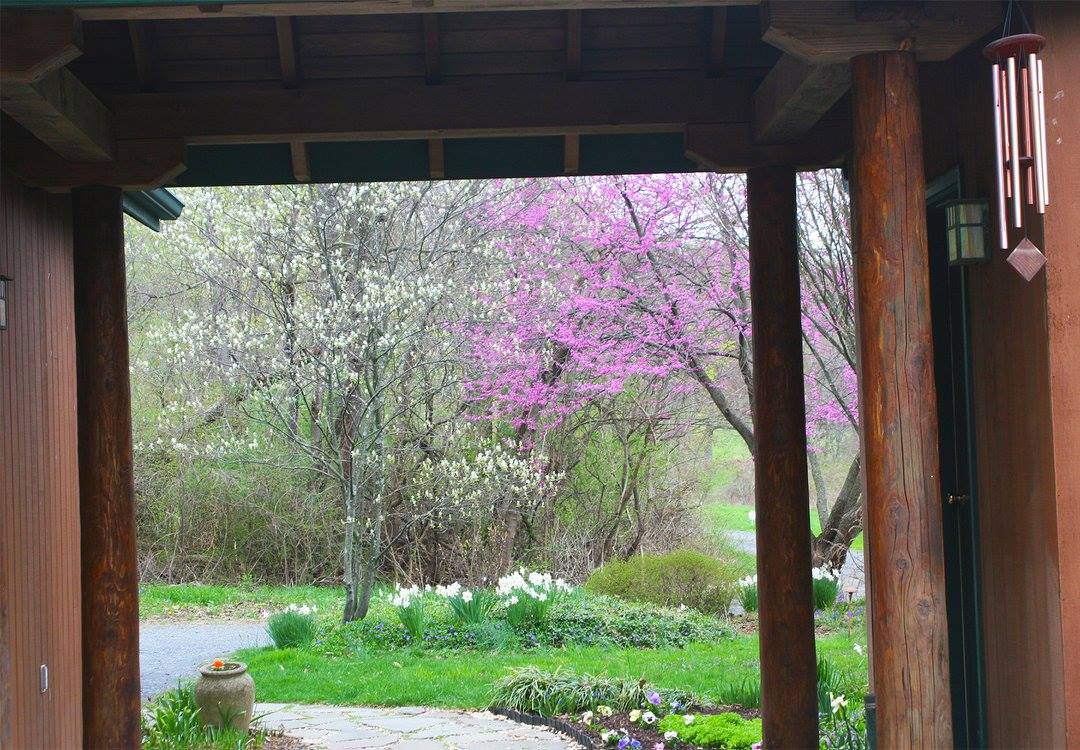
a view toward spring–in person

Conferencing, distance

Rather at the last minute, I found out that West Chester University’s Poetry Center was hosting a virtual conference during National Poetry Month. Previous WCU poetry conferences have been in person, and often in June; I used to attend when I had the time and money, since I can drive to West Chester in about an hour. For years, my full-time job has interfered. This time, the fee was low and the panelists and readers were people whose work I enjoy. While I could not attend all of the sessions or enroll in a 3-day workshop, I could at least “zoom in” to many of the events.

I’m glad I did. But before I write about this year’s conference, a brief history of my experience at past WCU Poetry conferences.

Initially, the conference poets focused on formal poetry: writing in forms, meters, and employing rhyme at a time when the major forces in U.S. poetry leaned more toward free verse. Dana Gioia was one of the co-founders, and the conference brought in such writers as Anthony Hecht, David Mason, Rachel Hadas, Marilyn Nelson, Richard Wilbur, Molly Peacock, and Timothy Steele…to name just a few (I haven’t forgotten the others, I just cannot list them all!). If you’re not familiar with them, Google their names and locate some of their poems; their work is considered “formal.” By some. The term itself is rather fraught. I’ll skip that argument for now.

It took considerable bravery on my part to participate in the conference the first time I attended, because I was writing mostly free verse, was not an academic, and was more or less acclimated to being a not-very-ambitious stay-at-home mother. I’d started my MFA program, however, and told my advisor that I wanted to learn the things I’d missed concerning historical patterns of poetry. I loved and grew up with rhymed and metered poems but had no idea how to create them. Hence: the WCU conference, which happened to be near enough that I could get away and back for four days and not have to do too much re-scheduling to accommodate my kids, pets, garden, and spouse.

Frankly, I was intimidated. The poets were all so…accomplished. Most were college professors, many were critics, lots of them had written books–lots of books–and even many of the people attending had won prizes and had significant publications. They were keenly and frighteningly “smart” folks, well-read and well-traveled. But after awhile, I felt more at ease. Sam Gwynn, Molly Peacock, and David Mason were hilarious. Rachel Hadas demonstrated intense and generous listening, and was so kind. And I learned so much (and bought so many books…) that I attended at least four more WCU conferences. Then I got too busy.

The Poetry Center and the conference have changed directorship a few times. For awhile, the late (and wonderful) Kim Bridgford, who later established the Poetry by the Sea Conference, was at the helm; currently, the Center’s guided by Cherise Pollard, who came up with the theme that drove this year’s panels and workshops: The Healing Power of Empathy. Healing and empathy are qualities we need when times are hard and seas are rough. It’s important to remember that healing requires change. It’s a change-state verb. Sometimes those changes feel uncomfortable, painful–and empathy can help, as long as we employ it in an active way (empathy as a change-state).

I managed to draft a sonnet in 15 minutes, thanks to Molly Peacock, and heard some new-to-me voices in poetry, and listened to poets who are deeply engaged in the work and art of poetry discuss their processes, enthuse over their influences, and say what drives their curiosity. I found kindred writers who are, like me, endeavoring to put voice to people with dementia and express the grief we experience as our Best Beloveds lose personality, language, ego-consciousness.

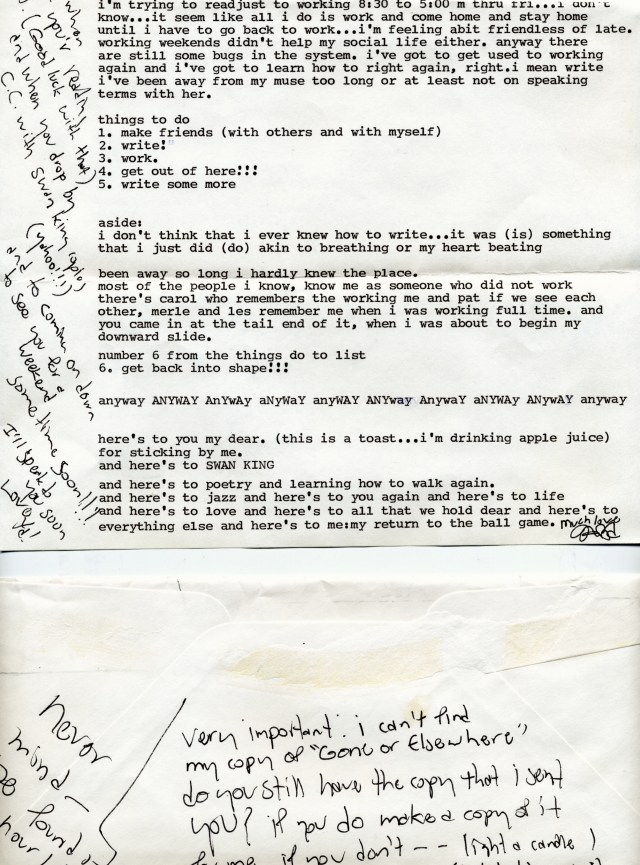
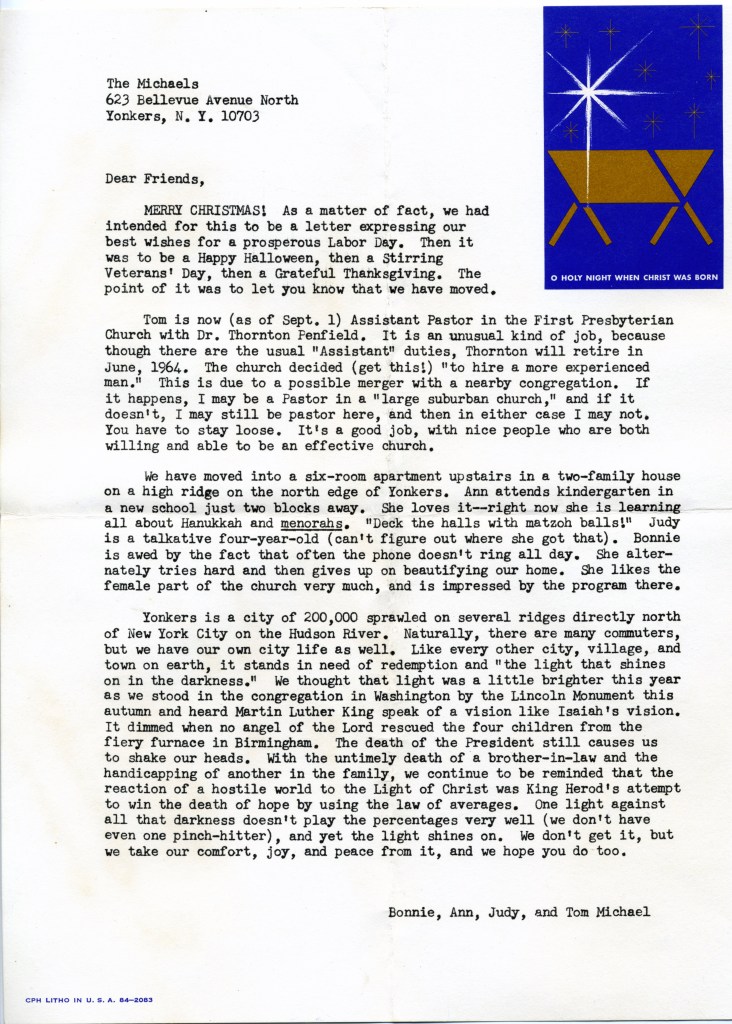
Lesley Wheeler shared the writing prompts her panel put together on her blog, here; she and her four co-panelists (see blog) reflected on feeling across distance, another apropos topic in the current times. It seems we can and do find methods to be human together, even when we are apart. I think of all the letters I wrote when I was in college, and afterward, as I moved around the eastern USA, changed addresses, and tried to keep my friends and family informed as to who I was and what my interests were. In my attic, there are boxes of correspondence written in the days before email. Many of them are now letters from ghosts. Words I will never hear again from living mouths, but a way we kept “in touch” despite, and over, distance. And still do.

14 syllables

Easter Sunday
sowing carrots
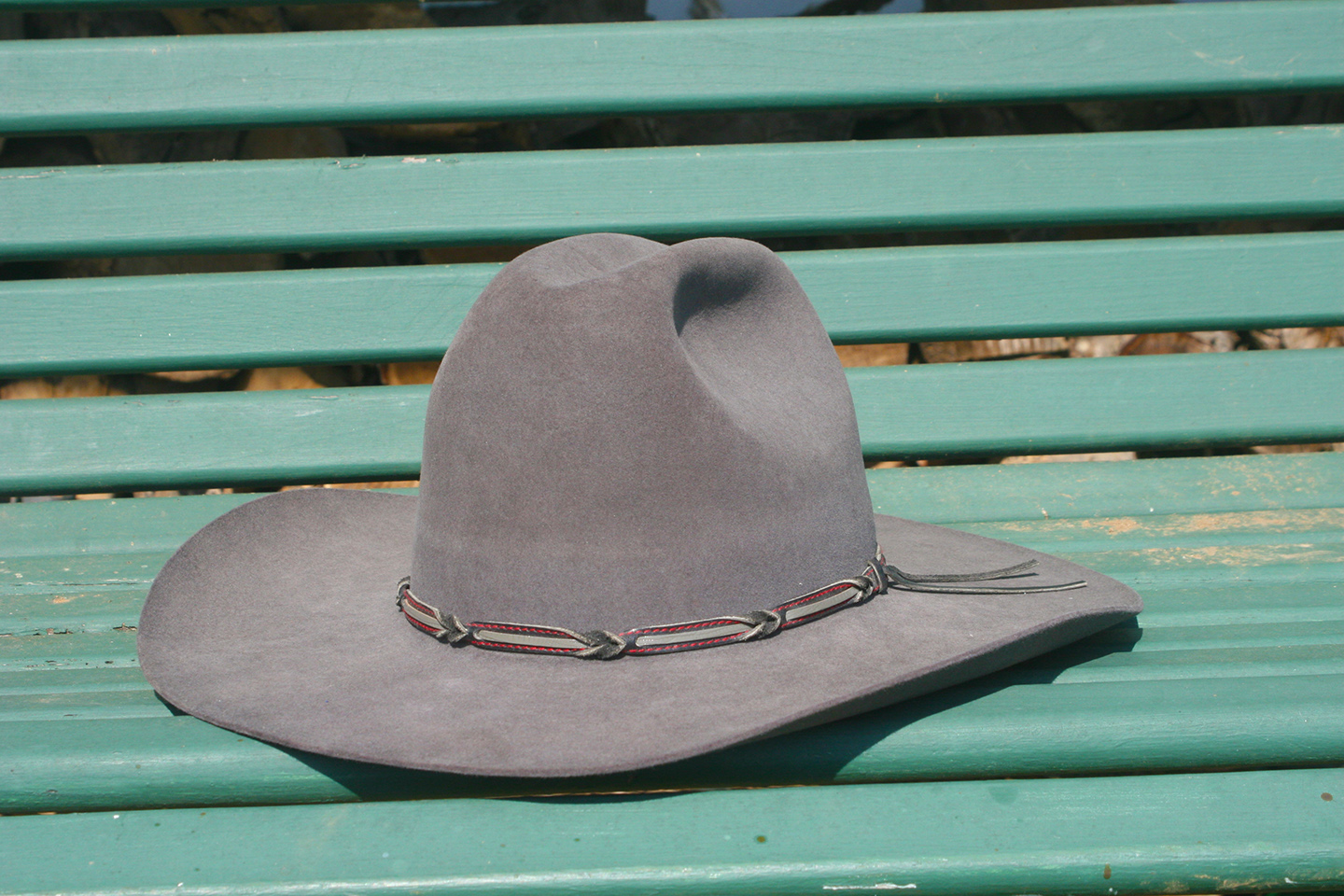
I wear my father's hat

~

Traditions

My dad liked to fly a kite on Good Friday.

I’m not certain how the tradition got started, but I remember as far back as first grade–maybe earlier–his taking us out to a park on Good Friday and sending a kite into the early spring winds. Maybe it was a sort of metaphor for hope, as was the Resurrection, according to his beliefs. Maybe just something to do with the kids when we had the day off from school.

Some years we had more success than others getting the kite aloft. There may be a metaphor in that, as well. What happens when what’s perching on the soul just huddles, dodging the weather and predators? Guano on the ground of the spirit? As a person who gardens, I could really overstretch the symbolism here: fertilization and renewal, so on.

But I haven’t been in the garden for a couple of days–we are having our blackberry frost and it has been chilly. Instead I am thinking about my absent dad and the significance of the holiday in my growing-up years. In church, the purple vestments were switched for white with gold trim on Easter; and my father, in his clerical robe and stole, looked important and shiny behind the pulpit. White flowers, especially lilies, showed up; everyone wore their best spring outfits. I feel nostalgia around these rituals, but they did not settle into my heart and create a believer of me. To my dad’s sorrow. I know my decision to leave the Church grieved him, but he accepted me and loved me all the same. He believed he’d see us in heaven, though he’d admit he had no idea what the afterlife would hold.

Rejoicing in the world’s beauty, the sharing of fellow humans’ suffering, and the way words can express the things that matter–the Biblical poetry–those things have settled into my heart. My consciousness. Hence metaphor and symbol and rhythm, songs of grief and praise.

They rise.

Like the hyacinths and daffodils rising from the half-rotted leaves of previous autumns. Like the flicker rising from the grass after scoring a grub. Like the early morning fog rising as high as the nearby hilltop, then merging into clouds. Like the sprouting kale seeds, the new pea leaves.

Like the thing with feathers. Or a kite.

~

I listened, this afternoon, to Bach’s St. Matthew’s Passion and remembered Good Fridays with my father. That’s all the poetry I have to share today.

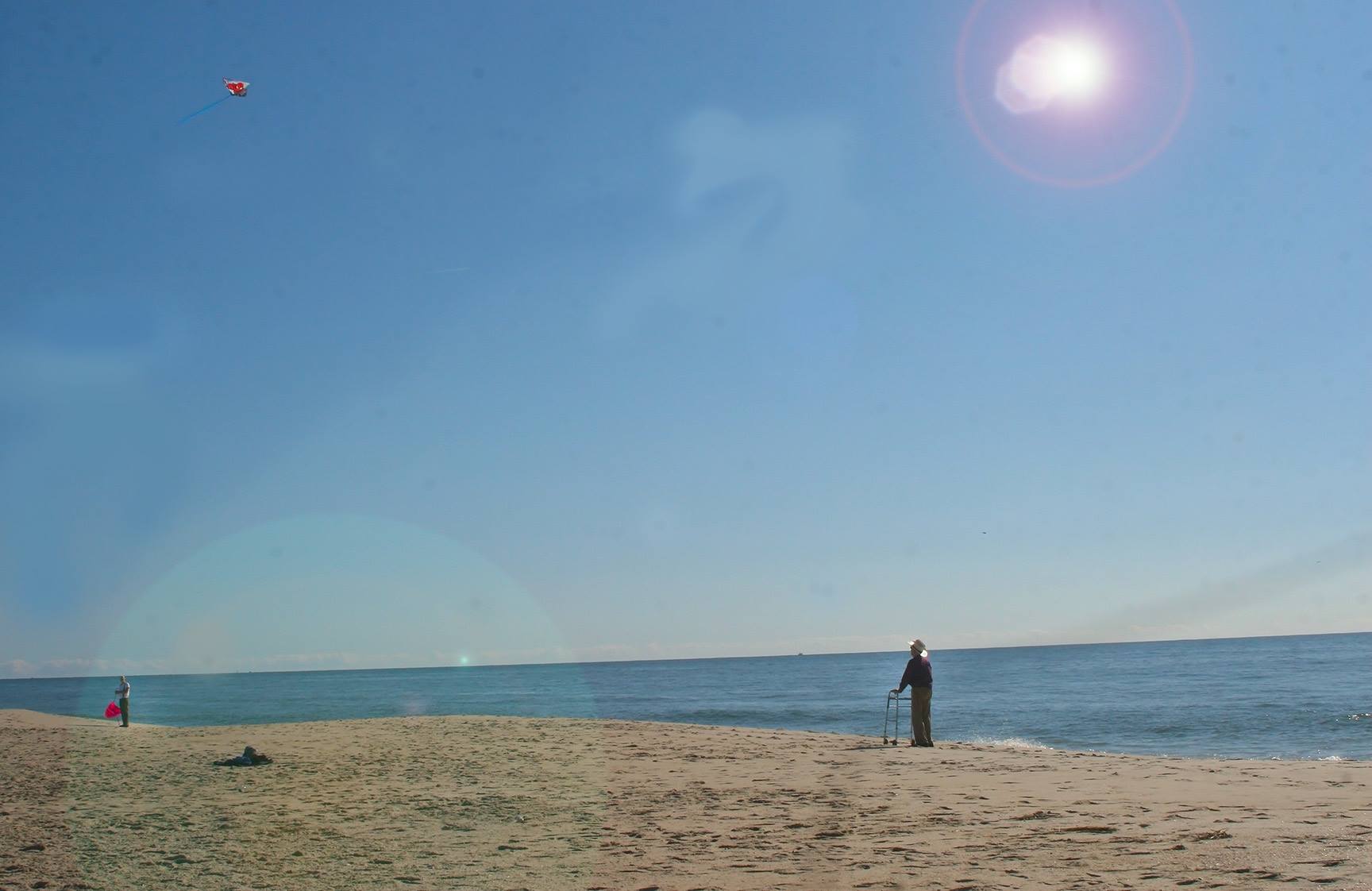
The last time my dad flew a kite was 2016, I think. And it was October, oceanside.

Dad (using the walker, far right) keeps a kite in the air above the Atlantic.

Moderately good intentions

We had some mild, sunny days around the equinox, days that lured me to the yard and garden. The neighbors’ pussywillow pushed its fuzzy catkins out in the warmth, and the sight of daffodil and hyacinth leaves making their way upward was cheering. A rather sluggish field vole ran out from under some mulch, much to my annoyance–the voles have really torn up the ornamental beds and the lawn under the cover of the snow. There’s a large meadow behind my house; why don’t the voles stay out there? At any rate, I wanted this one away from the garden. I figured I could catch it and let it go in the hedgerow where the grasses are dry and thick.

Field Vole (Microtus agrestis) from Warren Photographic

I was wearing garden gloves and the vole was a bit startled by sunlight but too fast for me. Because I had a hose in my right hand, I aimed it at the vole. I figured the wetting would confuse it enough that I could sweep down fast and scoop it up with some thatch, then release it. Or really, I wasn’t thinking much. But it did work: the vole, suddenly damp, froze for a moment. I snatched it and cradled it in my gloved hands (they bite!) and let it go along the edge of the meadow.

My compassionate spouse admonished me, though. He said it was cruel to spritz the vole. I realized he was correct. In the moment, I was considering my good intentions to remove the creature to a “better” place to forage; but that in itself was not a very kind thing–it was my wish, certainly not the vole’s! And I am positive I frightened it terribly.

The episode made me reflect on how often we privilege our own desires as being motivated by good intentions. We reason our way out of thoughtless behavior by saying “But I didn’t mean…” I have done so far too often. I think this is what props up microagressions and passive acceptance of egregious social behaviors like racism. Today I stumbled across an article by Shayla Love that suggests our much-vaunted concept of our true moral selves is illusion. She cites an article by psychologists that concludes that “[t]he true self is posited rather than observed. It is a hopeful phantasm.” Strominger, Knobe, & Newman’s article on the true self is here.

“Though we all believe in a morally good true self, our definition of what’s moral varies—and we define the ‘morally good’ part of our true selves based on our own values.” (from: https://www.vice.com/en/article/v7mwa3/why-your-true-self-is-an-illusion) ~Shayla Love.

~~

Meanwhile, this week marks one year since my latest chapbook launched into print–right at the start of US pandemic lockdowns. Find it here: https://prolificpress.com/bookstore/chapbook-series-c-14/barefoot-girls-by-ann-e-michael-p-317.html

So I am celebrating in a very small way, hooray for the little things! For the fact that my 88 year old mother has had her vaccine, and so have I, and now we can visit in person and appreciate little joys like cranberry, raisin, almond, and dark chocolate trail mix, floral bouquets, slow walks through the garden starting to green up and–soon–bloom. Maybe I will even be able to take her out for a beer (at an outdoor restaurant) in a month or two. I can read her some of the poems I’ve written about my dad. We can just sit and watch the birds.

For the fact that my students are slogging away, enduringly hopeful that by the time they graduate the USA will somehow be better. Maybe it will. With their help.

For the fact that my siblings and I have friendly relationships with one another–and honest ones.

Hooray for my spouse, mowing the meadow with his 1947 John Deere Model M tractor! For a new manuscript of old poems that I’m finally spending some genuine, careful, critical time revising.

For this poem: https://www.poetryfoundation.org/poems/58762/catalog-of-unabashed-gratitude

and thank you, friends, when last spring
the hyacinth bells rang
and the crocuses flaunted
their upturned skirts, and a quiet roved
the beehive

And for this one (RIP, Mr. Zagajewski) https://www.poetryfoundation.org/poems/57095/try-to-praise-the-mutilated-world-56d23a3f28187

Praise the mutilated world
and the gray feather a thrush lost,
and the gentle light that strays and vanishes
and returns.

Emergent

emergent (adj.) late 14c., “rising from what surrounds it, coming into view,” from Latin emergentem (nominative emergens), present participle of emergere “to rise out or up” (see emerge).

etymologyonline: etymonline.com

~

Spring equinox.

Very soon–perhaps days from now–the vernal ephemerals will appear. The vernal ephemerals are early spring flowers that thrive low to earth before the trees leaf out: spring beauties, dogtooth violet, squirrel corn, bloodroot, hepatica, and others that look delicate but are, in fact, tough little survivors who have found their ecological niche in the cool days and weak sunlight just post-equinox. We could consider their resilience an inspiration.

Vernal ephemerals sounds to me like a term for sprites, will o’ the wisps, or angels, but it’s a scientific term. I learned it from Tom Wessels (here’s one of his videos on coevolution https://www.youtube.com/watch?v=hCAvBmY7ZgA),* but I have been fascinated by these plants for decades. I have always been the sort of person who walked around with my head either facing the clouds or scanning the earth beneath my feet. Hence, a reason so much of my poetry uses images from nature even when I am not writing about the garden, the meadow, the woods, the sea. My clumsiness a byproduct of my peculiar need to observe the natural environment.

Anyway, hepatica is about as close to a sprite as any blossom I know of.

They aren’t common where I now live. Here, the vernal ephemerals I see most often are trout lily, bloodroot, spring beauty, violets, coltsfoot, trillium. Probably a few others that I’m forgetting because the ephemerals haven’t popped up yet. Still far too cold and a bit dry after a month of snow cover. The emergent greens in my gardens consist mainly of winter weeds, and I’m happy even to see those. Because: green.

“Just a little green like the color when the spring is born” says a line in Joni Mitchell’s song. The green things rise up or out of what surrounds them, coming into view.

I have been keeping under the standing snow, leaf litter, and dross for three months, processing (as the jargon terms it) my father’s death and a new manuscript and a backlog of poem drafts and covid-19 with its attendant disruptions, limitations, and opportunities. But the snow has subsided from all but a few gullies on the north sides of hills; iris reticulata and snowdrops are in bloom, along with the winter-blooming witch hazel. There’s work to do in the garden. Poems to revise. National Poetry Month ahead (April!). It’s the 25th year for this literary celebration.

Time for me, like the skunks and the skunk cabbage and the little ephemerals, to rise out of my surroundings. And take up this blog again? It’s a start. A little green shoot emerging in the chilly sunlight. Hello.

* Thanks to Dave Bonta for the video recommendation

Until…

We are at the end of an arbitrary, chronological year but still in the midst of a pandemic that will not be going away miraculously when the new calendar begins.

To what must we devote ourselves? I think, for now, just getting by and living through; we can learn much from solving the everyday puzzles life pitches at us. A friend counsels that having a project to do can help–something a bit thorny that offers a challenge but that is not a priority. For now, I am cutting vines–the ones that threaten to strangle the remaining trees in the windbreaks on either side of our narrow property.

Trees that have been weakened by too little and then too much rain, by warmer temperatures and crown die-back that encourage lichen, by insects and the viruses they carry, and by a lack of native undergrowth. The ash trees that ringed the meadow are all dead now, victims of fungus and stress-related illnesses caused by infestations of emerald ash borers.

It’s an ongoing effort for which there won’t be much reward, but it feels a bit like tending something in the dead of winter.

I will cease tending this blog for awhile. My deeper concerns lie elsewhere at the moment. If my next collection is indeed published this year as originally intended (covid protocols have affected almost every endeavor, even publishing, and certainly book launches), then I will likely resume a more noticeable social media presence! Maybe I will have resupplied my energy reserves that have been depleted during the past few months.

Until we meet again, and hoping that we can meet in person down the road…

photo by David Sloan