Poetry month books & doings

~

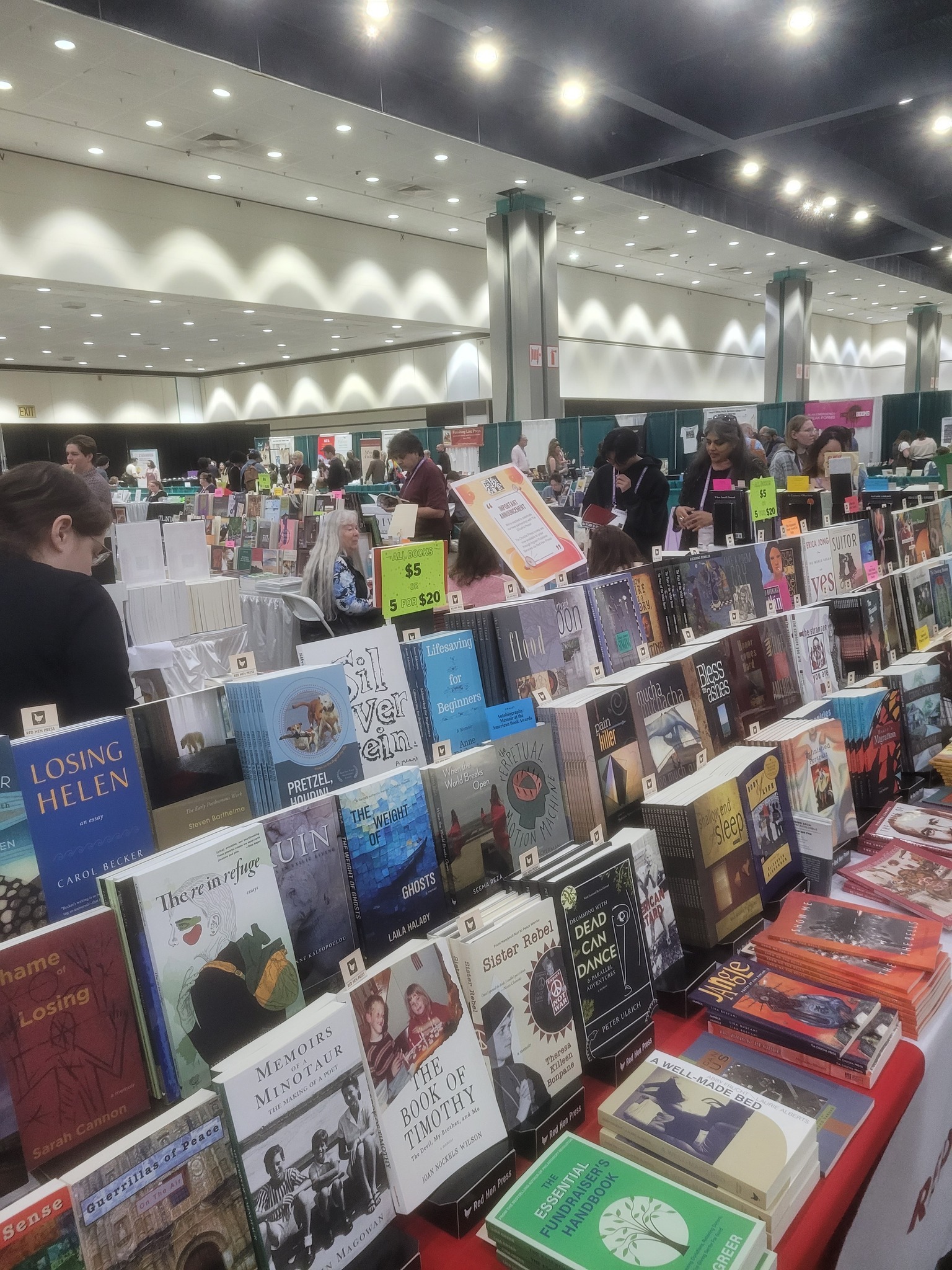
It is, once again, April: National Poetry Month. My recent trip to the AWP bookfair has given me many poetry books to peruse at whatever pace I please, and because the weather here has been far too wet to do much in the garden, I’m using the free time to read. The outpouring of millions of peaceful protesters who oppose the current administration’s policies and who rallied on April 5 was somewhat heartening to me, but I remain skeptical and am aware that real change takes a long time. For the present, I’m bolstering my spirit through poetry.

~

I met Diane Thiel decades ago, briefly, at the West Chester Poetry Conference. She is incredibly talented, intelligent, frighteningly well-educated, and her work impressed me a lot; somehow, though, I did not get around to reading the many books she’s published since then, so her Questions from Outer Space (2022) is a delight and a revelation. Travel, literary and historical references, child-raising, teaching–the poems here cover a large range of topics. I bought her book at the Red Hen Press tables in LA. Red Hen is a terrific source for contemporary poetry books, if you’re looking…

At Saturnalia’s booth (another good small press with a large catalog), I found three of Martha Silano’s books and rejoiced. So far I have finished reading only The Little Office of the Immaculate Conception, which I love, but I can hardly wait to read her more recent books. She has a wry sense of weird, nerdy humor that’s inflected with science facts and grocery-store labels, pop culture and life in the burbs, and a healthy questioning of, well, everything.

My fellow Goddard alum and friend Lou Faber has a new book here, and it’s so wonderful to read the work of a long-time poetry colleague whom I haven’t seen in years but whose voice comes recognizably through this collection. The second half of the collection, in particular, deals with the emotionally-complex aspects of being an adoptee and this person’s efforts to untangle where (and who) he’s “from.” Contradictions abound over the years; then, DNA testing sort of, but not quite, sorts out some of the mysteries. But life–well, much of life contains mysteries and always will.

~

Meanwhile, this April I will be busy giving and attending in-person and online poetry events–even a radio spot! I’ll be reading mid-day at a local community college, participating in a No River Twice poetry event; and at some point this month, an interview about The Poetry Press Project (and my latest book) will air on WDIY 88.9FM. And a few of my poems will be appearing in print this month, the first of which is here: “Luna, Paloma.” I’ve also signed up for virtual attendance at a couple of poetry reading; and on May 4, I will be among the features for a virtual reading sponsored by One Art journal. My physical stamina isn’t what I wish it were, but thanks to technology that enables me to participate from home, I can manage to do a bit of yard work and STILL get to a poetry event.

Riches

The past week gave me riches galore; though I am somewhat poorer in the pocket for it, my cup runneth over in about every other way. It’s true that often, lately, I’ve felt that I am living in “interesting times” that are all too much and too awful to contemplate for long. Then again, I could have been alive (possibly quite briefly!) during Boccaccio’s time and weathering the bubonic plague. Thanks to The Decameron, readers later in history have been able to get a picture of what people were thinking about and imagining–or trying to escape–when things were truly terrible all around. And while I’m not pollyanna-ish about the present, I do feel grateful that I live during an era when travel to distant places is possible and rather speedy, that books are readily available, and that some of the wealthy people of the not-too-distant past decided that philanthropy included funding libraries, gardens, and museums for the average citizen to visit and enjoy. Current billionaires, please take note!

What the week entailed was a trip to Los Angeles to visit my eldest child and, while there, to spend a morning at the AWP conference book fair. Riches indeed! I “packed light” to be sure I had space in my carry-on for poetry books, which thankfully tend to be slim paperback volumes. I bought almost 20 books, I confess. So I came home weighted with literary riches, and while at the convention managed to connect (however briefly) with numerous poet colleagues. A shout-out here to Lesley Wheeler, whose book I had to purchase online because Mycocosmic had sold out! Congratulations, and I cannot wait to read it.

My days in LA were limited to four, but my son had curated a things-Mom-would-like-to-do list that included Mom’s necessary down time. It’s terrific to have offspring who are now old enough to respect my limits. [They have not always been so accommodating.]

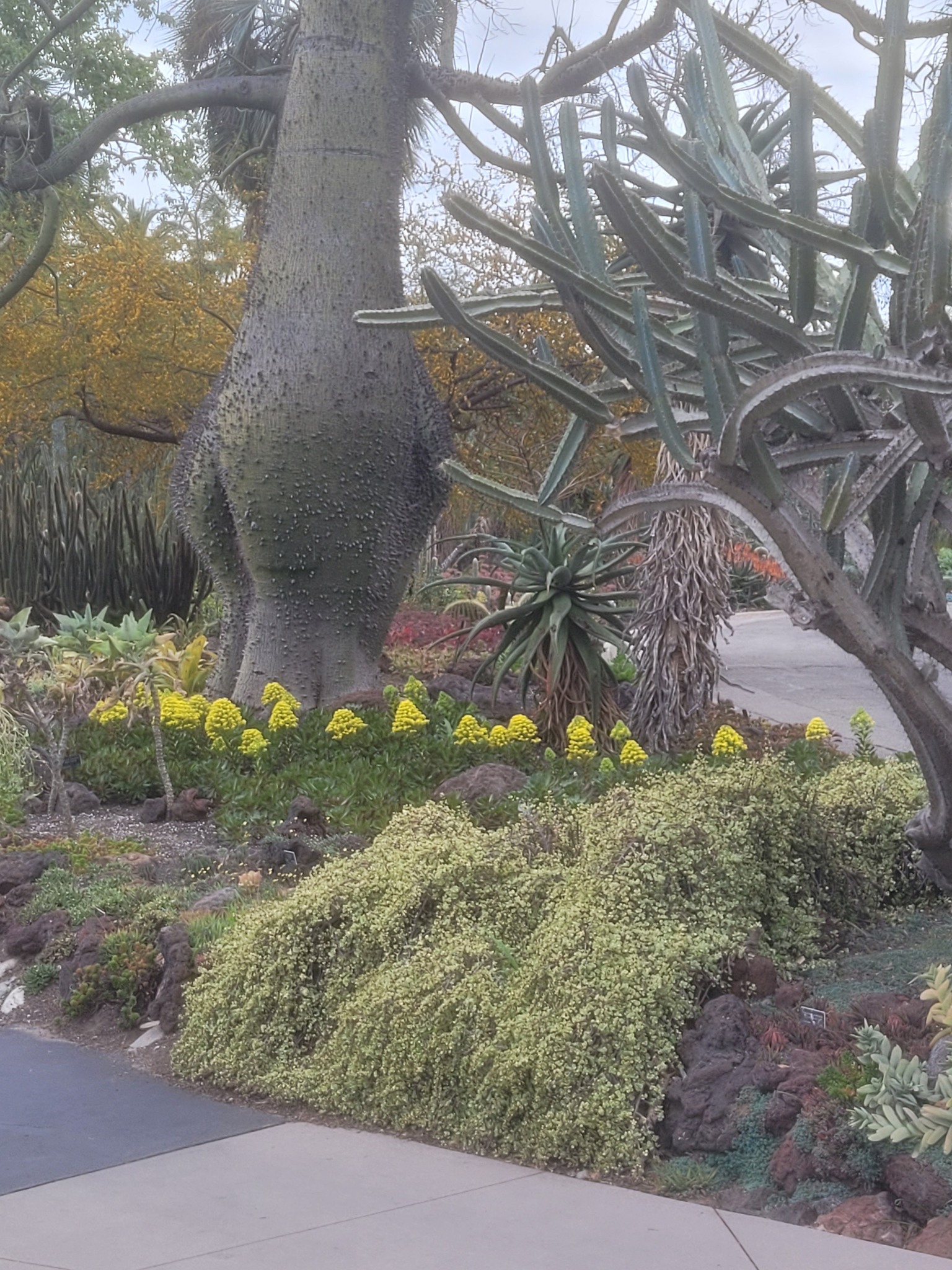
The list included several lovely meals out, a full day at Huntington Gardens and Library, a day trip up to Santa Barbara, a visit to LACMA to get an “art fix” for me and for my son’s best beloved, who loves art and architecture, and a visit to the amazing Museum of Jurassic Technology which, as far as I am concerned, is basically a series of amazing poetry prompts. I cannot possibly explain it; and the museum’s website is purposely a bit obscure and limited, compared to the immersive experience of going to the place in person. I am still thinking about it and will be for weeks.

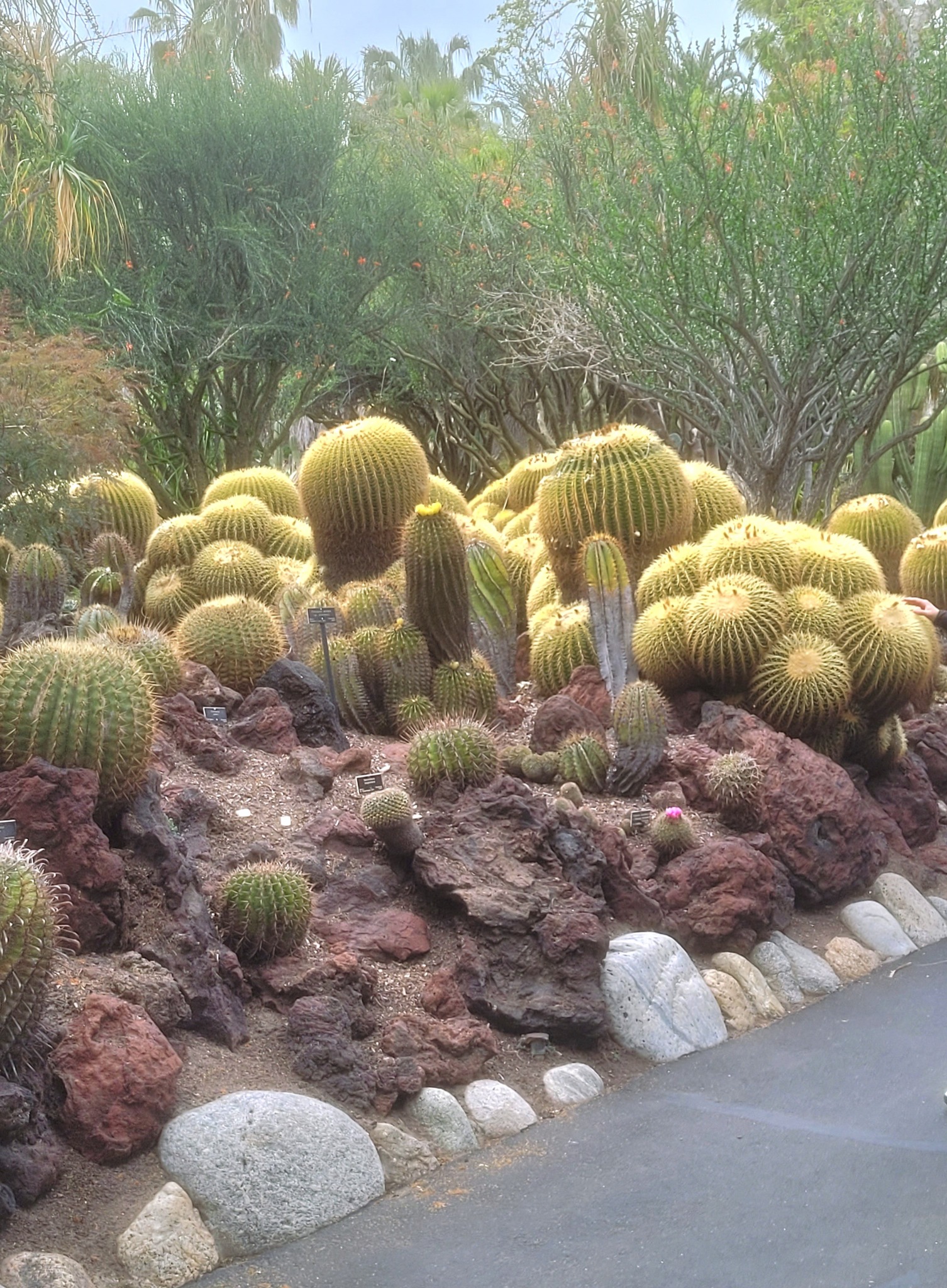
The barrel cacti at Huntington

While photo ops abound at the gardens, no photos are permitted in the Museum of Jurassic Technology; I will lead you to the website and just keep you guessing. But among the riches of the last week are germs of new poem drafts. We shall see what emerges.

Four+ days away, and I returned to spring in eastern PA: narcissus, magnolias, glory-of-the-snow, squill, bloodroot, forsythia, ornamental plum. Even more richness. Gratitude for the glory.

Mid-March

Tulip poplars begin to plump out their winter bud scales, where they will leaf out later in spring.

A marsh hawk zips overhead, winging above the treeline and vanishing over the northern hill.

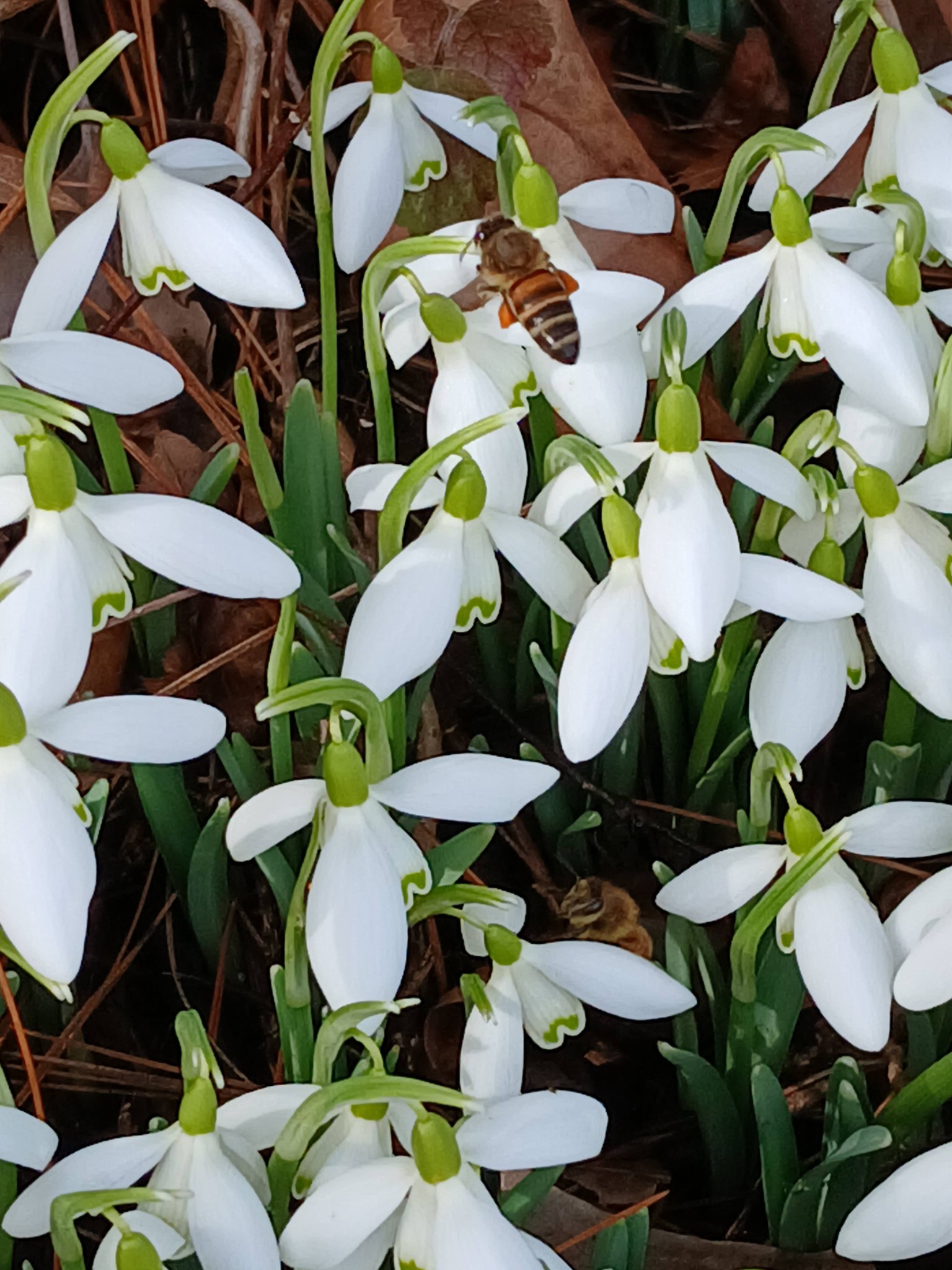
Early ornamentals bloom: crocus, snowdrop, aconite, i. reticulata.

Red-winged blackbirds make the mornings noisy–they have so many different songs and calls that three or four of them sound like multitudes, almost drowning out our year-round singers, the song sparrows. Early migrant passerines have returned, but it’s still winter here. Some bugs have gotten active and are emerging from hibernation or incubation. No bees as yet. When I turn over rotting logs, I find amphibians’ eggs and lots of different varieties of soil centipedes.

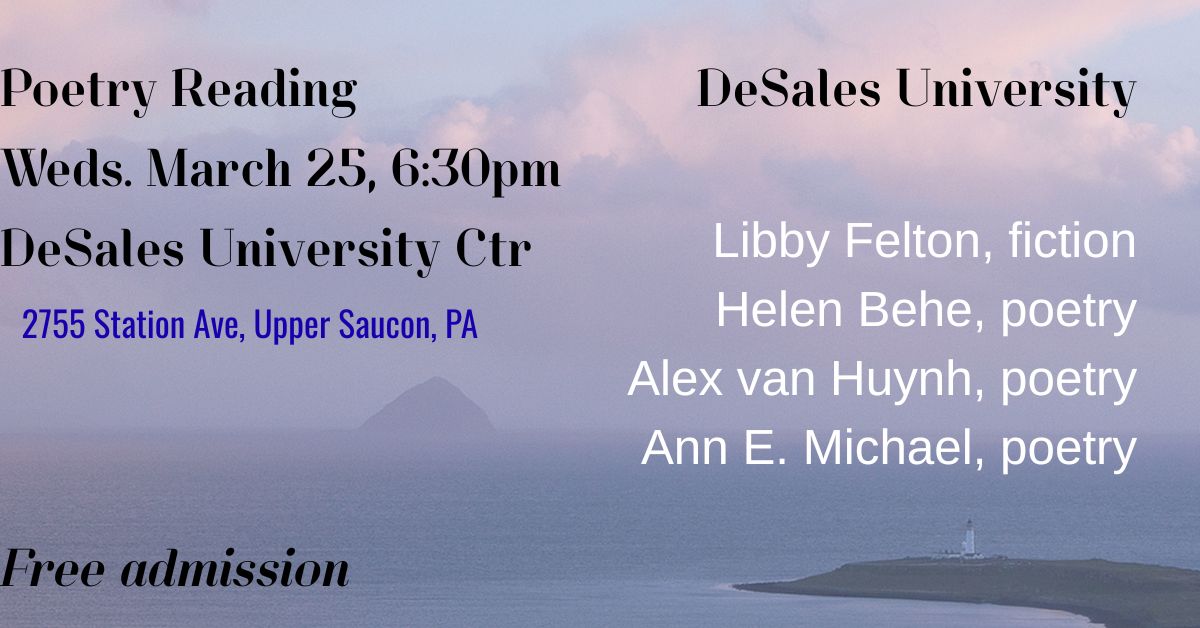
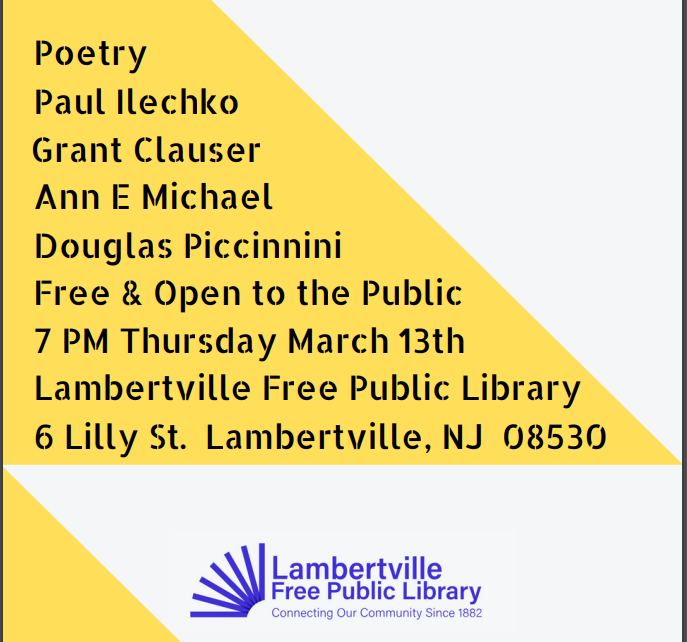
And, of course, worms. March’s moon is sometimes called the Worm Moon, and tonight there’s a total lunar eclipse around midnight here in PA. Is that auspicious? It’s also when I will be reading at the Lambertville Free Public Library in Lambertville, NJ. I’m excited to participate in an on-site, in-person reading again…I’ve been hibernating a bit from poetry events, but it is time to get stirring.

At the end of the month, I’m packing up for a brief trip to Los Angeles, where I will be attending one day only of the annual AWP Conference (Saturday’s Book Fair!) and spending the rest of the visit with my son. The conference always offers a terrific infusion of writerly companionship, community, and inspiration. Whereas time with my son offers love, cool places to see and eat and hike, a host of things I didn’t know I wanted to learn, and many moments of hilarity and conversation. It’s hard that he’s so far away–hard for me; I don’t think he minds, he is busy and having fun, which is as it should be.

Also, yes, the whole situation here in the USA is something I never could have imagined as a younger person, when I somehow had an unquestioning faith the US Constitution could actually be workable as an enduring rule of law. That careless people who value money over community could indeed disrupt that 1787 document was always a possibility (the moneyed property owners and slaveholders had their way with the original, after all), but most of us didn’t see this coming–naive, I suppose. Busy with our own concerns. I get it, and maybe we deserve what’s coming, but [ugh]. A concerned European friend recently asked me how I was faring under the stress of these first three months, and I told him that since making art (poetry) has generally been an unconventional act/behavior/response even under the patronage system, my response is to keep making art. Granted, it isn’t much, nothing earth-shattering, not gonna change society that way; but it keeps us observant little non-conformers on our toes, creative, and flourishing in the face of weirdness and oppression.

Which is something we can do. Like early bloomers in the cold days of late winter.

winter witch hazel blooming in snow

Breathe

2024 closed with “thundersnow” in my neck of the woods, a weather phenomenon that I find rather thrilling in its strangeness. And the year commenced with the conflagrations in California, not to mention everything else that goes on daily in the cosmos. Oh, the difficulties of life in interesting times.

Photo by Sabian Symbols on Pexels.com

It so happens that I had made plans, and purchased plane tickets, to visit my son in Los Angeles during the week that AWP is holding its annual conference there, in March–that is, assuming the situation in Los Angeles County doesn’t get even worse and assuming his apartment building survives the fires; it hasn’t been easy to keep myself from doom-scrolling and watching updated fire maps. I remind myself that there is not a thing I can do beyond sending money to charities and such, perhaps, and waiting for the winds to change, and that making myself stressed will actually do harm. But I am not one of those Pollyanna types (now termed a “toxic positivity” person, I have recently learned). I’m aware that the world can be hard, and that we may suffer. So, as my yoga and tai chi instructors would tell me:

Breathe.

There’s no point in trying to decide whether this start to the year is auspicious or inauspicious, though if I’m going to go with signs and auguries, I might choose to follow the Chinese year and move my year’s start to January 29, Year of the Wood Snake–and get all this awful stuff (including January 20th) packed into LAST year.

As I noted in my year-end post, a year’s end–or beginning–is arbitrary.

~

As for writing-related resolutions, I make them all the time, not just at the beginning of the year. But in that one respect, the first dozen days of January are going surprisingly well. I’ve been spending more time on revising older–sometimes much older–work, and I have been drafting some new poems. I even submitted just a few things to lit journals and have been making minor progress in the monumental task of culling and organizing my writing files.

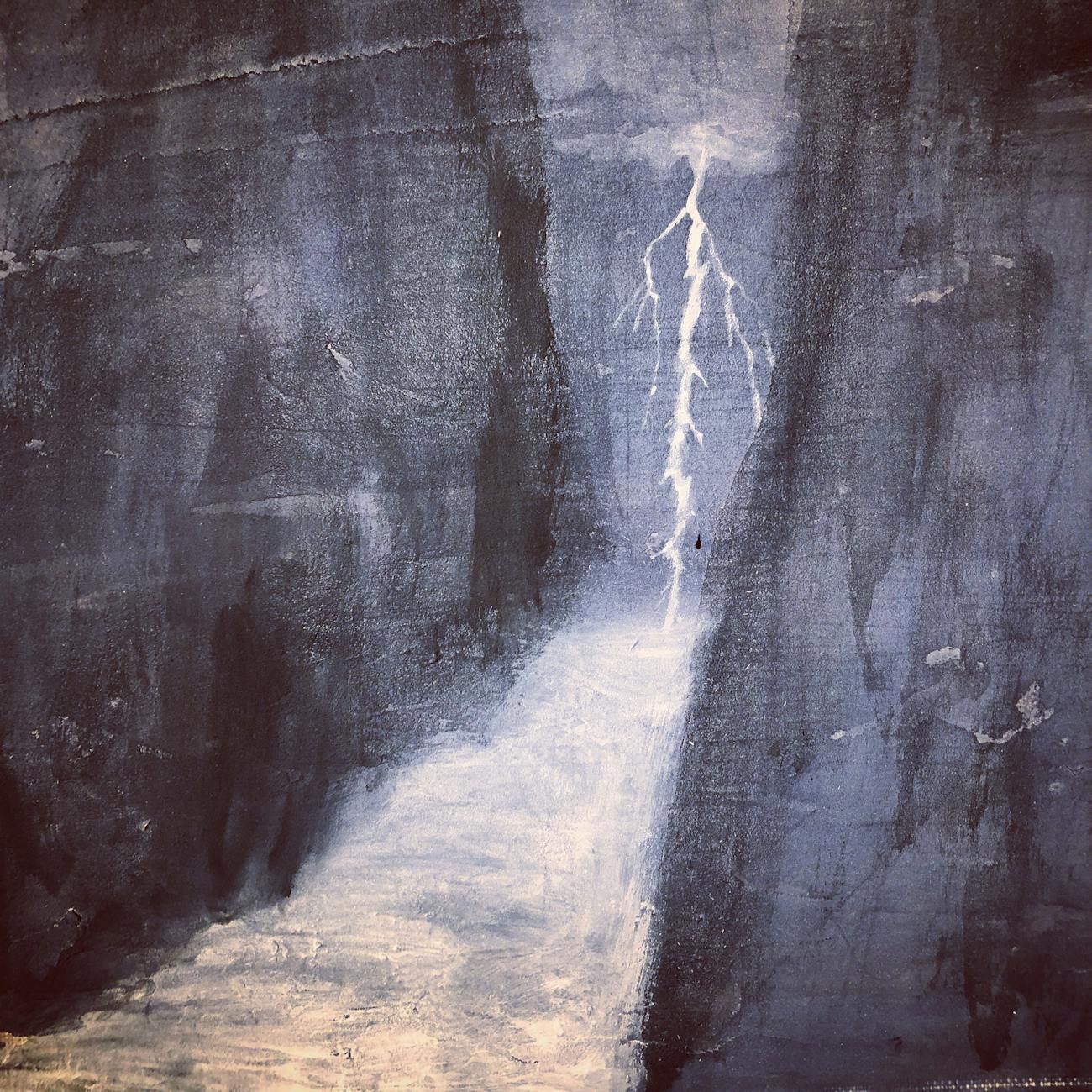
Best of all, I enrolled in an online poetry workshop with Anita Skeen through the Friends of Theodore Roethke Foundation, which starts this week. And I registered for an art class in February, so my plans to focus more on my creative work post-retirement are proceeding more or less apace. We balance fear and misery with art.

~

Cloud sketch in acrylics

In residence

It’s been some time since I was away at a residency with other artists and writers. Conferences, yes, but residencies are different–more intimate in scope, less social-life activity, more one-to-one conversations, and a great many overlaps in interests, inspirations, and approaches. The intensity doesn’t feel at all like the intensity of a large conference such as AWP, where I often feel I must cram my schedule with panels, meet-ups, and attendance at presentations and where the exchanges, while often intellectual, generally require the context of careers and situational details. At a residency, we certainly don’t avoid topics like families and day jobs; but such getting-to-know-you chats are secondary to conversations about art, artists, reading, technical methods, responses to environment, discussions about intent and audience, aesthetic and artistic philosophy.

A residency also offers that key component of creativity: unstructured time (or, time one gets to structure to one’s own liking). I cannot stress enough the value of reflection, contemplation, and woolgathering; the residency I attended in Spain offered this to a degree I haven’t had in quite some time, and I relished it. I took along Olga Tokarczuk’s book Flights, perfect reading for a plane-bus-train trip, and Mark Doty’s Deep Lane, contemplative and fearless poems that urged me to spend the necessary time with my thoughts and my environment.

~

It was interesting to hear about the methods and processes of other participants who were there the week I was. While all of them write in some form, their creative work is visual: Photography, film, digital art (animation, 3D, comics), performance/performative art, painting, multimedia. At first, I felt a bit out of step since what I “produce” is…well, abstract, I guess? And the means a person uses to create poems is mostly invisible; it’s not as though you can see us at work. A person at a desk, sitting on a rock, or lying under a tree doesn’t appear to be in the process of making anything and, except when the written work appears in print/online, the “artwork” isn’t something one can show to others. As I began to converse more with the visual artists, however, once again I experienced the joy of discourse with fellow creatives, no matter their discipline. I certainly have friends who are sculptors, painters, photographers, ceramicists, dancers, musicians, actors, & craftspeople of all stripes–and I don’t feel out of step when talking with them. I suppose it is my initial hesitation around “strangers” that kicks in. Shortly into the residency, we were no longer strangers.

The word la joya is Spanish for “jewel,” and it can also refer to a geographic hollow–a bowl-like area, which is fitting since the cortijo is situated in a sort of high valley surrounded by the mountains of the Parque Nacional de Sierra Nevada. On my last day at Joya-AiR, we held an artist talk to inform one another of our creative work and processes, influences, and possible future directions we imagine our work going in. Some of the other participants will be working there for another week or two! Which would be lovely, but I could not extend my stay at this time. Nonetheless, the residency has been very useful and productive for me. I feel so grateful to the people at Joya and to my Best Beloved for encouraging me to attend.

Poetry mentor: Ariel Dawson

Adrian Owles. That was her anagrammed alias. She used that name for things like electric and phone company bills when her real name set off “overdue payment” notices, resulting in her inability to get services. She did, in her youth, have a conniver’s sense of how to skive and get away with it. To some degree. She learned the skills from her father, a brilliant alcoholic from a once-wealthy family. From her mother, she learned poetry and an idealistic, romantic outlook on life…but also that she should be independent and never rely on men to take care of her or keep their promises.

Well, maybe she learned that last part from her father. Her parents never divorced, but her father was an absentee dad. That’s the picture she supplied to me. I suspect it was true, but I know only a tiny part of her story. Ariel Dawson, my poetry mentor, was a year younger than I but so well-read, aware of the “poetry scene,” reading craft essays and books before I knew such things existed–and taking reasoned issue with some of the writers, too, in ways it never would have occurred to me to do. Question such recognized authority? I would not have dared.

What is a mentor? A kind of teacher or model of behavior? Ariel’s behavior was far from conventional, which did appeal to me. We hitchhiked from Michigan to NYC and back. We stayed up almost until dawn and drank wine and talked about poetry. We ganged up on the poor man teaching a creative writing class at our college by questioning his pronouncements and asking about poets and poetry he had not specialized in. We sneaked into bars without paying the cover charge or having our IDs checked (Michigan had a liquor law that permitted 18-year-olds to drink, but Ariel was only 17). I kept wondering quietly to myself: Is this how poets behave? Is unconventionality necessary to the craft?

Well, yes and no. A certain aspect of the unconventional probably helps writers of any kind, but risky antics are not required. An individual perspective on heartbreak or trauma can be useful. Some of Ariel’s stories made me fear for her, feel heartbreak for her; if I never knew how factually true they were, I sensed a fundamental truth in what she told me. One example is her “love affair” when she was 13. She believed she was having an affair with a man in his early 30s who was from Pittsburgh, which she thought was an eastern seaboard town (so much for Detroit’s 1970s educational system as far as American geography goes). He disappeared one day, and she set off by herself to find him in Pittsburgh, where the police eventually located her. They sent her home to her mother. Now I look at this story as grooming by a pederast, but at the time she considered it oddly romantic of her. What makes trauma, if the victim doesn’t feel traumatized? If she can imagine the experience into something naive and…sort of like love?

Ariel’s poems appeared mostly in the early 1980s in print magazines; she taught creative writing at a couple of universities, but eventually her love of dreams and the mythic led her to pursue Jungian scholarship. Last I heard, she was working as an analyst in New York state. Perhaps unfortunately, she remains best known for a letter she wrote to the Writer’s Chronicle/AWP Newsletter in which she took a stance against New Formalism. She always did love a controversy.

My book Strange Ladies is dedicated to her memory. For a whole bunch of reasons and for a number of Ariel stories I can’t even begin to relate here. But most of all, because she urged me to write. And to revise. And to read as many poets and as many craft books as I possibly could. And never stop learning, and keep on writing. She got me to give poetry readings aloud to an audience. She kept me laughing. She was wild and lovely, and I am sorry she is no longer among us.

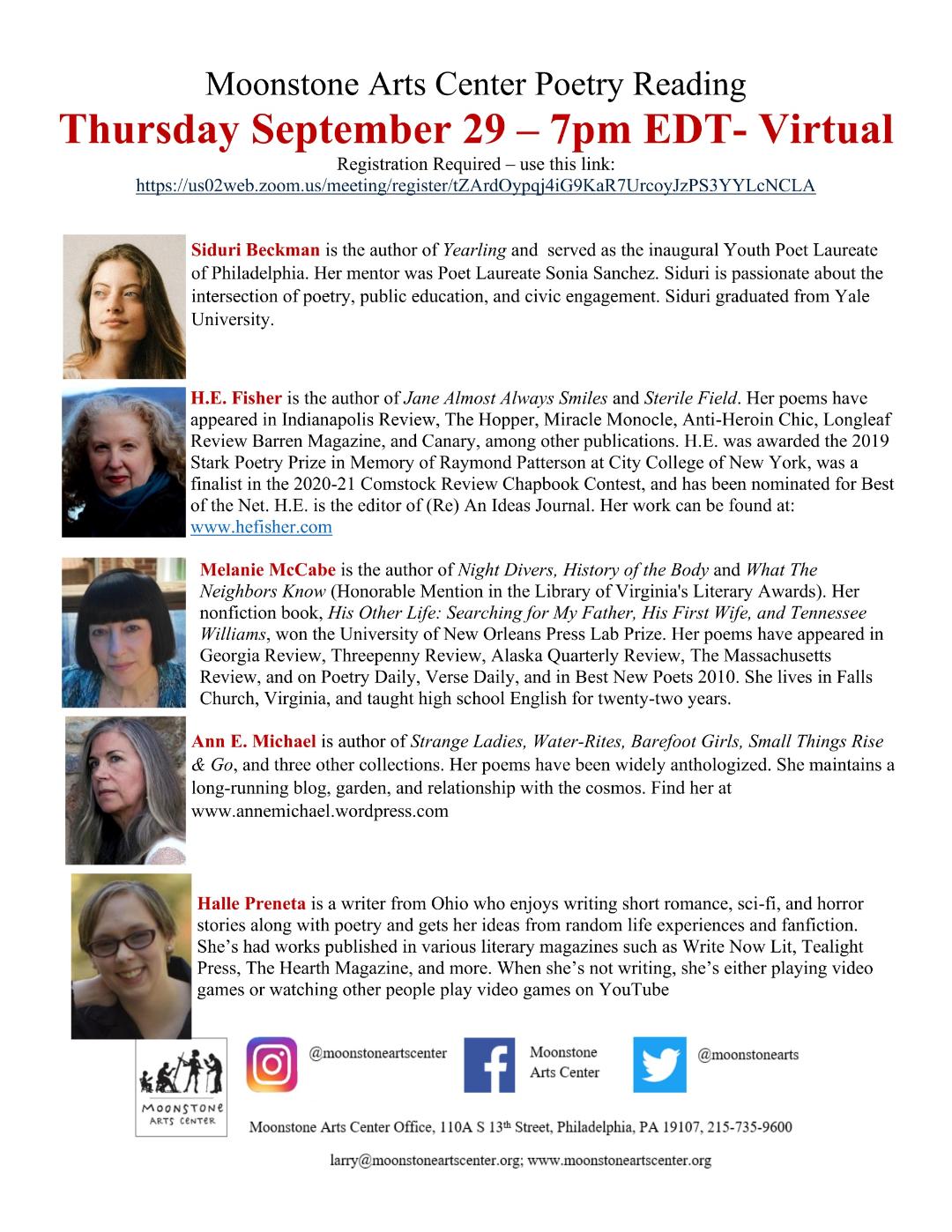
Meanwhile, here is the link to register for an upcoming Zoom reading by some strange ladies, including yours truly:

https://us02web.zoom.us/meeting/register/tZArdOypqj4iG9KaR7UrcoyJzPS3YYLcNCLA

~

Reading poetry

In March, I made a pledge to read more poetry than I had been. A poetry book a week, either a new one or a re-read from my stacks (because, yes, I have too many books…). And then I attended the AWP conference, which features an amazing book fair; you can guess the outcome of that.

Now that it’s National Poetry Month, I have plenty of books in which to immerse myself. I chose mostly contemporary writers this time, and the work of some poetry colleagues I have met through past conferences and social media. Here’s my by-the-bedside reading for the next month or two.

Two by Tim Seibles, because his work is such fun to read as well as thoughtful, sensual, and deep–and because he’s my age and his memory-based poems are packed with things I can relate to. I just read his 2012 book Fast Animal and have One Turn Around the Sun in the reading pile.

Eleanor Wilner’s early and uncollected, Gone to Earth. Kim Stafford’s Singer Come from Afar. Susan Rich’s new collection Gallery of Postcards and Maps. Cieve, by B. K. Fisher.

I’m browsing through the anthology Here: Poems for the Planet, edited by Elizabeth J. Coleman–a lovely selection of “ecopoetry.” I discovered a White Pine Press collection called Dreaming of Fallen Blossoms, Tune Poems of Su Dong-Po, that informed me about a type of poem I’d never heard of, the tune poems or song poems of 11th-c. China. Translated and prefaced by Yun Wang, and presented with original text on facing pages, it’s a fascinating set of poems for historical reasons but also offers really delightful poetry. I’m also awaiting the arrival of Emily Rose Cole’s Thunderhead. Emily went to high school with my son, and I am thrilled at her development as a really serious and talented poet. I can say “I knew her when…”

I’m going to sign off, post this update, and read a book. Happy National Poetry Month! Reading is the best way to acknowledge the art.

~

Squalls

It’s still March; and yes, a few daffodils had begun to bloom–and yesterday the weather was raw and today it is frigid, and both afternoons I got stuck in snow squalls while driving. Squall: a good word, apparently Old Norse in origin and related to squeal. My students were cursing the return to cold air. I put my mittens on and endeavored to teach myself patience. We do need the cooler currents, but the worst things about overall global warming are the meteorological extremes, the cold that is so cold and the snow that is oddly early or late and deep, the hurricanes, the hailstorms and tornadoes, the flooding.

Tree frogs know how to take care of themselves. They leave the trees and go back into amphibian dormancy until the weather breaks again. The shallow burrow where a tree frog waits out a spring freeze is called a hibernaculum. Days like this one, when the winter smacks back the warmth again, a hibernaculum appeals to me.

Having just returned from three days at a writers conference [the AWP], the concept of a solo burrow to recoup my energy fits the bill. The conference–largely due to covid 19– was not as well attended as those I have been to before (& required masks and a vaccine certificate); also, the Philadelphia Convention Center is vast, so I did not feel overly worried about the virus. The event felt as overwhelming as ever, though, and hard on an introvert. I did attend with writerly buddies, and met nice folks and learned new things. I remembered the lessons of past conferences in terms of pacing myself, purchasing books in a manageable fashion, and not lugging too much stuff around: general attending-a-conference navigation. One thing I will grouse about was my own inability to use a phone app to figure out what was going on where. My phone is small, and I am inept at its tech capacities. I prefer a paper guidebook, though I suppose that’s not as environmentally friendly.

Re-entry into my routine was bumpier than it used to be. I had post-conference physical aches and fatigue, and I felt oddly rattled intellectually, as if all those marvelous and interesting poems, concepts, people, theories, books, journals, programs, and voices had jumbled themselves into my brain and not finished synthesizing. I suppose that about describes it, too…it is a LOT to try to connect and to sort through. Worth it, however.

The upshot? I need my hibernaculum to screen me from the squall. But spring will come.

Photo by Eva Elijas on Pexels.com

Conventional

It’s been a long time since I attended a convention, concert, or any large event. Thanks to covid, longer than usual. This year, I’m braving the Association of Writers & Writing Programs’ annual conference–in person, next week–since it’s being held near me, in Philadelphia, this time. Never one for large crowds or rooms full of strangers, given my natural inclination to internalize or curl up in a corner with a book, I have nevertheless attended AWP in the past and have found it supplies me with creative energy in the form of writers I need to read, intellectual ideas I want to explore, and reasons to keep writing.

~

The conference provides a good place to meet up with fellow writers I know mostly “virtually” via social media or email, and to see folks who live far from me; it also features well-known writers in readings, panels, and conversation–always an excellent experience. I’ve blogged about past conferences (if you’re interested, type “AWP” in the Search form on this page, and a bunch of posts will come up). Attendees do not have to be academics or involved in creative writing programs to attend. I’m excited!

Meanwhile, the month of March does its typical lunge and feint, volt, and passe arriere as it heads toward springtime…I never know what to expect, weather-wise. Today: mild and almost 70 F. I’m hoping we get a string of 50-degree days that permit some garden preparation. But then again, that’s always what I hope for in March.

New in the outdoor garden this week: the first bumblebees have emerged. There’s one in this photo, amid the iris reticulata–

bumblebee, just left of center; iris reticulata

~

My tomato seeds have sprouted in their little seed-starting pots by the sunny window. Gardeners must be optimists. I guess I learned that from my dad.

More reading, more poems

Here’s my second post on what new or new-ish or new-to-me books of poetry I am reading during 2020 National Poetry Month. This time, newly-released from Tinderbox Editions, Lesley Wheeler‘s collection The State She’s In.

wheeler-state

First, a little background about Wheeler, a poet, novelist, and educator who has been extremely supportive of contemporary poets and poetry in her classes at Washington & Lee University, in her administrative positions and presentations at AWP, and on her blog and other social media platforms. The state she’s in is metaphorical, but it is also Virginia, with its fraught history, and it’s also the body: female, white, mid-life.

What I want to write are responses to, not reviews of, the books I have been enjoying. And there is much here to enjoy! Each of the book’s sections carries the same title: “Ambitions;” and after I read these poems (almost in one go, the way I’d read a novel), I returned to the table of contents and considered how each set of poems made a list of ambitions, and also, what it means to have ambitions. Particularly for a woman in a 21st-c Western capitalist society, sometimes ambitions read like anger. Are met with anger. Require rage to confront, even though rage alone will not solve the problem. (Appropriate to insert here how I love her poem “Spring Rage”? Yes, appropriate.)

Wheeler’s use of haibun forms to explore state’s-rights racism or workplace harassment is something I found startling. I keep returning to these and other poems to appreciate, on each subsequent reading, the surprises in the craft as well as the barely-contained frenzy expressed, and also the keen observations of the world that act to calm the speaker down. A tough balance, that.

On the whole, The State She’s In feels like a fierce call to pay attention, not just to the reader but to the speaker in these poems–she’s finding her route toward sagacity but kicking away at what we take for granted, not wanting to find personal equanimity if it means hiding what she knows to be true. These poems oppose ignorance in all its forms, including the privilege of choosing not to learn (or not to act, or not to act fairly and justly) that gets practiced at the highest levels of the academy, the government, and in any form of society. Wow!

If enough of us could get together and recite Lesley Wheeler’s “All-Purpose Spell for Banishment” (p. 57), maybe we could make “The Nasties” vanish.