Local libraries

There are two local libraries near my house, and the campus library at the college where I used to work. And yet, until just a couple of months ago, they were rather underutilized by yours truly. I had developed into a bit of a book hoarder. I had enough disposable income to purchase books, and as a writer myself I felt an obligation to buy books–from the authors or their publishers when possible (some books are out of print and then…Amazon or ThriftBooks). Buying books helps to keep authors and publishers afloat. Win-win.

I’m now on a fixed income, however, and also have much more ‘free time’ because I have stopped working 40 hours a week. I can get to the libraries at ten a.m. and browse the stacks and ask for interlibrary loans. The first time I borrowed from the library in town, I received a receipt that said: “You checked out the following items,” followed by the due dates of each item, and then this cheerful little notice: “You saved $65.96 by using your public library!” Look at me, the savvy saver.

Maybe libraries have been doing this for awhile and I never noticed because I haven’t been using them. But I thought it was an amusing reminder. I guess it also serves to let people know they ought to donate money and books since, after all, they are saving so much by opting for the library. And so, while I slowly cull my own shelves for –er– “downsizing” purposes, I’ve been borrowing weekly from my free public libraries, one of so-called civilization’s greatest boons. I am sorry it took me so long to return to the safe and welcoming space of a public library.

ann e michael
The South Whitley Library as it was in 1967, with my grandmother in her Story Lady attire.

~

In most public libraries, the hardest books to locate are small-press poetry titles; but the campus library has a good selection of those and, as a former employee, I can drive over there when searching out poetry collections. This means that I will still purchase the occasional new or hard-to-locate poetry books by writers whose work I feel I simply must possess. It’s a big challenge to get over that hurdle of needing to own books, though. A series of full bookshelves feels somehow comforting to me. I’d much rather divest myself of clothing, shoes, jewelry, electronic devices, furniture, craft supplies, maybe even artwork or gardening tools, than part with my books…especially the poetry collections and the philosophy texts.

I’ll keep those for now. But I will also return this $65.96-worth of books to my local library and borrow another $66-worth of books in their place.

~ And in the happy news department, P.S. see below! The issue should be live soon. Amazingly, this is my third Pushcart nomination this year. The last time I was nominated for this annual prize was 1997. So, kinda gobsmacked…and grateful.

Alone not lonely

Recent read: Party of One: A Loner’s Manifesto by Anneli Rufus, a book that I would have found enlightening if it had only been around when I was 18 years old. But many things were as yet unwritten 45 years ago, and even if this book had been–I might not have discovered it. Rufus celebrates social loners, decrying the myth that people who prefer time by themselves to socializing are by nature dangerous and threatening. That knowledge would have been a great relief to me when I was young; but I eventually learned on my own that the “loner myth” is, indeed, a mistaken idea perpetrated by too many so-called experts in our society. Through my lifelong bookworm habit, I learned a great deal about people who chose to be alone, chose small circles of friends, or chose to keep friendships going by letter rather than through visits.

All of which options seemed perfectly reasonable to me. I like people and deeply need my friends and family, but I’ve always found a different form of comfort in–and need for–being by myself. I joined Girl Scouts mostly because my two best friends were Scouts, but I was the kid who dawdled on hikes, slowing down to look at the plants and mosses, and I pretended to be asleep when camping so that others would stop chatting to me. When I found my old Girl Scout sash some years back, it was festooned with badges earned for loner-type skills: literature, sewing, whittling, embroidery, and other crafts or pursuits I could accomplish on my own. Selling cookies? Nah. I managed to be the worst cookie salesperson in the troop for several years running.

In high school, I joined the marching band. It was required duty for every student in the concert band, where I played flute. My sister protested against that requirement and succeeded in getting out of marching band, but the self-advocacy did not seem worth it to me-at-15. Besides, band provided me with a few close friends and some sense of high-school camaraderie which, as a sensitive nerd who was never much for teams or competition, gave me a veneer of normalcy in a very team-oriented time and place. I was not a rebellious loner but a stealth loner.

Despite often feeling a bit like an outlier among my peers, I had no burning need to belong or be accepted, and that need (and lack of acceptance) in a person is what leads to “pseudo-loners” (Rufus’ term). Those are the people most likely to get angry, resentful, hostile, or suicidal, she claims: the ones who want to fit in but are ostracized or blocked. The rest of us just want to be left alone when it suits us. It’s not the same thing.

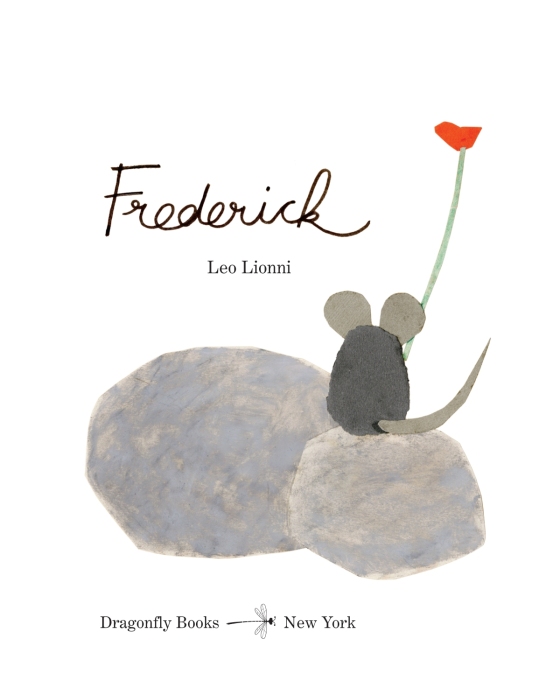
Loner, introvert, eccentric, moody, artistic, creative, sensitive, weird–at my age, I don’t need a manifesto. Experience demonstrates a person can be friendly and funny and easily-tired and sometimes withdrawn and able to speak in public and irritated by too much noise or novelty and can dance at parties and laugh too loudly and a thousand other things that are contradictory and not simple to pin down. (And capable of polysyndeton!) But if you know a child who is content being by themselves and who may feel pressured by well-intentioned adults, I recommend Leo Lionni‘s Caldecott-winning book Frederick. It is a story I loved as a child, and now I realize why. The quiet mouse who is off on his own while his busy community harvests food for winter proves valuable to his mouse-society by offering them poems and stories that ease their discomfort when they are cold and hungry.

In some ways, that has been my lifelong dream.

Thysanura

The bristletails (order thysanura) are a group of wingless insects that includes Lepisma saccharina, the silverfish–one of the most common “bookworms,” although they are not worms! They nestle between pages, covers, and bindings of books, though books are certainly not all they eat. I must confess they are not among my favorite arthropods. Nonetheless, I class myself as a bookworm, though I’m far less voracious than some folks I know.

Therefore, I ought to note that my office on campus has been moved to my favorite place: the library! As I noted in some long-ago posts, libraries have been among my comfortable places ever since I was almost too young to read, and my maternal grandmother volunteered at her local library (notably as “The Story Lady.”) I still recall the jingle–from the 1960s–that accompanied a PSA for the library I loved as a 5-to-7-year-old.

~

ann e michael
The South Whitley Library as it was in 1967, with my grandmother in her Story Lady attire.

Anyway, it has longed seemed logical that the campus writing center be located where research takes place; we just had to find room. The library staff generously donated one quite spacious office room for the college writing center, and I couldn’t be more pleased!

My colleagues in academic support–my university department–are still housed in the basement of the main classroom building. I miss them, and they envy the fact that I now have a window (and that it’s not freezing up here). But while I would never knock the value of a window after 15 years under the frost line, I’m happiest about having my work office located in my favorite building on campus: the library. Books make me comfortable. When I need a break from my computer screen or from meetings, I can take a deep breath and walk around the stacks in silence. It’s perfectly acceptable to be rather introverted in a library. And the people who surround me are as enthusiastic about books as I am.

I plan to take a short breather from blogging and work-related stuff to visit a far-away Best Beloved and am already plotting which paperbacks to pack for the tedious flights. I hope to avoid silverfish and viral stowaways. Wish me luck.

Meanwhile, embrace your inner bookworm!

I searched for the most attractive photo of a silverfish I could find, and this one came from Encyclopaedia Britannica. Sorry, it was the best I could do. I’m sure another silverfish would find this one quite handsome. To the human bookworms I know: this is not meant to deride those of us who digest books with a healthy appetite. Just a metaphor!