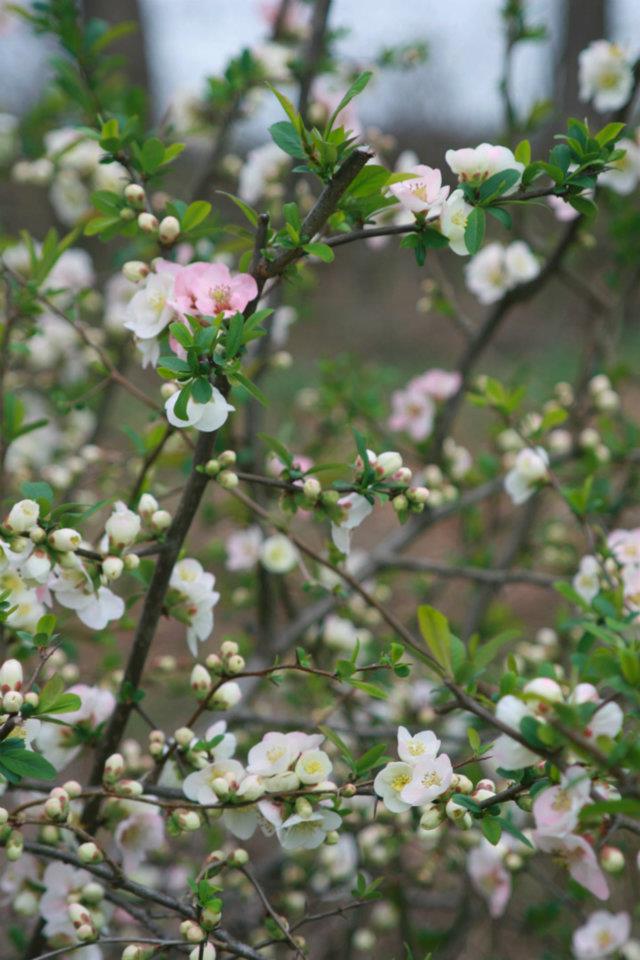
Prose/poetry

In the first weeks of this year, I participated in a virtual poetry workshop with Anita Skeen. It was so useful to me that I signed up for another workshop, this one on writing the prose poem, with mixed-media artist and poet Lorette Luzajic. She is the editor of an online prose-poetry lit journal, The Mackinaw.

In this workshop, I’m returning to a form I learned early in my writing practice. My friend and mentor David Dunn may have introduced me to prose poems, I cannot recall anymore; but I do know he was writing them in 1980 and that some of the poems in our collaborative chapbook The Swan King are either prose poems or on the verge of being prose poems. Prose poetry was then considered a “new” form and was (& in some quarters, remains) controversial among poets and critics. It sounds self-conflicting: if it is prose, how can it be poetry?

In the decades since I was very new to poetry, reading everything I could find of contemporary work and experimenting all over the place, the prose poem has been much written-about in literary forums and academia and is–mostly–on pretty sturdy footing as a “form” of poetry. I never completely stopped writing prose poems, and a few appear in most of my books. I’ve been writing so many sad lyrical-narrative poems since 2018, however, that I haven’t spent much time really playing with poetry, and play is a huge part of creative thinking. So Lorette Luzajic’s workshop, which gives us a chance to experiment and play, appealed to me.

The workshop has got me thinking about versions and expansions of the form, turned up some exciting new poets to read, and offered amusing prompts that have moved me into ekphrastic, surrealistic, dream-based, and pop-culture themed poems. I have found some surprises in my own work, which is always a reviving feeling.

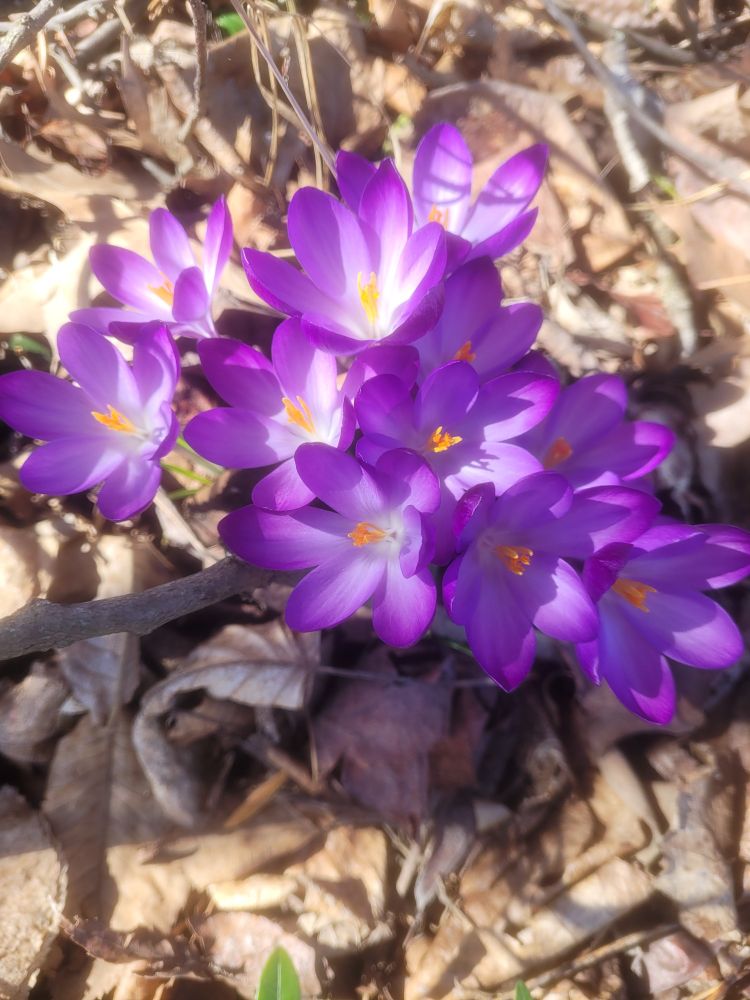
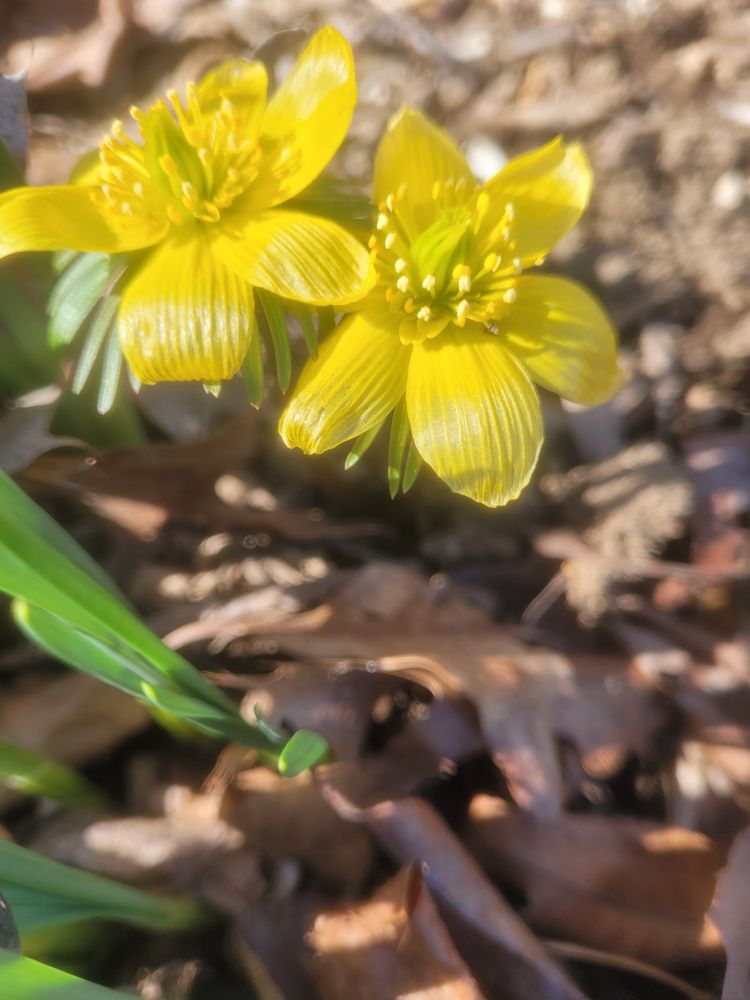
Also, we are almost at the vernal equinox. My environment is brightening in small ways, which tends to help with enduring the tough stuff.
Just reading

Sunday evening, my weeding stirred up so much dust and chaff that I needed to wear a bandanna around my nose and mouth. A continuous late-summer drought. There are still tomatoes and basil, sunflowers and zinnias, but the avian migration has been going on for some weeks and the days are getting shorter. Just after equinox, three weeks without rain; at last the sky clouds over and drops a little moisture on the parched soil. Yellow leaves sift onto the lawn. Small flocks of robins rejoice in the softer top layer of dirt, pull at grubs and worms, then fly off.

~

The rain’s necessary, and I’m grateful. Rainy days, however, take issue with my body–or, probably, the other way around. The need to take NSAIDs and rest offers the opportunity for just reading. This isn’t a bad thing, especially as I had Richard Powers’ novel The Gold Bug Variations to hand. It’s a tour de force of pattern, structure, code-breaking, DNA-building, relationships, love, chemistry, music, art, literature, and much more. I love the references (the narrator is a reference librarian), the minutia, history, alliteration, lists, compilations*, the whole thread of the novel’s dramatic arc, its relationship (mathematically, metaphorically, structurally) to music and the work of the gene-sequencing science. The book tells the parallel stories of couples who fall in love 25 years apart, the coincidences and randomness, the patterns that may not be patterns. I’m thoroughly wowed by an author who puts so much research into his writing and makes everything fit somehow.

Powers must have been about 33 when he completed this novel. I can’t imagine being so wise about human behavior and so informed about the sciences and music theory at that young age. Well, for one, I’m not as brilliant as he is; and two, I was raising toddlers when I was 33, which is a science unto itself and as revelatory as any book I could have been reading or writing in early mid-life.

But I digress. This book interests me on so many levels that I’ll be thinking about it for weeks. I may have to re-read it, take notes next time. I kept wanting to underline passages–it’s a library book, and marginalia is a no-no. I can imagine reading it again to the strains of the Goldberg Variations–indeed, I read a few chapters to said accompaniment this time. This is not a swift and easy read: it took me awhile to feel warmed up about the narrator, though she’s funny and smart. By the end, I loved her like a friend.

Honestly, novels seldom get me this excited or inspired. I’m glad I had a crappy day so I could justify lying around and “just reading.” As if “just reading” is not a worthwhile endeavor. The weeds can wait.

~

* re compilations: a word Powers employs often in this novel is the neologism/computer programming term “kludge.” I wasn’t familiar with it. But it’s a terrific word! https://www.etymonline.com/search?q=kludge

Equinoctal

Torrents. We had rain in torrents, and it went on for days from February into March and then on…and on. Constant alerts on the cell phones: “Flash flooding.” Doldrums set in. In an effort to accomplish anything at all, I even started to sort through and organize my attic.

Talk about desperation!

The attic project isn’t finished–the weather turned mild and clear two days ago, so I ran to the garden to get to work out there–but it turned out to be a more rewarding task than I expected. I started by tackling the Christmas stuff, then the books (SO many books), children’s toys (the kids are in their 30s and there are no grandchildren), and moved on to paper correspondence. Letters! Postal mail. Epistles. Why I have saved so much of my correspondence from 1975 to the present, I cannot explain. Maybe that’s a thing that people who love words just naturally do, the same reason I have kept so many books. I certainly don’t need all of it; but that was part of the task, sorting what I want to keep and agreeing to recycle the rest. I also found odd ephemera, such as photocopied posters for long-ago poetry readings, broadsides of poems, xerox-zines from the early 1980s, and ancient mixtapes on cassette.

~

There’s some sorrow with this project. So many of my former correspondents have died. I find my grandmother’s looping script, my dad’s distinctive handwriting, my dear friend David Dunn’s nearly-illegible scrawl. Reminders of times past. Maybe that is why we keep ephemera: to remember what we thought, at the time, was important.

Maybe it is, maybe it isn’t, by the time we reach our later decades–if we’re fortunate enough to reach them.

I keep gardens for different reasons. Not to remember the past but to see what the present can bring.

~speaking of the present~

My new book can now be ordered from the publisher, if you find Amazon problematic (and there are good reasons for that). The link is here.

Morning birds

Every year, late March, starting at dawn, the cardinal thumps against our basement window, reminding me of a bored bear I saw long ago in a too-small cage–that repetitious sway and stomp–poor thing. But the bird’s unfettered and the window’s behind a large bush, a spindle tree we planted too close to the house–what’s driving that bird? Territoriality? We think perhaps it sees its reflection, so we’ve tried bird scare tape, opening the window, curtaining. Some years there are nests in that bush, but it’s never been cardinals nesting there. Thunk! Thunk!

My son used to stay up playing League of Legends until 3 am in that room, only to be awakened at 5:45 with irritating regularity by “Morning Bird.” He has left the nest, but the bird or its genetically programmed-to-thunk offspring returns annually. So it must be Spring.

Finally we got some good rain, about 3″, but the feeder stream behind our property lies pretty low and swampy after a mostly snowless winter and a dry autumn. Times have been when that stream flowed four feet deeper, rushing to meet Saucon Creek and head to the Lehigh River basin. I walked there this morning looking for frog eggs and salamanders, found two of the latter in a vernal pool where the skunk cabbage drills up from the swamp. Skunk cabbage doesn’t have much of a reputation for beauty but looks lovely with the sun behind its unfurling leaves.

I’m not a birder and can only identify about 25 birds by sight, fewer by sound. I noted mourning doves, mockingbirds and turkey buzzards, robins and redwings as I headed toward the creek. I have loaded Cornell’s “Merlin” bird app on my phone, though, and spent some quiet time sitting back on my heels in the sunshine while recording birdsong. The field sparrows weren’t in the field as yet, but other sparrows were calling: white-throated, song, and house sparrows (the house sparrows love to hide in the thick English ivy bush near the back of our house). Cardinals, of course, house finches, American crow, bluejay, red-bellied woodpecker, hairy woodpecker, tufted titmouse. Deeper in the woods, the white-breasted nuthatch got noisy, and an Eastern phoebe scolded me quite insistently from a beech tree. I was scouting around the largest beeches to see if I could find any dry beechdrop stems, but likely these trees aren’t quite old enough for beechdrops. I was happy to find some partridge-berry leaves, though; ten days ago, when my husband mowed the meadow, he saw a bobwhite–and left some cover standing for it.

I heard the Carolina wren as “Merlin” identified it, and was interested to note the bird app also recorded the presence of black-capped chickadee, bluebird, and Eastern towhee. It’s a bit early for towhees, but I’ve seen them here in past years, usually in April. And just before this recent rainstorm, I spied a killdeer in the meadow. I feel like an amateur naturalist! Anyway, forsythia are blooming. Even if we get more cold spells, I call Spring as having sprung.

~

By 10 am I was assessing the vegetable patch, where I moved a couple of perennial herbs and tore out as much shotweed as I could find. Some winter weeds can stay in the soil for later season removal, but shotweed flowers early, bolts fast, and sends out thousands of seeds so effectively that winter weeding is essential. I can’t keep it out of my lawn, but I can keep it under control in the garden. Redwings, robins, and woodpeckers kept up their calling while I worked. Good to get sun on my hair and dirt under my nails–feels like the first real spring day.

Emergent

emergent (adj.) late 14c., “rising from what surrounds it, coming into view,” from Latin emergentem (nominative emergens), present participle of emergere “to rise out or up” (see emerge).

etymologyonline: etymonline.com

~

Spring equinox.

Very soon–perhaps days from now–the vernal ephemerals will appear. The vernal ephemerals are early spring flowers that thrive low to earth before the trees leaf out: spring beauties, dogtooth violet, squirrel corn, bloodroot, hepatica, and others that look delicate but are, in fact, tough little survivors who have found their ecological niche in the cool days and weak sunlight just post-equinox. We could consider their resilience an inspiration.

Vernal ephemerals sounds to me like a term for sprites, will o’ the wisps, or angels, but it’s a scientific term. I learned it from Tom Wessels (here’s one of his videos on coevolution https://www.youtube.com/watch?v=hCAvBmY7ZgA),* but I have been fascinated by these plants for decades. I have always been the sort of person who walked around with my head either facing the clouds or scanning the earth beneath my feet. Hence, a reason so much of my poetry uses images from nature even when I am not writing about the garden, the meadow, the woods, the sea. My clumsiness a byproduct of my peculiar need to observe the natural environment.

Anyway, hepatica is about as close to a sprite as any blossom I know of.

They aren’t common where I now live. Here, the vernal ephemerals I see most often are trout lily, bloodroot, spring beauty, violets, coltsfoot, trillium. Probably a few others that I’m forgetting because the ephemerals haven’t popped up yet. Still far too cold and a bit dry after a month of snow cover. The emergent greens in my gardens consist mainly of winter weeds, and I’m happy even to see those. Because: green.

“Just a little green like the color when the spring is born” says a line in Joni Mitchell’s song. The green things rise up or out of what surrounds them, coming into view.

I have been keeping under the standing snow, leaf litter, and dross for three months, processing (as the jargon terms it) my father’s death and a new manuscript and a backlog of poem drafts and covid-19 with its attendant disruptions, limitations, and opportunities. But the snow has subsided from all but a few gullies on the north sides of hills; iris reticulata and snowdrops are in bloom, along with the winter-blooming witch hazel. There’s work to do in the garden. Poems to revise. National Poetry Month ahead (April!). It’s the 25th year for this literary celebration.

Time for me, like the skunks and the skunk cabbage and the little ephemerals, to rise out of my surroundings. And take up this blog again? It’s a start. A little green shoot emerging in the chilly sunlight. Hello.

* Thanks to Dave Bonta for the video recommendation

A break

I took a break from weeding and lay in the hammock awhile. Cloudless, breezy, equinoctial day–in no time, acorns and oak leaves hastened down to join me (nothing quite like having a large acorn ping on the forehead to remind one of the force of gravity and the inevitability of seasonal change). Hammock time is being pared away by the longer nights.

When I can be out of doors, I keep an eye out for migratory dragonflies, monarchs, flocks of robins, assemblages of chipping sparrows. Yesterday, I spied a kestrel in flight, zooming pointedly, clearly on the hunt. Today, we heard the weirdly rasping, short-stopped honks of herons, a stately pair of whom were being followed by an oddly-silent flock of crows.

smallcornsThis brief post is likewise a break for me. Post-weeding and post-hammock, I have student papers to grade and a busy work week ahead. Well, that’s what happens in the fall! I may as well be ready for it.

In the meantime, specific observations from the hammock or the back porch may act as feeder streams for future poems.

Dogs & lions

By chance, I encountered the poem “Thorn Leaves in March” by W.S. Merwin (1956, Poetry magazine) a day ago and felt levels of resonance such as poems can evoke. The powerfully “clear expression of mixed feelings”–thank you again, W.H. Auden–converges with seasonal details in this early Merwin piece and merges, completely by happenstance, with events in my current life.

Walking out in the late March midnight
With the old blind bitch on her bedtime errand
Of ease stumbling beside me, I saw

At the hill’s edge, by the blue flooding
Of the arc lamps, and the moon’s suffused presence…

My elderly dog stumbles beside me on these late-winter nights; I do not think she will see another full-blooming spring. Resonance.

alicelamb

Rescue of an orphaned lamb.

“As a white lamb the month’s entrance had been…” Well, that has certainly been true of this year’s weather. And the lamb allusion makes me think not just of the old saying about March but about my daughter, who is spending this month’s last two weeks working among ewes on a farm in Scotland as lambing season progresses.

Merwin’s speaker refutes the aphorism; his March comes in like a lamb because it is white, and goes out in white, as well:

…as a lamb, I could see now, it would go,
Breathless, into its own ghostliness,
Taking with it more than its tepid moon.

The lion, he claims, is “The beast of gold, and sought as an answer,/Whose pure sign no solution is.” No lion in this quiet, late-winter/cusp-of-spring snowfall–the light is silvery, the budding leaves of the thorn trees translucent and cold. The speaker stands beneath the “sinking moon” and wonders, questions, listening for something he knows he will not hear.

The old dog, domestic companion (neither lion nor lamb), completes her mission; the man lets go of metaphysical thoughts; the earth inexorably turns toward summer–despite the snow.

I’ll keep this poem in mind as the next snowstorm heads my way on the equinox.


Roadkill

As the spring equinox approaches and creatures rouse from dormancy, the number of roadkill incidents spikes. Yesterday as I made a left turn into my driveway, I noticed a groundhog carcass lying in the middle of the street. I was stopped to retrieve my mail anyway, so I figured I should move the body off.

And then it moved–bloodied mouth opening and shutting, one heavily-clawed forepaw shuddering slightly. It wasn’t quite dead.

Poems about road kills sprang to mind. I thought immediately of Stafford’s “Traveling through the Dark” and that moment of swerving, replete with caesuras, in the last couplet; Billy Collins’ “Ave Atque Valealso skittered into my thoughts, that bloated woodchuck waving “hail, Caesar” to the passing vehicles.  As I pulled a plastic bag from my car, one of my own poems resonated–“Burials,” which is in my collection Water-Rites (available through this link and posted below).

I made a glove of the bag and grasped the poor beast by its tail, a precaution: it might have been lively enough to snap at me. Not the case this time. A car running over the body would have put the groundhog more quickly out of its misery, but by daylight drivers tend to avoid road kill; it gets smashed during the night hours. So I left it on the embankment to gasp out its last breath with the birds larking about above it and some damp wintry weeds under its dark body.

This sort of experience feels oddly metaphorical…obviously, not only for me but for people like Stafford and Collins. I am sure one could put together an anthology of very lovely roadkill poems.

~groundhog-day-groundhog

BURIALS

1.
Last week the neighbors’ dogs eviscerated a woodchuck,
left it, stinking, at the perimeter of our woods

which is how we found it, by the smell—
body bloated, partly hairless:

a scientific demonstration on the rapidity
and absoluteness of decay, the brief time it takes;

but today my daughter cannot bear the stray cat’s
road-killed stillness, the soft, domestic body,

the pet, which isn’t hers—she begs to bury it.
The schoolbus arrives with my promise

to give the cat some cover. Under mulberry I scrape
a shallow grave, in thin and gravelly roadside soil,

cover it with fallen leaves, an autumn prayer—
nothing more, because I know burial does not forestall

death’s swell, its stink, desiccation,
absoluteness; I do what I promised,

disguising the body’s inevitable progression
from the eyes of my grieving child.

2.
Shall I cover my gray hairs
with dry leaves, shall I layer
my wrinkled hands beneath clay,
hide my own departure—

or shall I teach my children
to understand the truth of maggots,
which consume equally
the treasured and the stray—

which arrive unasked,
fulfill their contract with the earth,
never seeking recognition
or time, more time?

~

© 2012 Ann E. Michael


Equinox: autumnal

ann e. michael poet

I do like early autumn. The bright flowers of late summer possess almost tropical coloration: tithonia, goldenrod, zinnias, dahlias, canna lilies, cosmos, salvia, marigolds…meanwhile, the leaves begin to turn. Where I live, the euonymus alatus (spindle-tree/burning bush), sassafras, and sumac are the first leaves to redden, along with the five-leaved Virginia creeper vines.

My reading in Bloomsburg was a great experience. There was a full house, the sound and lighting systems worked, and the Moose Exchange is a delightful building, similar in purpose to many arts-venue collectives in other small US cities as they attempt to revitalize their downtown regions. The building was once the home of the Moose Lodge, one of many community associations that once worked to keep small cities and neighborhoods vibrant in the days before flight to the suburbs. My reading, part of the Big Dog reading series, took place in the third-floor ballroom! Afterwards, we had dinner in a terrific little Italian restaurant just off Main Street. Portobello mushroom ravioli in sage-butter, delicious.

The drive home was quiet–mostly highway, late crickets still making noise along the road, full moon in a perfectly cloudless sky.

I recognized that I can work on my writing practice more diligently and less anxiously than I have been. There are ways to make space in my life for creativity again. My recent readings on consciousness and the nature of being lead back to the poetics of space somehow.

first day of Autumn
my heart is pounding wild
Ah! The full moon

     ~Basho

Endemophilia

This poem is sort of my version of endemophilia, describing (as Albrecht defines it) “the particular love of the locally and regionally distinctive in the people of that place. It is similar to what Relph … called “existential insideness” or the deep, satisfying feeling of being truly at home with one’s place and culture.” You might want to check out Glenn Albrecht’s site for more detailed definitions and philosophical/psychological reasons for inventing names for such concepts.

My long-poem in Water-Rites, “The Valley, the Whitetail: A History,” probably fits the term endemophilia more closely than the poem I’ve posted below–which may one day appear in print if I can find a publisher for my next manuscript. But the long-poem is a little too long for a blog post.

[I have an idea: buy a copy of Water-Rites from Brick Road Poetry Press, and read it there!]

~

Suburban Georgic

A mild day in February. Good chance
there’ll be more snow or ice. Walk slowly,

note the footprint of a hosta, dormant, or
the arrow-shaped deer hoof in hardened soil.

Look more closely for the ravages and burrows
of rodentia—woodchucks, voles and mice.

You may discover where squirrels have
hidden seeds or laid waste to crocus corms—

try to restrain your wrath. Decide
how best to counter such yearly looting;

strategy keeps the mind sharp. Grubs,
for instance, in your lawn—a different tack,

and this year you may succeed, and keep
the skunks from rooting through the grass.

Weigh, in your mind and pocketbook,
the relative costs of pesticide and herbicide.

It might be the year to go organic,
though there’s even odds the dandelions will thrive.

Ease your troubled breast from lawn woes.
Raise your eyes to forsythia, to witch-hazel,

observe critically the shrubs’ bare bones,
decide what needs the kindest cut,

find your saw and pruners, time to oil
and sharpen—your fingers itch—

but it’s a little soon. To assuage your
yearning, cut back the redtwig osier

so its new growth will flush crimson.
Consider forcing blooms indoors—

aren’t there soft, small swellings on
the slim wands of pussywillow?

When the next storm hits, dream of columbine
and narcissus. Get out your Horace, and wait.

ann e michael

quince blossoms

~

© 2008 Ann E. Michael

~

Waiting, in the place I call home, for spring.