Promotional

I keep forgetting to mention a few nice happenings regarding my recent book, so I may as well stuff them all into one post here in case anyone is interested. Have I mentioned how much I hate doing promotion for my poetry? Why yes, I believe I have. And since these days I feel no career ambitions related to my work anymore, why does it even matter?

I think there is an answer to why it matters. Sort of an answer, anyway–that without some form of prompting to the World at Large, my poems will be reader-less. A sad fate for a poem or book, and a common one. I don’t write just for myself: I keep a journal for that. I write as a form of communication, a way to connect with a reader I may or may not know.

Sometimes no one connects because the poems don’t work for them. Sometimes no one connects because no one knows the poems exist. The first lack is unavoidable–there is no kind of artistic creation that works for everyone. The second lack I cannot do much about, but I can do a little. Hence, this post.

Some months ago, a current student at one of the colleges I attended called to ask a few questions about my new collection. I did not expect it to be more than one of those “here’s-a-thing-an-alumna-did” paragraphs, and no one got back to me to make sure the piece is accurate (and, yes, a fact or two are incorrect and no, I didn’t say I believe “anyone can write poetry because anything can be poetry; people just have to look for it,”); but it’s a nice little promo bit all the same. Link here.

Then, Michael Escoubas of Quill & Parchment reviewed The Red Queen Hypothesis. Somewhat to my surprise (I don’t think of myself as very “edgy”), he writes, “Michael’s latest collection is edgy; chock full of poems that challenge everyday assumptions about life.” He does recognize that often what I try to do in poetry is exactly that: confront assumptions, observe from different angles. Less surprisingly, he adds that my poems are “sensitive to analogies between the natural world and human experience.” Um, that would be me. That review can be found here.

I know that in a previous post I mentioned Lesley Wheeler’s generous mini-review of the book, which can be found here; she’s an especially insightful reader. I’m thrilled that she writes: “Michael’s second full-length collection is meditative, witty, and smart, with a scientific and sometimes philosophical bent. Also like her blog, it’s closely observant of the more-than-human world in flux…The Red Queen Hypothesis suggests the advantage of sexual reproduction, and there are plenty of seductively “soft persuasions” in this collection. Like the “Stew Cook” speaking to her beloved, this is a book to “fill nooks with aromatic hours.” Shout-out to all the tasty slant-rhymes amid a profusion of traditional forms.” Thank you again, Lesley!

Another little thing to celebrate is Highland Park Poetry’s nominating my poem “Game” for a Pushcart Prize. By the way, that poem appears in The Red Queen Hypothesis!

Finally–or maybe, down the road, there’ll be more to add to promotional posts–I have been getting out and around to readings a bit, in person and virtually. The latter is easier, since many readings are in the evening; these days, I am not too terrific most evenings thanks (ha! as if!) to fibromyalgia fatigue and symptoms. But I do enjoy in-person events and have been glad to read at the Easton Book Festival, at Nowhere Coffee in Allentown PA, and at Bethlehem’s Sun Inn, to mention a few. I was featured in a Mad Poets “OK Zoomers” online reading (love the pun) virtually and will be participating in a group launch of Inlandia‘s most recent issue online on November 19th (info below).

That’s about all the energy I can spare right now for self-promotion. And no, I don’t use Instagram or Tik Tok or Substack or YouTube, at least not yet, so this is all I got, folks. Thank you for bearing with me. Less promotion and more poetry and philosophizing and nature/gardening next time.

If you join the Inlandia event–make sure you account for the time zone! That’s 1-3 pm PACIFIC time.

Language power

In advance of my reading this weekend, Jennifer Dotson of Highland Park Poetry asked a few questions and created the flyer below. I especially like the last question and have more to say about it below.

~

The graffiti on the NJ and NY Palisades sent a thrill through my childish mind and body. I first recall seeing words spray-painted on the cliffs when I was under age five and barely cognizant of letter forms. The view puzzled and frightened me, partly because of the heights (I was acrophobic from a very early age) and partly because I had no idea what those huge, high-up letters signified. When I got to kindergarten and began deciphering letters, the graffiti confused me because it contained signs that weren’t in the alphabet I was learning at school: Ω, Φ, the scary-looking Ψ; θ, Δ, and Σ, which resembled a capital E but clearly wasn’t. Once I could read and still could not understand them, I asked my father what those letters were and why they were up there on the rocks. They reminded me of the embroidered on some of the altar cloths in church, but I didn’t know what that stood for, either.

Frat boys from the colleges painted their Greek symbols on the rocks long before spray paint was invented, my dad said, possibly as part of hazing rituals. By the time I was a child, the 50s-era “greasers” had begun announcing their love for Nancy or Tina through daring feats of rock and bridge painting; then the graffiti era came into full swing after the mid-sixties, and the process got colorful–the Greek symbols vanished, replaced by “tags.” All of which just reinforces the importance of words in the world.

I will never climb up high to write or declaim my own words, as heights continue to terrify me. But I continue to push ideas, words, arguments, pleas, elegies, and gratitude into the world. Writing is the only way I know how to do that. It’ll have to be enough.

Book launch, travel, PR

Highland Park Poetry press has set up a book launch/poetry reading for The Red Queen Hypothesis (and me) with poet Rene Parks and an open mic to follow. This event takes place Saturday, September 9th at 5 pm, at Madame ZuZu’s, 1876 First Street, Highland Park IL. Here’s a link, and here’s another link. It’s a ways to travel from eastern Pennsylvania but a good reason for yours truly to visit a new place, meet new people–including the book’s publisher–and listen to other poets.

Too often, perhaps, I stay around the home front, indulge in my introversion by gardening and reading, and shy away from promoting my work. Lately, it’s been months since I did any submitting. There was my participation in the annual Goschenhoppen Festival, then a short but lovely week in North Carolina, camping and seeing friends. Now, the veggie season is starting to wind down–tomato sauce simmers on the burner–and I will have fewer excuses for why I am not sending out poems.

But my travel for the year is not quite done. In September there’s one more trip away from PA, and after that we can settle into autumn. I have writing plans, so once we return, I need to create a schedule that is flexible enough I can stick to it but framed clearly enough that it feels necessary and not difficult to integrate into my days and weeks. Every one of my writer friends knows how challenging that can be. Wish me luck. There’s a chapbook that’s been languishing in my desk area for quite a long time, but to which I’ve recently returned; there’s a ream of poems under 21 lines that might make up a collection, too. Then there’s the next manuscript, rather grief-heavy at present, that I need to re-think and revise.

Oh, and all those poem drafts I have not looked at in awhile…

Then there will be the next round of promotion, not just for RQH but for a collection for which I just signed a publishing contract! That book may be released as soon as April or May of 2024. We shall see. After the drawn-out publication wait for this last book, I will not be holding my breath. Still–it’s heartening news on the poetry front.

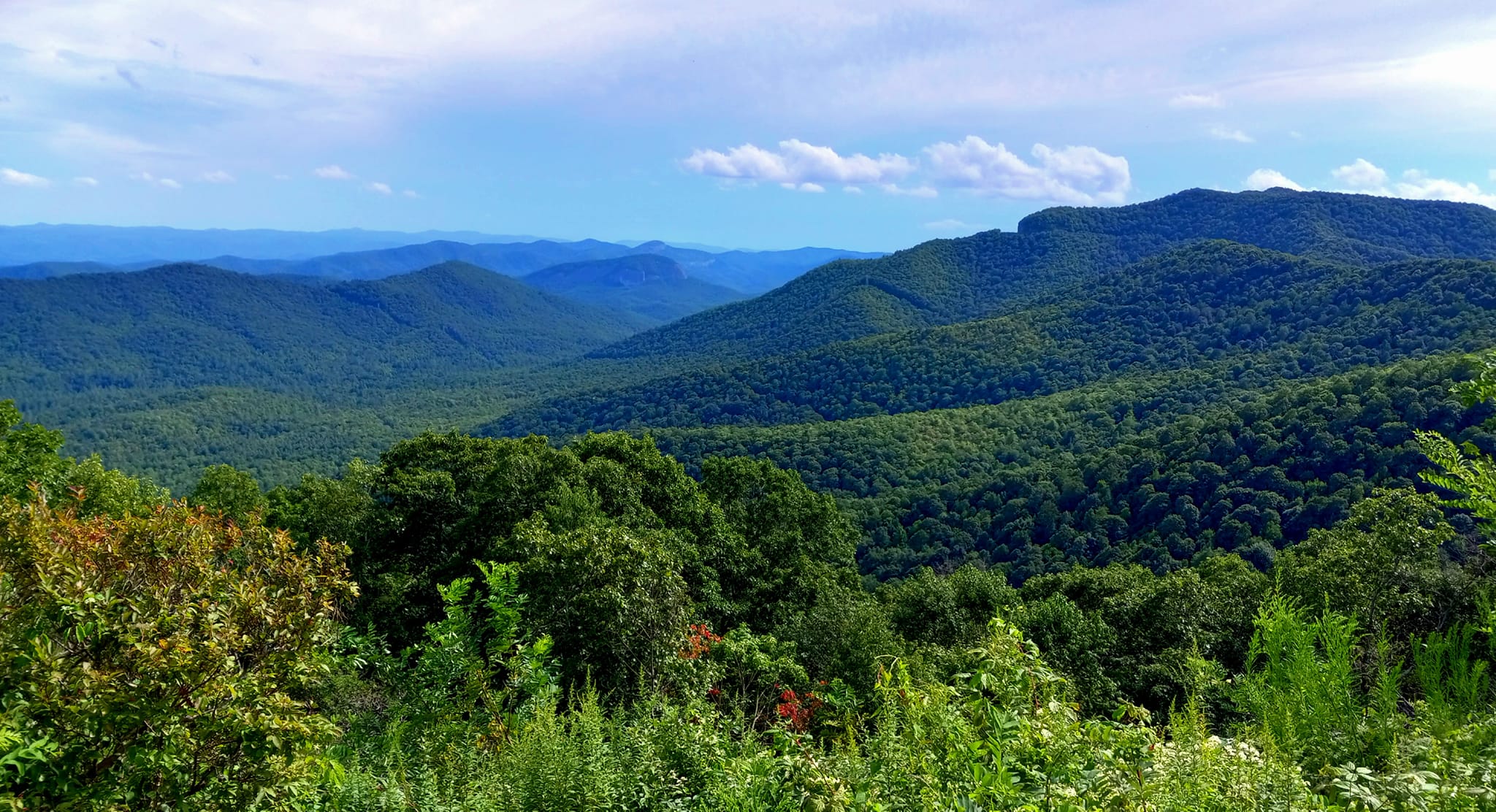
Above, Blue Ridge Mountains in August.

How it’s done

The annual Goschenhoppen Folk Life Festival happens this week–Friday and Saturday–and for the first time ever, neither of our now-grown children can participate. Nonetheless, my husband and I will be at our respective craft demonstrations, showing visitors how people a century or two ago solved the requirements of living in the region before there were highways, diesel shipping lanes, power grids, electric appliances, and cars–but after Europeans displaced indigenous people and started sawing down the forests. We had a taste of pre-power grid life ourselves early this week when a fast-moving storm made us lose electricity for 24 hours.

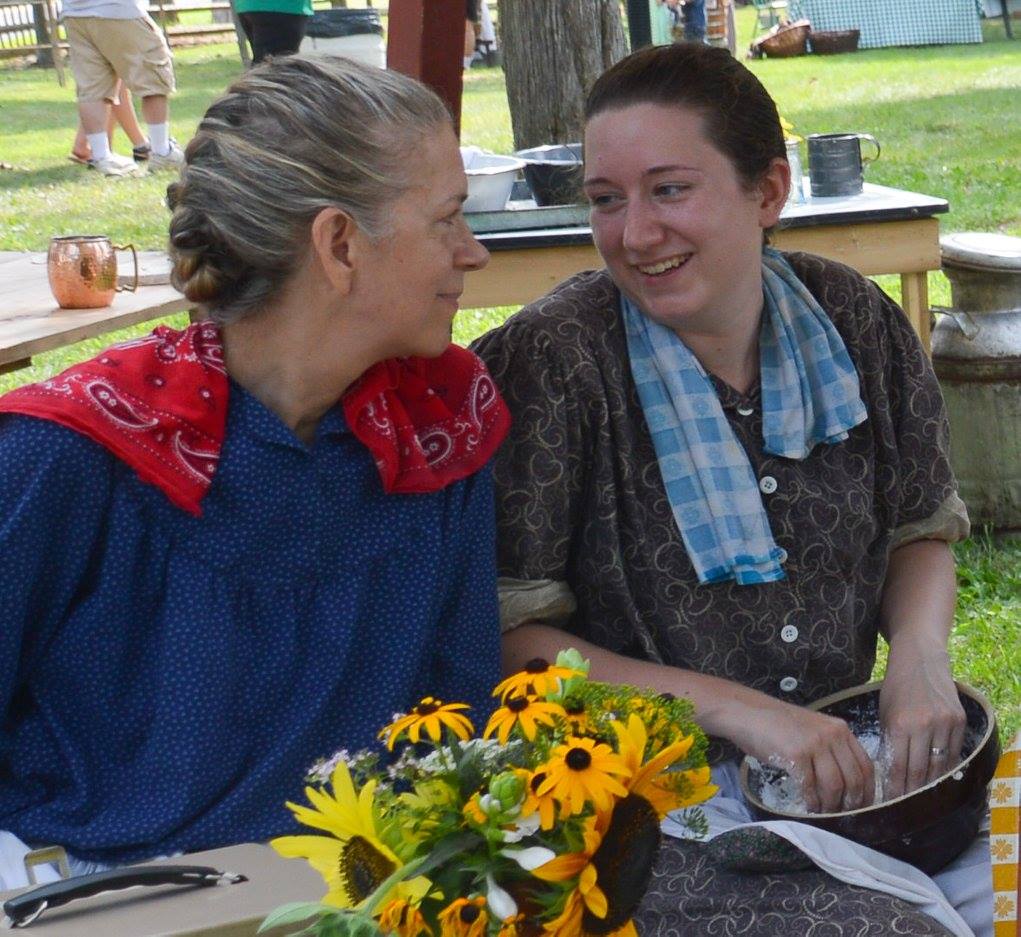
Visitors to the festival often marvel that they “never knew that’s how it was done.” They buy pickles or jam in a jar in the supermarket and figure it’s all made in a factory somewhere (which is true, today); meat comes packaged, and who thinks about how rope is made, or flour, or candles? One part of the festival demonstration includes butchering. I won’t post a photo (though there is one here), since some people get uncomfortable about it, but if you eat meat it might be worth remembering where it originated. In the late 1990s, I wrote the following poem about it. I may as well post it today! But the image I am adding is instead a nostalgic one of my daughter and me at the potato candy stand in 2016.

~

Hog Butchering Demonstration, or Deconstructing Breakfast
 
Cleaving bone and muscle 
beneath tough hide,
the man with the knife starts his
slow disassembly,
describes cuts of meat,
holds out intestines, uncoiled:
“used for sausage casings”—
removes the bladder
to rinse and inflate—
children’s game, an old-time balloon.
 
The carcass resembles nothing
the audience usually sees
whose meat arrives in cellophane
processed—slices, nuggets.
The children, especially,
have never watched the studious
and useful taking-apart 
of a body, never witnessed
anything dead
but the flattened,
nearly unrecognizable bodies 
of road-killed opossums.
 
No comparison, this 600-pound hog, 
hooked and dangling, its interior 
opened with jigsaw precision.
The man with the knife 
is a revelation.
They stare fascinated
at the butcher’s truth
carving an exact history of
their breakfast bacon.
 
~

In person

Imagine it: gathering again, with other human beings, engaged in listening, in art, in entertainment. You know–all that stuff we once took for granted, pre-pandemic and back when virtual events were mostly either experimental or TV shows.

In recent years, I have not been participating in many poetry readings; attending them still, yes–when possible, when life has not intervened too much–but not actively looking for reading venues, not the way I did in previous decades when I was learning how to present my work publicly. Lately, even when I’ve attended readings with open mics, I often choose not to sign up to read. I need to get home to grade papers or go to bed.

This situation has led to a gap in my reading-poetry practice. True, I teach; I am accustomed to speaking in front of a group of near-strangers, and that is a kind of public-speaking skill. There’s a distinct difference between being the authority and being the author, however. I found myself trying to explain this difference to a friend of mine last evening as we drove home from: MY FIRST IN-PERSON POETRY READING IN AGES!

[An aside here to express boundless thanks to Jenny Hill and Dan Waber of the Wunderbarn in East Greenville PA, who asked me to lead off their Just about an Hour and a Half Variety Hour for the 2021 season–quite an honor!]

I had some preparation, however, because local friends-in-poetry had invited me to read for a video that will stream on April 27th from the Facebook page of Bethlehem PA’s venue The Ice House. That was a new experience for me, though strange: I had to stay in one place without walking and fidgeting while reading to a very kind person behind a camera and another kind person connected to me by a microphone and earphones–in an otherwise empty performance space. O, Brave New World…

The reading at the Wunderbarn commenced the following evening, so the practice in front of the camera helped by giving me the opportunity to organize both my poems and my thoughts. I would not say that putting together a reading is exciting, but it offers some of the quiet challenges of a puzzle or word game. The act of reading in person to an audience changes those challenges to one of performance. It has been a pleasant task to expend energy thinking about poetry; I’ve been attending readings and craft talks remotely all month. And the performance space at Wunderbarn is sweetly rural. We were seated outdoors, and as dusk came on the human voices were accompanied by ducks and frogs. As so many of my poems feature the natural world, that felt fitting.

Friends in the audience, an added boon. That fact encouraged me to read two or three newer poems that I’ve not read out loud before and not to feel too awkward about possibly stumbling through my own lines. Also, though the grounds were muddy and the air rather cool, the rain held off. If I were the sort of person who believed in omens, I would say this event bodes well. Instead, I lift up my voice in gratitude.

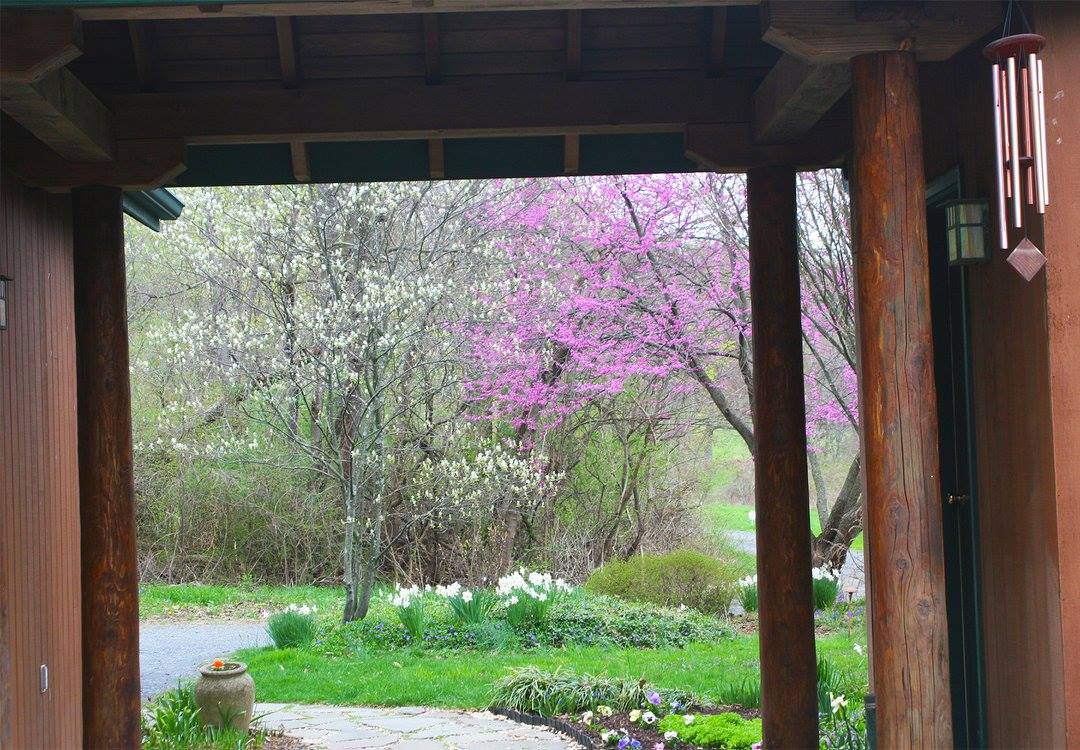
a view toward spring–in person

Festival, virtual

Coronavirus safety protocols continue to affect my teaching at the college and life in general–also, the life of the shared and diverse arts community, near and far. But arts folk are creative folks, by nature problem solvers and think-outside-the-boxers. This weekend, I have been attending the biennial Geraldine R. Dodge Poetry Festival via technological interface (my laptop); it has so far been as mixed and as enlightening an experience as teaching has been for me this semester.

It has been years since I have been at the Dodge in person. Teaching and tutoring are busy for me in October, and I have been free to travel to the festival only once since its move to Newark in 2010. Times have changed, and I have changed. I’m taking notice of what I like and do not particularly like about the virtual platform of the 2020 festival. Bear in mind that I am only marginally tech-savvy and not a person who’s wedded to the screen (television or computer or phone).

First impression, from the “opening ceremony” and an initial panel, is that I like the closeups of the poets–something I seldom had the chance to see when in the crowded auditoriums or tents of past Dodge festivals. As an older attendee, I have to admit I appreciate hearing the readers more clearly. It’s also nice not to have to wait for stumbling about on stage as presenters navigate the stairs, step over wires, chat with emcees, or shuffle through papers and books marked with post-it notes.

There’s a downside, too, of course. I cannot see the holistic figures of the poets, their attire and body language, their posture on the stage. I do not feel the attentive excitement of fellow audience members, hear appreciative murmurs, applause, or the rare but spicy snide remarks. The readings seem somewhat static and prepared (which they have been). The festival thus loses some of its remarkable spontaneity. I suppose I’m referring here to a lost physical community–but all of us should be accustomed to that feeling by now.

On the second night of the event, Pádraig Ó Tuama moderated a panel discussion on the theme “Imagine a New Way” with Martín Espada, Vievee Francis, and Carolyn Forché. The poems were intensely engaging, the readings remarkable; and the discussion among the poets and moderator managed to feel lively and immediate. Oh, notes to take, things I must read, ideas that go ‘pop’ in my head…

The takeaway after day two is that my sense of skepticism about online performance and conference events has begun to wane a bit. True, there is less chance of bumping into colleagues and making connections with fellow poets while grabbing a snack, and the bookstore browsing is not nearly as lovely an experience when the bookstore is online. True, there is much I miss about the hubbub and the buzz of past festival experiences.

Yet it turns out I rather like watching and listening to poets while sitting home in my pajamas and drinking decent, not-overpriced wine in the company of no one but my cat. In fact, at present, the scenario rather suits my mood. And I will be ‘tuning in’ tomorrow.

Beach reading

Mock orange and honeysuckle scents pervade the evening air. It’s the season of lightning bugs in the meadow and fireworks on Fridays at the local AAA baseball stadium over the hill. While I was preparing for the reading (this evening, in New Jersey!), I sat on my back porch surrounded by my own poems.

It’s interesting to look at one’s work and find “old friends” among the poems. Even among work I wrote thirty years ago, there are a few poems that I’m happy to meet up with again.

poster


Now to garner the stamina to do what needs to be done!

Poetry reading

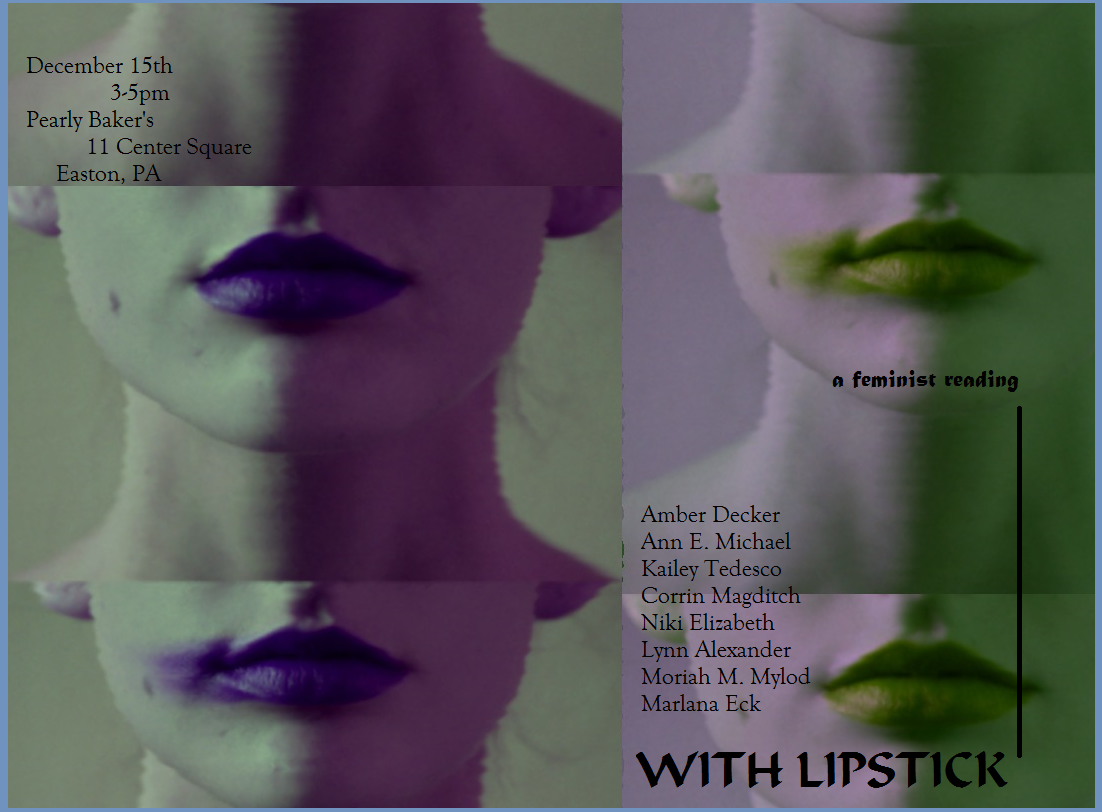
One week from today, I will be reading in Easton, PA with a few talented, feminist writers hosted by my colleague Marlana Eck. I have not given a reading in awhile, and this should be fun.

Here’s the poster:

~

with-lipstick

~

Questioning

Next week, on May 5th, I’ll be the featured poet for the River Poets of Bloomsburg, PA (info here and here). Bloomsburg is situated along the Susquehanna River, and the region will be beautiful in early May.

Linda Dietrichson, the MC for this event, has posed a theme for the poet (me) to consider when choosing poems to read and to follow up in a Q&A with the audience. The theme is “Questioning.” At first, I read the word as questing–the mythic journey toward some remotely-attainable goal. But question’s etymology offers a varying perspective:

japanese maple

Quest (n): early 14c., “a search for something.”

This searching comes to Westerners mostly via chivalry’s poems and Arthurian legends, derived from “Old French queste ‘search, quest, chase, hunt, pursuit; inquest, inquiry’ (12c., Modern French quête), properly ‘the act of seeking,’ and directly from Medieval Latin questa ‘search, inquiry,'” according to the Online Etymology Dictionary.

Question, the noun, derives from “Latin quaestionem (nominative quaestio) ‘a seeking, a questioning, inquiry, examining, judicial investigation,’… early 13c., ‘philosophical or theological problem'” with even a suggestion of interrogation (or torture!).*

These definitions overlap in some areas; but the word-basis does differ in the Latin. The act of seeking tends to connote search for an object–a physical search for a physical something–whereas inquiry and examination (yes, even torture) suggest that the “question” has a rhetorical object: the abstract or metaphysical aim (never an answer!) that’s more contentious and usually more ambiguous.

Questioning offers interrogation toward the unknowable, and that is poetry’s territory.

So this is where I begin next Thursday evening’s reading: with the unknowable. Who knows where we’ll go from there?

~~


*(see the site Online Etymology Dictionary for further brief origins–or any OED).

Poetry Readings~September

Please check out my Events Page here, especially if you are not too far from Pennsylvania’s Lehigh Valley or Berks County. I will be participating in two quite different poetry events during the second week of September.

The first event presents the culmination of a years-long project of collaboration between educators/writers/photographers Hernán Pereira, Pamela Daza, and Lucia Ramos in Iquique, Chile and Dr. Karen Jogan of Albright College in Reading, Pennsylvania. There will be a gallery of photographs in the library at Albright and a celebration of the book’s publication the evening of September 11. Arturo Prat University and Albright College have been able to sponsor this project through a competitive teaching innovation project. The book’s title: So Far..So Close/Portada y Contraportada: Contemporary Writers of Tarapaca & Pennsylvania.

The anthology presents poets from both Chile’s Atacama Desert region (Tarapaca) and Pennsylvania’s eastern/northeastern counties. Interviews with the poets provide insightful mini-biographies and are accompanied by wonderful photographs. Here’s mine:

photo by H. Periera

photo by H. Periera

I have previewed the book, through the magic of .pdf files, and found it fascinating to read about the backgrounds of these writers, their writing processes, their creative influences.

The Pennsylvania writers include some colleagues I have known for awhile, yet the editors’/authors’ choice of inquiries and the settings of the photographs evoke aspects of these writers that inform and delight. It should be an interesting evening, and the public is invited.

~~

The second event takes place in Bethlehem, PA at Godfrey Daniels–a listening room/coffeehouse in the American Folk tradition. Dave Fry, folk troubadour extraordinaire, hosts a monthly “Dave’s Night Out” concert there at 7 pm on Sundays. Most of the time these events feature singers and musicians; but Dave branches out to storytellers and, on Sunday the 14th, to poets Daniel Notaro (author of Limn the Mask) and me.

602043_614706205212099_1317517254_n

We’ll be reading from our work and conversing with one another, with Dave, and with the audience. $10.50 at the door.