Interviews

This past weekend I was most fortunate to have been interviewed, via Zoom, by four Chilean university students of English and creative writing. They are taking Hernán Pereira’s course at Arturo Prat University, Iquique, Chile. In 2014, Hernán collaborated with Dr. Karen Jogan of Albright College in Reading, Pennsylvania on a poetry and place project that resulted in the book So Far..So Close/Portada y Contraportada: Contemporary Writers of Tarapacá & Pennsylvania. Pamela Daza took the photos for the book; I posted a bit about it here. Thanks to social media, which I don’t often thank, I’ve kept in touch with Hernán, who is full of interesting ideas for teaching young people to enjoy poetry and to learn English.

Now, I’m retired, and I was pleased to hear from Hernán that he’s assigned his students books by English-speaking poets to read and research, and then interview, said writers (with whom he is acquainted). Would I be willing to be interviewed? Why, of course!

The result of most interviews is that I learn a great deal about my work by having other people ask me questions about it. I usually learn a bit about the interviewer(s) in the process. In this case, I was happy that the students had come up with some good and unexpected questions that really made me pause and ponder. I was also impressed with what excellent English skills they have, and how polite and earnest they are. One of the questions was what makes me motivated to write a poem. Not inspired (the usual question), but motivated–a slightly different verb and a telling one.

I answered along the lines of how seeing an image, experiencing an event, learning new information (ie observation), or reading a text with which I might disagree or wonder about leads me to a line of questioning/reflection, and that whole process motivates me to write. I have to say my answer was, in real time, rather vague, and that I was speaking with people for whom English is a second language. But a student named Maximillio said, “So, would you say then your motivation is responsive?” Wow, yes! Which clarifies a lot for me. I’m not a forward-momentum sort of writer who bulls into powerful expression, much as I admire such writers and sometimes wish I were more like them. I’m the ponderer, the one who imagines being an other and tries to figure out that perspective, the somewhat distant observer who nevertheless wants to bring the feelings and experiences home to whoever my reader may be.

That was a splendid experience for me. So nice to speak with people under 25 years old again. I miss that. Meanwhile, reading a 1998 edition of Lorca’s Poet in New York (in translation of course, though I am getting slightly better at reading the Spanish). And drafting new work in my head while watering the garden.
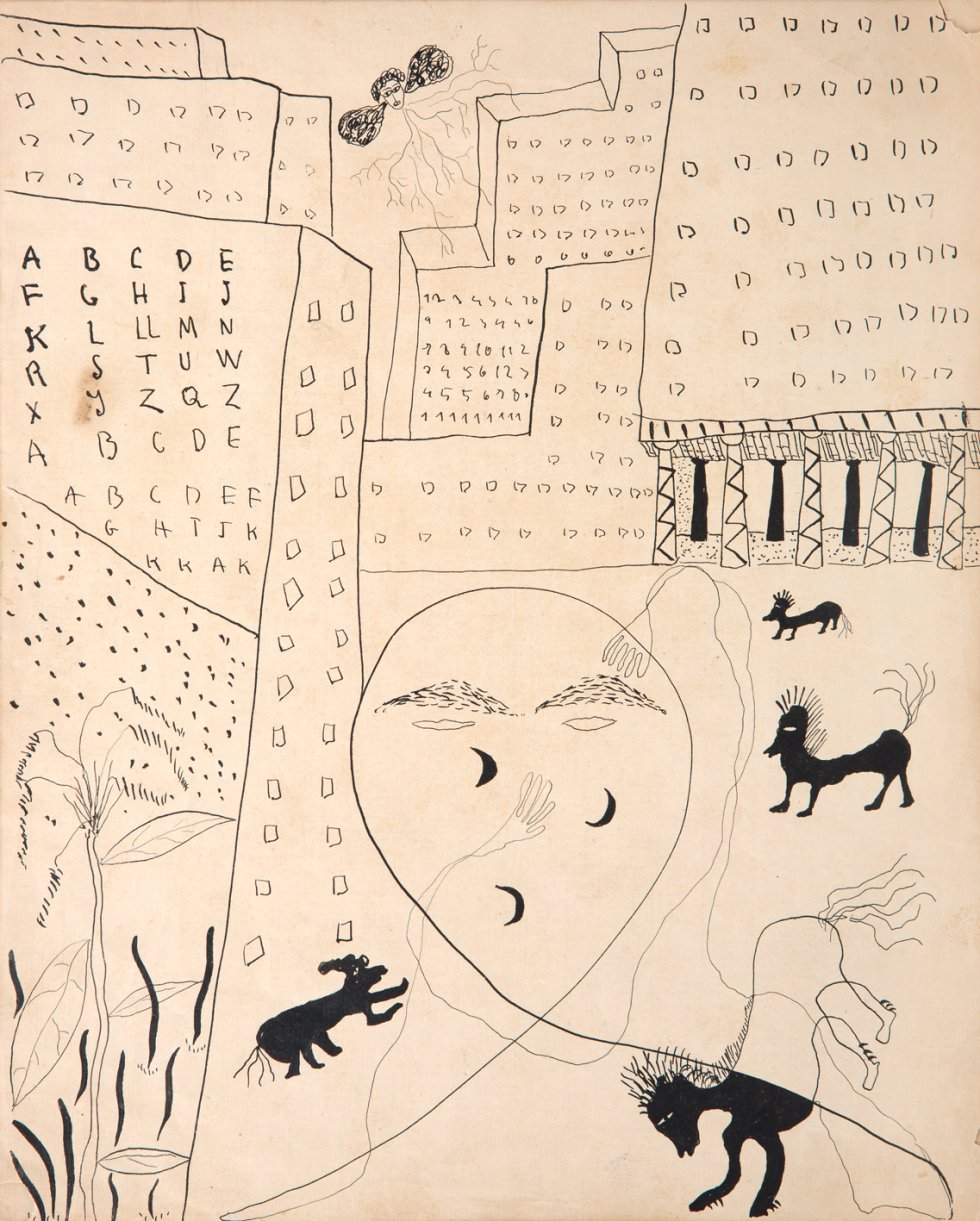
art by Federico Garcia Lorca.

Key images

I had intended to post on Denis Dutton’s book The Art Instinct: Beauty, Pleasure, and Human Evolution; and I will (I suppose) at some point, because I enjoyed it immensely. Looking through my files, however, I found the transcripts from the initial interview Karen Jogan and Hernán Pereira conducted with me when they were compiling the book So Far…So Close and realized that my answers to some of their inquiries connect with my last post about poetic voice and Kunitz’s thoughts on key images. (The longer, but edited, version of the interview appears in the book).

~~

  1. What colors or aromas remind you of your childhood?

Cinnamon toast, mown grass, onion grass (wild garlic), lily-of-the-valley, cedar-water and pine trees, the scent of a muddy river in summer, wintergreen, play-dough, school paste, steam-irons, fresh peaches, campfires, burning leaves, talcum powder, Pepto-Bismol, air-dried clothes and linens, mimosa blossoms, roses, strawberries.snowdrops

  1. Describe yourself as a child.

I wonder from whose perspective I should attempt to answer this question. I know from others that I was considered to be shy and polite, talkative when comfortable, imaginative. I certainly felt uncomfortable among groups of people, preferring small groups of friends with whom I played make-believe. I made up stories which I told my sister and brother, and when I was old enough to write I made little children’s books that I illustrated and bound in cardboard.

My sister was my best friend, but I spent a good deal of time all by myself. When alone, I walked my dog, climbed trees, played on the swings, sketched and painted, and read books. I really was a bookworm and spent many happy hours with books and in libraries. Being alone was, and still is, deeply satisfying for me—it helps me regain creative energy.

  1. At what moment in your life did you begin to write?

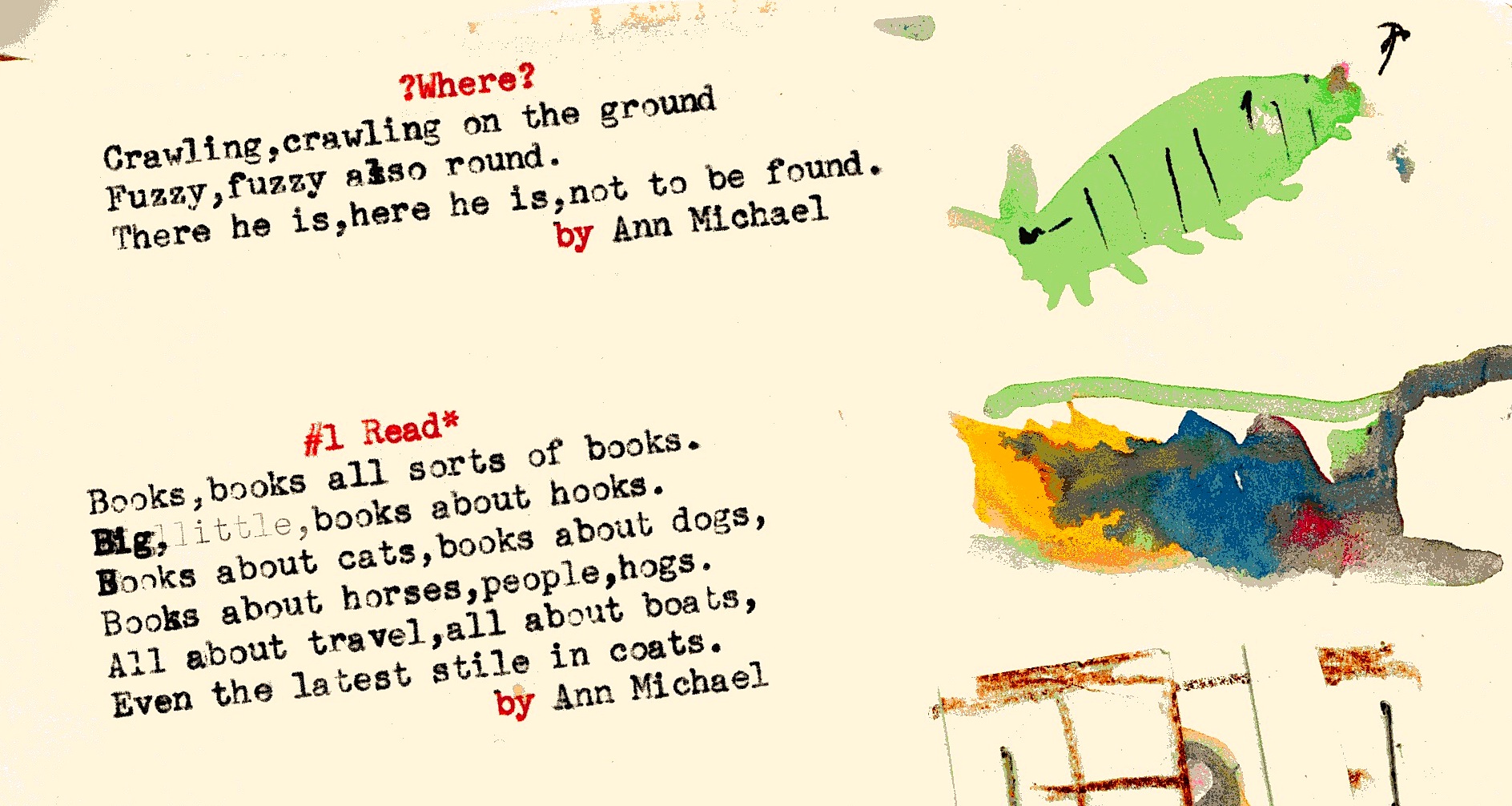
I don’t remember when I began writing. My storytelling began early, and I suppose the writing developed from there. The first story I recall writing down was about a princess; I was in second grade. I felt proud of myself, even though the story was only about three sentences long. Apparently, the poems started when I was about nine. I don’t remember writing poems then, but I recently found some that I had composed and typed up (I was fascinated by the typewriter), and my mother’s notes said I was nine when I wrote them. What I really wanted to be was an artist, but writing seemed natural to me. I started keeping a journal when I was ten…

9yroldpoems010

Rhyming and typing and illustrating and bookmaking– at nine years old.

  1. What influences have been important to you?

Other writers, naturally, but first of all, visual art. From the time I was very small, I’ve loved paintings and sculptures and architecture. Church hymns and Bible verses and nursery rhymes were influential to me, as well as folk music and the lyricists of popular music when I was growing up. I am also influenced by non-fiction work, especially in the sciences, and philosophy. My early poetry influences were Donne, Shakespeare, Blake, and the King James Bible; but then I fell in love with contemporary women writers, then surrealist poets, then Latin American writers, then Asian poetry, then contemporary lyric poems…it goes on and on. It might be easier to say what I have not found particularly influential!

~~

With further reflection, I could go deeper about early images that have become, for me, “key” aspects of my writing voice…a particular landscape, the feeling of an empty nave, bees and birds, milkweed, cloud patterns, my parents singing, my little sister beside me in our shared bed, the sound of a symphony. They may not appear in my poems as such, but these images connect with me in ways I probably don’t understand. What do such keys unlock, I wonder?

~

Poetry Readings~September

Please check out my Events Page here, especially if you are not too far from Pennsylvania’s Lehigh Valley or Berks County. I will be participating in two quite different poetry events during the second week of September.

The first event presents the culmination of a years-long project of collaboration between educators/writers/photographers Hernán Pereira, Pamela Daza, and Lucia Ramos in Iquique, Chile and Dr. Karen Jogan of Albright College in Reading, Pennsylvania. There will be a gallery of photographs in the library at Albright and a celebration of the book’s publication the evening of September 11. Arturo Prat University and Albright College have been able to sponsor this project through a competitive teaching innovation project. The book’s title: So Far..So Close/Portada y Contraportada: Contemporary Writers of Tarapaca & Pennsylvania.

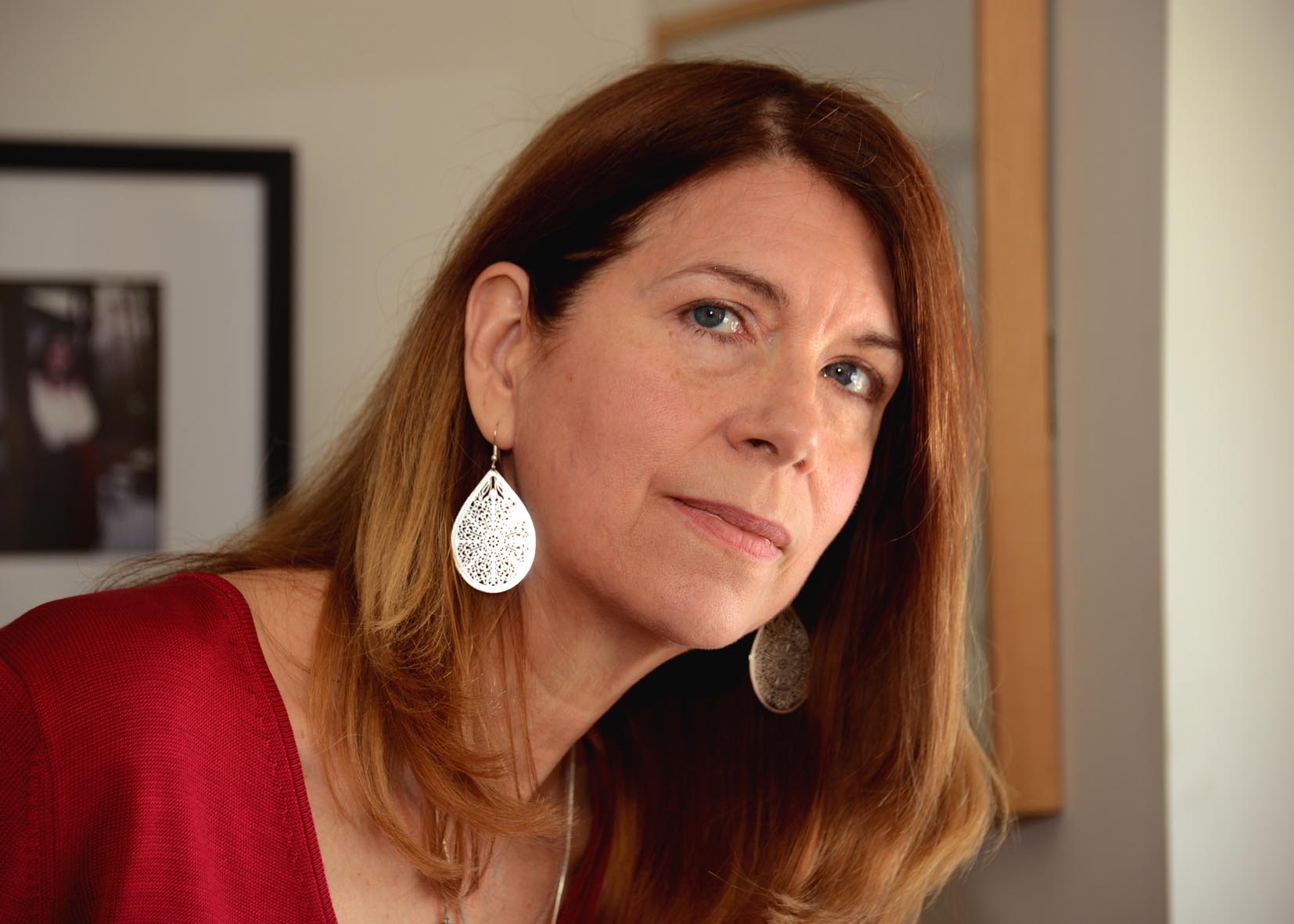
The anthology presents poets from both Chile’s Atacama Desert region (Tarapaca) and Pennsylvania’s eastern/northeastern counties. Interviews with the poets provide insightful mini-biographies and are accompanied by wonderful photographs. Here’s mine:

photo by H. Periera

photo by H. Periera

I have previewed the book, through the magic of .pdf files, and found it fascinating to read about the backgrounds of these writers, their writing processes, their creative influences.

The Pennsylvania writers include some colleagues I have known for awhile, yet the editors’/authors’ choice of inquiries and the settings of the photographs evoke aspects of these writers that inform and delight. It should be an interesting evening, and the public is invited.

~~

The second event takes place in Bethlehem, PA at Godfrey Daniels–a listening room/coffeehouse in the American Folk tradition. Dave Fry, folk troubadour extraordinaire, hosts a monthly “Dave’s Night Out” concert there at 7 pm on Sundays. Most of the time these events feature singers and musicians; but Dave branches out to storytellers and, on Sunday the 14th, to poets Daniel Notaro (author of Limn the Mask) and me.

602043_614706205212099_1317517254_n

We’ll be reading from our work and conversing with one another, with Dave, and with the audience. $10.50 at the door.