Source material

Creative writers are often asked where they get their ideas from. In my own case, the answer to that varies a great deal. Sometimes ideas arise from personal experience, of course, but one’s life offers only so much material if you are a relatively staid person like me. Topics for poems can arise from recent headlines or from histories, written or oral; from conversations overheard in a grocery line; from stories other people tell me; from folk tales; from science books; from dreams; from works of art, and numerous other sources. It’s this wide array of possibilities that make the concept of the creative-writing prompt so popular. A quick Google search for “creative writing prompts” offered well over 20+ pages of entries, in several languages.

Photo by Pixabay on Pexels.com

I have written pieces based upon prompts, especially when in a workshop or class, or when I feel rather tapped out of my own imaginative source material. I’m especially fond of writing that stems from viewing or experiencing a work of art–sculpture, painting, musical composition, dance, installation art (ekphrastic poems). Generally speaking, though, that’s not from whence my poems originate.

I can’t really say why I feel an urge to put down in writing specific reflections about something that’s caught my attention–or even what sort of experience evokes my response. Maybe I feel intrigued by an image, a detail, or an ambiguity–a question arises in my mind that I tussle with for awhile. Then, I may compose a draft and let it sit. Two days. Two years. Longer. Lately I’ve been revising some old poems and have realized I no longer recall what their incipience was. Which can be a good thing, because I am no longer wedded to the “reason” I wrote them and can instead consider whether they can be crafted into decent poems.

I am also working on a manuscript that I let sit for at least six years. An idea got into my mind after reading Robert Burton’s 17th-century book on depression, The Anatomy of Melancholy, quite some time ago (2017, perhaps?). I took a stab at writing what seemed to be evolving into a historical fiction story, which is not my usual approach (I have zero practice at plot and dialogue). Then, I stopped. As one does. But the topic lodged in me somewhere, I suppose, and early this year I returned to it. What if, I wondered, the draft could be restructured into a series of prose poems? There might be a sort of hybrid novella-poem in the earlier draft.

That’s more or less what I’m developing, at least for now, and we’ll see what if anything emerges. It’s keeping me interested, which I like, and the experiment feels fresh compared with “writing what I know,” or writing “how” I know. Because yes, of course we ought to write what we know; but we also know about human beings, and we have imaginations, and anything is possible.

By Robert Burton – Burton’s Anatomy of Melancholy, 1628, in the British Library, Public Domain, https://commons.wikimedia.org/w/index.php?curid=84390857

Adventure and ibises

At my daughter’s suggestion, we ended up in Mesopotamia: central to eastern Turkey, fertile crescent, Euphrates and Tigris, vaguely following the borders of Syria, Iran, and Armenia up toward the Caucasus to Kars. It was, indeed, quite an adventure. We were booked on a tour following a section of the storied Silk Road through Wild Frontiers, a British company, and spent 11 days in Turkey. It was informative, beautiful, marvelous–a fabulous way to spend over a week with someone I love who lives about 2,000 miles away from me. Our expert tour leader Timuçin Şahin (Tim) is a history enthusiast and sustainable-agriculture proponent who loves his native land and–despite its current repressive government–is not shy about noting its failings, complexities, and fraught past; he says a truthful narrative is the sanest way to accept the past and learn from it rather than repeat it. Though Türkiye doesn’t seem to be heading that way at the moment, and if anything, some of the processes that have led to Erdoğan’s consolidation of governmental power sound frighteningly familiar to this US citizen.

Which brings up another point about our trip: we were the only two Americans. The other ten tour participants were British, mostly pensioners. After a few days, when we felt comfortable with one another, one person admitted that “we were all a bit apprehensive about having Americans on the tour.” Apparently the perception is that more of us in the US support the current administration than is actually the case. So it was up to me and my daughter to correct some stereotypes and present as informed, kind, curious, reasonably well-educated world citizens. I hope we succeeded.

A larger-than-life bald ibis statue and yours truly at the bird sanctuary.

As I’ve no desire to chronologically report the entire trip, and honestly cannot do it justice, I am using my back-at-home time to reflect not on “highlights” (though there definitely were some) or inspiration–though there was that, too–but on some of the quieter surprises that enrich an experience like this one. For example, the Bald Iris enthusiast and savior we met in Birecik along the banks of the Euphrates. This man, whose name I didn’t write down, alas, has been operating a sanctuary for these birds for almost 40 years. The migratory kelaynak was once seen in huge flocks throughout Egypt and much of the Middle East and was considered sacred in some cultures. They went extinct in Egypt quite long ago and have been declining rapidly in the 20th century due to pesticides, climate change, environmental habitat destruction, sport hunting, etc. There are a few non-migrating colonies of Northern bald ibis in Morocco. Yes, it’s a funny-looking bird, but beautiful in its way. The ones we saw in Birecik are theoretically migratory but mostly reside in the colony, because whenever they are let out to migrate, they end up dead (found through tracking devices). The cheerful, enthusiastically hopeful ibis savior who photographs, tags, puts up nest boxes, and corrals the birds so they don’t fly off in winter is a veritable encyclopedia about these avians. He has put together a small museum, informational pamphlets, gift shop, and fund-raising platform in Birecik. There are decent human beings in the world who recognize the value of non-human creatures. This guy is an inspiration.

My readers may wonder whether I found poetry inspiration on this trip; the answer is, dunno yet. Probably, once I settle down and reflect, mull stuff over, consolidate my notes and my photos, and get over my intense jet lag. There was certainly no time for writing during the tour, as the itinerary was packed with cool things to learn, see, do, visit, hike up, float on (there were boat rides), and eat. I’d never been on a tour before. I liked this one, and because I had no knowledge of Turkey’s culture, language, economic situation, transportation options, etc, I was truly grateful for our tour guide’s expertise and enthusiasm.

Adventuring

The weather here has been hot and somewhat humid, though it continues to be dry–much drier than autumns used to be. Drought extending past August into October is becoming a more usual thing, according to my garden journal. One plant that thrives this time of year is tithonia (Mexican sunflower), and it attracts monarch butterflies like crazy. These are the monarchs that go adventuring: the super-generation of these insects that makes the 3,000-mile trip to Mexico. Here’s a brief blog from the Xerxes Society that has some quick facts. The monarchs I see in my garden may, if they are lucky enough to survive the trip, live up to 9 months, which is well past the life span of spring and early summer generations.

They are not even returning to a place they know or have ever been. Human science has never yet determined how monarch butterflies of the last summer generation find their way to Mexico. They just go adventuring, floating on air currents, supping on flowers as they travel.

I’m about to go adventuring, as well, traveling further east than I’ve ever been, in the company of one of my favorite persons in the world–my daughter. She and I had long talked about taking a mother-daughter trip together once I retired, and sooner is better than later! She found an environmentally-conscious adventure tour business that offers some really intriguing historical/archeological/environmental hike-and-bus options. We’ll find out whether the company is worth recommending & I’ll report back here, meanwhile keeping our destination unrevealed for now. A little mystery is fun.

While I am taking this trip for reasons beyond writing inspiration, I can’t help hoping it will act as a prompt and opportunity for drafting new poems. I’ve been working on new drafts, and revising older ones; but I have to admit that for awhile my creative mojo has been a bit off. Yes, this happens to any so-called “creative” occasionally, but it never feels terrific. One prefers the juicy, challenging urgency of creative flow. Wish me luck (and traveling mercies).

Illusions, connections

Reading Proust again returned me to some of my own past reflections on memory and self, the capital-S Self. A decade or so ago I spent considerable time reading in philosophy, physics, and neuroscience in an endeavor to get a grip on human consciousness and, perhaps, behavior. I posted about some of these texts on this here blog, in between writing about poetry, the garden, and my teaching job. Recent coincidences of reading returned me to this topic, “the hard problem of consciousness,” and made me consider how our embodied selves/minds/awareness: use shortcuts to manage the overwhelming inputs of our environments; define who we are using subjective if physically-based perceptions; and fail to see the obvious because of habituation and the apparent need to confirm what we believe we know. Illusions! The Vedic concept of Māyā, Plato’s Theory of Forms…propaganda, Penn & Teller, quantum physics, complexity theory, Marcel Proust, complementarity. I have a lot on my mind.

If it IS on (or in) “my” “mind.” For there’s even some question about that, as proposed by Neil Theise in his book Notes on Complexity. Just as light can be a wave or a particle, depending upon perspective and viewer (see: complementarity), it’s possible that our minds or selves can be individual and separate but also connected and boundary-less. The subtitle of this text is what appealed to me: “A Scientific Theory of Connection, Consciousness, and Being;” so far, I’m enjoying it and finding inspiration.

It’s needed, inspiration. Despite a few plunges into new drafts (see here), I have not been writing much for at least two months, and I miss it. The ideas from physics and neuroscience that intrigue me include potential metaphors and terms such as quenched disorder, endosymbiosis theory, and holarchy. These–along with the hard problem of consciousness–all have some relationship to complexity theory, and Theise does an elegant job of writing about complicated science concepts for the non-expert.

I ran across Notes on Complexity right after finishing Sleights of Mind, a book about the neuroscience behind the sort of illusion we call entertainment magic: sleight of hand, sawing people in two, mentalist “mind-reading,” and other performances; the authors, Susana Martinez-Conde, Stephen Macknik, and Sandra Blakeslee, are trying to discover more about how brains work (or filter, and sometimes don’t work so well) by studying how we get fooled by illusionists. This is a fun book, even more fun for me because one of my Best Beloveds has long been an enthusiast of magic shows and magicians. Martinez-Conde and Macknik are neurologists, so–unlike Theise’s text–this book is very body-mechanics in its basis. Their work reminded me of how amazing the human physiological system is. And it’s entertaining.

Before these non-fiction reads, I was finishing up with Proust who, in his own creative way, was exploring the interiority of the human self and carefully observing human interactions, behaviors, assumptions, prejudices, and aesthetics. Not neuroscience, because there is no science to it, but definitely related to how our brains and bodies process experience. My sense is that poetry works that that way for me: it’s not an abstract stream of thought but something inextricable from bodily experience, maybe even, through the environment in which we exist, something deeply connected to everything, a global being-there.

The way we process experience (and is this consciousness?) is largely what leads us to the arts, to make art or to appreciate it, and to decide what feels compelling, important, beautiful. And it’s not all in our heads.

Whatever works

My last post (here) generated some intriguing feedback and was cause for further reflection about revisions, at least on my part. Because I was writing a poem for a specific person–my son–I got useful information from his response, as well as responses from other readers; so I had the chance to hear back from my audience, however small, and to compare reactions. My son, the “you” in the poem, told me he liked the descriptions and that the piece did a good job evoking the atmosphere of the experience he’d had. He liked the closing lines, too. However, he said that while he had some moments of anxiety during his stint on the military ship, his overwhelming feelings cantered more toward frustration and an almost-constant irritation. He thought I had focused over-much on the anxiety aspect. “Though a person certainly could be feeling exactly that way in those conditions,” he added.

And that’s fascinating, because in earlier drafts I did not work toward evoking anxiety; I was trying to get the details right and to create a sense of annoyance, even anger, at the situation. (Apparently, that is closer to how he responded.) Here’s the “BUT”–but those revisions weren’t making the poem work any better. This is a challenge for many of us writers: when the impetus for writing the poem, and the initial intentions of the writer, don’t resolve into a good poem…and then some alterations–some “fictionalization”–make a better poem, but maybe not the poem the poet set out to write. Do we stay with our initial idea and keep whaling away to make it work as we initially imagined, or do we let the poem move into new territory somewhat removed from initial inspiration if the resultant revisions are more powerful, more believable?

I’m inclined to go with whatever works to make a stronger poem, most of the time. There are other options, though. Sometimes I end up with two or more poems stemming from the same initial idea. A bonus! One prompt I have occasionally used for myself is to re-write an earlier, less-satisfactory poem from a different viewpoint or to focus on a different aspect of the experience. This practice has been awfully helpful, and it keeps me from getting over-invested in the more obscure, personal components of a writing piece.

Photo by Leon Ardho on Pexels.com

Strengthening one’s work takes practice, and possibly a kind of discipline–not to suggest that I am a very disciplined poet, although I wish I were. I do take my practice seriously, though, and revision is a major aspect of my practice, always has been, even when I was a “baby poet” starting out. I never could quite agree with Ginsberg’s famous “first thought best thought,” since my first thoughts are seldom deep, reflective, or in any way excellent; and my first words set on paper are generally equally weak. For me, writing is thinking, in the way of E. M. Forster’s famous quote “How do I know what I think until I see what I say?” Thinking is often flawed, so analysis and critique and revision? They’re required.

Finally, whatever makes the poem better as a poem is worth doing. That’s my opinion: whatever works.

Constricted

I am forcing myself to write despite my sense that the flow, such as it is, has narrowed. I’m keenly aware that there’s a lot of material beyond the blockage and opening the floodgates may be as unmanageable as the “dry period” is unrewarding. Funny thing about balance. Keeping the seesaw level–no easy task. And as my peers and I progress toward aging, the constriction metaphor applies all too well. Many people I know now walk around with plastic or metal tubes inserted in their interiors to keep vital organs ‘flowing.’ My mother’s brain operates through constricted blood vessels, and now she can barely produce an understandable sentence. My lower back’s accumulating calcium deposits that have narrowed the path my spinal cord takes as it does its daily, necessary work.

Sometimes the flow of anything gets constricted. In our bodies. In the earth’s rivers. In our cities and houses: clogging and backups, plumbing and traffic. We implant stents, dig culverts, widen highways, remove the blockage–once we have determined where it is. There’s the challenge. Where is the rub that keeps us from our dreams? (Hamlet couldn’t figure it out, either).

Normally, I read at least a book a week; lately, just magazine articles, or no reading at all. Very strange for me–and I wonder whether my lack of motivation for reading and my current “dry spell” hinge on sorrow. My workplace has been busy lately, lots of scheduling, many meetings and decisions, not much time for personal reflection. It becomes natural, easy, to do the work of routine and ignore the kind of creative effort that grief requires. In my case, there’s also speculative grief: I know my mother’s dying little by little. We who love her spend as much time as we can with her, lifting our own spirits whenever our visits or gifts of chocolate and flowers and dinners out make her happy. What does she love? Fresh strawberries, for example. I bring them from my garden. She savors them. My day is made.

But I come home sad.

vessels, unconstricted

~

I wrote to a friend recently:

My writing practice has suffered a bit during pandemic but feels also as though underlying changes are in process. Just not much by way of results yet.
Somewhat surprised that my father’s death has affected my practice. Or perhaps it is my mother’s aphasia, frailty, and impending death that’s at work here. Or maybe just the stress of trying to maintain my job and relationships with colleagues and students under pandemic protocols, which has not been easy.
My brain’s been stuffed with things like learning new technology and teaching practices, and that leaves less room for wandering and interconnections and daydreaming. And then I have less energy for the creative work, as well. The garden’s been good, though. I’m not discontented, just feeling the currents of interweaving changes.

~
I suppose those interweaving changes may be a bit knotted, if they are threads, or partially dammed, if they are streams. Maybe why that’s the case does not matter much. What matters more is how to proceed when it seems nothing’s forthcoming–patience, force, ritual, practice, or…change.

You can judge your age by the amount of pain you feel when you come in contact with a new idea.

Pearl S. Buck

Wry words from Ms. Buck. Meanwhile, where are those new ideas? Maybe I just don’t feel up to unblocking the flow just yet. A little apprehensive about the pain.

Practice & Muse

For people active in the arts, “creators,” the concept of the Muse is familiar–we read or hear about her often, sometimes in laments bemoaning her abandonment of the artist. May Sarton mentions needing a Muse to write poetry; in Sarton’s case, the Muse had to be an actual person, someone intellectually and sensually stimulating. For other creative types, the Muse is metaphorical, or acts as an aspect of a ritual to invoke inspiration, or as a method of removing writer’s block.

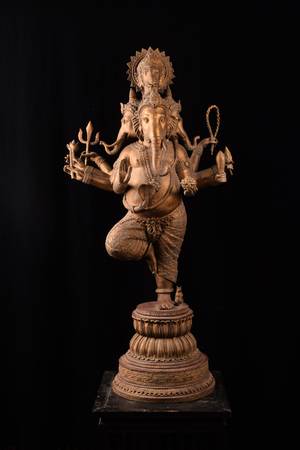
I rather like the idea of the Muse, as myth and metaphor; sorry to report, though, that I cannot recall a time when I felt I actually had a Muse. For writer’s block, I might have turned to Lord Ganesha, Remover of All Obstacles–but as I age into confidence as a writer, I find more patience with myself when the words don’t flow as rapidly.

dancing god ganesha

Dancing Ganesha. [wikimedia/creative commons: 123rf.com]

I seldom think of myself as “blocked” anymore. During the times I compose less poetry, I can revise and rework older poems. I can gather completed poems together and puzzle over making the next manuscript. Or I might be busy writing various genres of prose, such as this blog or work-related articles and proposals.

Writing, for me, requires constant practice. It has little foundation in inspired revelation or appearances of the Muse. I do like prompts and challenges, though, for motivation and to pique my curiosity. My latest challenge-to-self is to write a screenplay. It’s a new form for me and I have to learn how to write dialogue and setting and to think in scenes. The only past experience at all similar has been my work on opera libretti, fascinating and, for this particular writer, extremely hard to do at all–let alone to do well.

Colin Pope writes, in a recent essay on Nimrod‘s blog, that he believes “poets are the types of people who feel most comfortable examining themselves on paper, tallying up inner thoughts and realizations…”

In my case, muse is a verb:

muse (v.)

“to reflect, ponder, meditate; to be absorbed in thought,” mid-14c., from Old French muser (12c.) “to ponder, dream, wonder; loiter, waste time,” which is of uncertain origin; the explanation in Diez and Skeat is literally “to stand with one’s nose in the air” (or, possibly, “to sniff about” like a dog who has lost the scent), from muse “muzzle,” from Gallo-Roman *musa “snout,” itself a word of unknown origin.


Thanks again, Online Etymology Dictionary!

~

Worth reading for the consideration of grief as a kind of inspiration: Colin Pope on Nimrod’s blog– “Every Poem Is a Poem about Loss.”


How-to

What prompts a poem, really? Probably differs from writer to writer to such a degree that discussing inspiration can be an intriguing discourse among fellow poets but not a method to instruct anyone “how to.” A poem, or any work of art, can be interpreted or reconstructed through analysis, but simply following someone else’s instructions is unlikely to lead to meaningful results.

Among my Best Beloveds are a few people who are excellent how-to writers. They can write about how to build a boat, debug a software program, light a face for photographic portraits, construct a Windsor chair, use a beading pattern to make a bracelet. This sort of work is surprisingly challenging to write well–think of how many times you’ve been frustrated by a poorly-written manual for one of your digital or mechanical devices. Good, clear, concise how-to writing requires intelligence, accuracy, awareness of the reader’s skill level, critical analysis, and a clarity of style the unpracticed writer lacks. And by unpracticed writer, I mean most of us!

After 25 days of writing poetry drafts, I cannot suggest to anyone how to write a poem. Perhaps someone with more experience in the process (such as Luisa Igloria) can weigh in on how to write a poem (she teaches creative writing, after all, at Old Dominion). At the end of this month, I will resort back to my usual process of intermittent drafts; though it’s possible that this month of discipline will stick–maybe I will be more productive for awhile. Mostly what I will need to do is to REVISE! Because with 30 drafts to work on, I can stay busy tweaking and reworking (and giving up, occasionally) on poems for months to come.

~
Lilacs

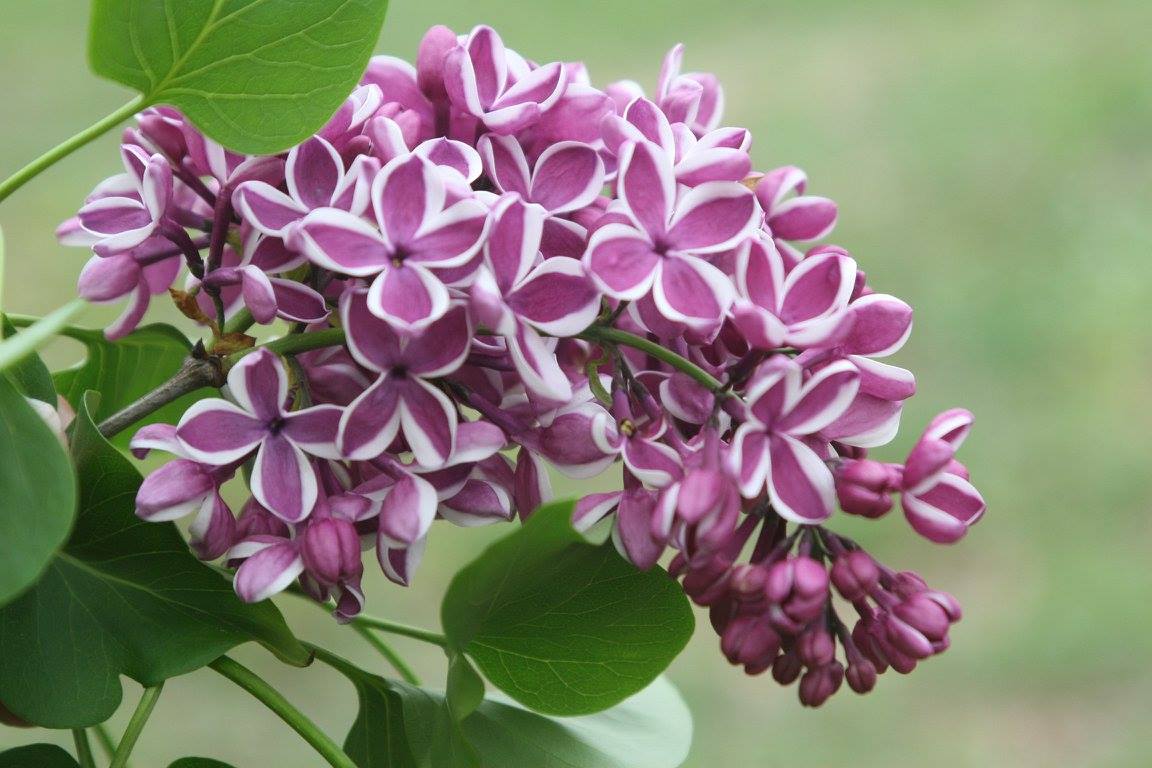
Because I had early morning errands,
because I had to change my route,
because creek’s tributaries are still swollen,
the brief commute
took an ambit unexpected
through small towns, over the rutted bridge,
delayed by schoolbus signal flashers, waiting
for foot-dragging kids.
Pollen drifted on the windshield
because it’s that time of year,
because two days of rain and spells of warmth
have settled here.
Because I decided not to worry,
because no one would mind if I were late,
because I opened the car window, I saw lilacs blooming
beside the cemetery gate.
~


lilac


Prompts

Teachers of creative writing have mixed views about the use of prompts (a prompt is an image, phrase, visual, question, or anything else meant to get a poet started in lieu of–or in addition to–“inspiration”). I have found them useful for practice; in my experience, occasionally a random prompt does result in a serviceable, or even good, poem. But I do not tend to use them regularly.

During this month of writing and posting a poem draft each and every day, I haven’t turned to prompts. I notice, though, that the drafts are perhaps more personal than I expected them to be.

This one doesn’t have a title yet:

~

Today there’s pain
opening with every blossom,
the pain of others
far from you, and also
those nearby. Even yours.
You see the world
as it is, how each bloom
attracts tiny ants
and the industrious bee,
later transforming
into hard green fruit.

Today you suffer the way
all things suffer
although you breathe
sweet air, although you
see the constant sun
now and then appearing
between dense, mobile clouds–
joy, flickering, brief,
but always possible.
Isn’t that also how
the world is? The cat’s
fur, soft beneath your
stroking thumb. Thrushes
uttering melodies for
anyone who will hear.

IMG_5953

More on influences

During my adolescence, many of my friends came, if not from “broken homes” (the term we used in the 1970s), at least from emotionally-difficult family situations. Why that is, I don’t know–but it seems the town I lived in had quite a few struggling families in it. The era was a difficult one, rife with drug use, protests, political upheaval; and people were wrestling over attitudes concerning sex and feminism and birth control, dealing with a recession, and uncomfortable with the nation’s changing demographics.

I loved my friends, most of whom were female and, in one way or another, outsiders among our peers. I loved the nerdy bookworms who appreciated my goofy, bookish sense of humor. I loved the slightly wild risk-takers who encouraged me to do the kinds of things I might otherwise avoid; I loved that they accepted me even when I decided to decline participation in their antics. I learned my boundaries and learned to be accepted for having boundaries, knowledge that is vital for anyone to discover–especially for a young woman.

My friends liked me because I listened to them. One of them referred to me as her psychologist. Through these young women, I learned about love, lust, yearning, sex, educational aspirations, the behaviors of men, family stresses, jobs, career hopes, personal values, fears, thrills, recreational drugs, alcohol, birth control, popular music, dancing, concert-going, lies, mistakes, and heartbreak. The only thing I can think of that has taught me as much is the reading of books, particularly poems, novels, and memoirs.


1974, New Jersey, USA

Years later, I asked my parents whether they ever felt concerned about my choice of friends. Did they ever worry that these young people were somehow bad influences on me? My dad paused a moment, thoughtful, and answered, “I don’t think we ever worried about your friends being bad influences on you. I kind of thought you were maybe a good influence on them.” I’m not sure that’s accurate; but looking back, perhaps my parents, or my family, presented a positive “model” for my friends who endured much more challenging home lives and had less support for education, career, and independent futures. And most of them have grown up to have successful lives–but that’s not because of me.

Four or five years ago I found myself reminiscing through writing poems; it was quite accidental on my part, and initially just a response to a Bruce Springsteen song. Influences: popular song, teen friends, the suburban environment of my youth. I ended up with at least 40 poems, of which there may be enough good ones to make up a chapbook collection someday. [In 2014, I blogged a bit about the project here.] I call them my Barefoot Girls poems. They provide, I suppose, one aspect to answering the question posed in my last blog. My friends’ experiences, flowing through me.