Source material

Creative writers are often asked where they get their ideas from. In my own case, the answer to that varies a great deal. Sometimes ideas arise from personal experience, of course, but one’s life offers only so much material if you are a relatively staid person like me. Topics for poems can arise from recent headlines or from histories, written or oral; from conversations overheard in a grocery line; from stories other people tell me; from folk tales; from science books; from dreams; from works of art, and numerous other sources. It’s this wide array of possibilities that make the concept of the creative-writing prompt so popular. A quick Google search for “creative writing prompts” offered well over 20+ pages of entries, in several languages.

Photo by Pixabay on Pexels.com

I have written pieces based upon prompts, especially when in a workshop or class, or when I feel rather tapped out of my own imaginative source material. I’m especially fond of writing that stems from viewing or experiencing a work of art–sculpture, painting, musical composition, dance, installation art (ekphrastic poems). Generally speaking, though, that’s not from whence my poems originate.

I can’t really say why I feel an urge to put down in writing specific reflections about something that’s caught my attention–or even what sort of experience evokes my response. Maybe I feel intrigued by an image, a detail, or an ambiguity–a question arises in my mind that I tussle with for awhile. Then, I may compose a draft and let it sit. Two days. Two years. Longer. Lately I’ve been revising some old poems and have realized I no longer recall what their incipience was. Which can be a good thing, because I am no longer wedded to the “reason” I wrote them and can instead consider whether they can be crafted into decent poems.

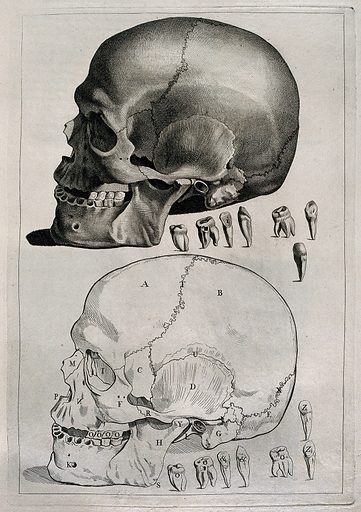
I am also working on a manuscript that I let sit for at least six years. An idea got into my mind after reading Robert Burton’s 17th-century book on depression, The Anatomy of Melancholy, quite some time ago (2017, perhaps?). I took a stab at writing what seemed to be evolving into a historical fiction story, which is not my usual approach (I have zero practice at plot and dialogue). Then, I stopped. As one does. But the topic lodged in me somewhere, I suppose, and early this year I returned to it. What if, I wondered, the draft could be restructured into a series of prose poems? There might be a sort of hybrid novella-poem in the earlier draft.

That’s more or less what I’m developing, at least for now, and we’ll see what if anything emerges. It’s keeping me interested, which I like, and the experiment feels fresh compared with “writing what I know,” or writing “how” I know. Because yes, of course we ought to write what we know; but we also know about human beings, and we have imaginations, and anything is possible.

By Robert Burton – Burton’s Anatomy of Melancholy, 1628, in the British Library, Public Domain, https://commons.wikimedia.org/w/index.php?curid=84390857

Curriculum vitae

My year has begun with half a dozen literary journals declining my poems, but it has also begun with a proliferation of new poems–which makes me happy. There are several reasons for a prolific spurt, some of which involve sad events that have turned me toward reflection. While sorrow isn’t a reliable prod for writing in my case, reflection almost always is. Also, attending a workshop is generative for me.

In last week’s session, we read Lisel Mueller’s “Curriculum Vitae,” and Anita asked us to emulate the poem for our own life story. I encourage you to read Mueller’s poem if you are not familiar with it; it’s full of lovely imagery and is so concise and evocative that it stands as autobiography–quite an amazing piece. Also daunting: how to use that poem as a writing prompt? I needed a strategy, so to keep myself as brief and non-narrative as possible, I limited my version to 15 points instead of 20. Then I edited it down several times, taking out as much as possible while leaving things that feel “true.”

What I realized after this practice in form, and after revising it and tightening it up, is that if I were to start again rather than revise–and were to focus on different aspects of my life experience–I could write a completely different, but still true, poem. I could write a dozen completely true and completely different CV poems! I could have used national events that occurred during my life and had greater or lesser impact on me–the Kennedy assassination, the March on Montgomery, Viet Nam War on television, etc. all the way to 9/11 and since then; or I could have focused on friends and family, their appearances and disappearances from my life; or places I lived or traveled…easily a dozen CVs, curated to present a lifetime.

So while the piece I wrote isn’t a “keeper,” not something I would send out to literary journals, the practice of writing and revising it has been remarkably useful (thank you, Anita Skeen!); I’m more aware than ever of how perspective, focus, and image affect narrative. And of how many ways there are to “tell” an experience, which of course is something poets often do: revisit, re-frame, re-imagine an experience, loss/trauma, or relationship using numerous forms, images, perspectives, speakers, and so on.

Which is certainly one reason Anita asked us to try this exercise.

I did not manage to be as lyrical and concise as Mueller, but then I didn’t expect to; she was an amazing poet. From her poem cited above, I especially relate to the line: “At home the bookshelves connected heaven and earth.” It felt like that at my parents’ house, too.

I’ll be brave and post the practice poem, one of many versions of my autobiography.

~

CV, after Lisel Mueller

1. Three weeks before summer solstice, I enter the world. My father considers me the first perfect thing in his life.
2. Underfoot, meadow grass and church aisles.
3. We move from the manse to the city, where my sister goes twice to the hospital and I walk two blocks to school.
4. Suburban house, square and white as a die. We learn to ride bicycles in the street.
5. Bussing and gas shortage, algebra, barefoot girls in summer. My embarrassment at growing too tall, too thin, too bookish, too moody.
6. Early entry into college. When the only thing I wanted was to get away.
7. In Michigan, snow like I had never seen before.
8. Some years of misery, tedious, purposely omitted. But I meet the people who most encourage me to write.
9. Back to my parents’ kind embrace. Celibacy, recalibration, writing.
10. We meet one summer. I write you so many letters. It might be love.
11. Two children 18 months apart, vegetables in the backyard: it is love.
12. Autodidact in the garden, in the world of literature, in child-rearing. There are cats, chickens, guinea pigs, a beloved dog, but I need to return to study and poems.
13. Loss and joy keep me writing, teaching keeps me busy, children grow and travel far. My books see print.
14. Pandemic.
15. My father dies, my mother loses her power of speech, friends start failing, there are dark weeks. Many hours in the garden, growing and grieving. We hold on, uncertain, but whole.

~

Promptings

I have mixed feelings about poetry prompts. There have been times when using prompts has really got me writing and feeling inventive about poetry. I’ve had instructors (and read books) whose prompts seemed terrific for me; but maybe I felt already ‘primed’ for writing, anyway, and it was not so much the prompt itself but the circumstances that led to fruitful drafts. At other times, prompts appear useless, or even–dare I say–insipid. My current belief is that, for me, circumstances and instructor matter more than the cleverness of the prompt. Any prompt can be delightful if only I find myself situated in the mood or feel an urgency to write.

The virtual workshop I’m taking with Anita Skeen opened with a discussion of poems (by Roethke, initially) and then moved to some list-making and prompts. This is not unusual for workshops, and lists are a fine way to begin thinking about poems. The prompts we were assigned employed both lists and a method for drafting a poem. So far, I’ve drafted four or five poems in a week: therefore, success (!) even though only one of the drafts seems to have legs.

I think what happens is that after many, many years of writing poetry (or making any kind of art) one begins to feel a rhythm that is almost circadian–as analogy–that informs a person about flow. I ask myself, “Am I ready to write today?” The answer may not be yes. But if it is yes, then I can just write. No expectations, and it’s okay to use a prompt, or re-write an older poem, or just free-write about whatever moment I happen to be in. Usually, in this frame of mind, I don’t get concerned about writing well. I just start on in.

If the am-I-ready answer isn’t a definite yes, then I may procrastinate or distract myself by cleaning the house or reading a book. I can overcome the “maybe” by turning to work by a poet whose work I find interesting or by experimenting with a prompt. Sometimes, it helps to give myself a deadline of some kind–this is why workshops are often useful!

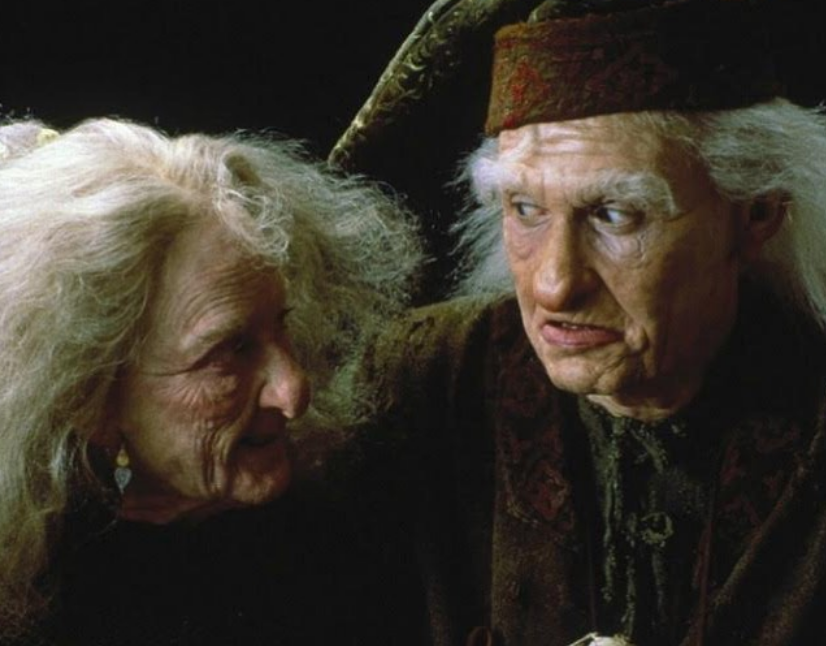
But the answer may simply be, “No, not today.” Sometimes we have those non-creative days. It is alright to have them. Art shouldn’t be about pushing out ideas to get to a “product.” I’m suddenly laughing to myself, thinking of Billy Crystal as Miracle Max in the movie The Princess Bride: “You rush a miracle man, you get rotten miracles.”

At least with writing, one gets a chance to revise.

Carol Kaine & Billy Crystal in The Princess Bride (20th Century Fox, 1987)

If you are a writer, what do you think about the use of prompts?

Whatever works

My last post (here) generated some intriguing feedback and was cause for further reflection about revisions, at least on my part. Because I was writing a poem for a specific person–my son–I got useful information from his response, as well as responses from other readers; so I had the chance to hear back from my audience, however small, and to compare reactions. My son, the “you” in the poem, told me he liked the descriptions and that the piece did a good job evoking the atmosphere of the experience he’d had. He liked the closing lines, too. However, he said that while he had some moments of anxiety during his stint on the military ship, his overwhelming feelings cantered more toward frustration and an almost-constant irritation. He thought I had focused over-much on the anxiety aspect. “Though a person certainly could be feeling exactly that way in those conditions,” he added.

And that’s fascinating, because in earlier drafts I did not work toward evoking anxiety; I was trying to get the details right and to create a sense of annoyance, even anger, at the situation. (Apparently, that is closer to how he responded.) Here’s the “BUT”–but those revisions weren’t making the poem work any better. This is a challenge for many of us writers: when the impetus for writing the poem, and the initial intentions of the writer, don’t resolve into a good poem…and then some alterations–some “fictionalization”–make a better poem, but maybe not the poem the poet set out to write. Do we stay with our initial idea and keep whaling away to make it work as we initially imagined, or do we let the poem move into new territory somewhat removed from initial inspiration if the resultant revisions are more powerful, more believable?

I’m inclined to go with whatever works to make a stronger poem, most of the time. There are other options, though. Sometimes I end up with two or more poems stemming from the same initial idea. A bonus! One prompt I have occasionally used for myself is to re-write an earlier, less-satisfactory poem from a different viewpoint or to focus on a different aspect of the experience. This practice has been awfully helpful, and it keeps me from getting over-invested in the more obscure, personal components of a writing piece.

Photo by Leon Ardho on Pexels.com

Strengthening one’s work takes practice, and possibly a kind of discipline–not to suggest that I am a very disciplined poet, although I wish I were. I do take my practice seriously, though, and revision is a major aspect of my practice, always has been, even when I was a “baby poet” starting out. I never could quite agree with Ginsberg’s famous “first thought best thought,” since my first thoughts are seldom deep, reflective, or in any way excellent; and my first words set on paper are generally equally weak. For me, writing is thinking, in the way of E. M. Forster’s famous quote “How do I know what I think until I see what I say?” Thinking is often flawed, so analysis and critique and revision? They’re required.

Finally, whatever makes the poem better as a poem is worth doing. That’s my opinion: whatever works.

Prompted

I have been composing new poems, a welcome development spurred in part by my participation in a poetry workshop (see my last post here). Meanwhile, the college semester has resumed, and my colleagues who teach poetry have been discussing and sharing writing prompts.

For those readers who are not poets: A writing prompt is a sort of assignment in associative thinking or use of a craft strategy that the instructor offers as a form of inspiration or motivation to get creative writing started. There are entire books on this topic. Most writers go through dry spells or low motivation, and teachers need new ideas to keep their students doing the actual practice of writing even when bolts from the blue do not arrive to shake the creative spirit into gear.

I will admit to mixed feelings about prompts. Prompts can act as shortcuts to the process of composing, but I am the kind of writer who prefers the long haul; for some reason, the struggle of finding something to say, and an interesting way to say it, assists me in writing poems. I’m not in a hurry. I revise frequently. If it takes a long time to get to the finished poem, so be it. Sometimes I’ve followed a prompt and produced quite a nice poem, but maybe the voice or style or approach does not feel like my own. That’s a potential downside to prompt use. I have read poems by other writers that sound like prompt-produced poems. Some of them are fine work and yet…

This isn’t to suggest prompts lead to inauthentic or cookie-cutter poems (though that can happen, especially with inexperienced poets new to the task). I think it depends on how the prompt is presented or written and, in addition, the environment surrounding the process of thinking about writing. What works best for me is a prompt that makes suggestions I have to complete or devise for myself. Ambiguity with specifics, if that makes any sense–or specifics with ambiguity.

The environment in which I’m currently working includes a group of seven people, with whom I had not previously been acquainted, meeting online, and a moderator/leader who makes observations non-judgmentally and asks questions concerning where this poem draft could go next. And yes, there are also prompts. What I like about Elena Georgiou’s prompts is their open-endedness. Because none of us are beginning writers, we feel free to disregard any part of the prompt that doesn’t appeal to us–or to follow it closely to force us out of well-worn poetry habits–depending on our internal environment on the day we happen to be tuning in or trying the prompts. We are a group of independent people who are collectively thinking about writing. That’s something of value.

Kisses & Bees

Today, I have opted to use an Osip Mandelstam poem as a prompt. I apologize in advance to his memory and to his lovely poem, translations of which are here, here, and here.

In a blog post some time ago, I discussed this poem and the problems of translation.

~

Kisses Tattered as Bees
-after Osip Mandelstam

Your claim asserts that kisses
can be tattered
and bees emerge from
floral tussles or hive dances
in a disordered raggedness
so the two are as like
simile disperses into breeze:
loose petals and torn wings
fail to impress upon your lips
any tactile memory.

But oh, there were kisses once
so fevered they evaporated
on meeting your cool skin
while you traversed the woods
beguiled by honey’s scent–
and kisses that stung,
leaving a trail of the dead,
soft, gold-and-black bodies
in each of your footprints,
beads strung along your path.

~

be-quince

~

Three days, three poems, one tenth of National Poetry Month having passed; I can do this, right? NaPoWriMo has a site that includes daily poetry prompts, if you happen to be interested. It is worth trying even if you do not plan to write a poem a day.