I celebrate myself…

April is National Poetry Month in the USA, and I begin the month with Walt Whitman’s famous phrase and will attempt to duplicate the joyous urgency of his call to celebration. That means I am going to try to post just a little more frequently in April.

Poetry month began this year with a wonderful act of creative largesse on the part of a friend who sent me a poem…dedicated to me. Receiving a gift like this one is humbling; and it has been quite a long time since anyone’s written a piece for me. David Dunn, to whom my collection Water-Rites is dedicated, wrote a few poems for me or inspired (indirectly or directly) by our friendship or my family and surroundings. But he died over a decade ago, and since then I suppose I have had to learn to celebrate myself.

Not that this is a bad thing–celebrating the self–but for some of us it presents certain cultural or psychological obstacles. In this, Whitman has been an important teacher for me. As a great observer, loafer, lover of the world and all its beings, he was able to include himself among the beloved. My background, Protestant, agrarian, modest, surrounded by the biblical entreaty to remain always humble before God, combined with a natural shyness, means that I have had trouble admitting of self-celebration in any form and under any circumstances. I don’t take praise comfortably. The left hand shouldn’t know what the right hand is doing.

However, Whitman seems contented in his skin and in his world and follows a different parable as model: he does not hide his light under a bushel.

Walt Whitman in mid-life

Walt Whitman in mid-life

Furthermore, his passion admits of compassion and of aesthetic appreciation for all of the “Kosmos.” Each breath, scent, texture, color, hue, person, idea, object, sentient or non-, living or inert or dead long-past or recently, religious or scientific or imagined comes to life in language through line, syntax, lists, descriptions, words. I think there is a hint of zen-like acceptance in Whitman’s most lasting poetry, the vulnerable willingness to accept all that we experience and to do so non-judgmentally.

Thank you, Beejay, for the poem. I feel inspired anew. And as I celebrate all poets and the valuable, irreplaceable, gorgeous, ancient art of poetry this month, I shall endeavor to embark upon the celebration of myself (davening to ol’ Walt with humble pleasure). Therefore, a reminder:

My book Water-Rites is still in print, and Brick Road Poetry Press sells it (as does Amazon.com, where poetry-lovers can purchase the book in e-book form for Kindle). Dawn Leas reviews it at Poets Quarterly this month. Click for the link here!

May April be full of revelations in the form of poems for you.  water-rites by Ann E Michael

Introversion as character?

Holy pop-psychology, Batman! Introverts are asserting themselves all over the place! At least, you might think so based on current media trending. There was that insightful and rather humorous  2003 article called “The Care and Feeding of Your Introvert” in The Atlantic magazine. More recently, Susan Cain has brought us the book Quiet: The Power of Introverts in a World that Can’t Stop Talking. When popular culture embraces an idea, parodies and simplifications and misinterpretations spawn in the stream of cultural consciousness. Some of these are charming, such as Dr. Carmella’s Guide to Understanding the Introverted, with its hamster-ball analogy. Mostly, the chatter masks any actual usefulness of categorization. Categorization as a method of understanding has had its pros and cons going all the way back to that master of the process, Aristotle.
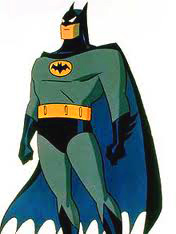
Batman is copyrighted by DC Comics

Batman is copyrighted by DC Comics

Recently, I’ve been participating in discussions, virtual and face-to-face, around the topic of introversion and extraversion as personality or character traits, and the value or lack of value of the categories as well as the definitions of these words. Popular culture, which perhaps ought to be called majority culture, as usual flattens and simplifies the concepts. “Introverts” are shy and quiet, “extraverts” are sociable and talkative.

Or not. The current psychological meaning of introvert is based on the work of Isabel Briggs Myers and her colleagues and means, broadly speaking, a person “predominantly concerned” with his or her interior thoughts or sensations and less concerned with “external things.” An extravert (sometimes confused with the non-psychological, more general term extrovert), by contrast–naturally–is more concerned with life’s “practical realities” and gains more gratification from what is outside the self.

A friend of mine recently blasted the Myers-Briggs type indicator assessment as being responsible for promoting stereotyped ideas of introverts and extraverts and claimed the assessment is worthless (she used an earthier term). I don’t agree that Myers-Briggs is worthless; like any assessment tool, however, it cannot provide anything more than a snapshot of a personality. It can provide useful insight when combined with careful observation, professional knowledge, and other methods of determining character and personality. Just because Myers-Briggs is probably the most-applied or most-trusted personality assessment tool in the world does not mean it is always accurate or can be interpreted by laypeople…or even by experts. Brief forms of the test online are just that: brief forms, less complex, and therefore–as human beings and the mind and consciousness and personality are exceedingly complex–considerably less reliable as to results.

Then there is the whole concept on which the test, and others like it, are based. Carl Jung posited the notion of two dichotomous pairs of cognitive functions operating in the human psyche, and the test is derived from his initial explorations concerning those dichotomies. Well, that works–if you are a dualist. Not all of us buy into the categorization program, and many skeptics suggest that the world is far more interesting than just pairing opposites can explain.

Yin-Yang

I love the idea of harmony the taoist symbol represents, but my sense of the universe’s fractal and relational saved-from-chaos-by-a-thread “reality” tells me things are not that simple. We simplify them to attempt understanding at the human level, but oversimplification leads to stereotypes and fallacies, outcasts and enemies. Introverts and extraverts can face off and talk about how different they are; but Jung and Myers would remind us that these “types” exist on a continuum, despite the dichotomous origin of the concepts. Some people test out right near the middle of the two; some are only partway between the extreme ends of their type. Furthermore, how one defines these terms makes a big difference in how the types are perceived…and people do change as we develop along our own continua.

My father was an early proponent of the Myers-Briggs assessment and has administered the test to me three times (when I was 17, about 26, and in my late 30s). As I matured, my introversion factor changed slightly. Of course, I could have told him that without the test! I had more time for daydreaming at 17, and fewer external responsibilities. By the time I was nearing 40, I had to deal with some significant external realities: my young children and all the practicalities of external life that child-raising entails. The other aspects the indicator assesses changed a bit less, but there was movement; human beings are not stone carvings, and even stone carvings wear down, break, and change.

My own definition of what it means to be an introvert is that I “recharge” best when I am alone or with another person who is quietly reading or walking or daydreaming alongside me. I do not like being lonely; loneliness can occur even when surrounded by society, however, and solitary hours aren’t necessarily accompanied by a sense of loneliness. After spending a day at work, talking with students and colleagues–activities I enjoy–I need to go up to my room and get out of my work clothes and unwind without immediately chatting about my day. Parties can be fun, but afterwards, I need to spend a little time by myself. Concerts and tourist-clogged beaches can overwhelm me, yet that doesn’t mean I find no joy in attending them. I just need to pad the experience with some quiet time before and afterwards. Some of my family members, though, feel drained when they are quiet for too long. They recharge by socializing, or by making and doing things (ah, those “practical realities”!).

I was considered shy as a child and adolescent, but few of my current friends would say that shyness is one of my most obvious characteristics. These things are matters of environment and perception, not merely of some implacable temperament. In fact, I have several friends who appear much “shyer” than I am but who are extraverts, because they feel a sense of increased energy after social interactions or going to concerts or cities, whereas I need to retire, book in hand, to my quiet chair for recuperation. Ask anyone who knows me and you’ll learn that I love to talk and can be quite gregarious. Sometimes. And after awhile, my need to transmit and receive sort of slows down. After that, I don’t need to have anyone attend to me, converse, or ask me if I need anything. I don’t need interaction anymore–I’m like a cellphone nestled in its charger.

Even a cellphone needs a few minutes when no one is talking. That doesn’t negate its role as a conduit for communication, does it? As any reader can tell from this blog, I am concerned with “interior” thoughts and sensations but speculate on and relate these thoughts to the wider world, which is also my main impetus for thinking these thoughts in the first place.

Freedom above utility

S. Polgar is mentioned in Tough's book. Her website is here: http://susanpolgar.blogspot.com/

Susan Polgar is mentioned in Tough’s book. Her website is here: http://susanpolgar.blogspot.com/

One of the gifts I received this year is the book How Children Succeed, by Paul Tough. It’s a quick read that dovetails many of my interests: education, psychology, character, motivation, philosophy, & childraising, among others. There are several aspects of the book I could write about here; but today my frame of mind has wrapped around one particular passage having to do–well, in the book, with chess–but metaphorically and personally, with why I bother to write poetry.

In the chapter titled “How to Think,” Tough offers the stories of several chess-for-children programs and connects these endeavors with education, as well as with traits of persistence, grit, and critical thinking skills. He cites examples of chess masters the world over, of child prodigies, and of chess teaching methods; then, he connects these strands with the notion of learning “character.” That’s one of the book’s arguments: that character is learned, made up of other habitual traits, that it is not the same as temperament. One skill that good chess players learn is how to fail, how to overcome confirmation bias in decision-making, and how to immerse themselves through the habit of study (persistence). This does not mean that chess players naturally extend these abilities to other areas of their lives, but they could do so since they do possess these abilities. Tough finds it fascinating that many chess players still manage to screw up other areas of their lives…they do not choose to extend, or apply, their chess traits to things like academics, career, or personal relationships.

So choice (“volition” as he terms it, though he defines volition as closer to willpower) interferes with our application of learned ‘good’ habits. Ah, the old ‘free will’ trap…

~

But I digress.

The part of this chapter that grabbed me is a quote from chess master Jonathan Rowson. He says: “the question of chess being an essentially futile activity has a nagging persistence for me…I occasionally think that the thousands of hours I’ve spent on chess, however much they have developed me personally, could have been better spent…[yet] chess is a creative and beautiful pursuit, which allows us to experience a wide range of uniquely human characteristics.”

Sounds familiar to me. People say the same sort of thing about writing poetry. Then Rowson says chess is “a celebration of existential freedom, in the sense that we are blessed with the opportunity to create ourselves through our actions. In choosing to play chess, we are celebrating freedom above utility.”

Oh, that says it so well. Freedom above utility–choosing to create myself through my actions, which allows me, as poet and as sentient being, to experience all of those messy and sorrowful and complex and delightful human characteristics.

~

I have spent my 10,000 hours writing and am “expert” at it, yet it has brought me not money nor favor nor fame. So why pursue the path? Because it is beautiful and freeing. Because it is my form of gift–I have a small talent that I have labored at, but I am not “gifted” as a writer…yet I can see my way to thinking of my poetry as part of the gift economy Lewis Hyde elaborates upon in his book The Gift (which I’ve mentioned in a previous post). Ambition is not the same as willpower, and I do not have single-minded willpower in the task of promoting my work or my persona as a poet–no “poetry diva” am I. But I do have persistence in this one area: the writing practice and all it entails; and I do have experience with it, and I possess deep and abiding curiosity about poetry and gratitude that it exists and that I can continue to try my hand at it.

Even if it seems futile or pointless or non-productive to some people.

~

As an aside, I note that David Orr’s recent book Beautiful & Pointless: A Guide to Modern Poetry has been both enthusiastically and scathingly reviewed, so I must get to it soon. Perhaps Orr’s work will clarify my thinking on the non-remunerative, generally unacknowledged occupation that chose me long ago.

Or perhaps it does not need clarifying. Perhaps celebration is enough.