Aft a-gley

Today marked the first day of the Fall semester at the college, but I had no reason to be there. Instead, I enjoyed the surprisingly fine August weather, harvested tomatoes and basil, and began the much-delayed task of weeding our numerous perennial beds. At 4 pm, I rested in the hammock after a walk and spent a few minutes reveling in retirement; though generally I’ve been too busy to find myself in reflective or relaxation mode, it was nice to pretend for awhile.

Yes–I wanted to read books in that hammock, and get to the community pool, and hang out with friends on the patio until the bats came out and the last fireflies gleamed over the meadow. Ah, but Robert Burns nailed it: “The best laid schemes o’ mice an’ men / Gang aft a-gley.” There were so many other things to do.

That said, while I did not do the Sealey Challenge this August, I managed to read several really terrific poetry books–and the month’s not over yet! To keep this post brief, I’ll just mention the book I’m reading now, Jennifer Franklin’s stellar new collection If Some God Shakes Your House. Lots of (mostly) non-rhyming sonnets, a series of memento mori poems, and lyrically linked poems titled “As Antigone–” connect anger, grief, and suggest that anti-authoritarian acts are often more about love than bravery. The speaker keeps denying that bravery’s behind her disobedience, but these poems are brave. I found many of them utterly heart-breaking, so it may not be an “easy read” if you want something cheerful to uplift a low mood. Nonetheless, Franklin’s poems secure hope to love so intensely I could not look away and keep returning to them even before I have finished the book.

I grew up confusing opinion
with oracle. She reminded me
all men are dangerous, each time
I left the house alone….

Jennifer Franklin

It can be difficult to avoid comparing such strong poetry with…well, with what I write. I think that most writers do this occasionally, some more than others. If one is a competitive or ambitious person, analysis and comparisons may be second nature; I have known poets who feel dismayed by their own inadequacy compared to the “greats,” and poets who felt bitterly overlooked because they didn’t get the attention or lauding other writers garnered. Either way is a trap, though. In general, I look to admirable literature as something to enjoy, learn from, admire, and to analyze to figure out how it can be done. If I have ambition, it is the ambition to learn. Oh yeah, the autodidact in me again!

And speaking of ambition, or lack thereof, I am far behind in promoting my book. Next post should contain details of the book launch in the Chicago area (September 9), and perhaps other writing-related newsiness.


There’s always a book

Many thanks to Lesley Wheeler for giving my chapbook Strange Ladies a mention on her blog! Given the circumstances of the past month or so, I have not been on the ball about promoting the publication. Word of mouth and social media platforms have helped the sales, but I have been remiss about scheduling readings, book signings, etc. These days, even well-known mid-list authors often have to be self-reliant about promoting their books. Agents for poetry are few and costly, so while getting the book into the readers’ hands may more easily happen thanks to online bookstores, finding an audience of interested readers takes effort and imagination on the part of the poet. Effort and imagination that, at present, I lack.

But–as Kurt Vonnegut reminds us in Slaughterhouse 5–so it goes. (106 times.) At the close of this quick post, I’ll try to remind myself to add the link to Strange Ladies.

As life has afforded few spare moments of uncluttered mind-time in which to write, I’m back to scribbling notes, phrases, and ideas on random pieces of paper and in my journal. This fallback method works well for me, an old-school pen & paper poet. Quite a few colleagues-in-poetry use various smart phones and electronic devices to write notes-to-self and even to draft poems, but when I resort to that–on the rare occasion that I have my cell phone but not a writing implement or bit of paper–I forget about my ideas, which are filed somewhere “in there” (on Samsung Notes’ app). It’s a good thing I am not considered a significant author whose work is worthy of preserving, because my poet-life drafts and mementos would be challenging to archive.

For the moment, my writing has a work-centered locus: curriculum, to-do lists, meeting schedules and agendas, orientation and presentation scripts, group emails to announce this or that Important Thing that likely 80% of the recipients will ignore. I get home, eat dinner, pick beans, tomatoes, zucchini, and zinnias. And I read. The one thing I always seem to have time for!

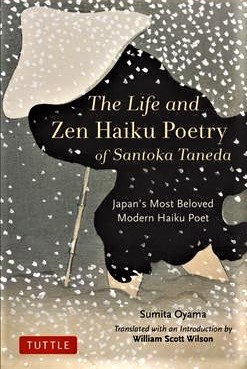
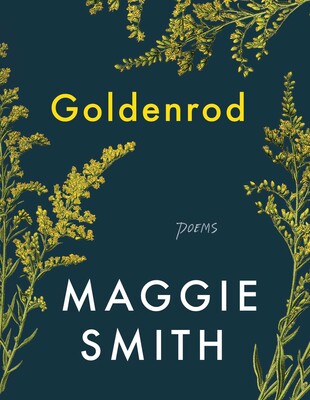
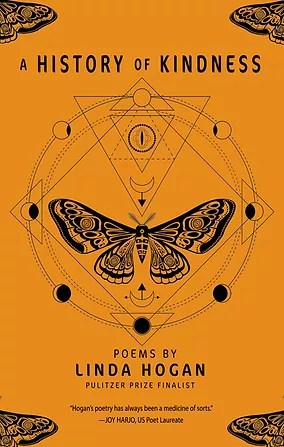
While I didn’t purposely take up the Sealey Challenge, I have continued reading poetry books more than once weekly, mixed in with creative non-fiction of various sorts, histories, and a novel or two (recently re-read Our Mutual Friend, by Dickens, to cheer myself up). Here’s a list of the recent poetry books I’ve perused: Linda Hogan’s A History of Kindness, Maggie Smith’s Goldenrod, Jill Alexander Essbaum’s Would-Land, and Sumita Omaya’s The Life and Zen Haiku Poetry of Santoka Taneda, tr. William Scott Wilson.

The least exciting was Smith’s book–I liked her previous collections Good Bones and The Well Speaks of Its Own Poison better (this is not to say Goldenrod was “bad.”) The most exciting was Alexander Essbaum’s book, which I devoured and have already read a second time. I find Hogan’s work meditative and calming, even when she writes of trauma and disturbance; it’s her style, I believe, that creates that mood in me. And I knew very little about Taneda or his standing in literary Japan, so that’s been interesting.

~

~ And, as promised, there’s always a book! Here’s my latest:

available here: https://moonstone-arts-center.square.site/product/michael-ann-e-strange-ladies/370