Berries

My region, like many others, has been sweltering through a heat wave lately. The mild winter pushed bloom times and fruiting times a bit earlier than usual; blackberries started ripening ten days ago, and now we have blueberries before July.

But not much before July. In celebration of blueberries and other joys of summertime, here’s a poem from my collection Small Things Rise & Go.

The Blue of July

We pick the first blueberries
while lilies gape at us,
peering over their green fans.
Birds’ tirades scatter over wind
and into our ears,
buffeting us with scold and caw and
something not melody but song:

a song of fruit, of seeds and
mealybugs and inchworms,
the wild clack of bamboo
or maple branches.

Summer’s like a mulberry,
a blueberry, dark and vivid.
It stains the day sweaty,
leaves bright pollen on our noses
as we inhale the sun

on lilies, as white clover gathers
like clouds upon the grass
and, sweet in our mouths,
the day explodes—blue.

~

A note to anyone who has ordered or wishes to order Water-Rites: The order has gone to the printer. Possibly 2-3 weeks before my book is in your hands. Many thanks.

“The Atlantic”

 Atlantic by John Sevcik

A few years back, I was privileged to join John Sevcik, his wife Lynne Campbell–who is also a marvelous painter–and a few art students and friends for three lovely days of art talk and plein air painting sessions and terrific food at a beach house in NJ. This painting, by John Sevcik, inspired the following poem, which appears in Water-Rites.

The Atlantic

She and her mother
are knee-deep in water
their backs to the shore

What they discuss
as they look eastward
you cannot hear–

breakers, the wind,
the natter of laughing gulls
cover their conversation

Besides, you are busy
fathoming the sea’s tones
and mixing the sky–

Trying to stake claim
to the reflective shallows
between you and them

At this hour
they are your subjects
as the sea is

and what they say
she will share with you
later. Or she won’t.

It doesn’t matter, you
have set down on canvas
their communion

And your own conversation–
the one between mind’s eye
and artist’s hand.

~~~

Many thanks to John Sevcik for allowing me to post his painting here on my blog. To see John’s other works and find out about gallery showings, visit him at his web page. He is also a teacher, poet, playwright and actor.

Generous community of writers

Lately, my days have been busy with gardening and household chores and efforts to promote my book Water-Rites. I find I can jot ideas into my notebooks but that more sustained creative writing efforts are not possible at this time. That’s okay. Writing, for me, often comes cyclically, with the slow periods acting as collecting points and reflective opportunities that may result in poetry later on. Also, when I am not writing much, I have time to read.

On this blog, I have a page devoted to ART which featured links to work by painters, sculptors, and other artists of my acquaintance. Today, I’m posting links to websites of and books by friends. One thing about the solitary life of writers is that we still require community of some kind: readership, first and foremost; but also reviewers, friendly but useful critique, emotional and career support, and misery-loves-company ranting and hilarity. This community develops many ways–face-to-face, mentorship, virtual collegiality, networking, even postal mail–and sustains the generous community of writers over years and miles.

The event that precipitated my desire to post these links was reconnection with poet Alfred Encarnacion, whose first chapbook, At Winter’s End, David Dunn and I published in the early 1980s when we were running LiMbo bar&grill books. You can find Alfred’s 2012 collection The Outskirts of Karma here.

One poet who has quietly been disseminating poetry for 25 years from his tiny press in Kanona, NY is Michael Czarnecki of FootHills Publishing. From his website, you can order books by many of the people in my writing community: Michael himself, and also Craig Czury, Heather Thomas, Karen Bashkirew, Paul Martin (whose beautiful 2009 full-length collection is available here), Steve Myers, Kelley Jean White, Elizabeth Bodein and many others…including two of my own chapbooks.

Finishing Line Press, which sells through Amazon as well as its own site, has published many of my colleagues in the poetry community and particularly supports female writers; I urge you to purchase books by Celia Lisset Alvarez, Kelley Jean White, Nancy Scott, Elizabeth Bodein. Finishing Line also sells my book The Minor Fauna.

Through Dave Bonta, I met the folks behind Phoenicia Publishing and, through Dave and through the Women’s Poetry Listserv, met Ren Powell. Dave’s book and Ren’s book are available through Phoenicia, and so are print issues of Dave’s online blog literary journal, qarrtsiluni. Also through Dave, my literary community grew through meeting Luisa Igloria, whose books you should definitely check out. Another connection with the inimitable Dave Bonta? That would be Ron Mohring of Seven Kitchens Press, which will be publishing Dave’s next collection and which advocates for the work of Pennsylvania-based poets such as the late Lou McKee and another of my colleagues-in-writing, Harry Humes. August Evening with Trumpet is a particularly lovely book, and Harry is a master. Other Pennsylvania poets to whose tribe I am happy to belong include my much-lauded friend Barbara Crooker, the unpredictable and enthusiastic Barbara DeCesare, Patricia Goodrich (sculptor and poet), and that magnificent woman of letters, Elaine Terranova.

Attending an MFA program at Goddard College granted me an immediate community for which I continue to be grateful many years later. Books by my fellow students and by my mentors include but are not limited to the following (really, there are too many to recall!):

Alan Smerdjian, Jessamyn Johnston-Smyth, Elena Georgiou, Christian Peet, Bea Gates, Ian Haight, Barbara DeCesare, Jan Clausen, Janice Goveas, Bill Moser, Jen McConnell, and forgive me for running short on time or forgetting others…and from my long-ago days at The New School, the amazing Maurice Eidelsberg, whose poems in Shit, Sex, Love, Palsy will have you viewing life from a perspective you may never have imagined.

Through the Women’s Poetry Listserv I mentioned earlier and through conferences and festivals, the generous community of writers has led me to Diane Lockward, Pat Valdata, Elizabeth Raby, Rosemary Starace, Julie Kane, Elaine Heveron, Lori May, Juilene Osborne-McKnight and Steven Allen May of Plan B Press; Ned Balbo, Jane Satterfield, April Lindner among many others. Wendy Ellsworth has written a book on beading and spirituality; my cousin Scott entered the world of book writing with a children’s book you can find here. And my brother, a true Renaissance man, has published a novel and is working away at a non-fiction Rip Van Winkle-type story of archeology, empiricism, Stephen Jay Gould and Samuel Morton.

So  you see, the life of a writer need not be–and seldom is–solitary. Writers love to read, and they therefore support one another inadvertently. My community also includes Shakespeare, Mark Twain, Charles Dickens, Emily Dickinson, Jane Austen, Vladimir Nabokov, Elizabeth Bishop, Robinson Jeffers, Dante, and Dostoevsky. To name a few.

Ephemera

My collection Water-Rites was begun in response to a drought and a death. Interesting that the book’s release appears during an unusually wet spring here in my valley. On my morning walk through the meadow today, I saw quite a few species of dragonflies, generally a sign of a damp period in my region. Two days ago, mantis cases hatched; now there are tiny praying mantises on the patio slates, in the lawn, and among the grassy flora where we seldom mow.

The bees are out; the cabbage moths and early butterflies busy themselves with knapweed, eupatoria, penstemon, golden alexanders, honeysuckle, milkweed. The fragrance settles above the dewy grasses.

Most people are aware of honeysuckle’s scent. Few people know how lovely the aroma of milkweed blossom is. You have to time it just right–there’s no perceptible scent when the buds are furled, and the blooms are open only briefly. Almost at once, the blossoms ripen into pale knobs that will produce the familiar pods full of seeds packed cone-like into the pointed cases, silks battened tightly until autumn dries the pods and they burst.

But in early or mid-June, when the butterflies begin to arrive, those blooms are pale purple clusters of fragrance on a stem.

milkweed bloom

~

Ephemera intrigues me. Human ephemera usually is just that: brief, transitory, “lasting a day” (the Latin name for daylily, hemerocallis, comes from the same root: ἐφήμερα). Our letters, our emails, our YouTube videos and Hallmark greeting cards and shopping receipts.

Biological ephemera, however, is part and parcel of the cycle of life.

And poetry? Perhaps it’s an effort on the part of human beings to contribute to the lasting sort of ephemera.


~


milkweed in autumn Ann E. Michael


Fruition

In 1999, my beloved friend and fellow poet David Dunn died of a diabetes-related embolism. A few years later, some of the poems I had written as I worked my way through my grief made their way into my graduate school (MFA) thesis. After more years of writing and revision, that manuscript became Water-Rites

which is now a book. Many thanks to Keith Badowski and Ron Self of Brick Road Poetry Press and to the friends and colleagues who helped me to work on these poems and who encouraged me to persist in finding a publisher for the book. Link to purchase is here: Water-Rites.

water-rites by Ann E Michael

Thanks also to sculptor Steve Tobin, whose sculpture “Retretti River” as photographed by George Erml gives Water-Rites a striking cover image.

Thanks to my writing group for almost 20 years of critique and support, and to my mentors and instructors at Goddard College, and to colleagues who have written kind words about the poems. Here’s a quote from Barbara Crooker (whose poetry & website can be found here):

Ann Michael says, “There is nothing wonderful here,” but clearly, she’s wrong, as Water-Rites contains many wonders:  goldfinches, “lovely in the lost way of beautiful things,” the richness of beans that “lie warm / one inch below the earth; uncounted yet,” an ordinary robin’s egg, a yellow-shafted flicker in black and gold tail feathers. This is the natural world Ann Michael inhabits and explores: her home, her garden, the landscape of eastern Pennsylvania that surrounds it. Michael takes us on a journey through the woods of loss and grief in poems that are as clean and clear as water running over stone. “And what is as beautiful as water?” she writes.  These poems are unencumbered by unnecessary wordiness, enhanced by careful word choice and a richly varied vocabulary. “I know what I daily know,” says Ann Michael, and now we, her readers, know these things, too.

     ~Barbara Crooker, author of Radiance, Line Dance, and More

More thanks to my non-writing friends who have enriched my life in so many ways, and to my wonderful and supportive family members.

And to David Dunn, who is with me still wherever he is.

Interview

“Who has not sat, afraid, before his heart’s
curtain?  It rose:           the scenery of farewell.
Easy to recognize. The well-known garden…”
–Rainer Maria Rilke
~

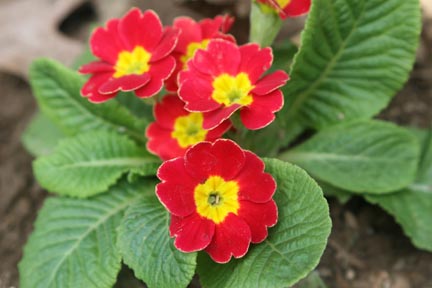
primrose by Ann E. Michael

Herewith, a recap of my side (much edited) of the ArtsAlive! conversation this past Sunday at Soft Machine Gallery. SØrina Higgins was also reading and being interviewed by Lehigh Valley Arts Council director Randall Forte, but I can’t adequately summarize her insightful comments. You can find her book here, however.

~

RF: What is your favorite poem in the collection Water-Rites?

AM: I hate to try to pin down a favorite poem, by my favorite writers or by myself. I once heard Billy Collins reply to that question by saying his favorite poem is always the one he is currently in the process of writing. That’s kind of cleverly evasive, but it’s also a little true. Though sometimes I hate the poem I’m currently working on…

I like the title poem, but I get a kick out of “Doxology” because it is so odd; and perhaps my favorite poem is “Tailfeathers” or “The Big Umbrella” or, for purely sentimental reasons—not because it is my best poem—“At Bull’s Head Pond.”

~
RF: What was the most difficult poem to write?

AM: The most difficult poem to complete was probably the long poem in the center of the collection, “The Valley, the Whitetail: A History.” That was difficult in terms of managing the length and the purpose of the poem; also, it required some research. Yes, occasionally poems take quite a bit of research—I have no desire to be inaccurate when I am writing about history or geology or botany (though I often am, inadvertently, despite my best efforts). Not all poetry is solely a work of the imagination.

There are other ways to be “difficult” however. A poem that was hard to complete was the elegy “I Shall Never Be Nearer,” which came quickly initially but took a long, long time to revise and to come to terms with. Not all of these poems—or any of the poems I write—are “about” me or my experiences, I mean, not as biographical as they may seem. But this poem does deal very specifically with the death of my close friend. It was the day after I learned of his passing, and, completely numbed and sleepless, I went with my family for a canoe trip on the lake. I titled this poem “Single Lines” for several years while I was revising it, because the images came to me in – well – single lines. Single images. I must have revised little tiny things in it oh, about 14 times. So I guess that means it was “hard to write.”

~

RF: So, the opposite question. Which poem was easiest to write?

AM: Some poems do come quickly and relatively easily. Not often, and sometimes those that come rapidly end up being sort of crappy poems. But “Lot’s Wife” only underwent about 2-3 drafts and mainly arrived, haiku-like, as a visual image that carried with it some cultural freight.

Another poem that arrived rather miraculously is “River by River.” That was the result of a car trip to Indiana with my kids and is kind of a list poem. It spooled out as a result of a kind of inadvertent prompt. Will Greenway and Elton Glaser were looking for poems about Ohio for an anthology. I read the call for work, went back to my notebook about the car trip, and recalled an incident with my son and a roadmap. The editors chose it as the opening poem in the main text of the book—immediately following the preface poem by James Wright. I felt completely graced and humbled.

~

RF: How did you choose the title of the collection?

AM: Early on, while I was working on my graduate thesis project, I chose the title for the book. I’d written the title poem but hadn’t really thought of it as the title poem until I recognized how many of the poems dealt with drought or with bodies of water or rain or artworks that portrayed water. And spelling the second word as “rites” as in ritual, rather than as an other interesting aspect of water—the “rights” to water that have caused so much conflict over the centuries—seemed fitting given that there are also rites associated with death. Funerary rites, religious rites. And rites in the form of chants and dances people have done to invoke rain during times of drought. So there’s a pun there, rights and rites, and I love literary puns.

I wanted to use Steve Tobin’s sculpture as the cover art, and Steve granted the rights for that photo (more rights, legal rights) and Keith at Brick Road approved of the image for the book cover. So I am gratified by all of that. The sculpture is an early work of Tobin’s, when he was making art using surgical glass piping. It’s environmental, site-specific art that really looks like a splashing creek. But it isn’t—it is glass.

~

RF: Tell us about your publishing history and about how and if poetry publishing has changed over the years.

AM: I had my first poem published in a tiny literary journal back in the days of Xerox-ed micro-magazines, 1981 or 82. I’ve been publishing pretty regularly since then, regularly but not ambitiously. Lots of individual poems and essays in individual journals. I had no academic reason to get a book out, and I had no real direction either. It didn’t seem to be on my to-do list when I was in my twenties. Then, at 30, I had my children. Most of my creativity went in the parenting direction, though I continued to write. I didn’t really work toward book publication until about 1999. Then I began to think about it—after David Dunn had died. In fact, I got a chapbook and a full-length collection of his work out after his death. This is hard to do—to convince a publisher to put out a book posthumously. After all, the poet cannot promote his work. That’s hard on small publishers. But I succeeded. So I thought, I guess I can get my own books published. Maybe. And my first collection was a chapbook Spire press published right after I graduated from Goddard, 22 poems about building a house, sort of ecologically-invested nature-type poems.

Things have changed in the world of poetry publishing, but it is still hard to get your work into actual print—ebooks and POD self- or partially-self-published options, as well as the web and blogs, have changed the spirit of the poetry world only marginally, though I do think these options have made it possible for more people to read and encounter poetry. The absence of critical, discerning, well-read editors & proofreaders is a loss, in my opinion; but poetry is finding other ways to deal with that. And those editors are still out there. Underpaid and overworked and cranky, but out there nonetheless. MFA programs, perhaps. Critique groups have maybe replaced salons and absinthe cafes. I don’t know.

~

RF: Any advice for aspiring poets who want to get published?

AM: I’d advise aspiring poets to be ambitious. But there are many ways to be ambitious. I’m a bit of a plodder, but I hang in there. I’m not great at networking or schmoozing or even being sort of normally assertive—I’m quite shy with strangers and hate to ask even small favors…like asking an editor to consider publishing my work. Or asking people to host readings. I mean, that goes with the job, but it’s taken me a long time to get good at doing that. I hate that stuff lots more than I hate being rejected. I don’t take the rejections hard at all. My weaknesses lie in other areas. So I can say, if you want to get published, you might not want to do what I did…anyway, if you are eager to see print soon, you might want to be more assertive and organized. On the other hand, I have been self-promoting rather badly for thirty years; and I’m okay with that because the poems are better after thirty years even if my publicity skills are not.

I’m kind of outside the box as far as the “po-biz” goes. I do my job at the college, which is only marginally poetry-related, and then only when I am teaching a section of intro-to-poetry. (Mostly I teach remedial comp and tutor students in English; I like to remind myself that Kay Ryan has the same kind of job!). I attend conferences when I can get away and when I can afford them; I have taken seminars and workshops over the years, but not religiously or frequently. The “big thing” I did for my so-called career was to get an MFA from Goddard College in 2003. This was after I had won a PA Council on the Arts Fellowship—back when the council was giving those out. Please lobby your congress people for an increase in federal and state arts funding. That was so crucial for me, earning that grant. A great confidence-builder.

Since then, I’ve earned my MFA and have four chapbooks and this full-length collection coming out and a job in academia that I probably wouldn’t have if it hadn’t been for my graduate studies and a certain amount of dogged persistence of a sort of quiet variety that I seem to possess in abundance. I still send out individual poems for publication in print and online, though not as often as I should if I were really eager to stay on the po-biz radar. I keep up a blog and a Facebook page for “promotional purposes” but don’t expect to see me on your Twitterfeed anytime soon. Technology takes me away from my reverie zone and is, generally, bad for my poetry. What’s good for my poetry are long walks, gardening, and genial loafing, visits to museums, viewing architecture and geological formations, long face-to-face chats with friends, and reading reading reading.

The quote that opens my book, the Rilke quote, kind of sums that up for me. It’s really the well-known garden that makes me recognize where the poems are coming from. The scenery of farewell, in this case, opened up the place this collection began, in loss and later in fullness.

Water thoughts

This weekend brought some rain to our valley. Gratitude! The rain softened the soil and the air, bringing haze and drizzle and greening up the parched grasses. Nonetheless, a little searching of weather-history sites revealed that this March was the fourth-driest on record, with only .92 inches of precipitation; the average precipitation is 3.4 inches. The region is also 6″ below average for the first quarter of 2012. As a gardener, I take my “stewardship” of the earth and its resources seriously; and water is one of the most valuable resources that we take for granted here in the United States. I can conserve water at home through many means–and I have established fairly resilient plants in my ornamental gardens (if it survives drought and flood and the deer don’t eat it, I find a way to make it look pretty in the yard). There isn’t anything I can do to change the weather patterns, though.

Given my deep concerns about cyclical drought, long-term equitable distribution of water, potable water and clean waterways, I thought I would use this post to share the title poem of my upcoming collection, Water-Rites. The publishers at Brick Road Poetry Press will be bringing the book out this spring. If the year continues to be a dry one, then it’s strangely suitable for this particular collection: I wrote many of these poems during a serious drought cycle. Some of the poems deal with the loss of a close friend, too. For me, drought and grief are metaphorically closer than “floods of tears.” Loss felt more like the numb, dry absence of drought than like the gift of rain.

For some soothing photos of running natural waters, I recommend Don Schroder’s series taken at Rickett’s Glen. Meanwhile, I’m grateful for the rain.

Water-Rites

I.

I take my shower
lean into water’s hot stream
too many minutes
lathered in steam, guilty skin,
greedy pores

knowing the well empties
and the earth’s in drought.
II.

Off Nova Scotia’s south coast,
small islands spring fresh water
surrounded by sea. We hauled
the pine-brown but potable
stuff from the well in buckets,
heated it on the woodstove,
dabbed at our bodies, and dried
in the sea wind. We drank it:
pine-water coffee—water
sprung from nowhere, gift of rocks,
glaciers, lost to eons.
III.

The Mideast erupts again.
Retribution. Religion. Water-rights.

Oil will get you water;
water will buy you oil.
Barrels and tanks,
tanks and barrels—

each has a meaning
for water and warfare.

I reach for soap.
IV.

On the Caribbean volcanic island,
rain’s the only source. Rock
carved into cisterns. Water
hauled in like gasoline, by truck.
V.

We do not need to be so clean.
The industry of soap cajoles us—
promoting glycerin, methyl paraben
and the lauryl sulfates—
exposes our filth and offers
deliverance from evil.
Lye and tallow. Better to wallow.
The cost is less. Think:
Were we not formed of clay?
VI.

Tap
like sap
provides
sustenance.

Water
up root and
down:
taproot.
Soil            unsoiled
needs rain

silt       sand       loess—
water-loss

water’s
lost,
VII.

runs down my body,
thirsty skin, down drain
into pipes, tanks, drainage field
where ryegrass covers meadow,
percolates through sand, loam; disperses—

if it should rain
I will run out, arms wide,
mea culpa, mea culpa,
so many parched human beings
desiccating earth and I—
I thought to wash
my trespasses away
in something other
than rain.

© 2012 Ann E. Michael